Support WBUR
The Weekender: Boston's Saturday Morning Newsletter
Inside New England's sprawling network of Santas
Editor's Note: This is an excerpt from WBUR's Saturday morning newsletter, The Weekender. If you like what you read and want it in your inbox, sign up here.
It’s busy season for Santa.
Malls. Hospitals. Community events. Bass Pro Shops.
“It’s a whole gamut of activities,” Dan Greenleaf, a New Hampshire resident who portrays Santa, told me while on his way to an appearance as the man in red.
But Greenleaf, in true Santa Claus fashion, can’t be everywhere at once. Luckily, he’s got more than a few bearded buddies he can tap for support: The members of the New England Santa Society.
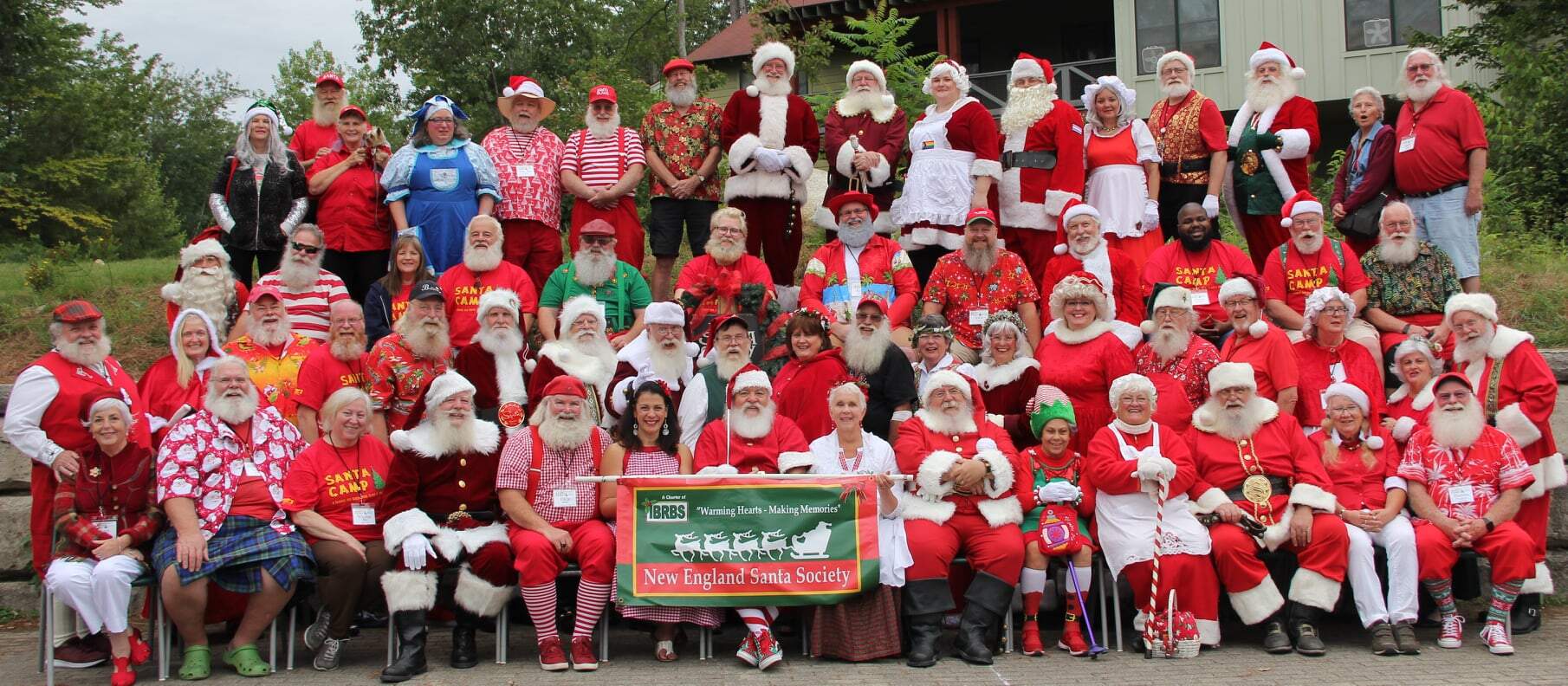
The New England Santa Society is an organization made up of more than 175 performers that portray Santa, Mrs. Claus, elves and reindeer across the region. Actors in the network exchange tricks of the trade necessary for successful Christmas appearances. And in the summer, NESS even hosts a Santa Camp in New Hampshire, where jolly folk of all creeds come to train for the winter ahead. (It was actually the subject of a 2022 documentary from HBO Max.)
Here’s a look at how they prepare for the hustle and bustle of Christmas:
“Putting on the hat and jacket, you accepted the contract.”
How does someone “become” Santa?
In the 1994 comedy “The Santa Clause,” Scott Calvin (played by Tim Allen) becomes Santa when the big man dies from a fall off Calvin’s roof. Greenleaf, who resides in Manchester, New Hampshire, says he sort of “fell into” the role, too.
“I had a friend say, ‘I’m having a party. Would you like to be Santa and help me out with it?’” said Greenleaf, NESS president and co-founder. His friend’s inquiry didn’t come as a surprise. “I had a beard, and it had turned white. And I’m on the chubby side. And I have a fairly jolly personality.”
Becoming Mrs. Claus was also a matter of coincidence for Wakefield resident Susan Roberts, the secretary of NESS. She said that while helping her boss organize the staff holiday party at Emerson College over 30 years ago, they came across a Mrs. Claus costume.
“And guess who fit into the dress?” Roberts recently told me, before a “gig” at her own personal dentist’s office.
Others were a bit more intentional about selecting a role.
Deb Gedney, of Trumbull, Connecticut, always loved visiting Santa at Macy’s in New York City’s Herald Square when she was growing up. Now, she doesn’t have to travel far to see him: Her husband, Jeff, has portrayed Santa for more than 20 years. But don’t call Gedney “Mrs. Claus.”
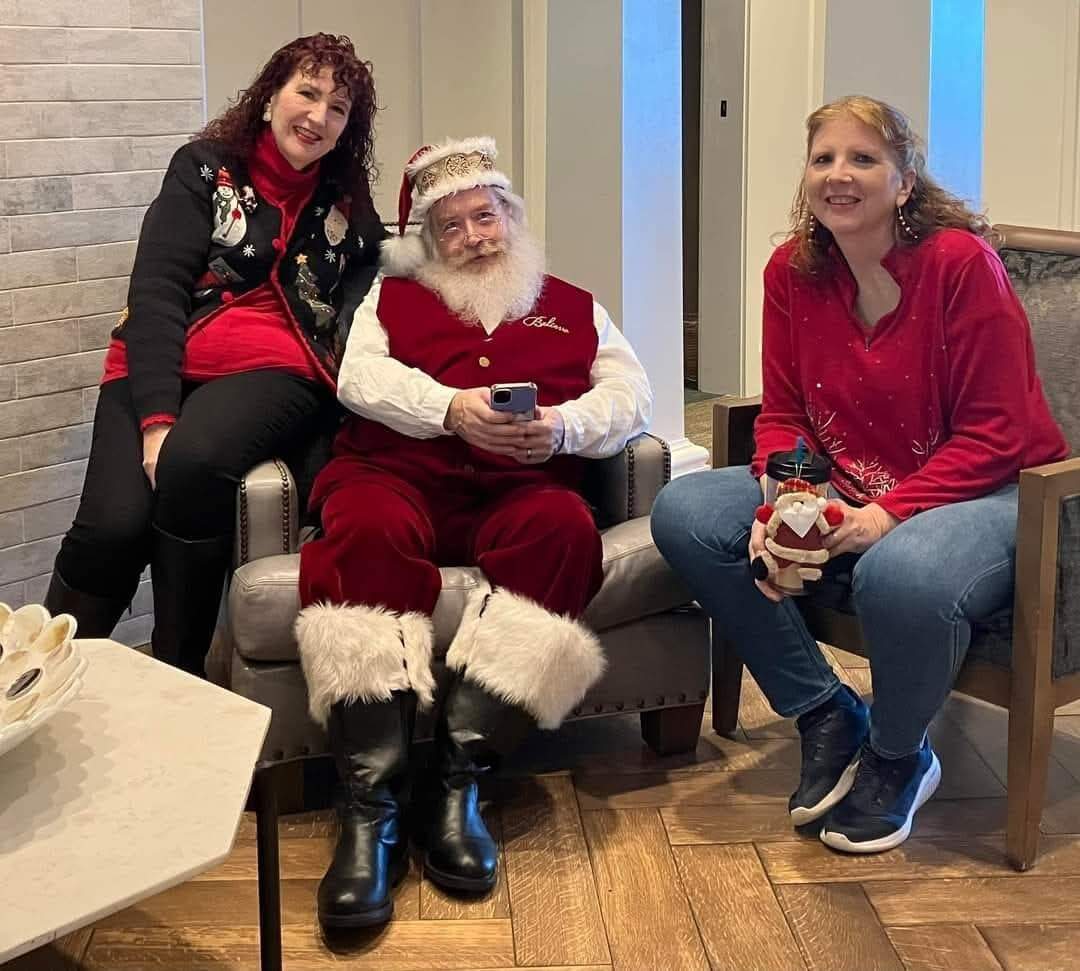
“Everyone’s like, ‘You’re married to Santa. You must be Mrs. Claus,’” Gedney said. “I never really connected with the role. I don’t want to be that nice person. I’m mischievous. I’m an elf.”
Suiting up
Embodying the role of Santa, Mrs. Claus or an elf takes work — especially if you’re going to meet thousands of people in a single day. Santa Camp attendees go through a number of courses to rehearse their performances. “We call it, ‘preparing for the sleigh,’” said Greenleaf.
If you take it seriously, and especially if you’ve got a real beard, when children see you throughout the year, they think you may be Santa. You kind of have to be on your best behavior all the time. You want to personify being kind, giving and loving.
Dan Greenleaf, president of NESS
They also learn how to engage with children who may have disabilities, interact with children’s guardians at events, pose — with both hands visible in every picture — and answer common (and difficult) questions that children might have.
“There’s the question, ‘I want my grandma back for Christmas. She died,’” said Roberts. “How do you answer that question?”
It’s situations like this where a network is helpful. Roberts says the camp gives Santas a chance to connect and share tips. “There’s a lot of sharing of knowledge going on,” she said.
For example, when asked about a deceased loved one, Roberts says the Santa may say, “Your grandma is with you all the time,” or “She’ll be in my heart and I know she is in yours.”
“Once you have been Santa or Mrs. Claus in many different settings, you will learn what comes naturally for you,” Roberts said.
Gedney studies elf mythology and history in her spare time, and teaches a class about elf behavior at camp. Through her research, she’s come across stories of elven creatures from the Philippines to Germany to Mexico. To her, that means there is no one way to be an elf.
“Elves are everywhere,” she said. “So there are definitely ways that people can be part of the community, no matter what [their] race or language. We’re trying really hard to increase diversity in our ranks.”
It’s a lifestyle
Ultimately, the success of the holiday appearance depends on the performer’s ability to maintain authenticity, according to Roberts. “We do not play Santa or Mrs. Claus,” said Roberts.
And if a member can’t make a gig, they know exactly where to find a replacement that’s sure to maintain the magic.
“If there’s a problem at the last minute and we need someone to fill in, we have each other as a community to rely on,” said Gedney.
“And the best thing is that nobody is in competition with anybody else,” added Roberts. “Everybody wants every single other Santa, Mrs. Claus, other holiday performer to be their best.”
Once Christmas passes, NESS members reunite in January for a banquet. They also keep in touch over Facebook and occasionally meet up for breakfast or dinner during the lead-up to camp in August. But the curtain never really closes for these performers.
“If you take it seriously, and especially if you’ve got a real beard, when children see you throughout the year, they think you may be Santa,” Greenleaf said. “You kind of have to be on your best behavior all the time. You want to personify being kind, giving and loving.”
Greenleaf added it’s given him pause in certain scenarios. “If you’re driving down the road and somebody cuts you off, you might want to wave to them or give them the finger, but as Santa, you can’t do that,” he said. “And in my case, my license plate is ‘IMSANTA,’ so that’s double the reason I can’t do that!”
*Editor's note: A previous version of this article misstated where Susan Roberts lives. A quote from Dan Greenleaf was also corrected for a typo. We regret the errors.