Support WBUR
Mass. approves utility plans to temporarily lower gas bills without charging interest
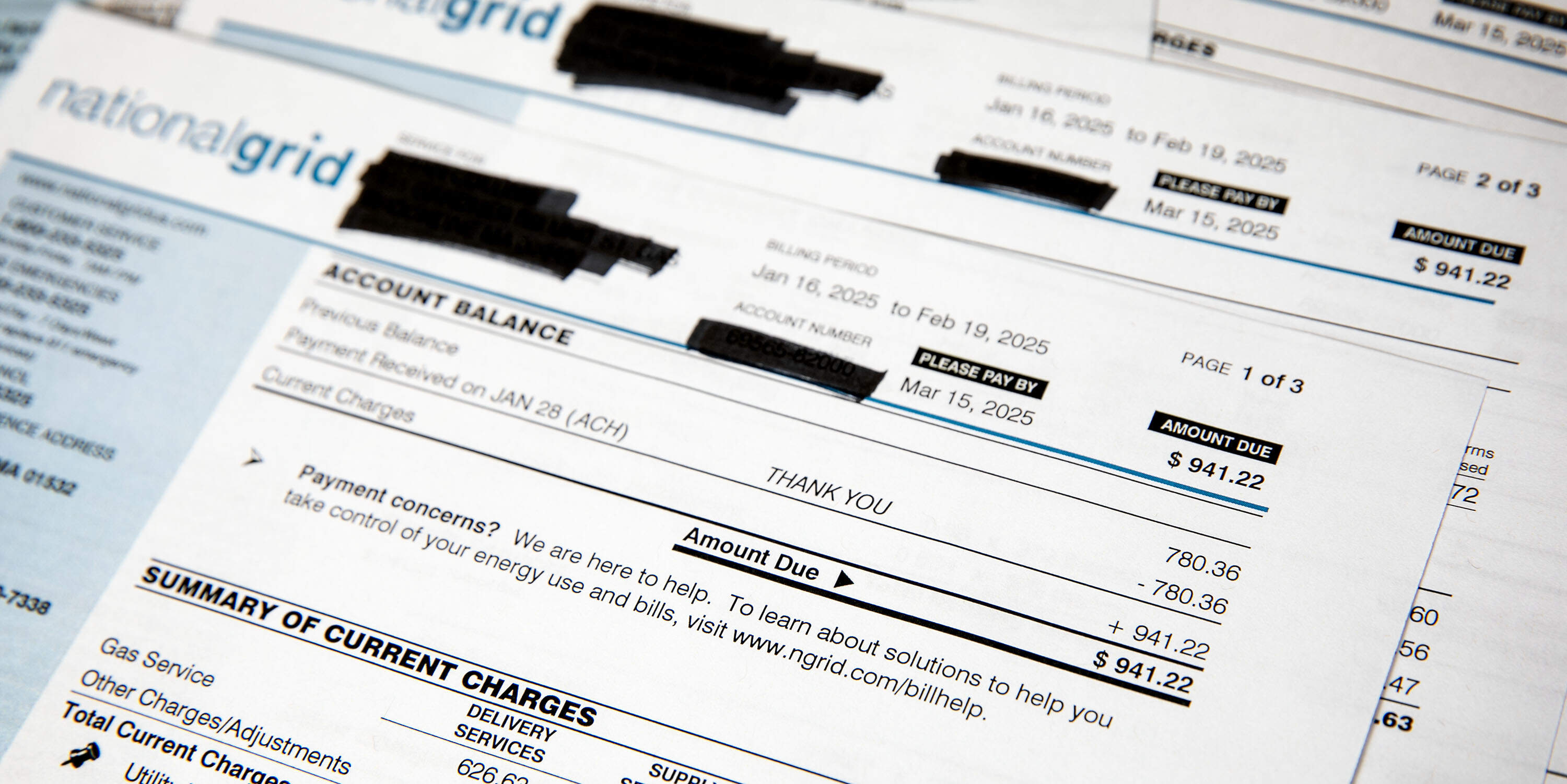
Massachusetts residents who heat with natural gas are going to get a slight — if temporary — reprieve on what they owe their utility this Spring.
The state’s Department of Public Utilities approved plans from the five major gas utilities to reduce customer’s heating bills by about 8-16% in March and April. The cuts announced Friday aren't true savings, though, since the money will be collected in future bills.
Here’s what this means on bills:
- Eversource customers will see their March bill go down by about $34 and their April bill go down by about $19.50.
- National Grid customers will see their bills go down by about $40 both months.
- Unitil customers will their bills go down by about $33 both months.
- Liberty Utilities customers will see their bills go down between $12.50-$16 both months.
- Berkshire Gas customers will see their bills go down by about $33 both months.
Earlier proposals from National Grid and Berkshire Gas included interest fees — called carrying charges — on the deferred money. The companies said these fees were needed to help cover the cost of borrowing money from a bank that they otherwise would have collected up front from customer. But the public, already reeling from high heating bills, responded with outrage; many said they’d rather pay the full amount right away, rather than cover the interest on deferred payments.
On Thursday night, National Grid and Berkshire filed revised plans that dropped the interest charges. National Grid said the change will save the average customer about 17 cents per month from May through October.
"The deferral helps to avoid additional volatility customers have experienced this winter heating season," a press release from the department said.
The department also approved a plan on Friday that slashed the budget of Mass Save, the state's energy efficiency program, by $500 million, which may negate the need for customers to make deferred payments in the summer. Growing demand for Mass Save has been a big driver in why peoples' bills have gone up this winter.
Still, not everyone is convinced the gas utilities' plans will make a meaningful difference.
Attorney General Andrea Campbell, who serves as the ratepayer advocate in the state, called the plans “paltry” and said the “proposed relief does not go far enough to alleviate the financial strains walloping ratepayers,” in a filing she made with the department earlier this week.
“Under the Massachusetts regulatory regime, the Companies are well-compensated for their delivery service and should be well-positioned to do more for their customers,” she wrote.
Campbell also noted in her comments that the utility proposals will do nothing to mitigate the cost of February gas bills, which, given the cold weather, she said are also expected to be “extremely high.”
Eversource customers in particular may be in for some sticker shock since the Department of Public Utilities recently approved an increase in the cost of the gas they use — otherwise known as the supply rate. Beginning Feb. 1, customers in Eversource’s NSTAR territory pay $0.93/therm, up from the $0.76/therm they’ve paid since November. Eversource Gas Company of Massachusetts (formerly Columbia Gas) customers now pay $0.94/therm, up from $0.79/therm. State statutes require utilities to ask for supply rate adjustments if the cost of gas they buy from pipeline companies changes by more than 5%.
If there’s one thing that everyone — customers, state officials, consumer advocates and even utility leaders — agree on, it’s that energy prices in Massachusetts are too high and require longer-term affordability solutions.
The Department of Public Utilities is investigating various ways to rein in gas and electricity prices in the state, especially for low- and moderate-income residents. And Gov. Maura Healey has said her administration is preparing legislation and executive action to help reduce energy costs.
Winter heating bills have been exceptionally high this winter thanks to a combination of really cold weather, slightly higher gas prices and state-approved delivery fee rate hikes to help cover the ballooning costs of programs like Mass Save and the Gas System Enhancement Program, which gives gas utilities extra financial incentives to repair or replace leaky pipelines.
Though utility supply and delivery rates usually change in November and May, this winter's adjustment was particularly steep. National Grid’s delivery rate increased 63% on Nov. 1, representing a 15% increase from last winter. Eversource’s delivery rates increased between 24-28% on Nov. 1, representing a 31-34% increase from last winter.
If you are worried about paying your gas or electricity bills, help is available.