Support WBUR
Boston's Morning Newsletter
What Massachusetts' new junk fees rules mean for you, from hidden charges to subscriptions
Editor's Note: This is an excerpt from WBUR's daily morning newsletter, WBUR Today. If you like what you read and want it in your inbox, sign up here.
If you need a last-minute king cake for Mardi Gras today, MassLive has a handy guide to where you can find them around Massachusetts.
But first, the news:
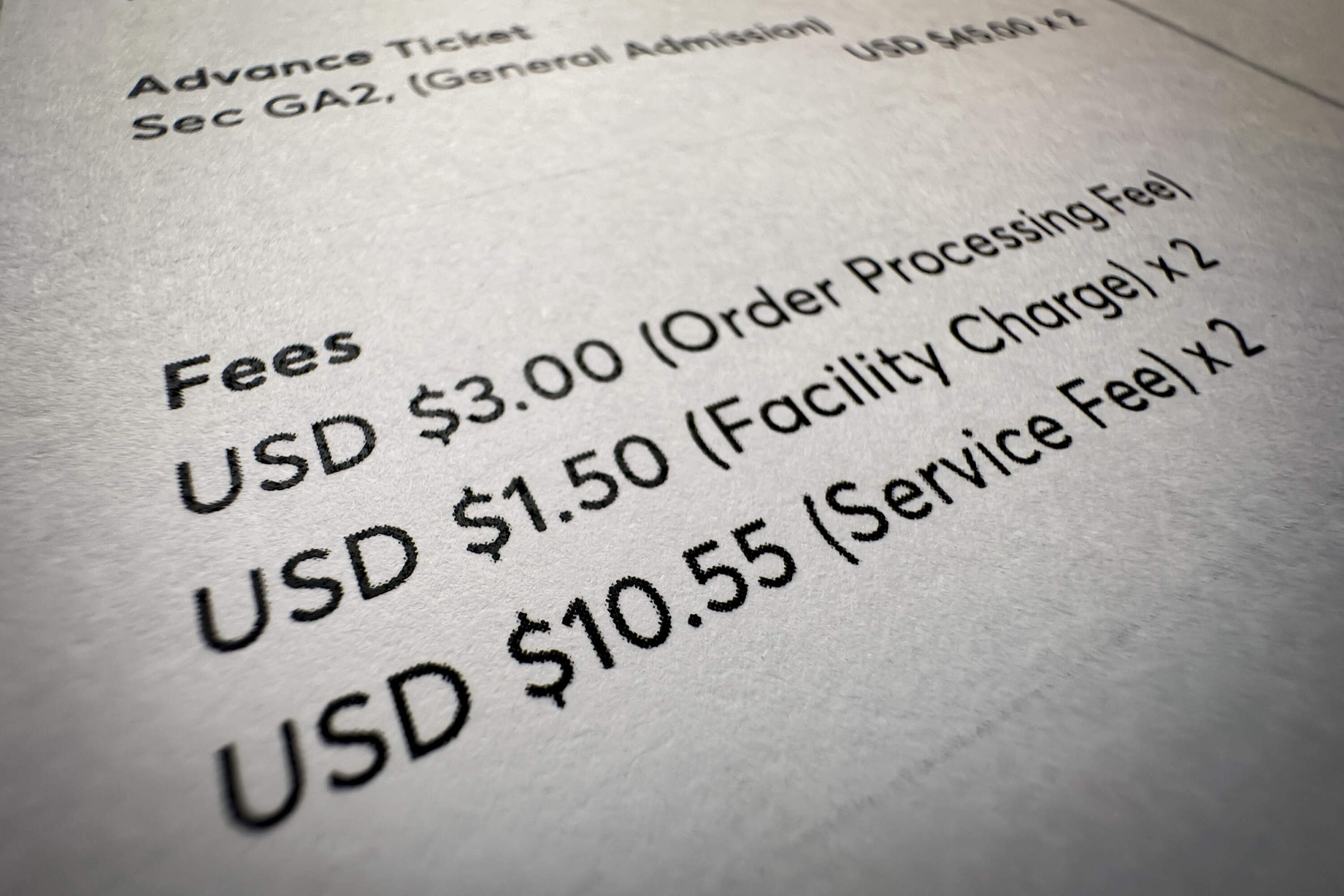
Show prices with fees: Get ready to say goodbye to those surprise “service” and “processing” fees. Massachusetts Attorney General Andrea Campbell announced yesterday that, starting this September, she plans to enforce new regulations intended to make it easier for residents to avoid hidden “junk fees” and other unwanted charges. The rules — under an expanded interpretation of the state’s consumer protection law against “unfair or deceptive practices” — declare “junk fees” illegal and require businesses to be more upfront about the total cost of their goods and services. “These fees obscure the true price of goods and services, prevent comparison shopping and make a profit off of gotchas,” said Ariel Nelson, a senior attorney at the Boston-based National Consumer Law Center. And it’s not just tickets. The rules apply to most companies doing business in the state, from hotels to subscription services to landlords. Here are the major changes to expect:
- Hidden fees: Have you ever hit the checkout page on concert or Red Sox tickets, and seen the final price jump 20% due to added service charges? Or been surprised by a $40 hotel resort fee? No more. The new rules will require businesses to clearly include all required fees in the advertised price. That effectively means platforms like TicketMaster won’t have the filter option of showing prices with or without fees, Campbell’s office said.
- Optional charges: The new rules will also require businesses to clarify when a fee is optional. (For example, convenience fees for paying with a credit card versus a bank account.)
- Subscriptions: Campbell also hopes to make it easier to avoid unwanted recurring charges and subscriptions — both through additional disclosure requirements and rules that make it just as easy to unsubscribe. For example, if a company lets you subscribe online, it has to let you unsubscribe online as well; they can’t require you to use a different medium, like a phone, to cancel.
- Zoom in: Some industries are exempt from the new rules, such as air travel. Food delivery apps can also still advertise the base prices of a menu item, as long as they include fees with total pricing info. (You can read a full summary of the rules here.)
- Zoom out: The regulations — which Campbell first proposed in 2023 — come after the Federal Trade Commission finalized similar junk fees and subscriptions rules last fall under President Biden. However, Campbell noted the Trump administration appears to be “stepping away from consumer protection.”
Tariffs, take two: President Trump’s 25% tariffs on Canada and Mexico are officially taking effect today. He’s also doubling tariffs on China to 20%. Trump says the across-the-board tax on imports is meant to get our foreign neighbors to crack down on fentanyl smuggling into the U.S. (even though the crisis has already been easing, and barely any drugs come from Canada). According to Gov. Maura Healey, the primary impact of tariffs will be hiking the cost of gas and heating oil, as the state grapples with high energy bills. “This is a lose-lose that we can’t afford,” Healey said.
- Go deeper: Gas and heating oil aren’t the only ones taking hits. Here are five ways the new tariffs could affect New England energy prices.
- The latest: Canada and China announced retaliatory tariffs on certain American exports overnight, ranging from 10% to 20%.
- Tune in: Sen. Elizabeth Warren favored some tariffs in the past. But she tells WBUR’s Tiziana Dearing she would prefer more surgical tariffs, targeted toward protecting specific industries.
DEI drawback: Add the Boston-based financial giant State Street Corp. to the list of companies rolling back diversity initiatives. The company’s investing group, State Street Global Advisors, previously had a gender diversity target for its corporate boards to be at least 30% women. However, as Bloomberg reported yesterday, its most recently released guidelines don’t include that policy anymore.
- Go deeper: NPR reports some diversity experts see a silver lining from all the scrutiny of DEI programs.
Strike averted? Stop & Shop has agreed to a tentative contract with the Teamster union representing 900 workers at a distribution center in Freetown. The deal resolves a contentious stalemate that briefly threatened to balloon into a strike with far-reaching consequences.
P.S.— WBUR will have live special coverage of Trump’s address to Congress tonight, beginning at 9 p.m. In the meantime, here’s everything to know about the speech, including the Democratic response and why it’s not called a State of the Union.