Support WBUR
Boston's Morning Newsletter
Why March is 'Maple Month' in Mass. and how you can get sappy this weekend
Editor's Note: This is an excerpt from WBUR's daily morning newsletter, WBUR Today. If you like what you read and want it in your inbox, sign up here.
Get some extra rest now because come Sunday, the clocks spring forward an hour with the start of daylight saving time. We'll have much more evening light as we break free, albeit slowly, from the icy grasp of winter.
Now, let's get stuck in some news:
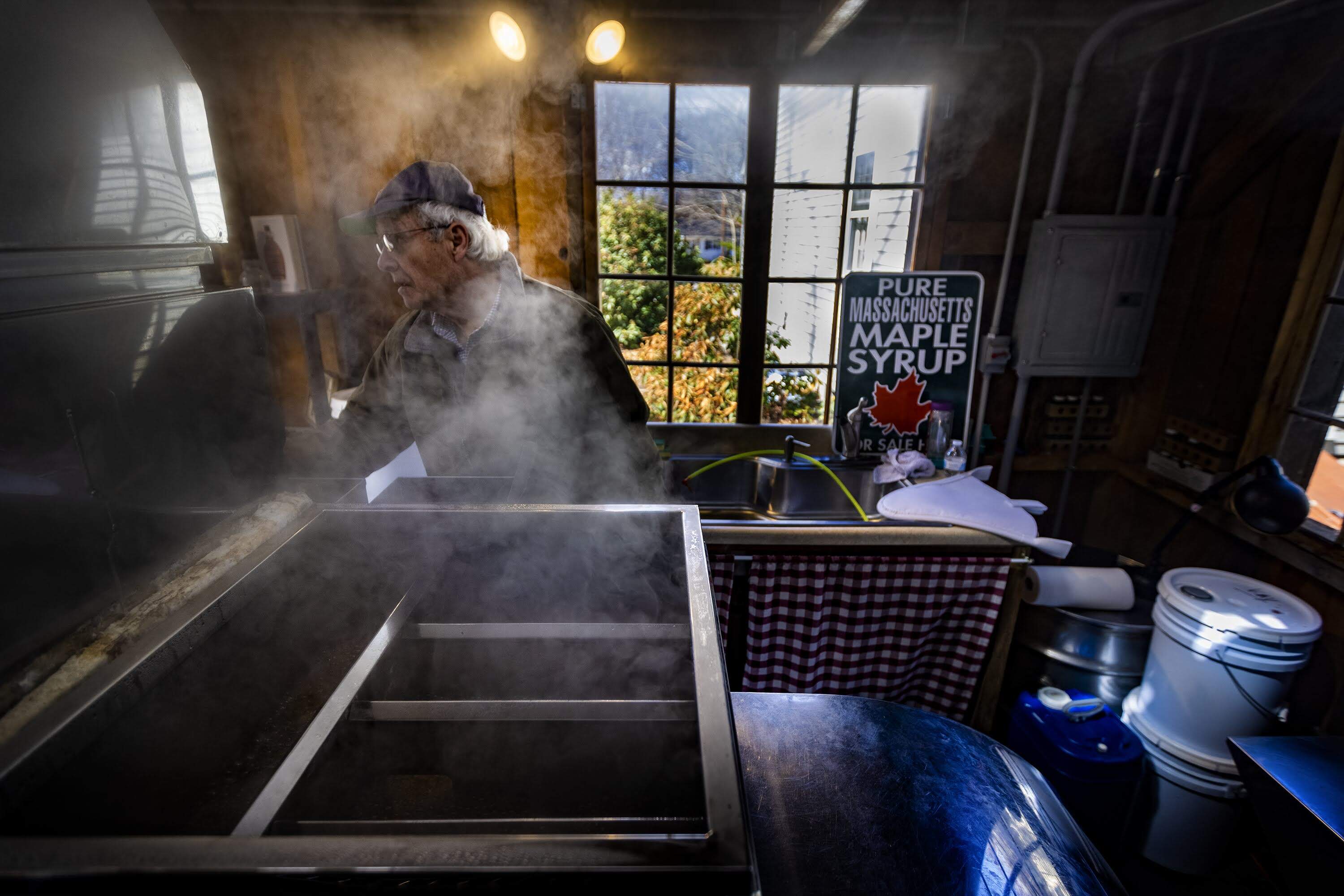
Let it flow: Sticky, sweet sap begins to flow from Massachusetts' maple trees as early as January. But, as Gov. Maura Healey declared, "Maple Month" doesn't occur until March. It's around this time of year local sugarmakers begin to boil down their sap supplies into maple syrup and other goodies. And this Saturday and Sunday, you can catch a sugar rush during the state's "Maple Weekend."
- The deets: You can find a sugarhouse near you that produces maple syrup (or maple candy or maple cream or other treats) using this map from the Massachusetts Maple Producers Association. When you visit, you'll learn how maple syrup is made and can try some freshly made products. (Fun fact: Massachusetts sugarmakers produce more than 50,000 gallons of maple syrup annually.)
- It's all in the weather: Sugarmakers produce maple syrup in March due to the month's up-and-down temperatures. "For the sap to flow in the trees, you want cool nights and warm days," Winton Pitcoff, deputy commissioner of the Massachusetts Department of Agricultural Resources, told WBUR's Amy Sokolow. The freezing cold of January and February was not optimal for sap harvesting. Pitcoff says daytime temperatures around 40 degrees are ideal to thaw out the trees and ground. "That's when the sap starts to run," he added.
- Try this: Maple syrup can be used on more than just pancakes! These five recipes from Here & Now resident chef Kathy Gunst are a good place to start, if you want to make the most out of your maple syrup haul this weekend.
Massachusetts Attorney General Andrea Campbell is asking her boss for something many of us want: A bigger budget. WBUR's Walter Wuthmann reports that she's requesting a nearly 7% increase as her office takes on more cases against the Trump administration. Right now, the state is part of more than a half-dozen federal lawsuits.
- Her case: Campbell is citing her track record so far, having successfully sued the administration over frozen federal funds and the attempted end of birthright citizenship. She also says her office brings in more money than it spends, recouping about $11 for every dollar spent.
- The bigger picture: While Trump claims his administration's efforts are to weed out waste, fraud and abuse, Campbell thinks he's threatening the rights of people in Massachusetts — and that he won't stop anytime soon. "When the president tries to use fear, which seems to be his main instrument of power right now, we will not be afraid. And we must, and I tell my team every day, respond," Campbell said.
No, the sky isn't falling: The MBTA is investigating what caused a ceiling panel to come tumbling down at Cambridge's Harvard Station yesterday morning. (If this sounds familiar, that's because the same thing happened just two years ago — on the same platform.) According to the T, no one was injured, and the collapse did not affect Red Line service, but the panel did show signs of corrosion.
- What this means for commuters: Harvard Station is fully open to Red Line riders, except for the area where the panel fell. T staff worked overnight to remove other panels like it.
Tracking turtles: Researchers from the New England Aquarium are gaining new insight into the lives of loggerhead sea turtles. That's thanks to trackers that were implanted into cold-stunned loggerheads that washed up in local waters.
- Each year, aquarium staff treat and release sea turtles stunned by cold temperatures or suffering from boat strike injuries. Recent data show the vast majority of those turtles responded well to treatment and lived many more years as a result. With the trackers, "we can continue to build the picture of what sea turtles are doing in New England when they're here, where they are exactly," Charles Innis, a veterinarian at the aquarium, told WBUR. He hopes it will help NEAQ advocate for legal protections for the turtles in the future.
P.S. — True or false? Allergy season in Boston has become shorter than it was in the 1970s. Take our Boston News Quiz and test your knowledge of the stories we covered this week.