Support WBUR
Commentary
An art-inspired mystery on the Cape
Editor's Note: This story is an excerpt from WBUR's weekly arts and culture newsletter, The ARTery. If you like what you read and want it in your inbox, sign up here.
It’s not every day that you get to see a “lost” artwork saved from a condemned house.
I had this experience last October. Our team received an email from arts specialist Christine Berland at Eldred’s auction house, who was attempting to save a unique Norman Lewis artwork painted on the chimney of a home in South Dennis. Lewis was a renowned Black artist from Harlem; national interest in his work has been revived in the past decade with the first comprehensive retrospective of his work presented at the Pennsylvania Academy of the Fine Arts in 2015.
I was immediately intrigued by her mission and was onsite as Berlane, welders and a stone mason carefully removed the painted chimney. The abstract work went up for auction last week but remains unsold. It’s a one-of-a-kind piece that needs a one-of-a-kind owner. It is probably the only documented painting that Lewis did on an unconventional surface.
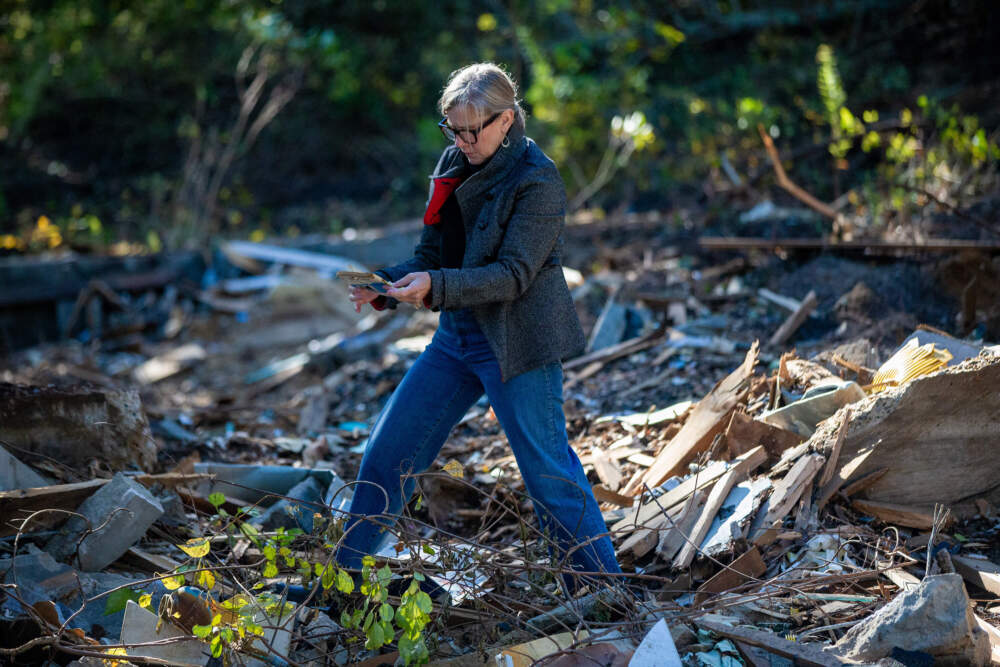
But there’s so much more to the story than the painting being saved. On that first visit to the house demolition site, I stood among the rubble, watching the wind ruffle the pages of old documents and books belonging to the former home owners, Marguerite and Hampton Gill. I wondered who this fascinating couple was. Berlane had those same thoughts.
“Take these,” she told me, handing over a bag filled with materials. Inside were old photos, letters, passport applications and more — all belonging to the Gills. “I saved these things from the house.” Berlane was captivated by the Gills and their unknown story. She hoped I could use my reporting instincts to find out more — there was absolutely nothing online about them.
Over the next few months, I investigated the Gills using information gleaned from those documents. I was able to find out their birthdays and death dates, their siblings’ names, and learn more about their primary home in a Harlem brownstone and their lives there. Marguerite attended Columbia University and Hampton went to New York University’s School of Law. Marguerite was involved in community work and Hampton represented tenant rights groups in the fight against rising rent and displacement in Harlem. A lover of art, Marguerite was friends with both Norman Lewis and Romare Bearden. She even donated two other Lewis paintings to the Studio Museum in Harlem. The Gills were cultured, well-educated and well-connected.
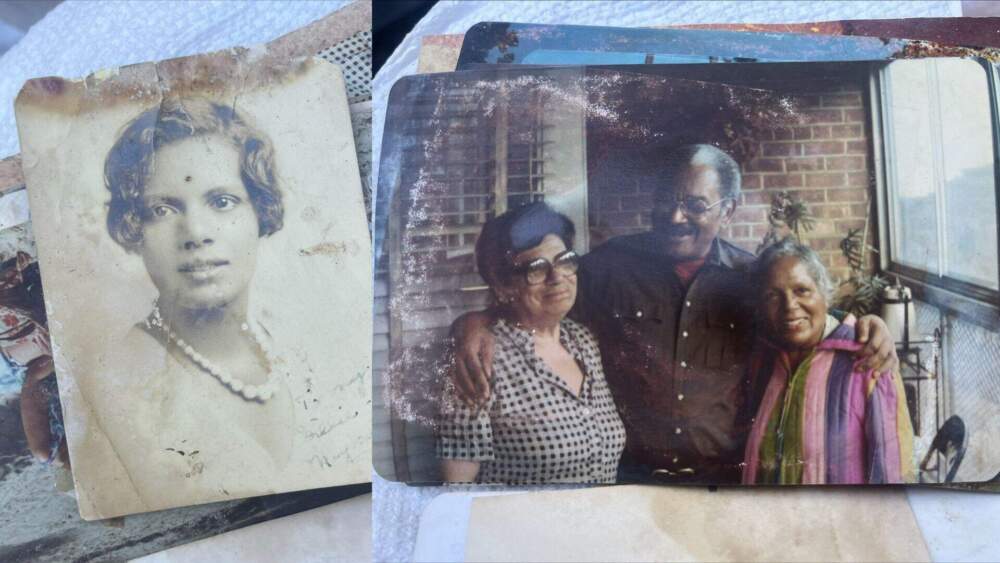
The big question is what happened to them? Why did their South Dennis house become condemned? And what happened to their home in Harlem? After Hampton died in 1983 and Marguerite in 1995, their properties in the Hamptons and South Dennis went to relatives, some of whom lived across the country. What happened to the Harlem brownstone remains a point of intrigue and tension.
I’ll be spending many more months continuing my investigation into answering these questions and looking into the possibility of a historic Black community in South Dennis.
Hopefully, I’m able to find some answers.