Support WBUR
She founded a Boston day shelter for women, then became a doctor. Decades later, she's back to help
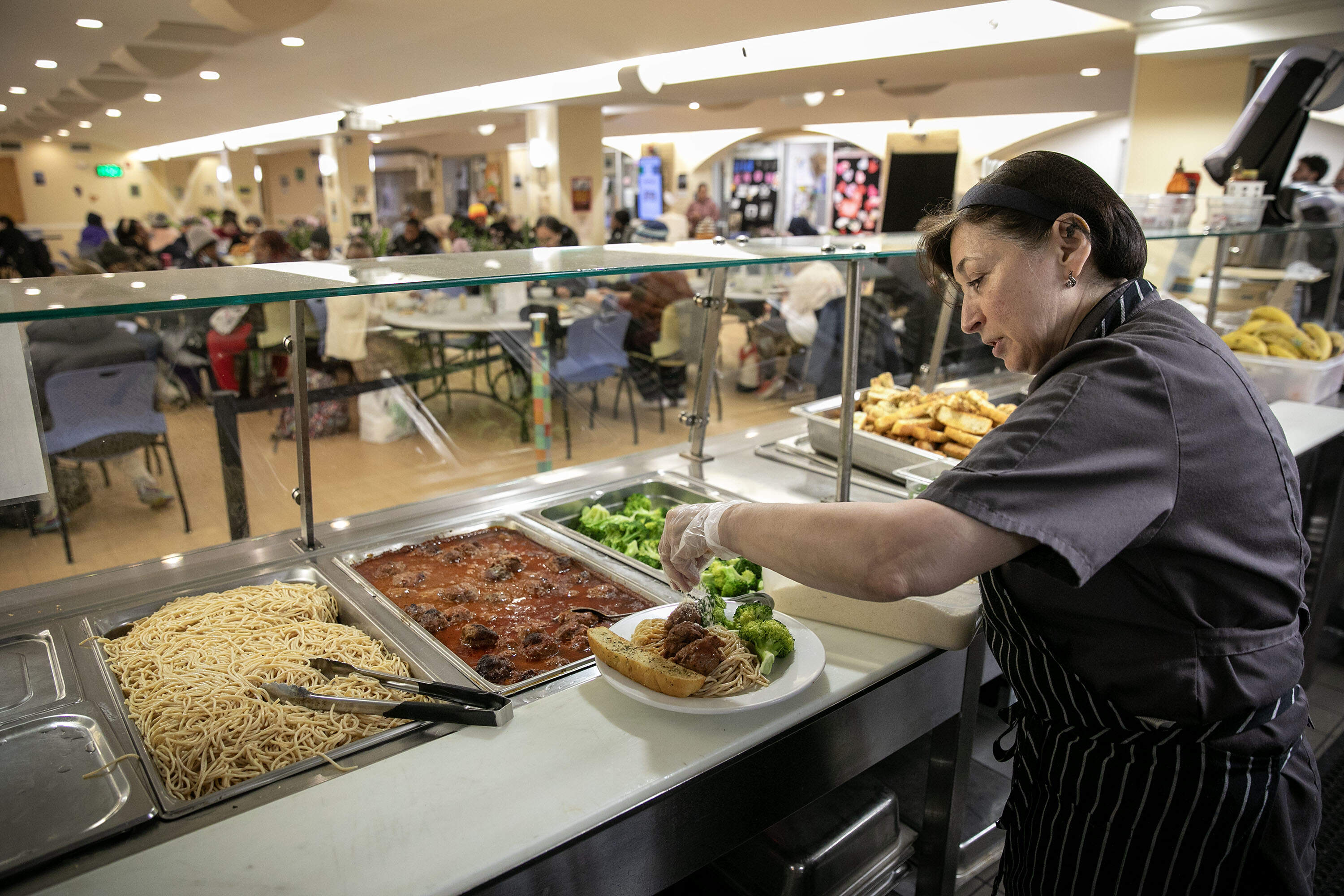
Every day, the basement of Church of the Covenant on Boston's Newbury Street comes alive, as it fills with women facing homelessness or housing insecurity.
It's a day shelter called Women's Lunch Place. On a recent weekday, the chatter of women and clanking of silverware filled the air, along with pop music. Several volunteers chopped vegetables and stirred big tins of food. Others carried hot meals directly to the guests, restaurant style, at tables decorated with fresh flowers. On the menu for lunch: chicken noodle soup, meatballs, whole wheat pasta, steamed broccoli and carrot cake.
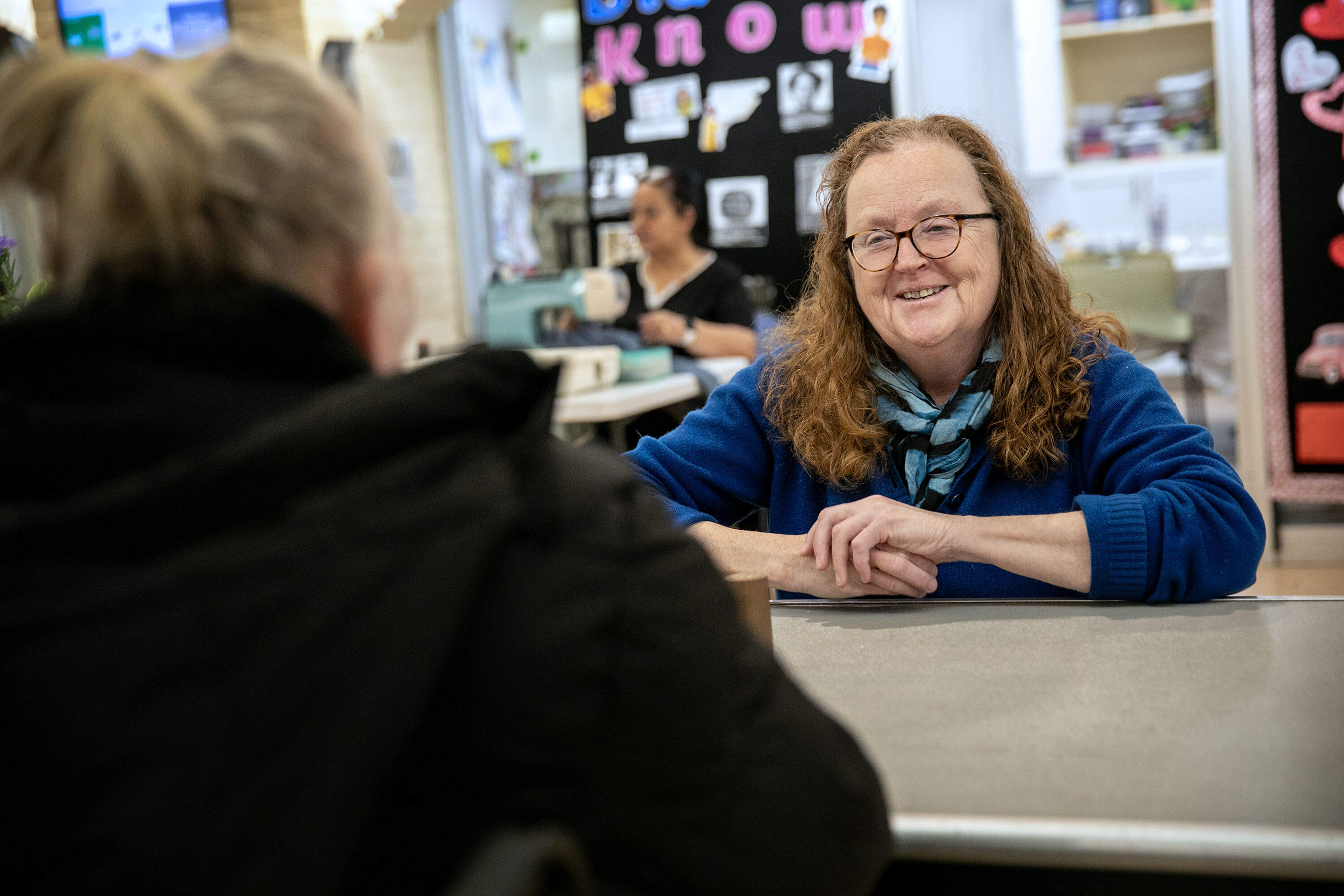
An unassuming woman with the air of a librarian scanned the crowd to find a place to sit. She grabbed a chair across from day shelter guest Erica Harris and introduced herself as Eileen.
"I'm trying to get to know the women who are here, just so I can be a familiar face," she said. She then turned to Harris and asked her how she was doing.
What she didn't say right away is that she's Dr. Eileen Reilly. She's a psychiatrist who's worked for decades with people who are unhoused in Boston.
Nor did she say she's one of two women who started this day shelter more than 40 years ago. It's not something she typically mentions to the women who come here.
Harris told Reilly she was stressed about losing her housing again after years of homelessness. She said she was having a conflict with her landlord over a rent increase she couldn't afford, so she was going to have to move.
Reilly listened and offered words of comfort.
A spirit of love
Reilly was 26 when she co-founded Women's Lunch Place.
"I'm always amazed that the spirit is the same spirit we had in 1982," she said. "The sense that Women's Lunch Place is all about hospitality, about kindness, and I think even about love."
When she decided to open the day shelter, she was working part-time in a medical clinic at Boston's Pine Street Inn homeless shelter. The shelter was crowded, and it closed during the day except for appointments.
"Sometimes I'd see women who had mental illness stand across the street the whole day, waiting for the building to reopen, talking to their voices," she said.
There were so many women on the streets, Reilly and a colleague from Pine Street, Jane Alexander, decided to create a place for women to go during the day.
Their sisters and friends donated time and money to help. Reilly and Alexander asked several churches if they could use a basement. Church of the Covenant said yes.
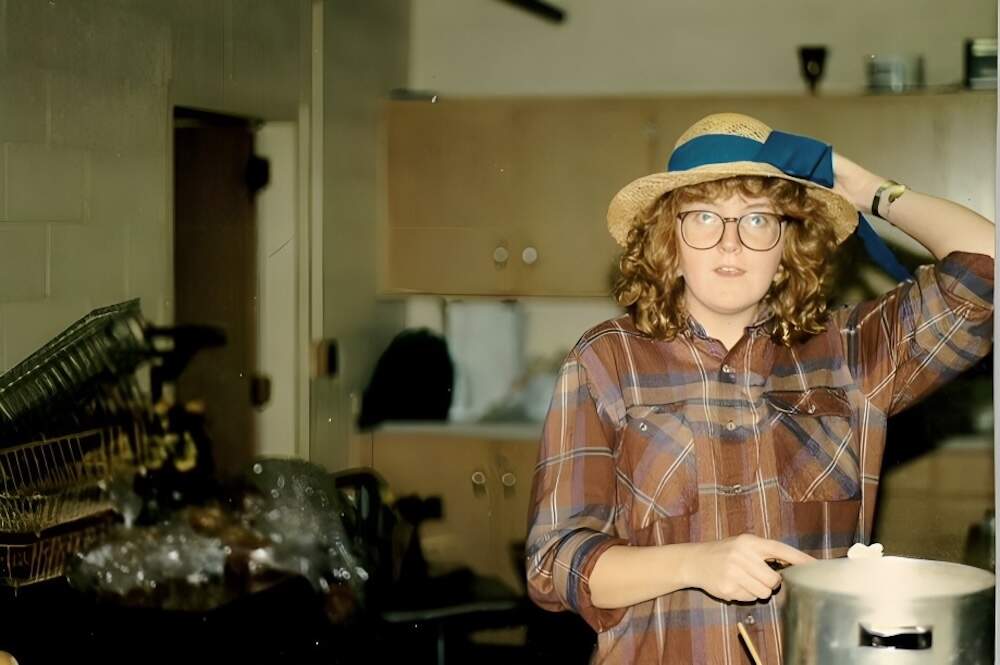
Reilly said she and Alexander wanted the space and the experience of their guests to be dignified. So there would be no paper plates — only real dishes, silverware and tablecloths.
" One of my other friends gave us her grandmother's china so that we could serve coffee in the cups," Reilly said.
They hung up signs around Copley Square to advertise the opening.
"We were really worried that no one would show up," she said. "We decided to have chili for the first lunch. And eight women came, and we were just so thrilled."
Word got out that the food was excellent. Over the next few years, demand was so high, the day shelter went from serving lunch a few days a week to serving breakfast and lunch five days.
In 1986, Reilly left the organization to go to medical school. She later decided to specialize in psychiatry because she wanted to help people heal from their psychological wounds.
"I think that's a gift that I was lucky enough to have," Reilly said. "I feel pretty humble about it. But I feel that I want to just help people not to have to suffer and to make them have peace."
Women's Lunch Place has continued to grow. It offers housing and job placement assistance, art and music programs, and shower and laundry facilities.
Full circle
In the last few years, shelter leaders noticed more women come in with serious mental illness and trauma. They decided to offer full-time mental health care, with a clinical social worker and psychiatric nurse practitioner on staff. And there was one more person they wanted to have on their team: Dr. Eileen Reilly.
"When I'm with Eileen, my heart rate goes down. Like, she just has that incredible calming presence," said CEO Jennifer Hanlon Wigon.
Reilly returned to the day shelter as a psychiatrist in the summer of 2023.
Hanlon Wigon said she's amazed by what Reilly and her co-founder accomplished when they were 20-somethings. And she's grateful Reilly came full circle.
"I think clearly it's part of her constitution to care for those who are vulnerable and often on the edges of our society," Hanlon Wigon said. "I'm just so impressed that she sort of absorbed what she did here and knew that she could do more."
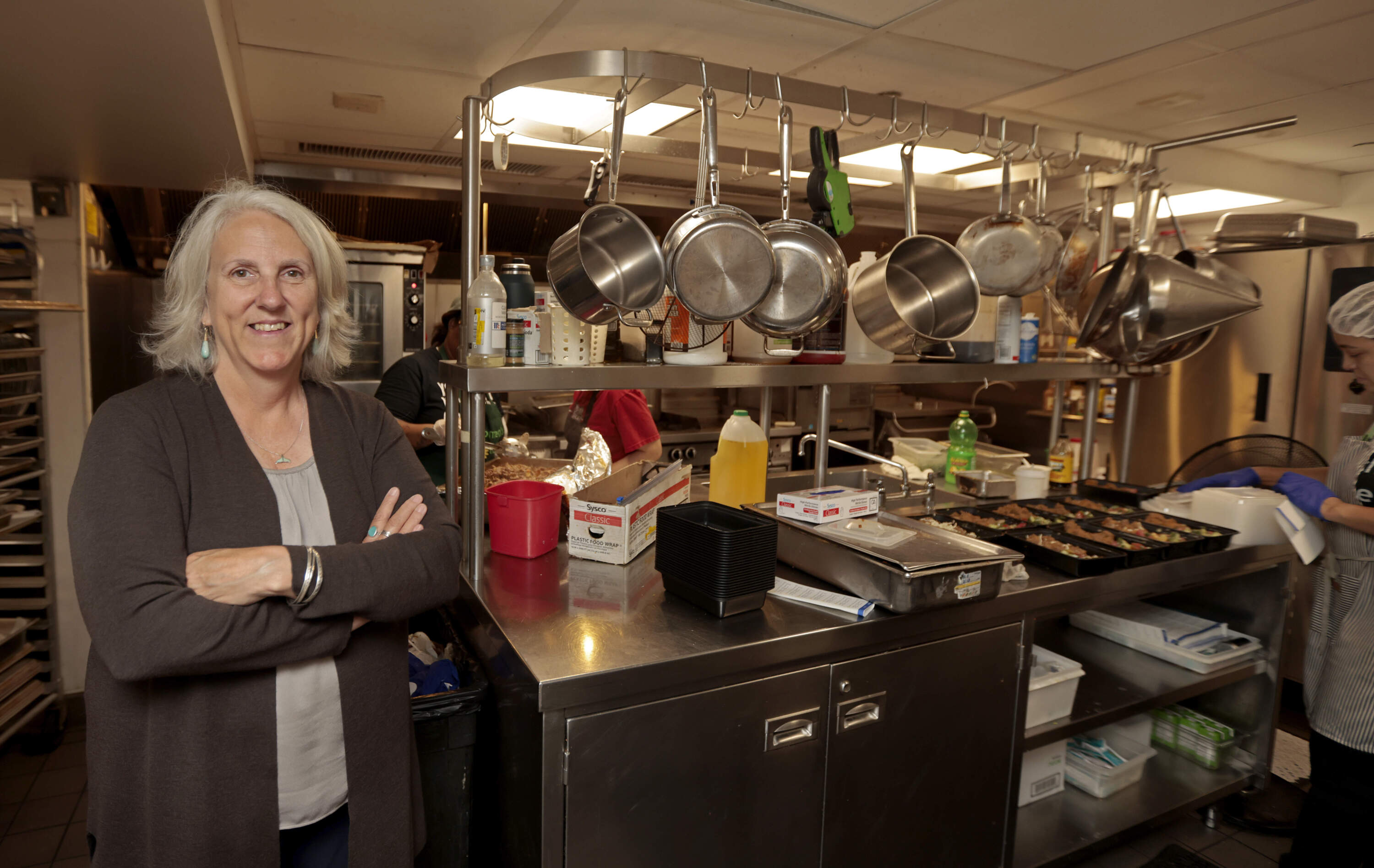
Reilly works at the day shelter as an employee of the state Department of Mental Health. She also cares for the unhoused population at a state-run clinic and with a street outreach team from Boston Health Care for the Homeless Program.
In her shifts at Women’s Lunch Place, she sees a handful of patients pretty regularly. She helps the center’s therapist navigate tough cases, including when a woman needs psychiatric medication and hospitalization, or when the clinicians want to help a client avoid ending up in the hospital.
The therapist, Lianne O'Reilly, said the veteran psychiatrist is a valuable resource.
"I love to talk, get her opinion on cases, kind of get her perspective, since she just knows our population so well and she really just sees them with the most strengths and the most empathy," O'Reilly said. "And I think that can be missing sometimes with more traditional forms of psychiatry."
For shelter guests including Harris, the mental health support from Reilly and the rest of the shelter’s team is welcome.
" I feel happy about it, because I need all the help that I can get," she said.
And for Reilly, happiness comes from getting to truly engage with the unhoused people she encounters. Sometimes she invites a person staying on the streets to talk over coffee or a meal at a restaurant — a different approach than most clinicians.
"I don't have to worry about, 'oh, you know, I'm doing something that's not billable' [to insurance]," she said. "So I'm really, really fortunate. I feel that I have the best psychiatry job in Boston, because I really have time to spend with people."
Early in her career, Reilly said, she believed she wouldn't be doing the same work even 20 years later because homelessness would no longer exist. Now, she said, it's tough to realize that some of the women she cares for will likely spend the rest of their lives on the streets. But her reward comes in the patients she helps get healthier, some of whom get off the streets and into permanent housing.
This segment aired on April 16, 2025.