Support WBUR
Harvard's lawsuit against the Trump administration paints stark picture of funding freeze
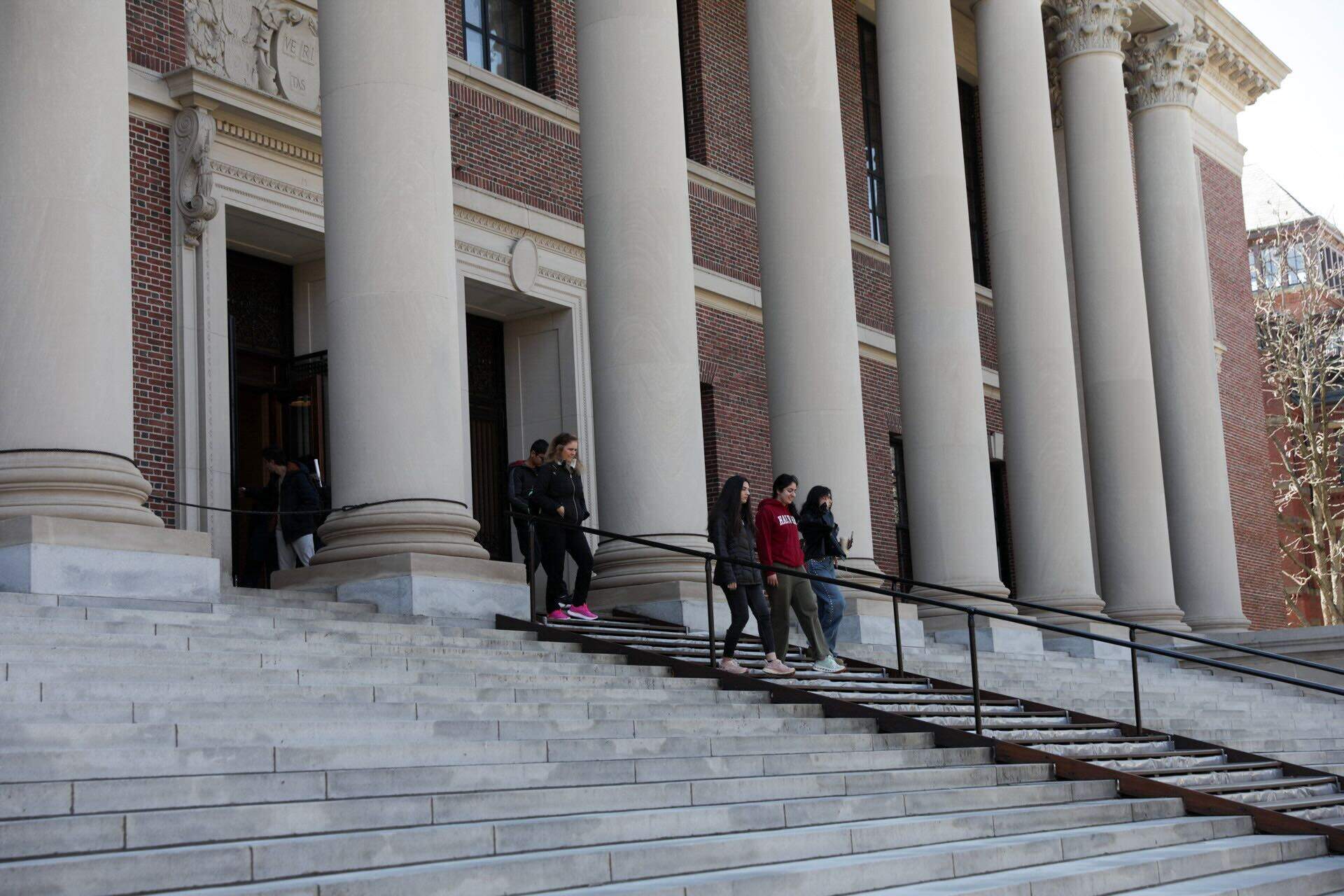
Harvard's lawsuit against the Trump administration Monday marked the latest turn in an escalating battle between the world's wealthiest university and the federal government.
The school is suing to block the government from withholding more than $2 billion in federal funding by arguing the freeze is part of an unlawful effort to "coerce and control Harvard" and dictate its academic direction, according to court filings.
Harvard's lawsuit argues the administration's funding freeze violates its First Amendment right to exercise academic independence. It also alleges the government failed to follow administrative procedures when it revoked funding under Title VI, the law which prohibits discrimination by institutions that receive federal funds.
The 50-page complaint provides a stark picture of the expected impacts of the slashed funding as a threat of additional cuts looms.
“Harvard anticipates further freezes, payment delays, and possibly even terminations as a result of the Freeze order,” the suit said.
The Trump administration warned last month that it was reviewing nearly $9 billion in federal funds to Harvard over the university's alleged failure to handle antisemitism on campus. It listed broad demands to keep the funds, like revising student disciplinary measures and eliminating diversity, equity and inclusion programs.
The government followed up with a list of more specific demands on April 11, including audits of hiring and admissions practices and oversight of specific departments. Harvard's president announced April 14 that the school would not comply. The government responded hours later by immediately halting $2.2 billion in grants and $60 million in contracts.
Stop-work orders issued since the funding freeze have so far affected a tuberculosis study, research into ALS and drug development to counter effects of radiation in the event of a nuclear disaster.
Monday's complaint expanded on the anticipated effects of future funding cuts. If the school were to replace federal funds with its own dollars, officials project decreased admission offers to graduate students and downsized faculty and research staff.
“Without the federal funding at issue, Harvard would need to operate at a significantly reduced level," the suit states.
On WBUR's Morning Edition Tuesday, Harvard Law School professor Nikolas Bowie said the school is already feeling some of these effects.
“Harvard is engaged in a hiring freeze. People are losing their jobs. Important research that would continue has been suspended,” he said.
He added that when long-term funding is yanked, “it changes the nature of research.”
”It's not as though scientific or medical research can take place in a week or over a month. It's the kind of thing that people have to plan for,” he said. “What the Trump administration has done is really just disrupted all of that planning.”
The lawsuit highlighted specific research areas supported by federal funding, including research into cancer, infectious diseases, neurological conditions and biotechnology.
The suit says that the school currently cannot determine "whether to end employment of anyone whose salary was supported by the frozen funding" and is unsure whether to "expend funds to continue to retain such items as cell cultures and other living and perishable materials used in research.”
The Wall Street Journal reported over the weekend that the Trump administration was planning to withhold an additional $1 billion in funding for health research at Harvard.
Already, cost-saving measures are being considered at Harvard's T.H. Chan School of Public Health, where 46% of its budget comes from federal funds to support research and reimburse facilities costs.
At a town hall meeting last week, the school discussed eliminating desktop phones, a shuttle bus service, non-peak security coverage, special programming for high schoolers, as well as vacating office space and offering more online degrees, according to slides shared with WBUR.
The lawsuit states the university will eventually "be forced to either reduce or halt ongoing research projects mid-stream and terminate employment contracts with researchers, staff, and administrators, or to make other cuts to departments or programs."
The case has been assigned to U.S. District Judge Allison D. Burroughs, an Obama appointee who ruled in Harvard's favor in 2019 when the school was sued by the group Students for Fair Admissions over its race-conscious admissions policy.
She is overseeing a separate but related case brought by the Harvard chapter of faculty group American Association of University Professors, over the administration's funding cut threats and its implications on free speech.
Lawyers in the Harvard lawsuit are seeking an expedited resolution of the case. As far as the timeframe, it "could be as short as a couple of months to as long as a year,” Bowie said on WBUR’s Morning Edition. “It depends on what the Trump administration does in response as well as how quickly the court acts.”
With reporting from WBUR’s Martha Bebinger.