Support WBUR
What students, teachers and parents think about banning phones in Mass. schools
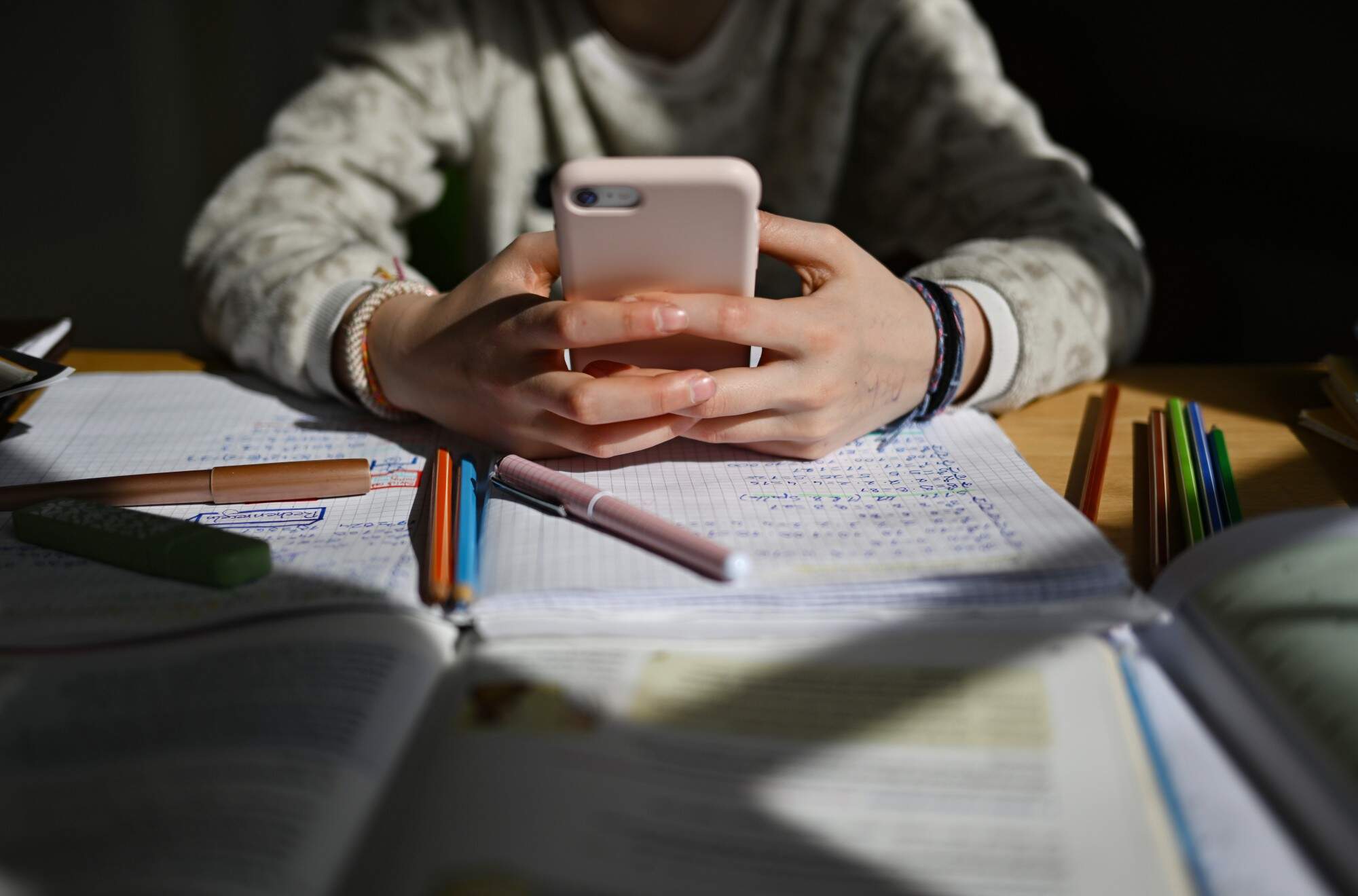
Getting a phone is a rite of passage for most modern American kids. It's finally a chance to stay connected with friends and tool around on the internet while at home — and often even in school.
How much these devices consume our attention, and particularly how they impact children's developing brains and social skills, has deeply troubled some health and education experts, parents and students.
Some schools and districts in Massachusetts have recently adopted personal phone bans, and now lawmakers are considering whether to pass statewide rules to clamp down on phone use in public schools.
The Joint Committee on Education is reviewing several proposals that would limit or ban personal phone usage in schools, including the so-called "STUDY Act." Attorney General Andrea Campbell has thrown her support behind the legislation, which would create a "bell-to-bell" statewide ban.
We talked to local students, parents and teachers to hear what they think about student access to phones, and possible restrictions, in schools.
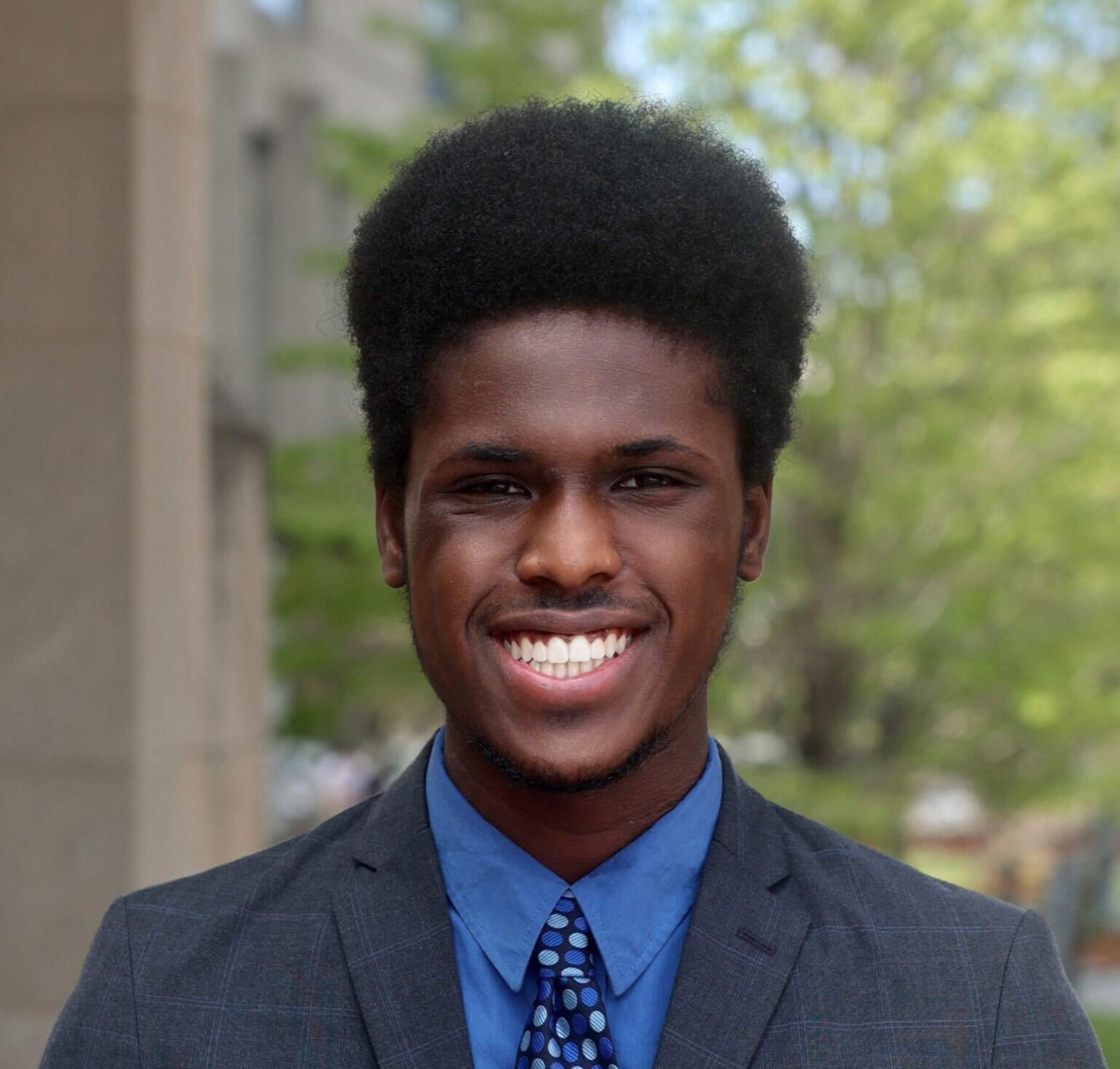
Nadsen Chavannes
High school student, Brockton
Brockton High School began to require students to lock away their phones in special pouches for the entire school day last September.
The district was facing scrutiny after student fights — and phone recordings of them posted online — captured community attention. The ban was one of several sweeping measures the district hoped would help restore safety and order.
For senior Nadsen Chavannes, the new protocol did create a more respectful school environment.
“It’s allowing a community to finally be built, around not just a phone or what’s happening on social media," he said, "but also with ourselves and how we communicate with others."
Every morning, students put their phones in individual Yondr pouches, which are bags with magnetic locks that keep electronic devices secure. They get to use them again at dismissal time.
Chavannes said he realized his phone usage was excessive when he took AP classes as a junior and started to prepare for work after high school. Balancing intense academics alongside home and social obligations made him think harder about how he wants to spend his time. He credits Brockton’s policy for giving him a push away from wasting hours on social media apps.
“When people say they want to detox from the phone or want to detox from electronics, it’s really hard to do it yourself,” Chavannes said. “With the Yondr pouches and having it out of your hands for a little while … after school, it feels more refreshing to go on your phone rather than it being aimless.”
Jesse Walsh
Parent and teacher, Medford
Jesse Walsh said banning phones at school is long overdue. A Medford teacher and parent of six, Walsh described phones as ever-present distractions in classrooms that undercut learning and trust.
“Let’s do it. Let’s make it stop,” Walsh said. “For the sake of children, give them a break from their phone while they're at school.”
He said it's not just academics that suffer because of phones' presence in classrooms. Students have recorded each other or teachers without consent and posted out-of-context clips to anonymous social media accounts.
“It’s incredibly dangerous,” Walsh said. “It corrodes trust between teachers and students.”
Walsh said since the COVID-19 pandemic, teaching has become increasingly dependent on technology. While the tech can provide additional resources and instant feedback, he said it also keeps distractions just a few taps away.
In the absence of a strict policy across Medford schools, Walsh said teachers create their own classroom rules around acceptable phone use. But he said enforcement is difficult without broader support from administrators.
“If I say, ‘Don’t use your phone in class,’ and they pull it out anyway, what are my options?” Walsh said. “I don’t want to confiscate it. I don’t want to be responsible for it. It’s just another layer of stress.”
Casey Brown
Parent, Boston
Jamaica Plain parent Casey Brown wants schools to teach teens about responsible phone usage and not “take the easy way out” by banning them outright.
Their 15-year-old daughter attends Boston Public Schools. While Brown said they understand the impulse to restrict phones during the school day, they think it’d be better to teach high schoolers when it is appropriate to use personal devices.
“Part of prepping these kids to go to college and be successful is teaching them digital literacy, teaching them responsibility, teaching them respect,” Brown said.
They shared a story about how their daughter asked if it would be rude to read her Kindle while getting her hair cut at a salon. It gave Brown the opportunity to talk it through with their daughter, and have her consider what it would be like if the situation were reversed.
“That stuff is so critical to our kids' success, to be respectful adults, to really be able to talk through all that stuff instead of just this blanket, ‘No.’ That doesn't teach anybody anything.”
“ I think part of prepping these kids to go to college and be successful is teaching them digital literacy, teaching them responsibility, teaching them respect.”
Casey Brown, parent
Also, Brown said blanket bans can be counterproductive. At one of the schools their daughter attended, they used lock pouches for phones during class. Brown said the policy ate up valuable teaching time.
“This was just, you know, a year after COVID lockdown … the main conversation we were having about school was catching up,” Brown said. “Meanwhile, my daughter’s coming home … talking about how much time they’re spending just taking their phones away and then giving them back.”
Brown added that phones are also essential tools for social connection and safety. At their daughter’s current school, they said communication between students is nearly impossible given the short breaks between classes.
“How on earth are you going to [coordinate with friends] with three minutes between classes and 20 minutes for lunch?” they said. “We know for sure that kids connecting with other kids is absolutely integral to their well-being … and so much of that, as I watch my kid, is happening on her phone.”
The safety aspect, Brown said, is non-negotiable. They recalled a situation last year, when their daughter’s school went into lockdown after a report of a possible weapon. The school didn’t contact parents; Brown found out on X, the social media platform formerly known as Twitter, and drove there.
“I was texting with my kid, making sure she was OK, reminding her to follow the teacher’s instructions,” Brown said. “If she didn’t have that phone, I would’ve lost my mind.
"That connection matters, especially in crisis. We can’t just cut it off.”
Harriette Sullivan
Teacher, Wareham
As a middle school teacher, Harriette Sullivan said she has seen firsthand how disruptive phones can be in her Wareham classroom.
“If it were up to me, phones wouldn’t even enter the building,” Sullivan said.
Constantly negotiating boundaries around technology is just one more responsibility for teachers to add to their plate, she said.
“I think teachers get a little burnt out," she said. Plus, correcting students interrupts lessons — and it's hard enough to hold their attention.
"They're just so used to technology. I would say the attention spans are shorter," she said. "They have a hard time even listening to 10 minutes of a book sometimes."
Still, she acknowledged phones can have a place when used responsibly, such as for research or during emergencies. But those situations, she said, are rare.
“If it were up to me, phones wouldn’t even enter the building.”
Harriette Sullivan, teacher
Sullivan said that since digital tools are so readily available teachers sometimes forget students might appreciate a break from their screens.
“I forget to even offer it,” Sullivan said about an online lesson she offered by default. “A couple kids said, ‘Could we make a poster instead?’ ”
Tommy Frohlichstein
Student, Wakefield
When Tommy Frohlichstein was a freshman in high school, he and his peers at Wakefield High were frightened by an online hoax about a school shooter.
Frohlichstein, now a 22-year-old senior at Boston College, said while no one was harmed, the false alarm showed why students need their phones within reach.
“We’re very blessed in that we’re one of the safest states in terms of gun violence, but it’s not impossible that it could happen,” he said.
Frohlichstein acknowledged distractions are an issue among students and that, in his opinion, youth generally spend too much time on social media. He said keeping phones physically away from students in class is fine, but locking them up goes too far.
“It takes away some sort of responsibility learning that students can have. … It’s up to you as a student to show that you can be trusted,” he said. “Cause it’s the same when you get to college, I mean, professors don’t usually call out people for being on their phones.”
Caroline Krehbiel
Parent and psychologist, Framingham
Caroline Krehbiel, a psychologist who works closely with children and teens, also stressed the importance of teaching digital literacy, but said the school day offers an opportunity to set limits.
“I see a lot of interference and distraction from cellphones,” Krehbiel said. “And so the idea of using the school day as a structured way to set some limits on that seems like a worthwhile thing to do.”
Krehbiel regularly speaks with teens about phone use and its impact on their mental health.
"I'm transparent with my teenage patients," she said, "[we] will talk about ways to limit cellphone use and why it's important for sleep, for connecting in person with the people around you, for your attention and how you focus on important parts of your day."
Many of them, she said, struggle with focus, sleep and emotional well-being due to constant connectivity.
“Even for me, there are moments where it's so all-consuming.” Krehbiel said. “There's almost no part of their daily lived experience, I think, where they aren't connected to that phone.”
While Krehbiel doesn’t advocate for one-size-fits-all policy in schools, she strongly supports establishing clear boundaries.
“I would like for there to be a standard that sets this basic, sort of community expectation about how cellphones show up in schools,” she said.
She likens it to traffic rules — not perfectly followed, but widely accepted.
“We have rules for speed limits on the highway,” Krehbiel said. It’s not perfect, but “everybody on the highway is basically agreeing to some boundaries to what’s acceptable and what's not.”
Paulina Mendes Javier
Student, Boston
Paulina Mendes Javier, a senior at Boston Latin Academy, said she's seen students drop fake or broken phones into Yondr lock pouches — instead of their real devices. She said she understands why.
“The key sense of something that’s yours being taken away from you without your clear consent," she said. "I feel like that would upset anyone."
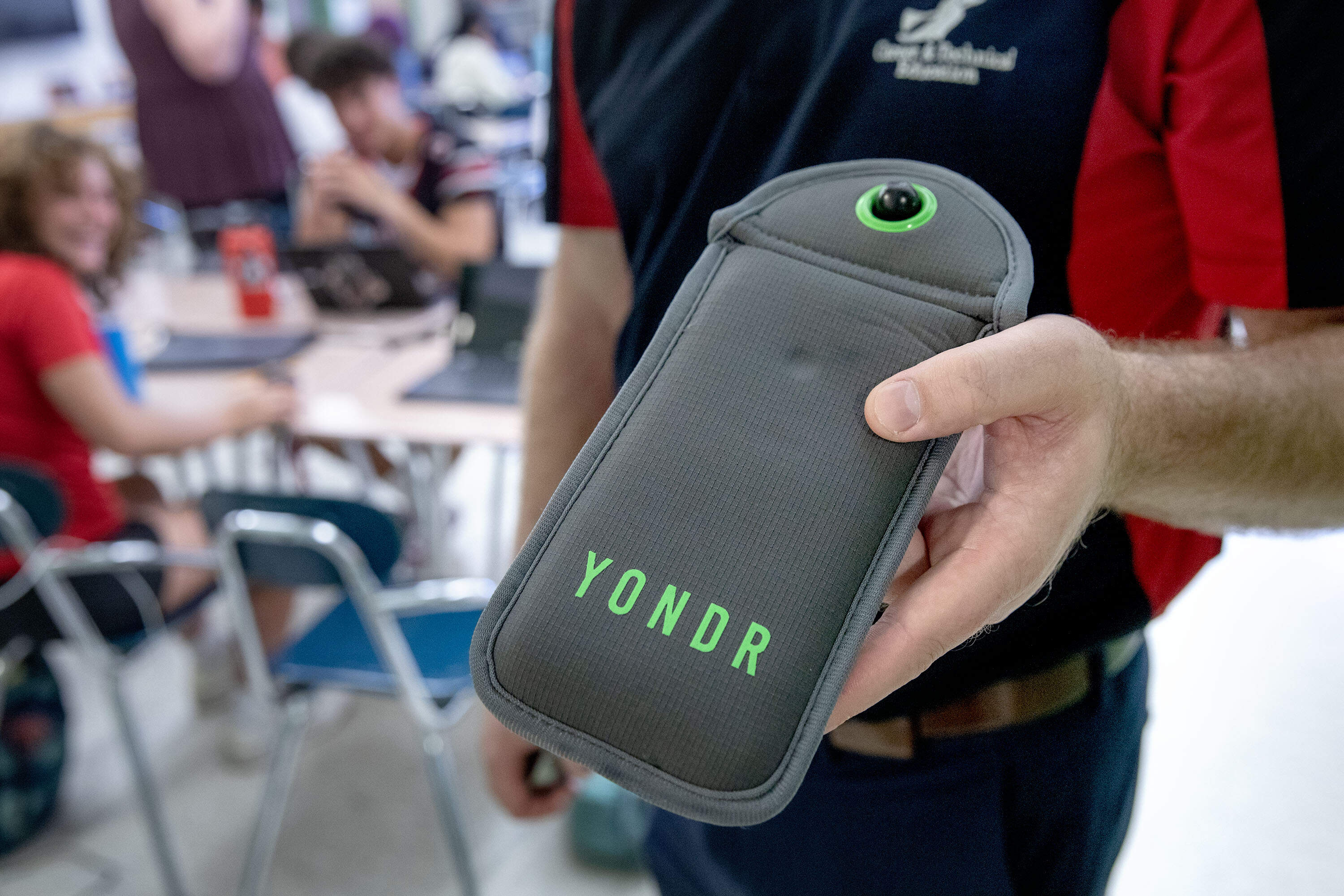
She's a member of the Boston Student Advisory Council, which issued a petition to abolish the use of Yondr pouches. It gained over 1,200 signatures.
Boston Public Schools requires phones remain hidden during school hours. Many district schools use Yondr pouches to lock up phones.
Students wrote in the petition that the current policy is inconsistently applied, unnecessarily disruptive, an invasion of privacy and a waste of funds.
“The key sense of something that’s yours being taken away from you without your clear consent, I feel like that would upset anyone.”
Paulina Mendes Javier, student
Mendes Javier said the council made the petition to increase awareness of the student perspective and underscore problems with the policy.
“Even despite certain schools having their own rules and regulations, others wouldn’t abide by that,” she said, adding that "teachers and administrations are making these decisions without student input."
The student council's leaders presented a phone policy proposal to school leaders across Boston at a town hall in February. It recommended allowing students to keep their phones on them while prohibiting use during classes.
The students advocated for a three-strike enforcement system that could empower teachers to take away a phone for the school day. This kind of system, they stressed, would preserve students' agency.