Support WBUR
'Splitsville' filmmakers on their new movie and making dumb comedies
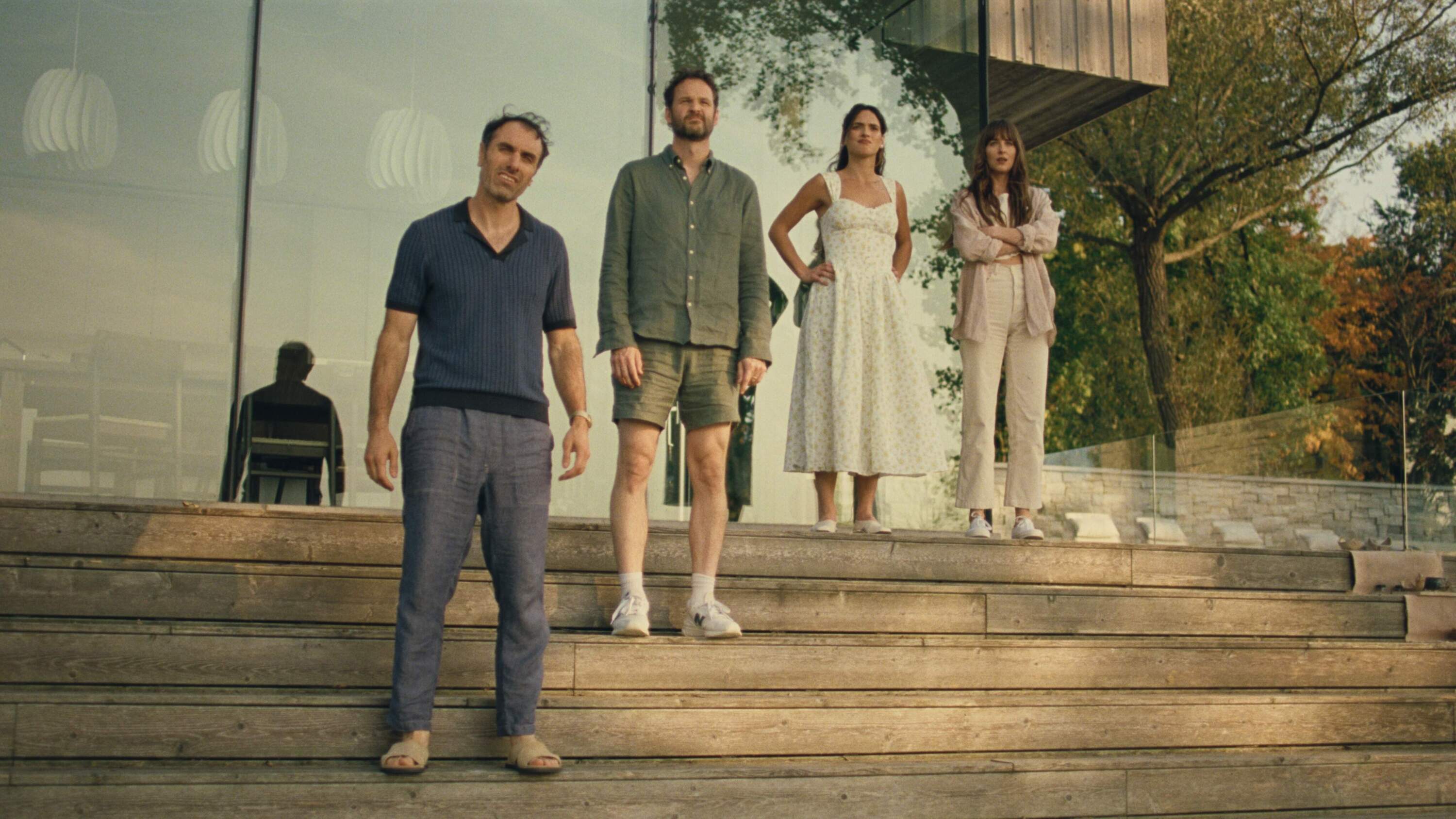
There’s a shot I’m obsessed with near the end of John Huston’s “The Misfits,” where Marilyn Monroe is waving her arms and screaming in impotent rage at the film’s tragic denouement. Huston shoots her from a vast distance, shrinking the larger-than-life screen icon into a tiny, flailing figure dwarfed by the desolate landscape. It’s one of the saddest things I’ve ever seen in a movie. This same trick is used to sneaky, hilarious ends by director Michael Angelo Covino and his co-star and writing partner Kyle Marvin in their new movie “Splitsville,” a comedy of male insecurity that features no shortage of fulminating resentment. Yet the angrier these characters get, the further away the camera moves, diminishing their aggression into sublimely silly sight gags.
“I think it’s an instinctual thing,” Covino explained. “There’s something about when emotions get heightened, moving to a more objective perspective can allow us to see that in its totality, and it can be mined for comedy. You have this opportunity to juxtapose a wide shot that allows you to take in the absurdity and laugh at what someone’s going through.”
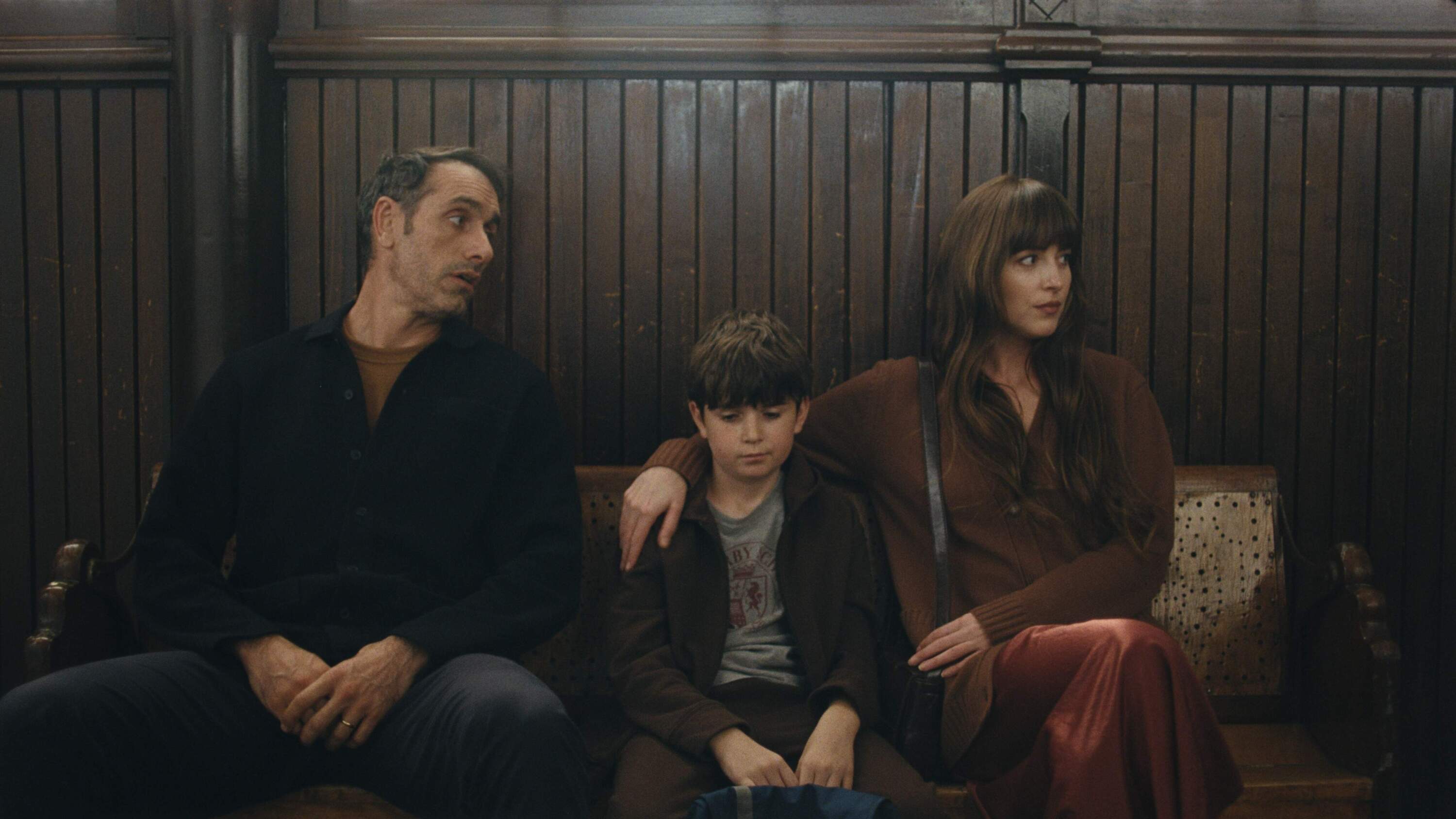
I spoke with Covino and Marvin in the Coolidge Corner Theatre’s new library conference room while downstairs, a sold-out audience was roaring at an advance screening of “Splitsville.” You could hear them out in the hall. In the film, the co-writers play lifelong pals whose friendship is rocked by the revelation that Covino’s character — a slick New York real estate operator — and his dreamy, pottery instructor wife (a perfectly cast Dakota Johnson) are in an open marriage. When the heartbroken gym teacher played by Marvin starts crashing at the couple’s lavish Hamptons home after his own wife (Adria Ajorna) asks him for a divorce, what follows is a wild bedroom farce of miscommunications, passive aggression and people adamantly insisting that they’re cool with things they’re obviously not cool with. It’s the funniest movie I’ve seen all year.
I watched a screener of “Splitsville” in my apartment and scream-laughed so loud at one shot during the opening scene that I’m afraid I alarmed the neighbors. Sitting through the first half of the film again with the Coolidge crowd, I realized that the audience was missing some of my favorite lines because the waves of laughter from previous gags hadn’t subsided yet.
“We paced it in a way where you can’t possibly keep up with the lines,” Covino admitted. “There’s just no way. My mom just saw it for a second time and thought it was a whole different movie. There were like fifty things she’d thought we’d added. Most of the stupid little jokes get breezed over.”
The density was part of a deliberate strategy, according to Marvin. “We really tried to be entertaining in this one in a way that was like, ‘we’ve got to put it all in there.’” The duo’s dazzlingly designed, shockingly funny debut film “The Climb” played to raves at the 2019 Cannes Film Festival. Unfortunately, it was scheduled to open in March of 2020, and we all know what happened then. The botched eventual release found some die-hard fans like this critic, but for all intents and purposes, it’s a lost movie. This added to the urgency of their follow-up.
“We wanted to blow the doors off from an entertainment standpoint,” Covino said. Part of doing that was their full-body commitment to an epic, early-movie fistfight that escalates into an instant classic of slapstick ultraviolence. A confession of infidelity sends the two friends flinging their gangly, uncoordinated bodies at each other with such goofy ferocity they basically destroy that beautiful Hamptons house. What’s amazing is not just the visual wit with which the fisticuffs are choreographed, but that it’s photographed and cut close enough so we can always see it’s really Marvin and Covino doing the stunts and taking the hits. Eat your heart out, Tom Cruise.
“We shot it in a way that isn’t how we experience action movies today,” Covino explained. “You know that jittery camera that moves with every punch? It’s very visceral and there’s a lot of energy to it, but I become desensitized as an audience member. I know it’s stuntmen. I know I’m not watching anything real. So I thought, what if we don’t move the camera for most of it? Then we’ll actually have to do it. Kyle and I will have to train for weeks in advance. He’ll actually have to fall through a table. I’ll have to fall down stairs. Over and over and over.”
The intricate preparations for shooting the fight have already been the subject of an in-depth Vulture piece. But what’s funnier is how the guys got into shape for it. According to Marvin, while doing preproduction in Montreal, the two got memberships at a rock climbing gym, because the floors are covered with big mats you can fall on. “Then we just hung out in the back away from people and practiced flipping each other,” laughed Covino. “Nobody knew what we were doing. They thought that we were amateur wrestlers. Everyone spoke French and they were like, ‘Americans are crazy. They’ve never rented rock climbing shoes and they don’t use any of the chalk.’”
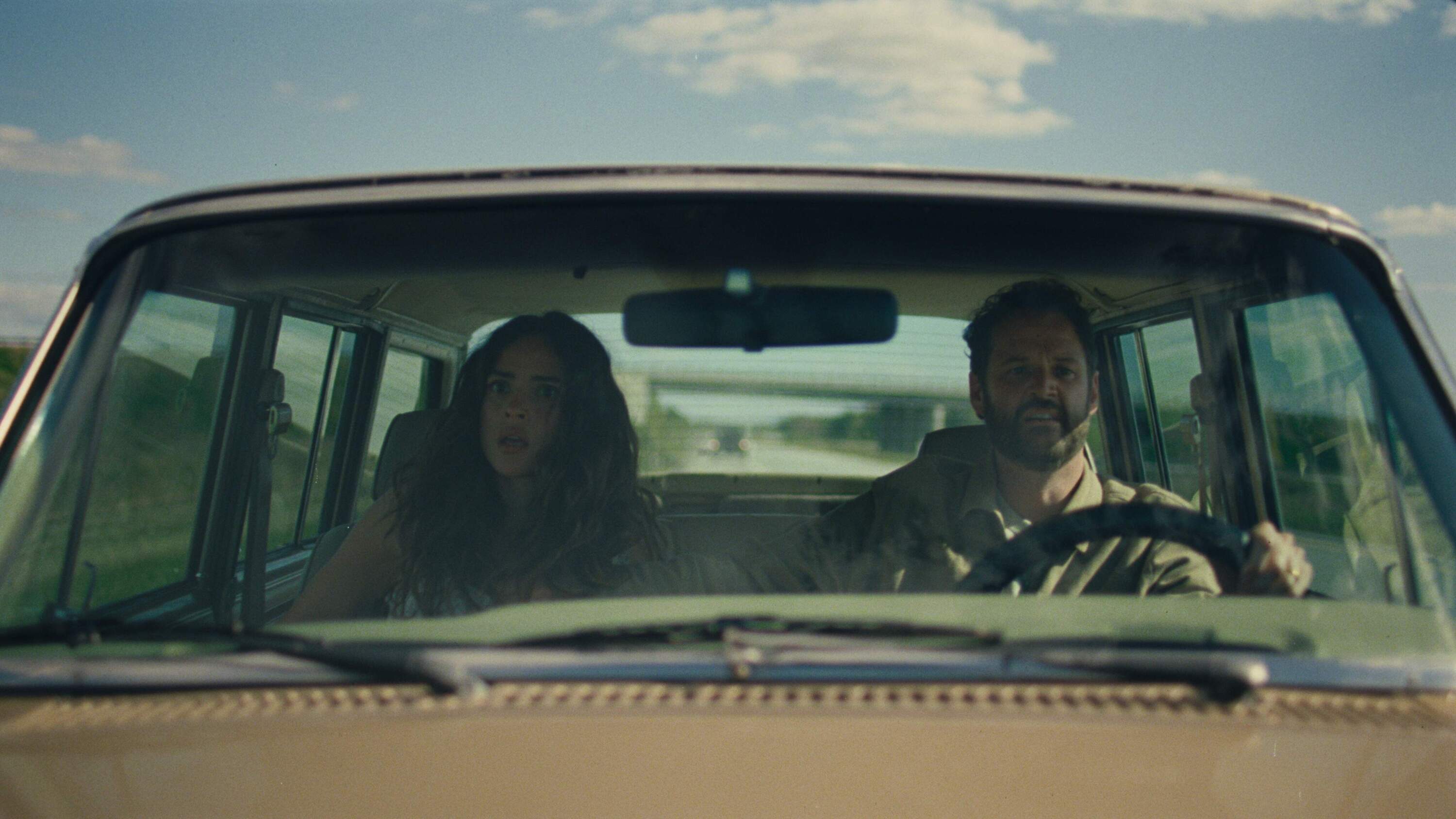
Such labors are emblematic of the duo’s commitment to visual storytelling. Critics like yours truly expel a lot of hot air complaining about how studios send comedies straight to streaming instead of releasing them in movie theaters. But the fact of the matter is, Hollywood comedies aren’t designed as theatrical experiences anymore. The post-Judd Apatow era has left us with lots of indifferently photographed shots of actors ad-libbing, hastily slapped together in post. The wonder of Marvin and Covino’s films is how artfully constructed they are — shot on 35mm and making smart use of the entire frame, incorporating the camera as a partner in the punchlines.
“We haven’t really been watching the studio comedies that get put out now,” Covino said. “They have flat lighting, the coverage is uninspired. They’re choppy. The stuff we were inspired by was from the ‘70s and even the ‘90s. Those early Farrelly brothers movies like ‘There’s Something About Mary’ and ‘Dumb and Dumber,’ those are masterpieces to me.”
Covino cited the long history of cinematically ambitious comedy. In preparing “Splitsville,” he and Marvin watched a lot of Paul Mazursky, Blake Edwards and Woody Allen films. Then the two went down a rabbit hole of Italian comedies from the 1970s, drawing inspiration from Lina Wertmuller’s “The Seduction of Mimi,” Ettore Scola’s “The Pizza Triangle” and especially Pietro Germi’s “Divorce, Italian Style” and “Seduced and Abandoned.”
“The thing about those films is that the characters are realistic. The actors are giving realistic performances, and then there’s absurd slapstick comedy, where people fall down and crazy things happen,” Covino explained. “The filmmaking is wildly cinematic, it’s ambitious. You’ll have a shot that’ll be two people walking out of a building 250 feet away, then it will track all the way across and land in a close-up outside of a car. And of course, you feel something different because you’re experiencing the story differently.
“This is the ambition. We’re making a movie, how is it trying to do something different? How is it provocative? How is it pushing things forward?” Covino laughed. “Even if it is a dumb comedy.”
“Splitsville” is now in theaters.