Support WBUR
Boston's Morning Newsletter
New rules in Mass. crack down on hidden fees — and stir confusion at some restaurants
Editor's Note: This is an excerpt from WBUR's daily morning newsletter, WBUR Today. If you like what you read and want it in your inbox, sign up here.
Bill Belichick made his surreal college football coaching debut for the University of North Carolina last night — and it did not go great. UNC lost 48-14 to Texas Christian University. At least no Microsoft Surfaces were harmed.
We're on to the news:
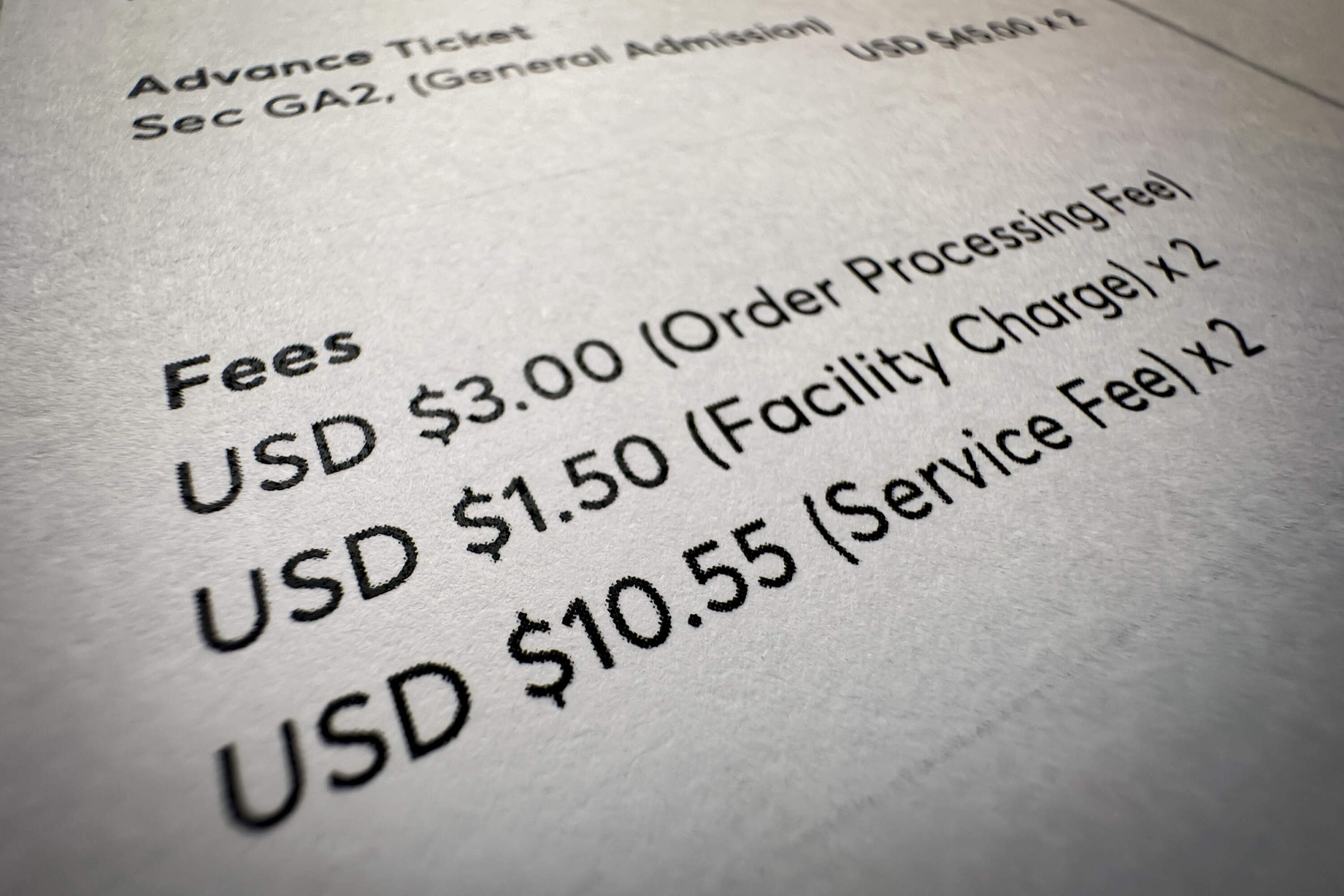
Add to cart: Shoppers in Massachusetts can expect more price transparency when purchasing concert tickets, hotel offers and subscription services. Starting today, businesses in Massachusetts must display the total price of certain goods and services before customers reach checkout, thanks to new state regulations against hidden costs known as "junk fees." The new rules, first announced by Massachusetts Attorney General Andrea Campbell last March, crack down on additional fees that unexpectedly jack up prices at the last step.
- What's wrong with junk fees? The hidden charges can trap consumers into paying for costs they haven't budgeted for and can't contest, Shennan Kavanagh, director of litigation at the National Consumer Law Center, told WBUR's Cici Yu. "They might not have the ability [or] time necessary to work their way through these transactions," said Kavanagh. And even if the buyer can afford the fees, "when there are hidden fees, that prevents the consumer from being able to comparison shop," she said.
- Where you'll see the changes: The new state regulations expand upon federal junk fee restrictions that took effect in May. You've probably already noticed platforms like Ticketmaster, Airbnb and food delivery apps displaying the full price of their products upfront, including service and convenience fees. (Air travel is exempt from the new regulations.) The rules also require that, when you sign up for a new subscription, you receive instructions on how to cancel it and what kind of additional charges you may incur by signing up for a free trial.
- The gray area: Restaurants are also required to disclose kitchen fees and additional gratuities for large parties on the menu for their diners. It's caused a bit of confusion in the industry, according to Stephen Clark, president of the Massachusetts Restaurant Association. "Most prices are disclosed in a restaurant because you get the full menu of what you're buying. It's not a concert ticket where you know you've been up-charged 200%," Clark told WBUR's Amy Sokolow. "A couple of attorneys have said, 'You're in compliance.' Other attorneys have said, 'I'm not sure.' So it's very, very gray right now on those different small types of fees that pop up."
- Go deeper: Campbell's office has released 10 pages of guidelines to help businesses comply with the rules and give a preview of the changes to expect.
After Allston Christmas: Boston officials are working to make sure streets and sidewalks are clear after the city's biggest move-in weekend. Conor Newman, the city’s neighborhood services deputy director, urged movers to get rid of trash properly to keep the rats away. "Residents reporting to the City of Boston when they see rodent activities is absolutely key," Newman said. "And also people being aware of how they dispose of trash to make sure they're not providing a food source for rodents."
- Newman also said any tenant who believes their new apartment is unsafe or not as advertised should contact the city. Read more about your rights as a renter here.
Boston’s first Labor Day Parade drew 8,000 to 10,000 teachers, electricians, health care and gig workers, according to organizers. This year, the Greater Boston Labor Council replaced the traditional Park Plaza Hotel breakfast with a march through downtown. As WBUR's Martha Bebinger reports, the event echoed a national protest theme: workers over billionaires.
- The scene: Teachers chanted about education funding cuts. Ironworkers and electricians carried signs about jobs lost to canceled renewable energy projects. And many union members protested ICE raids. Mayor Michelle Wu claimed billionaires in Washington, D.C., are behind many of these moves. "They target us with threats and attacks, hoping we’ll stay silent, while they rewrite the rules," Wu said. "Well, Boston’s here again to send them a message: Hell no."
It's Election Day in Worcester: Polls are open until 8 p.m. tonight in the city's municipal preliminary election. Fourteen candidates are vying for six at-large Worcester City Council seats in a race that will ultimately determine the city's next mayor. However, today's election will only narrow down the field to 12 for the November election. The race for a District E School Committee representative is also on the ballot. MassLive has more details on all the candidates here.
P.S. — Boston's own preliminary election is now just a week away, with early voting already underway. And starting next week, we're bringing back our weekly Mass. Politics newsletter to break down where the mayoral candidates stand on the biggest issues facing the city, from housing to transportation to Trump. Sign up here.