Support WBUR
REVIEW
Camaraderie and carnage mark 'The Long Walk'
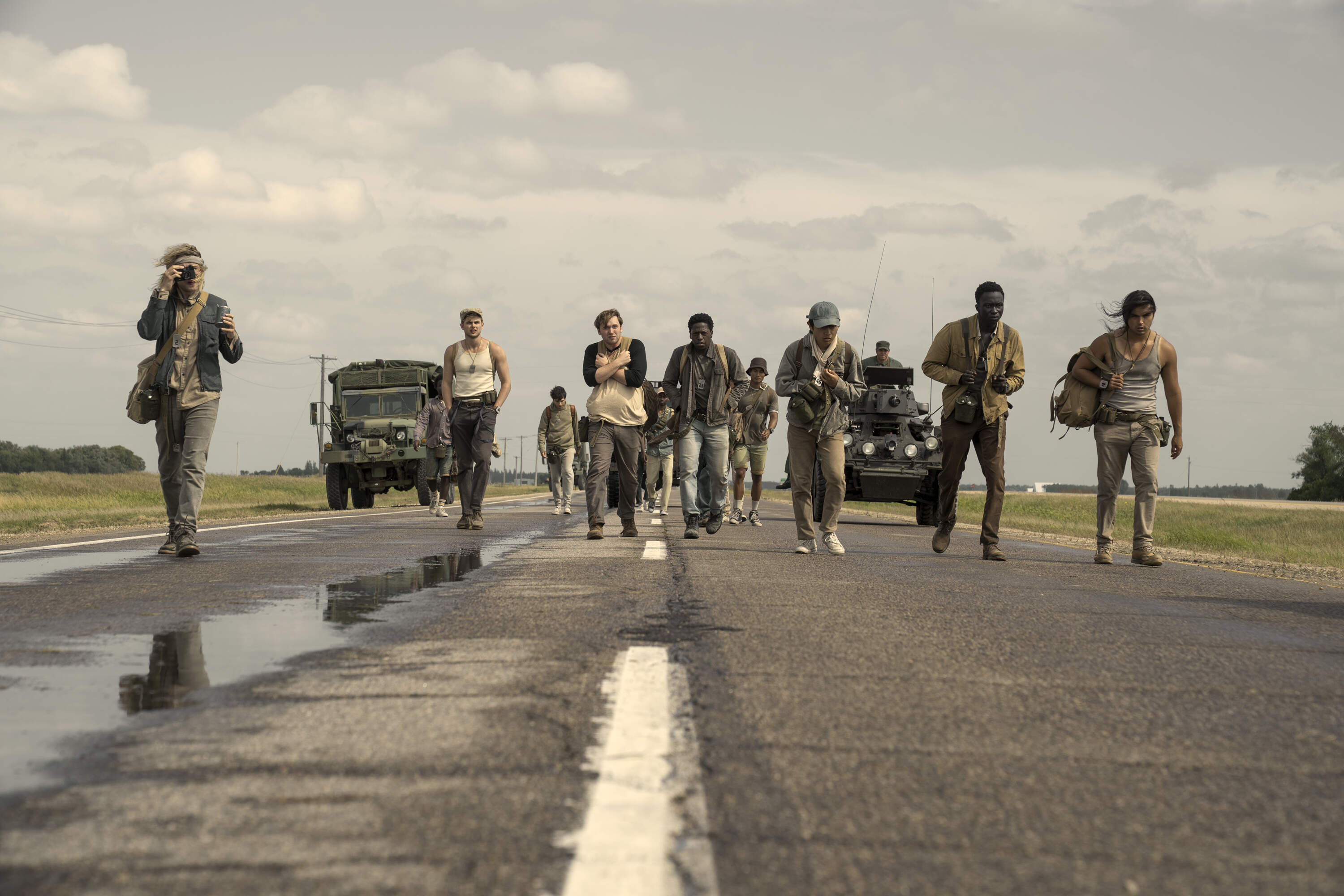
Stephen King started writing “The Long Walk” in 1966 when he was a freshman at the University of Maine. Three years later, CBS preempted their regularly scheduled airing of “Mayberry R.F.D.” to broadcast the first Vietnam War draft lottery, and the frustrated author must have realized you really can’t make this stuff up. Furious and fulminating, “The Long Walk” is an angry young man’s reaction to boys being ripped from their homes and thrown together to die violent, purposeless deaths with the promise of a greater glory that’s specious at best. King kept coming back to the manuscript throughout the years, eventually publishing it in 1979 under his Richard Bachman pseudonym – an alter ego the writer used for his bleaker, more pessimistic stories. That the author of “Carrie,” “The Dead Zone” and “The Stand” had another name for the heavier stuff should give you a clue as to the content.
A ‘60s antiwar parable marinated in doomy 1970s paranoia, “The Long Walk” is finally arriving on the big screen after decades of false starts. George Romero almost made a movie out of it in the ‘80s, and professional Stephen King adapter Frank Darabont of “The Shawshank Redemption” and “The Green Mile” fame came close some years later. The project was brought to the finish line (sorry) by filmmaker Francis Lawrence, who having helmed the past four “Hunger Games” movies appears to have a knack for this kind of thing. It’s a gripping, grisly piece of work made palatable by enormously charismatic lead performances from Cooper Hoffman and David Jonsson. The excellent young actors play Ray Garraty and Peter McVries, two competitors who become fast friends during the arduous trek, despite knowing that for one of them to survive, the other must die.
In King’s Spartan scenario, 50 young men start walking. If their pace falls below three miles per hour, they’re shot dead by an accompanying battalion of soldiers. Eventually, only one contestant will be left alive. That’s the winner. Like a lot of metaphors, “The Long Walk” is richer and more universal the more abstract it remains, and the film adaptation wisely resists larding things over with too much lore. J.T. Mollner’s screenplay is extremely faithful to King’s novel – for most of the running time, anyway – appearing to take place in a dystopian future 1979 devoid of modern technology, contemporary fashions or cultural references. (If you’re trying to put a date stamp on it, I could swear I heard a character mention the once-ubiquitous mall refreshment stand Orange Julius.)
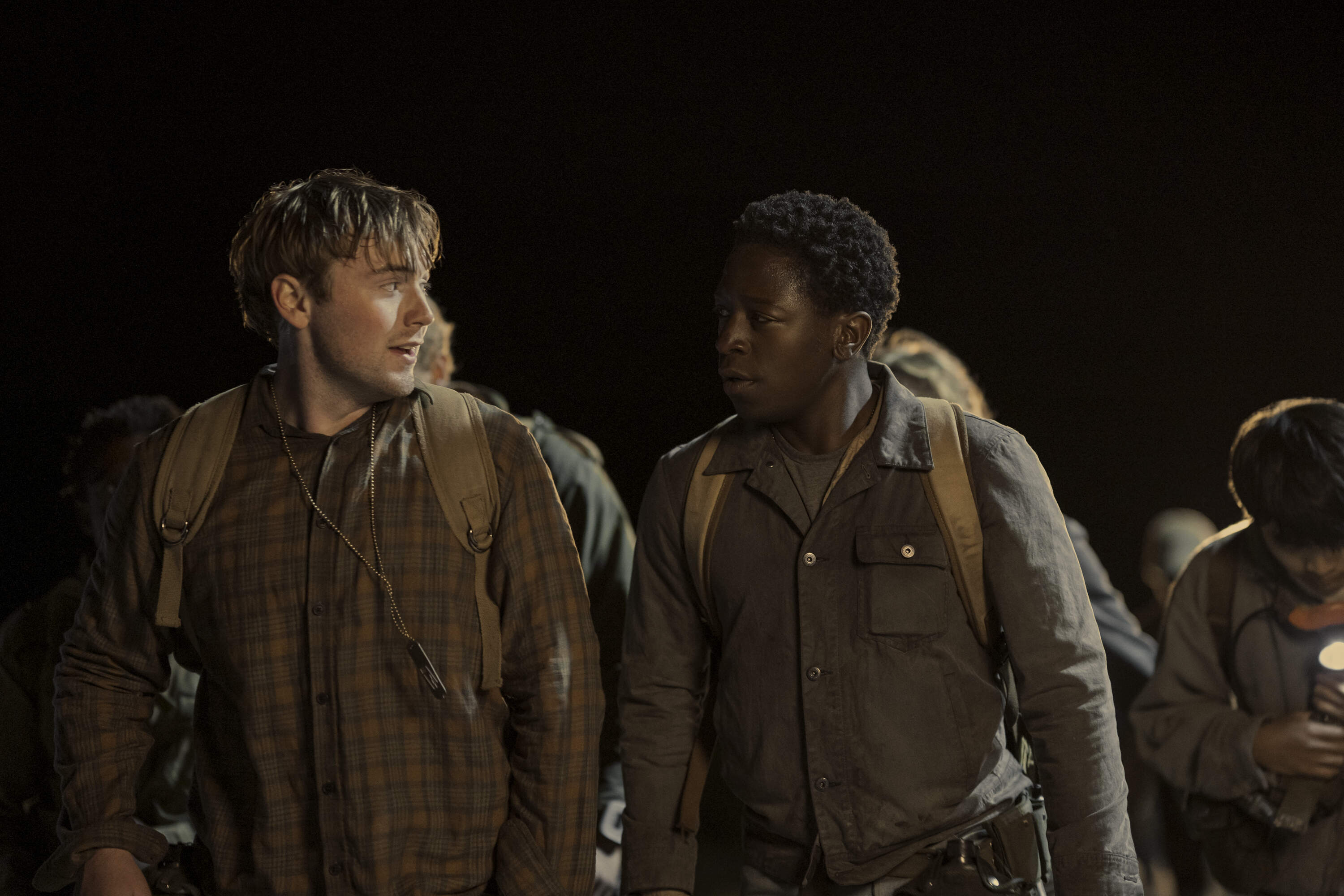
Cooper Hoffman made a huge impression as the lovestruck teenage entrepreneur in Paul Thomas Anderson’s “Licorice Pizza,” and while he might be the wrong physical type for Ray Garraty, you need a performer as warm and welcoming as he is for a story this relentlessly grim. As an actor, he’s gifted with the same mischievous, slouchy generosity as his father, the much-missed Philip Seymour Hoffman, and is able to invite us in and give us access to a character whose true motivations must remain hidden for a good chunk of the story.
Even better is Jonsson’s Peter McVries, a wise-beyond-his-years philosopher type who has been written to impart so many “Shawshank”-y lessons about living life to its fullest that in lesser hands the character could easily have been insufferable. Jonsson’s performance as the broken android in last year’s instantly-forgotten “Alien: Romulus” was the only original thing in that sad karaoke party of a movie, and he’s such a marvelous and inventive actor that his camaraderie with Hoffman elevates everything around them. These boys bantering and bonding on their journey can’t help but recall another Stephen King adaptation, Rob Reiner’s beloved “Stand by Me.” Except imagine a version of “Stand by Me” in which the kid who played “Jojo Rabbit” gets his jaw blown off for walking too slow.
Director Lawrence makes smart use of classical camera blocking to illustrate the character relationships, pairing the positions and rhythms of the walkers according to where their loyalties lie at any given moment. But his thoughtful compositions are undercut by some of the year’s sludgiest cinematography. I’m assuming that since all of this story is set outside, there was a conscious decision to overexpose the skies to a bleached uniform white, freeing the filmmakers from any need to match sunlight or cloud cover conditions from shot to shot. It probably saved the production a ton of time and money, but it’s also ugly as sin, soaking the actors in a drab, backlit haze. One needs only to look at how similar challenges of sun position and shadow were so beautifully managed in a tiny indie like “Eephus” – which had maybe one-fiftieth the budget of “The Long Walk” – to understand that the grubby discount aesthetic of so many modern studio pictures is not because of a lack of means, just a lack of care.
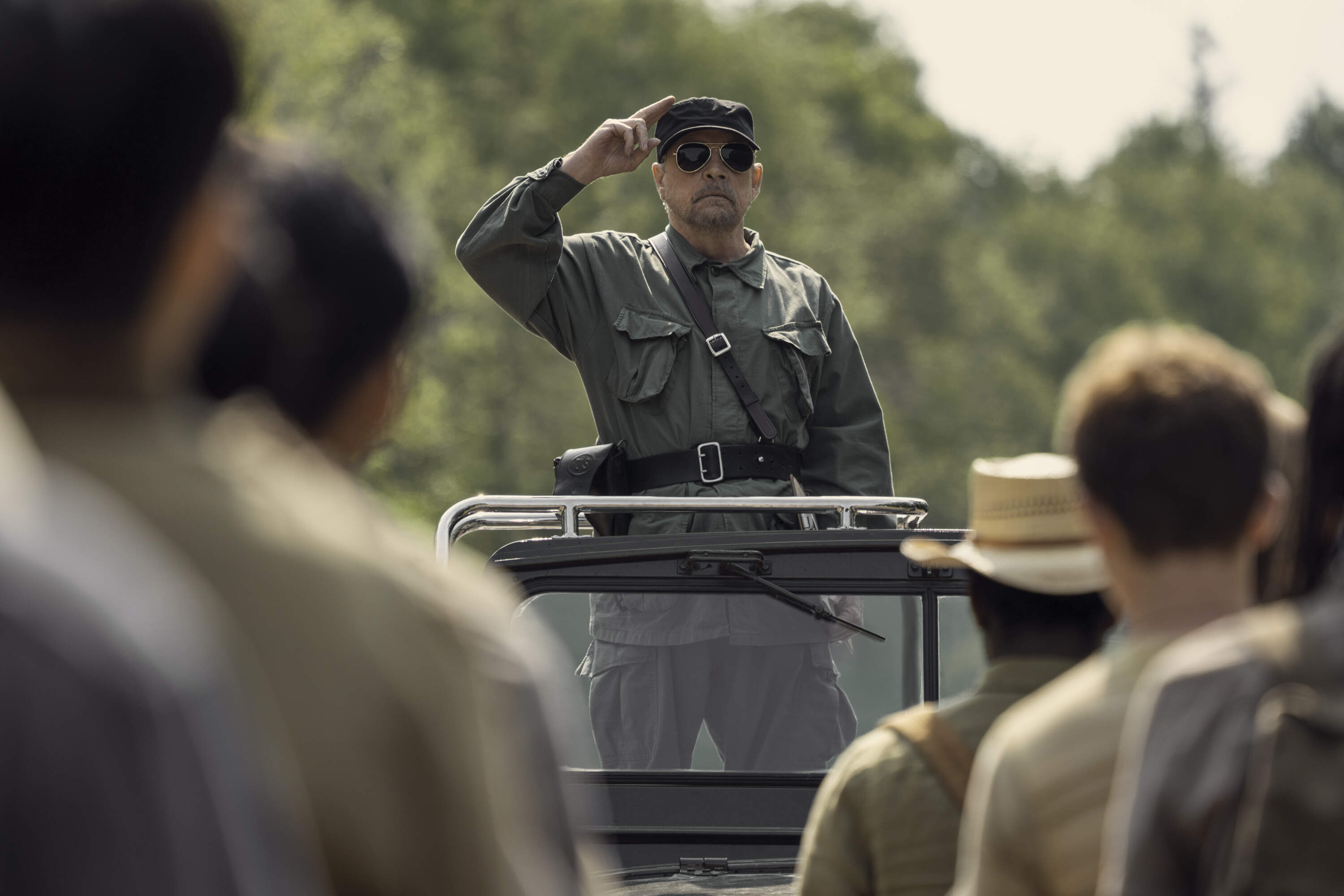
Still, there’s an unbearable tension built into the story, watching two tremendously likable people become friends and help each other out while knowing it’s impossible for them both to live through this. This papers over a lot of problems one might have with the film, including the casting of Mark Hamill as the story’s villainous Major. He’s the snarling fascist demagogue who goads on the walkers, a symbol of toxic masculinity that too many of these young men aspire to emulate. Having The Major played by Luke Skywalker himself feels like a stunt that’s too clever by half, even before we get into Hamill’s rather famously limited abilities in front of the camera. (He’s an excellent voice actor in cartoons, which is where this performance belongs.)
One wonders if after “Squid Game,” “Battle Royale” and “The Hunger Games,” “The Long Walk” might run the risk of feeling too familiar in its depiction of kids being killed in a televised competition for the amusement of a cruel and bloodthirsty public. This has become a popular trope in recent years for obvious reasons. The post-Parkland generation has grown up understanding full well that the adults in power see them as expendable cannon fodder. This is why I still can’t decide if the film’s departure from King’s original, ambiguous ending is a sop to the multiplex audience’s bloodlust, or a more nihilistic and insidious admission that if you can’t beat ‘em, join ‘em.
“The Long Walk” is now in theaters.