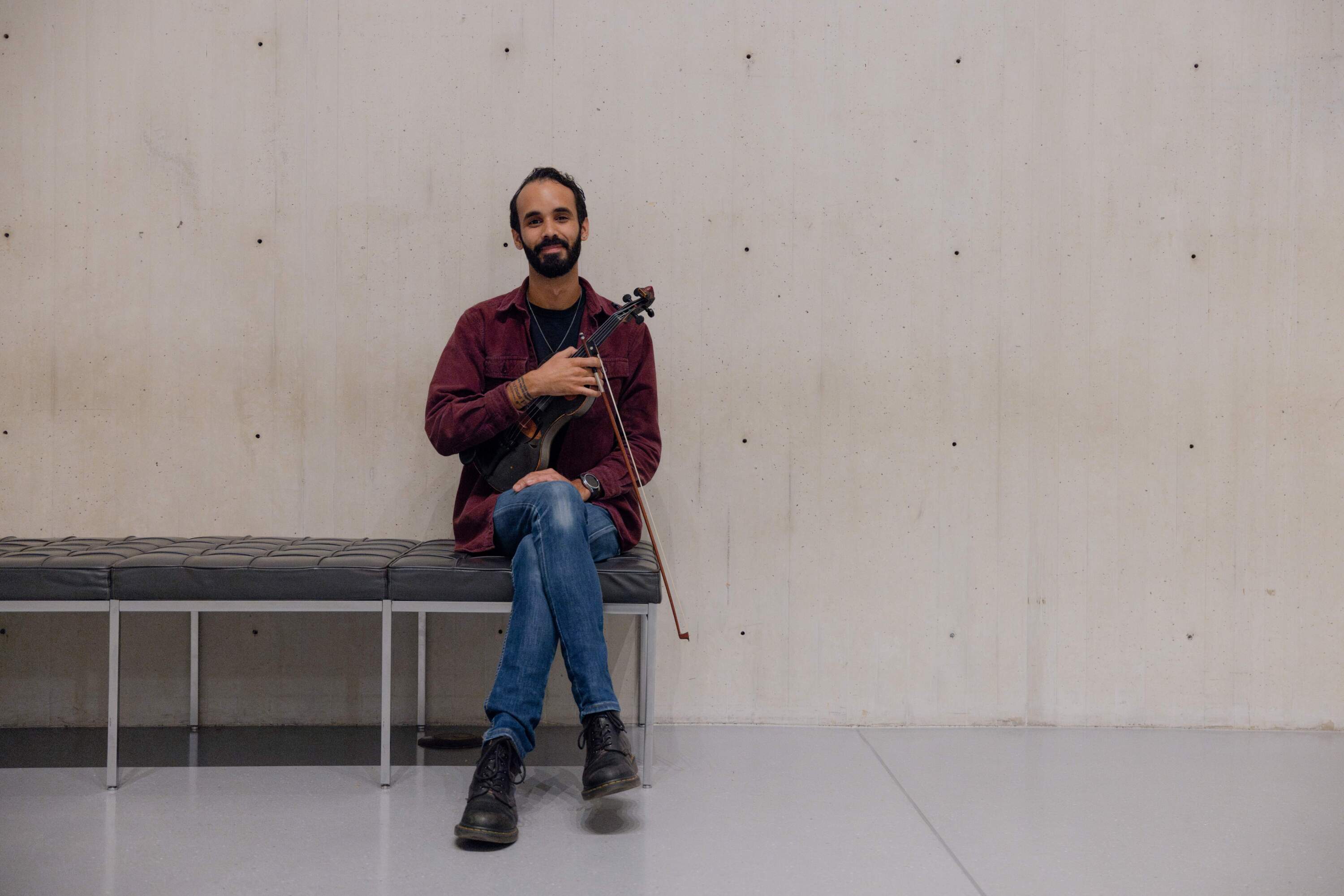
Jake Blount's dystopian folk music is an omen for the present
Back in 2020, folk musician Jake Blount launched into national awareness with the release of his debut album, “Spider Tales.” The project was, by some measures, a conventional interpretation of traditional Appalachian banjo and fiddle music. But Blount chose his source material with pointed intent: all the tunes and songs came from Black and Indigenous musicians. It was a political statement, designed to complicate and elevate the contributions of Black and Indigenous communities to American folk music, the commercial and cultural image of which remained steadfastly white.
In May, the same month that “Spider Tales” came out, a bystander recorded a white Minneapolis police officer kneeling on the neck of a Black man for over nine minutes, until he died. The murder of George Floyd ignited Black Lives Matter protests across the nation. In that explosive cultural moment, “Spider Tales” seemed to speak uncannily to the times.
“That album came out literally while the Minneapolis Police precinct was burning,” Blount recalled.
The attention earned him accolades, including the Steve Martin Banjo Prize, and a record deal with Smithsonian Folkways Recordings. Galvanized, Blount embarked on an even more ambitious musical project, coining a new genre along the way: Afrofuturist folk.
Five years later, the outlook is different for America, and for Blount.
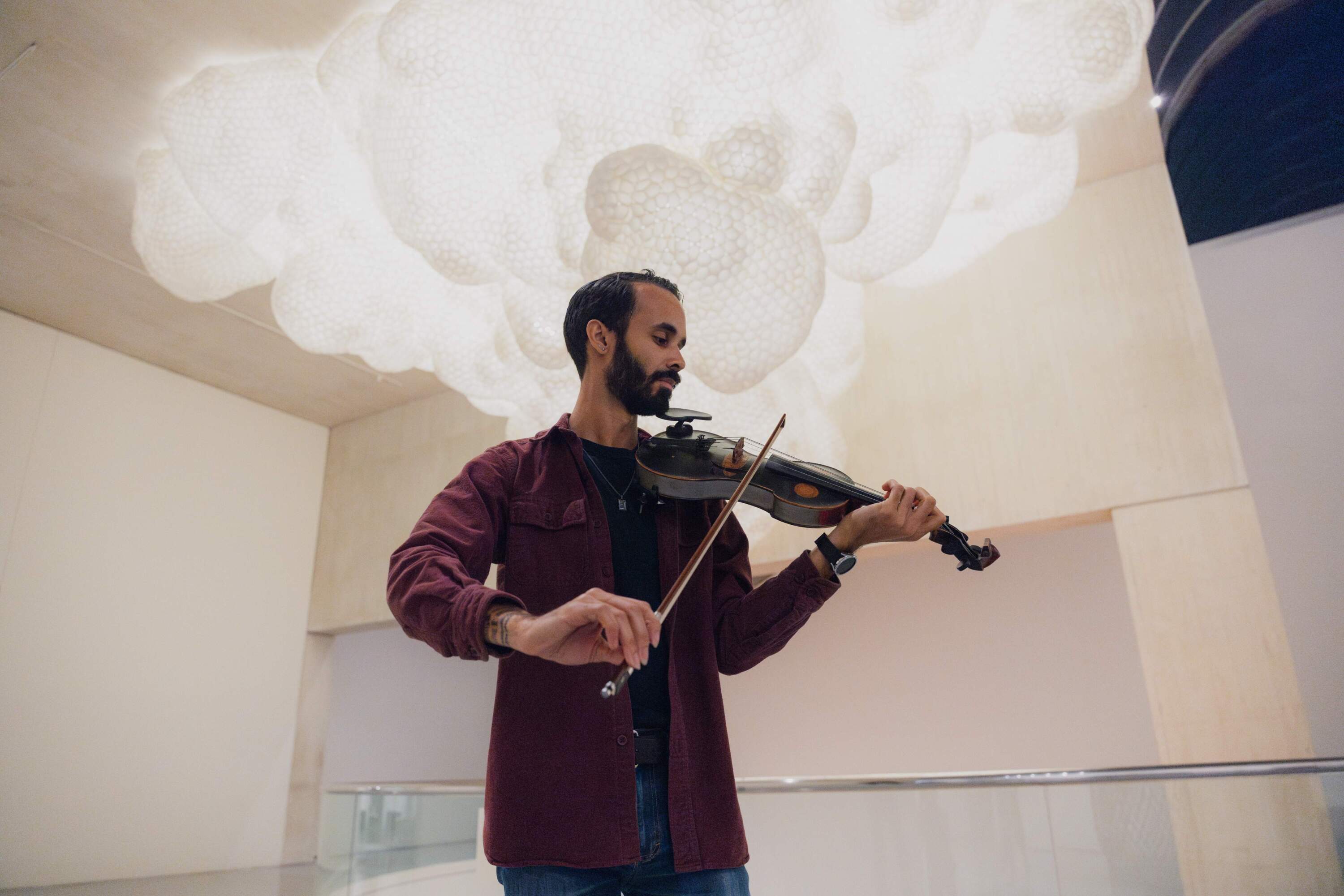
“ I was just backstage with another Black roots musician, who's much more widely established than me, a couple weeks ago, talking about how no one will do business with us now,” Blount said. “It really feels like there was this rush for Black artists in 2020 and now everyone is just washing their hands of us.”
It was an afternoon in late August, and Blount had just finished soundchecking for a gig at a ramshackle house venue in southern Rhode Island. He sat in a room upstairs and reflected on his extraordinary rise since that fateful year. The conversation turned to why he picked up the banjo in the first place: a “fateful encounter” when he was in high school with the clawhammer banjo player Byrne Klay.
“ He told me about the banjo’s history in the African American community,” Blount recalled. “Doing my own research after that, I discovered this was a really big piece of my ancestors' social lives in the Chesapeake Bay region, which is where they were held in bondage.”

Blount, who now lives in Providence, grew up in Washington, D.C. As a boy, he would sometimes make the three-hour trip to visit his grandfather’s farm in Virginia. The farm, he said, was on the same land where his ancestors were once enslaved.
“I grew up being driven around by my grandfather and my grandmother, who would be able to point to a tree and be like, ‘Your great-great-great-great grandfather sat under this tree when he exercised his master's horses,’” Blount said. “And that's not a hypothetical, that's an example that happened.”
Enslaved Africans originated the banjo, which shares DNA with West African stringed instruments like the kora. Blount was immediately drawn to the instrument. It was like a portal to that unfathomable time, and the people who survived it.
“We don't know much at all about their interiority, the way they saw the world, their feelings, their opinions, what they as individuals went through and how they coped,” Blount said. “The music, to me, feels almost like a piece of that we can take back.”
Blount, who is now 30, picked up the banjo at the age of 19. He immersed himself in the Appalachian stringband music scene in upstate New York, where he went to college. To say that the old-time scene, as it’s known, is predominantly white is an understatement. Even in the wake of the Carolina Chocolate Drops and amidst a burgeoning movement of young Black stringbands, Blount remains an anomaly. Perhaps for that reason, his music has always been political. From the start, he has tried to complicate the prevailing narrative about Southern folk music, which tends to confine Black contributions to the advent of the banjo and little else. In Blount’s vision, Black musicians are intrinsic to American roots music, and racism endemic to the country’s musical history.
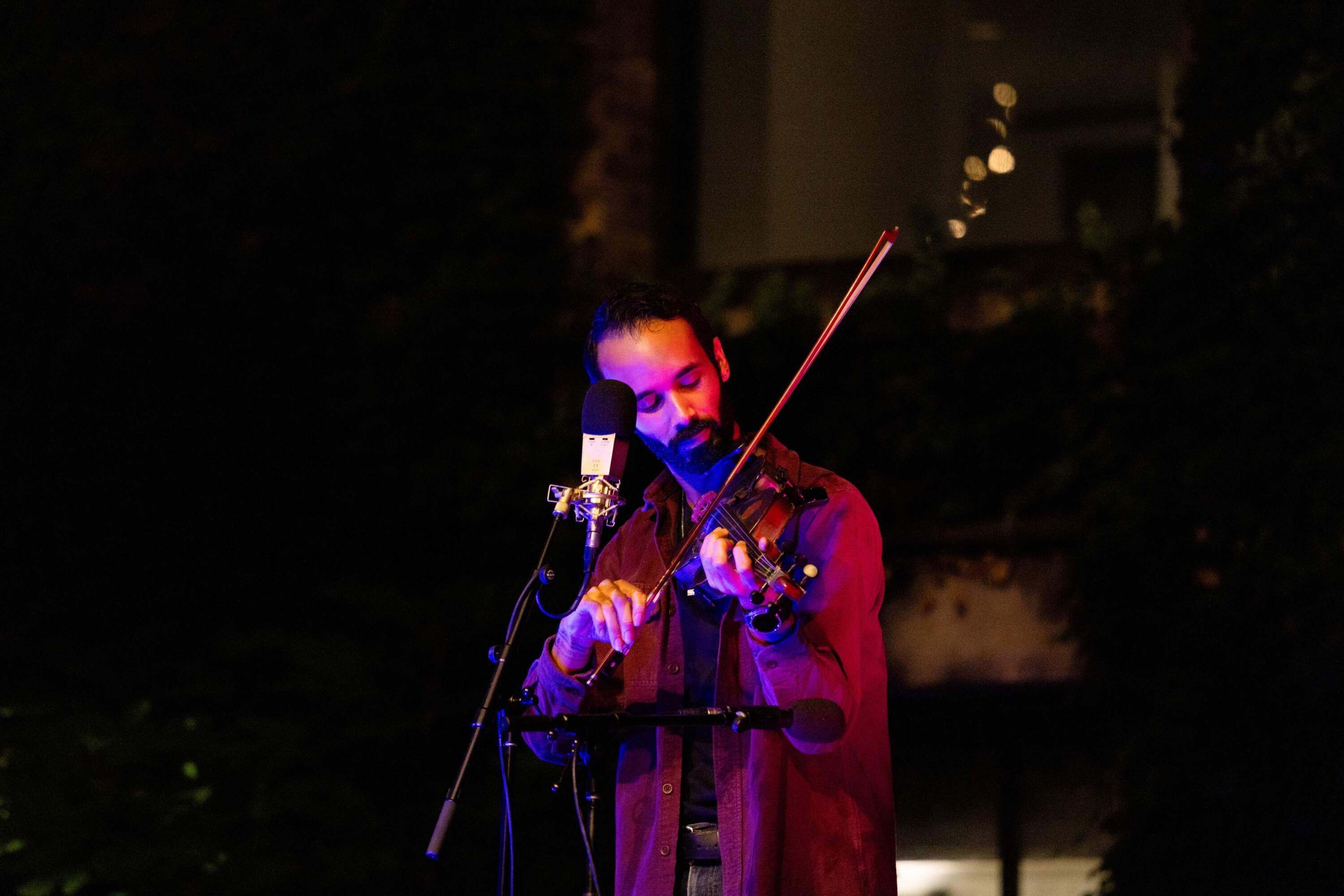
“Jake’s influence has been very large, I think, especially in the Black folk scene,” said Grace Givertz, a folksinger and banjo player from Boston, and a friend of Blount’s. (The two recently shared a bill at the Museum of Fine Arts in Boston.) “He’s doing the things we want to do. He’s saying the things that need to be said.”
Blount is a fan of science fiction and fantasy, in particular the authors Octavia Butler, N.K. Jemisin and Ursula K. Le Guin. His 2022 album, “The New Faith,” married his interest in speculative fiction with his love of traditional music. The concept album, a collection of Black spirituals, follows a group of Black refugees in the aftermath of climate collapse. In Blount’s hands, the songs are portentous and expansive, marked by spare, urgent percussion, expressive string arrangements and even the occasional rap. He intended the album to live in the Smithsonian Folkways collection as a quiet rebuttal to the archive’s incomplete history of Black music.
“ There's a way to understand the narrative of Afrofuturism as that a lot of Black culture is already post-apocalyptic, having survived the middle passage and slavery,” said musician and writer Brian Slattery, who co-produced “The New Faith.” The characters on the album, he said, “were people who knew how to survive another apocalypse because of their ancestral knowledge of having survived one already.”
Blount’s third album, a collaboration with the Abenaki musician Mali Obomsawin, called “symbiont,” is also set in a not-too-distant future shaped by climate change. Traditional music and speculative environmental fiction: these are not typical bedfellows. But Blount sees a connection between the story of his ancestors and the increasing likelihood of climate disaster.
“There is no way forward from here without great loss,” he said. “How can you listen to those old songs from a group of people who just lost the land that they knew, their relationship to the earth, just lost their history, had their future taken away, and not resonate with that?”
Blount doesn’t expect his next album to address climate change directly. He is working on two projects, one of which will be his first collection of original songs. He is taking his time, partly because he is enrolled in an ethnomusicology graduate program at Brown University — a decision he described as necessary for a sustainable creative life. The album that is taking shape, like Blount’s previous work, merges speculation about the future and the past, offering an omen for the present. “ It's really about how we think about humanness and who is considered human and what lives are expendable and why,” Blount said.
He has also been thinking about his legacy. As the Trump administration purges everything associated with diversity, equity and inclusion, it has made the Smithsonian a target, scrutinizing exhibits about racial and social injustice. Two of Blount’s albums live in the Smithsonian’s collection. When the topic came up, he grew serious.
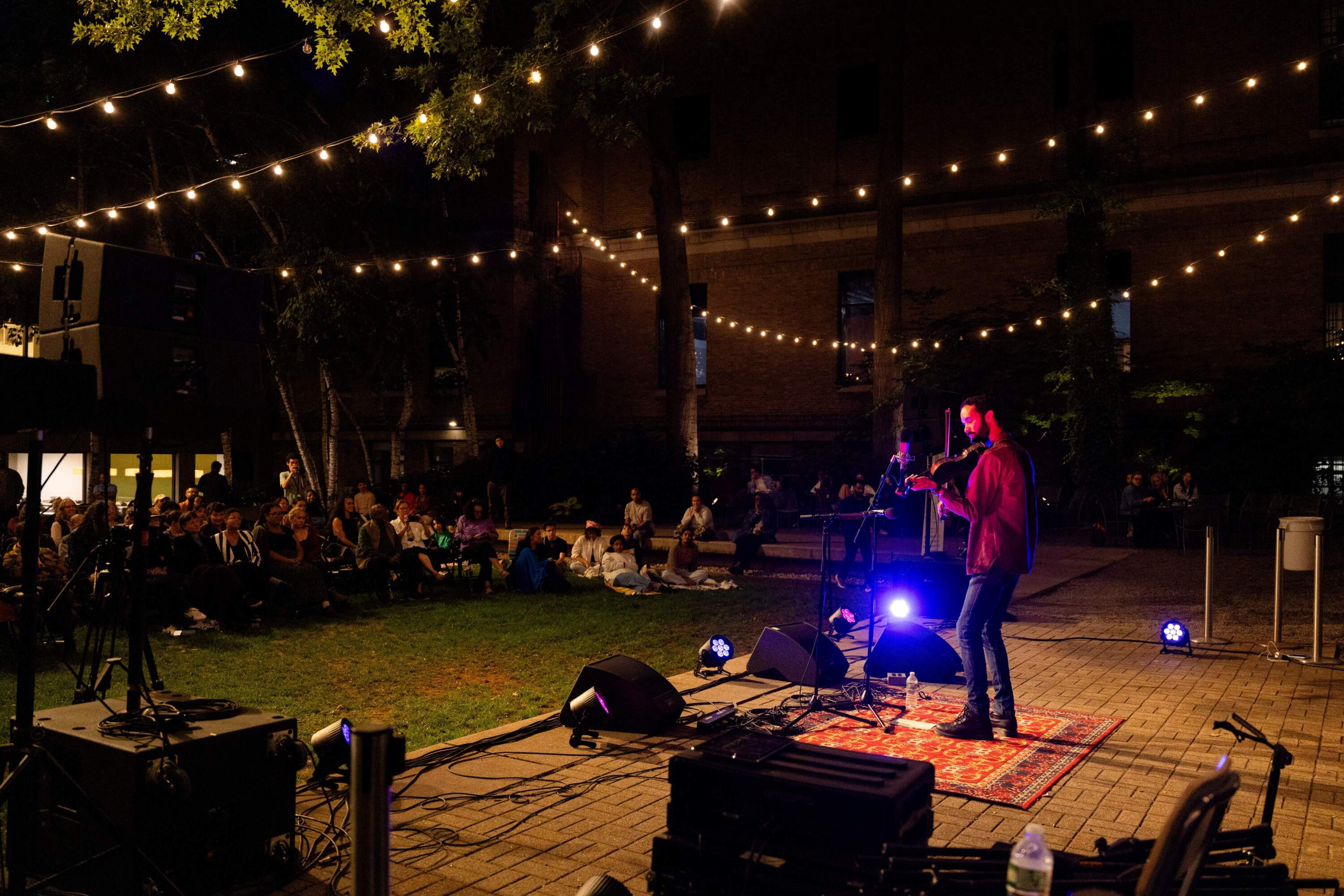
“If this goes the way stuff did in the last century, I will probably get hauled up in front of Congress like Pete Seeger did. And I have to be ready for that. I have to be ready to get blackballed and have to live out of my car for years like he did, or get thrown in jail,” Blount said.
The conversation had lasted for nearly an hour. Outside, the sky was growing dark, and the house was quiet. Blount continued. “I can't take back what I put out there now,” he said. “If I get killed by this country, that's just another birthright from them.”
Later, Blount would take the stage, cheerful and at ease. For his final number, a popular sea shanty called “Haul Away Joe,” he invited the audience to join in. Sea shanties were traditionally sung by sailors to keep in sync while hoisting a sail or raising anchor; they are, by design, rhythmic and rousing. Blount had slowed this one way down, lingering on the line, “Way, haul away, we’re bound for better weather.” He accompanied himself with somber restraint on growly electric guitar. In Blount’s hands, the song sounded like a warning, and an exhortation to get to work.
This article was originally published on September 29, 2025.
This segment aired on October 7, 2025.