For environmental architect Justin Brazier, change comes from community
Cities are confronting waves of extreme climate challenges, from flash flooding to enduring drought to urban heat islands. Educating the public about the rising risks is a big part of the battle. Solution-driven designers and architects like Justin Brazier are determined to engage communities in new ways.
One of the places he’s been doing this is Hoyt Field in Cambridge. Brazier was at the site on a recent September morning, overseeing logistics for an installation that was two years in the making.
The usual sounds of pounding sneakers and bouncing basketballs were replaced by the loud noises from a truck with an enormous crane. A team from Capone Iron Corporation, a Massachusetts steel fabrication company, maneuvered about 5,000 pounds of hulking columns off the truck’s flatbed.
“It’s a real orchestration,” Brazier, 32, said from the sidelines. “A lot of communication.”
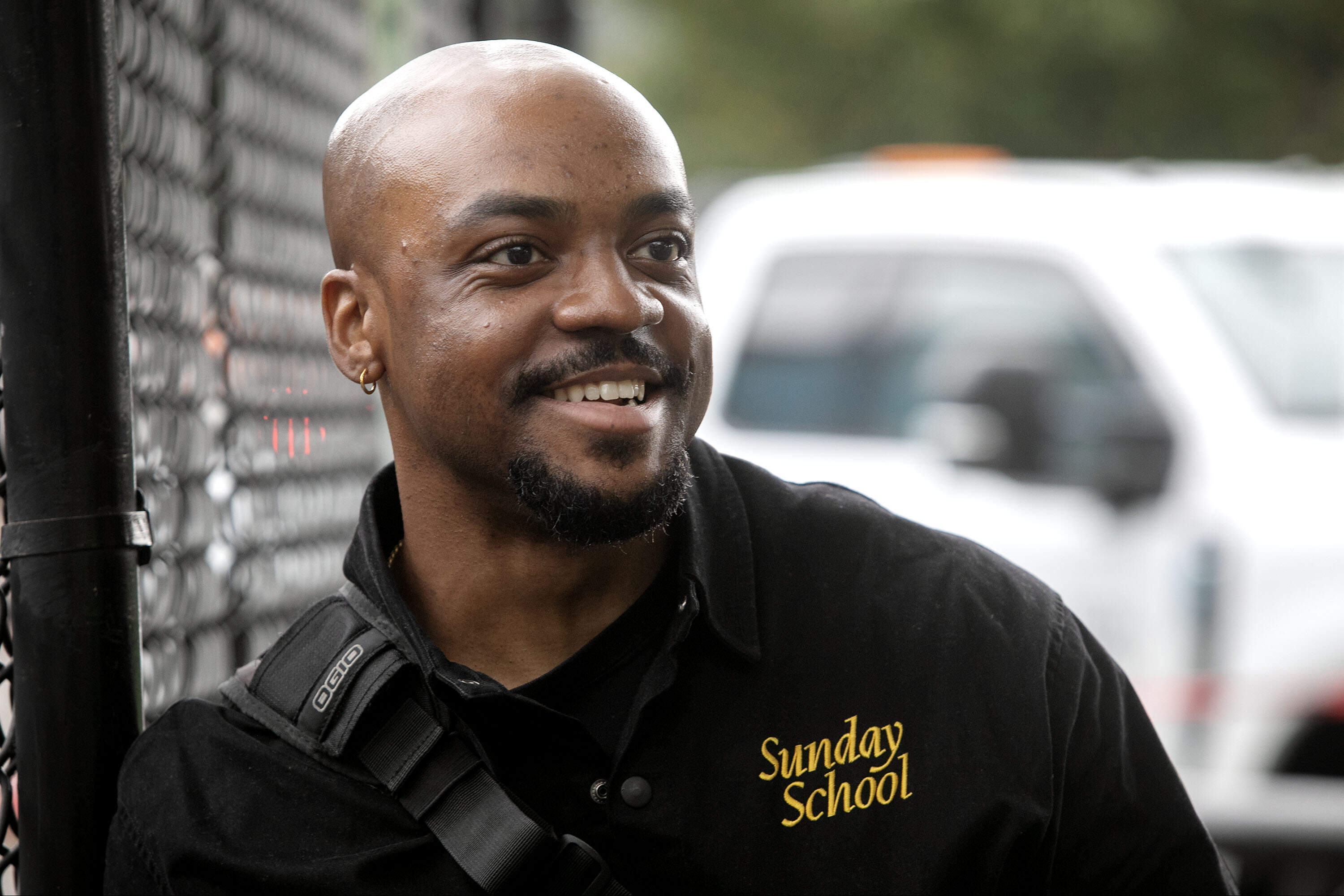
Communication is key for Brazier. His belief in thoughtful, open dialogue fuels the “Shade is Social Justice” project. The City of Cambridge invited designers and artists to create structures that build climate resiliency, preparedness and community.
“Hoyt Field is actually pretty shaded,” Brazier said. “But you can't shade the basketball court.”
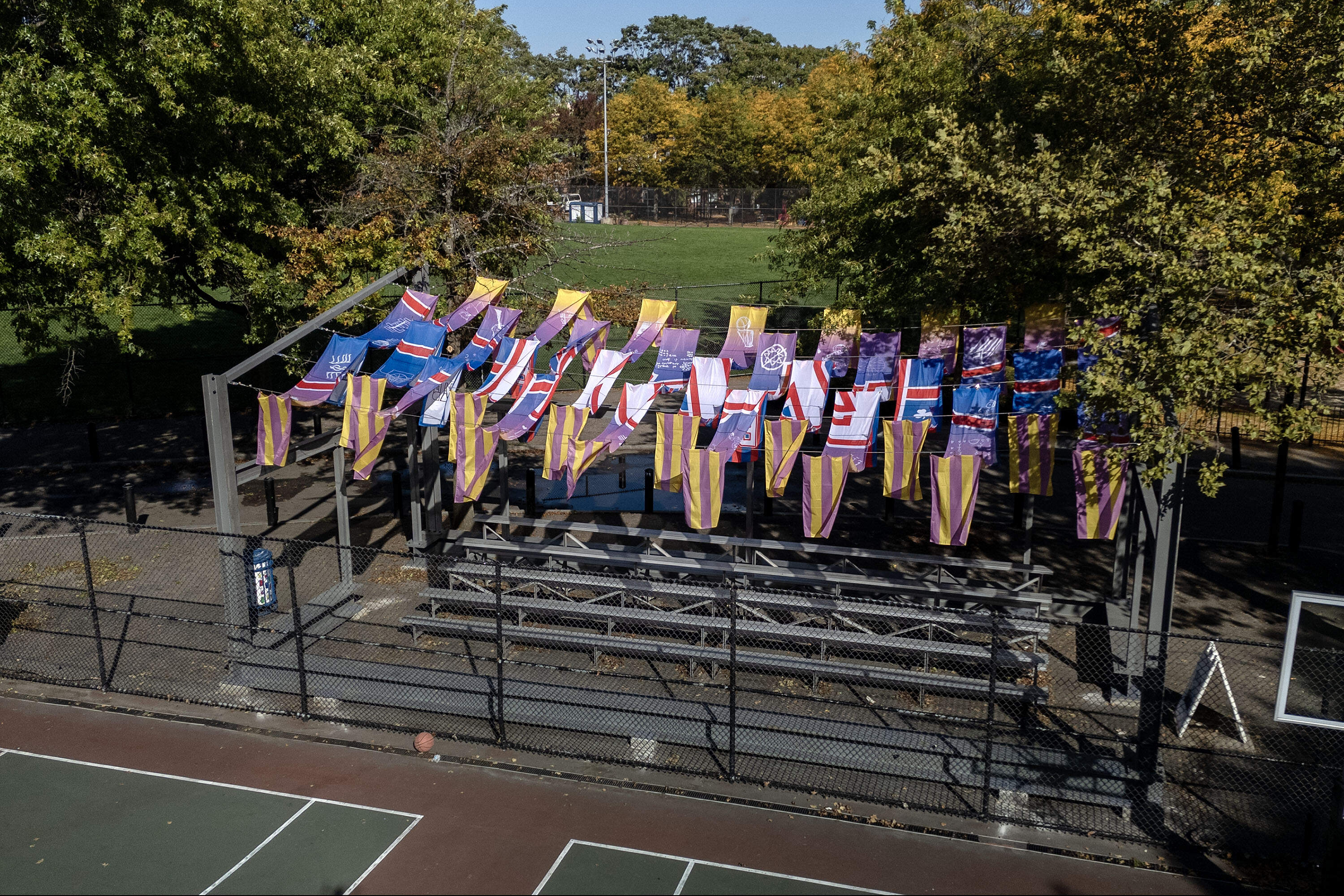
So Brazier’s colleagues at AGONY — a collective of young architects and designers who met at MIT — honed in on the court’s aluminum bleachers. “They attract a lot of heat,” he explained. “People with shorts can get burned a little bit behind their legs. So we thought we could shade the bleachers.”
Through their community outreach, the team learned spectators and players flock to this beloved hub for games, including a big annual tournament.
“They describe it like it’s out of a movie, all the great Cambridge basketball players have to go prove themselves at the Hoyt Field courts,” Brazier said. “So it was really cool getting that background, and then thinking about how can we add to the story by making it more comfortable for people to enjoy these games that happen throughout the summer.”
Cambridge’s Arts and Cultural Planning Director Claudia Zarazua called the court a gem and applauded Brazier’s team members for their collaborative approach.
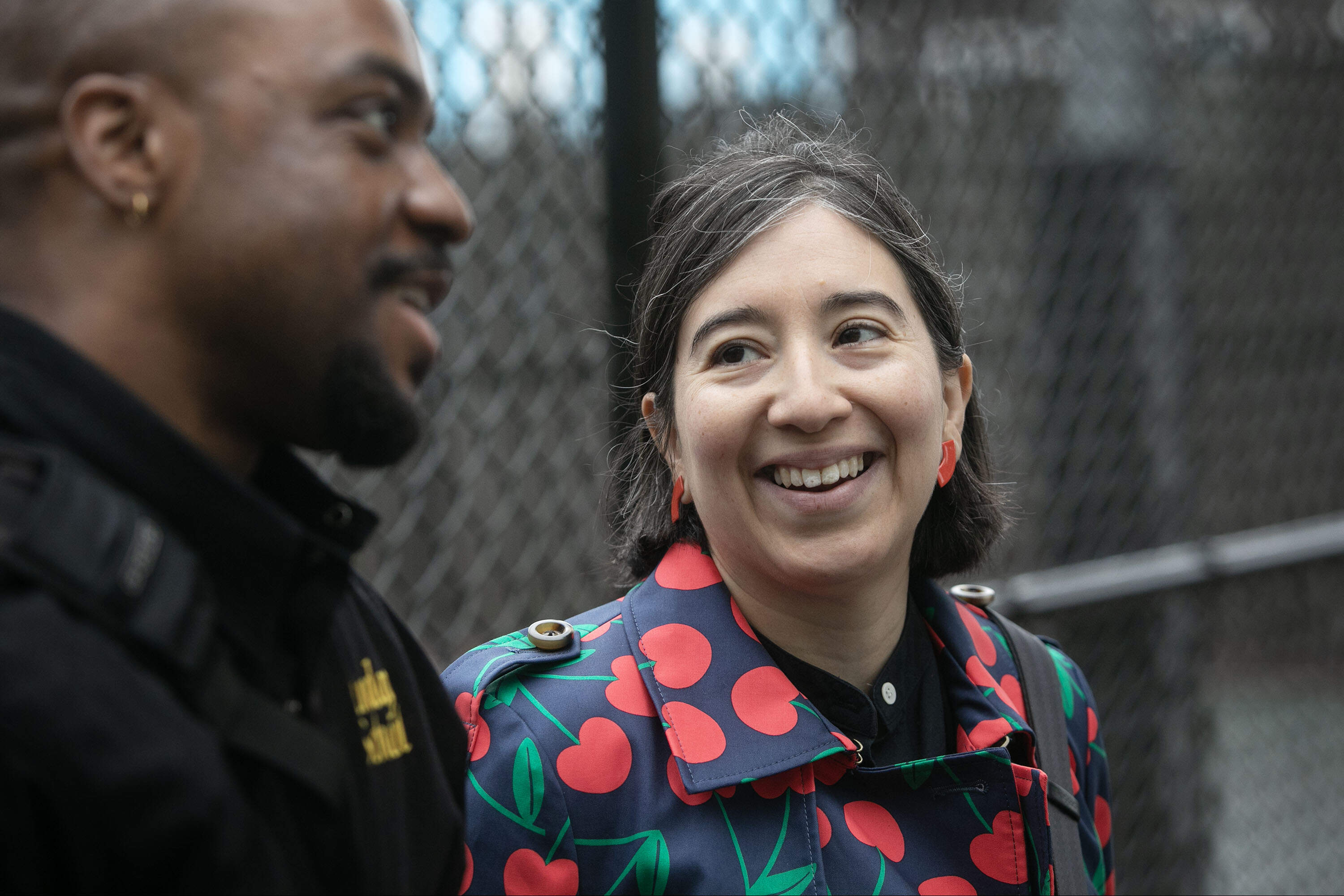
“This is really where community happens, around the basketball court,” she said. “For them to develop a structure that complements the function of the space — to make sure that even during the hot weather in the summer, this community building activity can continue to happen — is something the community's excited about.”
But potentially dangerous lack of shade isn’t the only environmental issue Brazier’s team wants to highlight.
“As architects, we contribute to a lot of waste and the global warming effects that are associated with that,” he said. “A lot of materials are being made every day, a lot of trees are being cut down for those materials, a lot of energy is being used. And we have the power to propose new ways of using materials in our practice.”
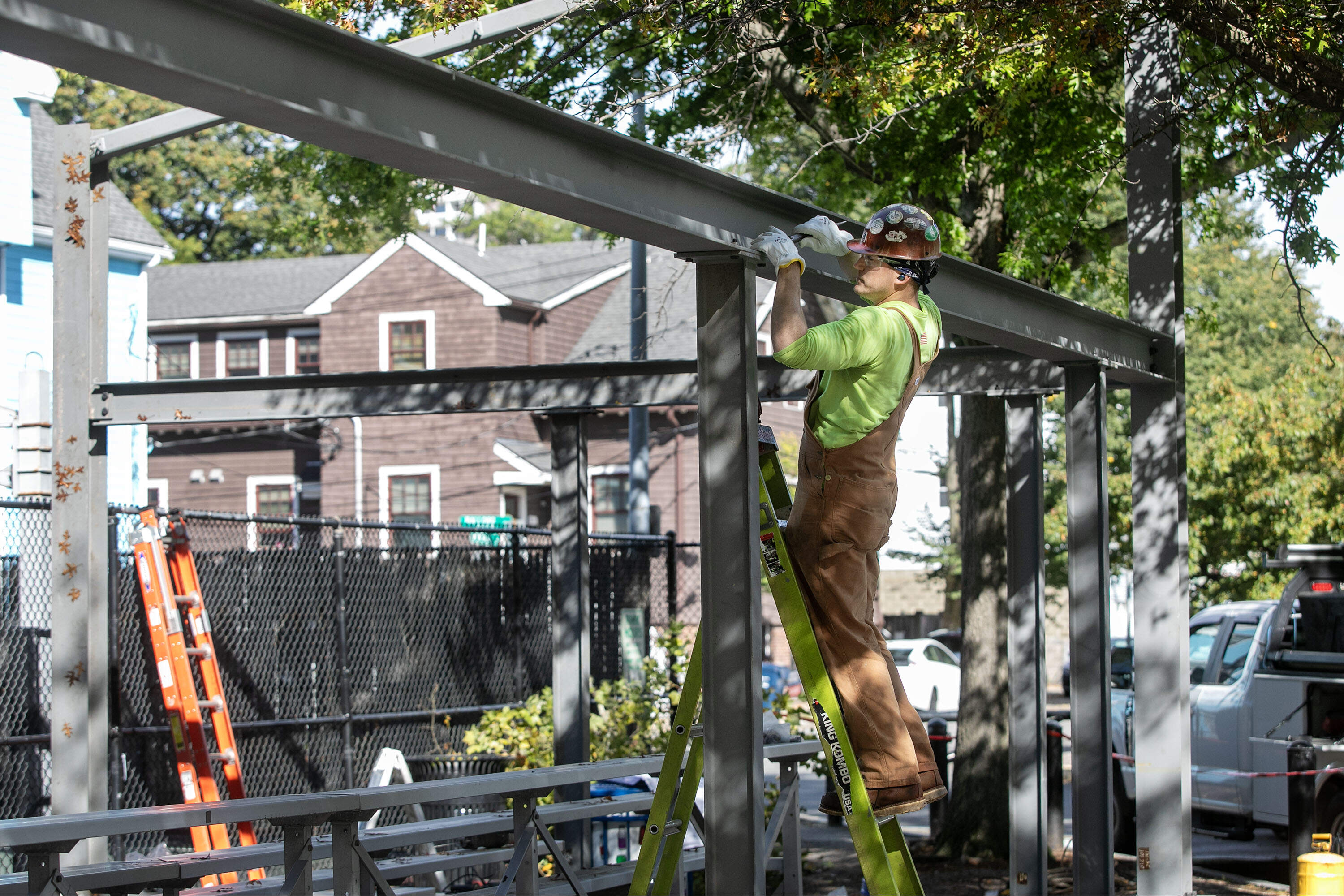
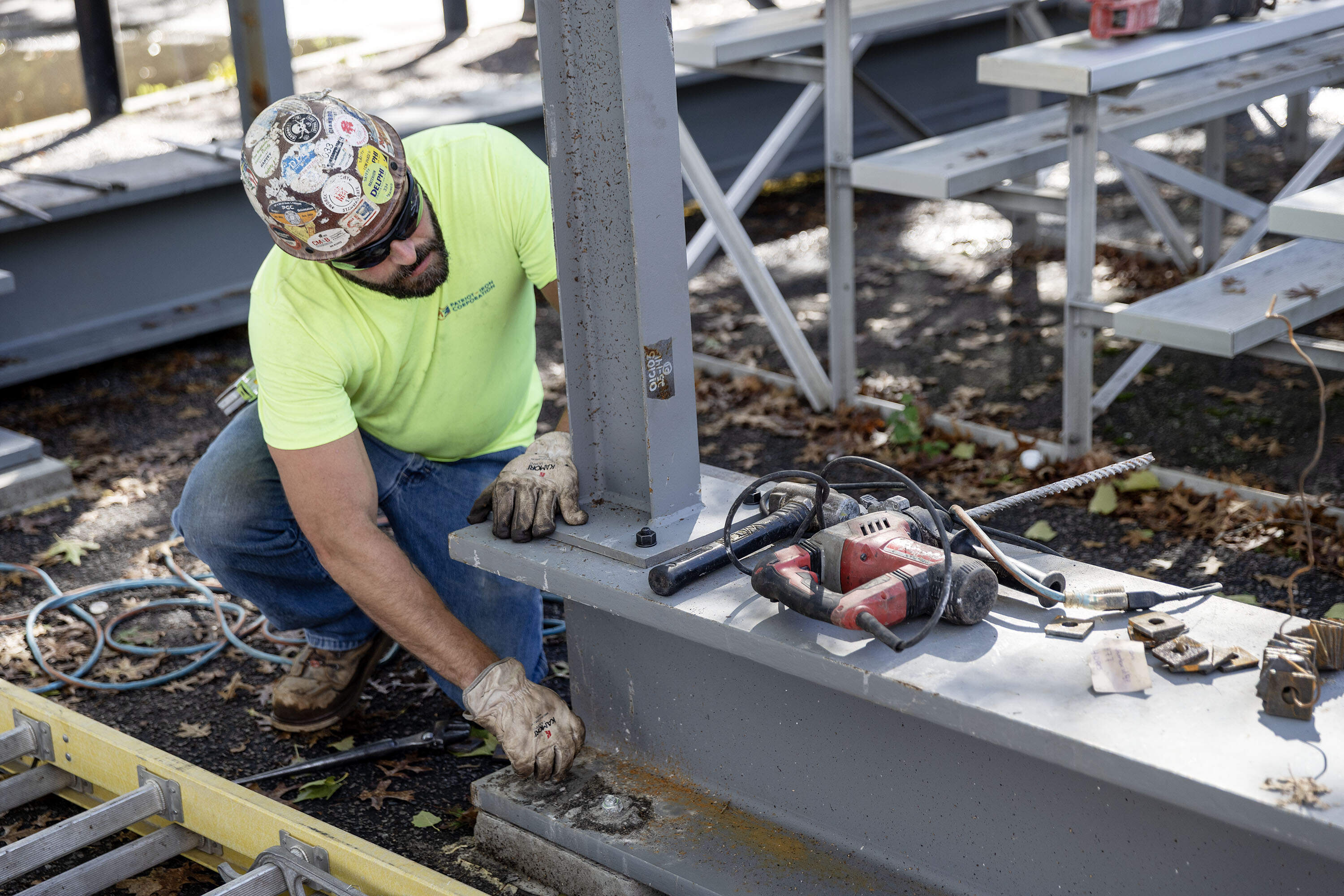
That’s where all that delivered steel comes in.
The massive members, as they’re called, aren’t newly manufactured. Brazier’s teammates collaborated with MIT steel researcher and Ph.D. candidate Juliana Berglund-Brown, who tracked down discarded columns so they could be repurposed. Structural engineers with Walter P Moore donated their time to evaluate and approve the integrity of the repurposed steel.
“We ended up using these big steel members from a water tower that went down,” Brazier said. “It had its own character and we can point back to where it came from, so it made a really great story.”
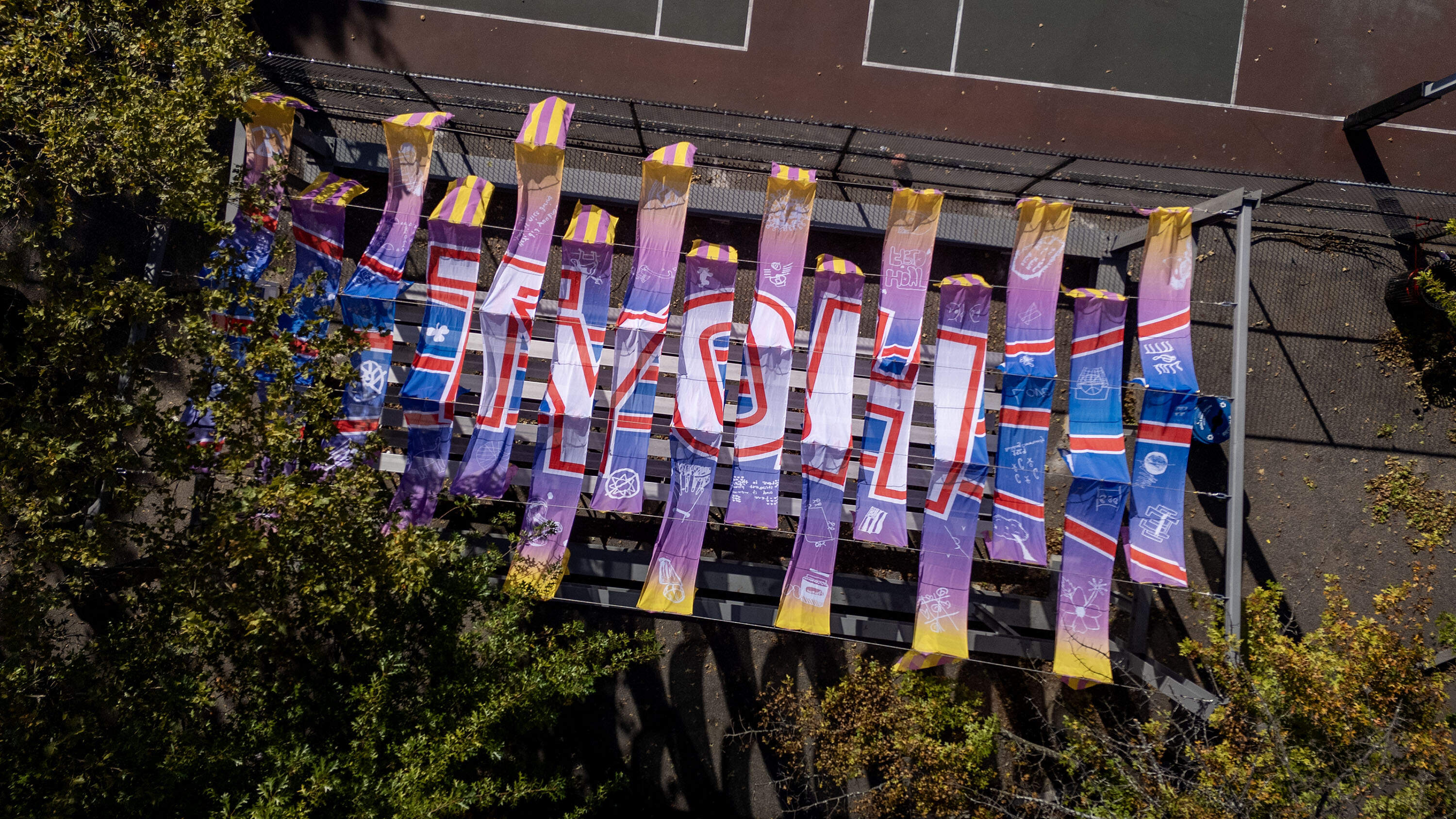
Once vertical and safely secured, the members will support a large fabric canopy with flags designed by community members. Brazier said the shade structure is also a way to start conversations, “about why there's extreme heat, and what can we do as not only community members, but also as designers, builders, steelworkers,” he said.
A deep sense of responsibility drives Brazier’s work as an architect, which began when he was an undergrad at the Massachusetts College of Art and Design. His projects have embraced not just climate resilience, but also social resilience. He wants to help residents have a voice in what gets built in their neighborhoods.
“There’s a lot of disinvestment, there's a lot of people that feel ignored, there’s the whole history of redlining and why streets are the way they are — highways coming through neighborhoods splitting things up," he said. "So there's a lot of distrust.”
Brazier hopes he can change that power dynamic, especially in neighborhoods of color.
“There are not a lot of Black architects, so being that person people can trust with their ideas, trust to communicate with,” he said. “And if you just listen to them, and help them find the right questions to ask, you can help them propose something that comes from the community and is not just proposed to the community.”
Brazier has also found ways to share his passion for how sustainably grown produce can benefit the community. As an architecture student at MassArt and MIT, he collaborated with the urban farming community on proposals for Dorchester and Mattapan, including gardens to revive vacant lots, greenhouse kits that double as places for gathering, and mobile farm kitchens commissioned by the City of Boston.
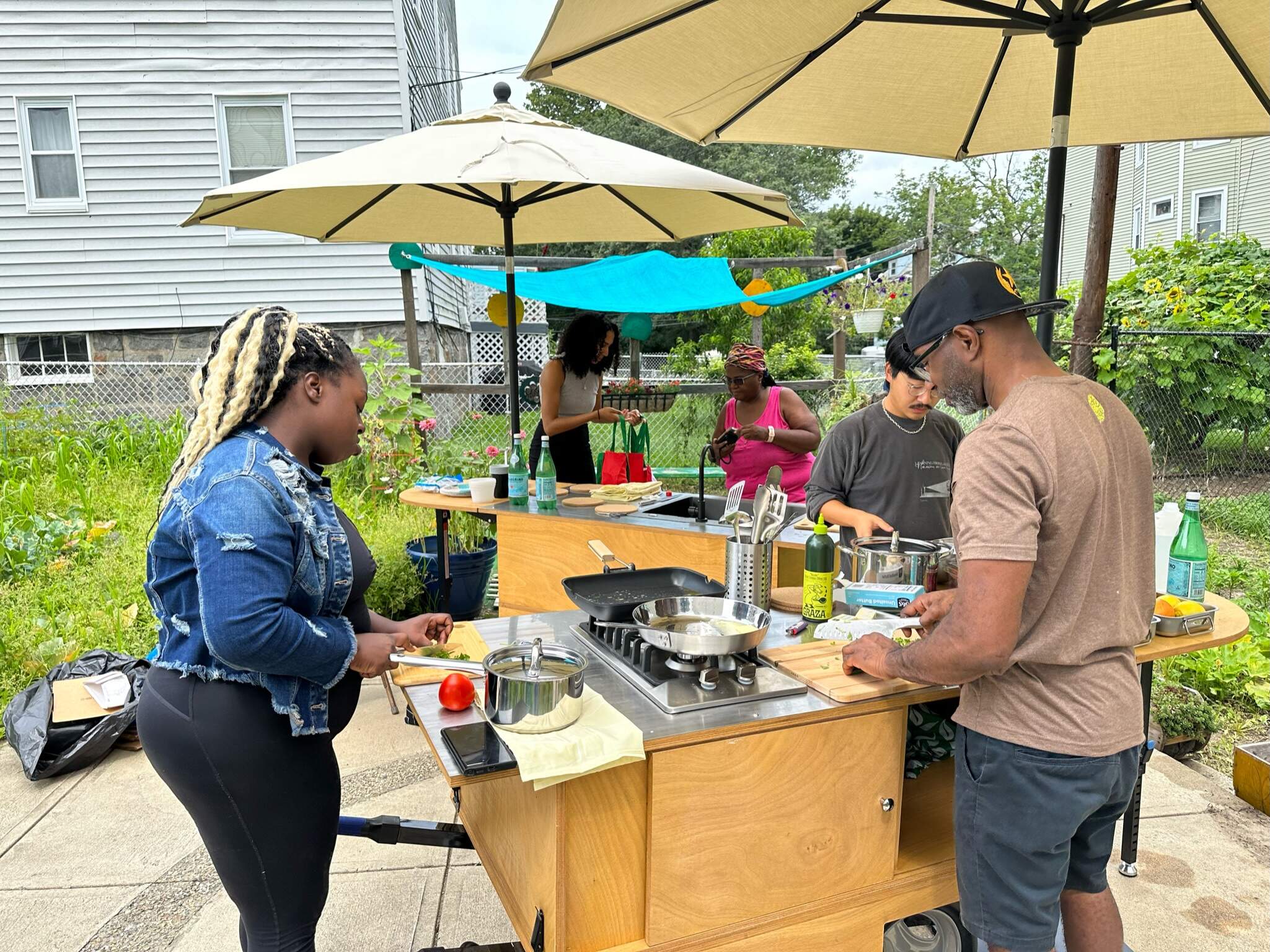
Sharing resources and bringing people together in common spaces are just two of the personal threads that weave through Brazier’s work.
“Me and my brothers are first generation. Our parents were born in Haiti,” he said. “As my extended family came over from Haiti, my great-uncle bought a triple-decker in Somerville and moved people in and out — the cousins are like brothers and sisters. So that's one way space might've been baked into the back of my head, just the multi-generational housing I grew up in."
These days, Brazier also works to engage communities around the world with colleagues at MIT’s Urban Risk Lab. They’re developing innovative climate solutions, including pop-up disaster housing, a preparedness game in Japan and more accurate heat sensors at Cambridge’s Hoyt Field.
And now that the new, repurposed steel shade structure is up, Brazier said he can’t wait for it to keep the community there cool — and together — next summer.
This segment aired on October 8, 2025.