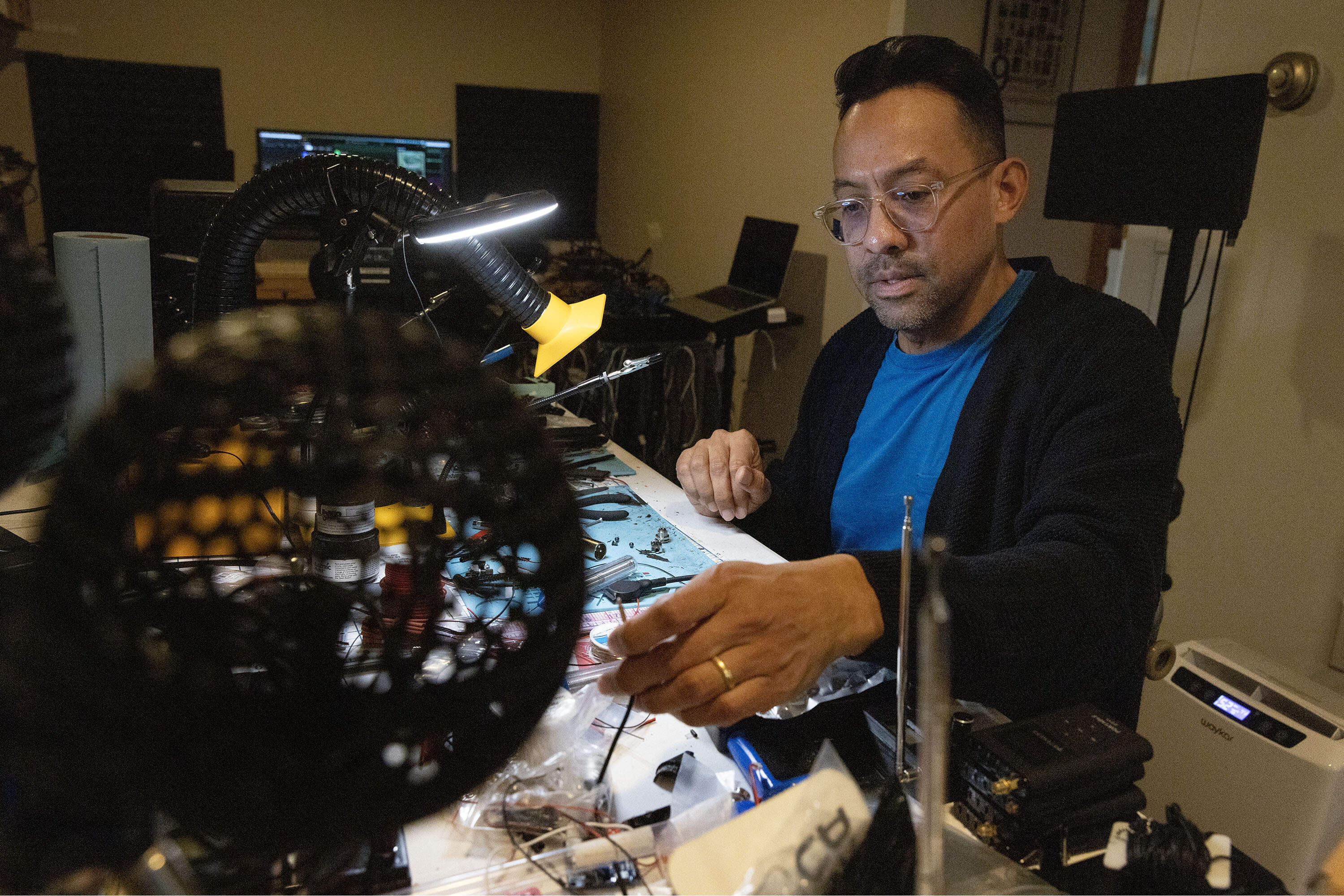
Sound designer Skooby Laposky amplifies the hidden lives of plants
As you wander through the world, you could stop and smell the roses. But sound designer Skooby Laposky believes nature’s beauty is meant to be heard.
At his “Wild Sounds” workshop in Framingham’s Garden in the Woods, the artist gathered with a group of curious participants and equipped them with microphones and gadgets to listen to the hidden symphony of plants, trees and soil. “The idea is to share all the tools I use to tune into nature,” he said, inviting the group to map out their sonic journey.
The group ventured out into the woods wearing radio headphones that tuned into micro broadcasts of sounds captured by sensitive microphones. Laposky had placed them along the winding trail: in moss-covered soil, a decaying tree stump, a bird feeder, a pond.
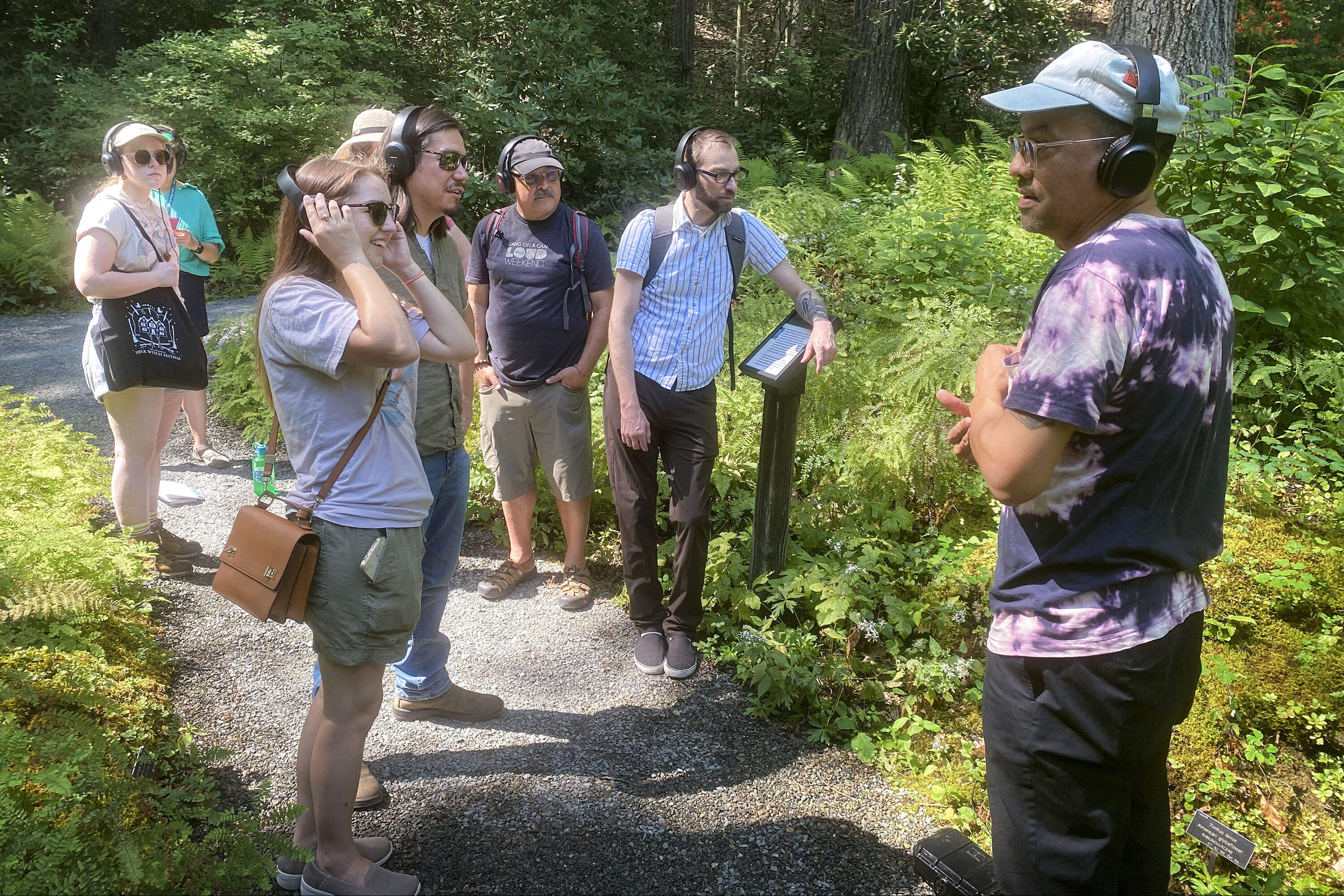
“This is the hydrophone, it’s in the water,” he said at the first stop. The submerged device can pick up the subtle sounds in a pond populated by bugs and turtles. The group followed Laposky to the spot where he stuck a geophone into a trailside mound of dirt. He said it’s the type of microphone seismologists use to listen to earthquakes. “It’s really for low frequencies, but I’ve actually had it pick up insect activity."
Laposky is an audio explorer. You could also call him a plant DJ. He collaborates with gardens and trees to turn up the volume on their hidden role in our environment. Laposky got to know this woodland garden as an artist-in-residence with the conservation nonprofit Native Plant Trust, which oversees the property. Public programs manager Giffen Maupin said she was blown away when he performed a plant concert with flowering trilliums here last May.
“Something really special that Skooby does is he allows us to really think about the ways plants can make sound,” Maupin said. “And what’s at the core of this is really having a chance to connect with plants in a whole other way.”
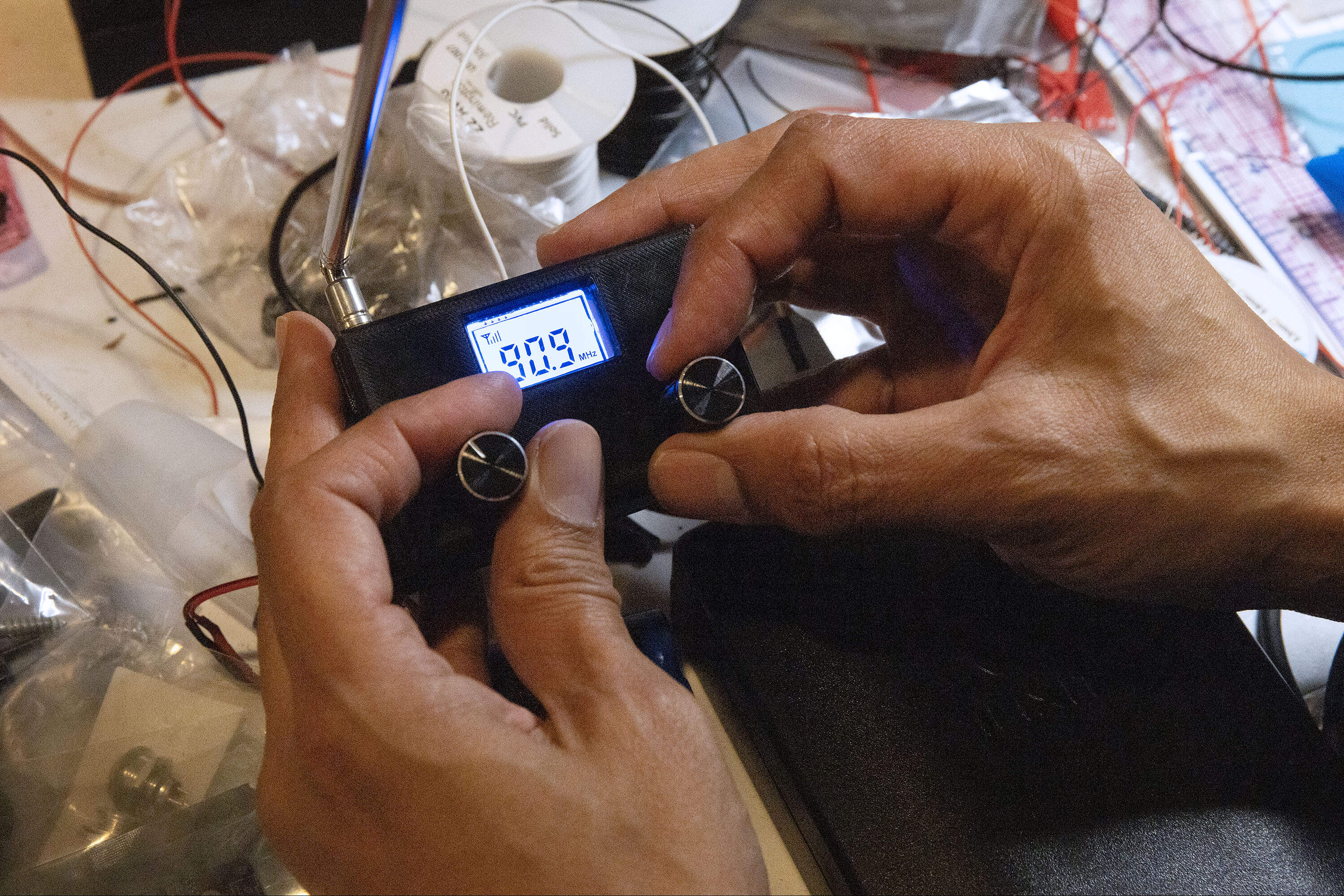
To do that, Laposky uses a technique called biodata sonification. He attaches electrodes to plant leaves, then processes and amplifies their biorhythms. “Whatever plant you connect to, it's reading the amount of electrical activity at that moment in real time,” he explained, “and giving you musical information to represent the electrical activity.”
Laposky is a lifelong music and audio tech geek. His tools are on full display in the basement lab at his home in Cambridge. A 3D printer builds microphone parts near a table covered with wires, antennas and circuit boards. Laposky grew up in rural Iowa, then went on to share his passion for sound as a DJ in places like Kansas City, Brooklyn and Europe.
Laposky discovered biodata sonification after moving to Boston in 2012. “I left the club space for the woods,” he said, smiling. “But it was all kind of a natural progression synthesizing all of my interests — synthesizers, electronic music, plants.”
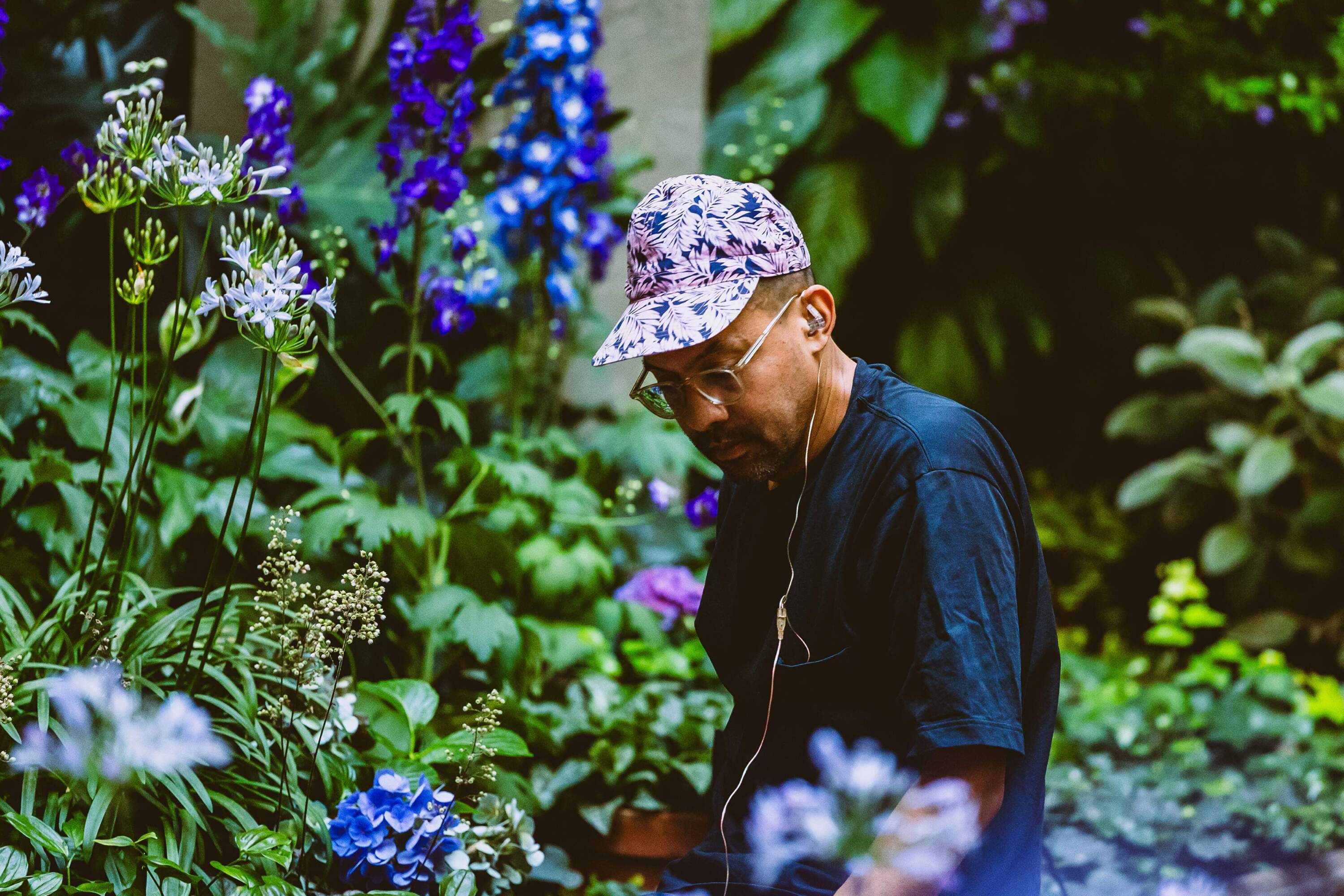
Laposky mixed his first live sonification installation in 2017 inside the Isabella Stewart Gardner Museum’s flora-filled courtyard. He synthesized their biodata to create immersive soundscapes with droning, ethereal chordal patterns. While there, someone asked Laposky if he’d ever tried sonification with trees. He was intrigued, and applied for a grant from the City of Cambridge.
“There had already been talk around the city about the disappearance of the urban canopy, heat islands, and even how that relates to redlining — if you go to a Black neighborhood, there are not a lot of trees,” Laposky said. “I had this idea: can I bring awareness through this listening experience?”
Laposky partnered with Cambridge public libraries to install solar-powered sonification equipment in trees, including a copper beech tree at the main branch. In 2021, he began livestreaming its sounds, 24 hours a day, through his website “Hidden Life Radio.”
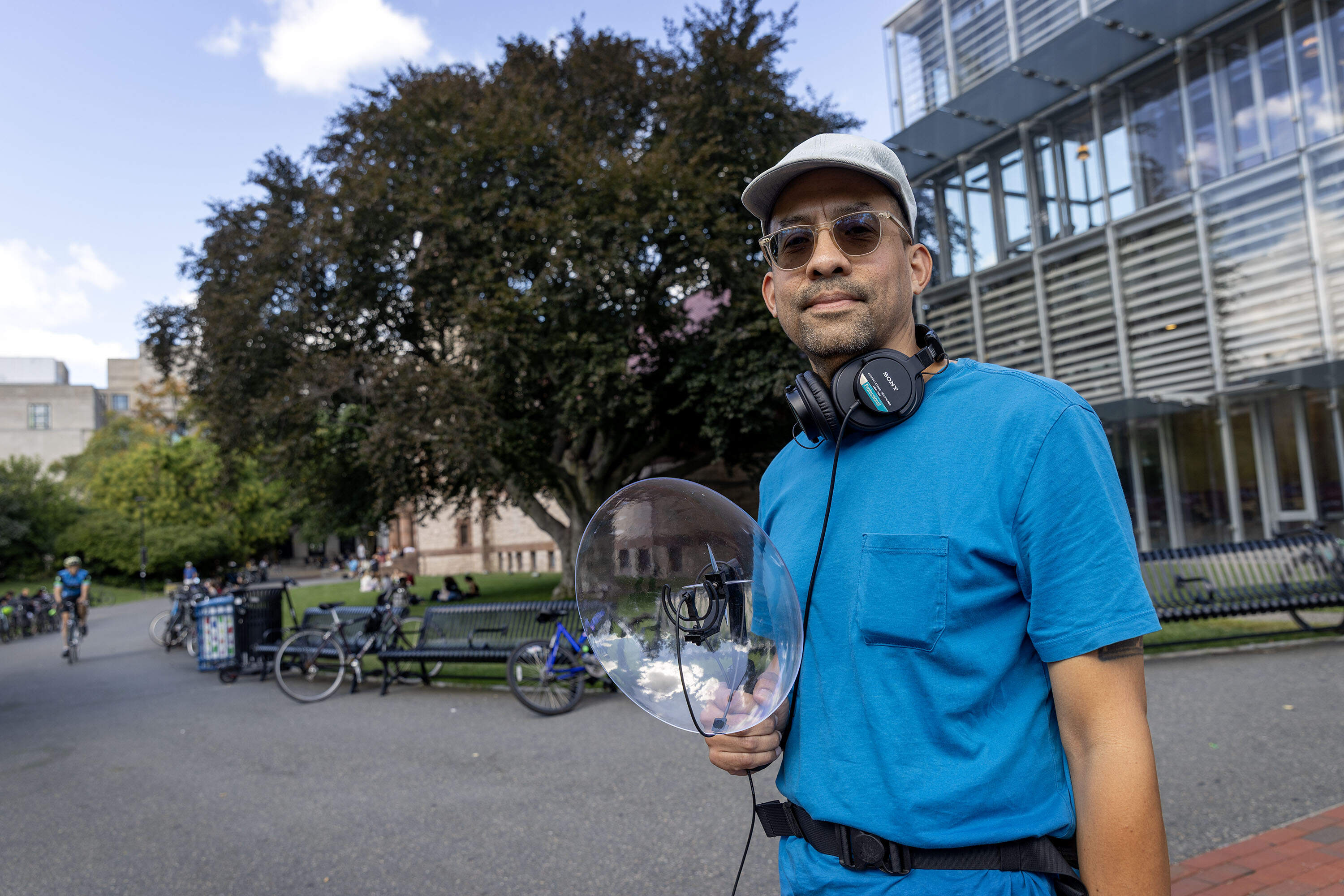
Laposky said the old-growth beech tree looks like it's from a storybook. Most days, it sounded beautiful. But there was a week when the tree went quiet. “And then it dawned on me, we’re actually having a mini drought right now."
A thunderstorm rolled into the city and the tree’s activity sprang back to life. Laposky said the experience illuminated how plants thrive or struggle in our changing climate. And it raised questions.
“If you're hearing something that's not there, what are those causes? And what can I do to help preserve the richness that I heard before that's maybe disappeared?” he asked.
Laposky’s chill plant music is a natural fit for the wellness space. He creates live sound baths for yoga and meditation classes. He also produces ambient, new age folk with guitarist Charles Copley. They’ve made on-site field recordings in forests on both coasts of the U.S. and at Walden Pond for their project “Palm Reading.”
Laposky hopes his work helps people slow down and connect more deeply with nature. “There's such a direct relationship between humans and plants that’s necessary for our survival and day-to-day existence that most folks take for granted.”
When asked if he sees himself as an environmental artist, Laposky paused, and with a hint of surprise replied, “I do. My happy place with my sound practice is really being out in the environment, out in the wild, and spending time doing the workshop at Garden in the Woods.”
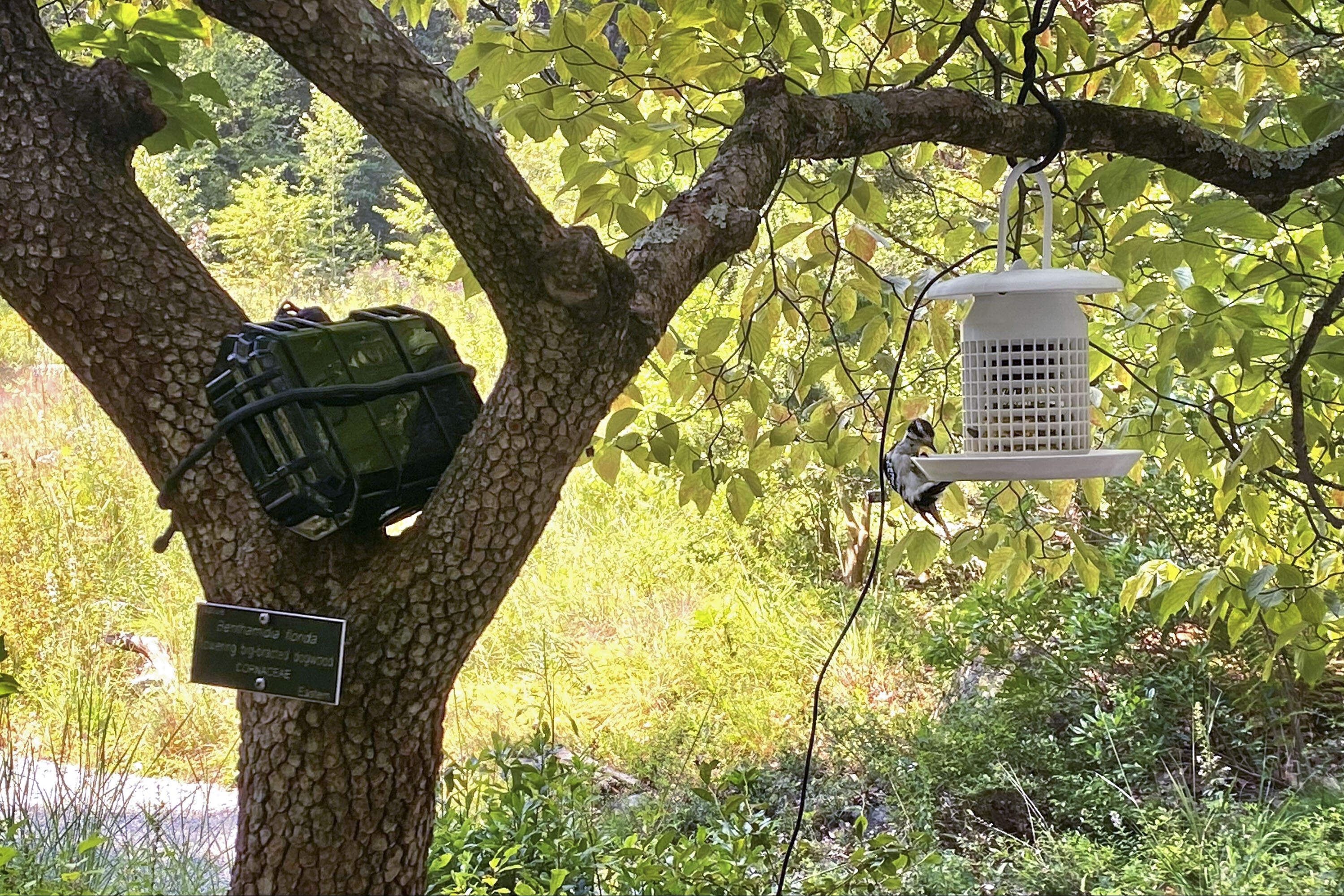
Back in the woods, Laposky’s workshop students stood in silent awe, listening as a woodpecker tapped at a 3D-printed bird feeder embedded with microphones. As the group made its way back to the education center, Jeff Danowitz, a participant from Connecticut, reflected on how Laposky’s art shifted his perspective.
“Even in our own backyards, these sounds are there,” he said. “It makes you want to tread a little bit more carefully when you’re in your own gardens.”
For Laposky, deep listening is a form of compassion. Practicing it together matters, he believes, because mind- and ear-opening brilliance doesn't happen in solitude — it comes from the collective.
This segment aired on October 2, 2025.