Support WBUR
Summer learning programs reached more than a quarter of Boston's students
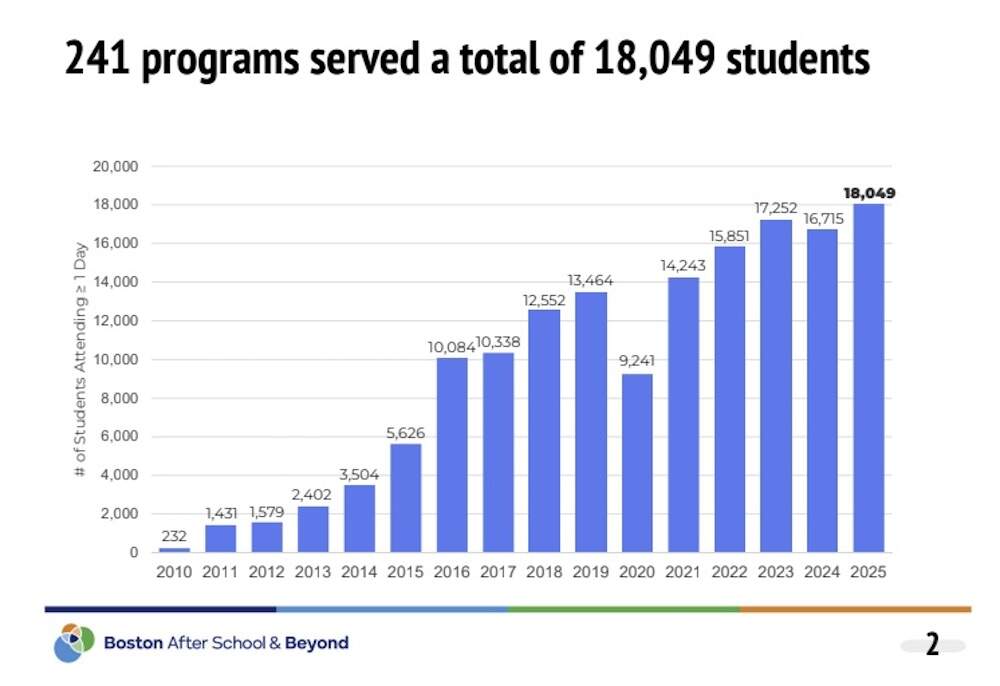
Boston’s summer learning program hit an all-time high this year with 18,000 kids participating, according to a new analysis by the nonprofit that facilitates it.
That’s the most students served since the program’s inception 15 years ago, and an increase of 1,300 kids from a year ago, according to the report from Boston After School & Beyond.
More than a quarter of the city’s school-age population took part in the programs, which range from academic instruction to outdoor exploration, sports, cultural programming and STEM-related excursions. That rate is on par with the last few years.
“ The average attendance rate was 85%, and we had some hot, humid days this summer,” Chris Smith, executive director of Boston Beyond, said. “Kids showed up because these programs are offering something that they want, not just something that they need.”
The summer network was spread among 241 sites across the city, with Dorchester, Roxbury and East Boston hosting the most programs, according to the report.
Historical data show summer learning participation in Boston has steadily increased, with the exception of a plummet in 2020 due to the pandemic.
About half of the summer programs this year were run by Boston Public Schools via a mix of high school credit recovery, school-based instruction or a program led by a community group.
Kids also had the opportunity to participate in activities offered for free or at low cost, including sailing through community partner Courageous Sailing, or learning environmental studies through Arnold Arboretum’s “Young Scientists” program.
“I think our biggest lesson over these years is that the entire city can be a classroom,” Smith said. “A lot of these really interactive programs get good results because they engage kids based on their interest. When they try something new and get better at it, they become both more curious and more confident.”
A study of five urban school districts, including Boston, by policy think tank RAND Corporation found students who regularly attended summer learning programs do better academically. RAND found better performance in math evaluations compared to peers in the following school year, and stronger language arts skills after the second summer of participation.
It's not only academics, Smith said. Kids who participate in summer programs also learn skills like “critical thinking, communication, teamwork, perseverance, in addition to academics."
The average attendance rate this summer dropped slightly to 85%, from last year’s 86%. During the regular school year, Boston student attendance is around 90%.
Smith said Boston public school leaders have been supporters of summer programming, known as “5th Quarter." BPS invested $3 million and the state $466,000 in the programs this year. Total funding dipped by about $1 million from last year due to the expiration of federal coronavirus relief funds, which helped support summer and afterschool programming.