Support WBUR
Boston's Saturday Morning Newsletter
Meet the new woman in charge of Greater Boston's zoos
Editor's Note: This is an excerpt from WBUR's Saturday morning newsletter, The Weekender. If you like what you read and want it in your inbox, sign up here.
For the first time in 23 years, Greater Boston’s zoos are under new leadership.
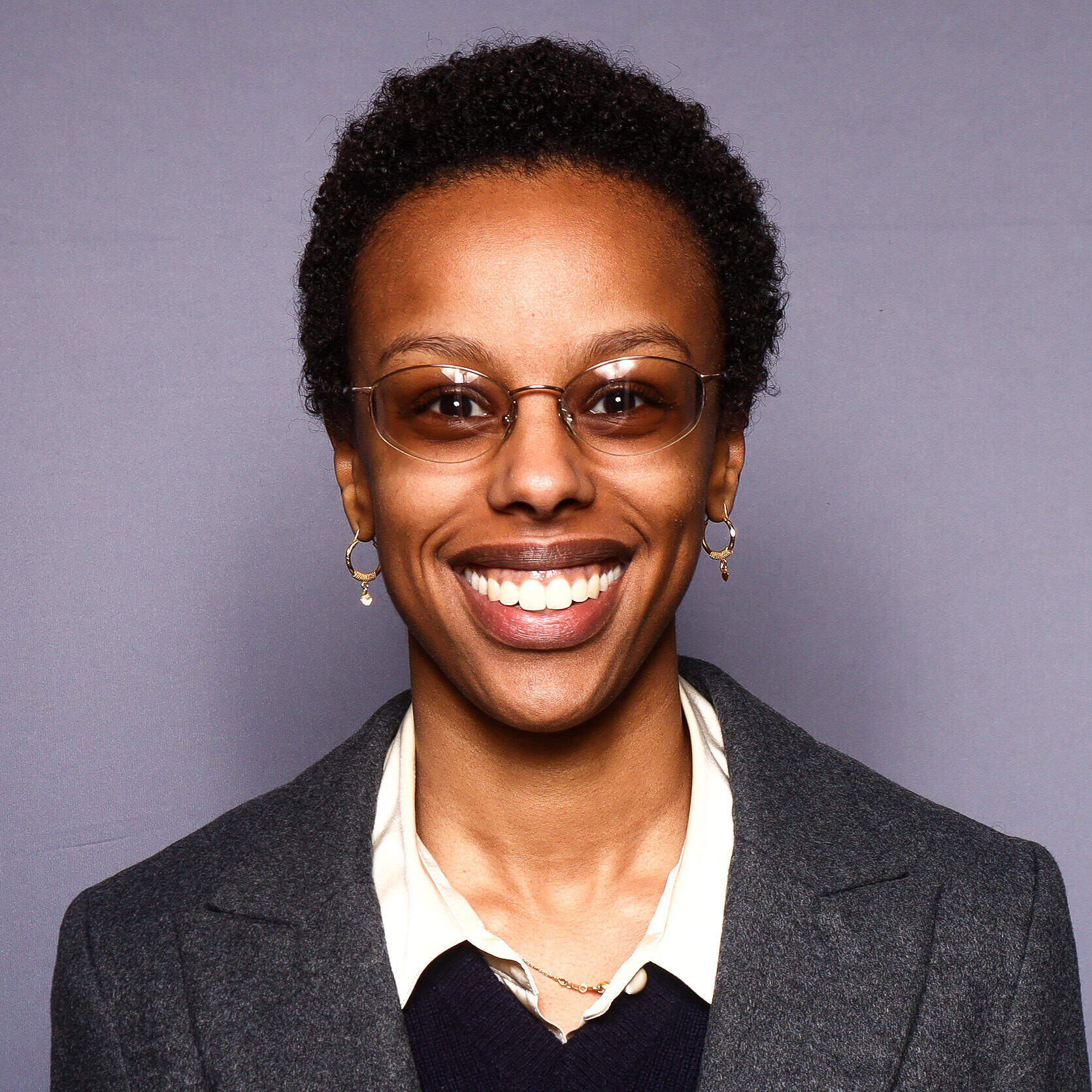
Stephanie Brinley, formerly the deputy director of the Smithsonian’s National Zoo in Washington, D.C., stepped into the role of president and CEO at Zoo New England last week, succeeding longtime zoo head John Linehan. Brinley will oversee Boston’s Franklin Park Zoo and Stoneham’s Stone Zoo, ushering in new exhibits and popular off-season programming.
Brinley describes herself as a lifelong animal person. Just don’t ask her which one at the zoo is her favorite.
“What I’ve discovered is that asking somebody what their favorite animal isn't the right question,” Brinley told WBUR. “The right question to ask is, ‘What is your current obsession?’ Because it changes based on the nature of the things happening at the zoo.”
Her current obsession? A male giraffe calf born just two months ago at the Franklin Park Zoo.
“He's already gargantuan … he's on display with his mom in the yard,” Brinley said. “I was just seeing him today and he's really, really awesome. So he's my latest obsession. But of course, talk to me again in a couple of months and that obsession will probably change.”
Brinley isn’t just bringing a passion for animals to the job. She also served in the U.S. Air Force for 12 years, a background she says helps inform her work with animals. We spoke with Brinley about her shift from the military into the animal conservation space, and what she’s looking forward to at the helm of Zoo New England.
Editor's note: This interview has been lightly edited and condensed for clarity:
How do you think your military background will help with this job? What prompted your shift into the conservation space?
Stephanie Brinley: “My military background absolutely has helped me to step into situations that are fluid — that you have to respond to and are quick moving. And I think that that definitely applies to the conservation space in particular, where every day is very different, because animals don't act in ways that you think they're going to act in. So being able to quickly think on your feet has been very valuable to me.
“As far as how I got here, I've always been an animal person. I've always been that person. When I was a kid — I grew up in Indiana — I was running around the woods, I was flipping over logs. So while my early career took me to the Air Force Academy and then into the Air Force and then to Smithsonian's National Air and Space Museum, when I got the chance to switch over to Smithsonian's National Zoo and Conservation Biology Institute, I was all in.”
What practices from your time at the Smithsonian Zoo would you like to bring over to Zoo New England?
SB: “Smithsonian National Zoo was a great training ground for me to really get an understanding of how zoos operate. And more than that, the importance of conservation, in not just the zoo setting but across the board and how conservation and zoos are two sides of the same coin. They don’t function without each other. And it’s really important for me as I start to work at Zoo New England and lead this amazing group of people forward that we can clearly communicate our conservation stories and all the incredible science and research work that our employees are doing.”
What are the challenges that come with leading a zoo network like the Smithsonian or Zoo New England?
SB: “The challenges are similar, going back to the animals themselves. Everything is a little bit different. And while that is also part of the fun of operating in these environments, it’s also a significant part of the challenge, because one size does not fit all. You’re constantly having to be creative. Cycling back to the conservation piece, the pace of research and scientific discovery is so great that it’s one of those things where you have to keep up with it, to make sure that you’re always paying attention to those things.”

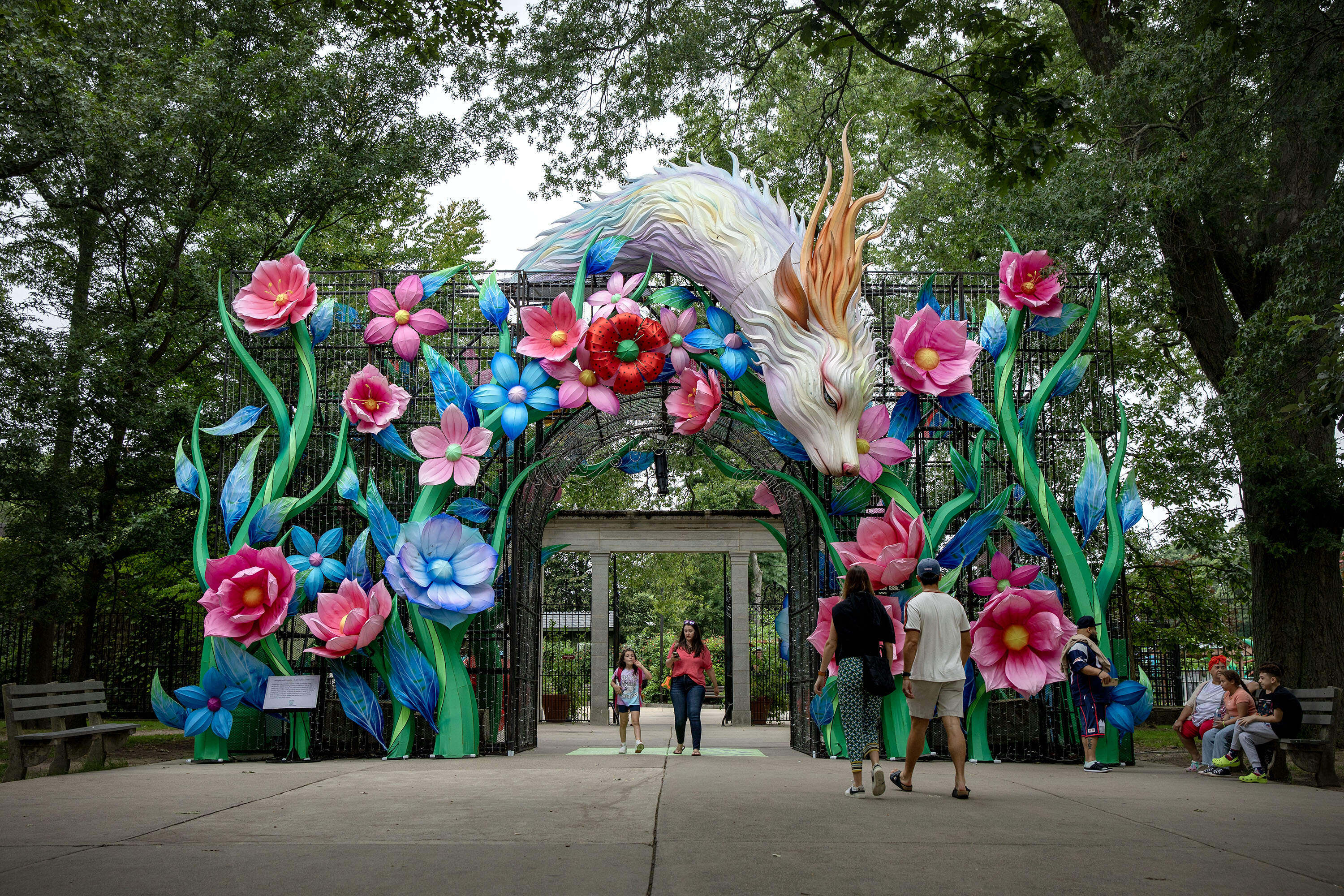
The annual “Boston Lights” and “Zoo Lights” are Zoo New England’s most popular off-season attractions. How do you imagine the event will evolve under your leadership? Are there other experiential events you want to bring to Zoo New England?
SB: “Boston Lights has definitely become incredibly popular and a destination for families to come. The lanterns are amazing, and it gets a little bit bigger every year. That continues every evening, running through Nov. 2. I am in awe of it, and I want to take some time as we go through the next year to really look at how it performs compared to other opportunities and where we might be able to improve these guest experiences.
We're also going to be doing later this month, because it's October, “Boo at the Zoo” at Stone Zoo and “Zoo Howl” at Franklin Park Zoo. And I'll be interested to see how both of those perform. I think that being able to offer these Halloween opportunities and looking at what some other opportunities may be to reach out to other age groups throughout the seasons.”
What’s one thing you’d like to improve within your first year at Zoo New England?
SB: “There's an amazing staff here at Zoo New England, and they've done some incredible transformation of the facilities, both at Stone and here at Franklin Park over the last several years. I'm really looking forward to working to open up our new exhibit, the African Experience, where we'll have penguins, which will be very exciting.”
Right now the African Experience is slated to open at the Franklin Park Zoo in spring 2026. Is that still on track?
SB: “Yes, it's still scheduled to open up this spring. I was just walking the site yesterday and very excited to see the buildings going in. Everybody should come out because penguins are just a really fun species, but that won't be the only thing that will be there. It'll tell the entire story of the African experience, and some of the animals that folks love that have been off of display because of the work on their habitats — like our ostrich and our zebra and the wildebeest — will be out and about and they'll be able to be seen again.”
Tell us a little more about Zoo New England’s new tree planting initiative in Roxbury and Dorchester.
SB: “That's such an exciting partnership. Being able to plant trees of native species in order to continue the biodiversity of the area. Green space is always at a premium when you start getting into urban areas, and being able to sponsor and offer the tree plantings and to continue to advance the canopy growth in these areas, not only provides visual appeal, but they also help with shade covering. They reduce the overall temperature in the areas where you have incredible canopy cover. And so it's just an all-around great opportunity and we're very honored to be able to lead and participate in that effort.”
You also mentioned community partnerships as a priority under your new leadership. What kind of partnerships are you most looking forward to pursuing?
SB: The communities around Stone and around Franklin Park are already very supportive of our facilities and I wanna continue to build on those partnerships. You know, they're gonna have to get to know me. The prior president and CEO has established some great relationships, but this gives me the opportunity to expand the network into some other areas that we haven't had relationships with before.”
P.S. — You can learn more about the expanded African Experience exhibit — and the cute penguins in it — in this story from 2024.