Support WBUR
MFA resolves ownership for vessels by enslaved potter David Drake
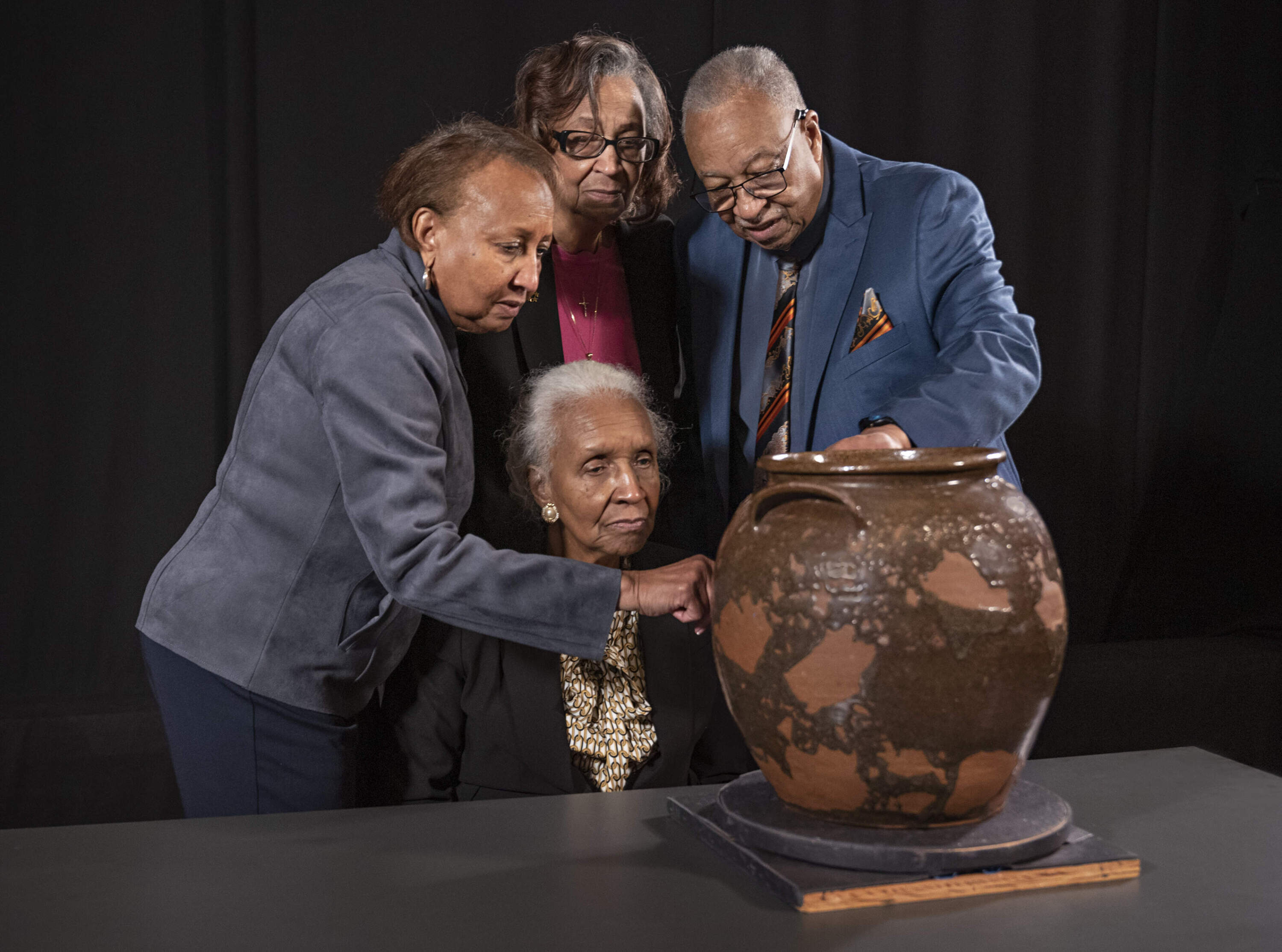
The Museum of Fine Arts, Boston has returned two monumental stoneware vessels to the descendants of the enslaved man who made them.
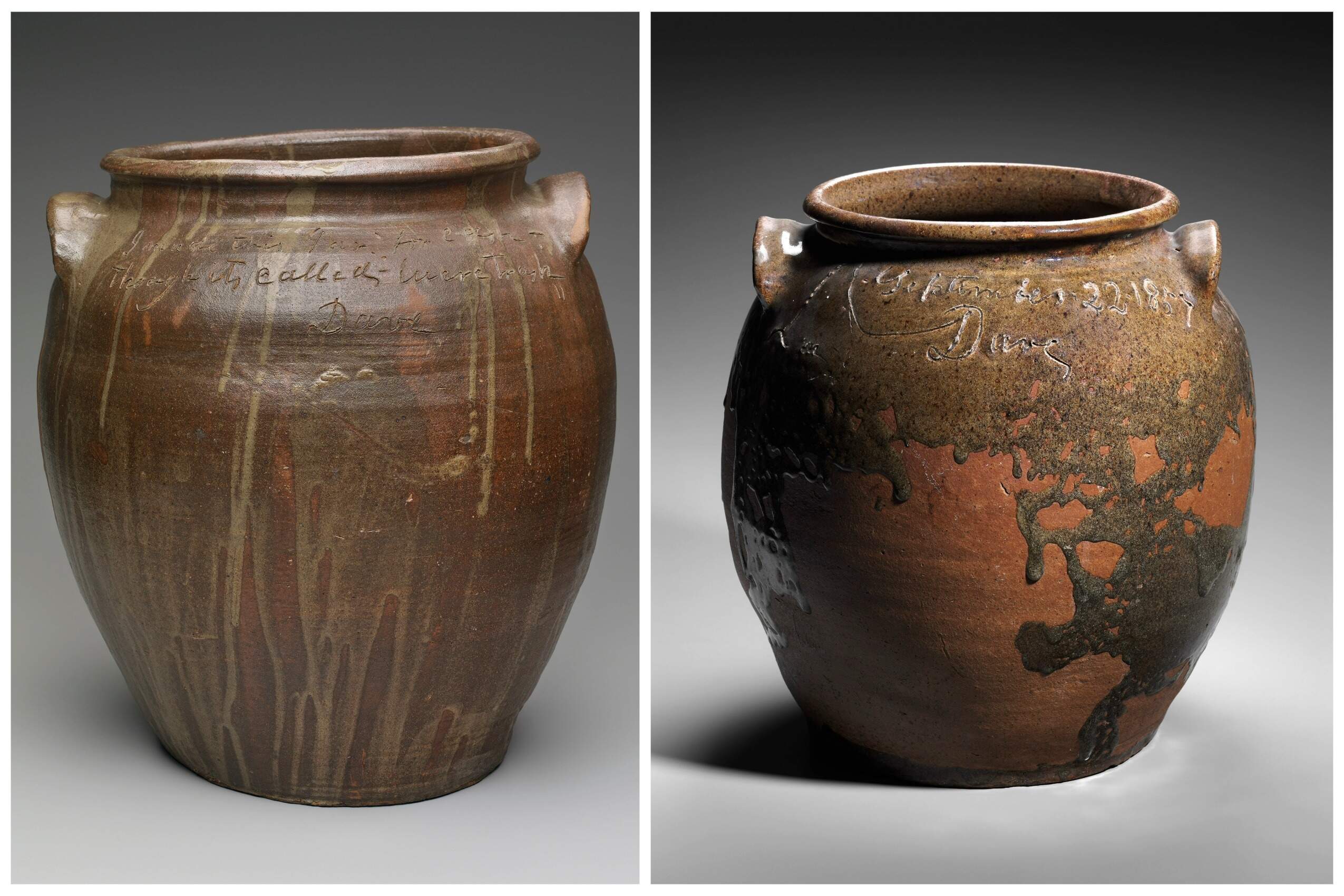
The museum acquired the two clay jars in 1997 and 2011. They were made by an enslaved potter named David Drake. Now, for the first time, the MFA has resolved ownership for works from the 19th-century slavery era in the U.S..
After the official transfer, the MFA repurchased one of the pieces — “Poem Jar” — from the descendants. The family retained ownership of the second pot — “Signed Jar” — but they decided to loan it to the MFA under a long-term agreement.
“This is really a story about the family, it’s a story about the vessels, it’s a story about David Drake's legacy,” said Victoria Reed, the museum's Bettina Burr Chair for Provenance. “It's absolutely a responsibility to conduct the research and to reach an ownership resolution, whether that is to return a work of art or to reach a financial settlement when there is indication of theft or looting or coercive transfer.”
The restitution process began as the museum was organizing the 2023 exhibition “Hear Me Now: The Black Potters of Edgefield, South Carolina.” Drake’s descendants and the MFA discussed rightful ownership of the acquisitions and moved forward with this historic agreement to restore the pieces to the artist’s relatives.
“As a family, we want to thank and commend the Museum of Fine Arts, Boston for its outstanding moral, ethical, and inspiring leadership with regard to this landmark act of restitution,” said Pauline Baker, Drake’s descendant in a statement.
“Our great-great-great-grandfather never got to own one single piece of his own pottery or to pass them on to his children and grandchildren. But today the museum does all it can to right that wrong,” she said.
One of the vessels, “Poem Jar,” is currently on view in the Art of the Americas Wing. At the time of their making, Drake was simply known as “Dave” for the simple way he signed many of his pieces. Drake lived from about 1801 to the 1870s and threw thousands of clay food storage vessels that were sold to plantations. He crafted the two jars in 1857 at the Stony Bluff Manufactory in western South Carolina.
According to the museum, he began signing and dating his work in the 1830s. Drake was also a poet and often inscribed his pots with verse. This was a defiant act because it was illegal for enslaved people to read or write.
On “Poem Jar,” Drake etched: “I made this Jar = for cash/Though it’s called Lucre trash.” Lucre — as in lucrative — paired with the word “trash” reveals the artist’s awareness that the proceeds from the sale of his work went to his enslaver.
“We are pleased to reach this landmark resolution with the family of David Drake,” said MFA director Pierre Terjanian. “His works tell important stories. We acquired two jars by him to share his accomplishments as a talented artist, and to also call attention to the conditions of slavery under which he lived and worked. We are honored to be able to continue to share Drake’s creativity and story with our visitors and to preserve his legacy for future generations with support from his family.”
In its announcement, the MFA also said the restitution of Drake’s works “is consistent with other resolutions it has reached for works of art that changed hands without the consent of their owners, for example during the Holocaust. In achieving the resolution, the MFA recognized that Drake was deprived of his creations involuntarily and without more compensation.”
Drake’s family will continue its efforts to reclaim the artist’s work, dignity and memory through the Dave the Potter Legacy Trust.