Support WBUR
Somerville indie band Intac embraces selling out
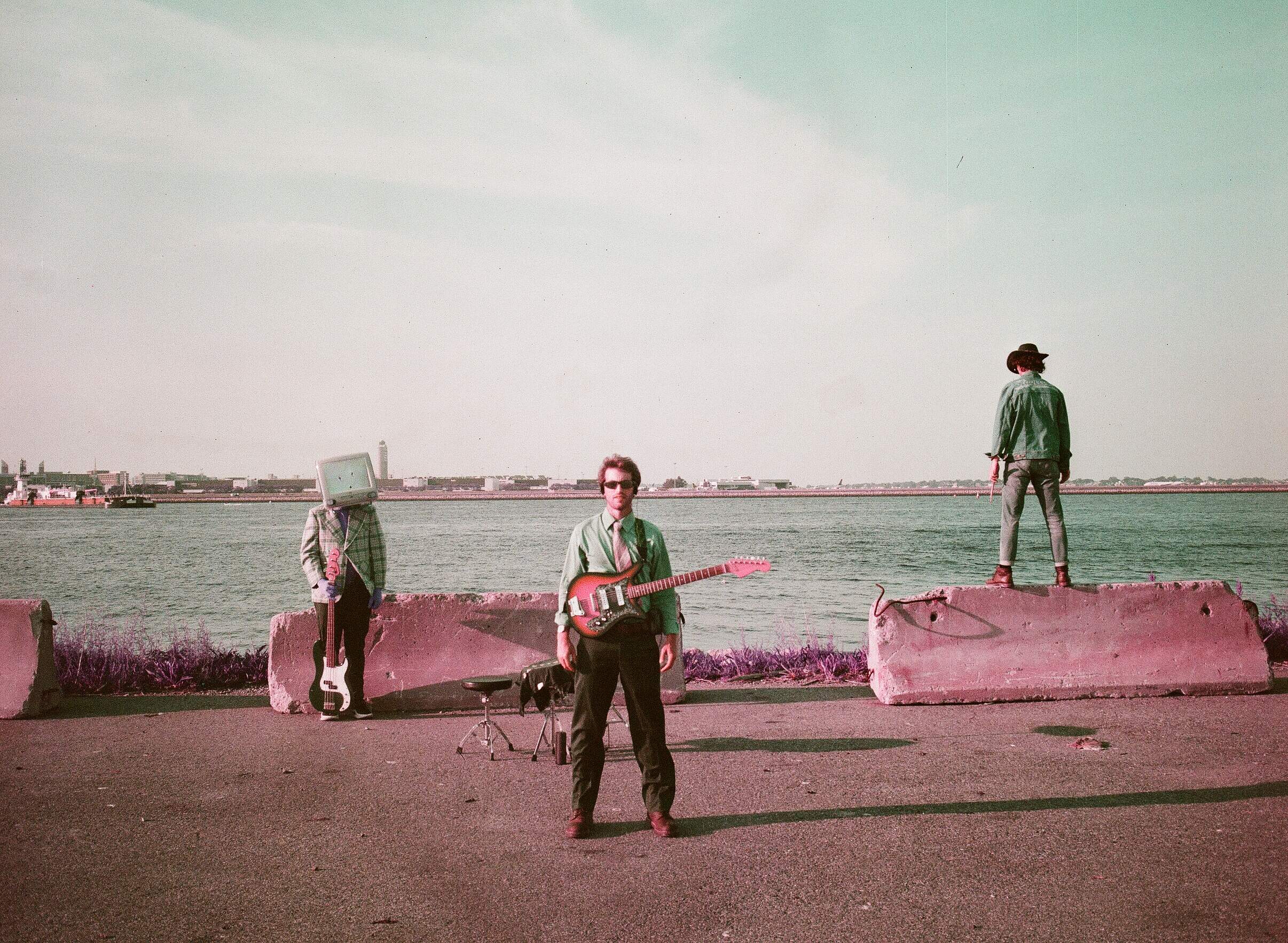
Lucas Restivo has a slideshow cued up on his laptop to help him explain the five Gs of “How to Build a Business Like the Mafia,” a strategy he claims to have learned from a run-in with organized crime. They involve grandmas (“The strongest people in the world,” according to Restivo. ”You want your business to be like one.”) and garlic (“Powerful flavors make powerful people.”)
“Follow these steps,” Restivo said. “And you’re well on your way to success.”
This is just one of many absurdist bits that Restivo has worked into a long slideshow for his band Intac’s live act. For the uninitiated, the experience of seeing them play is difficult to describe completely, but picture mournful guitar-led songs with frontman Bill Restivo singing about heartache and authenticity, punctuated by twisted multilevel-marketing parody.
That kind of whiplash is an extension of the Somerville-based band’s online presence, which has eschewed the anti-corporate trappings of a typical indie group and frontloaded a desire to get paid. Since indie’s inception as a genre, selling out has been used as a kind of epithet, as if even the whiff of some green would stain the purity of the art. But Intac has leaned in completely, paradoxically referring to themselves as the “First Indie Music Corporation,” calling fans shareholders, and granting band members corporate titles.
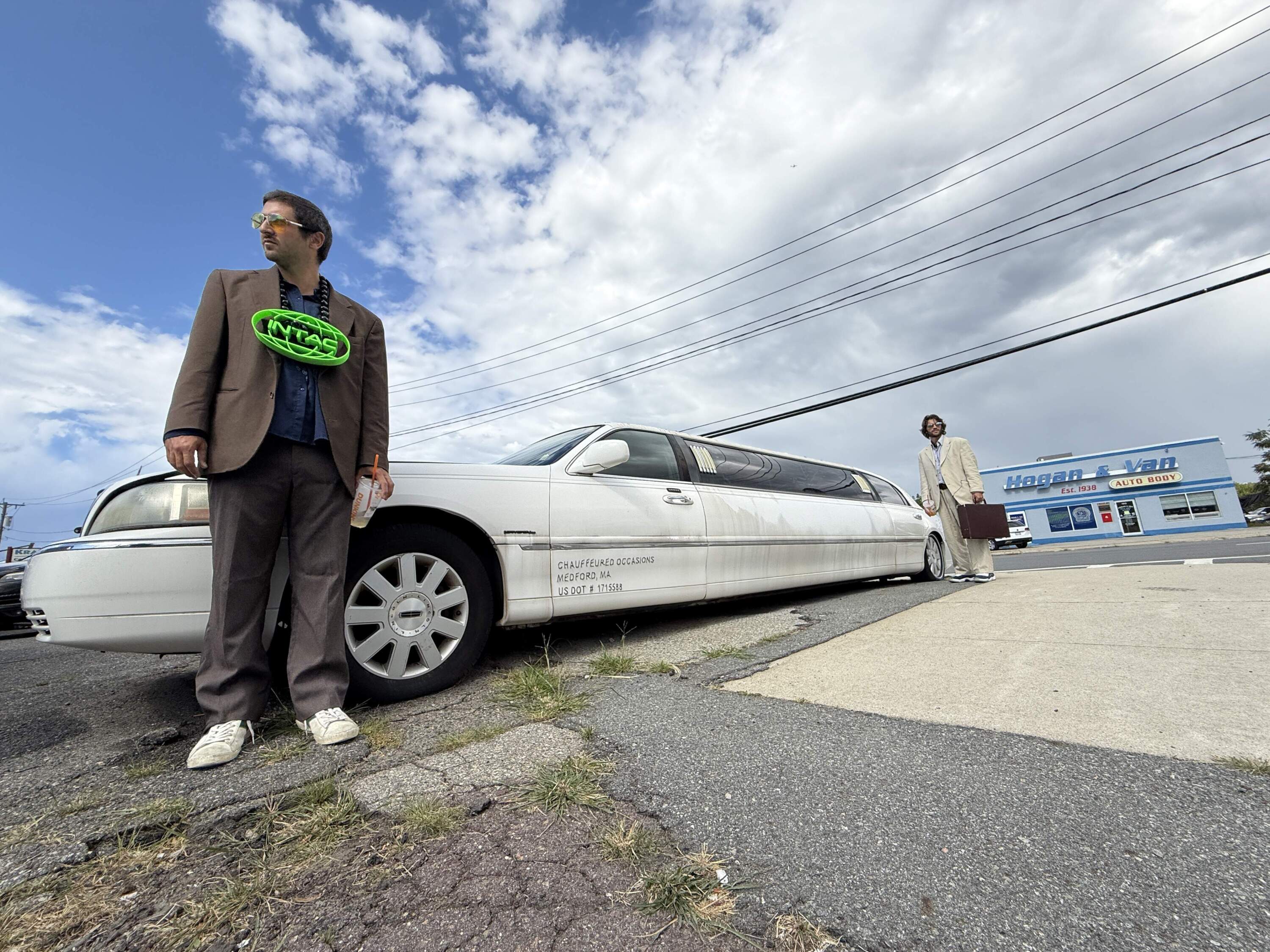
“Creative director” Bill Restivo founded Intac in the fall of 2023 quickly bringing on his cousin Lucas as “quality and innovations director,” and slowly expanding the roster to include several artists and musicians he knew from his days in Burlington High School when the duo played emo music as a band called Grandview. They include: operations and risk management director Josh Rosenberg (keyboard/guitar), visual media and vibrations director Peter Debarros, (bass), lead guitar technologist Jake DeRosa (guitar) and percussive specialist Nick Morrone (drums).
While the business antics are played for laughs, Intac feels the approach is one of the more authentic ways to present itself as a band. After all, any budding musician wants to make a living off their labor. The members of Intac just aren’t pretending they want to starve.
“It’s not really satire,” Bill said. “Everything that we’re saying about the money of it all, we do mean.”
Rosenberg points to his experience as a talent buyer and event manager who has worked at festivals like Playa Luna and Boston Calling. “If the dollars don't work, that show doesn't work as much as that sucks,” he explained. “Music is an emotional thing, and it's something that people connect to, but it also doesn't exist in 2025 without dollars going into it.”
The hijinks are a means to an end. At shows and online, new fans may come for the laughs, but Intac hopes that they’ll stay for the music. Despite its corporate presence, the kinds of songs Intac plays won’t be found on the Billboard 100. Listing the musical influences for their newest album (released Nov. 6), “God is Time, Time is Money, and the Money’s Long Gone,” Bill pinpoints the Moldy Peaches, a band whose 2001 indie cult classic is distinguished by an unapologetic refusal to record their instruments or voices with any polish.
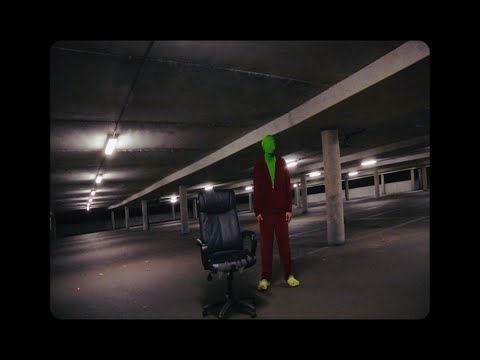
Taking their cue, Bill sought to write great songs with as few bells and whistles as possible. The resulting album is deceptively laid back. “God is Time” takes listeners through alt-country rockers, toy piano ballads, and funky jams with the kind of guitar work you might find on an early Mac DeMarco record. The songs are straightforward, but they are never boring, buoyed by Bill’s charismatic singing and lyrics, which take you to unexpected places.
Take the final verse of “That Boy Has Got Himself A Nice Head of Hair,” which reads as an embittered homage to Boston: “This beautiful city/ Will make a beautiful lab/ Ten million ways/ To destroy a rat/ And I love you/ How a vassal loves the castle/ How a camera loves an a-------.”
It’s the kind of tightrope between comedy and tragedy that Intac seems to have mastered on “God is Time,” an extension of their live antics, slideshow and all. There have been shows where Bill has caught himself singing with vulnerability about feelings of heartbreak, disorientation and loss when the audience will suddenly burst into laughter at a slide projected behind him.
Rather than be discouraged, Bill said, “It’s kind of fun. It's like we're able to Trojan horse a good song with some humor.”
Disarming the topic has given Intac a feeling of liberty and a way around the inevitable cringe of self-promotion. “I want to share the music that we’re making,” he said. “A fun way to do that seems to be a really straightforward, ‘Hey, this is a business, and we're trying to make money.’”
For this reason, Intac is experimenting with operating outside of major streaming platforms like Spotify or Apple. For the time being, fans are only able to access their discography through places like Bandcamp.
It has long been understood that streaming does not pay most artists enough to make a living. But in the last year, momentum to sever ties with the biggest streaming service, Spotify, has grown among indie musicians over rising ethical concerns. High-profile acts like King Gizzard and the Lizard Wizard, Hotline TNT and Deerhoof recently removed their music after finding out that the company’s CEO, Daniel Ek, had invested in a firm that was developing AI for military use.
Musicians like these may endure financial harm, but they already have an established fanbase to buoy them. For bands like Intac trying to gain a following, working outside the Spotify ecosystem means saying no to the exposure that those platforms have long promised.
It’s a gamble Intac is willing to make, betting that a few dedicated fans will be more beneficial to their bottom line than a handful more from around the world.
“We all grew up in an era where you bought a CD, and you saved all your pennies, and you spent 20 dollars on a CD,” drummer Morrone said. “You’re buying something and putting a value to it and then spending time with it.”
Ultimately, the move comes from a belief in the product. “We believe that these songs are worth $10,” Lucas Restivo added. “We hope that there are people out there who feel the same.”
It’s all right there in the first indie music corporation’s mission statement: “We believe in the value of song and the power of love.”