Support WBUR
Wu trades barbs with state lawmaker over 13% tax hike
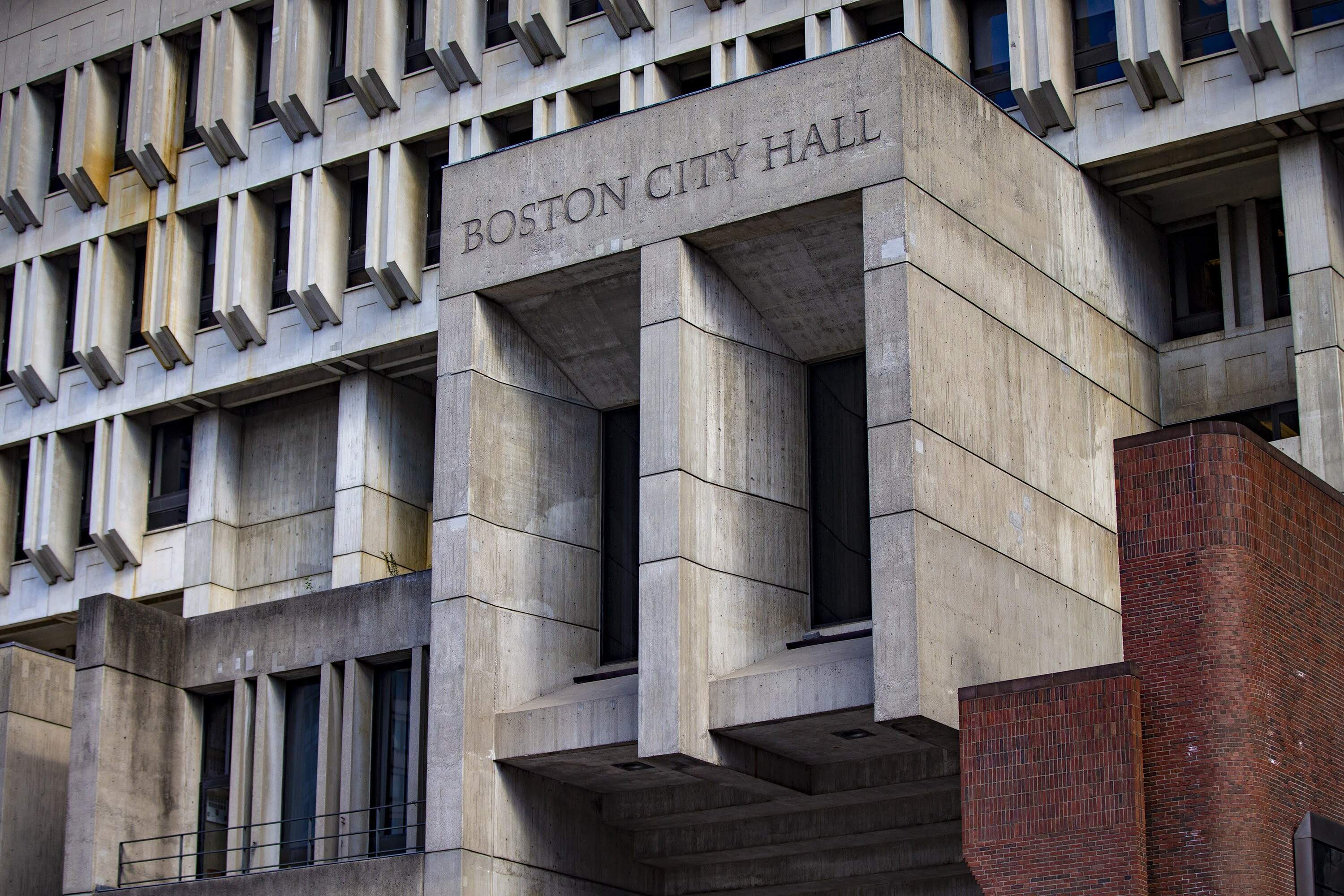
The fight between Boston Mayor Michelle Wu and State Sen. Nick Collins over property taxes is boiling over as the city’s top leader has struggled to shift the burden from homeowners to commercial property owners.
At a press conference Thursday, Wu said her Beacon Hill colleague, Collins, doesn’t “understand the basic facts of what his constituents are going through,” with residential property taxes expected to rise 13% next month — or $780 a year — on the average single family home. Commercial real estate taxpayers in Boston, meanwhile, are likely to see their bills decrease by 4.4% — for an average $210,000 in yearly savings.
On Friday afternoon, a city spokesperson announced the state Department of Revenue had finished certifying the valuations for commercial and residential real estate in the city to determine how to tax individual properties. The projections released to reporters on Tuesday lined up with the state’s numbers. Last year, critics pointed to considerable discrepancies between the two.
“Now that the valuations for Boston’s 180,000+ parcels have been confirmed, we can say with certainty that unless the state legislature takes action on Boston’s residential tax relief home-rule petition, the average single family homeowner’s tax bill will go up by another 13% next year, with many households having even higher increases than the average,” a city spokesperson said in a statement. “This is unacceptable and deeply destabilizing for our residents and for the businesses they run, work in, and shop at. We urge swift passage of this legislation before tax bills go out in January.”
Wu is taking political heat for the tax increase. Residents will pay roughly 34% more than they did just three years ago, to cover a significant part of the city’s $4.8 billion budget.
But Wu placed blame for the rise in residential property taxes at the feet of Collins, a Democrat in the Legislature who represents South Boston and parts of Dorchester and the Seaport. Twice, Wu said, Collins has moved to block her efforts to temporarily shift the tax burden more toward commercial property owners; under her compromise plan, residential taxes would rise 9%, instead of 13%.
Under state law, Wu needs approval from Beacon Hill to make changes to the tax structure, and in this case force the commercial sector to pay more. But the measure she worked on with business groups and recently got through City Hall for a third time, is stalled at the State House.
“After over a year of intensive debate and information, there were multiple hearings at the Boston City Council. There were two specific hearings before the State House that Senator Collins skipped out on and did not ask any questions at,” Wu said. “There was a meeting in the Senate president's office that I and our Boston delegation and the business group representatives were all at, and Senator Collins did not say a word in that meeting.”
Collins on Friday told WBUR that he is reviewing the city's updated property tax data. He also touted alternative measures to lesson the tax burden on residents.
"The Senate has proposed measures that deliver relief to homeowners without jeopardizing our economy," he said. "These include giving cities and towns the authority to issue rebates and other targeted relief using stockpiled surplus funds. I hope the City will support these common-sense solutions that provide relief to homeowners without putting our economy at risk."
Collins and several major business groups claim Wu’s tax shift plan jeopardizes the city’s economy by putting undue strain on commercial developers, who are struggling to fill office space in a post-pandemic world.
At the same time, Collins and others have questioned why it took so long for the city to share the real estate valuations.
Wu slammed any “accusations” that her administration withheld or obfuscated the numbers, saying elected officials’ “first responsibility” is to be “honest with our constituents.”
“ I just want to be very clear about that,” Wu said, “Senator Collins is either badly misinformed or purposely misleading voters and residents.”
The residential tax exemption rate and tax shift amount must be approved by the Boston City Council this Wednesday during the body’s final meeting of the year.
Ahead of the vote, the city council is scheduled to meet for a hearing on property taxes Monday at 10 a.m.
This article was originally published on December 05, 2025.