Support WBUR
Boston's Morning Newsletter
Massachusetts could see a record number of ballot questions in 2026. Here's a preview
Editor's Note: This is an excerpt from WBUR's daily morning newsletter, WBUR Today. If you like what you read and want it in your inbox, sign up here.
The big Boston Common Christmas tree lighting ceremony is tonight, but you'll want to bundle up if you're planning to attend. Wind chills are expected to drop to close to zero tonight, as we get a piece of the polar vortex. Meteorologist Danielle Noyes has more details on the quick-moving cold front here.
Despite the frigid air, it currently feels a little like sunny California over on Beacon Hill, due to the unprecedented number of potential 2026 ballot questions state officials are now reviewing. Here's an overview:
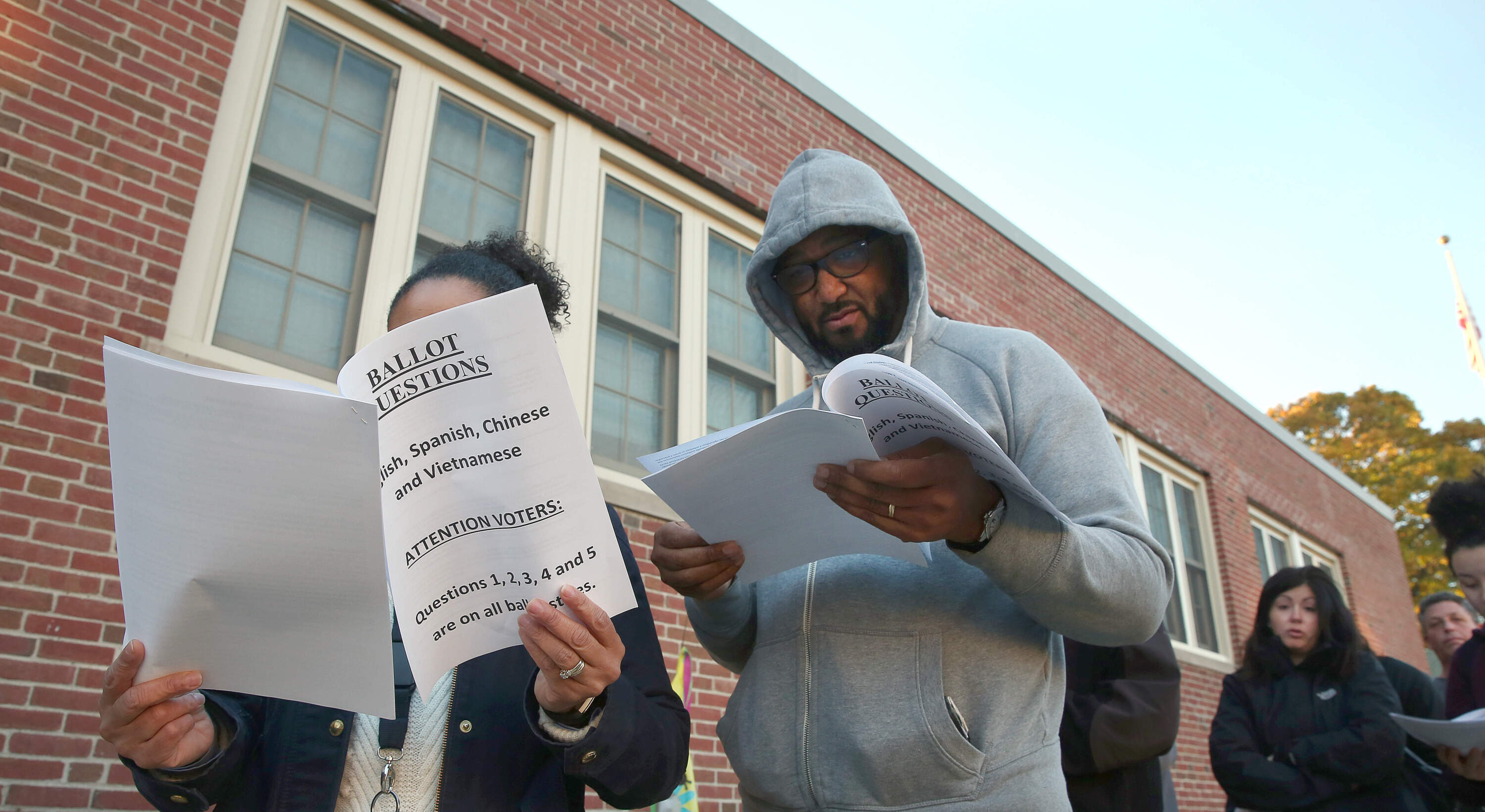
Ballot bonanza: Massachusetts voters could set a ballot question record next year. According to Secretary of State Bill Galvin's office, 11 ballot campaigns filed signatures with their election division by the deadline yesterday, in addition to a gun law referendum that's already been certified. "We've never had so many questions being submitted to us at this stage," Galvin told WBUR's Cici Yu. His office still has to certify that each campaign actually submitted at least 74,574 valid signatures. And there are several additional steps in the process — not to mention potential legal challenges or legislative interventions that could keep some questions off the ballot. Still, Galvin says it's "probable" the state will set a new all-time high for ballot questions next year. (The current record is nine, set in 1972, 1976 and 1994; usually, the state sees only around two to four questions.) Galvin said the volume suggests a larger frustration across the political spectrum with Beacon Hill's inaction on certain issues. "It's really diverse. It's a whole range, going from rent control to tax reductions to voter rights," said Galvin, who himself is behind one of the questions. " Their frustration is causing them to go directly to the voters." Without further ado, here's a look at the dozen proposals we could be voting on next fall:
- All-party state primaries: If passed, Massachusetts' state elections would be like how they do things in California, Louisiana and Boston: candidates of all political parties would be on a single ballot in the primary and then the top two finishers would advance to the general election. It would take effect in 2028.
- Government transparency: With last year's legislative audit ballot question stuck in legal limbo, Massachusetts Auditor Diana DiZoglio is backing a new proposal that would make the governor's office and Legislature subject to the state's public records law, with some exceptions.
- Rent control: You've probably already heard a lot about this one. This proposal would repeal Massachusetts' ban on rent control and limit yearly rent increases across the state to the rate of inflation or 5%, whichever is lower. There are exceptions for newer buildings and smaller, owner-occupied buildings.
- Conservation fund: Conservation and nature groups are pushing this proposed question to earmark half of all state sales tax revenue from sporting goods, recreational vehicles and golf courses for a nature conservation fund. The money would be dedicated to things like parks, trails and green spaces.
- Legislative stipends: This proposal by Jonathan Hecht, a former state lawmaker, would change how the big stipends for State House leadership positions, such as being the chair of a committee, are calculated. It would also require that lawmakers do a certain amount of work to get the money.
- Union rights for public defenders: This question would let members of the Committee for Public Counsel Services unionize, following the recent public defender work stoppage over pay rates that spiraled into the dismissal of hundreds of criminal cases.
- Same-day voter registration: Proposed by Galvin, this question would allow Bay Staters to register to vote at the polls on Election Day. It's something that 23 other states allow, but similar proposals have failed on Beacon Hill.
- Minimum lot sizes: This proposal would require cities and towns to allow single-family homes to be built on lot sizes as small as about an eighth of an acre (provided it has a little room between the road and water/sewer access). It's an effort to make it easier to build more affordable "starter homes."
- State income tax rate: Business groups are pushing a question that would gradually cut the state's income tax from 5% to 4% by 2029.
- Chapter 62F: Another business-backed proposal, this question would change the state revenue surplus cap law to account for money from the millionaire's surtax and effectively make it so that taxpayer rebates are triggered more often.
- Pot shop repeal: This question would repeal the 2016 ballot law legalizing recreational marijuana sales, though adults would still be allowed to possess up to 1 ounce of cannabis. Existing recreational marijuana shops would have to convert to medical marijuana shops or sell their inventory to them.
- Gun law repeal: Remember the gun control law Gov. Maura Healey signed in the summer of 2024? Gun rights advocates collected enough signatures later that fall to put a referendum on next year's ballot in an attempt to repeal the law.
Up in the air: The Trump administration is moving to revoke the permit of another wind energy project off the coast of Massachusetts. As WBUR's Miriam Wasser reports, the Bureau of Ocean Energy Management filed a court motion Tuesday to reconsider its last major permit for a pair of projects, New England Wind 1 and 2 — more than a year after the Biden administration gave them the permit in July 2024.
- Why? ACK for Whales, a Nantucket-based group that opposes offshore wind, says the Biden administration rushed the review, and the BOEM's motion says it "may have" failed to account for all of the project's impacts. (Multiple federal agencies spent about four years evaluating the project.)
- Zoom out: This week's motion is just the latest move by the Trump administration against the offshore wind industry. Here's an updated look at the projects off the coast of New England and how they've been effected.
P.S.— Today is your last chance to win an unforgettable 16-day trip for two to New Zealand, courtesy of Road Scholar, when you donate to WBUR during our December fundraiser. Donate before 7 p.m. to be automatically entered in the sweepstakes!