Support WBUR
2026 Winter Arts Guides
An extensive guide to Greater Boston's winter classical music concerts
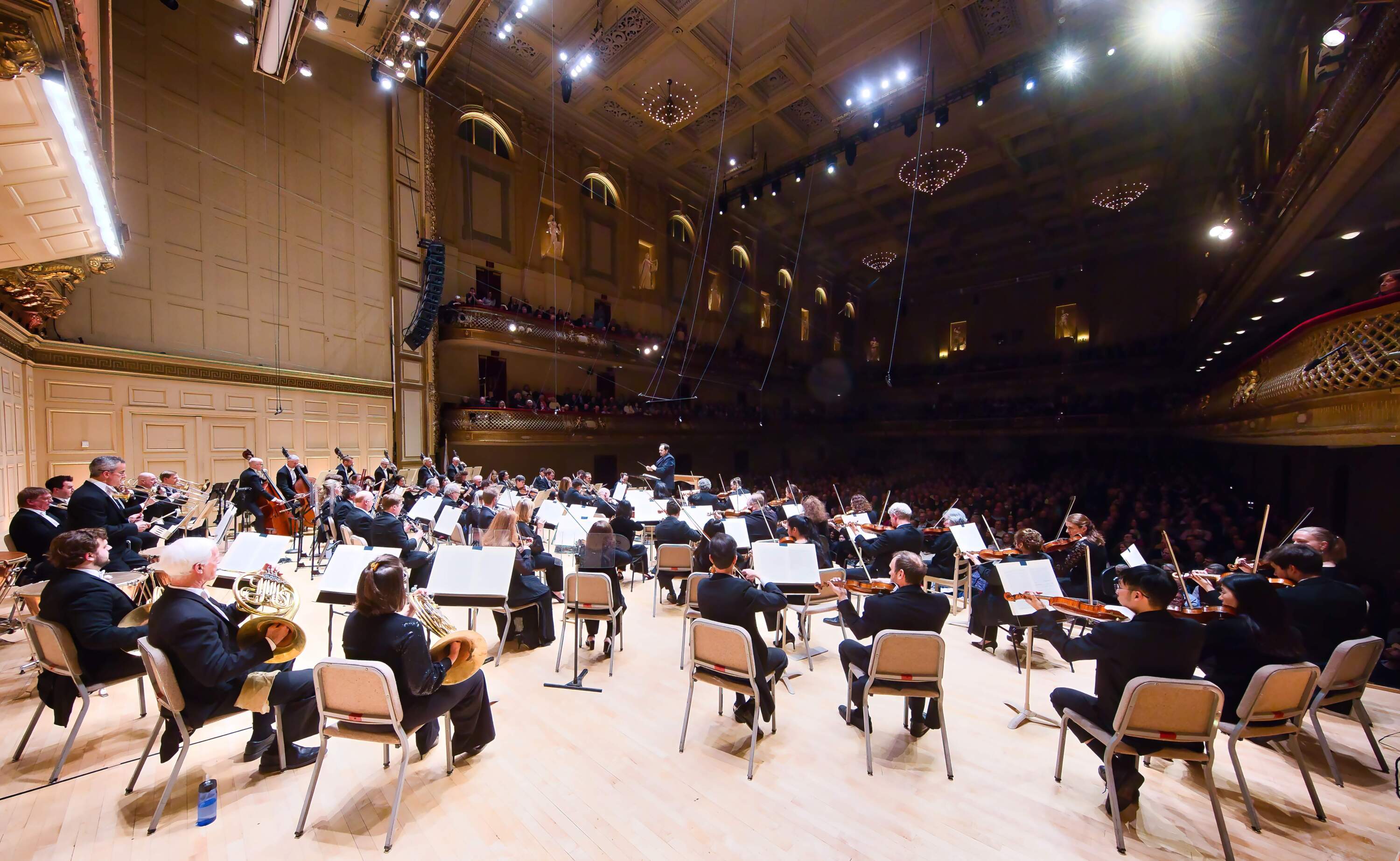
It’s winter. The cold is numbing. Walking might be dangerous. There isn’t any place you’d rather be than snuggly at home. But you’ve got cabin fever. You’ve binge-watched all your favorite series and heard all your favorite recordings. You’ve just got to get out and experience what is impossible to reproduce at home: live music. So here’s a pretty extensive, if not totally exhaustive, list of what is coming up in live classical music performances around Boston this winter.
But let me also remind you that there are also excellent free programs at Boston’s schools and conservatories, and that a good number of performances are also livestreamed, so it’s still possible to listen to live music at home — just check the websites. And please be on the lookout for any other concerts or productions I might not know about at the time of this listing.
SYMPHONY ORCHESTRAS
Boston Symphony Orchestra
Symphony Hall | Jan. 22-March 22
One of the world’s undeniably great orchestras, and one of America’s “Top 5,” whose home is in Synmphony Hall (an acoustic marvel), the Boston Symphony Orchestra begins its programs with three evenings of the BSO’s Andris Nelsons conducting the film and concert music of John Williams, with guest pianist Emanuel Ax and violinist Gil Shaham (Jan. 22-25). The next program will be conducted by BSO assistant conductor Anna Handler, who made a sensational surprise debut with the orchestra last fall, filling in at the last minute in a program that included Ravel’s glamorous arrangement of Mussorgsky’s “Pictures at an Exhibition” and Ukrainian composer Thomas de Hartmann’s Violin Concerto with Joshua Bell. This time, on schedule, Handler leads the BSO in one of Mozart’s most endearing works, the Sinfonia Concertante, a kind of concerto for violin (the BSO’s new concertmaster Nathan Cole in his BSO solo debut) and viola (principal violist Steven Ansell); a new piece, “Bioluminescence Chaconne,” by American composer Gabriella Smith; and a suite of music from Tchaikovsky’s “Swan Lake,” which will also give the BSO’s principal oboist, John Ferrillo, a chance to shine (Feb. 5-7).
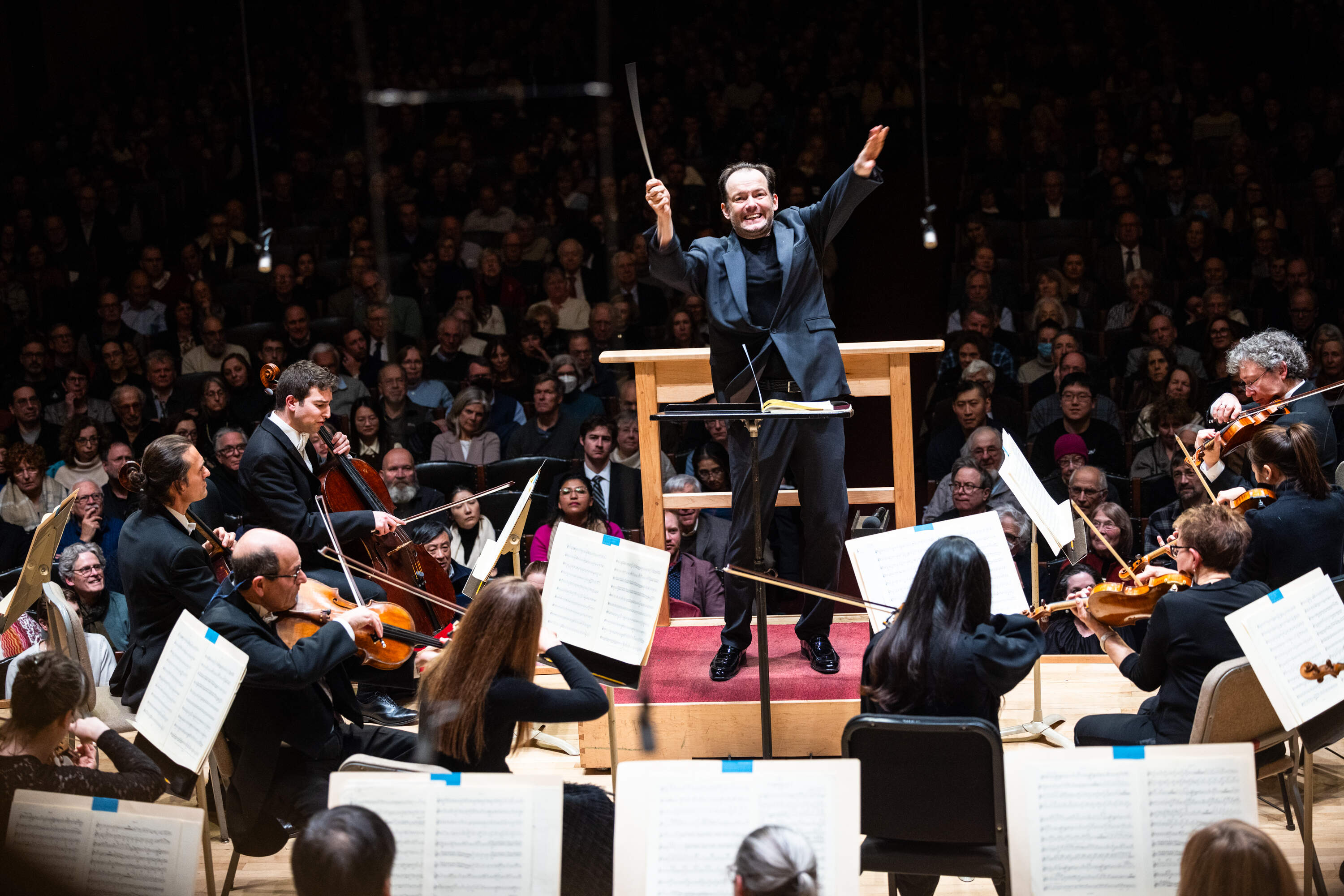
The next BSO program is even more of an “event.” It marks the return of conductor/composer Esa-Pekka Salonen leading the world premiere of his own Horn Concerto, composed for the Berlin Philharmonic’s principal horn player Stefan Dohr (and co-commissioned by the BSO), who will be playing it here in the American premiere. The concerto incorporates passages from Bruckner’s most popular symphony, his Fourth (the “Romantic”), which will also be played on that program, along with the Boccherini/Berio “Ritirata notturna di Madrid” (Feb. 12-14). This will be followed by the happy return of another of Boston’s favorite conductor/composers, Thomas Adès, leading two of his own works, “Aquifer” and violin concerto “Concentric Paths,” featuring BSO’s artist-in-resident violinist Augustin Hadelich, and ending with another hymn to nature, Beethoven’s beloved “Pastorale” Symphony (Feb. 26-28). Another much-admired conductor from the opposite end of the age spectrum, 98-year-old Herbert Blomstedt, returns with a composer who is one of his specialties, Brahms, the great Fourth Symphony and two rarely performed choral pieces, “Nänie (Lament)” and “Schicksalslied (Song of Destiny),” with the Tanglewood Festival Chorus led by guest choral conductor Lisa Wong (Mar. 5-7).
Andris Nelsons returns to close the BSO winter season with Tchaikovsky’s sweeping “Manfred” Overture and Van Cliburn piano competition winner, the soulful Yunchan Lim, in the Schumann Piano Concerto (Mar. 19-22).
Boston Philharmonic Orchestra & Youth Orchestra
Symphony Hall | Feb. 13 & Feb. 27
Benjamin Zander’s next Boston Philharmonic concert is sure to be one that no classical music lover will want to miss. Zander will be conducting the most eloquent of early keyboard instrument players, Australian pianist Kristian Bezuidenhout, in Mozart’s most dramatic piano concerto, No. 21 in D-minor, a concerto clearly by the composer of “Don Giovanni,” and maybe Bruckner’s most perfect symphony, the Seventh. Zander is a master of Bruckner, and also a master orator. Come early to hear Zander’s eloquent commentaries on these two towering works (Feb. 13).
And Zander will put his astonishing youth orchestra through its paces with a program consisting of a movement from Ives’ “Three Places in New England,” Debussy’s magnificent seascape (and human-scape) “La Mer” and Mahler’s exuberant and movingly autobiographical First Symphony (Feb. 27).
Bach, Beethoven, & Brahms Society
United Parish, Brookline | March 1
Steven Lipsitt’s BB&B offers a compellingly various program, with neither Bach, Beethoven, nor Brahms. Called “Changing Times,” the program ends with another performance of Mozart’s heavenly Sinfonia Concertante (with violinist Adrian Anantawan and violist Sergio I. Muñoz Leiva), which will be preceded by Haydn’s rarely heard Symphony No. 64 (“Tempora mutantur”), a new work by Herschel Garfein for saxophone and string orchestra (with stellar saxophonist Kenneth Radnofsky, a BB&B commission) and Schoenberg’s Overture in Old Style.
VISITING ARTISTS
Vivo Performing Arts
Multiple venues| Jan. 30-March 20
Boston’s longest-running institution importing important classical performers began in 1938 as Aaron Richmond’s Celebrity Series, named after its director, a pianist turned impresario. From 1953 to 1984, it was the Boston University Celebrity Series, its name when I heard the legendary Budapest String Quartet, my very first concert after moving to Boston. In 1989, it was renamed after its banking sponsor, the Bank of Boston, which went through its own process of rebranding. In 2007, it became the Celebrity Series of Boston, and it has just been renamed again. Under any name, it will be offering us some delicious goodies this coming season. Some of these concerts might already be sold out, but don’t give up. Often, tickets become available even at the very last minute, as mine did for that Budapest concert. Here are this season’s visitors.
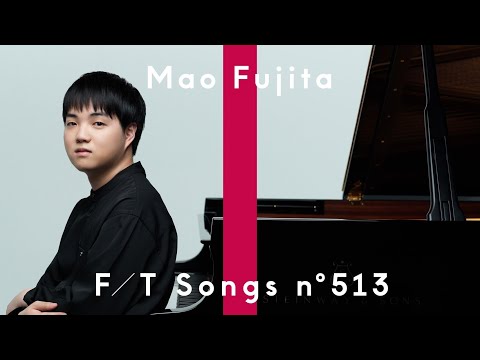
The highly intelligent and sensitive Norwegian pianist Leif Ove Andsnes gives his first solo recital for Vivo Performing Arts. Beginning and ending with Schumann (Andsnes opens with Four Piano Pieces and closes with one of the greatest — and most enjoyable — piano pieces of all time, Schumann’s “Carnaval”), coming in between are selections from György Kurtág’s “Játékok (Games)” and Leoš Janáček’s “On an Overgrown Path,” Book 1 (Jordan Hall, Jan. 30). Dynamic bass-baritone Davóne Tines joins the period-instrument rock band Ruckus for an exciting evening of American Baroque music from before the Civil War to the Civil Rights movement, and up to the present (Sanders Theatre, Jan. 31). The organization’s Debut Series presents the first Boston recital by French soprano Axelle Fanyo and pianist Julius Drake, which includes Ravel’s “Shéhérazade,” Vaughan Williams’ “Songs of Travel,” Messiaen’s “Trois Mélodies” and “Poèmes pour Mi,” and selected William Bolcom “Cabaret Songs” (Pickman Hall, Feb. 3). Another young pianist appearing in the “Debut Series” is Mao Fujita, whom I haven’t heard before either, but whose playing is described as “poetic” and “fluid,” appropriate adjectives for a program of early Beethoven, Berg, Mendelssohn, the Brahms First Sonata and Wagner’s “Liebestod,” the gigantic orchestra whittled down to the piano by Liszt (Pickman Hall, Feb. 19).
February also brings to Boston the Budapest Festival Orchestra and its celebrated conductor Iván Fischer with Mahler’s epic Third Symphony. Gerhild Romberger is the crucial mezzo-soprano, and the Boston Lyric Opera (a co-producer of this event) and the Boys of the St. Paul’s Choir School will supply the all-important choral work (Symphony Hall, Feb. 10). Superstar violinist Itzhak Perlman’s “In the Fiddler’s House” is not a conventional classical concert, but his fans still want to hear this beloved figure, celebrating his 80th year. He’s joined by Andy Statman on clarinet and mandolin, the Klezmer Conservatory Band and “other special guests” (Symphony Hall, Feb. 15). And the greatly admired Danish String Quartet returns in a fascinating program of Schnittke’s String Quartet No. 2, a suite from Jonny Greenwood’s music for “There Will Be Blood,” and Ravel’s luscious String Quartet in F (Jordan Hall, Feb. 27). A free “Clarinet Weekend” offers a classical program suitable for children “8 and up” with soloists Juan Ruiz (clarinet and saxophone) and Camila Cortina (piano) followed by clarinetist Itay Dayan with members of the Klezmer Conservatory Band on Saturday (Multicultural Arts Center, Feb. 28). On Sunday, the program continues with BSO clarinetist Christopher Elchico, cellist Christine Lee, and pianist Ming-Chieh Liu (Multicultural Arts Center, March 1).
The 29-year-old Finnish conductor Klaus Mäkelä has become a controversial figure largely because he is so young and is becoming the musical director of four of the world’s most admired orchestras. Last time he was here, he led the Orchestre de Paris in a performance of Stravinsky’s “Firebird” that was so beautiful and mysterious it brought tears to my eyes. This time, he’s giving us a preview of his directorship of the Chicago Symphony Orchestra, which hasn’t played in Boston since 2001. The two pieces on the program — Beethoven’s riveting Symphony No. 7 and Berlioz’s wonder-filled and macabre “Symphonie Fantastique” — are familiar enough that most listeners could probably tell within seconds whether these will be the performances of their dreams. If I had to pick one upcoming concert I wouldn’t dream of missing, this would be it (Symphony Hall, March 1).
Two days later, Symphony Hall opens its doors to another of the world’s great orchestras, the Vienna Philharmonic (last heard here in 2003), conducted by someone already quite familiar to Bostonians, none other than BSO music director Andris Nelsons, leading the Mahler Symphony No. 1, and joined by guest keyboard phenomenon Lang Lang in Bartók’s Third Piano Concerto (Symphony Hall, Mar. 3).
Castle of our Skins, now celebrating a decade of advocating Black musical artistry, returns with a performance by the Castle of our Skins string quartet and the Boston Children’s Chorus in a performance of Derrick Skye’s “American Mirror” (Salvation Army Kroc Center, March 7). Pianist Isata Kanneh-Mason and cellist Sheku Kanneh-Mason, siblings, present an evening of Felix Mendelssohn, Nadia Boulanger, Robert Schumann and Rebecca Clarke (Groton Hill Music Center, March 12; Jordan Hall, March 13). The terrific pianist Conrad Tao returns with “Poetry and Fairy Tales,” a deliciously varied program featuring works by Brahms, David Fulmer’s “I have loved a stream and a shadow” (parts 1, 2 and 3), Rebecca Saunders’ “Mirror, mirror on the wall,” Todd Moellenberg’s “Leg of Lamb” and Ravel’s literally marvelous and fiendishly difficult “Gaspard de la nuit” (Jordan Hall, March 15). Vivo Performing Arts now feels that Icelandic pianist Víkingur Ólafsson is ready for Symphony Hall. Some of the admirers of this artistic pianist would surely agree, while some of us will miss the intimacy of Jordan Hall. His program includes a Bach prelude and partita, two Beethoven sonatas (Op. 90 and 109) and Schubert’s E-minor Sonata (Symphony Hall, March 20).
Weekend Concert Series
Isabella Stewart Gardner Museum | Jan. 25-March 15
The Gardner’s Sunday afternoon concert series, curated by George Steel, has become more and more indispensable, bringing both established and younger artists to Renzo Piano’s still-controversial Calderwood Hall.
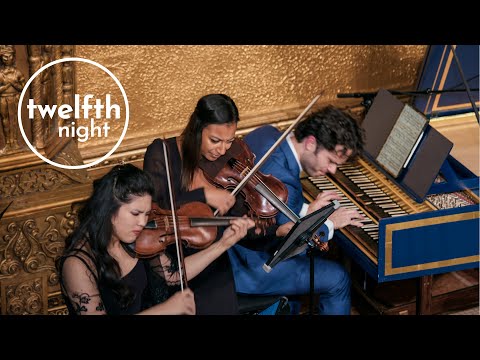
Award-winning violinist Rachell Ellen Wong is joined by her colleagues from the Twelfth Night Ensemble, harpsichordist David Belkovski and cellist Coleman Itzkoff, in a program of 18th-century trio sonatas by such familiar and unfamiliar composers as von Biber, Corelli (the wonderful “La Folia”), Tartini ("The Devil's Trill”), Bach, Royer, Veracini and Leclair (Jan. 25). Twelfth Night is followed by another trio: violinist Romuald Grimbert-Barré, cellist Tommy Mesa and pianist Albert Cano Smit — concentrating on music from the 19th and 20th centuries, Clara Schumann, Brahms, Debussy, Lili Boulanger and Jessie Montgomery (Feb. 1). And they are followed by yet another trio, a Boston favorite, the Claremont, in an 1842 piano quintet by Louise Farrenc (the plus-2s are Rosemary Nelis on viola and Bradley Aikman on bass), Ravel’s 1914 Piano Trio and Chicago-based Shulamit Ran’s 1997 “Soliloquy” (Feb. 8).
After the trios, we get a series of quartets, beginning with what the Gardner website calls the “impossibly talented” Attacca Quartet in a program of Mendelssohn, Bartók and David Lang’s “daisy,” a 2024 Gardner co-commission (Feb. 22). This will be followed by the Goldmund Quartet playing Haydn (the wonderful “Joke” Quartet) and Polish composer Grażyna Bacewicz’s Fourth Quartet, plus Amy Beach’s Piano Quintet with pianist Gloria Chien (March 1). The string of visiting string quartets gets interrupted by celebrated lutenist Hopkinson Smith playing the unforgettable melancholy music of the great Elizabethan composer John Dowland (March 8).
Then back to quartets, and deserving a paragraph to themselves, NEC’s extraordinary quartet-in-residence, the Borromeo String Quartet. They’ll be playing an impressive range of quartets from Bach (the magnificent Prelude and Fugue in C-sharp minor, in an arrangement by Borromeo first violinist Nicholas Kitchen) to Vijay Iyer’s 2012 “Dig the Say,” with stopovers at Stravinsky’s irresistibly lively Three Pieces for String Quartet, Shostakovich’s B-flat Prelude and Fugue (also arranged by Kitchen), Caroline Shaw’s 2011 “Entr’acte,” and Jessie Montgomery’s 2013 “Source Code.” At the center of the program will be one of the most moving works in the entire string quartet repertoire, Schubert’s “Death and the Maiden” (March 15).
VOCAL MUSIC
Emmanuel Music
Emmanuel Church and other locations | Jan. 25-March 26
Emmanuel Music’s legendary weekly cantatas (by Bach and others) continue as part of the Sunday service at Emmanuel Church, but anyone who prefers to hear only the cantata itself, which begins at 11 a.m., is welcome. Check the website for the particular cantata for any given week, and read the wisely eloquent notes by Emmanuel Music’s legendary founder, Craig Smith, and current music director Ryan Turner.
This year’s Lindsay Chapel series, Thursdays at noon throughout Lent, consists of a different major Boston cellist playing one of the Bach suites for solo cello: Jennifer Morsches (Feb. 19), Rafael Popper-Keizer (Feb. 26), Sarah Freiberg (March 5), Joshua Gordon (March 12), Rhonda Rider (March 19) and David Russell (March 26).
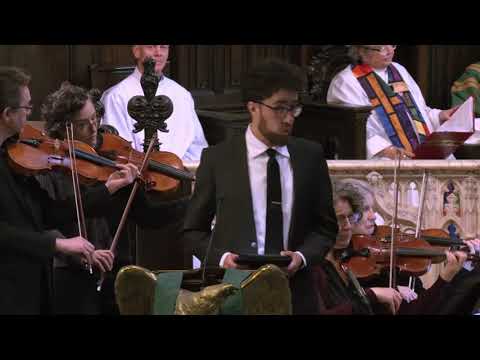
Emmanuel Music has also planned a double event it’s calling “The ‘Winterreise’ Experience,” with two outstanding tenors, William Hite, who has been particularly admired for singing Schubert’s greatest song-cycle, and Nicholas Phan, who has been widely praised for his range from Mozart to contemporary composers. Hite will be singing “Winterreise (Winter Journey)” with pianist Jiayan Sun (Goethe-Institut, March 15) and Phan will be singing Hans Zender’s reinterpretation of “Winterreise” for tenor and orchestra (Tufts University’s Distler Hall, March 22). Emmanuel artistic director Ryan Turner will be discussing Schubert’s masterpiece with both singers.
Boston Youth Symphony Orchestras
Sanders Theatre | Jan. 25
Federico Cortese, the music director of the Boston Youth Symphony Orchestras, is no shrinking violet when it comes to grand opera. In the last few years alone, he has taken on some of the grandest of them in the entire operatic repertoire: semi-staged versions (directed by Joshua Major) of Bellini’s “Norma,” Verdi’s “Don Carlos” and this year, perhaps the closest opera to an actual epic, Berlioz’s setting of major sections of Vergil’s “Aeneid,” “Les Troyens à Carthage,” essentially the last three acts of his five-act version called “Les Troyens,” which includes the stories of Cassandra and the Trojan Horse (Sarah Caldwell’s Opera Company of Boston gave the American premiere of the complete version in 1972). But the “short” version alone takes up about three hours. And Cortese’s youth orchestra has never failed to rise to the occasion. The professional singers this year include Avery Amereau (Dido), John Matthew Myers (Aeneas), Cory McGee (Narbal), Shannon Keegan (Anna), Junhan Choi (Pantheus), Neal Ferreira (Iopas) and Philippe L’Esperance as Hylas, the small tenor role of a Trojan sailor who has one of the most hauntingly tuneful arias in the whole opera.
Cantata Singers
Multiple venues | Feb. 7 & March 14-15
Music Director Noah Horn leads the Cantata Singers and special guests The Percussion Collective in an all too rare performance of Stravinsky's singular masterpiece, the vigorous, raucous “Les Noces (The Wedding),” which began in 1923 as a ballet-cantata choreographed by Bronislava Nijinska, the great dancer Vaslav Nijinsky’s sister. The scoring for vocal soloists, chorus, orchestra, uninhibited percussion and four pianos is one of Stravinsky’s most daring and exuberant compositions. What could be more evocative of a peasant wedding? The other piece on the program, also featuring complex percussion, is Garth Neustadter’s “Memory of Water,” which Cantata Singers calls “an elemental counterpart to Stravsinsky’s ritualistic vision” (Wellesley College’s Houghton Chapel, Feb. 7). The following month, Cantata Singers returns to its first and perhaps greatest love, Bach, with the profoundly moving and still theologically controversial (was Bach antisemitic?) “St. John Passion” (Needham Great Hall, March 14; Sanders Theatre, March 15).
American Classics
Multiple venues | Feb. 13 & Feb. 15
Bradford Conner and Benjamin Sears, the founders of American Classics, are students and scholars of American theater and popular music. But they are also more fun — and having more fun — than practically any other group in the area. Their next concert, joined by their singing and piano-playing partners, consists of songs by Stephen Sondheim, Frank Loesser (maybe “Baby, It’s Cold Outside”?), Johnny Mercer and others. If you think you know every great song ever written, wait till you hear Ben and Brad. The perfect Valentine’s Day concert, even though the performances surround the actual day (Cambridge’s First Church, Feb. 13; Bedford’s First Parish Church, Feb. 15).
Odyssey Opera
Multiple venues | Feb. 21 & March 13
Odyssey Opera, our most adventurous opera company (and the most aptly named), returns for only two performances, but they include four different operas. “Mono e Mono e (Mono)” is a triple bill of one-act monodramas (i.e., each opera has only one character): William Bolcom’s “Medusa” (soprano Julia Mintzer), Ronald Perera’s “The White Whale” (baritone Michael Chioldi as Melville’s Captain Ahab), and Carlisle Floyd’s “Flower and Hawk” (soprano Sarah Colburn as Eleanor of Aquitaine). Artistic director Gil Rose leads the Boston Modern Orchestra Project (Jordan Hall, Feb. 21). Three weeks later, our operatic odyssey gives us another rarity, this time fully staged: the satirical “The Last Savage” (music and libretto by Gian Carlo Menotti), which, though Menotti wrote the words in Italian, had its premiere in French in Paris (in 1963) and its American premiere at the Met in English in 1964. But it has taken decades and a rewrite (in Italian) to recover from its original negative reviews. Bostonians will have only one chance to discover its true value (Huntington Theatre, March 13).
Boston Cecilia
Jordan Hall | Feb. 22
Michael Barrett leads the 150th season of the Boston Cecilia in “A Feast of Remembrance” that will include Bach’s “Gloria” and the cantata “Gott, man lobet dich in der Stille (God, one praises you in silence)” and “selections from Handel oratorios previously performed by Cecilia,” which can add up to a lot of selections from a company so consistently devoted to Handel over so many years, especially under the direction of the late Donald Teeters.
Coro Allegro
First Church Cambridge | March 15
Boston’s excellent choral group dedicated to the LGBTQ+ community and its allies is presenting a concert called “And Still They Vanish,” featuring James Whitbourn’s “Annelies,” a cantata based on “The Diary of Anne Frank.” Soprano Sonja DuToit Tengblad sings the role of Anne and the piece will be performed without an intermission.
SOLO & CHAMBER MUSIC
Pro Arte Chamber Orchestra of Boston
Multiple venues | Jan. 18-March 15
Pro Arte’s first concert of 2026 is “A Musical Menagerie,” a family event conducted by Conner Gray Covington with excerpts from some very familiar pieces suggesting our winged, feathered, four-legged and scenic friends. The music is by Rimsky-Korsakov, Saint-Saëns, Mussorgsky, Tchaikovsky and Beethoven, plus Caroline Shaw’s “The Mountain that Loved a Bird.” Tickets are free (Newton City Hall, Jan. 18). “Czech Please!” is the witty title for a concert featuring two not entirely frivolous works by Czech composers: Anton Reicha’s Woodwind Quintet, Op. 91, No. 3, and Leoš Janáček’s “Mládí (Youth)” for wind sextet (Allen Center for Arts and Culture, Feb. 8). “3, 4, 5 Fanciful Flute and Strings” brings us music, all including flute, for three, four and five instruments: a trio for flute, cello and violin (“Maombi Asante” by Valerie Coleman), a Mozart Flute Quartet, and Amy Beach’s Theme and Variations for Flute and String Quartet, Op. 80 (Scandinavian Cultural Center, March 15).
New England Conservatory Faculty Recitals
NEC | Jan. 21-March 9
The New England Conservatory Faculty Recital series shows off NEC faculty members often performing classical music with distinguished visitors. This winter, some of the highlights include NEC pianist Joel Ayau and Detroit Symphony cellist Jeremy Crosmer (Williams Hall, Jan. 22); Rachel Childers (horn), Christopher Elchico (clarinet) and pianist Jiayan Sun (Jordan Hall, Jan. 26); and the brilliant pianist and visionary Stephen Drury in an evening ranging from Liszt to 91-year-old Christian Wolff, composer, classicist, student of John Cage and (some decades ago) my grad school Latin (Ovid) teacher (Jordan Hall, Feb. 17).
Music for Food
NEC | Jan. 25 & Feb. 20
“Music to the ears, Food to the table” is the motto of Music for Food, founded by stellar violist Kim Kashkashian, a concert series (now national) in which the proceeds from every concert go to feed the needy and the performers are among our most distinguished. For the Boston concerts, admission is always free, with a suggested donation for the Women’s Lunch Place. “The Sacred” is a kind of family concert, but not in the usual sense. Husband and wife Don Weilerstein (violin) and Vivian Hornick Weilerstein (piano) will play short pieces by Sibelius, and another distinguished musical couple with distinguished musical offspring, Miriam Fried and Paul Biss (violins), will be joined by Nicholas Cords, the Brooklyn Rider quartet’s violist, and Yeesun Kim, the Borromeo Quartet’s cellist, in Mozart’s great String Quartet No. 15, in D minor. Also on the program are selected pieces from György Kurtág’s “Játékok” and “Signs, Games, and Messages,” with Kim Kashkashian on viola and pianists Camerson Stowe and Vivian Hornik Weilerstein, along with several choral pieces not yet determined (Brown Hall, Jan. 25).
The following concert, “New Beginnings,” has another team of impressive players, Kashkashian again, this time with super piano virtuoso Marc-André Hamelin in Shostakovich’s Sonata for Viola and Piano, Op. 147 and Fauré’s Piano Quartet No. 2, in G minor (along with violinist Geneva Lewis and cellist Marcy Rosen). Kashkashian collaborates with cimbalom player Petra Berényi in Kurtág’s Tre Pezzi and Tre Alte Pezzi and seven others in works by Bartók and Bach, “and more” (Jordan Hall, Feb. 20). Food for the soul, indeed.
A Far Cry
Multiple venues | Jan. 31-March 18
It’s hard to think of a more consistently adored group than the conductorless chamber orchestra A Far Cry. Its winter season begins with “Side-by-Side @ Jordan Hall,” its annual partnership with the young players of Project STEP and the New England Conservatory. The program begins with Golijov and Ljova’s arrangement of Taraf de Haïdouks’ “Turceasca,” followed by Stravnisky’s great example of neo-classical music at its most sublime, “Apollon musagète (Apollo, leader of the Muses),” composed for small string orchestra, Randy Zigler’s arrangement of Joan Towers’s String Quartet No. 5 (“White Water”), and two Corelli Concerti Grossi (Jordan Hall, Jan. 31).
“Heart Strings” is the title of A Far Cry’s Valentine program. Curated by Crier cellist Rafael Popper-Keizer, the program includes celebrations of various kinds of love: devotional by Bach, maternal by Anna Clyne, romantic by Tchaikovsky (who else?), “complicated” by Janáček and love of humanity by Valerie Coleman (Groton Hill Music Center, Feb. 13; Jordan Hall, Feb. 14).
The Criers’ “Appalachian Spring” concert, curated by Jae Cosmos Lee, consists of Shelley Washington’s “SAY,” Copland’s own 13-string arrangement of his “Appalachian Spring” (I prefer it to Copland’s chewier full-orchestral version), and Beethoven’s “Pastorale” Symphony. As a woman standing on a mountain top in an old New Yorker cartoon exclaims, “The great outdoors — I just love them!” (Jamaica Plain’s St John’s Church, March 14; First Church Cambridge, March 18).
Chamber Orchestra of Boston
First Church, Boston | Feb. 6
David Feltner’s COB brings us “Four Seasons of Tango,” centering on “Four Seasons in Buenos Aires,” Astor Piazzolla’s tango version of Vivaldi’s popular “Four Seasons,” with the young violinist Alina Kobialka. The concert is fleshed out, as it were, by a selection of old and new tangos featuring the Venezuelan trombonist Angel Subero.
Mistral
Multiple venues | Feb. 7-8
Flutist Julie Scolnik’s Mistral presents (drum roll!) a cineaste’s holiday: “Mistral Goes to Hollywood,” with music coming from or related to the movies with scores by such notable film composers as John Corigliano, John Williams (who turns 94 on Feb. 8), Bernard Herrmann (including a “Psycho Suite” arranged for string quartet), Shostakovich, Korngold, Nino Rota, John Kusiak (“Film Noir” for flute, cello, and piano), Prokofiev and Morricone. And the Oscar goes to… violinists Sarita Kwok and Lucia Lin, violist Stephanie Fong, cellist Owen Young, Todd Palmer on clarinet, flutist Julie Scolnik and Sarah Bob on piano (Andover’s West Parish Church, Feb. 7; St Paul’s Brookline, Feb. 8).
Ashmont Hill Chamber Music
Peabody Hall, All Saints Church | Feb. 8
The Borromeo String Quartet, which will be playing a different program a month later at the Gardner Museum, will be performing for Ashmont Hill: a heavenly string quartet by Haydn (Op. 20, No. 2), Britten’s String Quartet No. 2, and Dvořák’s Quartet A-flat Major. A deliciously varied program by this extraordinary ensemble.
Rockport Music
Rockport venues | Feb. 1-March 11
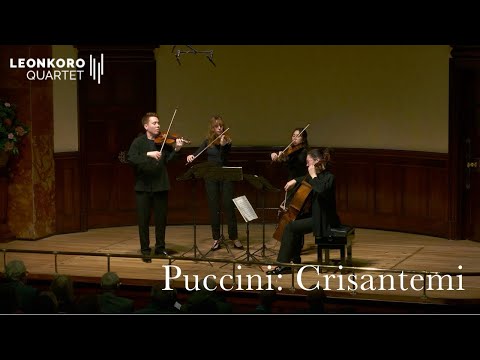
Rockport Music is interspersing its jazz concerts with some impressive classical music. The remarkable Arneis Quartet is offering a free concert with only one work, Devlyn Case’s “The Lighthouse Keeper,” with Jean Danton narrating (First Congregational Church, Feb. 1). Then we get a series of visitors from afar. The Venice Baroque Orchestra plays a program of Baroque string music called “Vivaldi, Tartini, Veracini, Locatelli: a Bows Duel in Venice” (First Congregational Church, Feb. 8). Then from Berlin, the young, prize-winning Leonkoro Quartet in a program called “Role Models,” with quartets by Henriëtte Bosmans, Mendelssohn, and Schubert’s “Death and the Maiden” (Shalin Liu Performance Center, March 1).
Finally, three former Juilliard students, each from the former Soviet Union: violinist Sabina Torosjan, cellist Valeriya Sholokhova and fadolínist Ljova Zhurbin. They call themselves Trio Fadolín. “What’s a fadolín?” you might ask. Turns out it’s a new six-string instrument “that encompasses the range of the violin, viola and most of the cello.” I’d like to hear what that sounds like. The program will be announced at the time of the concert (Shalin Liu Performance Center, March 11).
Boston Chamber Music Society
Sanders Theatre | Feb. 15 & March 8
Boston Chamber Music Society’s two upcoming concerts, under the artistic direction of violist Marcus Thompson, promise a good way to keep warm. The February concert includes violinist Isabelle Ai Durrenberger and Thompson himself in one of Mozart’s small but extraordinary masterpieces, his Duo in G major, and Alexander von Zemlinsky’s D-minor Trio with Romie de Guise-Langlois on clarinet, cellist Raman Ramakrishnan and pianist Max Levinson. The concert in March offers an imaginative program of unusual works: Richard Strauss’ string sextet from his opera “Capriccio,” Penderecki’s Duo Concertante for Violin (Alyssa Wang) and Double Bass (Thomas Van Dyck), Mendelssohn’s Capriccio for String Quartet, Beethoven’s “Grosse Fuge” and Korngold’s Suite for Two Violins, Cello, and Piano Left Hand.
Boston Symphony Chamber Players
Jordan Hall | Feb. 15
The phenomenal Marc-André Hamelin will join violinist and BSO artist-in-residence Augustin Hadelich in the Boston Symphony Chamber Players February program, in which they’ll be performing Chausson’s Concerto for Violin, Piano and String Quartet, with the Chamber Players also offering Debussy’s Sonata for flute, viola and harp, and Samuel Barber’s “Summer Music.”
Chameleon Arts Ensemble
First Church, Boston | Feb. 21-22
Flutist Deborah Boldin’s distinguished chamber group enters its 28th winter with “Bards & Ballads,” a typically varied concert including Rebecca Clarke’s “Dumka,” a Duo Concertante for violin, viola and piano, Einojuhani Rautavaara’s “Ballad” for harp and string quintet, Carl Nielsen’s Wind Quintet, Op. 43, and Dvořák’s Piano Quintet No. 2 in A Major.
Glissando
First Church, Boston | Feb. 27
Most professional pianists are either virtuosos or artists. Sergey Schepkin is one of the rarer breeds who is both. And he conveys both of those qualities in his programming for his series Glissando. This year’s winter concert, which he shares with violinist Lucia Lin and cellist Thomas Barth, is called “Celebrating Schumann,” and includes the Adagio and Allegro for cello and piano, the D-minor Sonata No. 2 for violin and piano in D minor, “Gesänge der Frühe (Songs of the Morning)” for piano, and the Piano Trio No. 2 in F. When Schumann was capable of being happy, this program would have made him very happy. I know I’d be happy to hear Schepkin in this variety of pieces.
Radius Ensemble
Longy's Pickman Hall | Feb. 26
Jennifer Montbach’s superb Radius Ensemble (in residence at the Longy School) continues its 27th year with a multi-season winter concert opening with Amy Beach’s four-hand piano piece “Summer Dreams” (1901), followed by a world premiere by one of Boston’s premier composers, Michael Gandolfi’s “Autumn Music” for winds and strings, Caroline Shaw’s “Winter Carol” (2018) for voice (mezzo-soprano Sophie Michaux) and strings, and Jon Russell’s arrangement of Stravinsky’s thrillingly primitive “Rite of Spring.”
Sarasa Chamber Music Ensemble
Multiple venues | Feb. 27-March 1
The superb consort of musicians that form Sarasa don’t just play early music, though their one winter concert, “alla Bolognese,” is all music from 17th-century Bologna. The pieces for cornetto, violin, cello and organ are by Isabella Leonarda, Cazzati, Arresti, Gabrielli, Bononcini, Torelli, Antonii and Montalbano. The ensemble will perform at Brattleboro Music Center in Vermont (Feb. 27), Friends Meeting House in Cambridge (Feb. 28) and Follen Church in Lexington (March 1).
Foundation for Chinese Performing Arts
Jordan Hall | Feb. 28
This beloved organization presents some of the best musicians in the world. Multi-prize-winning violinist Feng Ning offers a program of solo violin works by Bach (the astounding Partita No. 2 in D minor), two Ysaÿe sonatas, and excerpts from Paganini’s brilliant 24 Caprices.
NEC's First Monday at Jordan Hall
Jordan Hall | March 2
After 40 years of curatorship by cellist and former New England Conservatory president Laurence Lesser, the monthly First Mondays at Jordan Hall — now in season 41 — are now run by violist Nicholas Cords, violinist Soovin Kim and pianist HaeSun Paik in concerts that link NEC faculty members with young musicians from the Institute for Concert Artists. First Monday in March will feature a piano quartet arrangement of Beethoven’s “Eroica” Symphony, Earl Kim’s seldom performed “Now and Then (1981) and Richard Strauss’ late, deeply contemplative “Metamorphosen.” In addition to Cords, Kim and Paik, the performers include flutist Cynthia Meyers, violinist Soovin Kim, cellist Paul Watkins, soprano Mara Riley and Krysten Keches on harp. First Monday concerts are free but you need to register for tickets online.
Winsor Music
St. Paul’s Episcopal Church, Brookline | March 1
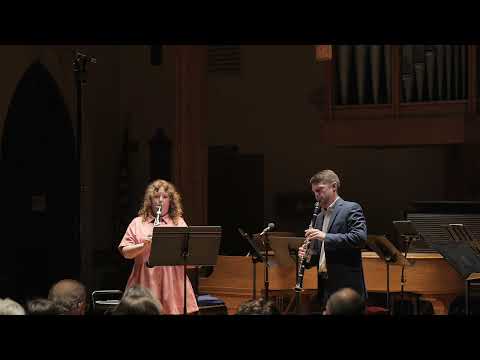
This year’s annual Winsor “Lineage” concert explores the background, creative work and keyboard chops of composer-pianist Anthony Cheung. The program seems to cover a lot of his interests, and includes violinist Gabriela Díaz and clarinetist Rane Moore (the Winsor’s artistic directors), cellist Rafael Popper-Keizer, and pianists Yoko Hagino and Cheung himself, playing pieces by György Ligeti, George Enescu, Tristan Murail, selections by Thelonius Monk and Duke Ellington, Paul Dukas, Olivier Messiaen, Bach, Sofia Gubaidulina, a world premiere of one of Cheung’s works, and a world premiere by students of the Boston String Academy.
Boston Artists Ensemble
Multiple venues | March 6 & 8
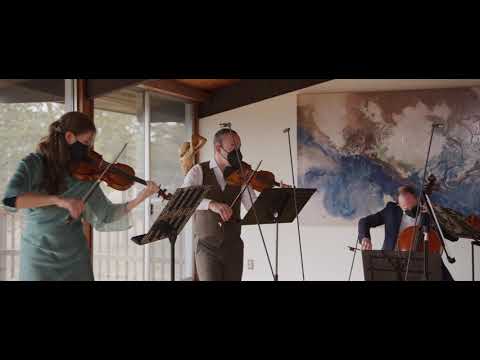
Although Debussy’s only string quartet and Beethoven’s Opus 132 are very different in both shape and style, the title for this concert featuring just those two works is quite fitting, since each is in its own way “transcendent” — the Debussy in a dream-like way and the Beethoven, the structural model for T.S. Eliot’s “Four Quartets,” in a more spiritual way — one of the most inwardly spiritual pieces of classical music ever written. The players are Julianne Lee and Lucia Lin on violins, Rebecca Gitter on viola, and Jonathan Miller on cello. The ensemble plays “Transcendence” at Salem’s Hamilton Hall on March 6 and St. Paul’s Brookline on March 8.
EARLY MUSIC
Boston Baroque
Multiple venues | Feb. 7, March 6 & 8
How many conductors does it take to replace Martin Pearlman? He has just stepped down after more than half a century as the founding music director of Boston Baroque (which began as Banchetto Musicale, Boston’s first full-time period orchestra). Each of the upcoming concerts has a different conductor in charge. The February event — "The X-tet: Sounds from Spain,” chosen by associate artistic director Christina Day Martinson — has arrangements of music by Olivia Pérez-Collellmir and tenor Karim Sulayman singing Spanish Baroque (Sanders Theatre, Feb. 7).
The March concert has more traditional classical material: Haydn’s great “Lord Nelson Mass” conducted by Bernard Labadie, on a program with Mozart’s penultimate symphony, No. 40 in G minor. The vocalists in the Haydn will be BB first timers: soprano Lauren Snouffer, mezzo-soprano Alex Hetherington, tenor Andrew Haji and bass-baritone Philippe Sly (Jordan Hall, March 6 & 8).
Boston Early Music Festival
First Church Cambridge | Jan. 31-March 13
The Boston Early Music Festival presents our greatest variety of early-music performers, from local heroes to international celebrities. BEMF starts with the first solo performance in more than a quarter of a century of someone who is both local hero and international celebrity, lutenist Paul O’Dette, artistic co-director of BEMF, in a recital called “New Discoveries: The extraordinary manuscripts of Orazio Albani da Urbino,” documents from the 1590s of major lute music only recently discovered (Jan. 31). The next concert, called “Seelenbräutigam: The Drese Effect,” offers nearly the complete known work and some of Bach’s arrangements of the music of two cousins, Adam and Johann Samuel Drese, who were Bach’s immediate predecessors in Weimar. The performers are chamber ensemble ACRONYM, and their guests include such fine singers as soprano Clara Rottsolk, mezzo-sopranos Elisa Sutherland and Sylvia Leith, tenors Aaron Sheehan and Jacob Perry, and bass Jonathan Woody. We are promised the first modern performance of an Adam Drese cantata that includes the earliest known use of the slide trumpet (Feb. 14).
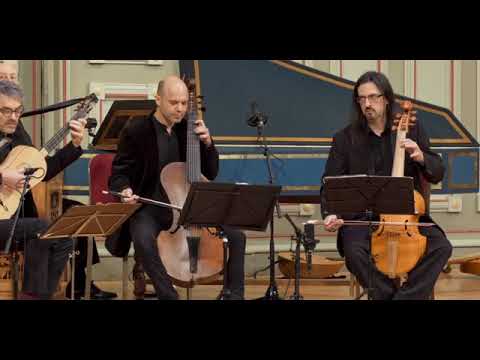
The esteemed Tafelmusik Baroque Orchestra, directed by the equally esteemed Robert Mealy (BEMF’s orchestra director and director of Juilliard’s Historical Performance department) is joined by two Juilliard dancers, Caroline Copeland and Julian Donahue, in “Rameau and the Art of Dance,” which is sure to include some of the most delicious Baroque dance music ever composed (March 1). And finally, Le Consort — violinists Théotime Langlois de Swarte and Sophie de Bardonneche, Hanna Salzenstein on violoncello, and Justin Taylor on harpsichord — perform “A trio sonata soirée,” which will take us on a musical travelogue that starts in France, then goes to Venice and Naples, and then Bach’s Germany, ending with Geminiani’s earworm version of “La Folia” (March 13).
The Boston Camerata
Pickman Hall, Longy | Feb. 15
John Dowland, the great Elizabethan songwriter, was born the year before Shakespeare and died 23 years after Queen Elizabeth I (this year marks the 400th anniversary of his death). His songs are full of a deep melancholy expressed in unforgettable melody (think of Rodgers and Hart’s “Falling in Love with Love”). What could be more touching and delightful than an evening of Dowland presented by The Boston Camerata, under the direction of Anne Azéma, now in its 72nd year.
Blue Heron
First Church, Cambridge | Feb. 21
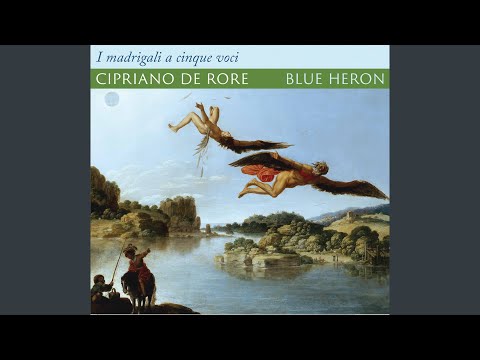
“In Praise of Laura Peverara: Madrigals for the ‘Concerto delle Donne’ (Ferrara, 1580s)” — the title tells you almost everything you need to know. This “Concerto delle Donne” was a group of three women, and one of them, Peverara, was a particular star. They sang music by Ferrarese composers, largely unknown to us now. But this concert will surely bring some of them — Wert, Marenzio, Luzzaschi — to our attention. Fans of Blue Heron will need no convincing.
Newton Baroque
Multiple venues | Feb. 27-28
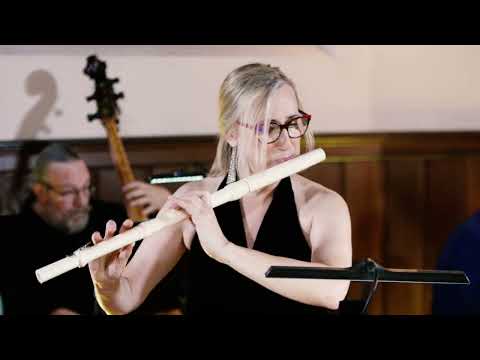
Thank you, Newton Baroque, for introducing me to the name of Giuseppe Antonio Brescianello. Newton Baroque’s winter concert, “Bringing it Home with Brescianello: Concerti a tre from the Stuttgart Court,” sent me to Wikipedia where I read about a complex life, and to YouTube where I just heard one extremely attractive trio sonata with the same instruments that Newton Baroque is featuring: Susanna Ogata and Jesse Irons on violins; Alison Gangler, oboe; Sarah Freiberg, cello; and Andrus Madsen, harpsichord. For most attendees, I imagine, this will be a delightful program of discovery (Newton’s Nathaniel Allen House, Feb. 27; Goethe-Institut, Feb. 28).
Seven Times Salt
Harvard-Epworth Church | Feb. 27
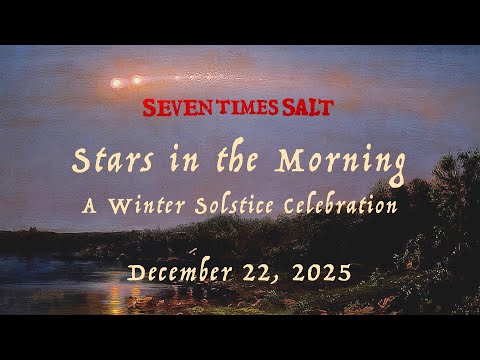
“English Country Dance” is the name of this delightful group’s winter program and English country dance is what you will actually be encouraged to do, with the help of a professional caller (Orly Krasner). We’re promised a variety of popular songs from 1650 to the present. Seven Times Salt provides the live music for the annual Harvard Square English Country Dance. It wants you to play an active part in it.
Musicians of the Old Post Road
Multiple venues | March 14-15
It’s a treat to learn something new about old music. These period-instrument players are offering music that was played at an 18th-century Berlin salon of a woman named Sara Levy. The Musicians of the Old Post Road call it “A Hive of Creativity.” Levy’s teacher was W.F. Bach. She commissioned a trio by C.P.E. Bach. This concert will feature work by these two composers as well as chamber works by Janitsch and Schobert (pre-Schubert), as well as readings of Enlightenment writers (Wayland’s First Parish, March 14; Boston’s Old South Church, March 15).
CONTEMPORARY MUSIC
Collage New Music
Longy’s Pickman Hall | March 1
Collage New Music is now in its 53rd season of bringing contemporary music (anything after 1900?) to Boston, and in its second year under the music directorship of composer Eric Nathan. This winter concert is entirely devoted to “Missing Words,” a six-part piece by Nathan that’s been recorded, but never before performed complete in a live concert. “Missing Words” is inspired by a book by Ben Schott’s cleverly titled “Shottenfreude: German Words for the Human Condition.” “Nathan’s work,” the Collage note tells us, “brings to life the unique German words Schott invented for his mock dictionary to describe everyday human experiences for which English has no direct equivalent” (like the love for bad foods, or the urge to yawn). Each musical section is scored for different instruments (Missing Words II: brass quintet; III: violoncello and piano; etc.). The only of these invented words I can make out from the concert flyer is “Fingerspitzentanz,” which Google Translate tells me means “Fingertip dance” (was Schott thinking of Charlie Chaplin?). Is there a German word for the desire to hear music that makes you laugh?
New England Philharmonic
Boston University Tsai Performance Center | March 15
Under music director Tianhui Ng, the New England Philharmonic’s winter concert will present four world premieres (!) in a program called “New Music New England.” There isn’t much information yet about the nature of these works, but the first (as yet untitled) will be by NEP’s composer-in-residence, Carlos Carrillo. The other premieres will be Daniel Godfrey’s new “Piano Concerto” (2025), with pianist Gloria Cheng; Jason Huffman’s 2016-17 “Alleles” (defined as “two or more alternative versions of a gene that control the same trait”); and Curtis Hughes’s 2005 “Symphony in 3 Movements.” Hughes, you might remember, composed the 2005 Guerilla Opera “light tragedy” “Say It Ain’t So, Joe,” featuring the actual words to the recent vice-presidential debates (I nearly wrote “duets”) between Sarah Palin and Joe Biden. Hughes’s opera aroused, as you wish most new opera would do, considerable discussion.