Wu wants to focus on Boston this term. But Trump policies still loom
Inside Symphony Hall, Boston Mayor Michelle Wu shifted her feet on stage in her least comfortable boots. Last Sunday's dress rehearsal for her second inauguration had been underway for hours. As she took to the podium, city staffers stopped flitting around to watch and listen.
“Good morning, Boston, and happy New Year,” she began, her voice echoing through the grand and nearly empty concert hall. About 19 hours later, Wu would return to this spot before an audience of nearly 2,000 to officially start her second term.
After the dry run, Wu moved to the edge of the stage and sat on her knees to talk through edits and final logistics with her team. Her sons, Blaise and Cass, would hold the Bible for her oath of office. For now, though, they chased each other through the chamber's seats as Wu’s 1-year-old, Mira, let out a rare cry. The mayor still had to finish tweaking the speech — a task she’d work on until 2 a.m. — but first, she needed to hit the store.
“There are constantly baby shoes on my knees with Velcro that are ripping my tights,” she said. “Maybe I’ll go to CVS or something.”
This was the last-minute prep of a politician heading into challenging times. After a week of celebrations, other realities about Wu's next term would kick in: a tightening city budget, intensifying immigration enforcement, rising taxes, falling commercial property values, storm clouds over biotech, crime and drugs around Mass. and Cass, and all the other business of running the city.
In her first term, Wu was untested — all possibility and potential in 2021 as Boston clawed its way out of the COVID pandemic. Now, her constituents expect her to deliver major improvements, and she does too.
A need for friends on Beacon Hill and in business
At each inauguration event last week, Wu’s top priorities and problems — the ones that will determine her legacy — came up often: the cost of living, schools, Trump.
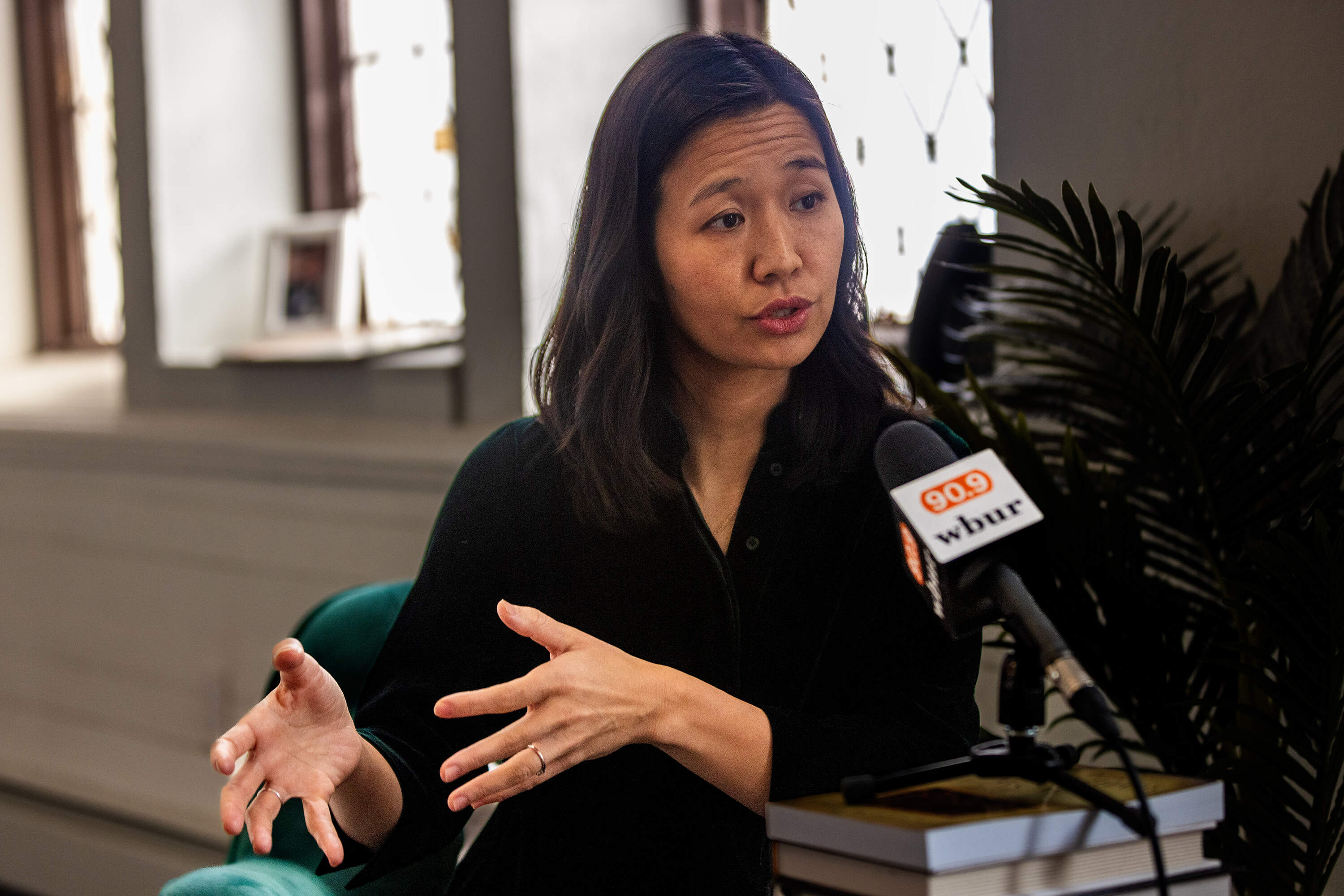
In several conversations with WBUR around her inaugural, Wu shed light on the things that keep her up at night. Under the Trump administration, she said, she worries most about “getting pulled into having to deal with unnecessary and yet horrific emergencies when there are already so many really deep challenges that need addressing in Boston that we can be fixing — that we will be fixing.”
At the top of her to-do list is to help working Bostonians afford their rent or home mortgage. Wu cites housing successes her administration has had so far, including turning 140 empty offices into residences, helping people avoid eviction through a new program, and building more income-restricted units in a three-year period than any mayor since the 1990s, according to her administration.
Still, the average two-bedroom in Boston goes for nearly $2,500 a month, according to the real estate website Apartmentlist.com, and many people pay much more.
There’s a limit to what a big-city mayor can do about the rental market. Much of what Wu can tackle is controlled by the state Legislature, and her attempts to sway lawmakers there have not always gone well.
Her effort at rent control died at the State House. She tried to impose a tax on high-end property sales to raise money for affordable housing, and that was blocked too. And her latest push to shift the property tax burden from residents to corporate landlords failed to pass the state Senate three times. Now, the average single-family homeowner in Boston will have to shell out at least $780 more in property taxes this year. And landlords will likely pass that financial burden onto renters.
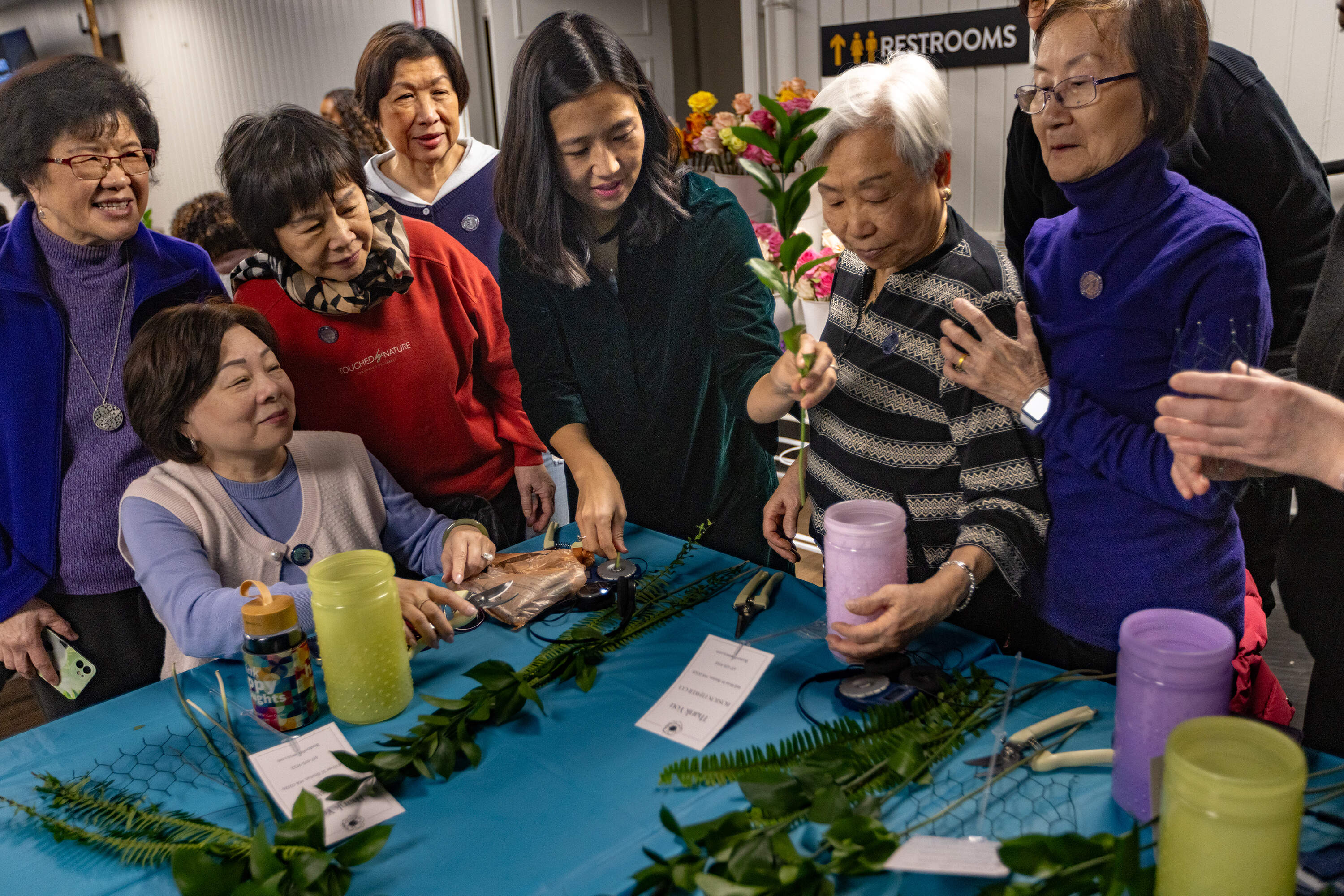
“It is horrible. I got my tax bill last week,” said Dorchester resident Shirley Jones, at a flower-arranging workshop that was part of the Wu inauguration week events. “And I said, 'If I was a drinking woman, I would need a shot of vodka right about now.’ ”
Jones, a 67-year-old homeowner, said she may need a part-time job to afford the increase.
Wu blames state lawmakers for the tax hike and the other housing-related failures. And she says a slow pace of new construction is due to economic factors like tariffs and interest rates. But critics say the mayor hasn’t worked closely enough with state lawmakers or the business community to make headway on affordability issues.
That frustration was part of what prompted advisors to encourage Josh Kraft, of the New England Patriots owner’s family, to enter the mayor’s race last year. Wu trounced Kraft in the preliminary election, and he dropped out days later. But complaints about Wu from the business sector persist.
Roy Hirshland, the Boston-based chair of North American brokerage at Savills, a major commercial real estate brokerage firm, said he'd describe the mayor's relationship to large real estate developers as "strained."
"There was hope that things would warm up in the second term, and I think there's a lot of feeling disappointment and frustration that it hasn't picked up speed," he said, "in terms of the tenor and energy around working together on attracting businesses, retaining business — big businesses — to keep these buildings full and ultimately pay taxes."
Mayors of yesteryear were guided in part by an exclusive club of Boston business leaders, known as “The Vault.” While Wu moves easily around small business owners, she has largely shunned that class of old-school power brokers — to the delight of many of her progressive supporters. But there’s been a cost to that: she lacks a deep bench of powerful allies in business and the Legislature to get some of her priorities over the finish line.
“ I think every mayor has different challenges related to how to get things done at the State House,” said state Rep. Aaron Michlewitz, chair of the influential Ways and Means Committee. The Boston Democrat, one of Wu’s top allies on Beacon Hill, contrasted Wu’s relationship with state lawmakers to that of her predecessor, Marty Walsh, who had the advantage of serving in the Legislature before becoming mayor.
As for the property tax hike, Michlewitz criticized his Beacon Hill colleagues for blocking Wu, but said now, the mayor needs to find a new approach.
“She's tried to put some public pressure on it. I don't think it's really changed the needle here,” he said. “So I do think that she's going to have to go back to the drawing board next cycle and see if she can come up with something that's different and something that's maybe more feasible.”
Tackling worries for young families
Wu needs to make progress on Beacon Hill for a number of reasons, including to help make Boston more affordable for young families.
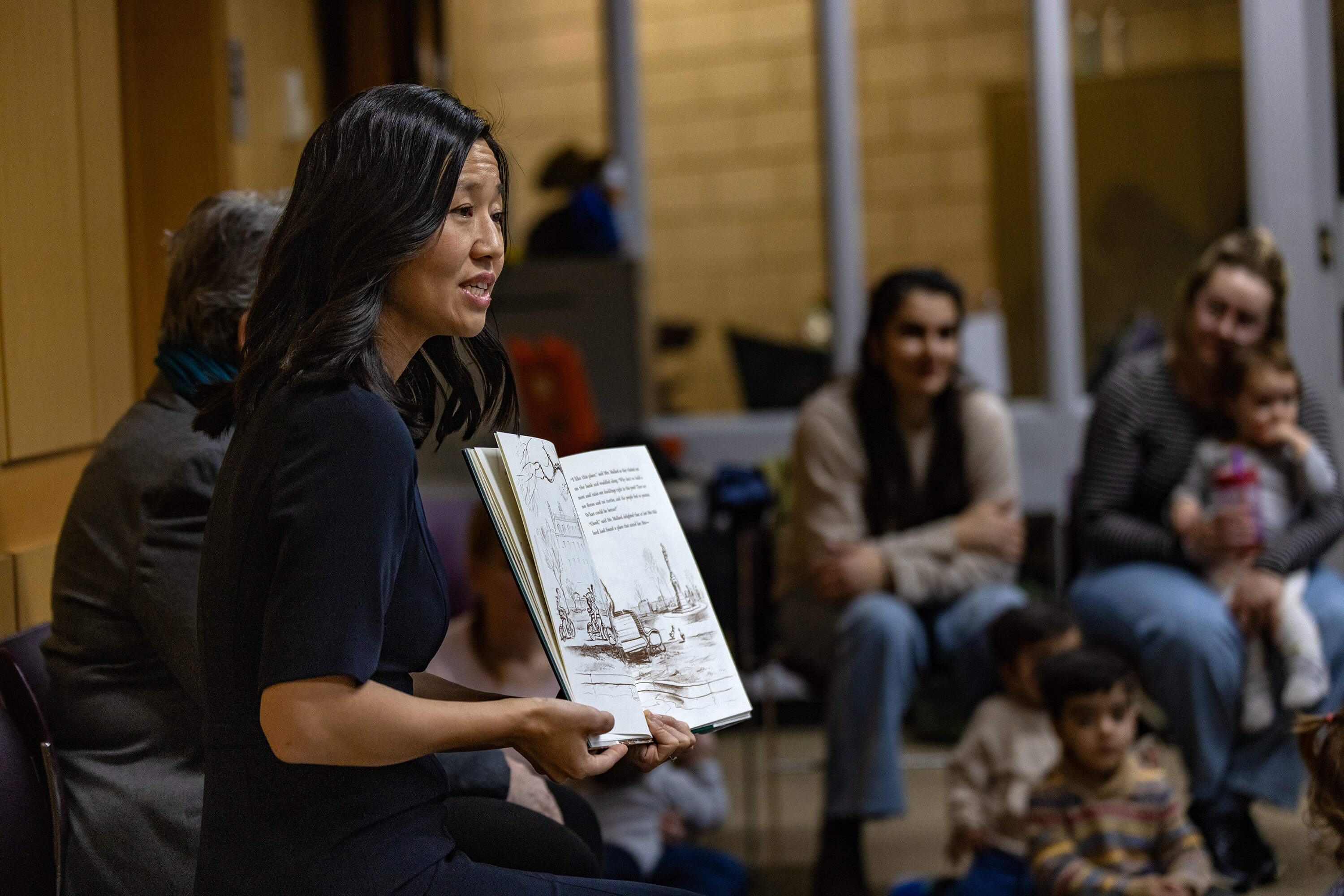
Brighton resident and new mother Olivia Porada described the struggle to make ends meet after Wu read to kids at the Boston Public Library.
"I love being in Boston and raising a little one in Massachusetts is something that's really important to me. But, you know, rent keeps going up."
Olivia Porada
“I've rented for the past 10 years," she said, "and currently we're being priced out of where we live.
"It's almost forcing us to leave the city. I love the city and I love being in Boston and raising a little one in Massachusetts is something that's really important to me. But, you know, rent keeps going up.”
District leaders for Boston Public Schools plan to shutter about a sixth of the city’s schools by the end of the decade because of underuse and declining enrollment. There are many reasons for that, including rising costs and immigration enforcement. Others are leaving because of concerns about the education quality — a longtime issue in Boston that predates Wu.
“It's that middle school, high school range, which luckily we don't have to worry about for a bit, but it's always in the back of your head,” said Lisa Coyne, a Brighton resident and mother of three. “It's like, is that something where things start to get a little dicier?”
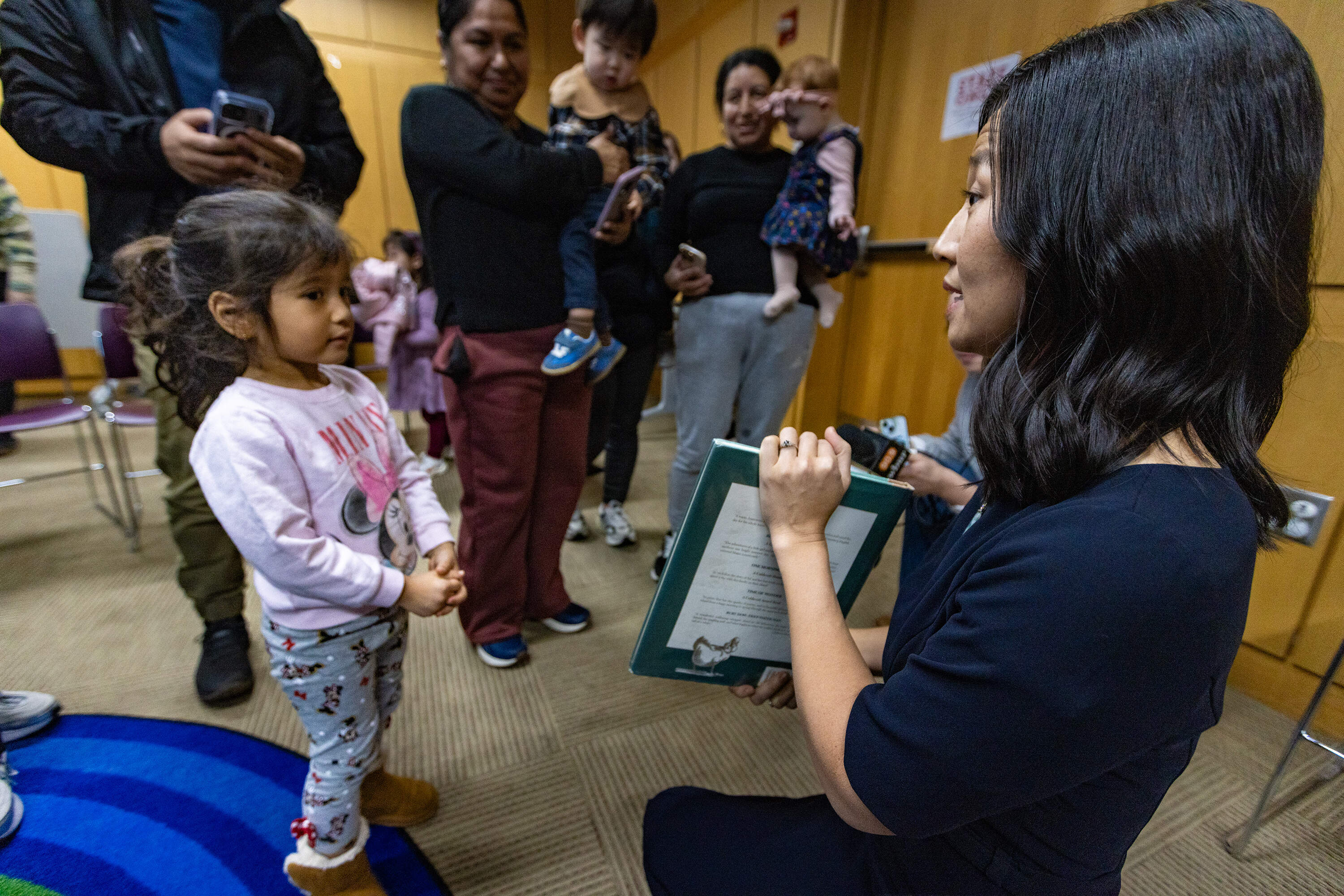
Wu is a BPS parent herself, and she’s devoted a lot of attention to improving aging school facilities and shortening students’ time on school buses. But she has yet to share specific targets for improving reading levels or classroom performance in her second term. At her State of the Schools address in the fall, she discussed new math clubs, expanded Advanced Placement offerings, and before- and after-school programs at every Boston school.
In her inaugural speech, she said her administration aims to ensure students can get a solid education in their own neighborhood, rather than traveling across the city.
“All of that is meant to address the individual needs of each student and family and guarantee that the best school for your family is right down the block,” Wu said.
That’s the hope. Wu has much to do, and she will have to make it all happen while continuing to face off with the Trump administration. She’s proven she can ably stand up to the city’s detractors in Washington when it comes to the war of words. But she is girding for more battles over federal funding cuts, lawsuits and immigration enforcement.
Will ICE 'hell' still come to Boston?
Reflecting on the immigration crackdown in Minneapolis, Wu said, “ We saw just recently an American citizen killed by an ICE agent with this push of harsh immigration enforcement and mass deportation, supposedly trying to make communities safer.”
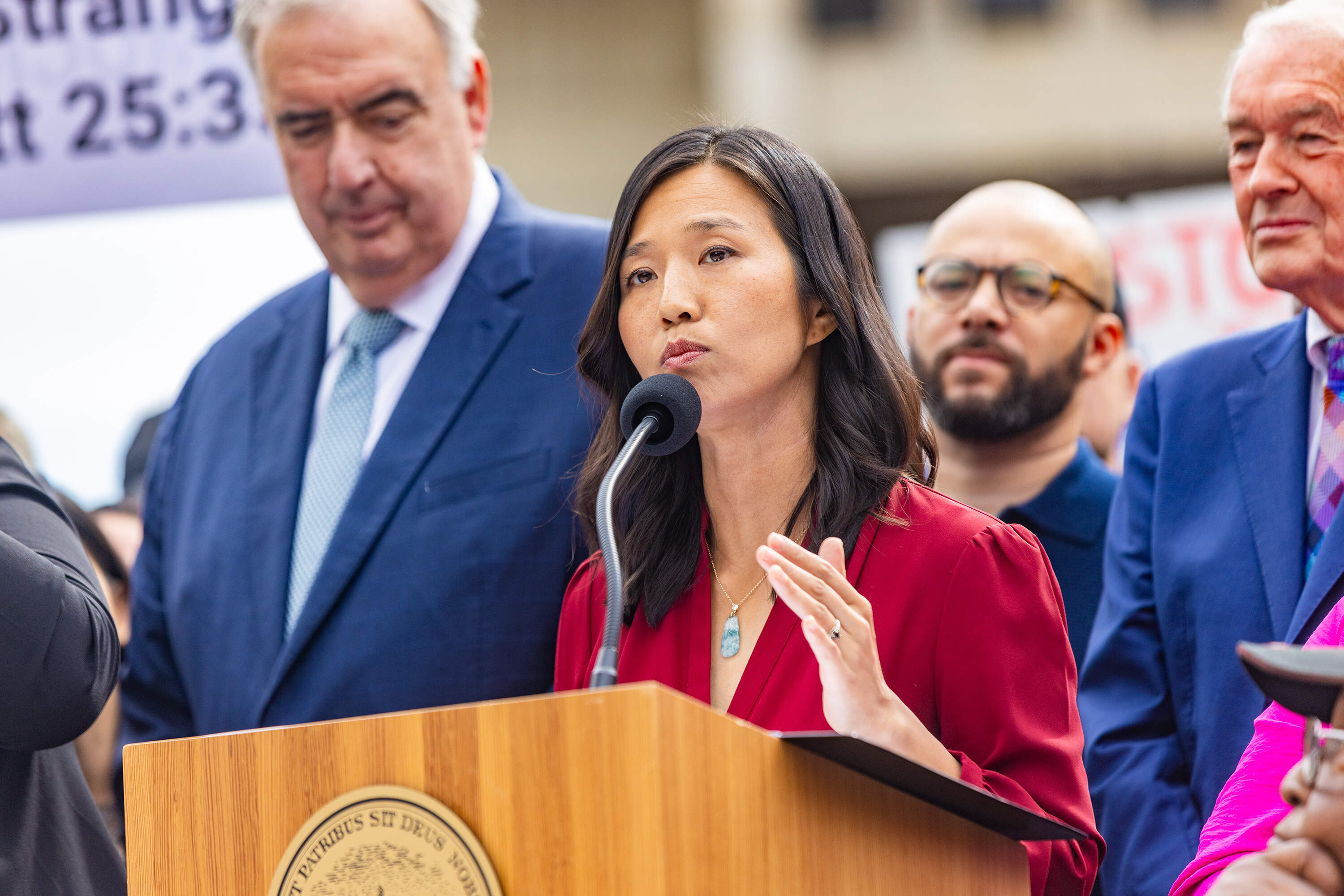
Trump border czar Tom Homan’s threat of “bringing hell” to Boston still rings loudly in her ears, and the Trump administration is not easing up on threats in other cities.
“So much of what Boston stands for," she said, "is under attack: a community that is diverse and welcoming, a community that is determined to do good in the world, and a community that represents the future of innovation and learning, and research and science and truth — and all these things that this administration can't stand."
Wu says she's determined to protect Boston and all its residents, while acknowledging, "it just requires an ever-growing amount of energy and resources to be able to do it all.”
This segment aired on January 15, 2026.