Support WBUR
Report: Boston could lose $1.7 billion in tax revenue due to empty offices
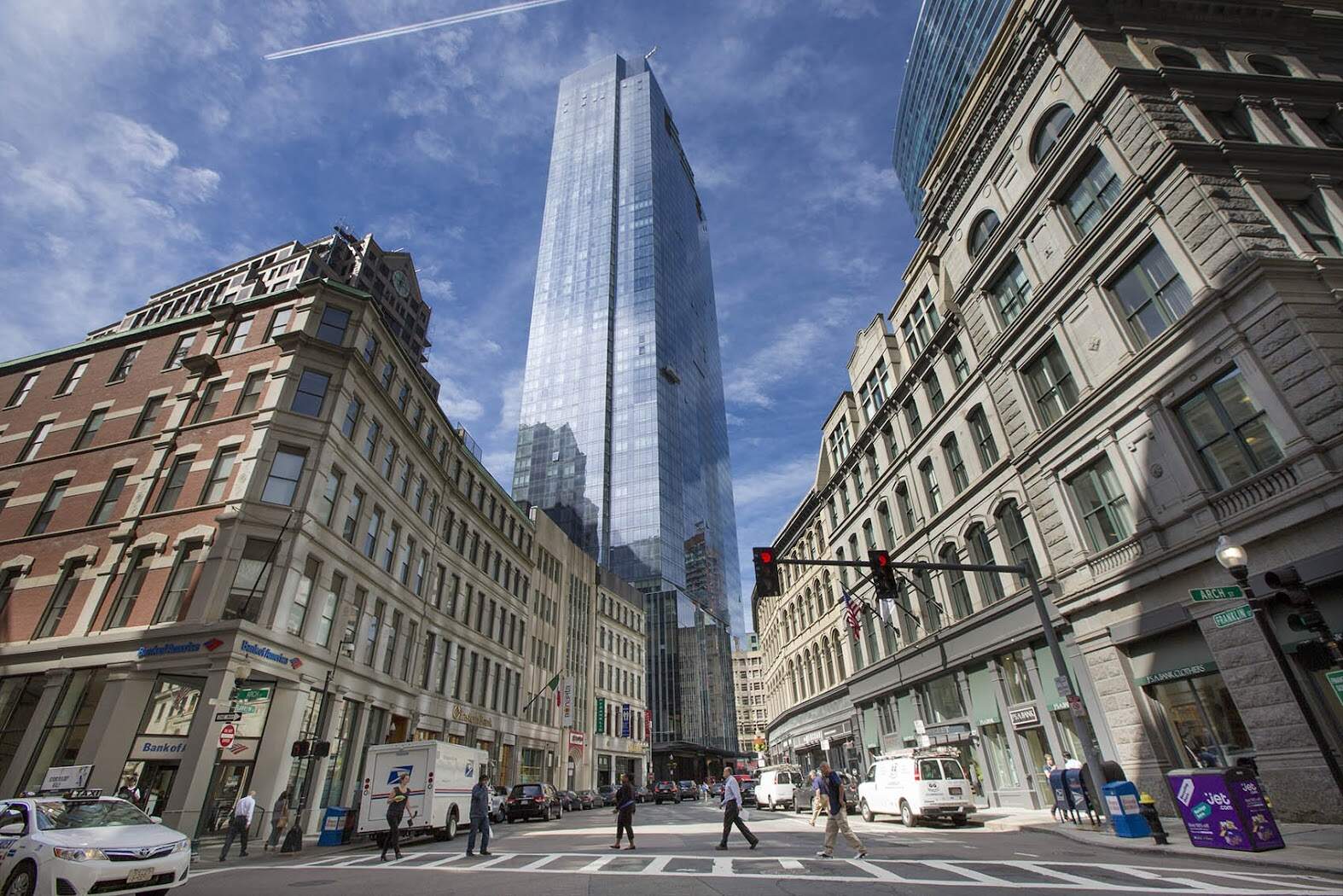
Empty office buildings and declining property values are threatening Boston's financial future — to the tune of a projected $1.7 billion loss in tax revenue over the next few years, according to a new report released Thursday by the Boston Policy Institute.
The tax revenue is a key source of funds for a variety of city services such as road repairs, schools, public parks and emergency services, according to the report.
The findings are an update to the institute's previous assessment of the impact of Boston's empty offices.
The updated report projects the city's budget shortfall will grow year by year, from $135 million this year to over $550 million in 2029.
Evan Horowitz, executive director of the Tufts University's Center for State Policy Analysis, which co-published the report, said the new projections are "much worse" than initially anticipated.
"Things are not getting better," Horowitz told WBUR's Newscast. "Offices remain empty. Their valuations continue to fall. We think they'll fall further than we thought."

The assessed value for all of Boston's office buildings fell 9% in fiscal year 2025 — a one-year dip reminiscent of the 2008 financial crisis and 2000 dot-com bubble burst, according to the report. This could amount to a decline in property values of 35% to 45% through 2029, the report said.
Some Boston office buildings have already sold at 50% to 70% discounts over the last year, the analysis found.
But the city's leadership is not buying the report's findings. Boston Mayor Michelle Wu said the final commercial property valuations for 2024 "do not show the scale of change that some have suggested."
"Last year's [BPI] report also stated that there would be over the next five years a $1.5 billion revenue loss," Wu told reporters at an event Thursday. "We are 20% into that next five years period now and have not experienced a revenue loss whatsoever. Our budget is balanced."
Wu also noted that the city recently received AAA bond ratings for the 12th straight year. The city is also working to convert office buildings to new housing and fill vacant storefronts with small businesses, she added.
Boston faces a number of factors that impact the value and profitability of the city's office spaces. Hybrid work has become the norm and mortgages rates have remained elevated, the report noted. Additionally, President Trump's tariffs have spiked the costs for building materials needed for maintenance, the report said.
Wu also noted Thursday that threats to international visitors could also impact the city's tourism levels.
Cities across the country are facing similar challenges and the potential fallout in commercial real estate. But Boston is in a particularly tough spot because the city depends more heavily on commercial property taxes, according to the Boston Policy Institute. More than a third of Boston's budget comes from commercial property tax revenue (such revenue is only 11% of other cities' budgets), according to the report. Commercial properties are also the single biggest source of revenue for core city services — providing more direct support than residents, the state or federal government — the report noted.
Further, Massachusetts law prevents Boston from having other types of tax revenue, such as a local sales tax or income levy — unlike cities in other states — the analysis said.
The report suggested the city could try to address the budget shortfalls by reducing its revenue expectations, increasing property taxes, or some combination of both.
But trying to implement changes to the city's property taxes has already proven politically tricky. Last year, Wu pushed a plan to shift more of the property tax burden to commercial property owners to avoid hikes on homeowners, but the effort failed on Beacon Hill. Wu renewed her tax plan efforts earlier this year, which she said is currently "backed up" at the State House.
"This [plan] represents a very modest reasonable compromise that was reached with the business community," Wu said Thursday.
Horowitz said Boston will likely need help from the state to "pursue any real alternatives" due to the city's "very limited taxing authority."
"We can't rely on big office towers that attract commuting workers," Horowitz said. "It doesn't mean the city can't be vibrant. The city has lots of other amenities that people enjoy. It just has to find a new way to secure its future strength."
WBUR's Rachell Sanchez-Smith contributed reporting.
