Support WBUR
Review
John Woo's 1992 action film 'Hard Boiled' is back in theaters
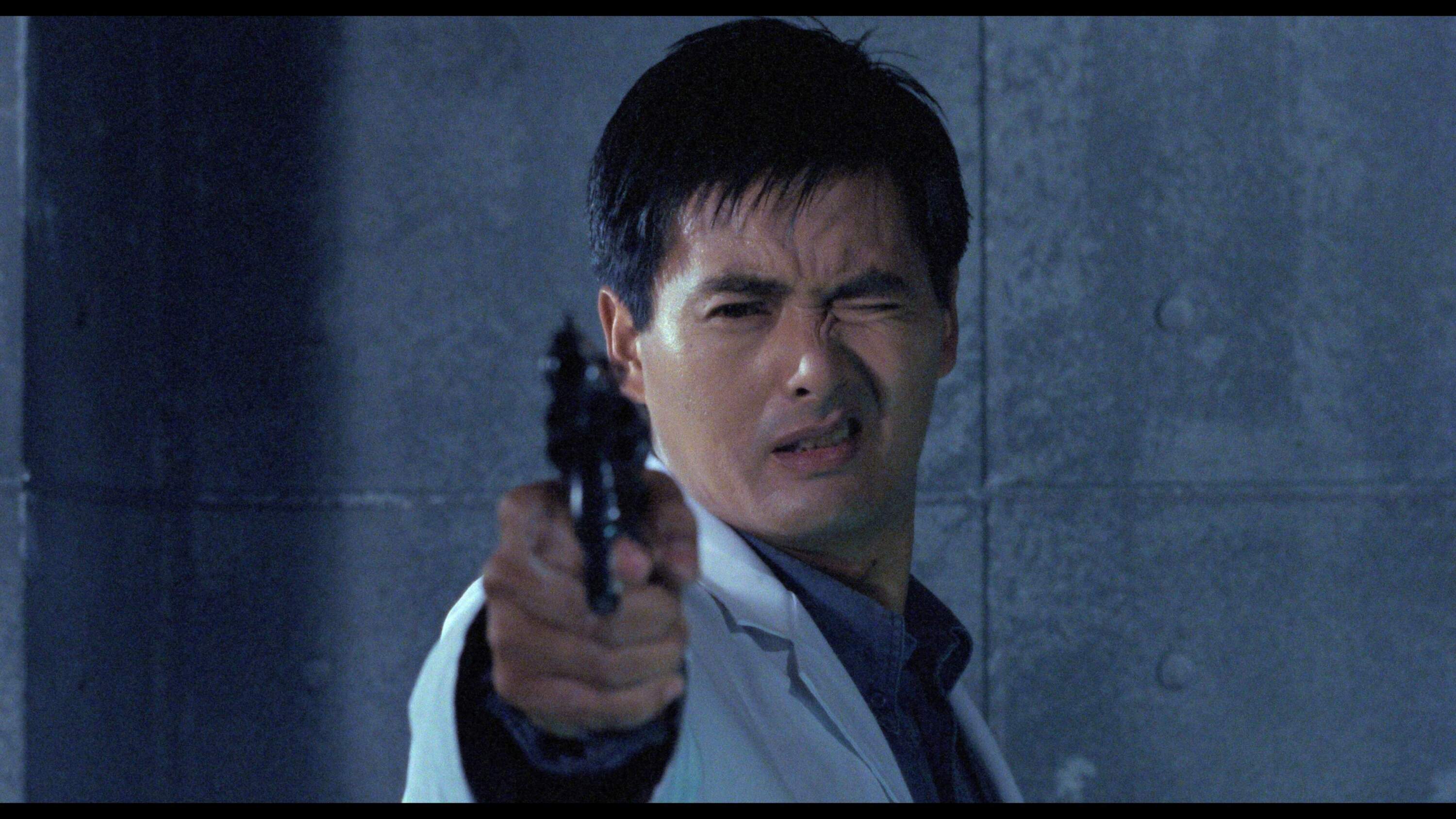
“X-rated action!” quips Chow Yun-Fat’s supercool cop, taking a jab at the U.S. film ratings board during the gonzo climactic shootout of director John Woo’s 1992 “Hard Boiled,” a movie comprised almost entirely of gonzo climactic shootouts. The line is an inside joke about the adults-only rating American censors slapped on Woo’s 1989 masterpiece “The Killer” for its extended scenes of orgiastic gunplay — scenes that “Hard Boiled” is hell-bent on topping at every turn. Proof of said intention is that Chow says the line to a baby, after the film’s final, explosive firefight has overflowed into the maternity ward of a hospital under siege. SWAT team members rappel out windows with infants swaddled in bulletproof vests, while our hero blows away baddies with a pistol in his hand and an adorable, gurgling baby under his arm. It’s one of the most outrageous things I’ve ever seen in a movie, even before Chow’s pants catch on fire and the child pees out the flames.
Back in theaters from Sunday, Jan. 25 through Wednesday, Jan. 28 in a new 4K restoration from Shout! Studios, “Hard Boiled” was the grand finale of a revolution in action filmmaking that exploded out of Hong Kong during a brief, glorious period during the 1980s and early ‘90s. These films have been maddeningly difficult to see legally over the past decade or so, as the rights were wrapped up with a Chinese real estate corporation called Kowloon. (No relation to the Route 1 landmark.) The situation looked so hopeless that pirate Blu-ray company Hong Kong Rescue was able to fleece desperate cinephiles like my friends and me out of a lot of cash a few years back. But now the good folks at Shout! have purchased the entire library of Hong Kong’s legendary Golden Princess studio and have been remastering these beloved titles in 4K. The Coolidge Corner Theatre showed a few of them last fall, but only as part of its After Midnite program, so I kept falling asleep during “The Killer” and waking up every time someone got shot. I woke up a lot.
The phenomenon began with Woo’s floridly melodramatic 1986 “A Better Tomorrow,” which rocketed Chow Yun-Fat to global superstardom as the doomed, defiant cousin to a family of cops and counterfeiters. (The movie’s iconic early shot of Chow lighting a cigarette with a burning $100 bill is the Hong Kong equivalent of John Wayne’s entrance in “Stagecoach.”) The suave, playful star was so immediately beloved he came back as the deceased character’s twin brother in Woo’s 1987 sequel “A Better Tomorrow II,” and again in 1989’s “A Better Tomorrow III: Love and Death in Saigon,” a Tsui Hark-directed prequel set during the final days of the Vietnam War. Woo liked to outfit his antiheroes in long cowboy duster coats, which were inappropriate for the Hong Kong climate but looked awesome when billowing behind the characters in slow motion. Soon, presumably sweaty real-life gangsters started wearing them to try to emulate their onscreen idols.
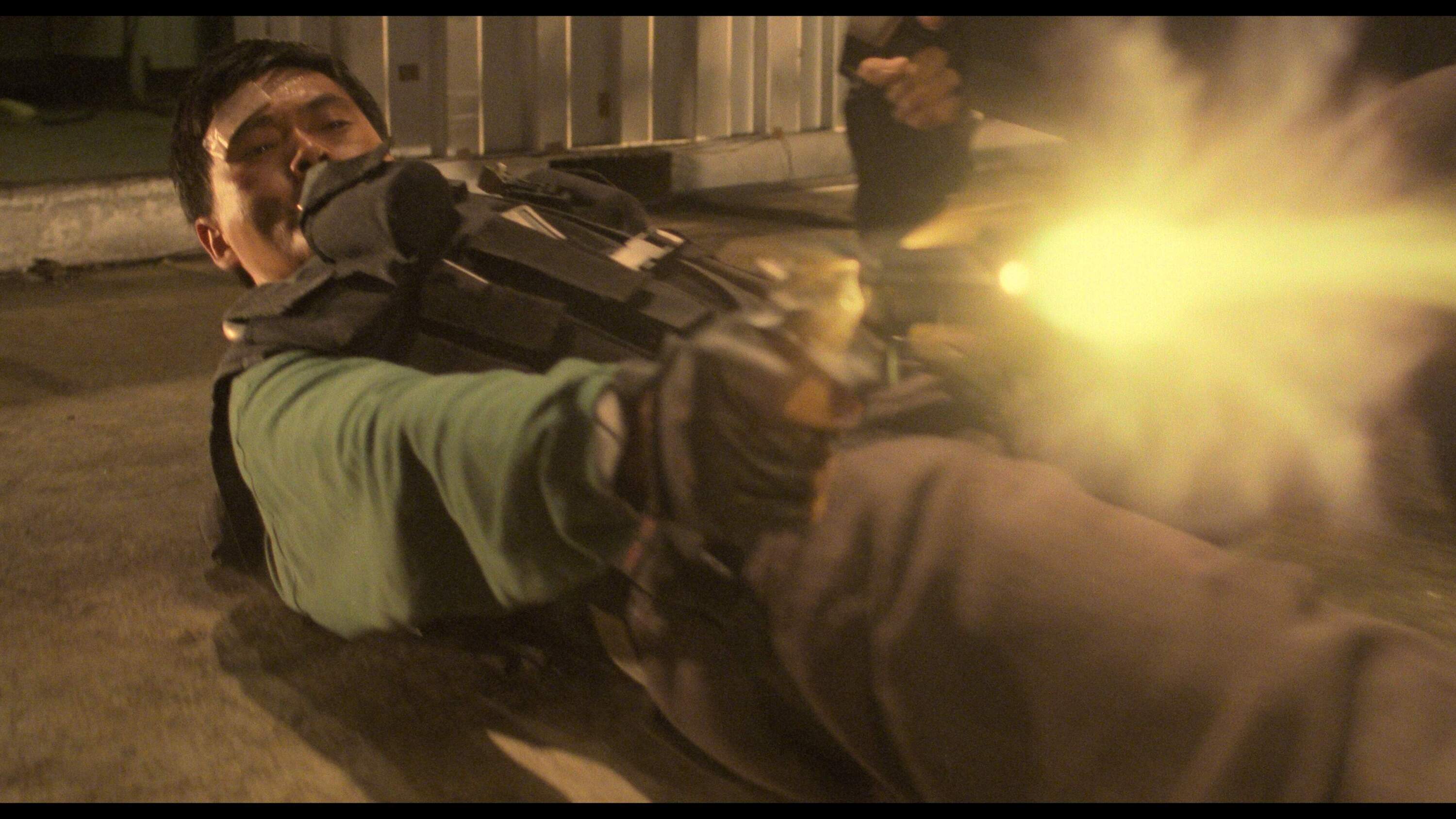
In a pointed contrast to the hard-guy grunting and growling of American action stars, Woo’s heroes were unabashed romantics, blasting away with their hearts on their sleeves. The dashing Chow owes more to Cary Grant than Arnold Schwarzenegger. That romanticism applies to the filmmaking as well, with a soaring camera and operatic swells of emotion amid the ballets of bloodshed. Woo’s game-changing innovation was applying the aerobic physicality of martial arts fight scenes to shootouts — a technique that came to be known as “gun fu” and was mimicked by Hollywood to intoxicating effect in the “Matrix” and “John Wick” movies. (The first time I noticed it in an American film was 1994’s “The Crow,” with Bruce Lee’s son Brandon being a natural early adopter.) One of Woo’s oft-imitated signature shots is of a character lying flat on his back, firing away with a pistol in each hand as the recoil from the shots sends him sliding backward across the floor.
“Hard Boiled” has something to do with an arms smuggling ring. Chow’s endearingly reckless police detective — who moonlights as a jazz clarinetist, because he’s got soul — finds himself on the trail of a dapper mob assassin who turns out to be a deep cover agent anguished by the moral compromises he’s made in the line of duty. The killer cop is played by Tony Leung Chiu-Wai with all the handsome melancholy he’d later bring to the films of Wong Kar Wai. Like a lot of John Woo movies, “Hard Boiled” is a bromance about professionally violent men being tender with each other, clinging to outdated codes of honor as a crass and ruthless new generation makes a mockery of their morality. One of the director’s early films was called “Last Hurrah for Chivalry,” a title that could apply to all of them.
Honestly, I’ve never really been able to recap the plot of “Hard Boiled,” and not just because the first 20 or so times I watched it as a teenager were on a VHS bootleg I’d bought in Chinatown for $5, which had subtitles that didn’t make any sense. Unsatisfied with the script they were supposed to be shooting — in which Leung Chiu-Wai was to play a madman poisoning baby formula factories — the filmmakers threw it out and made up a whole new movie as they went along. The extravaganza of an opening sequence, during which a crowded tea-house is shot to smithereens, was filmed before a single page was written. Woo had heard the famous location was going to be torn down and got his crew in there so they could destroy it first.
A pet peeve of mine in American action movies is how bullets never seem to go anywhere. The bad guys always miss our heroes, but they never seem to hit anything else, either. In John Woo movies, the countless rounds of expended ammunition wind up shattering windows, shredding furniture, blowing holes in walls and God help any crockery or dishware that might be on set. This goes for innocent bystanders, too. (My favorite of Woo’s pictures, “The Killer,” stars Chow as a mob assassin who accidentally blinds a female lounge singer during a hit and spends the rest of the picture trying to atone. Yes, of course they fall in love.) Part of the reason the maternity ward sequence in “Hard Boiled” works so well is that in the back of your mind, you’re thinking these people might be crazy enough to kill off a kid.
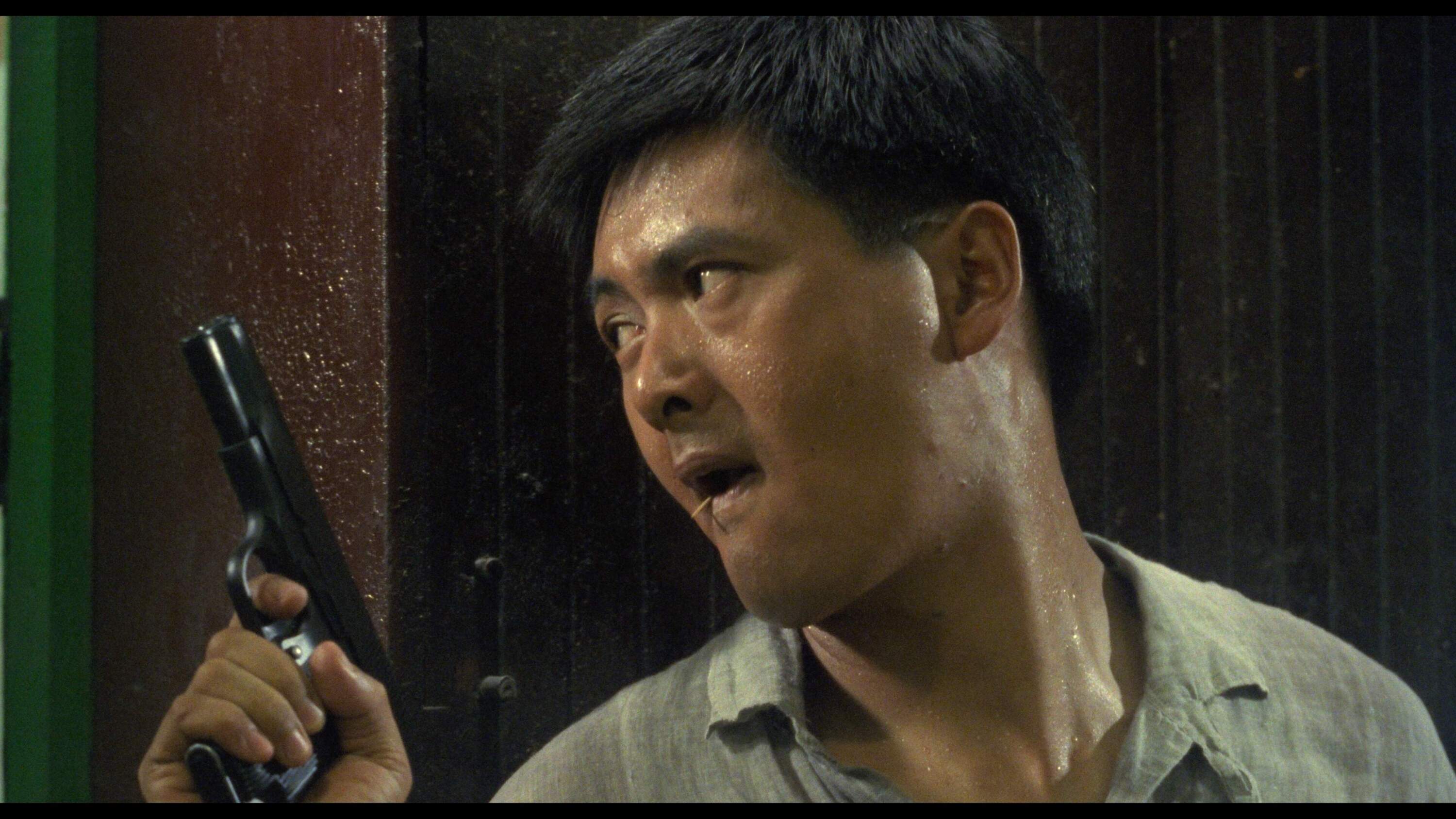
Woo conducts action scenes like symphonies, with mini-movements that swell and crescendo within the larger set-pieces. Despite being one of the most violent movies ever made, the predominant feeling when watching “Hard Boiled” is that of joy — a visceral exultation in the movement of bodies through onscreen space. The swirling camera works as a dance partner to these absurdly charismatic performers and the nimble grace with which they glide through the mass destruction; like in the famous shot of Chow sliding down a banister with a pistol in each hand, picking off henchmen while twirling a toothpick between his lips. You find yourself laughing aloud — not derisively, but in gratitude and appreciation because you can’t believe what you’re seeing. My friend Danny described it best when he said that watching “Hard Boiled” for the first time made him feel like God had handed him a beer.
The movie was itself a last hurrah for the Hong Kong film industry, sort of a farewell blowout before Woo and fellow filmmakers Jackie Chan, Tsui Hark and Ringo Lam decamped for Hollywood in anticipation of the 1997 handover to mainland China rule. (Interestingly, all references to the impending Chinese takeover have been removed from the new translation of “Hard Boiled.” As has the “X-rated action” line, presumably because the MPAA stopped issuing the X rating in 1990.) Woo found great success in America, with Tom Cruise choosing him to helm the first “Mission: Impossible” sequel. But for my money, he really only recaptured the old magic in 1997’s “Face/Off,” perhaps because John Travolta and Nicolas Cage were the only Hollywood stars fearless enough to sell the nutty sincerity of his lunatic grandeur.
“Hard Boiled” is back in theaters from Sunday, Jan. 25 through Wednesday, Jan. 28. It’s also available on VOD and streaming alongside other Hong Kong Action Classics on the Criterion Channel.