Support WBUR
'I'm sick of struggling': Boston homeowners are stuck in the middle of a tax fight
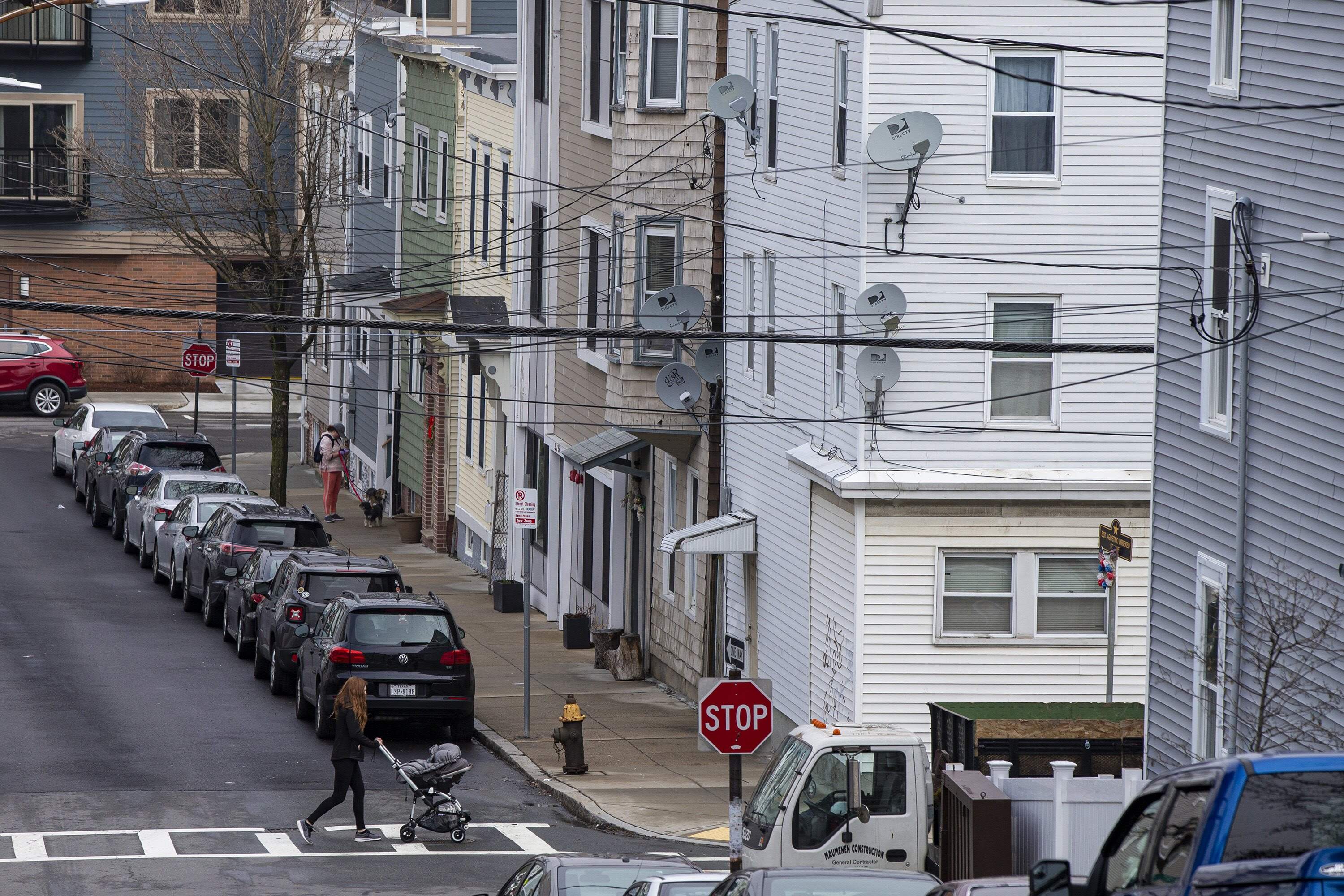
For 32 years, Olive McSweeney Sheehan has run a family child care center out of her Brighton home. She loves the work she does, but she faces a stark financial reality.
Her weekly budget for milk, bread, fruit and vegetables for the six toddlers and infants in her care at Over the Rainbow Family Childcare has doubled in the last few years. She says her utility bills have increased between $200 to $300 a month. And now, rising property taxes threaten to be the straw that breaks the camel’s back.
“I’ve been doing this a long time and I'm sick of struggling, to be honest,” she said. “Like, when does it stop?”
Boston homeowners are facing a 13% tax hike this year — about $780 more on the average single-family home. McSweeney Sheehan expects to pay about $1,100 more this year.
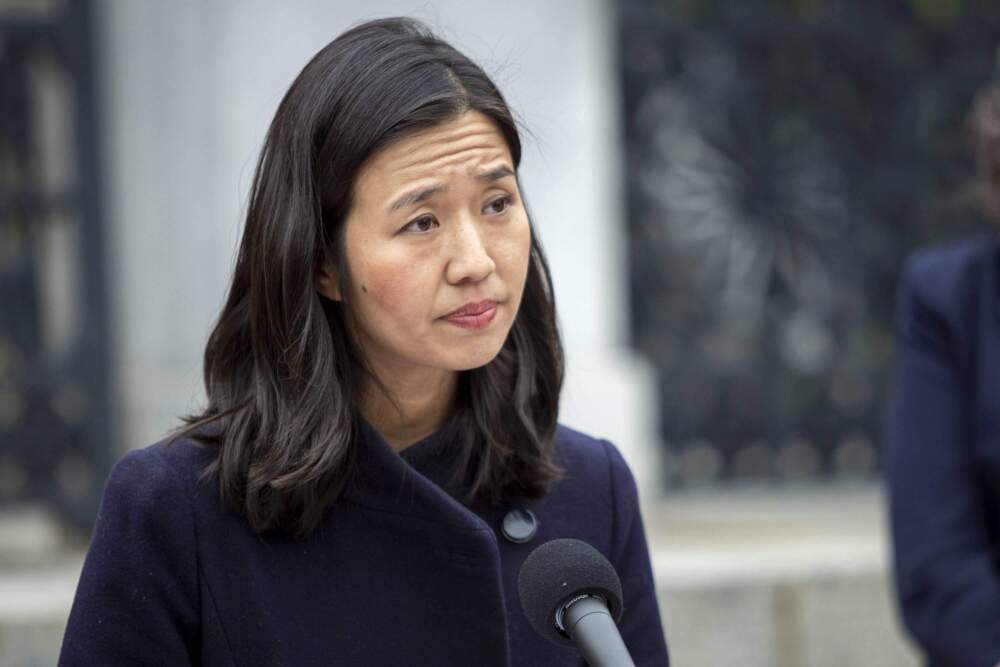
She is one of thousands of Bostonians caught up in the tax fight between Boston Mayor Michelle Wu and the state Senate. Wu wants to temporarily shift more of the property tax burden from residents to commercial property owners. But her efforts have failed multiple times.
It’s become a political maelstrom: Wu says senators have fought her because they’ve been swayed by real estate interests. On the other side, legislators say her plan would put too much strain on struggling businesses and that she should instead trim the city’s budget.

To understand why the Legislature gets to tell Boston (and other communities) how to set their taxes requires a deep dive. Several policymakers and pundits contacted by WBUR had little idea of how we got here.
“We have to work with the home rule amendments that were enacted in the 1960s,” said Janice Griffith, a professor emeritus at Suffolk University Law School.
They allow cities and towns to create local laws, and exercise much of their own power, but there are limits.
“They can’t regulate elections… They also cannot borrow money or pledge the credit of the city or town without state approval,” Griffith said. “They do not have any power to levy, assess and collect taxes.”
That’s why Wu had to file a home rule petition to try to shift the property tax burden, even though the city council and many other city leaders agreed with her plan.
Overall, Griffith said, she doesn’t think relying on home rule petitions is a good system.
“They violate the concept of equal treatment among municipalities,” she said. “Each municipality can go to the General Court and get whatever they want, assuming the General Court goes along with it. And then the other municipalities don't necessarily have the same legislation.”
In many of Wu’s recent interviews and public speeches, she’s raised her frustration about this system for a different reason.
“ Decisions that most states leave up to their local leaders, here are instead made by senators or others from hundreds of miles away,” she said before a crowd of hundreds at the Massachusetts Municipal Association conference last week. “We need the state to help us equip our municipalities with the flexibility to respond quickly and effectively to the needs of our residents.”
But others say home rule petitions allow for healthy checks and balances on proposals that warrant more consideration.
“I can definitely talk more generally about when towns and cities want to pursue wacky ideas, why it's good to have some state oversight,” said Paul Craney, executive director of the right-leaning Massachusetts Fiscal Alliance.
He's not a fan of the mayor’s tax shift proposal, and compared Wu’s initiative to efforts to pass ranked-choice voting. After being roundly rejected by voters across the state in a 2020 ballot question, proposals on ranked-choice voting have been taken to local communities.
"The check and balance is there for a reason,” he said. “It's so that when you make drastic changes, there has to be more buy-in besides a few people in your municipal government making all the decisions."
For now, the point has been made on Wu’s proposal for a property tax shift: state senators rejected it in a 33-5 vote this month. So despite her frustration, the mayor will have to go back to the drawing board next session as other efforts to lower the burden on homeowners continue percolating.
To the family child care provider Olive McSweeney Sheehan, relief can’t come soon enough.
She said she'll need to increase her fee to families to make ends meet. But she raised it by $25 a week last year, and she doesn’t want to do that again.
“It just feels wrong,” McSweeney Sheehan said. “They're young couples. They're starting out. We all are getting the same bills. They're paying the same utilities, the same food prices. And I also can't price myself out of business, you know?”
In September, she said, she’ll look at enrollment numbers, and decide whether it’s time to close the business.
This segment aired on January 28, 2026.
