Support WBUR
2026 Spring Arts Guides
A guide to Greater Boston's spring classical music concerts
As I write this, the snow from the huge blizzard that has buried Boston is still piled in the streets. So it was comforting to think that spring was not too far away and would bring with it some great music to celebrate the season of rebirth. But the big news turned out to be about two of our most significant conductors. There had been rumors circulating for a couple of years that the Boston Symphony Orchestra was not going to renew the contract of music director Andris Nelsons, and in a rather grim announcement, that decision has now been made and he will leave the BSO after the Tanglewood season of 2027.
Then Benjamin Zander, the beloved director of the Boston Philharmonic and the Boston Philharmonic Youth Orchestra — whose Mahler performances have been especially legendary since he led the Boston Civic Symphony in the 1970s, has announced, just after his 87th birthday, that he will be stepping down after the 2026-27 season and his two orchestras will be retiring with him, transformed into a new organization called the Zander Center.
Still, there is good news. Here’s my list of the groups and individuals who are offering particularly interesting repertoire and some performances I’m especially eager to hear — and think about.
But let me also remind you that I’m not listing any of the excellent free programs at Boston’s schools and conservatories, and that a good number of performances are also livestreamed, so it’s still possible to listen to live music at home — just check the websites. And please be on the lookout for any concerts or productions I might not know about at the time of this listing or may have unfortunately overlooked.
SYMPHONY ORCHESTRAS
Boston Symphony Orchestra
Symphony Hall | March 19-May 3
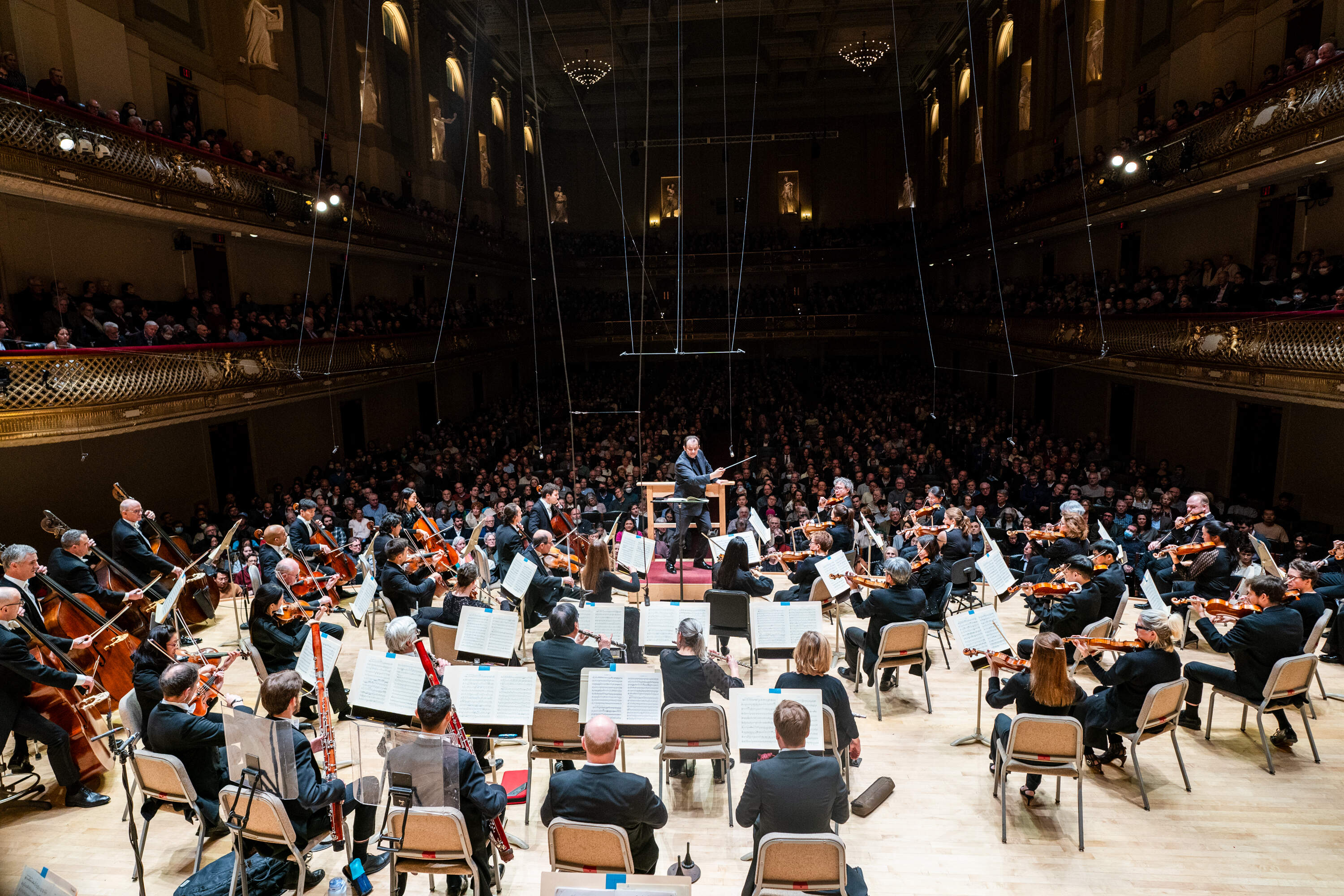
Pride of place must always go to the Boston Symphony Orchestra, the great international ensemble we are lucky to have in our midst, performing in one of the world’s great concert halls. Not that every concert is thoroughly satisfactory. After more than a decade, music director Andris Nelsons has failed to consistently satisfy, either in repertoire or performance.
It’s crucial that we get to hear other major orchestras if only to keep our standards up. If I had to pick one program for the spring season, it would be star-studded soprano Renée Fleming and baritone Thomas Hampson as Pat and Dick Nixon in excerpts from John Adams’ most admired opera, “Nixon in China.” I wish Nelsons had chosen something fresher than Dvořák’s “From the New World” Symphony to share the program. Why not more Adams or some surprising American — or Chinese — music? Lisa Wong is the guest choral conductor of the Tanglewood Festival Chorus (March 26-28). I can’t omit two phenomenal young keyboard masters who will also be appearing under Nelsons: Korean pianist Yunchan Lim, playing the Schumann Piano Concerto, with Nelsons leading Tchaikovsky’s “Manfred” Overture (March 19-22), and Japanese pianist Mao Fujita, playing Mozart’s sublime C-major Concerto, No. 21, with Nelsons oddly fleshing out the program with two Finnish pieces (April 2 & 4).
Boston Philharmonic
Symphony Hall | April 11
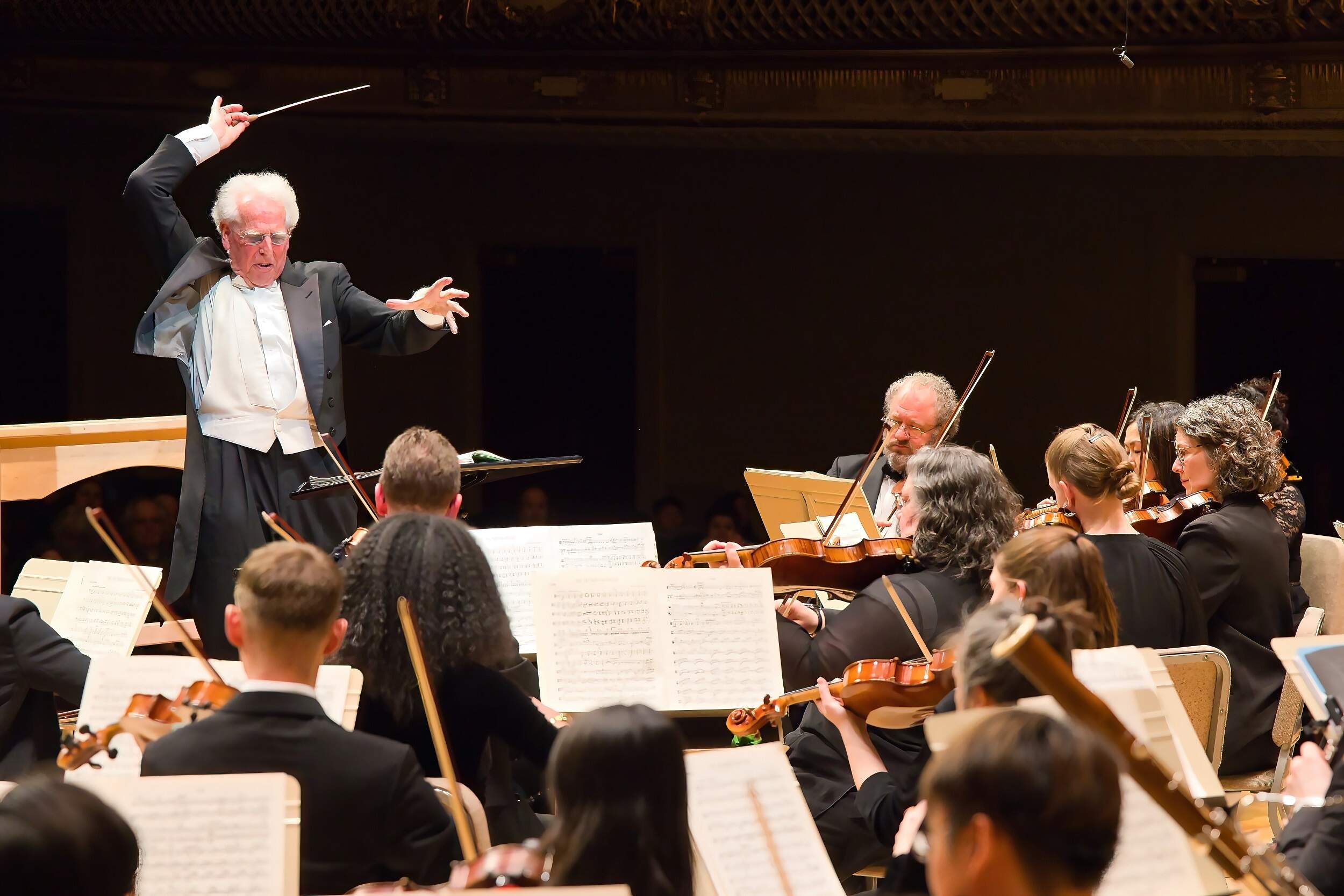
Boston’s beloved music director, Benjamin Zander, returns to Symphony Hall to conduct the composer with whom he’s most closely associated, Gustav Mahler — this time the vast and sublime Symphony No. 3, with the deeply expressive British mezzo-soprano Dame Sarah Connolly. We need to hear convincing performances of these cosmic works to help us see more clearly our place in the universe. If you take the time, arrive early and listen to Zander’s moving and sometimes funny but always illuminating pre-concert talk.
VISITING ARTISTS
Vivo Performing Arts
Multiple venues | March 20-June 6
Boston’s oldest importer of guest artists, now with a new name, is concentrating more and more on popular and jazz artists. But Vivo Performing Arts is still offering a juicy selection of visiting classical performers. My top choices would be the sensitive Icelandic pianist Víkingur Ólafsson, particularly celebrated for his delicate performances of Bach, in a program of Bach, a couple of late Beethoven sonatas and a Schubert sonata (Symphony Hall, March 20); the beloved Takács Quartet in Schubert’s delicious single-movement Quartettsatz, with guest violist Jordan Bak in Mozart’s magnificent C-major and D-minor String Quintets (Jordan Hall, April 11); and rich-toned Georgian violinist Lisa Batiashvili’s recital with pianist Giorgi Gigashvili in a program of early Beethoven, Bartók, César Franck, and a premiere by Israeli-Georgian composer Josef Bardanashvili (Jordan Hall, May 1).
Weekend Concert Series
Isabella Stewart Gardner Museum | March 29-April 26
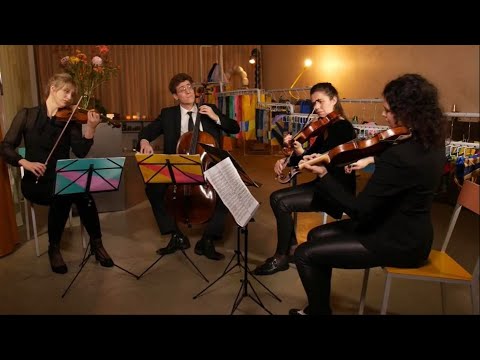
Curator George Steel has turned the Gardner Museum’s Sunday afternoon concert series into must-see/must-hear events. Among this spring’s programs, I’ll choose two quartets, one a Gardner regular, the other a newcomer. Castle of Our Skins presents a portrait of violinist, composer and “musical firebrand” Daniel Bernard Roumain, with two special guests: the composer himself on electric violin and “sound chemist” Val-Inc. The three Roumain quartets on the program are also portraits — sound portraits of Malcom X, MLK and Maya Angelou (March 29). The Butter Quartet is an early-instrument group, performing four works for string quartet by late 18th-century composers who not only essentially invented the string quartet but who are said to have actually performed together: Jan Křtitel Vaňhal, Franz Joseph Haydn, Wolfgang Amadeus Mozart and Carl Ditters von Dittersdorf (April 26).
Rockport Music
Shalin Liu Performance Center | March 29
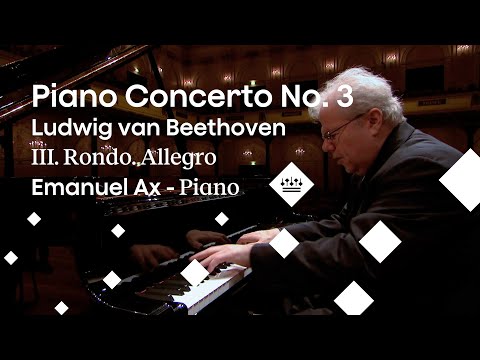
Rockport Music is probably better known for its outstanding local musicians rather than its importation of visiting luminaries. But its spring season has an exception. Pianist Emanuel Ax is a beloved figure, though I’m sorry to say that I’ve seldom found his playing particularly inspiring. But a friend whose judgment I trust said she had heard Ax recently and was pleasantly surprised. His Rockport concert has a solid repertoire, including Beethoven’s two Opus 27 sonatas, John Corigliano’s “Fantasia on an Ostinato” and Schumann’s “Arabesque” and “Fantasy.” The second of the two Beethoven sonatas is the famous “Moonlight,” and where better to hear that familiar masterpiece than overlooking Rockport harbor? Too bad the concert is during the day. The moonlight will be strictly inside.
VOCAL MUSIC
Boston Lyric Opera
Multiple venues | March 20-May 3
One of our major opera companies is also one of our least consistent. And of the BLO’s remaining productions this season, one sounds dicey on paper. Celebrated stage director Anne Bogart, who staged BLO’s brilliantly complex, insightful, powerful production of Paul Ruders’ “The Handmaid’s Tale,” also staged a heavy-handed, overthought and confusing “Carousel.” What will she make of — or do to — Mahler’s “Song of the Earth,” which was never meant to be staged? Bogart has added spoken dialogue and an actor in the role of a grieving mother to the two singers Mahler intended. This doesn’t sound promising, but I remind myself of some great productions of Handel oratorios that were never meant to be staged. We’ll see… We’re advised to come early for the “pre-show experience.” The singers will be mezzo-soprano Raehann Bryce-Davis (who is giving a solo recital on March 24) and internationally celebrated tenor Brandon Jovanovich. The actor is Ellen Lauren (BLO’s Opera + Community Studios, March 20-29).
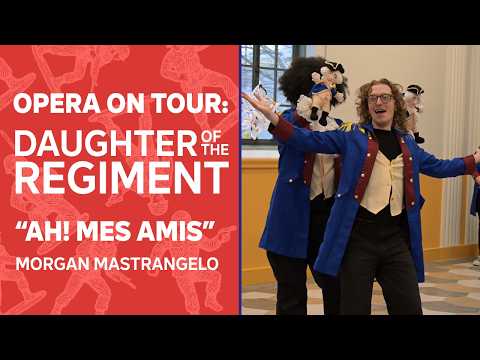
BLO returns to “real” opera with what sounds like a delightful production of Donizetti’s “Daughter of the Regiment,” with new English dialogue shifting the location to colonial New England (in honor of America’s 250th). It stars the brilliant Met coloratura Brenda Rae as Marie, with tenor Spencer Britten, mezzo-soprano Sandra Piques Eddy, bass Kenneth Kellogg and tenor Neal Ferreira as the Duchesse de Krakenthorpe, often the most hilarious role in the opera. Kelly Kuo is the conductor, John de los Santos the stage director (Emerson Colonial Theatre, April 24-May 3).
Emmanuel Music
Emmanuel Church | March 22-May 10
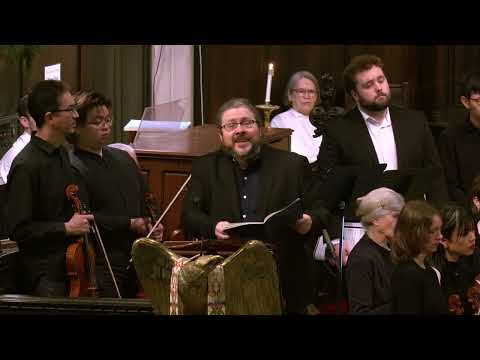
No musical organization is more committed to the idea that music is good for the soul than Emmanuel Music. Under music director Ryan Turner, the weekly Bach cantatas continue as part of the Sunday service, though if you choose to listen only to the cantata itself, which begins at 11 a.m., you’re still welcome. Check the website for the particular cantata for any given week, and read the eloquent notes by Turner and Craig Smith, Emmanuel Music’s legendary founder.
American Classics
Multiple venues | April 10 & April 12
Ben and Brad — you don’t even have to know their last names (Sears and Conner) to know that they and their talented friends will be offering you a delightful and illuminating encounter with the American Songbook. Officially known as American Classics, the spring program features the songs of Jerry Herman, Meredith Willson, Dolly Parton, Joni Mitchell and others. Who could those “others” be? (Cambridge’s First Church, April 10; Bedford’s First Parish, April 12)
Handel + Haydn Society
Symphony Hall | April 10 & 12
Handel + Haydn’s April concert promises to include some of the most delightful Baroque music ever written to be played by the H+H Orchestra on Baroque instruments led by music director Jonathan Cohen, who's very good at "delightful." These charmers begin with selections from Lully’s “Le Bourgeois Gentilhomme” and move on to three fugues from Bach’s “The Art of the Fugue" and First Brandenburg Concerto, Handel’s first “Water Music” Suite, and a suite of Rameau dances and overtures.
SOLO & CHAMBER MUSIC
Boston Chamber Music Society
Sanders Theatre | March 8-May 10
Violist Marcus Thompson’s Boston Chamber Music Society’s three spring concerts all have a lot to offer, but if you had to choose only one it probably would be the last one, which includes two of the greatest pieces of chamber music ever written: Schumann’s marvelous Piano Quintet and Mozart’s sublime-beyond-sublime Clarinet Quintet. The players for the latter include clarinetist Romie de Guise-Langlois and one of our most expressively Mozartian violinists, Stefan Jackiw. I can’t comment on the third piece because I haven’t heard it yet. It’s a new string octet commissioned by BCMS from one of its own violinists, Allyssa Wang (May 10).
Chameleon Arts Ensemble
Multiple venues | March 22-May 17
Flutist Deborah Boldin comes up with some of the most imaginative programs among our local chamber groups. And she has the players who can pull them off. I’m often tickled by her literary titles. For example, “To Wake the Dead” includes Tchaikovsky’s “Souvenir d’un lieu cher (Memory of a dear place)” for violin and piano, unfamiliar chamber pieces from 1917 (Louis Vierne’s Piano Quintet) and 1919 (Herbert Howell’s Rhapsodic Quintet for clarinet and strings), and Stephen Albert’s “To Wake the Dead: Six sentimental Songs and an Interlude after Finnegans Wake” for soprano (Mary Mackenzie), flute, clarinet, violin, cello and piano (Boston’s First Church, April 11-12).
Mistral
Multiple venues | April 11-12
Flutist Julie Scolnik, director of Mistral, is a serious person and a serious, refined musician. She has raised money to fight breast cancer, which she herself has blessedly survived. She has organized profoundly serious programs, though Mistral is better known for its elegance and choice of unusual but lighter weight programing. Mistral’s final concert of the season is called “Aeolian Tapestries” and involves some charming, mostly arrangements of French pieces, some of which include an important role for the harp (Krysten Keches). The composers include Saint-Saëns, seductive Reynaldo Hahn, Enescu, Valerie Coleman, and an arrangement for nonet of Messager’s ballet “The Two Pigeons” (Andover’s West Parish Church, April 11; Brookline’s St. Paul’s Church, April 12).
NEC's First Monday at Jordan Hall
Jordan Hall | April 6 & May 4
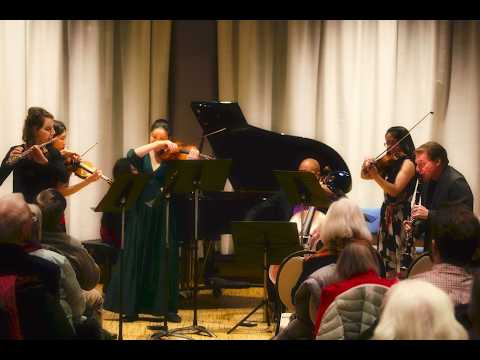
Each of the remaining NEC First Monday concerts has at least one item I wouldn’t want to miss. The April program includes Stravinsky’s “Rite of Spring” in its two-piano version, with Gloria Chien and international virtuoso Marc-André Hamelin. And the May concert brings the great Borromeo String Quartet back to town for Florence Price’s “Five Folksongs in Counterpoint.” The concerts are free, but you have to register for tickets online.
Boston Symphony Chamber Players
Symphony Hall | April 24
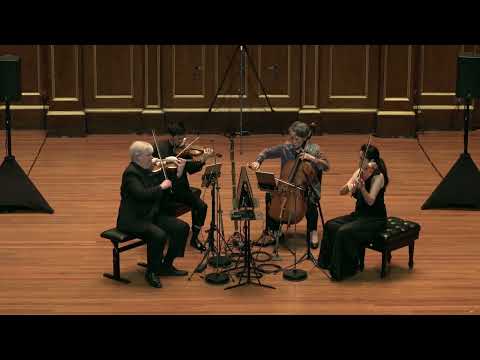
I have rarely been especially fond of the Boston Symphony Chamber Players’ Haydn, Mozart or Beethoven, but their spring event at Symphony Hall sounds like it might be a knockout. It’s one of Stravinsky’s theatrical masterworks, “A Soldier’s Tale,” a kind of semi-comical mystery play composed in 1918, when lots of soldiers were trying to get home after the Great War only to find that everything had changed. The BSO website emphasizes Stravinsky’s “jagged rhythms” and “biting dissonances” (very true, which is why it needs a conductor even if there are only seven players) but it’s also one of his most immediately catchy and tuneful scores. BSO assistant conductor Samy Rachid conducts, and Bill Barclay directs Caleb Mayo as the Soldier and Daniel Berger-Jones as the Devil.
A Far Cry
Multiple venues | April 25-May 9
One of the most popular groups in the city chose its name because it is “‘a far cry’ from how a traditional orchestra operates” — conductorless players with a “shared leadership,” in which the members get to choose their own programs. But, they crucially add, their name also suggests “a distant sound” that all of us need to hear. The Criers’ last concert of this season sounds like it’s a perfect fit for this ideal. Curated by violinist Jesse Irons, it’s called “The Stranger’s Case,” a “meditation on empathy and belonging,” tracing the lives of those who either want to or have to “cross borders.” The works include Armenian American composer Mary Kouyoumdjian’s “Tagh (Diary) of an Immigrant,” a set of Handel tenor arias, a Dvořák Nocturne, and Tunisian-born (but raised in Ottawa and now living in Houston) Karim Al-Zand’s “The Stranger’s Case” for tenor and strings. The guest artist will be Grammy-winning Lebanese American tenor Karim Sulayman (Jordan Hall, May 9).
Radius Ensemble
Tull Concert Hall, MIT | April 30
Jennifer Montbach, founder and director of the Radius Ensemble, has put together what is essentially a contemporary music concert ending with a great work by Robert Schumann, his Piano Quartet. I’ve never heard any of the other pieces. But I’m curious about MIT faculty member Keeril Makan’s “Madrigal,” a meditation on the sculpture outside MIT’s new music building, Nigerian American composer Shawn Okpebholo’s “Wunlit” for solo horn, and the brilliant Mexican composer Gabriela Ortiz’s “Puzzle-Tocas” for wind quintet.
Glissando
First Church Boston | May 1
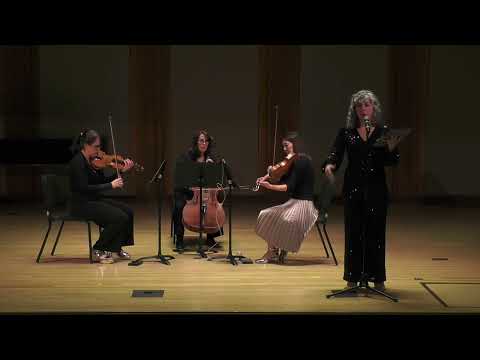
Where have I read this before: “Most professional pianists are either virtuosos or artists. Sergey Schepkin is one of the rarer breeds who is both?" Oh, I know. I wrote it myself last year, and I’ve thought it every time I’ve ever heard Schepkin play. His series, Glissando, has only one concert this spring, “Vive la France!,” which includes a series of French pieces for piano and cello (Thomas Barth). The composers are Debussy, Fauré, Nadia Boulanger and Franck. Joyeux printemps!
Sarasa Chamber Music Ensemble
Multiple venues | May 8-10
“All in the Family.” Whose family? How about a bunch of Bachs. Sarasa’s superb musicians offer us a grand alphabet of pieces by J. S., J. B., W. F., C. P. E. and A. M. (Anna Magdalena) Bach. With the whole Bach family, as with Sarasa itself, there’s always more to discover and surprise us. The ensemble brings the program to Brattleboro, Vermont, the Friends Meeting House in Cambridge and Follen Church in Lexington.
Winsor Music
St. Paul's Episcopal Church, Brookline | May 9
Winsor Music’s inventive spring program — “Games!” — is full of trickery and sleight of hand. The concert begins with rolls of the dice (rolled by members of the audience) for Mozart’s “Musikalisches Würfelspiel,” in which the dice determine the sequence of the musical phrases. And the concert ends with Mozart’s often witty “Kegelstatt” Trio, with Winsor co-directors Rane Moore on clarinet and Gabriela Díaz on violin/viola, with pianist Heng-Jin Park. In between come sports and jokes from Erik Satie and György Kurtág, and composer/soprano Kate Soper performing her own “Life’s Work,” which mixes Virgil with diary entries and board game rules.
EARLY MUSIC
Blue Heron
First Church, Cambridge | March 28 & May 2
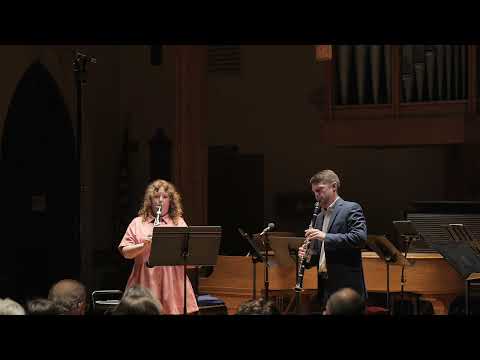
This beloved singing ensemble, under the direction of Scott Metcalfe, delivers concerts by two of its most beloved medieval composers: Ockeghem and Machaut. The Okeghem concert is devoted to his “Missa Cuiusvis toni” (Mass in whatsoever mode) This can be sung in three different scales or harmonies. Blue Heron will do all three versions at this two-part event. (March 28). The second concert, “Le grant rhetorique,” is part of a “mini-festival” dedicated to Machaut (May 1-3), with more performances, sing-alongs and talks.
Boston Early Music Festival
Multiple venues | April 12 & 25
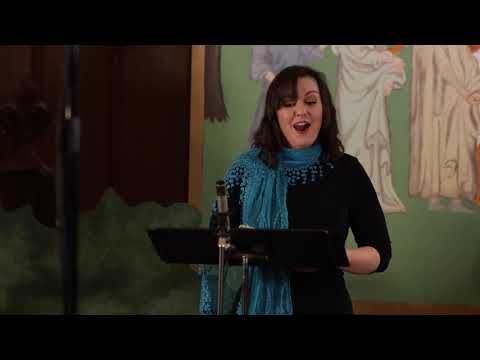
The Boston Early Music Festival is our celebrity series for early music, bringing us established figures and rising stars from the world over. And every odd-numbered year, we get a flabbergasting production of an opera only the early-music insiders have ever heard of. The two upcoming concerts are major events, bringing back to Boston two of early music’s supernovas. Jordi Savall and his group Hespèrion XXI have been very loyal to BEMF and will be back but not alone. It’s an extravaganza called “Songs, Battles, and Dances from the Old and New World: 1100-1780,” and Savall’s group will be joined by Tembembe Ensamble Continuo and La Capella Reial de Catalunya in an exploration of “how music served as a tool of faith, resistance, and survival through seven centuries of global transformation” (Jordan Hall, April 12).
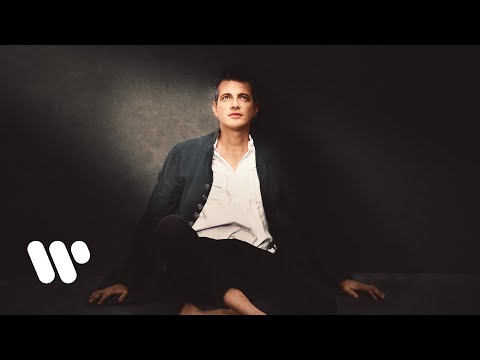
More intimately, the great countertenor Philippe Jaroussky returns with his band Artaserse for an exploration of Italian Baroque cantatas dealing with jealousy. The composers include Vivaldi, Porpora, Durante, Galuppi, and two Scarlattis. If you don’t think this could be one of the crowning musical experiences of your life, you clearly don’t know what you’ve been missing (St. Paul’s Church, Cambridge, April 25).
Boston Baroque
Emerson Paramount Center | April 24 & 26
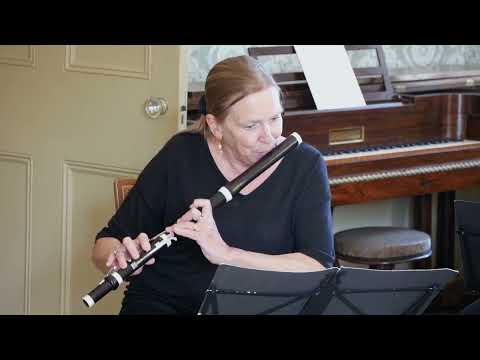
It’s still unsettling to see a new name listed as the guest conductor of Boston Baroque since founder Martin Pearlman’s retirement a year ago. But David Bates will be here to conduct one of the hardest operas to pull off. It’s Mozart’s “opera seria” “Idomeneo,” written between Mozart’s earliest collection of operas and before his major successes. It has some of his greatest music (probably more people know the overture better than any of the arias), but it’s dramatically static yet at moments shockingly less static than at others. The most exciting role is that of Elettra and in the hands and voice of Wendy Bryn Harmer, we should be fine. The other soloists include David Portillo, Hera Hyesang Park, Valerie Eickhoff, Omar Najmi and Joel Clemens. It should sound ravishing with early instruments. And who knows? Maybe this time it will be thrilling all the way through.
Musicians of the Old Post Road
Multiple venues | May 2-3
“Ben Franklin’s Musical Curiosity” is itself a curiosity, a concert exploring Franklin’s musical circles both at home and in Paris. I’m unfamiliar with any of the composers — Francis Hopkinson and Brillon de Jouy, John Antes and C.F. Abel — but we are also promised a piece written by Franklin himself (Museum of Worcester, May 2; Roxbury's Shirley-Eustis House, May 3). Happy 250th!
CONTEMPORARY MUSIC
Boston Modern Orchestra Project
Jordan Hall | April 19
When BMOP isn’t accompanying an opera, Gil Rose is leading his players in a program of new music. “Premiere4” offers the world premieres of four new pieces by significant composers: Avner Dorman’s cello concerto “Inner Fire”; John Aylward’s “History of the World” (the website describes this piece as “potent” and knowing Aylward’s music, I believe it); Lisa Bielawa’s “Pulse,” Concerto No. 2 for Violin; and Anthony De Ritis’ “Jiggedy Jingle Jaunty Jaunty.”
Collage New Music
Longy's Pickman Hall | April 26
I’m not sure I understand the title of Collage’s last concert of the season, “Mosaics of Home,” but the program itself is as interesting as ever. There will be the world premieres of six Collage co-commissions with the groups Eighth Blackbird and Left Coast Chamber Ensemble, led by music director Eric Nathan, with Collage’s artistic partner soprano Tony Arnold. The pieces, as yet untitled, are by JaRon Brown, Erin Gee, April Dawn Guthrie, Eric Nathan, Angélica Negrón and Juri Seo, with additional music by Christopher Trapani. The pre-concert talks with artistic director Nathan and the featured composers are always illuminating.
New England Philharmonic
First Church Cambridge | April 25
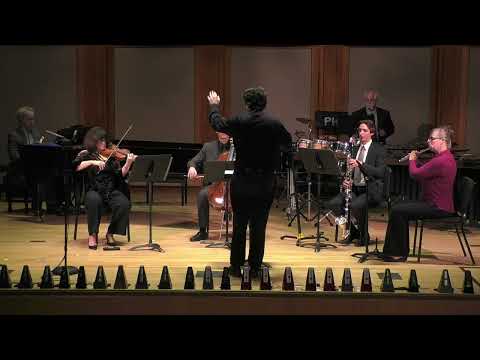
Under music director Tianhui Ng, the all-volunteer New England Philharmonic’s spring concert has a title that will resonate with a Boston audience: “Songs for Peace.” Joined by the Chorus pro Musica, the children’s chorus Voices Boston, and soloists at this time still unannounced, there will be a 1993 piece called “Cantares” by NEP’s composer-in-residence Carlos Carillo, and an epic work by one of the 20th-century masters, Krzysztof Penderecki, with all his musical, spiritual and emotional stops pulled out. It’s aptly called “Credo” (1998).