Support WBUR
Five years after his death, Chick Corea's legacy lives on
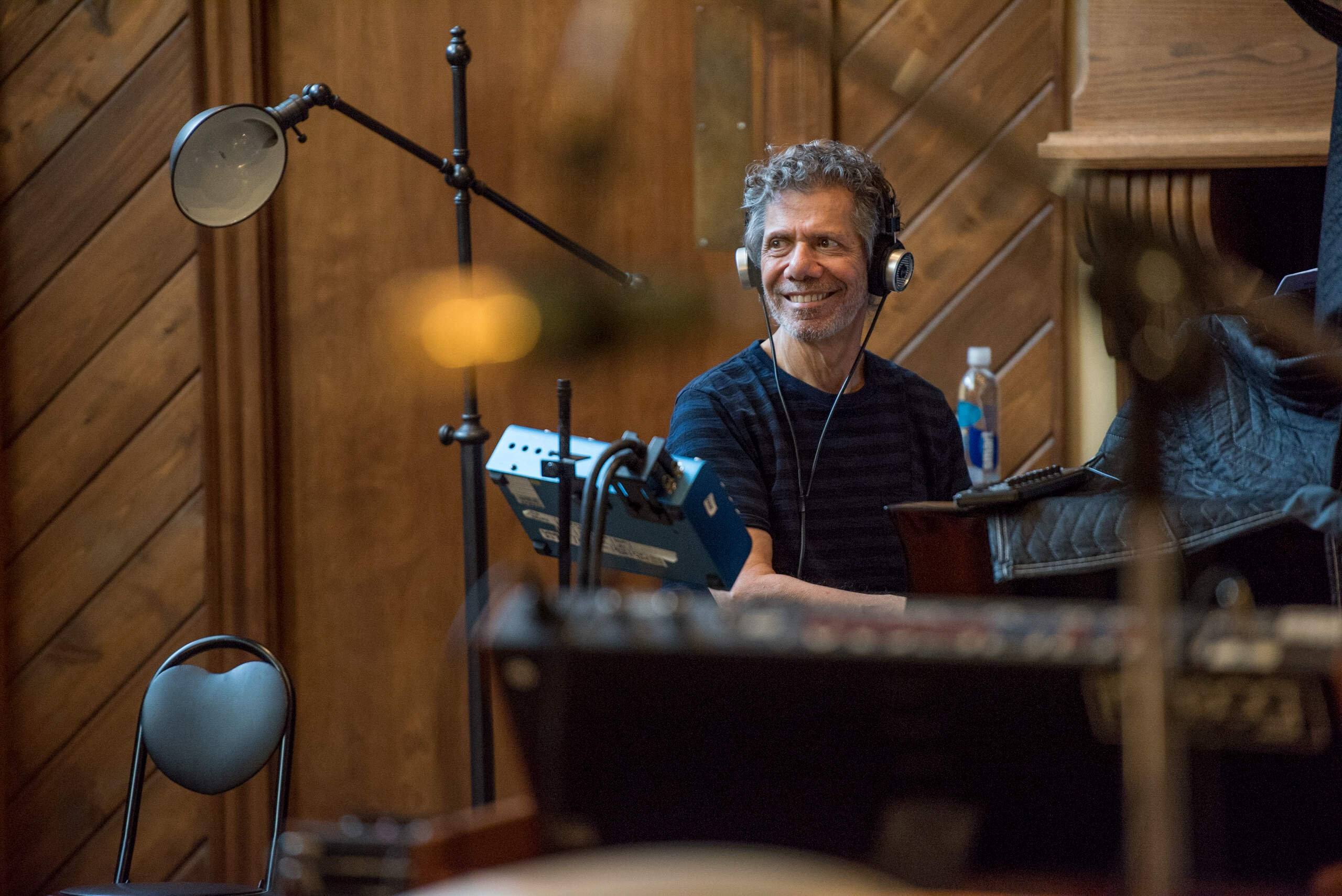
It’s been just over five years since Chelsea native Chick Corea died at 79. But between a series of newly released live recordings, his recent Grammy win for Best Jazz Performance, and his compositions remaining a core part of the jazz canon, the pianist still remains in the spotlight.
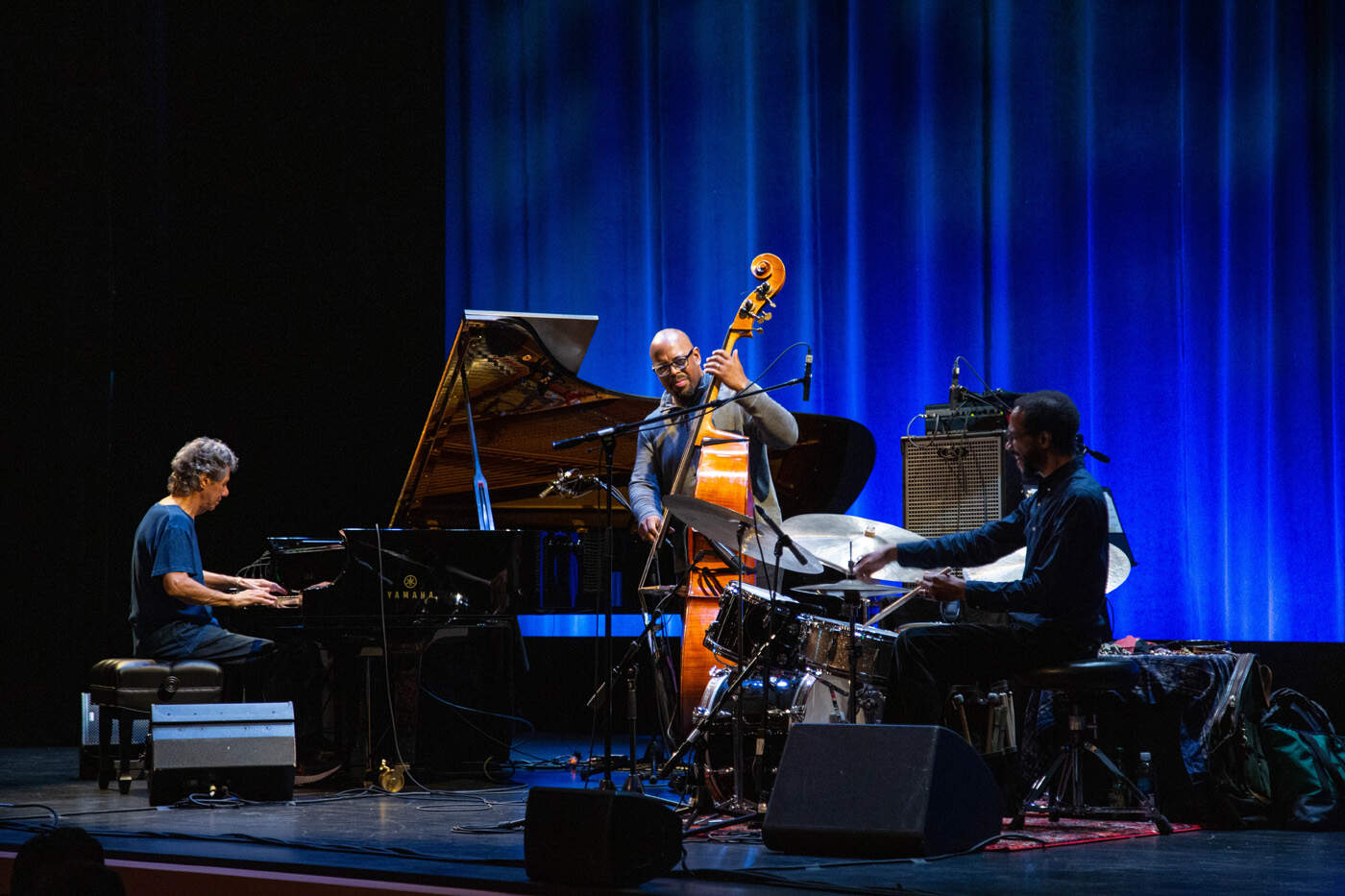
“His legacy is integrity,” said famed bassist Christian McBride, who — along with drummer Brian Blade — played on Corea’s last tour, which was captured in the recording that won the 2026 Grammy, "Windows (Live),” a track from the album “Trilogy 3.” “He always did what he wanted to express as an artist, and he just kept at it. He never lost his musical voice, his expression of his individuality.”
“Trilogy 3” was taken from a final trio tour of Europe that was cut short due to the beginning of the pandemic. But Corea was able to perform one more time in public before his death on Feb. 9, 2021, from what media reports called a “rare form of cancer” that was discovered shortly before his passing.
In October of 2020, while most venues were shuttered, Corea played a pair of socially distanced solo piano concerts at Ruth Eckerd Hall in his longtime home of Clearwater, Florida. Recordings from those shows have been compiled as “Forever Yours: The Farewell Performance,” which is now streaming and available on physical formats.
Besides playing poignant originals and songs by longtime influences like Bud Powell, Mozart and Thelonious Monk, Corea was also in a playful mood during those shows. He played his “Portraits” game, where he improvised pieces about audience volunteers. The set concludes with a suite of children’s songs Corea wrote in the 1970s for young listeners who are at an age where “their minds are wide open,” as he explained when introducing them with the Boston accent that he never lost.
At that point in the pandemic, Corea “really wanted to get out and play,” remembered Bernie Kirsch, Corea’s longtime engineer who mixed and mastered the new release. “It was pretty informal. The audience was really receptive, so there were some great interactions.”
Solo concerts were always a part of Corea’s itinerary, said Kirsch. “When playing solo, he really enjoyed his rapport with the audience. He loved seeing people be happy.”
Corea’s seemingly non-stop tour schedule was such that “we’d go out for months at a time,” Kirsch said. Long after Corea had graduated to large theaters and festivals, he’d still show up at small venues like Scullers Jazz Club in Boston, where he played in 2018.
“The audience was just a few feet from him,” said Kirsch. “He loved seeing the audience’s faces. He didn’t want to play into a void. He always wanted the house lights on to some degree. And when he played concerts, he would try to make them more personal by having the audience sing along.”
In addition to leading multiple bands, Corea also appeared with symphonies and in duos with banjo player Béla Fleck and vibraphonist Gary Burton, who was based in Boston for many years. McBride’s first tour with Corea was as part of the Remembering Bud Powell band, which also included Boston drummer Roy Haynes, the late trumpeter Wallace Roney, and sax greats Kenny Garrett and Joshua Redman. Even though it was Corea’s band, McBride said that the pianist often deferred to Haynes, who had played with Powell. Corea “was such an ultimate team player,” said McBride. “There was always a certain kind of regularity with Chick that was somewhat surprising and also relieving at the same time.”
For noted Boston pianist and Berklee College of Music professor Tim Ray, the key to Corea’s music is that “he’s doing everything great.”
“He’s playing beautiful melodies and beautiful harmonies,” he said. “But what really stands out to me both with his compositions and his improvisations is his rhythm — his amazing ability to track complicated polyrhythms.”
Ray teaches a Berklee class called “The Music of Jarrett, Hancock, and Corea,” which explores the three great pianists. Ray and his classmates will present a performance at the college May 6. All of his piano students learn Corea’s composition “Spain,” which, like many Corea pieces, has a strong Latin influence. As Ray pointed out, Corea’s father Armando was a Spanish immigrant who became a popular traditional jazz trumpeter after settling in Boston, and Chick informally played drums. “I think that being a drummer was part of what made him so rhymically adventurous,” said Ray.
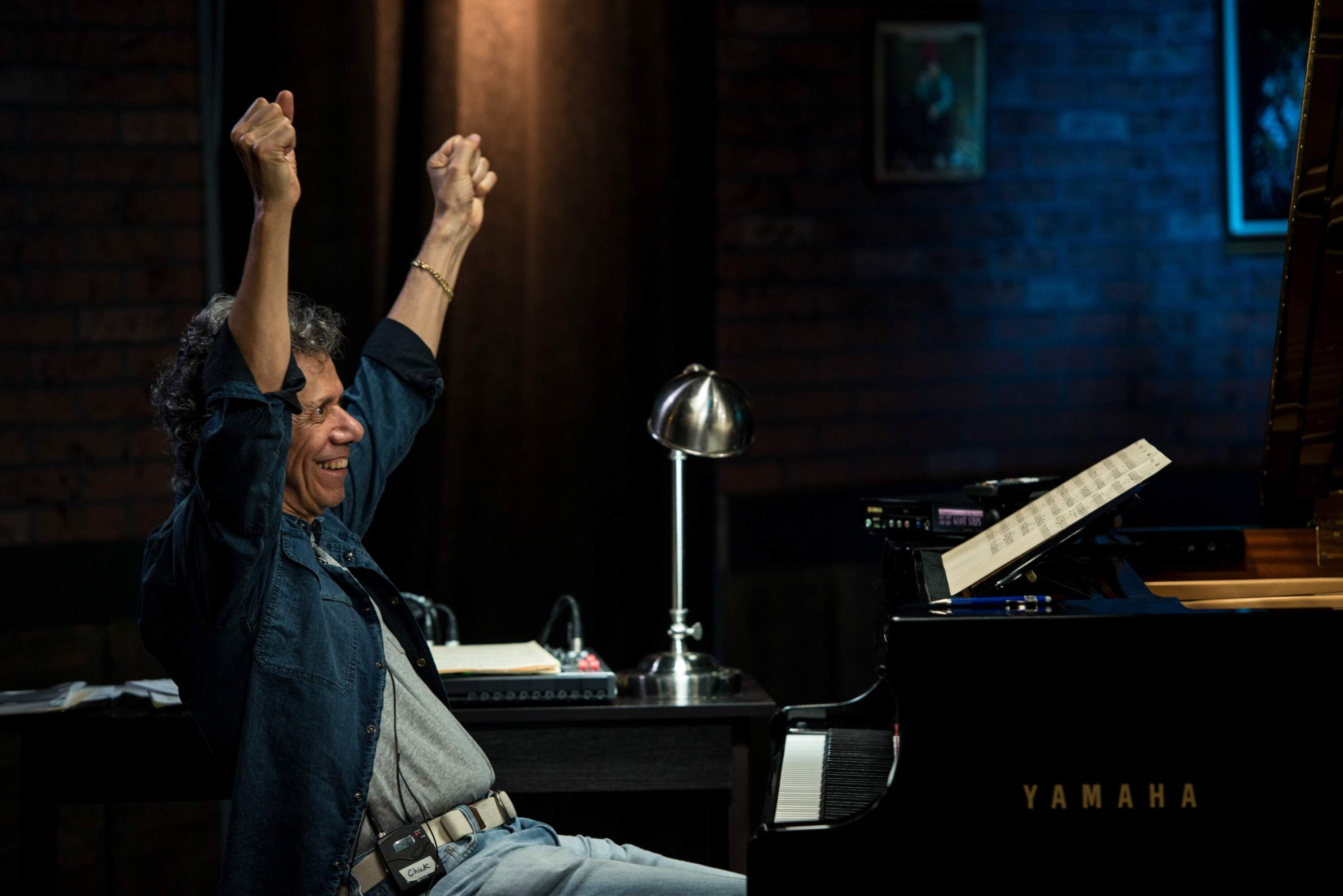
In a genre that often struggles commercially, Corea managed to always remain popular. Ray noted that Corea’s 1970s fusion group Return to Forever greatly expanded his audience. “I think all of his music is really deep and has a lot of integrity, but he also had an eye out for connecting with people. That was his formula,” said Ray. “He was a serious musician, but the playfulness is always there. Music should be fun, and he figured that out pretty early.”
McBride added that Corea had a strong business acumen and often came up with new touring and recording concepts. “That would excite promoters and talent buyers,” said McBride, who recently concluded a nearly decade-long tenure as the artistic director of the Newport Jazz Festival.
Kirsch said that Corea was constantly recording his concerts, so there is plenty of material in the can for future archival releases. McBride said that there is no chance that Corea’s posthumous reputation “might dwindle or diminish or not be acknowledged on the regular. He just put in too much time and produced too much important work.”