Support WBUR
Boston’s new arts chief wants to keep artists in the city
There’s a new arts chief in town.
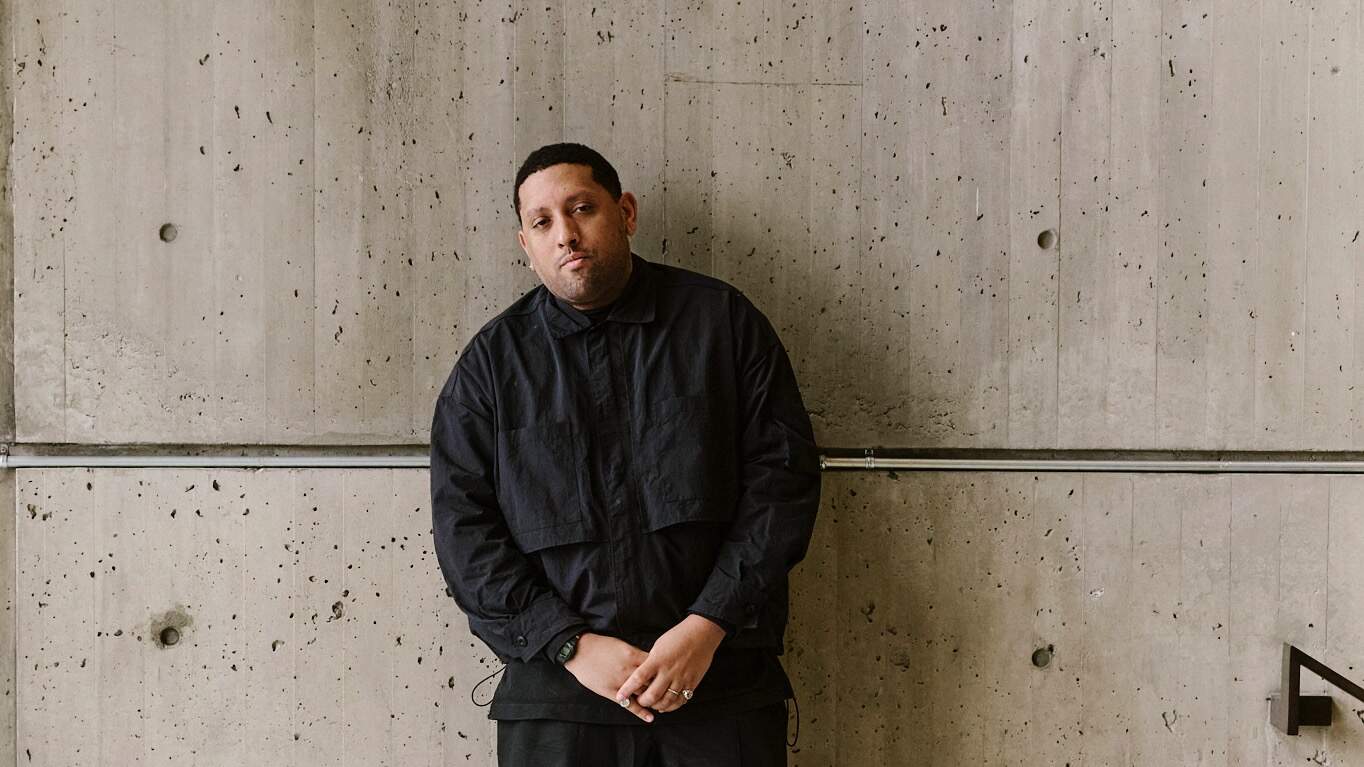
After a yearlong search, Mayor Michelle Wu has at last selected someone to lead the Mayor’s Office of Arts and Culture: Joseph Henry, a native Londoner who most recently served as Boston’s director of cultural planning.
Henry said he would bring his planning and development experience to the role.
“Access to affordable creative space is a top priority for us in this administration,” he said in an interview.
Henry started his job as the city’s highest-ranking arts official at the beginning of March, 14 months after the previous chief, Kara Elliott-Ortega, left her post. Elliott-Ortega led the Mayor’s Office of Arts and Culture for six years after serving as the department’s director of planning and policy. Kenny Mascary served as interim chief and now steps into a new role as Senior Advisor for Creative Economy under Henry.
A national search to replace Elliott-Ortega was conducted by Arts Consulting Group. In tapping Henry, Mayor Wu again elevates someone already working in the department.
“I’m excited to welcome Joseph Henry as Chief of the Mayor’s Office of Arts and Culture,” Mayor Michelle Wu said in a statement. “Joseph connects a deep understanding of our neighborhoods, global perspective of Boston’s leadership, and a clear vision for how the creative sector can help build on our long tradition of connecting arts, culture, and civic leadership.”
Elliott-Ortega also cheered the move, highlighting Henry’s background in city planning and design.
“Many cities are facing affordability crises, lack of access to physical space for creative work, and tighter budgets,” she said. “It’s more important than ever to have leaders who can engage planning and policy systems and ensure the creative sector is at the table.”
The Mayor’s Office of Arts and Culture has grown in profile and size over the past decade, while weathering a pandemic and an increasingly urgent artist displacement crisis. Under Elliott-Ortega, the department expanded from 12 full-time employees and an operating budget of $1.49 million to 25 full-time employees and an operating budget over $4 million. Elliott-Ortega, a visible and well-liked leader among Boston’s arts denizens, also oversaw the dispersal of $25 million in federal Covid relief funds.
“Kara did a lot to stabilize and then legitimize this work,” Henry said. “ This idea that you're there primarily to listen and advocate is something that I respect and am definitely picking up from Kara.”
Henry, 35, has a background in architecture and urban planning. He worked for the city of London for five years, where he oversaw the development of the Thames Estuary Production Corridor, a fashion and film district on the outskirts of London. In 2023, he co-curated the British pavilion at the Venice Biennale. The next year he came to Boston for a Loeb Fellowship at Harvard Graduate School of Design, and then joined the Mayor’s Office of Arts and Culture.
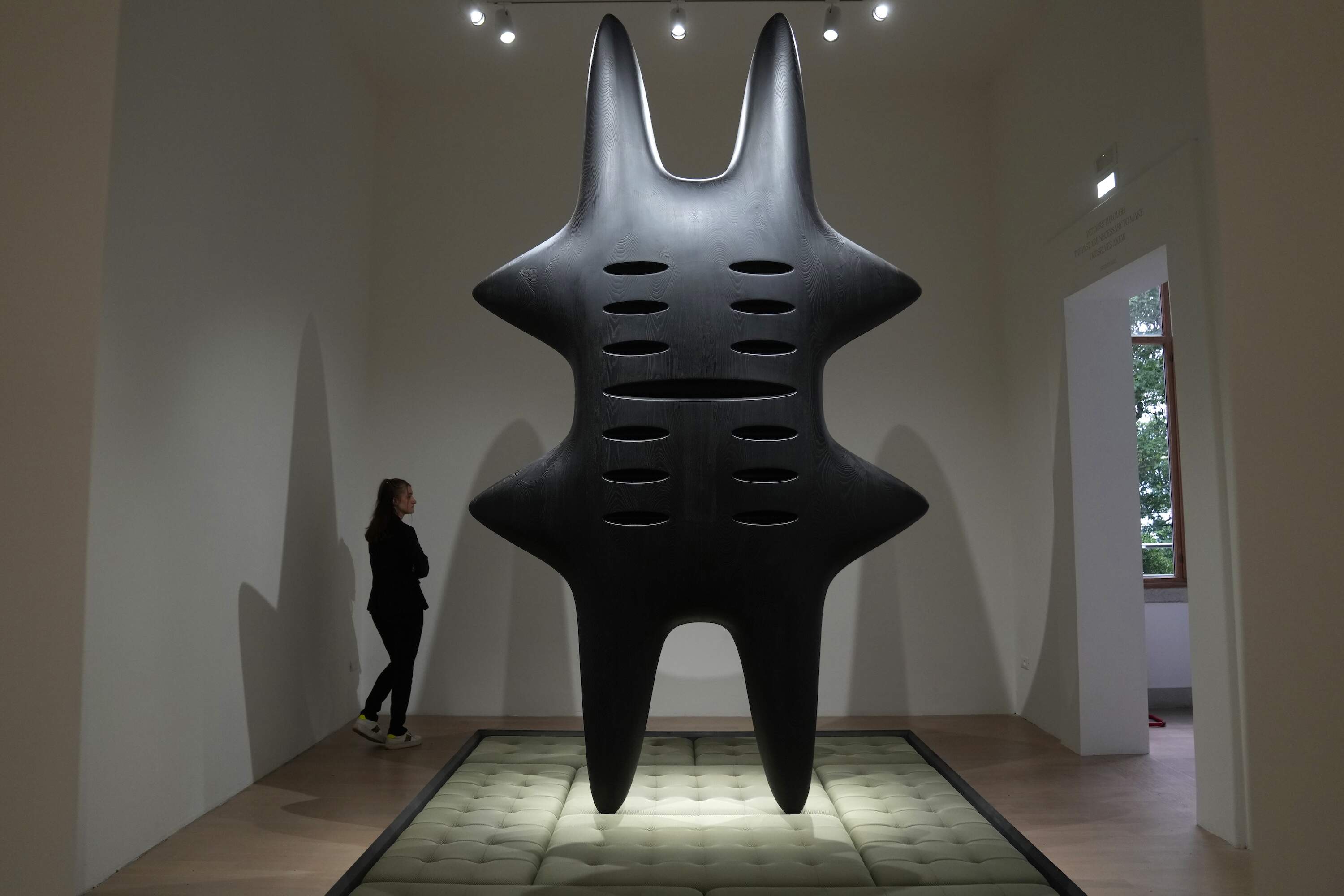
Henry outlined three priorities for his tenure: access to affordable arts space, workforce development, and equitable access to the arts.
He described workforce pathways for creative professionals in Boston as “hourglass shaped:” robust for students and those at the top of their fields, but lacking for everyone in between. He offered an example.
“ If you are coming out of Boston, and you've studied video games, you'll go somewhere where you think the sector is most mature, unless we can provide you with a tangible benefit to being in Boston,” Henry said.
But the issue that will likely define Henry’s tenure is artist displacement. In recent years, the closure or threatened closure of beloved rock clubs, artist studios and rehearsal spaces has focused intense attention on the scarcity of stable, affordable places for artists to work. The city has gotten more involved, helping support the preservation of the Humphreys Street Studios in Dorchester and advocating for musicians displaced by the closure of Brighton’s Sound Museum rehearsal complex.
If you are coming out of Boston, and you've studied video games, you'll go somewhere where you think the sector is most mature, unless we can provide you with a tangible benefit to being in Boston.
Joseph Henry
Henry pointed to a project initiated during Elliott-Ortega’s tenure that would offer a test case for his ideas: a planned city-owned music rehearsal complex in Allston.
The parcel at 290 North Beacon Street was acquired by the city with the promise that it would build 40,000 square feet of permanent music rehearsal space for musicians who lost access to practice studios when the Sound Museum closed. In 2024, the Mayor’s Office of Arts and Culture outlined a plan to build affordable housing alongside the music complex in collaboration with the Boston Housing Authority. The next community meeting is in April – nearly two years since that initial meeting.
“ There's always this tension between the short term and the long term,” Henry acknowledged. “And I think we need to build out our short term support in a more comprehensive way.”
To that end, he plans to hold periodic events at City Hall – a performance art piece, perhaps, or a gallery opening – where artists can also receive practical help from the arts office.
“ People can come and get their artist housing certificates sorted there and then, rather than waiting,” Henry explained. “Or get yourself added to the city supplier portal. Actually trying to find ways of delivering tangible benefits to artists and cultural workers, so it doesn't all feel abstract.”
Long term planning will be aided by the completion of a cultural infrastructure plan in the next two years. Henry said his office would soon announce the consultant team selected to develop the plan, which will look holistically at the arts sector’s infrastructure needs and guide development priorities going forward.
In the meantime, he looks forward to meeting more of Boston’s creative community.
“ There's a lot of listening that I'm really enjoying in this role,” Henry said. “ I enjoy meeting different organizations that have common ground and going, ‘Actually, you guys should speak to each other.’ It's led to some, already in a short period of time, some really exciting conversations.”