Support WBUR
What does the city sound like? This festival wants you to walk to find out
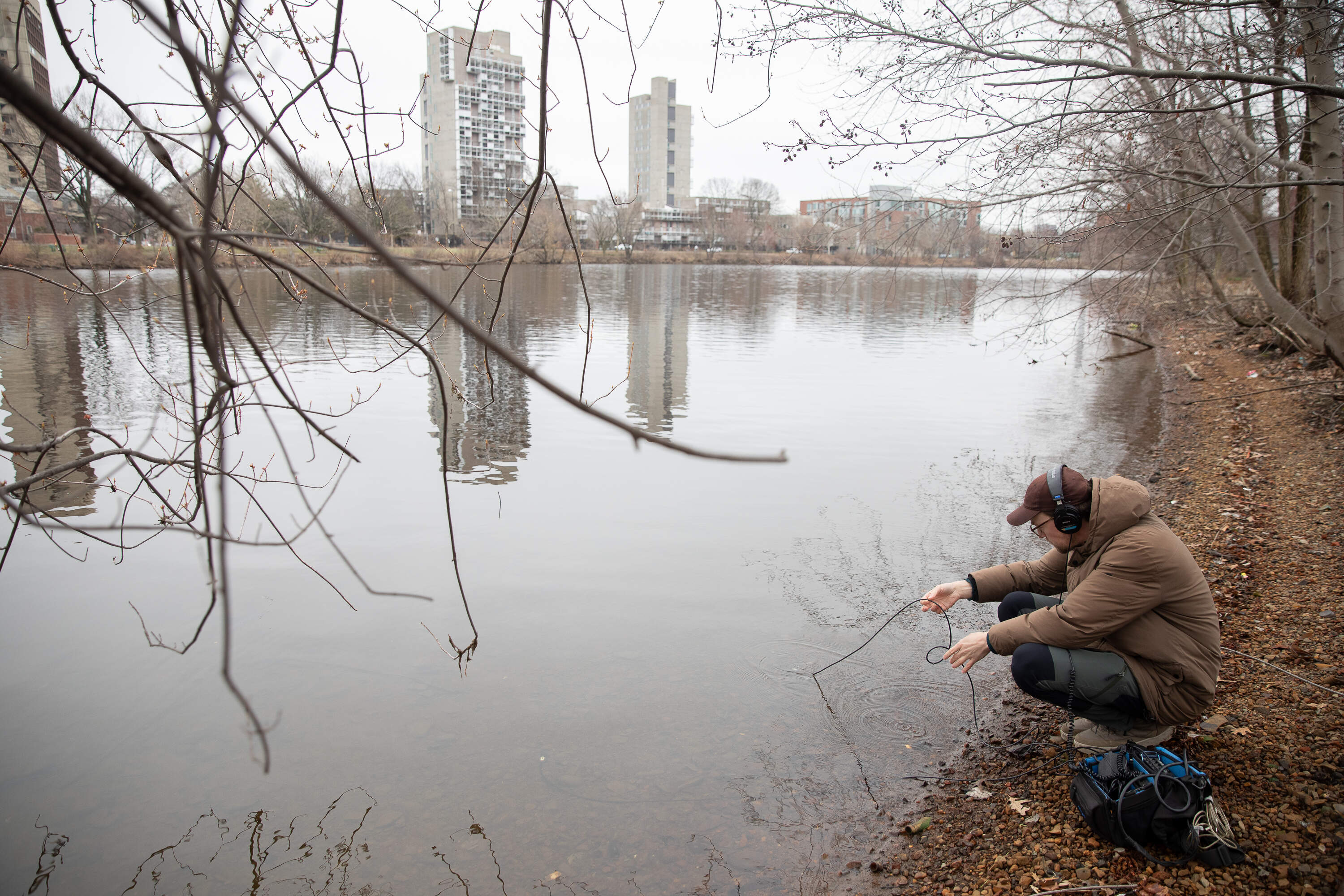
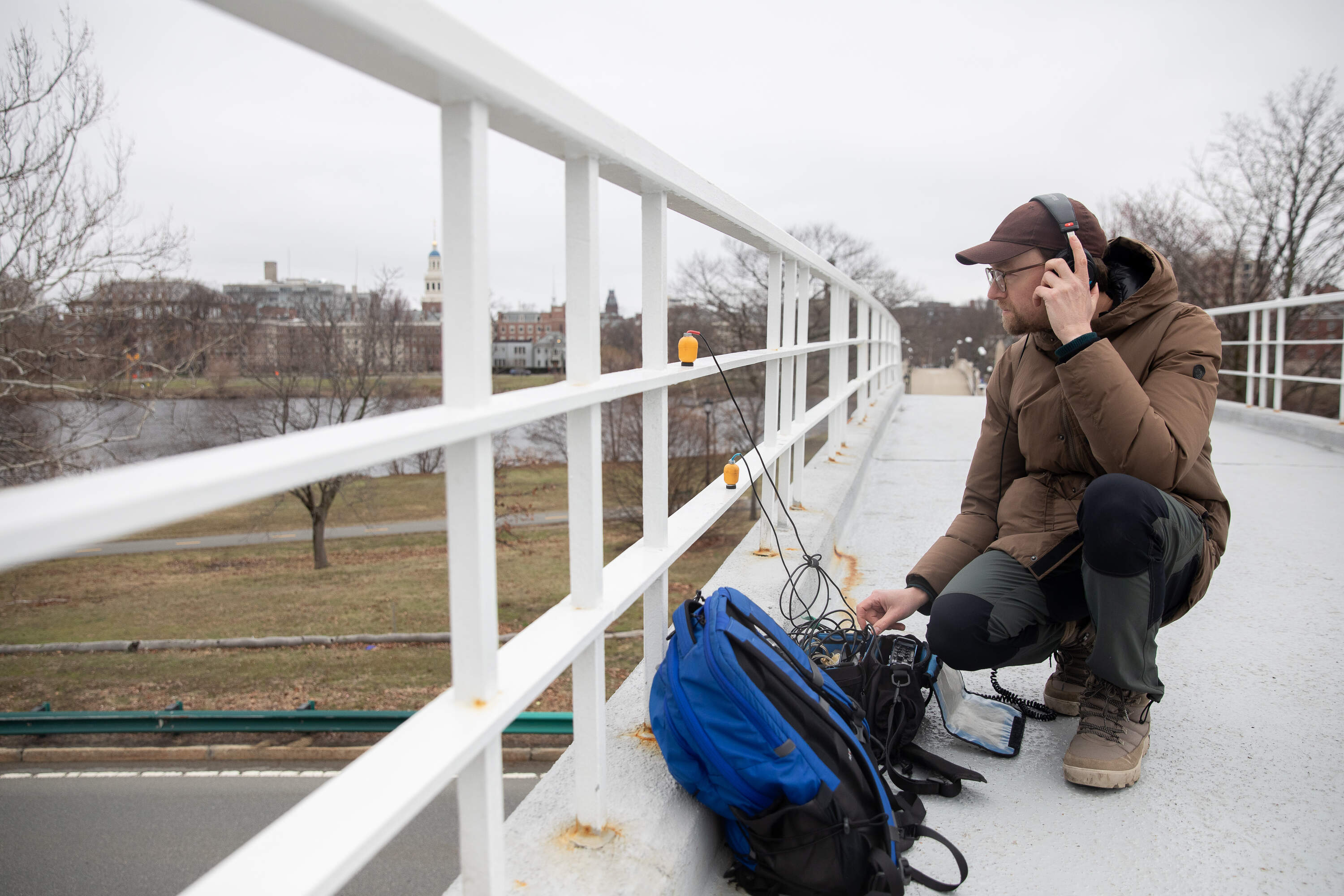
Walking along the Charles River at Riverbend Park, you can hear nearby construction activity, cars whizzing by on Memorial Drive, and the occasional sound of birds.
What you can’t hear is the river itself.
“It became quite disturbing to me to realize that it's not only Boston, it's not only Cambridge, not only in American cities, how much traffic is often pushed towards the river,” said Jacek Smolicki, an artist, designer, and researcher who has curated the Walking Festival of Sound.
Smolicki diverged from the footpath and strolled towards the edge of the water. He crouched down next to the river, and waited. After a few minutes, a motorboat passed by, producing small waves that crashed against the shore.
“Now we can finally hear the water,” he said. “And all of the sudden, I think the soundscape became so rich, right?”
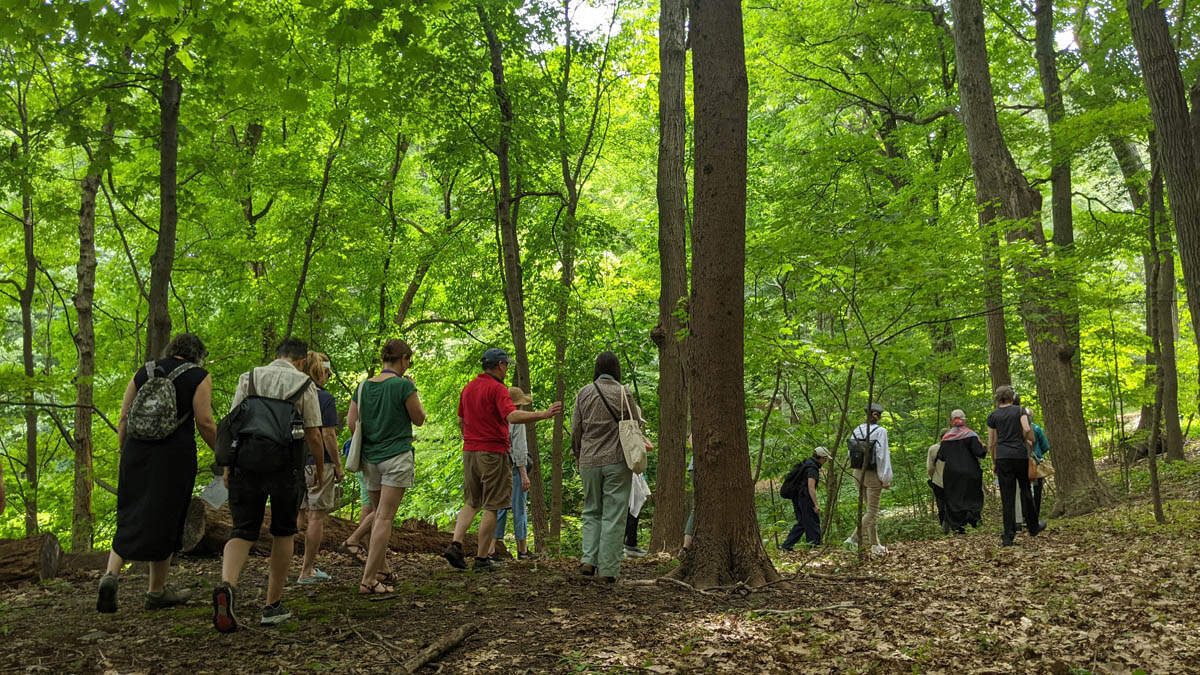
Starting April 15, the Walking Festival of Sound is a free, public festival made up of 19 soundwalks, listening sessions and lectures running through May 3. Participants will learn from local artists and researchers, and become immersed in the sounds and stories of Boston and Cambridge.
“The idea is very simple,” Smolicki said. “My hope is that the festival will allow people to find a moment to listen to their surroundings.”
Smolicki grew up in Poland and is based in Sweden. He’s spending a year in Cambridge as a Loeb Fellow at the Harvard Graduate School of Design and the Harvard ArtLab. He uses sound as a medium of art, research and storytelling, collaborating with designers and urban planners to study how sound — including noise pollution — impacts natural and built environments.
The idea for the festival sprouted in 2015 when Smolicki met artist and researcher Tim Shaw during a soundwalk in Vancouver. They shared a desire to create a gathering for walking and listening, and soon piloted the festival in Stockholm in 2019. Since then, they have produced the festival in cities across the world, including in Vancouver, Seoul and Zurich.
This year, Smolicki and the Harvard ArtLab are introducing the Walking Festival of Sound to Boston and Cambridge.
“ Even though we’re a part of Harvard, we are across the river. We take that pretty seriously and we're pretty connected with Boston and Boston-based artists,” said Bree Edwards, the director of the Harvard ArtLab. The Harvard ArtLab is a dedicated space for artists to develop projects and experiment across disciplines, at Harvard University and beyond.
The Walking Festival of Sound brings together 17 practitioners and 16 local institutional partners. Several partners within Harvard University are participating, including the Shelemay Sound Lab and the Woodberry Poetry Room. Greater Boston partners include Northeastern University’s College of Arts, Media and Design, the Goethe Institut, and the Massachusetts Water Resources Authority.
“We invite artists who operate locally and have something interesting to say about the cities, whether it's a cultural history of the place, environmental history of the place, or speculative storytelling about the future of the place,” said Smolicki. “The format of walking and listening is the uniting denominator.”
During a soundwalk on Deer Island, led by Massachusett elder Elizabeth Solomon and artist Sarah Kanouse, attendees will hear about the Indigenous and geological history of the island. Another soundwalk, led by artist and researcher Tim Shaw, unveils the hidden sounds of wifi and Bluetooth signals throughout the city.
Writer Garnette Cadogan savors the thrill of walking at night. Cadogan is a lecturer in the MIT Department of Urban Studies and Planning, where he teaches a course on cities at night. During the festival, he will lead a group night walk with 40 people, starting in Boston and ending in Cambridge.
“Too often the night first is either a time of entertainment or a time of fear, but not necessarily a time of contemplation or discovery. So often when you think of discovery, mystery, exploration, these are things that are best avoided in the dark. This [walk] gives us a chance to do that,” said Cadogan.
Cadogan first experienced night walking in his hometown of Kingston, Jamaica, then in New Orleans, and now Boston. He encourages his urban planning and design students to think of the night not as an afterthought, but as a vibrant city humming with restaurant workers and hospital workers, and all kinds of night walkers.
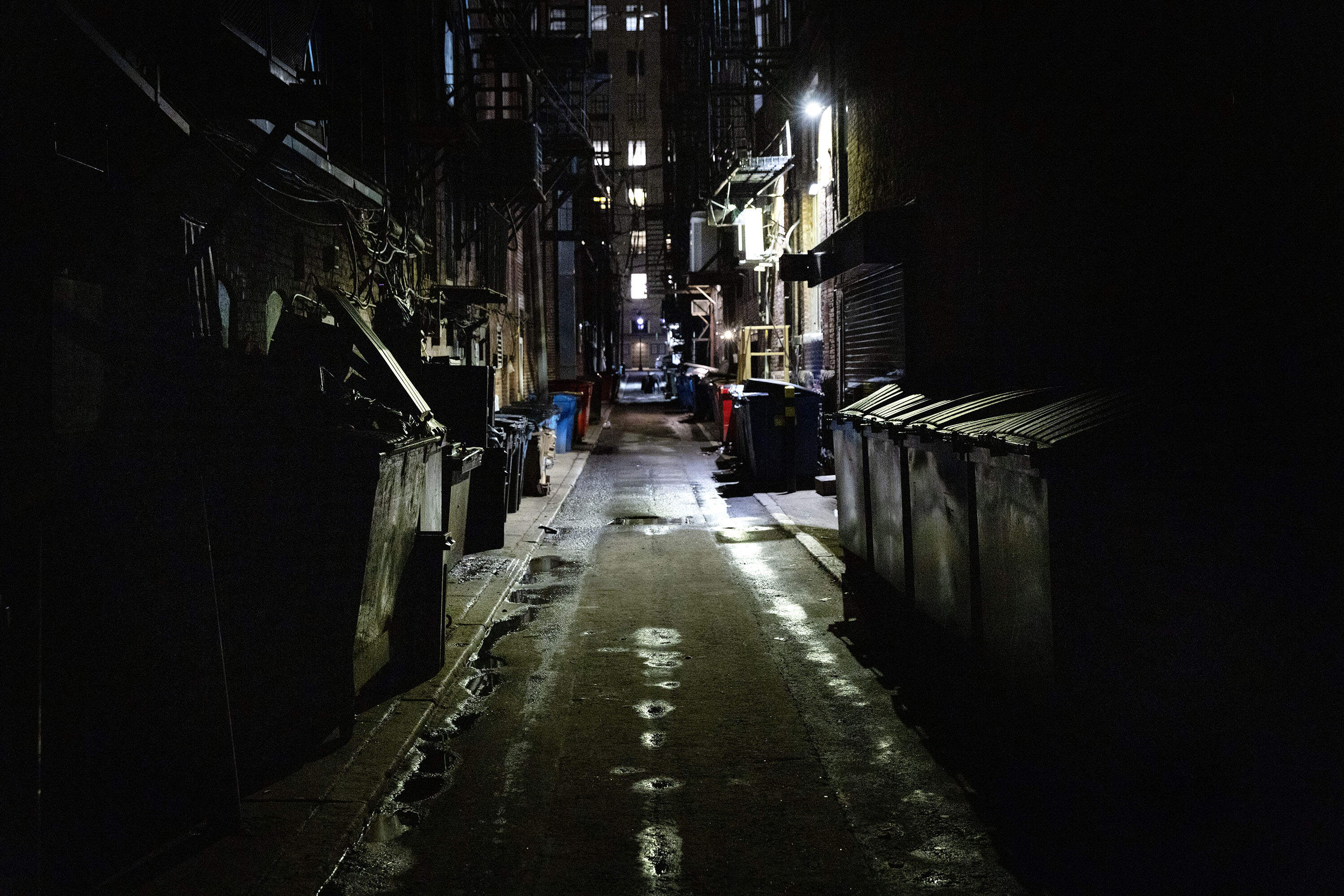
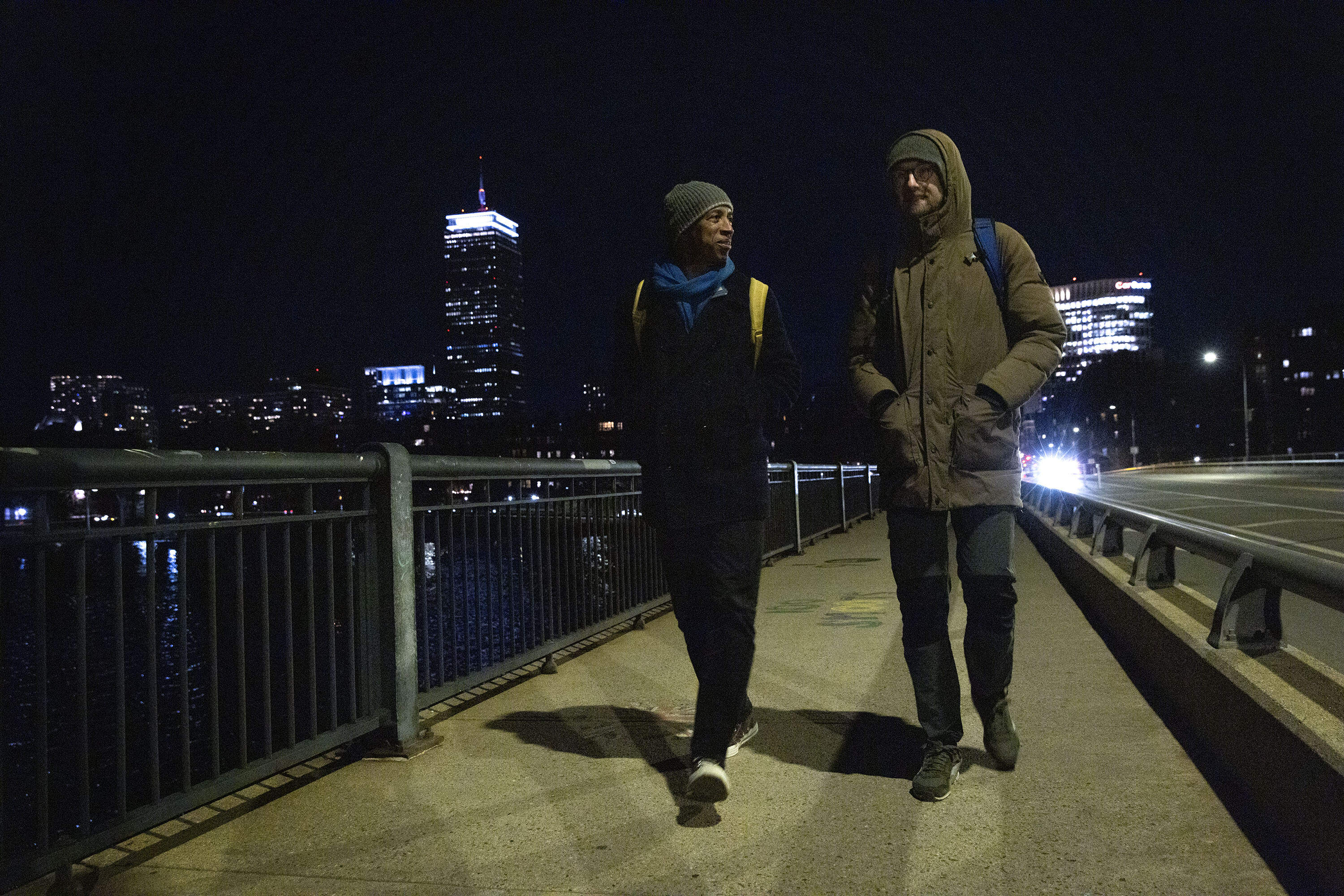
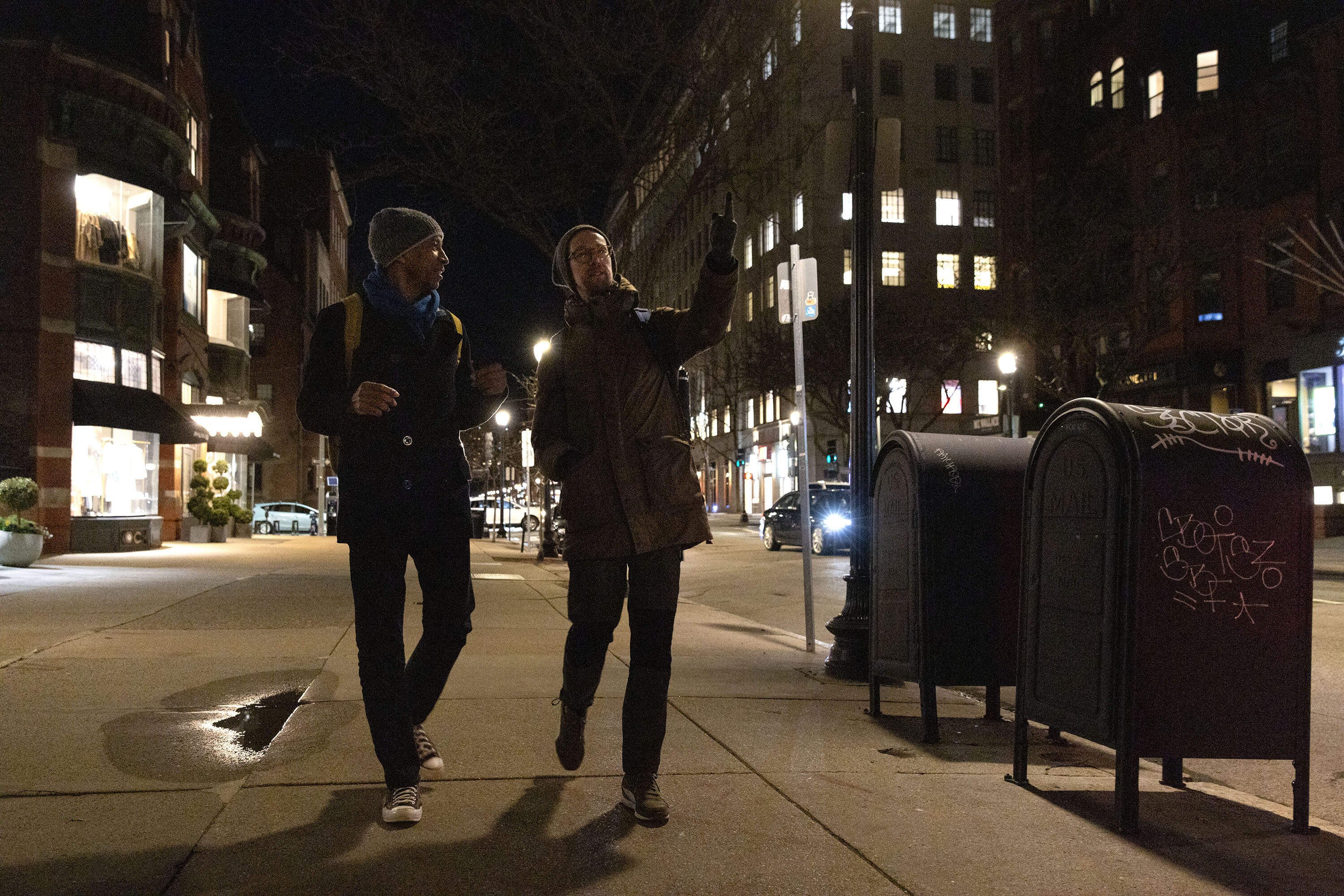
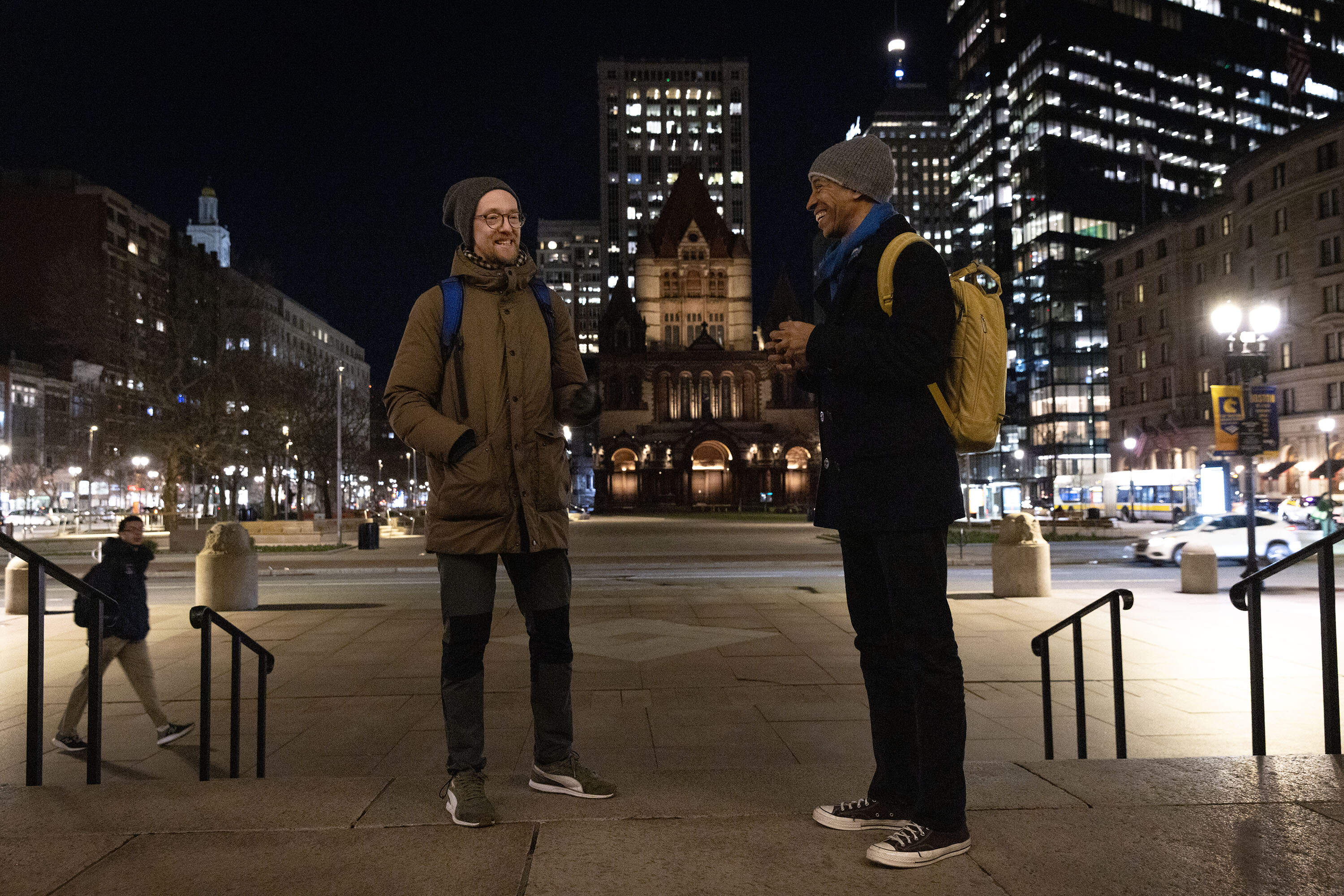
On an evening ahead of the festival, Cadogan and Smolicki tested out a walking route near Copley Square. They stopped to note sights, sounds, and smells — the echo of glass bottles hitting a dumpster in an alley; the contrast between bright lights on Newbury Street and the darkness of Commonwealth Avenue; the energizing hum of students and the smell of water near the Massachusetts Avenue bridge.
“I like walking along stretches where people can get reminded that there is a past and a history to explore,” said Cadogan. “Something that gives you a reminder that the world didn’t begin last week. That it has been here for generations and generations before you.”
Like Cadogan’s night walk, the Walking Festival of Sound will guide participants through the richness and complexity of the city. Hear literary voices of Cambridge’s past, secret sounds of trees at the Arnold Arboretum, and even infrasounds inaudible to the human ear.
Every day, Smolicki records at least one minute of sound. By now, he has a personal archive of several thousand samples. For every minute, he is filled with wonder.
“I think that feeling I would describe as a sense of awe or kind of selflessness, where your sense of being an individual dissolves and the whole world around starts opening up,” said Smolicki.
He hopes that the festival’s participants will open up to the world, too–to the city’s sounds, its stories, and each other.
The only ask is to slow down, and listen closely.
Walking Festival of Sound runs from April 15 through May 3. The festival is free and open to the public.
This segment aired on April 15, 2026.