Support WBUR
New England Democrats fear Trump will meddle in midterm elections
While President Trump's low approval ratings have Republicans bracing for a blue wave in the upcoming midterms, many Democratic lawmakers across New England still fear the president is laying the groundwork to undermine the elections.
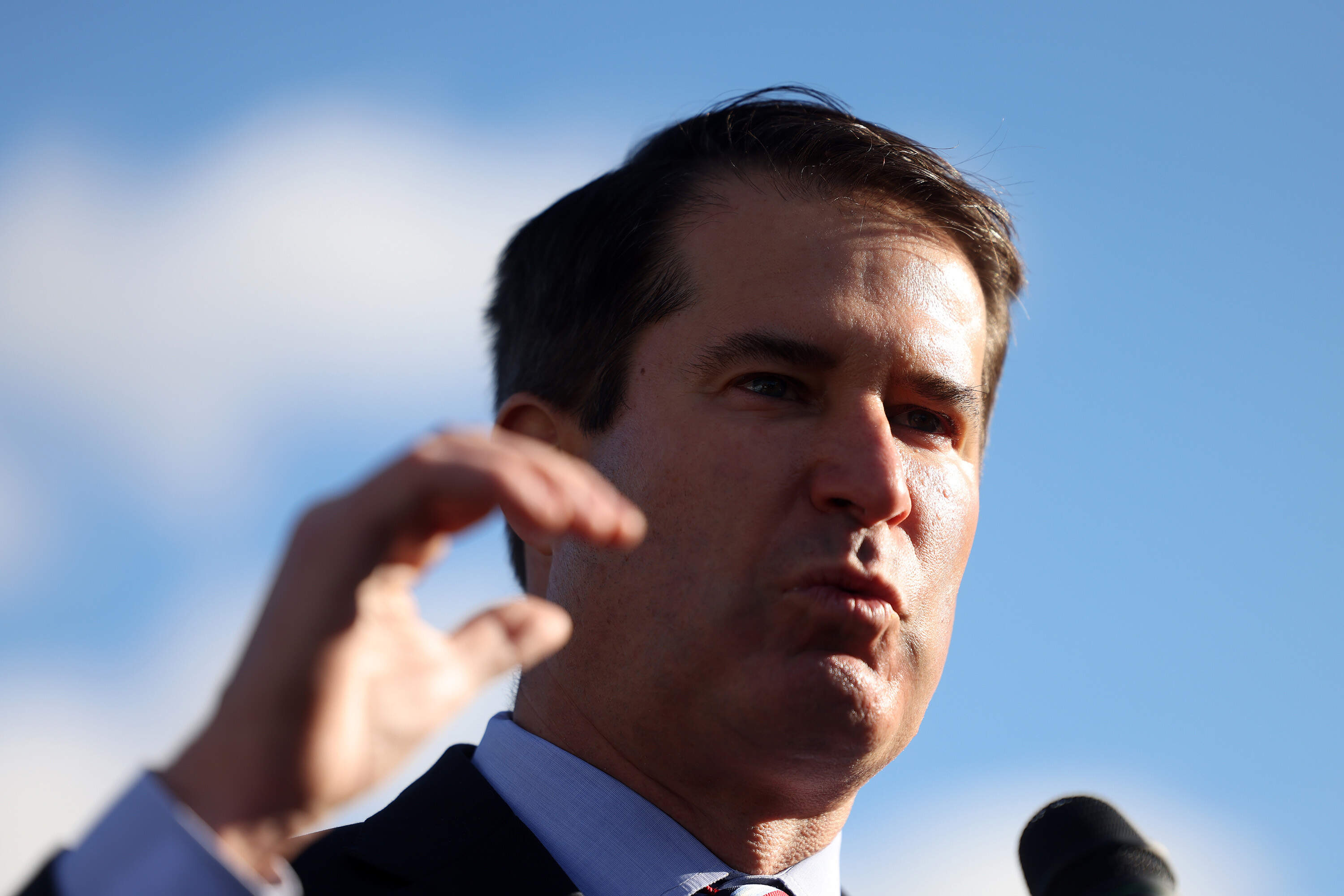
"There's no question that Trump wants to disrupt them," U.S. Rep. Seth Moulton, a Democrat from Salem, told WBUR.
The fear was echoed by U.S. Sen. Chris Murphy (D-Conn.), a potential 2028 presidential contender, who warned at a recent event in New Hampshire that Trump is "methodically and planfully weaponizing every aspect of the federal government to try to destroy the opposition party."
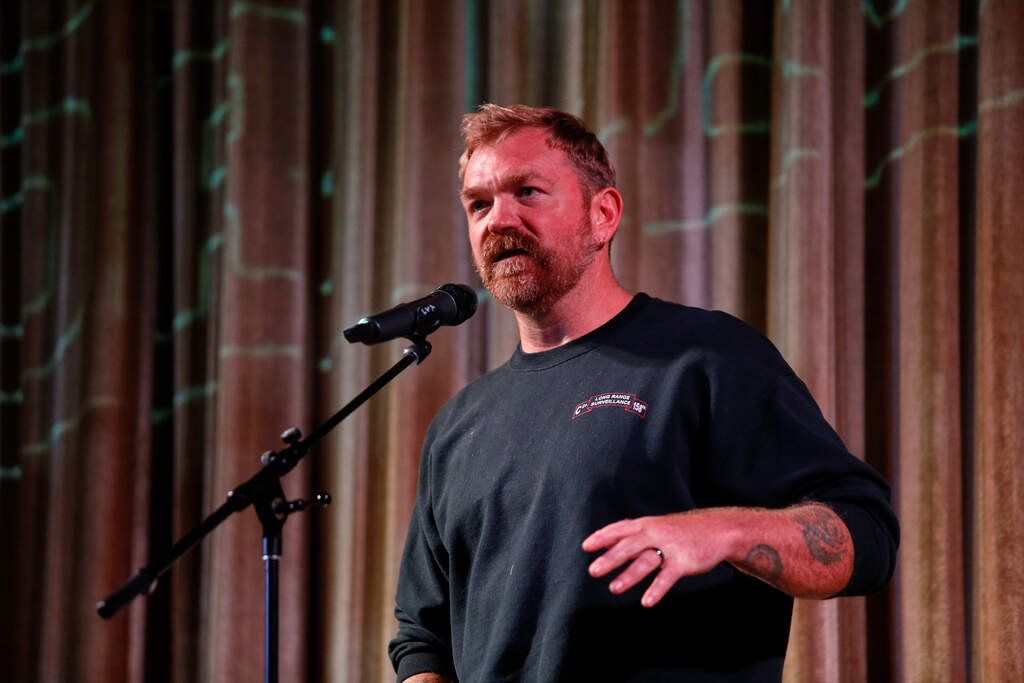
And Graham Platner, the progressive oyster farmer running to unseat U.S. Sen. Susan Collins (R-Maine) in a race that could determine control of the U.S. Senate, is also raising alarm. In the wake of the administration's aggressive immigration enforcement operations in his state, Platner told WBUR he’s worried about where those kind of tactics could lead come Election Day.
"My biggest concern is that this is the administration testing the boundaries of how it can use effectively a paramilitary wing for its political gain," Platner said, calling the threat "a terrifying prospect, especially for the upcoming election."
Fears of "paramilitary" interference might have some basis in reality, as prominent allies of Trump, including Steve Bannon, have openly called for it.
"You're damn right — we're going to have ICE surround the polls come November," Bannon said recently on his podcast The War Room. He said Republicans weren't going to allow Democrats "to steal the country again."
The Trump administration said in late February that assertions like Bannon are "disinformation," and there are no plans to deploy federal agents.
Logistically, the federal government doesn't have the personnel to police some 100,000 polling stations across the country. But the mere threat could intimidate some legal voters and suppress turnout.
Meanwhile, Trump continues to push debunked claims of widespread voting by non-citizens. He's repeatedly suggested Republicans should "nationalize the voting," even though a federal takeover would be a direct challenge to the Constitution, which leaves election control to the states. But statements like this alongside other unusual moves by the federal government, have election officials preparing for chaos — or at least uncertainty.
Trump’s Department of Justice is touting new “voter fraud” teams and has sued to seize voter rolls in numerous states, including Massachusetts, New Hampshire and Maine.
"Clearly, there is a concentrated and coordinated effort at the federal level to restrict voter rights," said Massachusetts Secretary of State William Galvin.
Galvin and Massachusetts Attorney General Andrea Campbell recently scored a win when a federal judge blocked the DOJ’s demand for the state's voter rolls, which would have exposed personal information, including address, date of birth and past voting records.
But Galvin remains concerned by other threats, citing the FBI’s seizure of 2020 voting records in Georgia and the president’s attacks on mail-in voting. He said all these efforts appear to contribute to one goal: "the fewer voters participating, the better."
"It's not one policy or one case," he said, "it's multiple cases with the same agenda."
"Clearly, there is a concentrated and coordinated effort at the federal level to restrict voter rights."
Secretary of State Bill Galvin
In a statement, White House spokesperson Abigail Jackson said, the president is also pressing Congress to pass bills that would "establish a uniform standard of photo ID for voting" and "prohibit no-excuse mail-in voting," among other proposals.
"President Trump is committed to ensuring that Americans have full confidence" in the nation's elections, "and that includes totally accurate and up-to-date voter rolls free of errors and unlawfully registered non-citizen voters."
But Moulton, the Massachusetts congressman, argues Trump’s refusal to accept his 2020 loss suggests he won't accept a Republican defeat this November. He said members of Congress need to exert their oversight powers and press administration officials — and senior military officers — on what they'll do if Trump asks them to interfere in the November elections.
"I want subordinate officials all across the government to go on the record that they will stand up for democracy," Moulton told WBUR.
A recent investigation by ProPublica detailed how the administration has systematically “demolished non-partisan guardrails" that protected the 2020 results — replacing dozens of career experts with Trump loyalists across multiple federal agencies.
Joanna Lydgate, CEO of the States United Democracy Center, a nonpartisan Washington group that advocates for free and fair elections, said Americans can't take free and fair elections for granted. She called the threat to the midterms “super-charged,” noting the president has installed "election-deniers in key positions of power across the administration."
“Trump has access to every lever of the federal government right now," said Lydgate, who's also the partner of Massachusetts Gov. Maura Healey.
But Lydgate said she is not despairing. Because America's elections are decentralized, run by 50 states, across thousands of municipalities, she said, it would be difficult for one president to seize control: "Trump can't do everything, everywhere, all at once."
She also noted the scorecard: Democratic state attorneys general are winning in dozens of election-related cases they've filed against the Trump administration. The guardrails are under pressure, she said, but they’re holding.
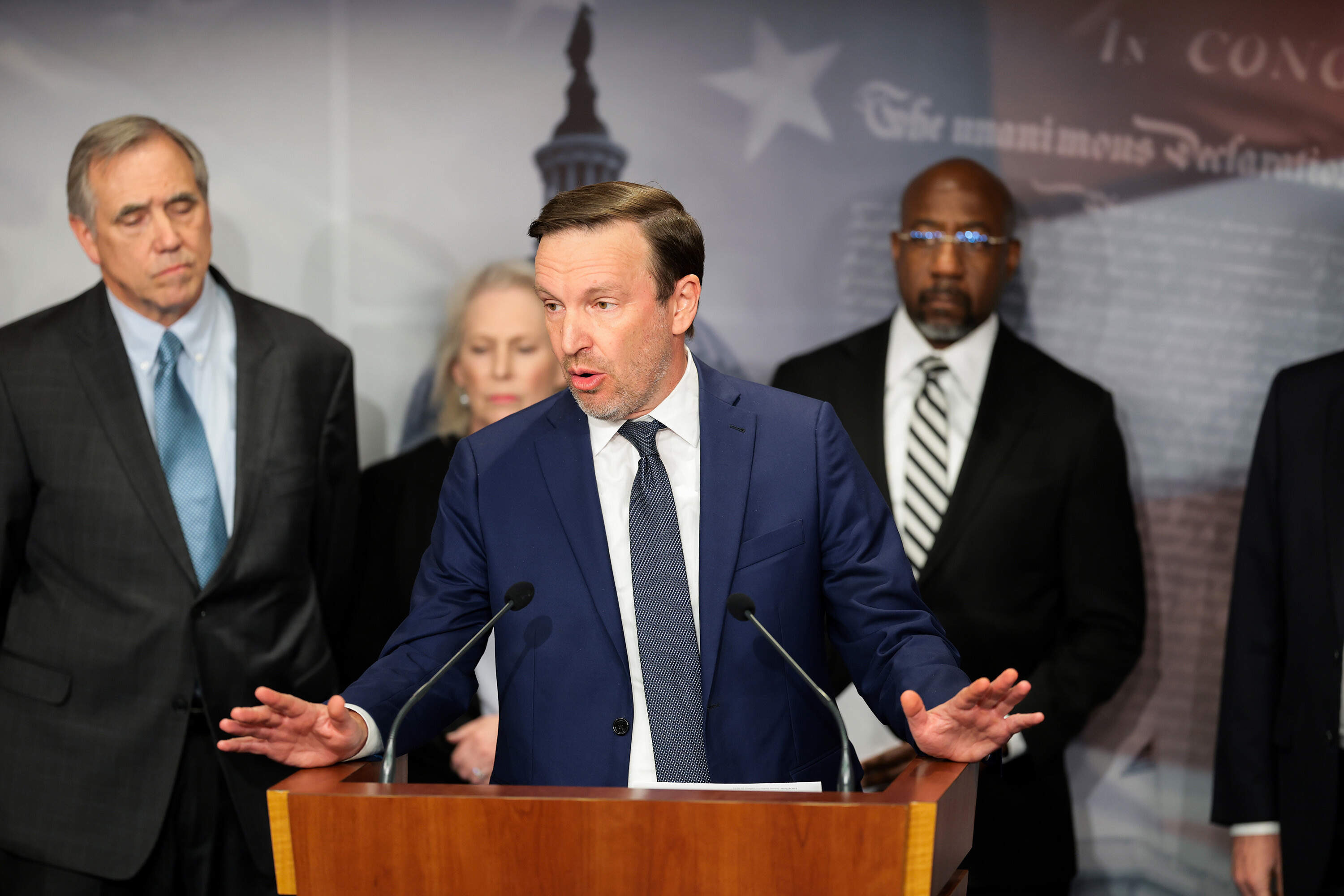
While Lydgate is also reluctant to be alarmist, lest that discourage people from voting, Murphy, the senator from Connecticut, said given what's at stake, it's impossible to be "too alarmist."
"I think the problem is we’re underselling the threat," he said.
Murphy said he hopes that sounding the alarm will drive more people to the polls — and offer the best chance of an election that no one can challenge.
This segment aired on April 24, 2026.