Support WBUR
Boston's Morning Newsletter
Gov. Healey proposes new rules for electric bikes, scooters and more
Editor's Note: This is an excerpt from WBUR's daily morning newsletter, WBUR Today. If you like what you read and want it in your inbox, sign up here.
Get ready for a warm and windy Cinco de Mayo. While I'd welcome a coastal breeze to cool off today's 80-degree temps, the projected 45 mph gusts feel a bit much.
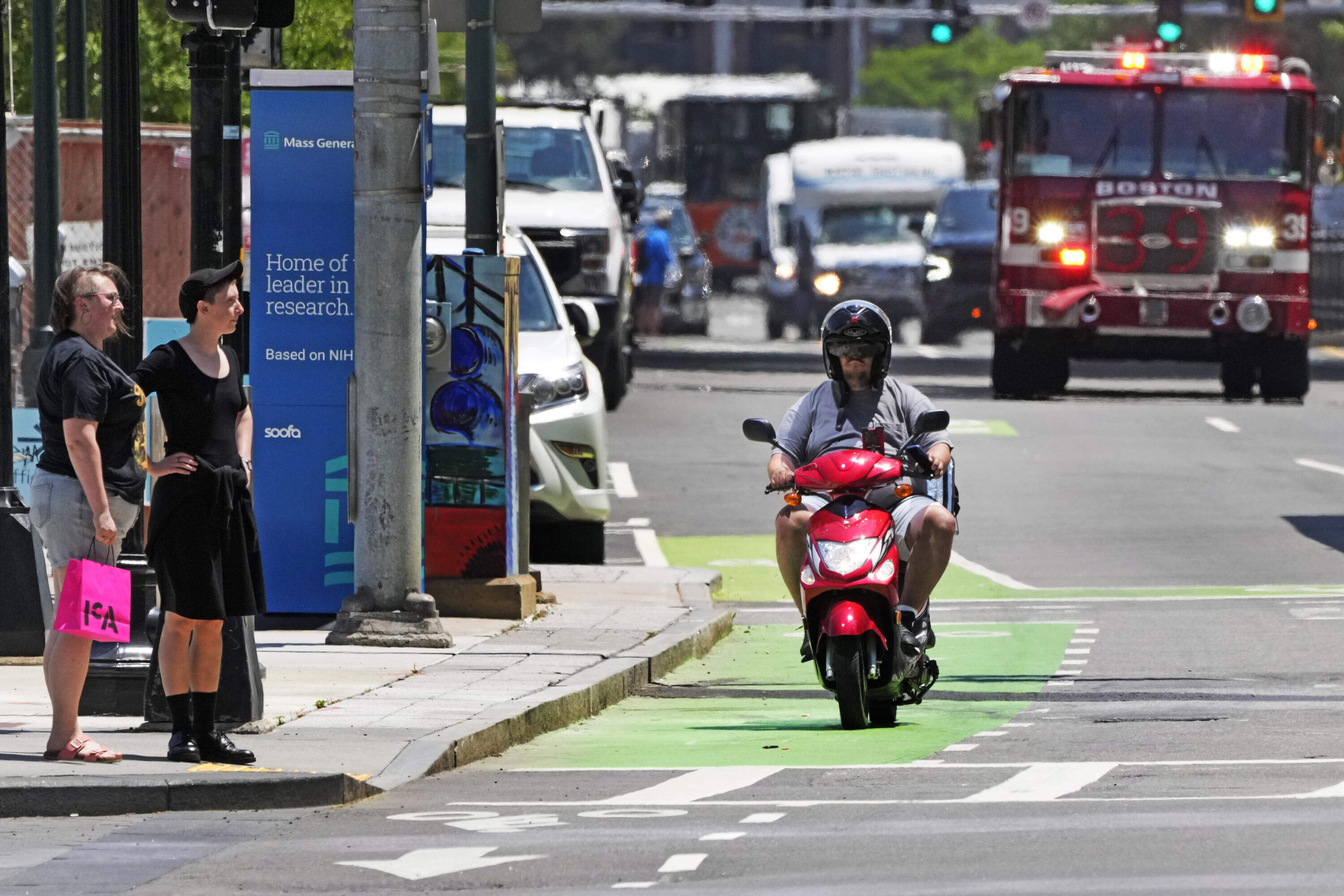
The scoop on scootery: For those in the Boston area, electric bikes and scooters are a growing part of everyday life whether you're commuting on one and watching them whoosh by on the sidewalk. However, outdated rules that lump everything from pedal-assist e-bikes to gas-powered mopeds into the same category have made it hard for government officials to keep up, amid concerns about safety and "reckless behavior." So, Gov. Maura Healey is proposing new categories. The governor filed a bill yesterday that would create speed "tiers" with specific rules based on how fast micromobility devices can go. Here's a look at the rules for each tier and who it affects:
- Tier 0 — 0-20 mph: Normal bikes, certain types of e-bikes (class 1 and class 2) and e-scooters that go up to 20 mph. That also includes electric skateboards, regular skateboards, roller blades, kick scooters — even unicycles. Healey's bill would clarify that all these devices would be treated like bikes, as long as they don't go faster than 20 mph. They can use bike lanes and off-street shared paths that are also intended for walkers and joggers (for example, the paths along the Charles River). And helmets would be required for all users under the age of 16.
- Tier 1 — 20-30 mph: Mopeds and class 3 e-bikes. Under Healey's bill, these devices generally would still be allowed in bike lanes and shared-use paths. However, it would allow municipalities and state agencies to ban them from shared-use paths and clarifies that they are never allowed on sidewalks. Healey's bill would also require Tier 1 device users to be at least 16 years old and would direct the RMV to develop universal helmet rules for both riders and passengers.
- Tier 2 — 30-40 mph: This is where we get into limited-used motorcycles and faster types of mopeds. Current state law allows some of these vehicles to use bike lanes. However, Healey's bill would explicitly ban them from both bike lanes and shared used paths. They'd also be subject to the same age and helmet rules as Tier 1.
- Tier 3 — 40+ mph: Motorcycles and any devices that can go faster than 40 mph. They'd also be banned from bike lanes and shared paths and be subject to the same age and helmet rules (if they aren't already).
- The backstory: The "first in the nation" speed tier proposal comes out of a recent report by a state commission created to study micromobility devices. Kris Carter, MassDOT's chief innovation officer and co-author of the report, said the part of the reason for grouping devices by speed rather than by name was to "future proof" the state's regulatory framework. "As new devices sort of show up, we've got a place where we can fit them in," Carter recently told WBUR's Amy Sokolow.
- What's next: Healey's bill still needs to go through the State House. But its odds seem relatively promising. Healey's office released statements of support from both the House and Senate chairs of the Legislature's transportation committee — as well as local police leaders, mayors and bike advocates.
At the pump: After ticking down in April, gas prices are spiking again. According to AAA, the average price of a gallon of gas in Massachusetts is now $4.39, up more than 30 cents in the last week. That's also nearly a full $1.50 higher than the prices in late February before the U.S. and Israeli war with Iran began.
- What's causing the latest surge? AAA cites tightening domestic fuel stockpiles, steady demand and the ongoing standoff over the Strait of Hormuz.
- What's next? It depends how long the strait is closed. But experts told NPR we could still be weeks or months from hitting the "peak of prices from this crisis."
The latest: Healthcare providers in Massachusetts say they'll continue mailing the abortion pill mifepristone to other states, in the wake of the Supreme Court's ruling yesterday. The high court issued a weeklong pause on a federal appeals court ruling from Friday that briefly blocked shipping of the medication nationwide.
- Go deeper: WBUR's Martha Bebinger has more here on the reaction from local abortion providers and anti-abortion groups to the latest decision.
P.S.— Not shelling out for World Cup tickets but still hoping to watch the games shoulder to shoulder in a crowd of enthusiastic soccer fans? Bookmark our list of Boston's best soccer bars, from Cambridge to downtown Boston to Dorchester. (And if you have a favorite you think should be included, let us know via this form.)