Support WBUR
Poll: Many Mass. families think they're middle class — but say it's a struggle to make ends meet
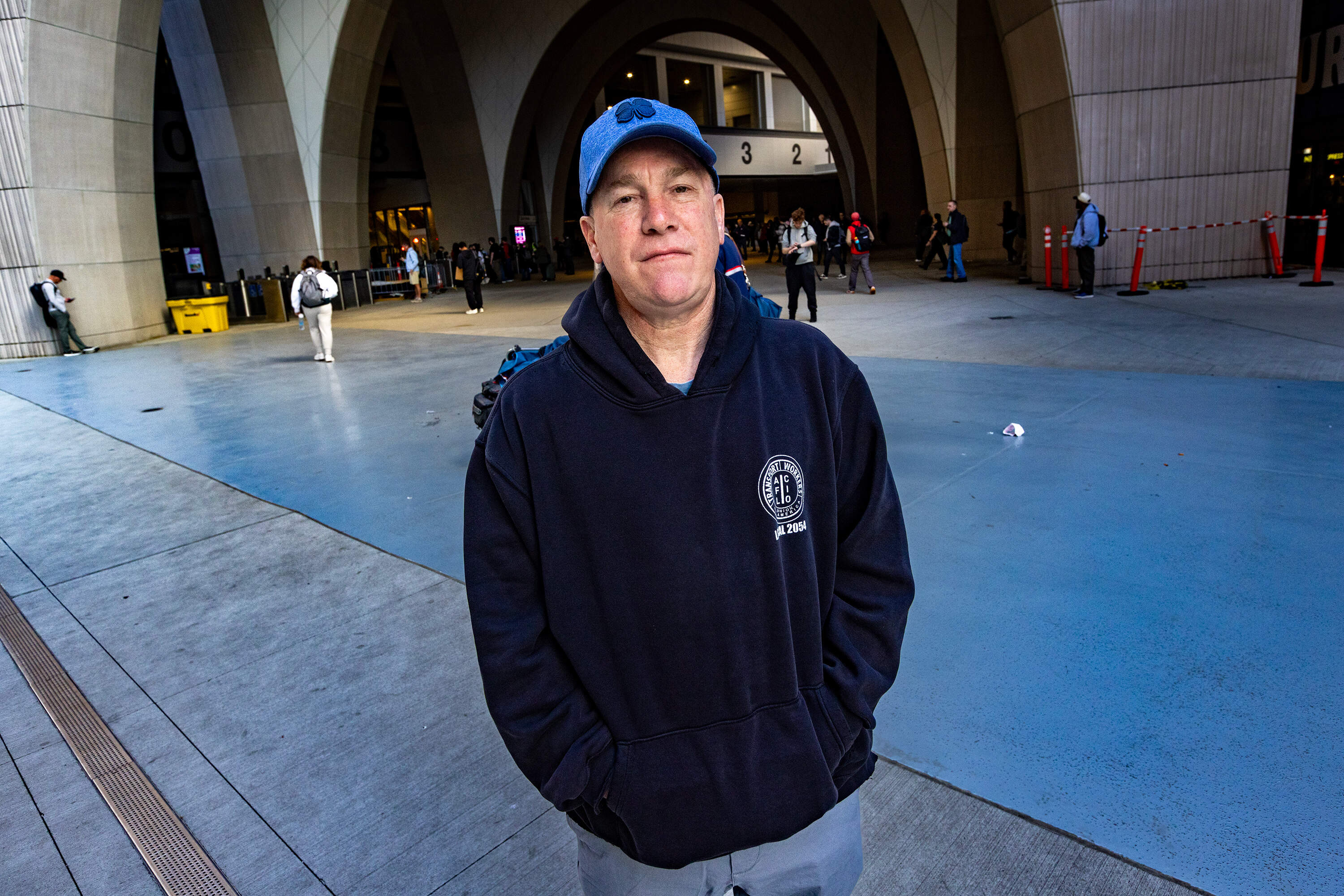
Michael Sullivan appears to know just about everyone who works at Boston's South Station, from train conductors and ticket agents to the people fielding questions at the information desk.
"How are you, Mike?" a co-worker called out to him, one of several greetings he received as he led a reporter through the station on a recent afternoon.
Sullivan has worked for Amtrak for 28 years, starting out as a coach cleaner and working his way up to a train mechanic for the high-speed Acela. He was part of the first team of mechanics in Massachusetts who worked on the fast train.
"They call us the original six, like the hockey term, because there are only a few of us left from the original class," he said.
It's a career that's put Sullivan, 58, solidly in the middle class. He earns about $125,000 a year and owns a home on the South Shore.
But instead of getting easier, life is getting harder to afford. His two grown kids still live at home, and he's helping one of them pay for college. He and his wife have also had to confront some medical issues. Meanwhile, the cost of groceries and utilities keeps going up, making it hard to keep up with bills at the end of the month.
"Like a lot of people, we're robbing Peter to pay Paul," he said.
Faced with rising costs on everything from housing and healthcare to childcare and filling the gas tank, a growing number of Massachusetts residents struggle to afford a middle class life, and feel increasingly insecure about their financial future. Those are among the findings of a new poll from WBUR, MassINC, the MassINC Polling Group and Commonwealth Beacon.
The survey found that while lots of people in Massachusetts still consider themselves middle class, many, like Sullivan, say their lives have become more challenging over the past five years.
Things used to be different, Sullivan said. When he was growing up in the 1970s, his father, a Boston firefighter who retired as a captain, earned enough to send four kids to parochial school and build a vacation home in New Hampshire. The family wasn't rich, Sullivan said, but they were "definitely solid middle class," earning enough to cover the essentials with some money to spare.
"I never sensed struggle. I don't think my parents ever showed that," he said. "Not like I feel today."
Sullivan is far from alone. According to the new poll on the middle class economy (topline/crosstabs), a third of those surveyed said their financial situation is worse than what their parents faced. That's up significantly from 15 years ago, when 22% said they felt that way.
"There's kind of a precariousness to middle-class identity," said Steve Koczela, president of the MassInc Polling group, which conducted the survey.
Once upon a time, it was an article of faith that if you worked hard you could live a comfortable life and do better than the generation before you. But that core belief has been eroding for some time, and this poll is more evidence that an increasing number of people in Massachusetts are struggling financially and feel less secure about the future.
The poll sought to answer a central question: What does it actually mean to be middle class? One basic measure is median household income, which across Massachusetts ranges from about $70,000 to $200,000 a year, depending where you live.
From there, the poll delved deeper into how people view their economic situation, asking if they consider themselves to be middle class. It found that in Massachusetts, 40% do, a number that hasn't changed much over the past past two decades. Another 32% consider themselves "working class," while 10% said they were "upper middle class."
But even as middle class identity has remained stable, that group's sense of financial security has declined markedly.
The poll asked people to identify key characteristics of a middle class life. The top three answers were having a full time job; earning enough to pay for basic needs; and having a comfortable place to live. Further down the list were things like being able to save for the future, take vacations or pay for college — all of which are increasingly difficult to afford.
And for people striving to climb into the middle class, those attributes feel increasingly out of reach.
"Life has become so hard," said Priscilla Rivera, who responded to the poll and said that she and her partner both work two jobs to try to stay afloat.
Rivera, who grew up poor in Puerto Rico, now lives in western Massachusetts. She said she came north to pursue the middle class dream: a college education, which she achieved; and a good job to provide a better life for her kids.
She and her partner opened a bar, she said, but it shut down during the Covid pandemic. Now she works as a graphic designer and as a caregiver for the elderly, but said she's still struggling, sometimes unable to cover basic needs, never mind spring for a vacation.
"For example, last week my dryer broke and I didn't have $800 for a new one," she said, adding that she used to consider herself middle class. "But no more."
For Rivera, the dream of gaining a foothold in the middle class for her family has faded. The poll found less than a quarter (22%) of respondents think their kids will be better off than them; 44% believe the next generation will be worse off.
The poll also identified what is perhaps the biggest challenge facing thousands of middle class families: Housing.
"The cost of housing is something that comes up and rises right to the top of the most important issues," Koczela said.
According to the poll, 40% of people said owning a home is one of the most important elements of a middle class life, yet more than half (51%) said houses are too expensive in Massachusetts.
That includes Alex Carchidi, who lives in Somerville and responded to the poll. Carchidi makes more than $200,000 a year as a freelance financial writer. But with $36,000 in college debt, he and his wife have been searching for more than six years for a home they can afford.
"The market has been completely crazy," Carchidi said.
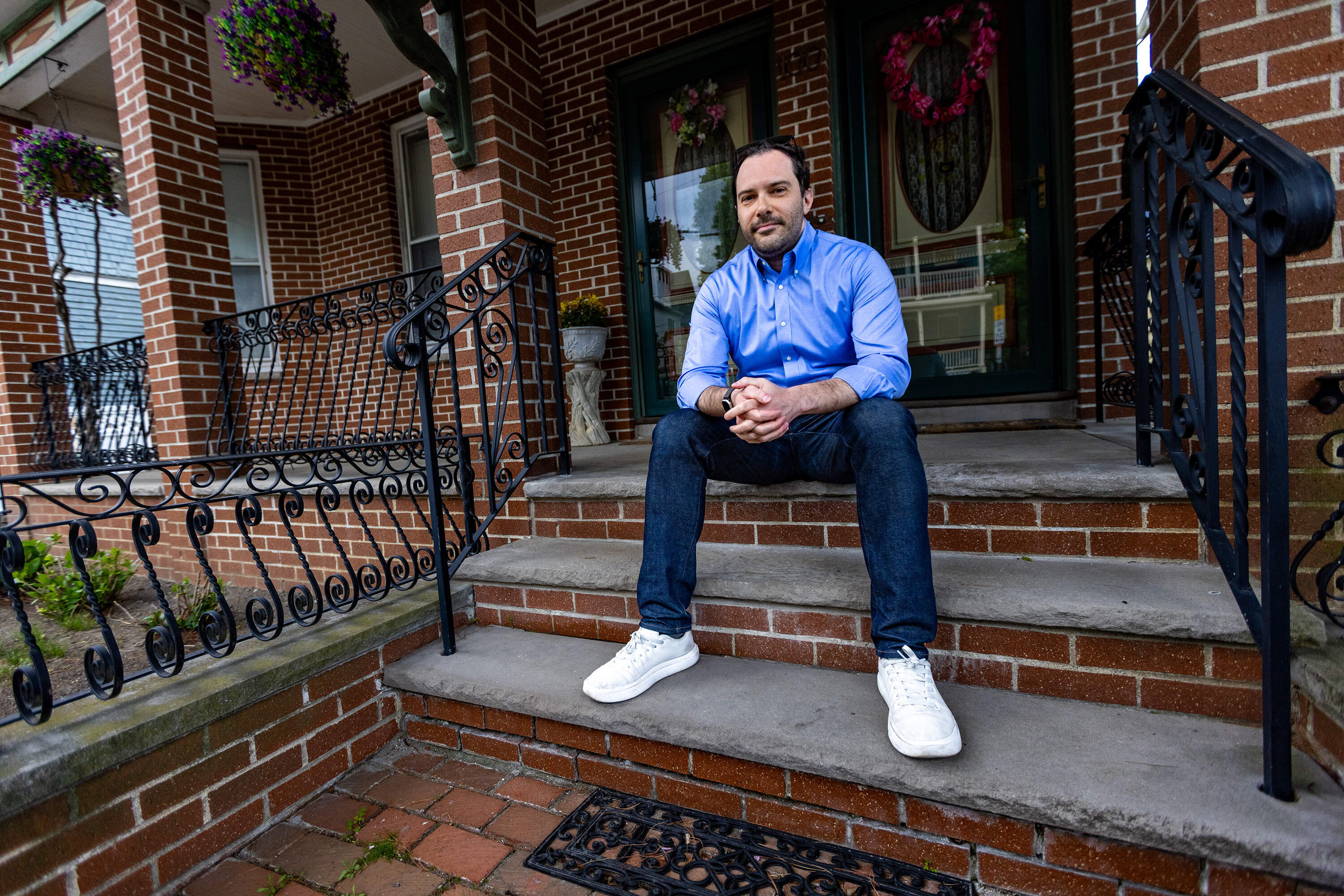
Because he hasn't been able to save enough, Carchidi and his wife are competing against cash buyers, who too often swoop in, he said, and "snatch things right out from your jaw."
Carchidi worries that between his debt, the high cost of housing and everything else, he could tumble out of the middle class. But he said he remains hopeful and believes there's still opportunity for people like him in the state.
His wife is from Argentina, where he said lots people work hard "without ever getting ahead." By contrast, he added, in Massachusetts, it's still possible to "invest hard work and get ahead."
It may be harder than it once was, Carchidi said, but "the door is still open."
Even so, the new poll found a sense of growing pessimism, at least for the near term. Five years ago, 17% of people said they expected to be worse off financially in a year. Today, 40% say they feel that way.
This segment aired on May 6, 2026.