Support WBUR
Harvard faculty votes to limit A's in undergrad courses
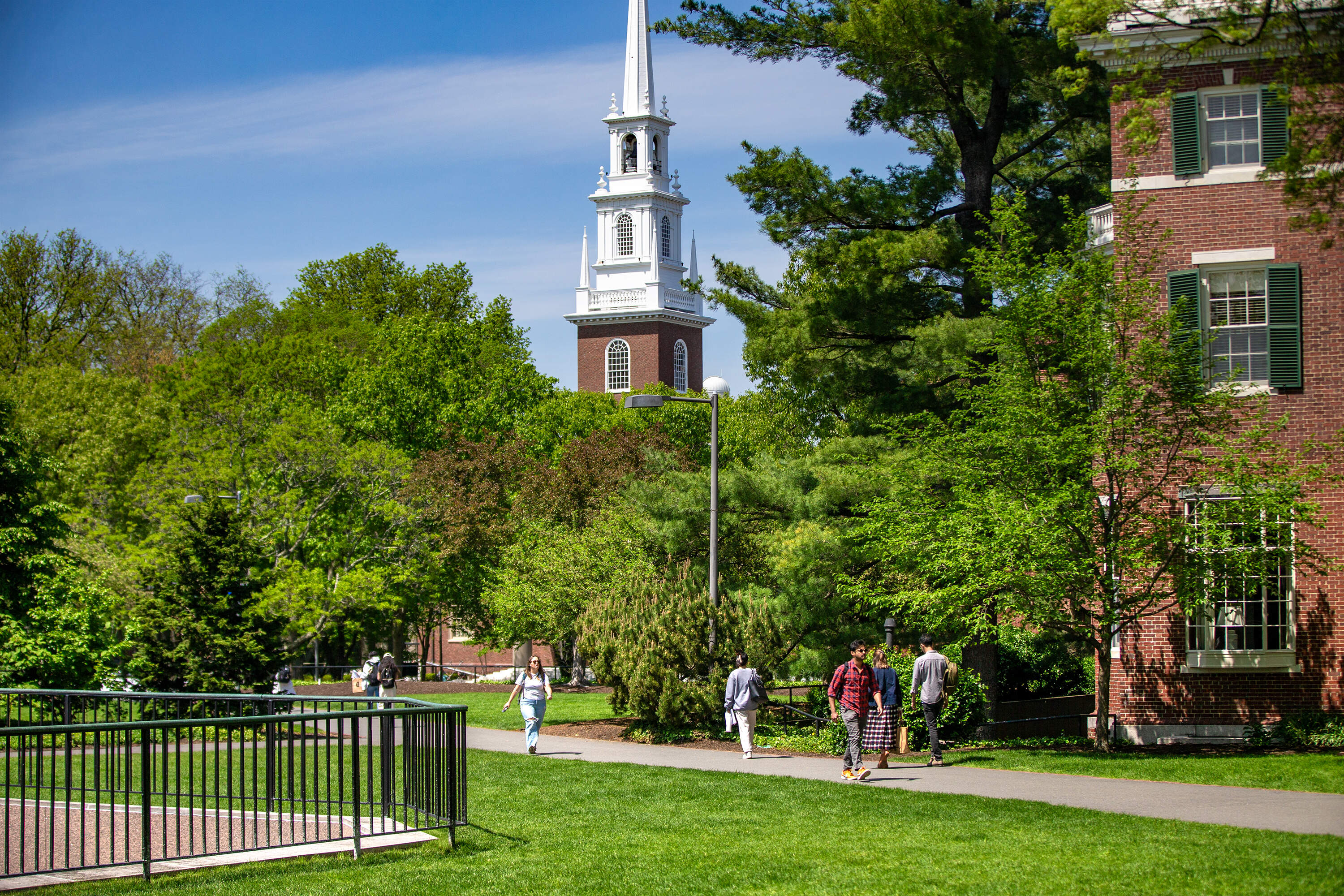
Harvard will limit how many A’s professors hand out in undergraduate courses starting in the 2027-28 academic year in an effort to stem grade inflation at the university following a faculty vote this past week.
Nearly 70% of participating faculty voted “yes” to the proposal, which will cap A grades to 20% of enrollees in a class, plus four additional students. The "plus four" of the plan was designed to offer grading flexibility for small, seminar-style classes, which can have fewer than 10 students enrolled.
“This is a consequential vote,” Amanda Claybaugh, dean of undergraduate education, said in a statement. “It will, I believe, strengthen the academic culture of Harvard.”
For decades, Harvard — as with other institutions of higher learning — has seen the number of A’s issued to students steadily tick up. Last academic year, an “A” represented two-thirds of all letter grades at the college. Proponents of the change argued that has diluted the meaning of the top mark, discouraged students from taking riskier moves along their academic journey and dampened rigor in some courses.
Of 659 faculty members voting, 458 voted for the cap, according to figures provided by a spokesman for the Faculty of Arts and Sciences. An even stronger majority — three-fourths of 655 voting members — voted yes on a separate question to implement an internal ranking system to distinguish students with honors and prizes.
Some Harvard faculty and administrators have been concerned about grade inflation for years. The pandemic served as “an accelerator” to jumpstart discussion about grading reforms, said Joshua Greene, a psychology professor at Harvard who served on the faculty panel that authored the proposal.
“There was a kind of generosity and benefit of the doubt when it came to grades during the pandemic,” he said. “But with grading, it's kind of a one-way ratchet. Once you go up, it's hard to come down.”
“ I think this is the beginning of a much larger change, and it's not gonna be the case that Harvard is off doing its own thing, with the limiting on A’s,” Greene added.
In recent weeks, Yale floated the idea of restricting average GPA to a 3.0, or B, average. A recent report from that institution noted that grades "cease to convey useful information about relative student achievement" and "like colleges and universities, no longer seem trustworthy."
Harvard faculty supportive of the shift said they want an A to again confer work of "extraordinary distinction" and to normalize an "A minus."
Students polled in February by the Harvard Undergraduate Association expressed overwhelming disapproval of the capped A policy, based on concerns it would fuel additional competition on campus or among peers at other schools competing for graduate school spots.
Greene said, at least in the informal conversations he's had with students, some have "warmed up to the proposal" over the course of the semester. A major part of that was the faculty panel deciding to delay implementation by a year.
That extra time also allows instructors to adjust their courses, he said.
"For some faculty, adjusting to the new policy will just be a matter of taking out their grade book and drawing the line in one place instead of another place. But for other faculty, they may have to really make their courses more challenging," Greene said.
The Office of Undergraduate Education plans to review the policy after three years.