Support WBUR
DOJ sues Massachusetts for refusing to issue ICE confidential license plates
The U.S. Department of Justice is suing Massachusetts over the state’s refusal to issue confidential license plates and registrations to many federal immigration agents.
The plates are typically issued to members of law enforcement carrying out undercover or other sensitive work.
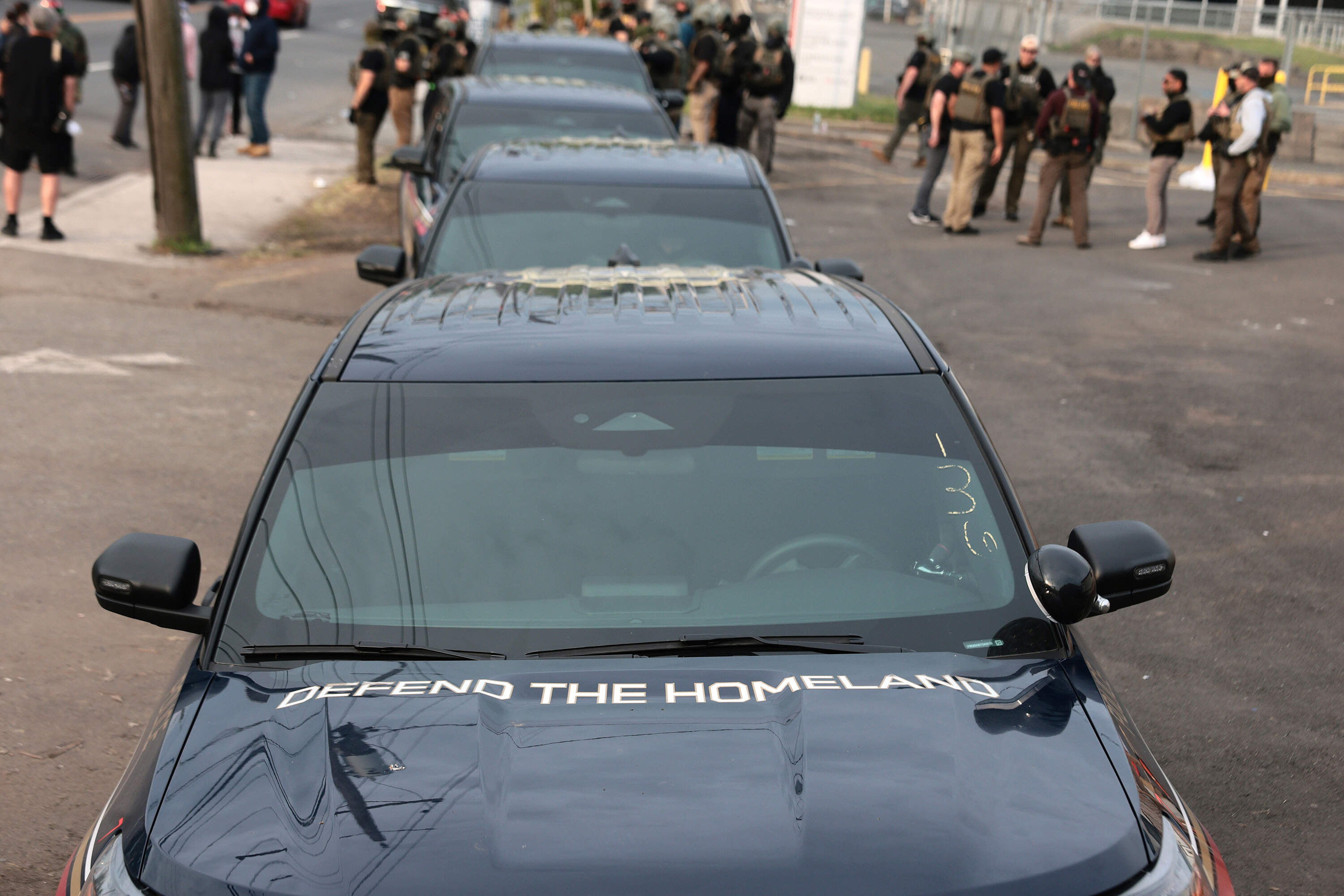
The Healey administration says the plates are only for criminal law enforcement purposes, regardless of which state, local or federal agency intends to use them. Vehicles used for civil law enforcement — as in much of ICE’s work — do not qualify for special plates, according to the administration.
Gov. Maura Healey on Thursday reiterated that Massachusetts is not a "sanctuary state," and said the state supports legitimate federal law enforcement work.
“That's not what we're seeing from ICE,” she said, “so we're not going to help them operate in secret as they take people off our streets without cause.”
Speaking to reporters Thursday, Healey also separately rolled out guidance for houses of worship, health care facilities, schools and day care centers on how to protect against ICE actions on their properties. It's the latest step in what Healey said will be the most comprehensive action in the country to protect people from ICE arrests in "sensitive" spaces where they go for worship, care and education.
According to the license plate lawsuit, Massachusetts stopped issuing confidential plates to U.S. Immigration and Customs Enforcement this year, after having allowed the plates in 2025 for ICE and other federal agencies.
The DOJ suit argues confidential plates are critical to the success of law enforcement operations and officer security. Government lawyers claim the state’s refusal to issue the plates to ICE and Customs and Border Protection discriminates against those agencies and violates the Constitution's Supremacy Clause.
“By denying undercover license plates to DHS components, including ICE, while issuing them to their own state agencies, these governors are pursuing discriminatory and obstructionist policies against federal law enforcement,” Acting U.S. Attorney General Todd Blanche said in a statement.
At a press conference Thursday, Healey said the license plate lawsuit is the latest in a series of "specious complaints against states like Massachusetts, putting together targeted investigations against political enemies.”
Massachusetts is among four states — including Maine, Washington and Oregon — that the government sued Wednesday over similar license plate policies.
Earlier this month, Assistant U.S. Attorney General Brett Shumate had threatened Massachusetts with a lawsuit if the state did not restart issuing special plates by May 22. In response, Healey's chief legal advisor, Jesse Boodoo, notified the Justice Department that Massachusetts would not alter its policy.
Boodoo rejected the claim that ICE agents could get doxxed, saying license plate records aren't accessible to the public in Massachusetts. In addition, he said, confidential plates mean even local police can't trace them. In the letter, Boodoo said ICE's “increasingly aggressive and unconstitutional tactics” to enforce civil laws does not transform it into a criminal law enforcement entity.
The license plate spat is unfolding as officials in Massachusetts face increasing federal scrutiny over policies that aim to limit local collaboration with immigration agents.
A congressional committee this week demanded a broad range of documents from the Suffolk County district attorney, the Suffolk County sheriff and the Boston Police Department. Boston, meanwhile, is awaiting a ruling from a federal judge in the DOJ lawsuit that targets the city's Trust Act.
Healey earlier this year filed legislation to block ICE from carrying out civil enforcement — actions that don't involve criminal judicial warrants or court orders — at places including courthouses, churches and schools. She also issued an executive order to prohibit ICE from making arrests in areas of state buildings that are not public, as well as to prevent federal agents from using state property as staging grounds for immigration enforcement actions.
The governor cited a string of ICE actions in Massachusetts and around the country in which ICE agents have taken children away from parents, arrested U.S. citizens and lawful immigrants, assaulted and shot protesters, and made arrests in places where people expect to be safe to go about their business.
"I wish we didn't have to be here today to continue to defend our residents from unlawful and harmful actions by federal agents, but the Trump administration and ICE have shown no signs of changing course," Healey said, joined by clergy at the State House to announce the new guidance. "They're going after people who aren't safety threats, and they're still making people afraid to send their kids to school, to go to work, to seek healthcare, to pray and worship; making them afraid to go to court and even report crimes."
Auxiliary Bishop Cristiano Barboza of the Archdiocese of Boston welcomed what he called the state's "assertive lead."
" As a civil society, we have a responsibility to preserve the dignity of all people, including those who are here out of desperation for their children and families," Barboza said. "Whether an immigrant or not, places such as churches, schools, state courts and hospitals are essential to maintaining the common good for all people in a civil society such as this."