Support WBUR
The A.R.T.’s ‘Black Swan’ turns horror into something you can sing
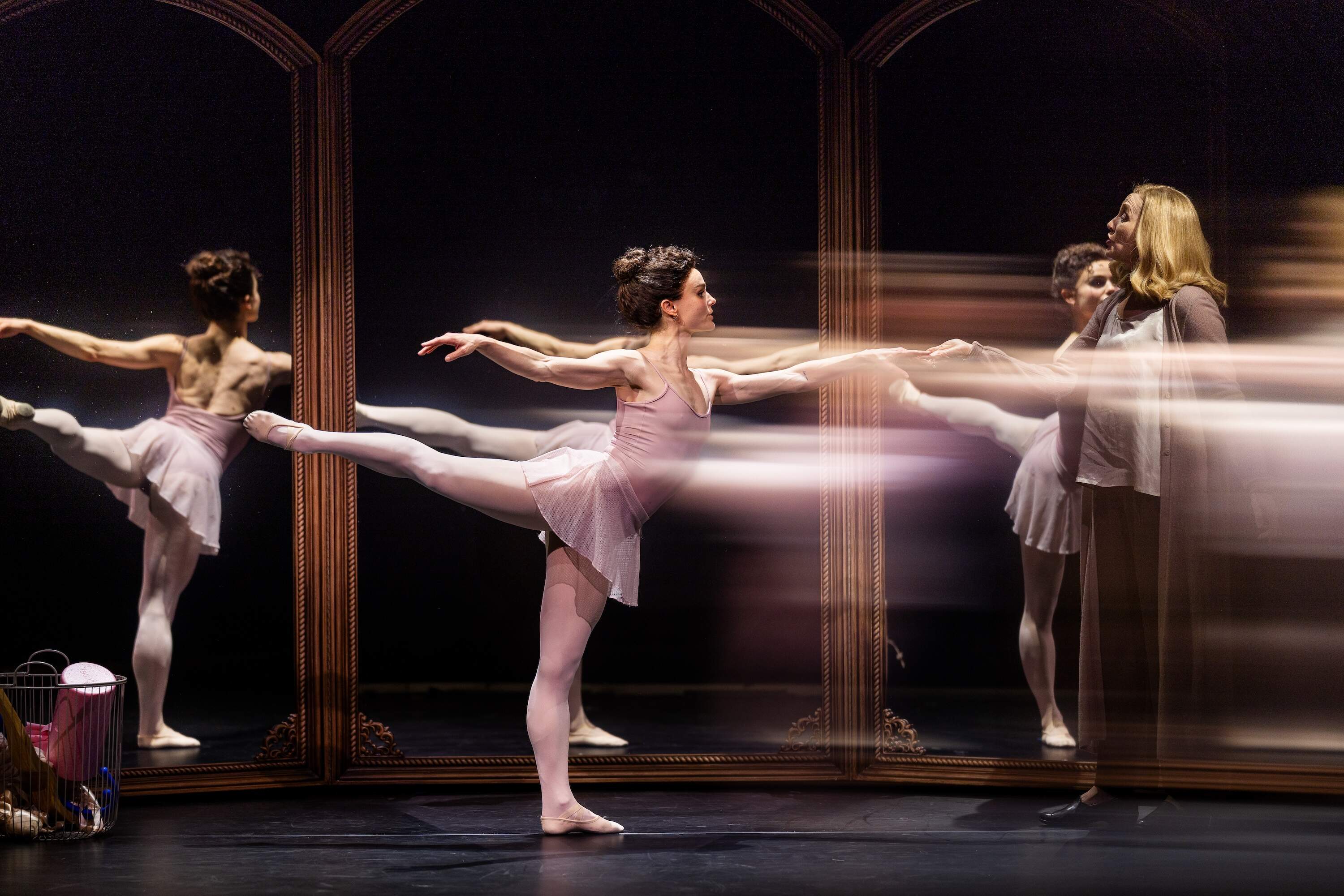
In Darren Aronofsky's 2010 psychological thriller “Black Swan,” a production of the classical ballet “Swan Lake” becomes an unexpected locus of horror. Now, the story is being reimagined in another surprising package: a musical.
On an afternoon in May, the production’s cast and musicians gathered at the American Repertory Theater in Cambridge to play through the score together for the first time. The room hummed with nervous conversation and the honks of wind instruments being coaxed to life.
Music supervisor Or Matias quieted the buzzing room. He began to explain a change to one of the songs. It was a small tweak, par for the course in this phase of production when multiple changes were coming daily. Melanie Moore, the actor playing the lead role of Nina, piped up.
“Just get ready you guys, this change is really going to blow your mind,” she quipped.

The scene had a whiff of life imitating art. “Black Swan” is also set in the final weeks before opening night, when every small detail is obsessed over in service of perfection. The American Repertory Theater is premiering the musical, which features music by composer Dave Malloy and a book by Jen Silverman. It has already been extended, through July 12.
“Black Swan” is based on the film of the same name, which stars Natalie Portman as Nina, a buttoned-up ballerina preparing to dance the demanding role of the Swan Queen in Tchaikovsky’s “Swan Lake.” She slowly loses her grip on reality under pressure from her overbearing mother and a manipulative director, haunted by a doppelganger who represents her darker impulses. The movie, a critical darling for which Portman won an Academy Award for best actress, is still considered one of Aronofsky’s finest.
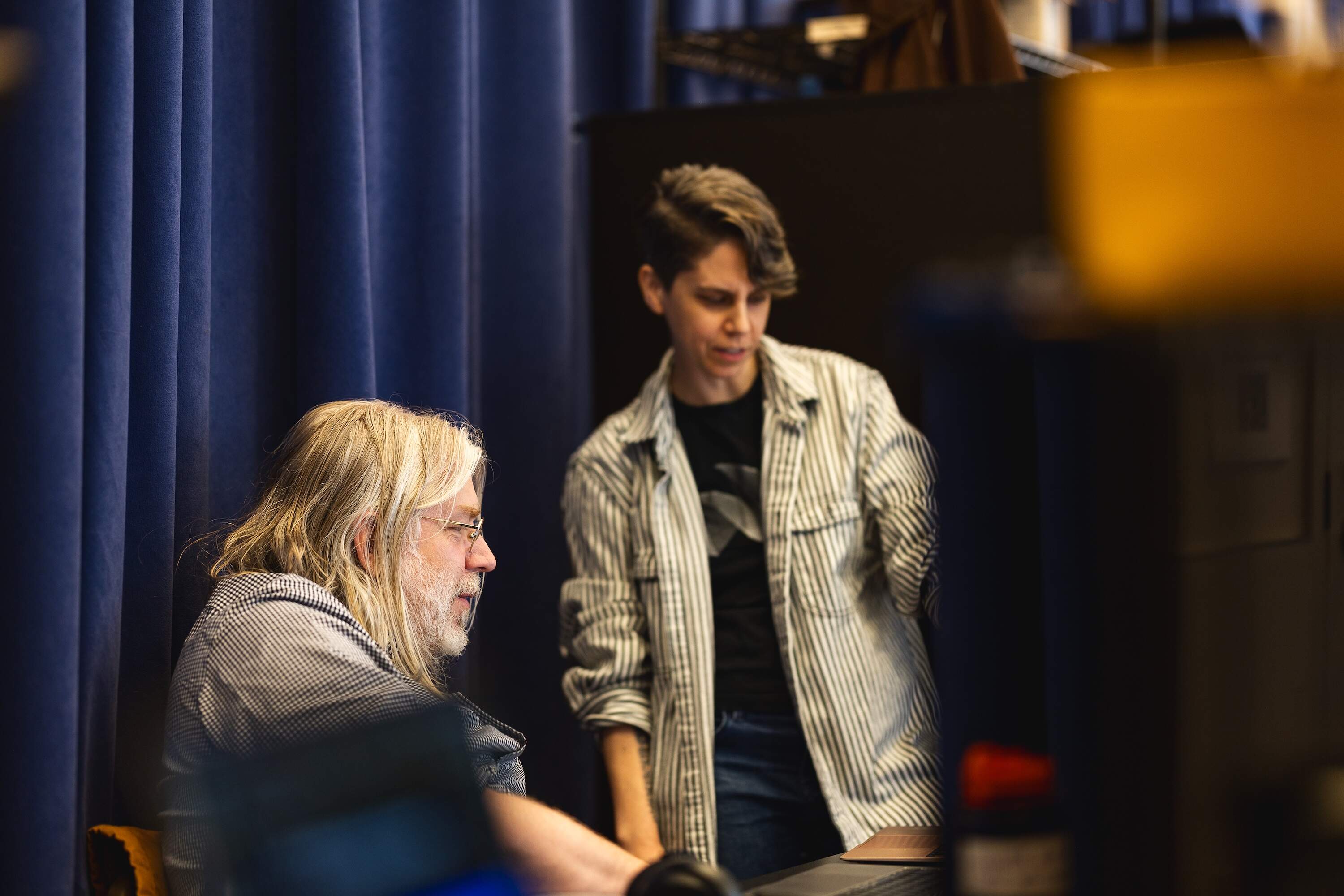
With its focus on dance, “Black Swan” was an obvious fit for the stage. The challenge was transforming a psychological thriller into a musical, where musical numbers often aim for catharsis.
“You build tension in the scene until the character sings, and then that tension gets released,” Matias said. “And with a psychological thriller, or with any kind of thriller, it's about tension-building, right? So how do you marry those two things?”
The answer, he explained, was to write songs that dig deeper into a character’s psychological state rather than offer release.
“ So that by the end of it,” Matias said, “instead of feeling like you're leaning back, you're feeling like you're leaning forward.”
A propulsive score by Malloy ratchets up the tension. Malloy, who was not made available for an interview, is best known for his genrebending electropop opera “Natasha, Pierre & the Great Comet of 1812.” “Black Swan” follows in that mold, with electronic flourishes and a propulsive sense of foreboding. Malloy and Matias traveled to Budapest to record a symphony orchestra performing “Swan Lake” so that they could sample it in the music. Melodies and motifs from the original ballet are interpolated throughout the score, sometimes appearing verbatim. In one nightclub scene, the cast gossips to the tune of one of the ballet’s most famous passages, a jaunty melody from the second act’s “Dance of the Little Swans.”
Violinist Marissa Licata, who plays in the pit orchestra for “Black Swan,” points to the score’s “scrapey dissonance.”
“When you hear it in the music, it’s like, ‘Oh, that’s Dave Malloy,’’ she said. “ I really love Dave's music because it gives you that ability to be a little bit perfectly imperfect.”
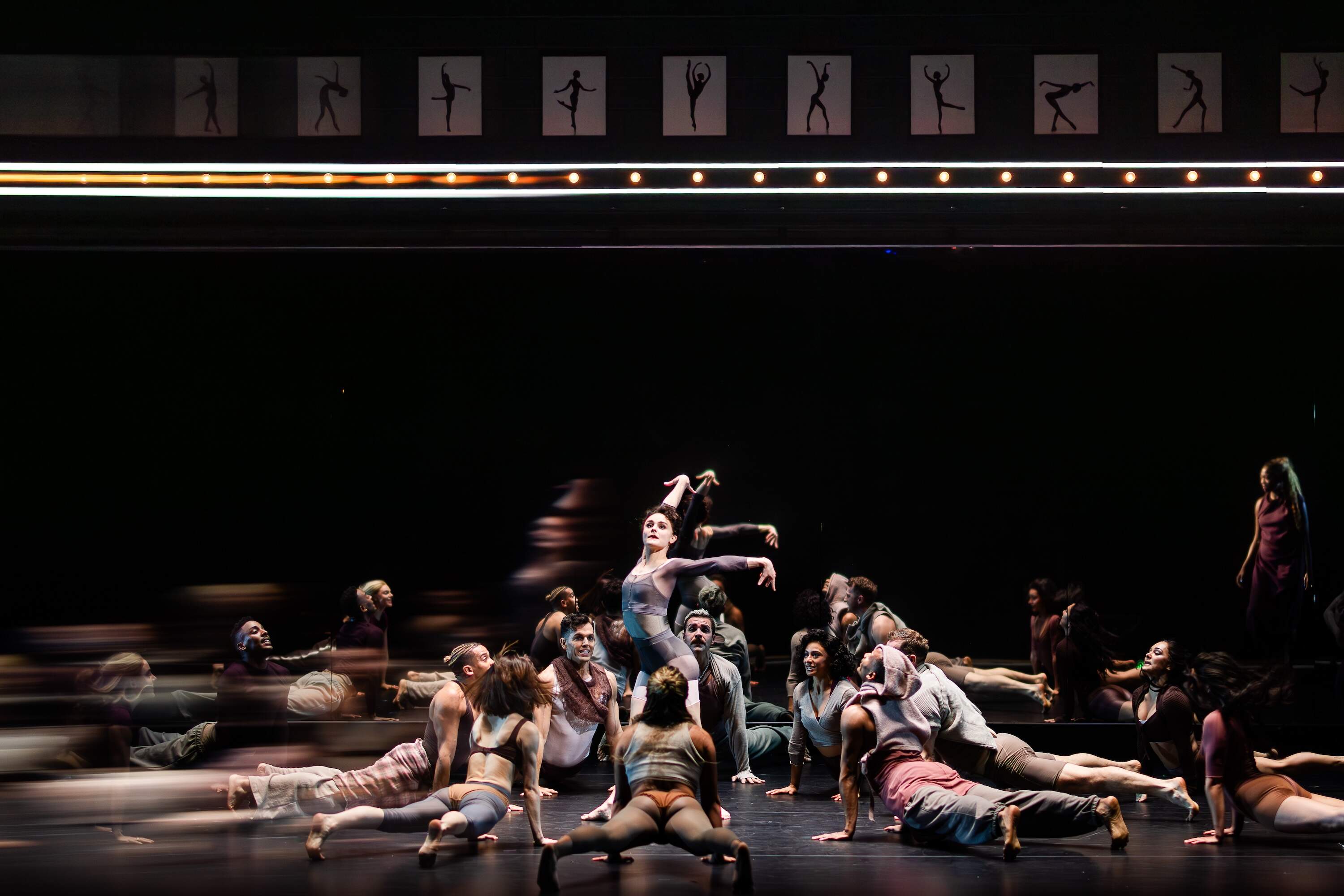
Despite all the singing and dancing, “Black Swan” the musical preserves the destabilizing sense of horror that characterizes Aronofsky’s film. Clever stage effects deliver jump scares and surreal sleights-of-hand. The play contains a lot of real ballet, merged with an athletic contemporary style that is the trademark of the Tony-winning choreographer Sonya Tayeh, who also directed the show. And, like the film, the musical explores the psychic toll of striving for perfection.
“This particular story, as an artist, I mean, it's very triggering,” Matias said. “ I went to Julliard for classical piano. The expectation was that we practiced until it was, quote-unquote, ‘perfect.’”
The musical does make one major change: the film’s male artistic director, Thomas Leroy, was rewritten as a woman. Instead of a domineering director who uses sex to manipulate his prima ballerina, the musical’s Leroy is a self-possessed visionary who is often at odds with the ballet company’s board over her unorthodox ideas.
The character – a strong woman with a complex relationship to power – spoke to Tayeh.
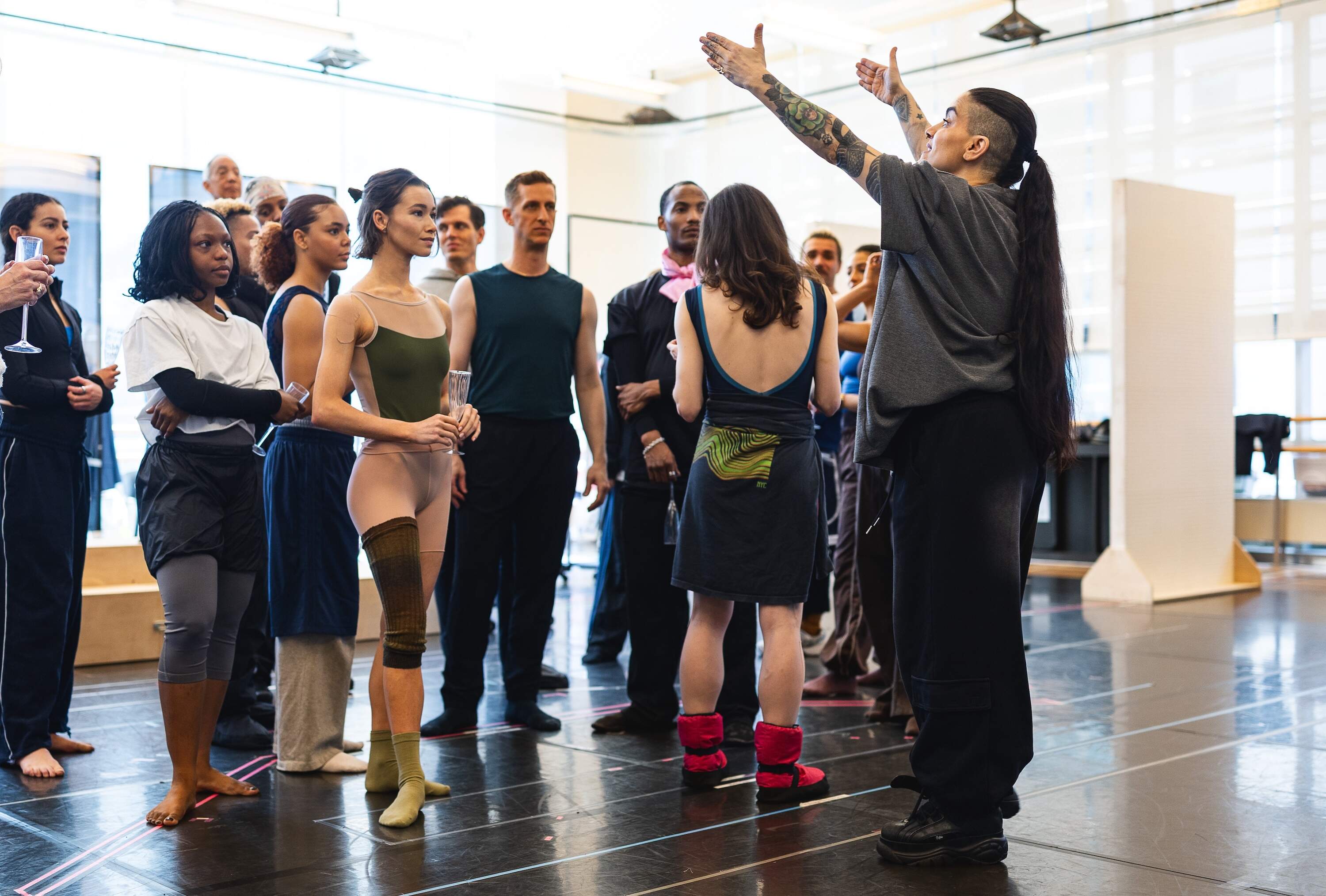
“I have a beautiful career, but it's a constant battle,’ she said. “It's a constant battle of holding myself and holding my ground and staying in my own desires.”
And she is all too familiar with the drive for perfection, how it can be at once motivating and crazy-making.
“I spend most of my day saying ‘again, again, again, one more time, one more time,’” Tayeh said. “And I never really mean that. I mean a million more times.”
It was complicated, she admitted. Dance is built on repetition and extreme physicality. How far was too far? She would often remind her cast that it was just a play. But then there were those euphoric moments when things just fell into place. “When the light makes its way in,” in Tayeh’s words. A loss of time, when the dancers reached a meditative, transcendent state.
“Then they'll say, ‘I'm so proud of this because people really get to see what we do, and what it takes,’” Tayeh said. “And I feel the same.”
"Black Swan" runs at the American Repertory Theater through July 12.
This article was originally published on June 05, 2026.