Support WBUR
How beer fueled the American Revolution
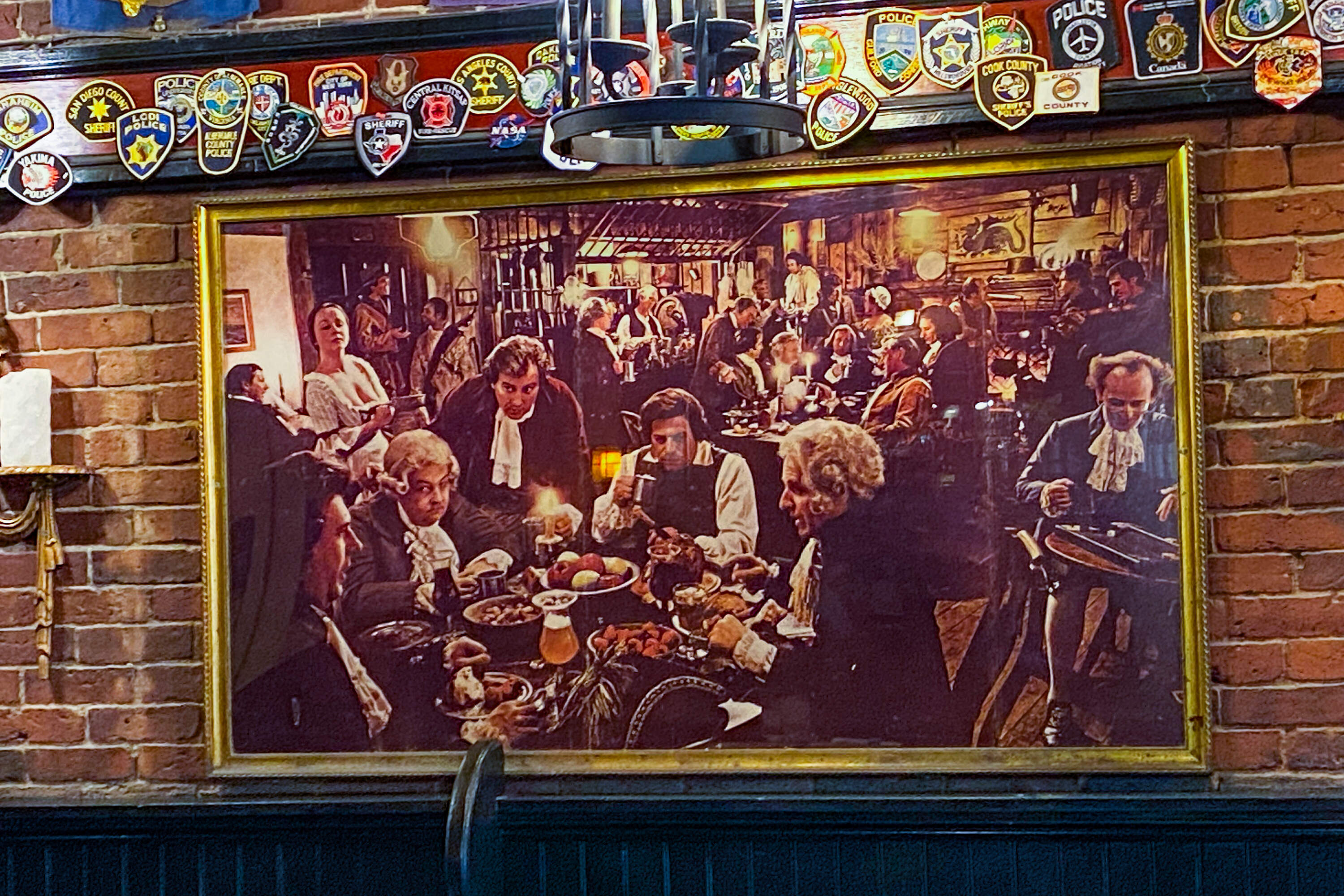
Tea is the beverage we usually associate with the patriots who protested and fought for independence from British rule. But did you know beer also played a role in the American Revolution?
A lot of history buffs are aware of the connection. They descend on downtown Boston so they can travel back to the birth of America at landmarks including Paul Revere’s House, Old North Church and the Green Dragon Tavern.
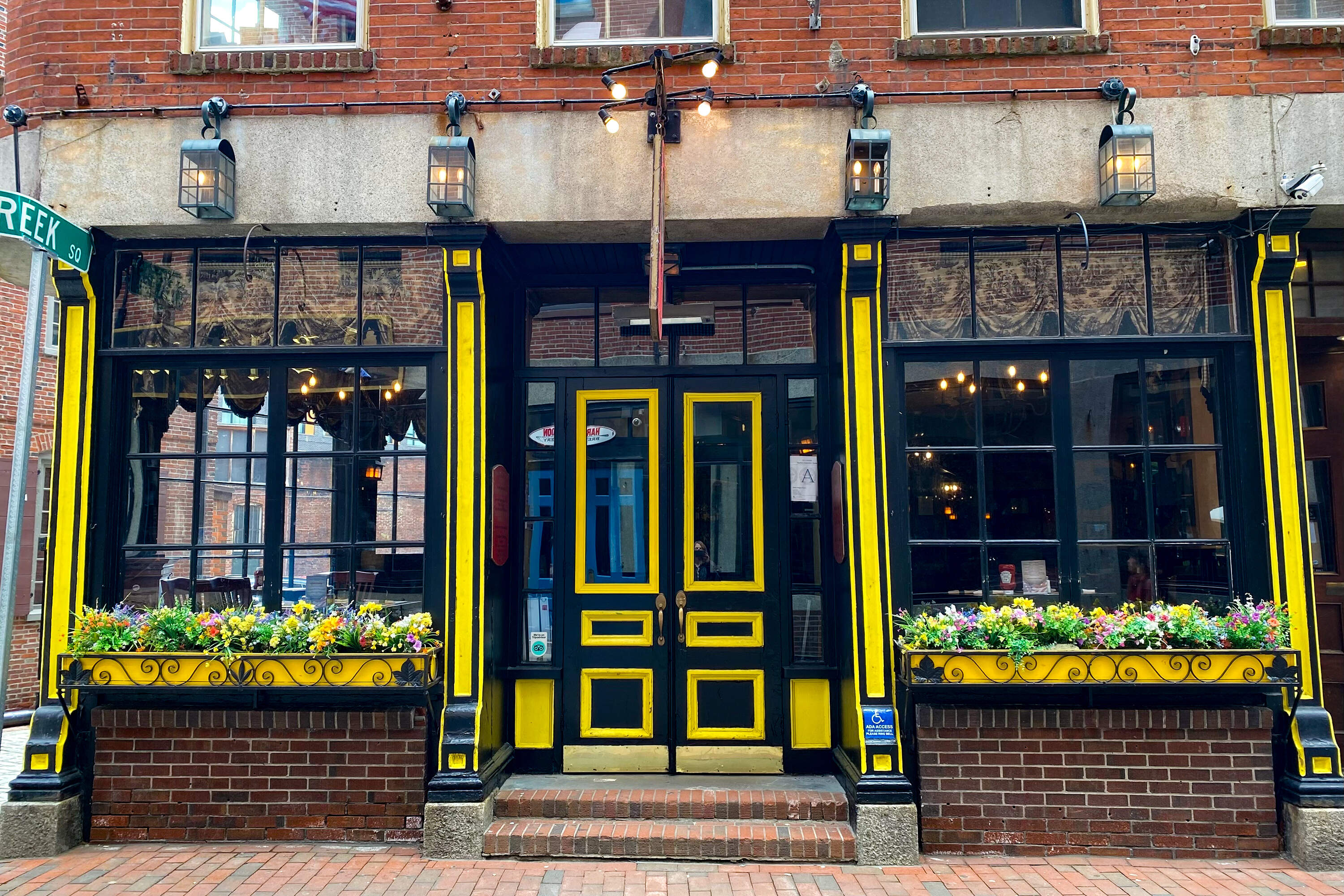
The legendary haunt was a must-see destination for Gary Gauger of San Diego. Standing outside the Green Dragon’s black and yellow doors he said it feels “kind of like going into Disneyland for the first time.”
Gauger is active in the Sons of the American Revolution, an organization for people with direct lineage to freedom fighters. The original Green Dragon was destroyed in the 1800s, but for devotees like him the rebuilt tavern is hallowed ground. Gauger said, “I have images of a room full of boisterous people raising pewter goblets full of beer – probably room temperature – and getting some of those brash ideas off the grog.”
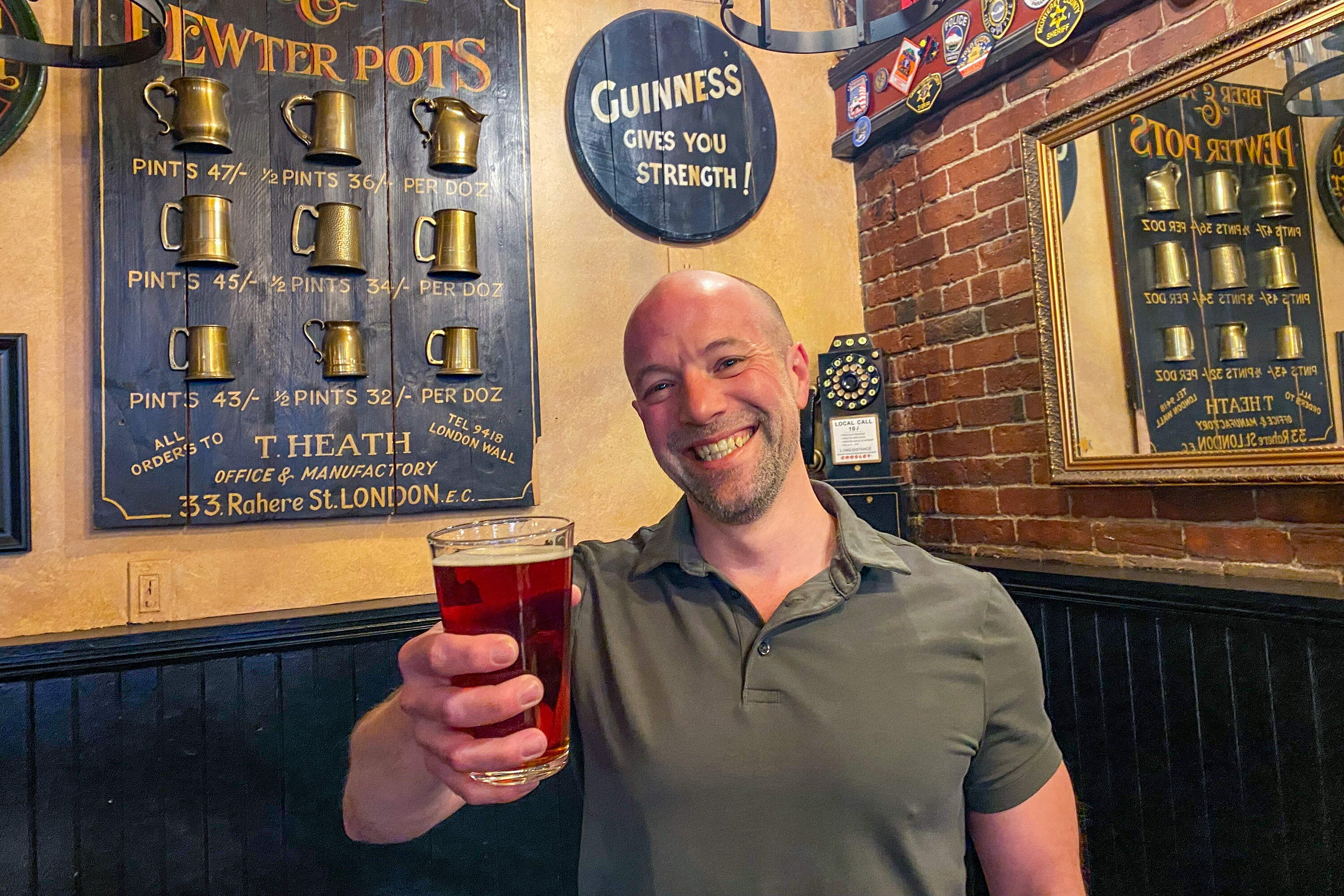
Sitting inside at the wooden bar, historian Malcolm Purinton said the riled up colonists were “debating all the ideas of the Enlightenment, the ideas of what is freedom, what is democracy, what is the role of the government.” And, as people started rising up in arms, “they would plan this, over beers, at local taverns like the Green Dragon.”
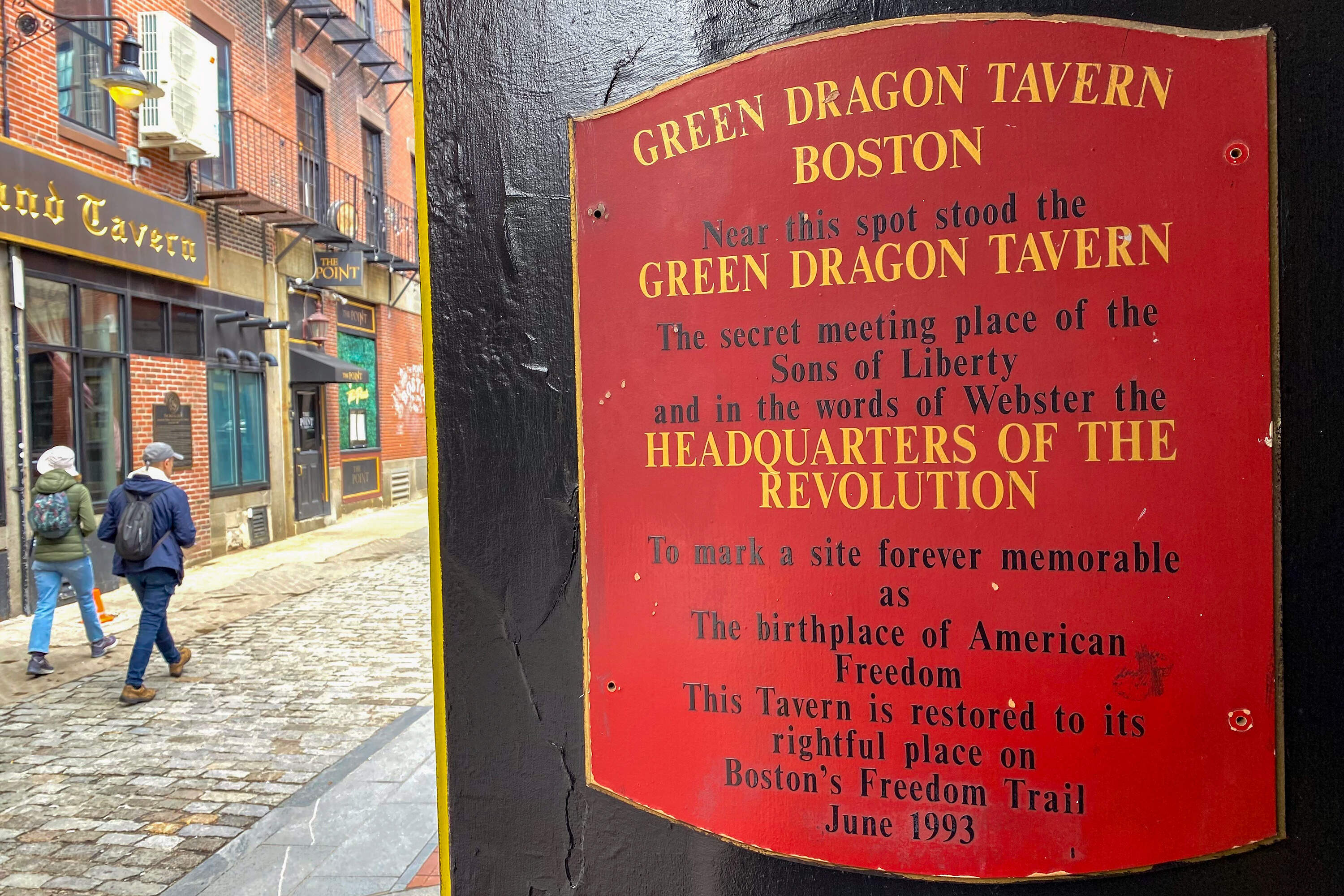
Purinton teaches courses on American history – and beer – at Northeastern University. He gestured at the antique guns, tricorner hat and maps of early Boston on the tavern’s brick walls. The Green Dragon is known as the “headquarters of the Revolution” because Paul Revere and Dr. Joseph Warren secretly organized revolt at the tavern.
“This was where the Loyal Nine – the precursors to the Sons of Liberty – first met after the Stamp Act,” Purinton explained. “That’s when we start seeing taxation without representation starting to happen.” The drinking establishment is also where the Sons of Liberty orchestrated the Boston Tea Party in 1773.
“The plan was actually to gather the tea and control the tea,” Purinton explained, “but of course they were hanging out at a tavern, so they got a little overexcited – perhaps overinebriated – and all that tea just ended up in the harbor.”
Throughout the Colonial era taverns and beer were ubiquitous. Purinton said most people brewed beer at home. Early Bostonians also drank imported beer, wine and rum – until the patriots waged boycotts of British imports.
At the Green Dragon, Samuel Adams advocated against drinking alcohol connected to the tyranny of England’s king. Purinton said Adams urged the colonists to craft and consume home grown beers instead because that was something they were making themselves with local barley being produced by John and Abigail Adams.
Drinking local beer helped ferment a new American identity across the colonies, according to Purinton. He said the governor of Virginia made a political statement by serving his own home brew. “Patrick Henry — we're talking, ‘give me liberty or give me death’ — he saw that this is good enough. This is our local Virginian beer.”
George Washington also brewed and had a taste for porter. When he took over as general of the Continental Army in 1775 he issued a command. “Washington made sure that every soldier would have a ration of at least two pints of spruce beer per day,” Purinton said. “Because it was nutritious, and it was liquid courage on the battlefield.”
Beer also greased the war machine before the fighting began. Generals including Washington planned their military campaigns at taverns that also provided lodging. “They were just centers of everything for the revolution,” Purinton said.
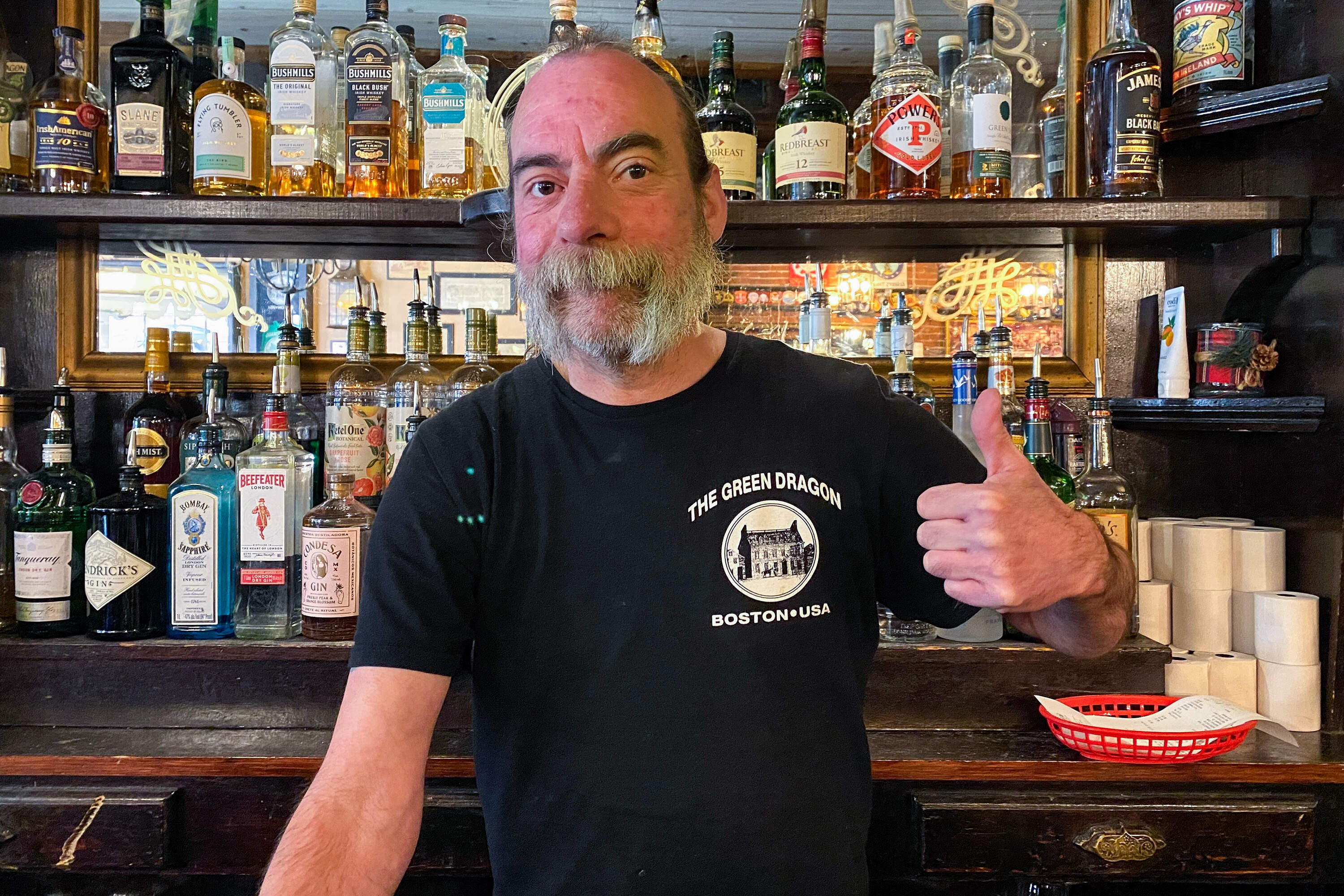
Feeling inspired, Purinton ordered a pint of Sam Adams’ Boston Brick Red from bartender Chris White. He’s worked at the Green Dragon for 21 years and said visitors always ask questions. “About the neighborhood, this place specifically, Paul Revere's house right down the street – and about beer because that's the main reason they're here.”
As he sipped his malty ale, Purinton imagined how beer influenced the founding fathers when they drafted the Declaration of Independence. He said today’s Americans can also commune with their forebears when they celebrate the country's big birthday this 4th of July.
“They could be tasting a nice brown ale, a porter, a pale ale,” Purinton explained. “Basically, it's the same ingredients.”
And, when the barley malt and hop flavors flow across their tongues, the historian hopes revellers remember the patriots who came together to fight for freedom 250 years ago and raised their pewter beer pots in a new country.