Support WBUR
Could ‘boommates’ help ease the housing crisis?
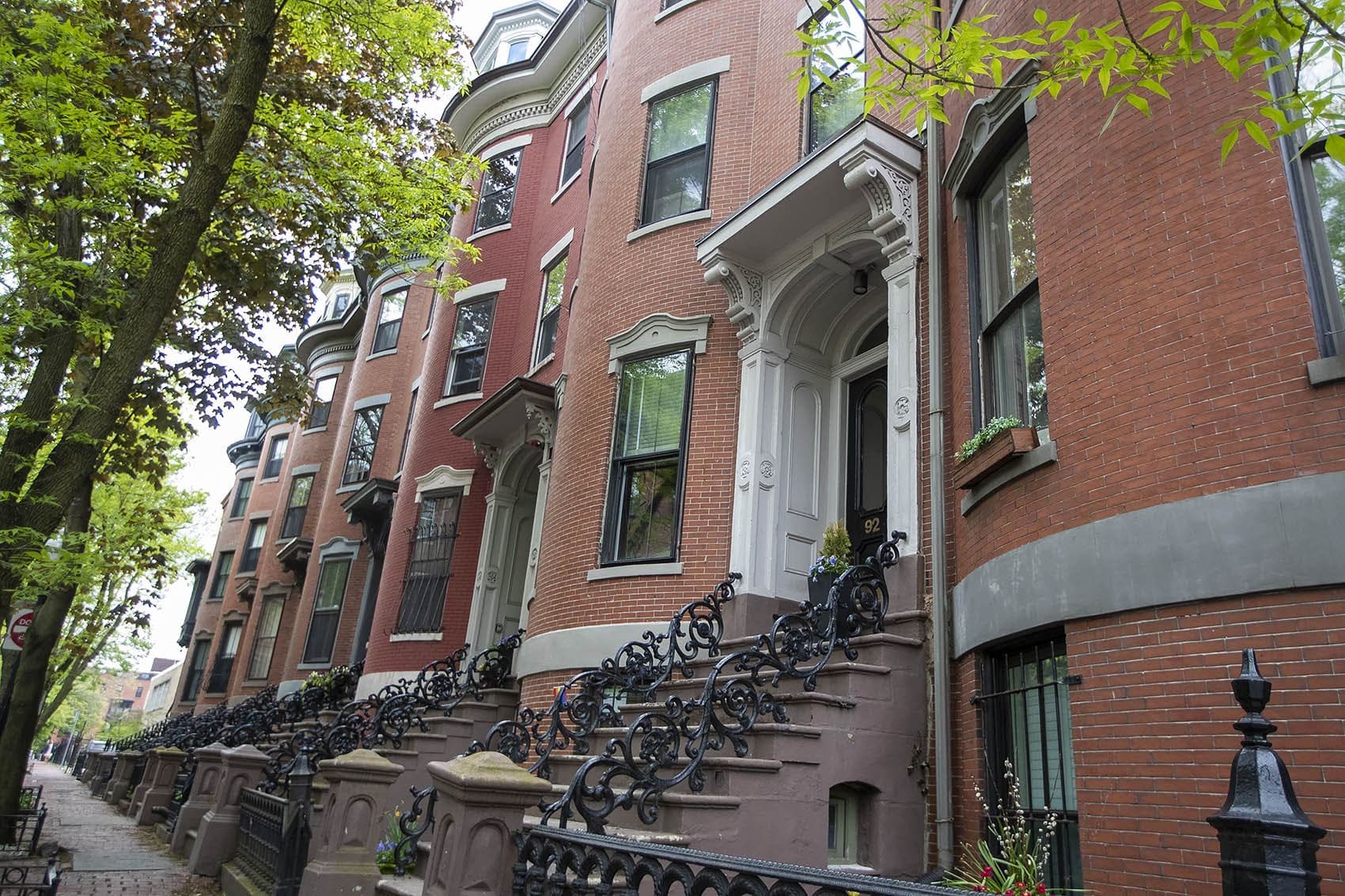
High housing costs are pushing more Americans to find roommates, including baby boomers and empty nesters.
We take a look at the growing trend of intergenerational living.
Today, On Point: Could ‘boommates’ help ease the housing crisis?
Guests
Jennifer Molinsky, director of the Housing and Aging Society Program at Harvard University’s Joint Center for Housing Studies
Matt Guinta, 40-year-old who shares his townhouse with 61-year-old Lauri Hoese
Lauri Hoese, 61-year-old who shares a townhouse with 40-year-old Matt Guinta
Also Featured
Deborah Anderson, 75-year-old in Minneapolis, Minnesota who shares her house with a 63-year-old roommate.
Gail Schechter, executive director of H.O.M.E., Housing Opportunities and Maintenance for the Elderly, a Chicago organization.
Transcript
Part I
DEBORAH BECKER: The convergence of high housing costs and an aging U.S. population is resulting in some creative potential solutions. One is having older and younger adults share housing, not just to reduce costs, but to help with some social issues such as loneliness and expensive child care. One example is 75-year-old Deborah Anderson, who's lived in her three-bedroom house in Minneapolis since 1989.
DEBORAH ANDERSON: I guess when my kids left, I've been single for many years. I got divorced many years ago. Traveling is a big part of my life. I just thought I would like to, I could have somebody live here while I'm gone and while I'm here.
BECKER: So Deborah decided to get a roommate and she's had several since. For the past four and a half years or so, she shared her house with a 63-year-old woman named Evita.
ANDERSON: We have dinner together. Maybe a couple nights a week. It depends on the week and what we each have going on. And we each buy our own food and have sort of our parts in the refrigerator. But if she's short an egg or I'm short a something, we aren't real strict on that.
If we need some cheese for a sandwich or something.
BECKER: Deborah and Evita each have their own bedroom and bathroom. They share the rest of the house's common areas, including the yard, where Deborah says Evita recently planted a garden.
ANDERSON: It's nice to say good morning to somebody and to check in with and they know where, I'm going to go somewhere.
This is where I'm going today. Check it on our day. I think that, they talk about one of the fears of growing old is definitely people's fear of loneliness and isolation. And so to have somebody else in the house that there's just shared experiences.
BECKER: Deborah also rents out an apartment that she built, and she says this living arrangement has social benefits, as well as making financial sense.
ANDERSON: She pays $500 a month. My mortgage is $2,000. And then with the utilities and everything, the costs are more like $2,500. The woman downstairs pays $1,000 for the apartment. So I get $1,500. But, if I were, if they weren't here, or if I've thought about it, if I were to, say, buy a condo or something, I'd have HOA fees.
This way I'm still accruing equity on my mortgage. It's nice that I can maintain my house.
BECKER: And this situation, where baby boomers seek to share housing, it's been called boommates. And for the next hour, we want to talk about whether this move toward intergenerational living could help with the U.S. housing crisis. We're joined in studio today by Jennifer Molinsky. She directs the Housing and Aging Society Program at Harvard University's Children's Joint Center for Housing Studies. Jennifer, welcome to On Point.
JENNIFER MOLINSKY: Hi, Deborah. It's great to be here.
BECKER: Good to have you. So sharing housing costs, getting roommates, not new necessarily, right?
But the context might be a little different here. We've got a lot more older people, we've got a really frozen in place housing market, for a variety of reasons, high prices, high interest rates, and all of that. So I wonder how many people like Deborah and Evita, who we just heard from, how many people are in this shared living arrangement with someone they're not related to?
MOLINSKY: Among older adults, it's just under a million people are living with unrelated other folks and without any other family. And that's under 2% of the older adult population. About half of those are people living with other older adults. And about 38% are older adults who are living with younger people, and the rest are some more complicated relationships.
And do we know what the trend looks like? Is that more? Is that, are we seeing it become a lot more popular?
MOLINSKY: It's certainly becoming the numbers have grown. That's doubled since 2006 as the older population has grown, and it's edging up in the percentile as well.
BECKER: And why do we think it's grown?
MOLINSKY: I think there's a number of reasons. Housing costs are rising, all across the age spectrum and all across the income spectrum, frankly, moving up into middle income folks having a harder time paying for housing. The older population is growing. We've got the leading edge of the baby boomers on the cusp of turning 80.
And we're looking towards a future with, the next 20 years, the doubling of the 80 and over population. I think we've done, we're recognizing both the dangers of social isolation and also the need for older adults especially when they reach their late seventies, eighties and beyond to have some more help around the house.
So I think all these reasons are combining to make this model particularly attractive.
BECKER: And what do we know about the empty housing that's available on the market? Because that would seem that there's a huge number, there's a lot of space really. And there are a lot of restrictions on new housing being built.
What's available potentially?
MOLINSKY: We took a look at the 15 million people who are 65 and over, live alone right now.
BECKER: 15?
MOLINSKY: 15 million, which, there's about 56 million older adults. So this is a fair chunk of older population live alone. Over 11 million of those households have homes that are more than two or two or more bedrooms. So there's a great deal of potential. And of course, we don't know the uses to which those bedrooms are being put, guest rooms and all that. But I think it just shows that there's a big potential. Most older adults do live in single family homes. Most single family homes have more than one bedroom.
There was a recent study by Redfin that found baby boomers with the kids, who had no kids at home, had, they own 28% of the nation's housing stock with three or more bedrooms. So I think there's just a lot of potential in terms of space.
BECKER: So how do you describe this particular point in time for intergenerational living?
Does it have a lot of potential to be a big boom for a lot of people, right? It's not just one population, it's older people, younger people, a lot of things going on here. How do you describe it?
MOLINSKY: I think it makes so much sense for so many reasons. One, it's using the existing housing stock more efficiently.
We're not building new housing, the estimate recently in the Boston area was that it's $600,000 to build a single unit of housing. So this is, we don't have to build. We can use something more efficiently. As I said, we've got affordability concerns across the age spectrum and care concerns too. Child care, and care supports and services for older adults.
So I think for so many reasons, this is a moment and we're seeing so much interest in this model.
BECKER: I wonder if there might be folks listening who say, a lot of the older folks in these homes that maybe they now find themselves in, that are too big for them.
They got these houses at very low mortgage rates and it's a break that's not given to the next generation, at least at the moment. And why should they be allowed to stay in these properties that they don't fit in anymore? And why don't they move out and make some more room for the next generation instead?
I'm sure that sentiment is out there.
MOLINSKY: Sure, I think there are a number of reasons why we're not seeing that happen. As you mentioned, a lot of folks, a growing number, in fact, of older adults have mortgages on their homes and they have locked in those low rates. And so that's difficult.
They would need to take another mortgage to move, if they choose to own. I think a big reason is that in many places, there are very few alternatives to single family homes. You're asking someone to move, and I think it's important that people have that option to stay within their community, within their network, but those options just may not exist.
I think, certainly, a lot of people prefer to stay in someplace that's familiar and comfortable. And even if they need to make adjustments to it. So I think that there's a number of reasons.
BECKER: Would you say it's being formalized at all at this point? If more and more people are doing it, are there companies getting involved or other folks?
Because it would seem that a lot of regulation might be needed for this to be successful on a large scale.
MOLINSKY: There are. There's been a non profit presence in the home matching business for a few decades in the United States and in other countries as well, but we have seen growth in those in the last few years and in private companies getting involved. And specifically with that match of Nesterly, a organization that helps to match older adults with younger people.
We're certainly seeing growth in that. People want the security of knowing that their potential roommate has been vetted. They may need support navigating different issues as the relationship goes forward.
BECKER: Would you say that most folks right now who are involved in these increasing numbers, are they doing this formally or does it tend to be an informal put an ad on Craigslist type of thing?
I think we don't know for sure the extent to which folks are going one formal route or the other, but what we've seen is that it's a mix. It's definitely a mix.
BECKER: And what is the data? What does that suggest? Do we have research about how this actually may help with housing affordability or help with some of even the social issues that you're talking about, with loneliness, with caretaking?
What do we know? Any hard numbers on that?
MOLINSKY: It's research. It's very limited. A handful of studies have found that older adults who take on roommates have benefited from both the companionship from the help around the house with the housework, shopping, et cetera.
One study found that people said that they ate better with having a roommate in the house, probably something to do with the social life. And others mention a sense of safety. Just having someone around in the house, knowing there's someone nearby can be a real comfort and benefit.
BECLER: I wonder in terms of these formal companies that are able to perhaps give a greater degree of security when someone does decide to get a roommate or get involved in an intergenerational housing situation. What are some of the other ways that perhaps we've learned as this is becoming more popular, that folks can make sure that they protect themselves when they're doing, even considering something like this?
MOLINSKY: I think what that limited research does show is that the concerns that arise tend to be around loss of privacy. Someone is used to having the home to themselves, control over the household, expectations on shared time. So I think those are definitely issues that one would want to explore with a potential roommate beforehand.
BECKER: Okay. And I did read a really surprising statistic that maybe we can talk a little bit more about after a break, but really high percentage of people over the age of 80 now have mortgages on their properties.
MOLINSKY: That's right.
BECKER: How many?
MOLINSKY: 31%.
BECKER: That is, and that's a big change. That's a huge change.
In 1989, it was 3%. So we are definitely seeing a growth of an older population and growth of homeowners who are having this debt later in life.
Part II
BECKER: We're talking about the high cost of housing in the U.S., and we're looking at some potential creative solutions that Americans are coming up with themselves, including living with members of different generations. These types of intergenerational housing can help younger people afford housing and they can also help other folks with affording their home and with caretaking responsibilities. We've been asking On Point listeners about this. We heard from many of you. Listener Aisha Adkins in Atlanta, Georgia, says she lives with her boomer parents and she's done so for about a decade to help take care of them.
AISHA ADKINS: It certainly doesn't come without its challenges around being with your parents 24/7 and still having some of those kind of adolescent conflicts at times, but I have the front row seat to what marriage looks like, and I've been able to see what true love looks like.
I think intergenerational relationships can teach you so much, and I know that my parents appreciate the care that I gave to them, and I appreciate the love that they have shown me.
BECKER: And an increasing number of people are living with non related roommates as a way to save money on high housing costs.
We'd like to hear from some of them now. Matt Guinta is a 40 year old architect in Metro Detroit.
Matt, welcome to On Point.
MATT GUINTA: Thanks for having me.
BECKER: And you share your townhouse with 61 year old Lauri Hoese, who's an editor. Also, obviously, in Detroit. Lauri, welcome.
LAURI HOESE: Hi.
BECKER: Hi. Thanks to both of you for being with us.
I wonder Matt, let's start with you.
Why did you decide that you were going to share your townhouse and with someone else?
GUINTA: Yeah. Two years ago I broke off a relationship, had a, I call it fake divorce, hit by both shares of the condo out of the relationship. It's expensive and although I have a good job, I'd like to travel.
I'd like to enjoy other lifestyle things. And it's a larger home than I need for just myself. And for a lot of the reasons earlier brought up in the segment, it just doesn't make sense to sell and to downsize, to have higher overhead. And to be frank, it's nice having someone else in the house.
Word of mouth spread, and a neighbor put Lauri and I together.
BECKER: So describe how your townhouse works. How do you maintain privacy and separate spaces and that?
GUINTA: What's wonderful is this townhouse was built before World War II. And in this community, it was common maybe to have a nanny, maybe to have a family member or a maid.
And so they have a third floor space that is a bedroom and a bathroom en suite with ample storage. We have shared entry, so it's not like it's a private apartment, but it does provide a level of separation. And then the townhouse itself, we have enough room on the common living spaces that it's not like one big great room.
Rather, it's three separate rooms for kitchen, dining, and living. And a partially finished basement with another living workout space. So there's plenty of room for us to both cohabitate.
BECKER: And Lauri, why were you looking to move?
HOESE: I was living in an apartment in downtown Detroit and it is being, the building itself is being extensively renovated and my apartment is going to have to be extensively renovated.
I work from home. And there was just no way I was going to be able to sit there with that kind of construction going on around me for six months. And I've been thinking of moving anyway. So as Matt mentioned, a mutual friend said, Oh, I know somebody who's looking to rent. And she marched me over to his house that very day, and introduced us and we hit it off really well.
So I thought this has real potential.
BECKER: Oh, nice. So what do you think, how would you describe, and I'm going to ask both of you this, but Lauri, you first, what's been the biggest benefit so far? And then what's the biggest challenge? What's been the biggest challenge?
HOESE: It's been a fairly recent arrangement.
So the biggest challenge so far has just been the act of moving. Moving is just the worst. But it's over now and I'm very happy and relieved to be here in terms of benefits. I just think personally, I do better living with other people. There is a level of engagement. And a lack of isolation that is beneficial.
And in this particular case, I can walk. I know people in the neighborhood, my church is right around the corner. I'm going to be able to walk to it. I can walk to the store. It's a much more livable environment for me.
BECKER: And no problems maintaining privacy or things like that?
HOESE: I don't think so.
And above all else. Of course, Matt was open to having me bring my two cats. That was extremely important.
BECKER: (LAUGHS) Wow, a landlord who allows pets. That's a real plus Matt. What would you say? What would have been the biggest benefits and challenges so far, even though it has been a relatively short period of time.
GUINTA: Yeah. I think one of the challenges for me, I just turned 40 and I'm thinking to myself, wow, I'm getting another roommate. I thought this was done in like the stage of life, but the benefit is definitely the social aspect of having someone that's not necessarily there and accountable, but there and witnesses.
And I think, as time goes on, I think Lauri and I are going to enjoy, probably a friendship that we'll build. Yeah, please.
BECKER: No, go ahead.
GUINTA: And I think the other thing is I travel a lot for work. Having someone at the house, it's really nice to know that the mail's being collected, that things are being looked after, and it makes things a lot easier.
I wonder how you decided to arrange this, because it seems as if it was done informally, right? Lauri said a neighbor mentioned to her that you were looking for someone, and it was organic, really, but how do you make sure that your interests are protected, that are there rules for the house?
Is there a rental agreement? How is rent negotiated or renegotiated for a possible increase? I'm sure you thought of all these things, but did you formalize them? And how did you do that? Matt?
GUINTA: That's a great question, and yes is the answer to all those things. I have a roommate agreement.
BECKER: Did we lose you?
I don't know if we lost Matt and Lauri. Did we lose you as well?
HOESE: Yes. We, I have signed a lease for a period of a year and it'll be up for renewal, next summer. And then I provided a deposit, just like you would, just renting through a company, provided a month's deposit and security deposit and all of that.
So there are protections in place.
BECKER: And Matt, I wonder who helped you devise this arrangement now that you're back with us, I'm told.
GUINTA: Yeah. So for me, just over the years, friends that have done rentals and things like that, a close friend, Julie, she always said, Oh, I use, SmartMove which is a background and credit check.
And for having a stranger, although Lauri was verified by a friend. It's nice to have the assurance that you're making the right choice. And so I always ask for that sort of thing when I go forward with a roommate.
BECKER: And what about negotiating things that perhaps are more difficult to write in a contract?
Privacy, right? Who uses the kitchen? What are the house rules? Are there any chores involved? Who does them? All of that kind of stuff. There's a lot of questions, a lot of nitpicky things that might seem small initially, but I think that they could turn very big as those of us who've lived with others might know.
So what did you, how did you negotiate some of those, Matt?
GUINTA: So one of the big things is that because Lauri's moved in, I do build into us sharing a cleaning lady and it's not that she's there every day, she's there every other week, but cleaning bathrooms, clean the kitchen, the general maintenance of the house that falls onto me and having someone to help clean.
The other thing is that I think there's social norms that Lauri and I have established where, you know, she's going to take care of her things direct. We do have shared use of a guest room. And I said to Lauri, Hey, you're welcome to use that for your guests. Let's just talk to each other about when those guests are coming.
And I need to do the same for her. So I think we're maybe living on a prayer here that there's good social norms and common courtesy. But if we need to talk about it, I think there's a good rapport that we'll be able to.
BECKER: And Lauri, you are already living in your own apartment. What about figuring out what you brought with you, storage, all of that, when you're moving into someone's already established home?
HOESE: Fortunately, this floor, the third floor, has an ample storage area. Things that we don't jointly use, I can still keep in storage, but it is interesting. And I think we'll get to points where we're negotiating. We both have these blenders. Whose blender are we going to use? We don't need 2 blenders on the counter.
... So I think we'll be we're about to find out, we're going to be negotiating a few things, but I can tell that we do have a good rapport, and I think that we'll be able to talk pretty openly and frankly about that sort of thing. And there's always storage to pull back on.
BECKER: And I just wonder, it sounds like you're, if you will, still in the honeymoon phase of things. But I do wonder, are there things that you formalized at this point that you think needed to be clear and in writing at the get go? Maybe it is use of the guest room or different, or storage or other things, But I'm just wondering what lessons you might have learned while you're considering and negotiating this process that you might be able to pass on to others who are thinking about the same thing.
Matt?
GUINTA: Yeah, the thing for me is I think of the discomforts that I want to avoid. And I think when we went into this, we were pretty open about what those are and kind of boundaries of what they could be. So Lauri's living spaces are pretty clearly defined and she has general use of the common spaces.
There are spaces in the house that she does not have use of and we both have, we're fortunate enough to have our own bathrooms. Then there's also a guest bathroom on the first floor for general use. Okay. Laundry, that's common for everyone. And then when Lauri was looking at the unit, I walked her through and I specifically said, these are spaces that you can use for storage, for living, for things of that nature.
So I think the expectations have been really socialized, but then also formally in the contract. Some of those have been more memorialized as well.
BECKER: And Lauri, what advice would you give to folks who may be considering a similar situation?
HOESE: I would tell them to be open to the benefits. I think a lot of people get really set in their ways and used to living by themselves, and they have their routines and so forth. I would suggest that there is, I'm the reverse of what we're talking about. I'm not the boomer with the property. I'm the boomer who is, I'm the generation Joneser who's moving in with a younger person.
And so I think being open and being flexible is something I would really look at. I would examine myself and say, am I capable of this or am I rigid? And do I need, am I going to be able to handle this with grace? And me, I enjoy the company of younger generations. So if you're somebody like that and you want to stay flexible and you want to stay open and you want to stay joyful, this is one avenue toward that.
BECKER: And just one last thing, Matt, were there also, we talked about rent and some of the other things, but were there other house rules that you did negotiate when putting this in place that you might want to share with our listeners?
GUINTA: Lauri and I talked very openly about having guests, we talked very openly, I'm in a relationship.
And so when my boyfriend comes over, what that looks like. Lauri met my boyfriend and his dogs, that way she knew what to expect as well. So there was ample opportunity for both sides to get to know each other before the actual move in happened. The other thing is, a drug policy, things of that nature, I've clearly laid out my expectations and we talked about things that are legal in the state of Michigan and what we're comfortable being around and things of that nature.
So I think we both were willing to be vulnerable to say, Hey, this is who I am. This is what I have. And does this work for you?
BECKER: And so do you have a last parting bit of advice to folks who might be considering the same thing?
GUINTA: I would say, almost the same line as Lauri, is that I didn't imagine myself living with a boomer as a millennial, but the fact that I'm open to it, it's actually allowing me to live with someone that has a little bit more experience.
I think both of us have some interesting life stories to share with each other. And ultimately, it's mutually beneficial. We're both just trying to have a good life. But being in each other's space is hopefully a benefit.
BECKER: All right. Matt Guinta and Lauri Hoese, both of them live together in Metro Detroit.
Thanks so much to both of you for being with us.
GUINTA: Thank you.
HOESE: Thank you.
I want to turn now to Jennifer Molinsky, who is in the studio with us. She's director of the Housing and Aging Society Program at Harvard University's Joint Center for Housing Studies. So I wonder when you heard Matt and Lauri's story, what did you think?
Did you think that, hey, there's a potential solution and as Lauri said, it's a bit of a flip. She's the boomer sort of living with the younger person, but they are both getting something out of this housing relationship.
MOLINSKY: Absolutely. It was a great, it's a great story of, I just love the balance of privacy, but the opportunities for socializing, they mentioned about cost sharing, sense of security and learning from each other.
It's very positive and their advice, be honest, be open, flexible. That seems like great advice.
BECKER: And is, would you say that there are, they talked a little bit about this in terms of resources to formalize this, to make sure that both sides really are protected here, because you're talking about your housing, especially for the person who owns the housing, they have a big investment to protect.
Are there enough resources for folks to be able to protect them if they are trying to formalize some sort of an intergenerational living arrangement?
MOLINSKY: I think those resources are out there. Matt was talking about some of the guidance that he was able to find. I think the matching services definitely offer that.
What I appreciated about what he said was just being honest about your needs and your priorities. Your boundaries and all of that in that process. So those resources are there, but you still have to really work through those questions.
Part III
BECKER: We're talking about the growing number of Americans who are turning to intergenerational roommates. Some of them are called boommates and they help with the high cost of housing. We heard from several listeners about this including Jay DesJardins who lives in Peachtree City, Georgia.
He says he's a boomer and has had five different roommates in four years between 2012 and 2016. Let's listen.
JAY DESJARDINS: After a divorce and my kids went off to college and everything, I had way more house than I needed, but it wasn't cost efficient to move and it worked out very well. I liked the social aspect of having someone else around to talk to and also to economically to share the experience.
BECKER: With us in studio to talk about this further is Jennifer Molinsky. She directs the Housing and Aging Society Program at Harvard University's Joint Center for Housing Studies. And Jennifer, I wonder, what are some, we've heard from a lot of people who are real advocates of this. We've had stories from folks on both sides, younger folks moving in with older folks who say they get to stay in their homes, or even younger folks get to stay in their homes, and there's a real social benefit to that, to this, as well as a financial one.
But I wonder, what about some of the obstacles that might be involved to intergenerational living? Some communities have zoning laws that would cap the number of unrelated people who can live together. What about insurance requirements and all of those things? It isn't as if you can suddenly say, you know what, that bedroom can go, those two bedrooms can go to someone and let's just work out a deal, right?
There are things you really need to think about.
MOLINSKY: There are. And it's true in some places there are these zoning provisions that many of them are very old. And often go unnoticed until they don't, about the number of unrelated people who are living together. And these date back to concerns about boarding houses and rooming houses and the like.
So I think with the rise of this model of housing, many communities are changing those laws. They're recognizing them in states actually, some of the states are actually prohibiting them now.
BECKER: That's interesting. But what about also for seniors who may get benefits in some way that are income dependent?
And now they're getting rental income. Do they have to think about how that potential rental income might affect those benefits and perhaps reduce them? And then what is the real net financial result from that rental income?
MOLINSKY: Yea, I have heard about those instances where people, their income coming in is going up, which makes, endangers their eligibility for something like Medicaid.
So that is a concern, something that has to be thought about ahead of time.
BECKER: Yeah. I wonder what about also protecting the younger person, right? The younger person who can be easily evicted, right? The younger person who, maybe they're getting, maybe their rent could go up suddenly and maybe they are getting a deal on housing, but the landlord is the one who gets rental income.
Who gets the companionship that everyone seems to say is a real positive, who perhaps gets help caring for a larger home and keeps all the equity, right?
MOLINSKY: Yeah, that's true. I think another issue that that can arise is if there's an expectation of support and care in exchange for reduction in rent or even no rent by the house sharer, the younger person.
And what the boundary of that is and how there have to be some agreements ahead of time about where that can go.
BECKER: As we've said, this isn't new, right. Having a roommate isn't a new issue, but it's the context right now and the way that we're looking at this. Because we have such a really hot housing market and we have an increasing number of people who are getting older.
So what about other countries? I wonder what we might learn from other countries who may be doing something similar, is there research? You said there's scant research on this, but what about in other places where it may be more established and more formalized? And can we compare that or is it not the same?
MOLINSKY: No, I think there's definitely comparisons there. There are organizations in many countries in Europe and Australia, in Canada that we can learn from, where older adults are sharing housing with younger adults or even, regardless of age, house sharing. I actually shared a house when I spent a summer in England one year, or someone owned the house.
They lent out the bedroom to me. So I think those things are more established in other places. I think there's related models that are even more prevalent in places like Europe, co housing, for example, it's not quite the same, but it's trying to get at some of the same elements where you have a balance of privacy and common areas.
That community is a big part of it, greater affordability is a part of it. And so we definitely look to other countries for models like that.
BECKER: And what about other models here in this country? What do we know that maybe another option, perhaps not renting out a room in your own home or taking a room in someone's home, but what are some other options for perhaps intergenerational living or other ways to deal with the high cost of housing?
MOLINSKY: Yeah. We talk a lot in the housing world about accessory dwelling units, which is a private apartment within your house or, on the exterior, in your yard or your property. It's technically sharing the same property. People are in different units of the house, but there's some of those same benefits, reduced costs, social interaction, support around paying for housings, maybe a stream of income for the owner. Then there are intentional communities, what I call intentional intergenerational communities, which are often for specific populations. They provide housing units that are individual, but again, have that shared space, shared amenity, and a real focus on community.
We think about Treehouse in East Hampton, Massachusetts, which is housing for families adopting from the foster care system and unrelated older adults. And they all live on the campus, but share resources, share programming, mutual support.
BECKER: We actually, we spoke with some folks in Chicago, Gail Schechter, she directs this organization called Housing Opportunities and Maintenance for the Elderly, or HOME, maybe you're familiar with this and apparently, they operate three buildings in Chicago where low-income seniors live with young families.
And they have resident assistants, almost like college, almost like a college dorm, who oversee things, and their rent is, seniors rent is capped at 75% of their income, no more than $1,350, and Schechter says that this program has been very successful so far, and what she'd like to do is see it scale up at some point.
Let's listen.
GAIL SCHECHTER: We feel we do have a model that works. Why we keep thinking that seniors only want to live with other seniors, I don't understand that. If you talk to seniors and you say, Would you want to only live with others of your age? And most of them say no. Some say yes, and that's fine.
People should have a choice. But what's awful is when you're low income, you often don't have a choice. In fact, a lot of times, low income seniors are pushed in nursing homes, even if they're not sick.
BECKER: That's Gail Schechter, Director of Chicago's HOME Program. Jennifer Molinsky is with us in studio. And I wonder, maybe there are a lot of folks who say, you know what, no assisted living.
I want to be in a more diverse community in terms of generations and I could benefit, and they could benefit and are there, is this an outlier or are there more places like this program in Chicago, like the HOME Program in Chicago?
MOLINSKY: They exist. And HOME actually has this other program they call Good Life Senior Residences, which are a family like setting, so small groups of older adults share an apartment, each with their own bedroom and whatnot, but a younger resident assistant lives with them and provides some onsite support.
It's a wonderful model. I think, one of the barriers, we were talking about zoning before, but another barrier when you're talking about housing that's subsidized for households with low incomes, it can be the regulations and restrictions that those monies come with.
And for instance, a lot of it requires you to have a private kitchen for each person, right? A unit has a private kitchen, and these units do not, because they share meals. And so things like that can get in the way. But I think, but it's a really promising model and it does wonderful work.
BECKER: And are there others that you would mention as well? You talked about assisted units, assisted dwelling units that are on someone's property. We've talked about this kind of communal living in a sort of area that combines generations into one unit with shared space.
But what, are there other ideas out there that we might be missing that are interesting to folks that we might want to consider or think about scaling up to help more people deal with this?
MOLINSKY: Yeah. I think Some of the co housing, the intentional communities, they're doing these, they have a real intentional focus on intergenerational living.
There are a lot of neighborhoods and buildings in urban spaces that have intergenerational, the multigenerational populations, right? And so I think one thing we can do is think about how to wrap around some of the programming, build some of those common areas and those spaces so that we take the places that are naturally intergenerational right now, but really try to foster the intergenerational relationships to a greater degree.
It's not just living side by side, but it's really being part of a community.
BECKER: We apparently have a listener voicemail here who says, what about people who don't want roommates but are forced to become roommates when they would rather have their own housing. I'm sure there may be some of that going on, but we know when we spoke with Matt and Lauri, both of them, there was an issue there with their expectations, right?
Of where they should be. Matt said, I'm 40 years old. I shouldn't have a roommate. Lauri said, I'm 61 years old and I shouldn't have a roommate, right? We have these expectations of how we quote, should be living at a particular time. And that idea of independence and independent living is a big thing.
And I think it might be hard for some people to get over that and really do this sort of communal living.
MOLINSKY: Yeah, I guess two things. One, I think are the way we live now is relatively recent, right? We go back a few generations. We go back to the 1950s and we see that one in five older adults were living multi generationally.
That's what we're at today. It dipped down in between. So I think the recent past doesn't have to show us all the possibilities for how we live. The other thing I would say is that a lot of these models, I think, they foster independence, they allow people to live independently through a little bit of interdependence.
So it's sharing those resources, sharing that support can help someone stay longer in a community setting rather than have to go to a nursing home or a city center. I think there's a lot of people who are working in the field of assisted living, which is very expensive for most people.
BECKER: Do you think, or is this too simplistic, that we are such a divided country right now that it's even harder to do something like this and to sell shared living to folks because people have really gone into their camps and hunkered down to a large degree on a lot of issues. And so saying, oh, share housing, it'll help everybody involved.
Is it a hard sell particularly in this climate?
MOLINSKY: I don't know. I think certainly some folks might not be open to sharing homes with people with different political beliefs or what have you. But I do think the experience of rising housing costs, the experience of social isolation, these are pretty universal.
And hopefully, and I think on a policy side, there's cost savings here, right? We're not having to build new housing. We're using it more efficiently. We are hopefully reducing the need for supports and services and early entry to nursing homes and all that sort of, on a smallish scale, but I think that's still important, too, for all parties.
BECKER: And speaking of policy, we did just hear from the White House that there is a policy that's come out in terms of putting a cap on rental increases and also building more affordable housing and looking at federally owned land to be able to do that. Do you think that this could be something helpful or is it too far out at this point to even think about?
And we don't know enough about it. Of course, we have an election coming up. A lot of ifs there, but do we need federal government involvement to help with this issue as well?
MOLINSKY: Yeah. Housing assistance in this country is not an entitlement. Only a quarter of families with kids, a third of older adults who are eligible for it, get it.
We need more help. We need more, any way we can do that. Whether it be through rental assistance or by reducing the cost of construction using federal land, using state local land for that purpose to build affordable housing, those things are really helpful.
BECKER: Are there other countries that are doing that you think we could use or look to as a potential model of what the government might be able to do to help people. It's not up to individuals to say, maybe I'll take a roommate or maybe I'll find one so we can really, because does it help the housing crisis, or does it almost contribute to the problem?
Because it doesn't cause the market to make these prices go down and to make people better able to afford mortgages and housing?
MOLINSKY: I think other countries certainly provide more generous assistance. I think one of the things that we've learned in our work on aging is that other countries also provide more generous assistance with the supports and services side. And so here we're thinking we think people talk a lot about aging in place or aging in community.
And we think a lot about the housing affordability, but it's also those supports and services and other countries have those as entitlements. We don't generally do that. And so I think for older adults and for us as a country, we have to think about the big picture. We're calling it a dual burden of housing and care, right?
So what does that look like when you put it all together?
This program aired on August 2, 2024.