Support WBUR
An economist's vision of economic growth — with less destruction
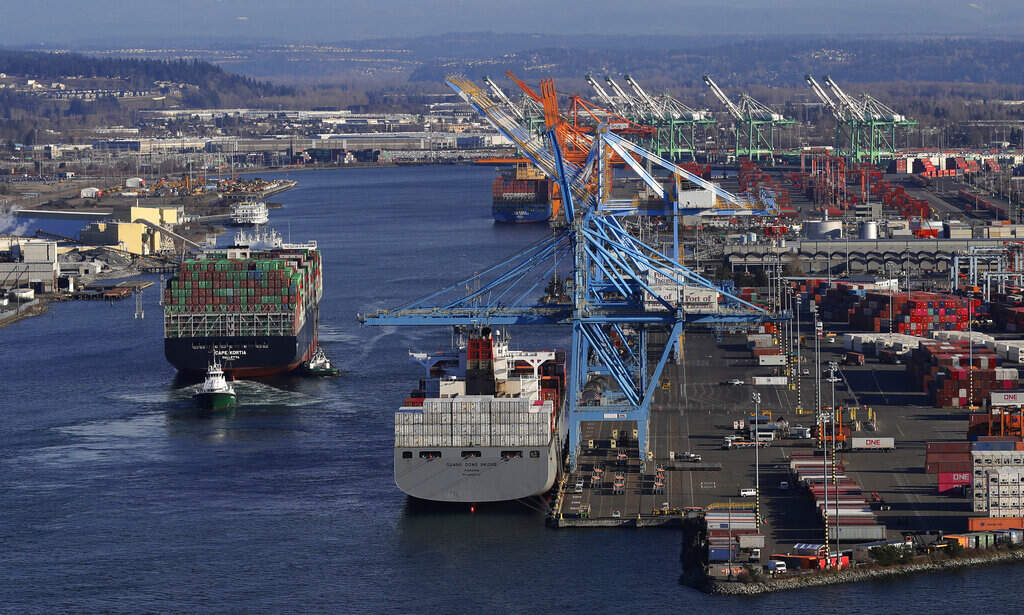
The world’s focus on growth - also known as GDP - has led to higher living standards, longer life and more jobs.
But it has also destroyed the climate and created mass inequality. Economist Daniel Susskind argues that what we need isn’t less growth, but less destructive growth. Is that possible?
Guest
Daniel Susskind, research professor in economics at King’s College London. He’s also the author of Growth: A History and a Reckoning.
Book Excerpt
Excerpted from GROWTH: A HISTORY AND A RECKONING by Daniel Susskind, published by The Belknap Press of Harvard University Press. Copyright © 2024 by Daniel Susskind. Used by permission. All rights reserved.
Transcript
Part I
(MONTAGE)
BARACK OBAMA: Today I'd like to talk with you about a subject that I know is on everybody's mind, and that's the state of our economy. Yesterday we received a report on our gross domestic product. That's a measure of our overall economic performance.
So we're at 3.3% DP. I see no reason why we don't go to 4,5%, and even 6%.
GDP numbers that are released today Indicate that the U.S. economy continues to turn in a fine performance. In the second quarter, real GDP increased at an annual rate of 3.7%.
And we need, in the world economy, a growth strategy.
Now, France clearly is one of the leading economies. And if you take job creation, growth, we are one or second in the eurozone.
We need a growth oriented, sound fiscal policy.
Once the pie stops growing, our system gets very polarized, and I don't think it actually works that well, unless you have growth.
From now on, it's got to be full speed ahead.
MEGHNA CHAKRABARTI: Growth. Specifically, economic growth. Even more specifically, growth of the gross domestic product.
American political and business leaders, international heads of state, the media worldwide. All obsessed with growth. A forever rising GDP has become the sacrosanct measure of a nation's well-being and of its power. To contemplate anything other than a soaring GDP is heresy these days, akin to wishing the four horsemen of the apocalypse to stampede amok from sea to shining sea.
But it makes sense, doesn't it? Because growing economies bring about higher living standards, more jobs, longer life expectancies. These, in fact, are indicators of national well-being. But they also come at a cost. With rising GDP as it's currently measured and valued, has come the climate crisis, resource wars, and rampant mass inequality. So is it time to dare to question our belief in unfettered growth? To wonder if nations can achieve a rising GDP, but somehow with fewer consequences? This is On Point. I'm Meghna Chakrabarti, and Daniel Susskind does dare. He's a research professor in economics at King's College London and author of the new book, Growth: A History and a Reckoning.
Professor Susskind, welcome to On Point.
DANIEL SUSSKIND: Thank you so much for having me, a pleasure to be here.
CHAKRABARTI: So I would like to start essentially with where you start, in terms of analyzing our obsession with GDP growth. Because as you note in the book, when we think about human history as a whole, from the time we emerged as homo sapien, growing economies or growing economic societies only encompass a blink of an eye of our time on earth.
Yes?
SUSSKIND: That's exactly right. What's so fascinating and the audio before really captured it, is the idea of growth and this GDP number, it just sits at the center of our common lives. The fate, the fortune of politicians, rise and fall, depending on whether that number rises and falls.
And yet what is so interesting is that before the 1950s, so relatively recently, before the 1950s, no politicians, no policy makers, no economists really were talking about the idea of economic growth. It's an incredibly modern and incredibly recent phenomenon.
CHAKRABARTI: And not only that, but in terms of human well-being, which is ostensibly what GDP is supposed to be a measure of, that didn't change for hundreds of thousands of years, until the Industrial Revolution.
SUSSKIND: That's right. Essentially human economic history consists of three facts. The first is that for most of human history, and that's about 300,000 years, economic life was essentially stagnant. So whether you're a hunter-gatherer working away in the stone age or a labourer working just before the Industrial Revolution, although your lives would have differed in lots of respects, fundamentally from an economic point of view, they would have looked very similar.
Both of you are likely to have been stuck in a relentless struggle for subsistence. And that only changes, modern economic growth that is significant and sustained, only starts about 200, 250 years ago. And that's the second fact, that exactly as you say, it's this incredibly recent phenomenon. The third fact, which is equally striking, is that human beings have managed to maintain that economic ascent.
So in that long period of stagnation, 300,000 years or so. There were brief flickers of growth, but they quickly disappeared and fizzled out. What's really interesting about the last few hundred years is that we've managed somehow to sustain it.
CHAKRABARTI: Notwithstanding temporary recessions, et cetera, but worldwide you're talking about. Yeah. It is quite remarkable. So then, as you said, we arrive at this very modern, or I should say, relatively modern, idea that measuring the economic output of a nation is, in fact, an important idea. So let's talk about how that came about. Because it starts in the 1930s, right?
With Simon Kuznets, he later won the Nobel prize for economics. What was he tasked to do?
SUSSKIND: That's right. It depends who you talk to. So I'm a British economist. I like to tell the story of GDP beginning in Britain, but I know American economists like to tell the story.
CHAKRABARTI: (LAUGHS) I'll allow it.
SUSSKIND: Yeah, that's very kind of you. So my story of where GDP comes from begins in the 1930s and what's interesting is that GDP gets its priority almost by accident. So what happens in the late 1930s and the 1940s is that the British government is at war. And a big question when you're at war is how much of your economy can you slice up and dedicate to the war effort, and how much do you need to keep behind for civilian needs.
And the great frustration for the British government at the time was that there was no way of doing this. There was no reliable measure of how large the British economy was and whether it was growing. And so in stepped, in the British version of the story, John Maynard Keynes the great British economist to develop in tandem alongside Simon Kuznets in the United States, this measure of how large the economy is. So that's the first moment in the sort of intellectual history of the idea of growth.
CHAKRABARTI: Can I just jump in here? Because before you get to the second measure, actually I'm glad that you jumped to Keynes. Because there's a critical difference between what Kuznets wanted to measure and what Keynes wanted to measure, right? Because if I understand correctly, Kuznets didn't actually think that military spending should be included in an evaluation of a nation's economic output, but Keynes did. And obviously because of the towering importance of the second world war, the Keynesian perception of GNP is what won out.
SUSSKIND: Yeah. And if you're a country wanting to project impressive economic credentials around the world at a time of conflict, a time of war, when you're spending lots of money on a war effort, the idea of not including that war effort in your numbers, you can see why politicians and policymakers lent towards sort of Keynes's thing, Keynes's approach, rather than Kuznets.
It was also interesting, though, what's actually going on there is quite interesting, too, because the reason they disagreed wasn't technical disagreements. They were moral disagreements, about not what the GDP measure does measure, but what it ought to measure. And Kuznets disliked the idea that something morally unpalatable like military spending, and other things like advertising and other parts of the economy, he thought weren't socially worthwhile, he didn't like the idea that these were included in the GDP measure.
And so very early, almost from the technical birth of this measure, you can see the debate starting that has continued for almost 80 years, which is, is GDP meant to just be a measure of what we get up to in the marketplace, a kind of technical measure of economic activity? Or is it meant to be a more moral measure of what matters?
And that's a tension that runs through the decades to come. And it's there really at the very beginning.
CHAKRABARTI: Yes, because I understand that Kuznets wanted to, he wanted to, or at least thought it would be important to include measures of services of housewives and other members of the family. And didn't think that military spending should be included, because he saw it as socially unproductive.
The reason why I point that out is because you're exactly right. This moral difference, it's totally eye opening to me. Because I guess in science, you end up valuing what you can measure and then you end up making decisions around those measurements. So if you are intentionally keeping things out of that system of measurement, they're not going to be part of your decision making.
And I think this is one of the things that emerges from your book, we'll tangle with a little bit later in this conversation. That has led to some quite negative consequences. But before we head to our first break, I want to bring it back to the U.S., wartime U.S.
SUSSKIND: And this time the story is in the U.S.
CHAKRABARTI: But I want to, let's listen to of course, President Franklin Delano Roosevelt. This is him on January 6, 1942, talking about why measuring the economy during wartime is very important. And this is during his State of the Union Address.
ROOSEVELT: We know that modern methods of warfare make it a task not only of shooting and fighting, but an even more urgent one of working and producing.
Victory requires the actual weapons of war and the means of transporting them to a dozen points of combat. It will not be sufficient for us and the other United Nations to produce a slightly superior supply of munitions to that of Germany, and Japan and Italy and the stolen industries in the countries which they have overrun.
The superiority of the United Nations in munitions and ships must be overwhelming. So overwhelming, the Axis nations can never hope to catch up with it. (APPLAUSE)
And so in order to attain this overwhelming superiority, the United States must build planes and tanks and guns and ships to the utmost limit of our national capacity.
CHAKRABARTI: President Franklin Delano Roosevelt, January 6th, 1942. We're joined today by Daniel Susskind. His new book is Growth: A History and a Reckoning.
There's much more to learn when we come back.
Part II
CHAKRABARTI: Professor Susskind, you said you wanted to bring the conversation back to the United States after the Kuznets Keynes debate. But I just wanted to say quickly, I was wondering if you're talking about Bretton Woods because it's not, that's actually not that far from where I'm based. And I've been in that room where sort of global capitalism was hashed out following the second world war. And it's wild to think of what happened in Bretton Woods, but that's not what you're talking about, is it?
SUSSKIND: No. What's interesting about that year that conference happens is that it's — and I think it's 1945. It's the moment when that seems to many people, think that's the most significant moment of that year. Of course, it's not really. The most significant moment of that year is a sort of a gathering of a few economists in a nondescript office building somewhere in Washington, D.C., where they agree that a measure that looks something like GDP is going to be the measure that countries collectively agree to pursue. Now we spoke before about how GDP as a result of the Second World War is created by the demands of war. What's the next stage in that story? Of course, though, is not the hot war off World War Two, but it's the Cold War.
Because what happens in the Cold War is that there are no traditional metrics to figure out who's winning. Territory gained and lost, weaponry destroyed, soldiers killed, those sorts of numbers aren't available. And so what happens is that the GDP measure, and in particular, relentless increases in the GDP measure, becomes a kind of proxy measure of who's winning that war. In part, it's for the reasons that we heard just before, because there's an idea that in the sort of, in the event that madness descends on the world and the Cold War turns hot, that whether the U.S. or the Soviet Union will win will depend upon the amount of military spending they can do and the size of their economy.
But there's also, of course, at the time, a broader battle of ideas going on as well. Between the market based system in the United States and century plan systems in the Soviet Union. And what this conflict does is it creates a period of really intense growthmanship where these countries are fighting a kind of economic war, competing to outgrow one another.
And that's what takes the GDP measure, which is created in the second world war, and really puts it in the sort of poll policy making position, the sort of relentless pursuit of. --
CHAKRABARTI: And that's why I snuck the word power in there in the introduction to the show, because again, it's not just considered a measure of national wellbeing, but an expression of global power, but just quickly.
So this is the early 19th, late fifties, early sixties. And as you said, there's this sort of commonly understood metric for then it was called GNP. But did the Soviets apply that to their nation at the time or no?
SUSSKIND: They had different measures. They didn't want to follow capitalist measures.
So they had their own numbers. And one of the great challenges of that time from the kind of U.S. standpoint was to figure out exactly how well the Soviet economy really was doing. Because at the start of the Cold War, the numbers that are trickling out of the Soviet Union suggest that they are actually winning this growthmanship, suggest that their economy is growing faster.
And this, of course, terrifies the U.S. into greater economic action.
CHAKRABARTI: This moral tension though that you explore in the book, obviously it does not go away even in the middle midst of the Cold War, and fascinatingly, it's, let's say it's surfaced within the Kennedy family itself, I would say, in two different points in time.
So first of all, here is then Senator John F. Kennedy in 1960. So obviously intensely during the Cold War when he was in a presidential debate between, obviously it was between Kennedy and then Vice President Richard Nixon. And JFK argued the way to win the Cold War. As you're saying, Professor Susskind, was to outgrow the Soviet Union.
KENNEDY: Therefore, if we are on the mount, if we are rising, if our influence is spreading, if our prestige is spreading, then those who stand now on the razor edge of decision between us or between the communist system, wondering whether they should use the system of freedom to develop their countries or the system of communism.
They'll be persuaded to follow our example.
CHAKRABARTI: That's 1960, and then Senator John F. Kennedy. Just jump ahead eight years, just eight years, and we have Robert F. Kennedy running for president. Now, I'm not necessarily suggesting that RFK disagreed with his brother on the importance of outgrowing the Soviet Union, but in a very famous speech at the University of Kansas, actually went so far as to highlight the things that GDP does not measure.
KENNEDY: Too much and for too long, we seem to have surrendered personal excellence and community value in the mere accumulation of material things. Our gross national product now is over $800 billion a year. But that gross national product, if we judge the United States of America by that gross national product, counts air pollution and cigarette advertising and ambulances to clear our highways of carnage.
It counts special locks for our doors and the jails for the people who break them. It counts the destruction of the Redwoods and the loss of our natural wonders. ... It counts napalm, and it counts nuclear warheads, and armored cars for the police to fight the riots in our cities. It counts Whitman's rifles and Speck's knives, and the television programs which glorify violence in order to sell toys to our children.
Yet the gross national product does not allow for the health of our children, the quality of their education, or the joy of their play. It does not include the beauty of our poetry, or the strength of our marriages, the intelligence of our poetry, or the integrity of our public officials. It measures neither our wits nor our courage, neither our wisdom nor our learning, neither our compassion nor our devotion to our country.
It measures everything in short, except that which makes life worthwhile.
CHAKRABARTI: Robert Kennedy, 1968. Professor Susskind, again, is the problem simply what GDP is measuring, right? It's national output, goods and services produced by an economy. Expenditure, or how much money is invested by businesses, spending by households, and obviously the government, and that's where military spending comes in a major way.
Business profits, individual income, government tax receipts. That's essentially what GDP measures. By focusing on those factors, those variables, what has our obsession with GDP growth brought?
SUSSKIND: Yeah. The Kennedy quotation is fascinating. You can really feel him drawing on those debates that were taking place 20 odd years before, between Keynes and Kuznets about whether, what the GDP measure ought to measure.
Should it just be a really narrow measure of economic activity, that takes place in the market as you're describing, or should it be a kind of broader moral measure of what matters? And the truth is today, when you look at the kind of objections and criticisms that people throw at GDP, there are two buckets of criticisms.
There are the kind of technical limits of GDP, which is that even on its own terms, if it's meant to be a measure of activity that takes place in a market, it's not a particularly good measure. It's got lots of problems. One is it only really captures the value of things that are traded in the market with a price attached to them.
And many things that are economically valuable and economically important don't have a price. If you think about the email service we use, the social media we engage, whatever it might be, we don't pay a price for those things. It also creates these sorts of really strange situations where if you marry your cleaner, for instance, GDP will fall. But if you send your parents to a care home, GDP will rise. So you get all these kind of funny adversities with the kind of technical. So there's all these sort of technical problems with the GDP measure. And, statisticians and economists and technocrats spend a lot of time debating and discussing those.
But there's also, and this is, I think, again, a really important theme in sort of history of growth. These worries about the sort of moral limits of GDP, not only as Kennedy suggests, that there are certain things that are socially worthwhile, that we don't include. But there are also many things that we think are not socially valuable, that we do include. And so there's a sense that if the GDP is actually meant to be a measure, not simply a narrow measure of what goes on in the market, but a broader measure of what we really value and care about in society, then it's flawed for a whole variety of moral reasons.
CHAKRABARTI: Yeah. I have to say, I was quite amused by a review of your book in the New Yorker, amused because I think they really captured your perception or your views of the limits of GDP as a measure quite well, because they quote you as saying that our global pursuit of endless GDP growth has led to a climate destroying, inequality creating, work threatening, politics undermining, and community disrupting present that we're living in now.
But then they identify you as being impatient with technocratic tinkering, that you don't think there's any sort of alternative mix of variables in GDP that would be an ideal measure of a nation's well-being. So in that case, and I'll allow that for now, but even though I think we do need to measure somehow, in some way. But in that case, then, doesn't that take us straight to the debate of, if we've got what we've got, why don't we try to aim for slower or no growth in GDP, given that it has produced all these negative externalities that you very rightly say are a major problem in modern life?
SUSSKIND: I think I know what the argument I'm making in the book is, which is that to think that the issues we have are simply issues of mismeasurement and measurement, I think are just wrong.
Exactly as you're suggesting, the issues are far bigger than, as I say, tinkering and tweaking with the way in which we capture GDP. We have this immense dilemma sitting at the heart of societies around the world, which is that on the one hand, growth appears to be associated with almost every measure of human flourishing. As we were hearing before, more prosperous societies, healthier societies that live longer, funding, cracking of the genetic code, exploring the stars, just a whole variety of extraordinary achievements have come through the pursuit of economic growth, but at exactly the same time, growth is also associated with many of the great challenges that we face.
Most famously, it's associated with the kind of the sort of environmental challenge that we're growing our way to a climate catastrophe, but it's also, and this is the argument of the book, associated with more than that. The price is greater. It's also increasing inequalities in society. It's encouraging us to pursue technologies like AI, who's disruptive effects on work and politics.
It's not clear we can properly control. It's also threatening the sustainability of particular places and local communities. And so one response to this dilemma and that enormous price is to say exactly that. We ought to not simply press pause on economic growth but even go into reverse.
And this is the argument that the so called degrowth movement is famous for supposedly making, it's an argument that began a few decades ago in the sort of relatively obscure debates of academics, but it's spread quite far and wide now. And you have lots of prominent people appealing to degrowth ideas, politicians in the UK like Caroline Lucas, environmentalists like David Attenborough, activists like Greta Thunberg, all appealing in different ways to this idea of degrowth.
So although I'm, I think, very critical of it in the book, I think it's really important to take it seriously on account of its growing influence.
CHAKRABARTI: Since you mentioned Thunberg, let's listen to her. This is climate activist Greta Thunberg speaking in front of the United Nations in 2019.
GRETA THUNBERG: People are suffering. People are dying. Entire ecosystems are collapsing. We are in the beginning of a mass extinction and all you can talk about is money and fairytales of eternal economic growth. How dare you?
CHAKRABARTI: Greta Thunberg in 2019. Now Professor Susskind, actually back in 2020, we did a show about different approaches to growth.
And in that program, we spoke with Kate Raworth, who's an ecological economist at Oxford. And Dietrich Vollrath, who is at the University of Houston. They said, Vollrath in particular said something quite interesting. That, you know, given GDP and the measure of what it is, it's actually just the wrong measure right now. Because, he was, he's saying that he told us that stagnant GDP, given what modern economies are, may not be such a bad thing, because it shows that the economy has shifted from the material basis of making stuff and consuming stuff to a more service based reality, which, it makes a lot of sense.
And I guess what I'm saying, I'm not sure if we, maybe we do have good measures for the value of those services, but perhaps is that an approach to degrowth, which would align more with how you think we should be thinking about growth?
Part III
CHAKRABARTI: And Professor Susskind, before we get to your bigger ideas on how we might get closer to achieving less destructive growth, I want to challenge you on your assertion that no amount of tinkering to how we measure GDP could be part of that solution. Because I guess I'm just a rampant realist on this, because ultimately policies are shaped around, whether we like it or not, two things, values, of course, and also things that we can measure.
And for that simple reason, GDP is going to remain an important metric. What if just we added three different measures to GDP, and I'm going to keep this in the American context, what if we added life expectancy, what if we added the amount of savings an individual has, and what if we added carbon emissions?
And the reason why I say that is because America has this giant economy. As measured by GDP, but at the same time, regarding life expectancy, we've seen the reversal of life expectancy for specifically working-class white men. We have a huge number of American households, even if GDP is going gangbusters, who don't have $400 in the bank to deal with any kind of financial emergency.
And of course, regarding the climate crisis, we don't even include carbon measures in the GDP. What if we just added those three things? Couldn't, wouldn't that be significant?
SUSSKIND: So I'm very sympathetic to the problem, which is that the things that we choose to count often become the things that count.
In a sense, that's what happened with GDP, that it began as this measure to figure out how big the economy was, and determine how much could be sliced up and dedicated to the war effort. It became a proxy measure of who is winning the Cold War. And then almost by accident, it takes policy making position.
And today it's got this unrivaled position in our common life. So I'm sympathetic to the idea that you've got to be very careful about what you count. Because that in turn becomes what counts. I suppose my worry is asking the GDP measure to do more. I think we should tighten it and ask it to do less.
I think the problem is that it has too prominent a role in society and we ought to give it less prominent a role. And just to give a flavor of my concern, very often my concerns that I write about aren't so much to do with the technical limitations of GDP. In fact, what I think we should do is a sort of GDP minimalism, where we try and make sure, as best as we can, that when we're measuring that very narrow measure, the amount of economic activity that takes place in a market, make sure we're doing as good a job of that as possible, but avoid trying to bundle other things into the measure.
And the reason I don't think we should bundle other things into the measure. Again, it's not so much a technical worry, it's more a moral one, that these questions about what else ought to go into the measure, and in turn, how much we ought to value those things relative to one another, those are not technical questions that can be answered by economists and statisticians and people working in central government offices.
Those are some of the kind of deepest, hardest moral questions we can ask one another, about what we value as a society. If we're in agreement, that what we choose to count becomes what counts, then the question of what we ought to count is a question not for technical experts and economists, but it's for citizens.
It's for politics. So just to bring that to life. Should we also say include a measure of inequality? Some people think that we should try and measure inequality and bundle that into the GDP measure. If we do that, what do we take out of life expectancy, savings and carbon emissions.
Suppose we take out savings, how then do we rank these different things that we've chosen? You just get into this sort of moral weeds, which I think it's important to get into, but I think the place to get into them is not in central government offices where people are trying to make this sort of ever better, ever more improved GDP measure.
I think the place to just to agree and disagree about these questions is in politics. So that's why I think it's a mistake. I think we should try and repair the kind of technical failings of GDP, but the idea that we might also repair it, sort of moral failings. I think is a big mistake, a big overreach.
We should be wanting the GDP measure to do less for us, rather than trying to patch together a measure and ask it to do more.
CHAKRABARTI: Professor Susskind, I ask the following question with the utmost respect, but how deeply tinted are your rose colored glasses about what's possible in politics today?
SUSSKIND: I think the book is in large part informed by realism.
It is part of what I'm anxious about in some of the responses to these challenges that we face, is the idealism. The idea, for instance, that we could press pause on growth or even go into reverse, the sort of thing the degrowth movement demands, leaving aside the kind of the consequences of that, which it would mean in practice, abandoning, if it meant freezing global GDP per head at its current level, it would mean abandoning 800 million people to extreme poverty.
Leaving that aside ... the more kind of practical, realistic political objection to it is if you don't want to leave 800 million people in extreme poverty, you're going to have to find a way of slashing the incomes of the 7.1 billion people that remain in the developed world.
And that's just not politically feasible. So I think the kind of political realism, being realistic about what we can actually achieve, I think is a really important part of the book. And I just don't think that tinkering and tweaking with the GDP measure is going to get us there.
It requires something more substantial.
CHAKRABARTI: But this sounds like a case of letting the perfect be the enemy of the good. If I can use that cliche, because the kind of consensus around which we would have to arrive regarding what our values are in order to help inform the decisions that you say we're currently relying on GDP to make.
I don't know how that consensus can happen. Again, I'm thinking in the U. S. context here, because of how fractured our politics are. It would almost seem to me that we would need a China style government there because the consensus is just simply, dictated from the top. So how would you get to a place where there was common agreement on what values should be, regarding how to measure or make decisions about a nation's wellbeing?
SUSSKIND: Yeah. So I do think that's a really important question. But I think there is a lot we can do before we get there. And this goes to the observation that you've made a couple of times, which is that a key theme of the book is not simply about how to get more growth, but how to get a different type of growth, how to get a growth that not only leads to greater material prosperity, but also doesn't destroy the environment, doesn't widen inequalities in society, doesn't unleash technologies like AI, whose impact on welcome politics.
We can't control, doesn't destroy traditions and local places and communities. So I think there is a kind of intermediate step where we can, in a sense, have our cake and eat it. We can get more growth and also protect these other things that we might value and care about without having to get into a kind of tussling disagreement about what it is that we value and care about.
But I do think you do, and this is where the book leads to, which is that sometimes there are difficult tradeoffs between growth and the climate, or growth and inequality, or growth and local places and communities. And I think it is really important that those debates about what we're going to prioritize and what we're going to pursue. Need to take place in politics rather than take pace in central government treasuries and fiscal departments and so on. The decision to include, say, a measure of the state of the environment in a GDP measure. Yeah, I'm very, supportive of that sort of idea. But there are many people in society who aren't supportive of that idea.
And the way to resolve that disagreement, the way to reach a kind of balanced dissatisfaction between different citizens is not to delegate the task to, again, technical experts and economists and statisticians and ask them to do it behind these kinds of complicated calculations, but it's to throw those issues out there.
To political debate and disagreement. And that's where, just to really answer your question, I think there are really interesting innovations happening and participative political institutions that can support these kind of disagreements and debates. Things like citizens assemblies, citizens panels, citizens juries, and so on, where citizens are brought together to debate some of the most, some of the hardest tradeoffs and questions we can ask one another.
I think that's a better place for these than in treasuries.
CHAKRABARTI: I would agree with you that any innovations in enriching the democratic voice of the people, essentially, in coming to conclusions about what we truly value as a nation are, they're much overdue and deeply needed.
We also have what's called elections, obviously. That's a form of that. And I point that out because I suppose what I'm struggling with is that it's not your assertion that GDP should play less of a role in how nations make decisions. I completely, I think that your articulation of that in the book is as eloquent as I've ever read, but there's also this sort of sense in how you're describing it now, that economics and politics are separate things, but in the United States, at least, they are absolutely not.
Capitalism is not just an economic system. It is a political system here, too, because capitalism informs our politics. So I just don't know how we could actually say, let's not let the pointy headed economists make some decisions. Let's let the people do it when the two are intricately intertwined. I think that's exactly right. And I think the way to think about what I'm talking about is not as a substitute for traditional politicians and great chambers of state, but it's as a compliment. Let me give you a kind of practical example, which really brings it home. In Asia, over the last, since the Fukushima disaster in Japan, there has been a lot of anxiety in that part of the world about having nuclear energy.
As part of the energy mix for fear of another disaster happening. And, it's not being contained to that part of the world, either. It's spread. And in Germany, for instance, they have developed an antipathy towards nuclear power, partly as a result of that disaster.
But anybody who spends any time studying our response to climate change knows that if we want to respond to the challenge of climate change, nuclear needs to play an important part of the energy mix. You cannot get more growth and also protect the climate without taking something like nuclear very seriously.
And so that put many politicians in Asia, in a real bind, many political leaders had committed to decommissioning nuclear energy on account of this disaster, on account of public safety. But at the same time, they also knew that if they were to reconcile the climate and growth, they needed to have nuclear as part of the mix.
And so in Korea, what happened was they put this issue to a citizen assembly. So a group of citizens were selected. They came together. They were briefed by experts, by politicians, by all the different people involved in this debate. They themselves, the citizens debated and discussed amongst themselves.
There was great coverage in the national media. And what the conclusion was from the citizens assembly was that yes, it was necessary to involve some, to have some nuclear energy in the energy mix. And so what that meant was that kind of citizen deliberation, that citizen participation, created a kind of political opportunity for the traditional politicians to pursue.
They were able to essentially make a U turn in their energy policy on an incredibly controversial topic. And that kind of political possibility just was not available before that assembly took place.
CHAKRABARTI: Bravo to that. Actually, we need more of that. But we've just got about a little over a minute left and I have been focusing on the United States or perhaps more broadly, let's say OECD countries, but why, in your call for GDP minimalism, why would any developing country want to do that, when in fact it is the laser like focus on GDP that has allowed the OECD countries to grow and increase the quality of life measures that we have been talking about.
SUSSKIND: Yeah, I suppose I think it's important just to keep in mind. I'm not saying that what we ought to do is throw the GDP measure out the window, not at all. But I am saying that I think we need to be very honest and upfront about exactly what it is that it's measuring, and it's a technical measure off the economic activity that takes place in a market.
That's what it ought to be. But for many developing countries, I think it's really important that these other things that we might value and care about, like the state of the climate, like the level of inequality in society aren't simply bundled into a measure. And citizens don't have a stake or a say in what those measures are, the kind of the global response to climate change is in large part going to be determined by the response to climate change in places like China, in places like India, and it seems to me a great tragedy to lose the opportunity to engage those billions of people in these discussions about what we ought to really collectively value as societies.
This program aired on September 6, 2024.