Support WBUR
Should the government give first-time homebuyers $25,000?
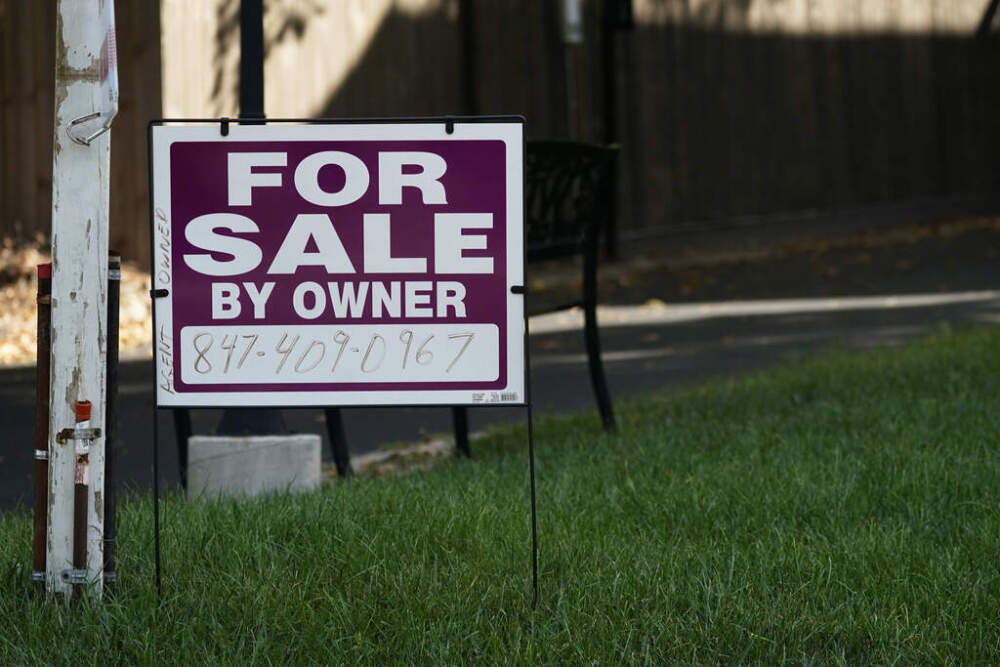
Vice President Harris proposes giving a $25,000 grant to first-time homebuyers to help solve America’s housing crisis. Many are skeptical.
But Florida’s Republican Governor Ron DeSantis has championed a similar program in his state.
Today, On Point: Should the government give first-time homebuyers $25,000?
Guests
Jerusalem Demsas, staff writer at The Atlantic. Author of the new book “On the Housing Crisis: Land, Development, Democracy,” a collection of her Atlantic reporting on the causes of the housing crisis.
Kevin Erdmann, senior affiliated scholar at the Mercatus Center at George Mason University. Runs the Substack the Erdmann Housing Tracker. Author of “Shut Out: How a Housing Shortage Caused the Great Recession and Crippled Our Economy."
Also Featured
Beth Bourdon, Assistant public defender in the major crimes division of the Orange/Osceola Public Defender’s Office in Orlando, Florida. She purchased her home with help from Florida’s Hometown Heroes program.
Karen Martin, 911 operator in Pasco County, Florida. She also purchased a home in Lakeland, Florida with assistance from the state’s Hometown Heroes program.
Ken Johnson, Christie Kirkland Walker Chair in Real Estate at the University of Mississippi School of Business Administration.
Transcript
Part I
MEGHNA CHAKRABARTI: You know that old election cycle saying about the most important issue to American voters every time? It's the economy, stupid. That one. This time around the axiom deserves a little refinement, because in 2024 it's two things.
It's the inflation and it's the housing, stupid. In fact, Back in May, a Gallup poll found that the high cost of housing was the most important issue on American voters’ minds, second only to inflation. A more recent poll from the Liberal Center for Popular Democracy found that 84% of swing state voters say the cost of housing is a big problem in their state.
And that's brought on a rather unusual flurry of presidential nominee policy bravado, which could be cynically called the illusion of a solution to the housing cost crunch. A couple of weeks ago, former President Donald Trump pulled this rabbit out of a hat.
DONALD TRUMP: We want to have land so we can have housing built in certain areas like this area. They don't have the housing. And we have so much land and we want to put it to use. So we're going to have land released and on that land we're going to build housing. We're going to have housing built.
CHAKRABARTI: Trump is referring to his proposal to open up federal land to build what he's called 10 new freedom cities.
For now, let's call it more of a concept of a plan, because so far, no details on how that would be accomplished or funded. Now, a modern-day homesteading movement actually has surprising bipartisan appeal. Vice President Kamala Harris also proposes repurposing some federal lands to build affordable housing.
But when it comes to that affordable housing, the type in shortest supply right now, last week in Tucson, Arizona, Trump was crystal clear about where he does not want those homes to pop up.
TRUMP: Finally, I will save America's suburbs by protecting single family zoning. The radical left wants to abolish the suburbs by forcing apartment complexes and low-income housing into the suburbs right next to your beautiful house.
CHAKRABARTI: On the other hand, Harris promised supporters in Pennsylvania last week that a Harris administration would supercharge a housing build a palooza.
KAMALA HARRIS: And so we are going to cut red tape and work with the private sector to build 3 million new homes by the end of my first term. (CHEERS)
CHAKRABARTI: That's about an additional 750,000 homes per year. For context, more than 1.4 million homes were built to completion last year, and estimates vary for the number of new homes needed to stabilize the housing market, anywhere between four to seven million. Harris says she'll kick off that building spree with another plan.
HARRIS: My administration will provide first time homebuyers with $25,000 (CHEERS) to help with the downpayment.
CHAKRABARTI: To many of the vice president's most ardent critics, she might as well have just tried to wave a joke shop magic wand.
(MONTAGE)
$25,000, free helicopter money is insane.
$25,000 handouts for a couple who just graduated from Harvard and want to scoop up their first starter home in Nantucket.
$25,000 will only make the demand higher.
Writing those checks is like putting rocket fuel on housing prices.
If you subsidize home buying without creating more homes, then the price of homes is going to go up, not down. You are not helping people. You are basically helping people who already have a down payment to outbid people who have less of a down payment.
Every homeowner would just raise their selling price by $25,000 to equalize the market.
Spending well over $1 trillion means borrowing well over $1 trillion, means even bigger deficits and debt creating, which means higher mortgage rates.
CHAKRABARTI: So a Democratic boondoggle, right? Or maybe not. Because what would you say if I told you that a similar housing assistance program has been repeatedly championed and funded by none other than the Republican governor of the state of Florida?
RON DeSANTIS: This is a hundred-million-dollar program that will provide down payment and closing cost assistance to more than 50 different professions, communities, when buying their first home.
CHAKRABARTI: This is On Point. I'm Meghna Chakrabarti. And in May 2022, Florida Governor Ron DeSantis stood proudly before a gathering of first responders, teachers and medical workers in Cape Coral to announce a new state benefit called Hometown Heroes. A $100 million fund set up to provide $25,000 to help eligible Floridians purchase a home.
DeSANTIS: So that will include all sworn law enforcement officers in the state of Florida, all paramedics, all firefighters, all EMTs, all 911 operators. If you're somebody that is here serving our community in those vital roles, you now have the ability through our Hometown Heroes program to get assistance to be able to purchase that first home.
CHAKRABARTI: The program now provides homebuyers up to $35,000 to put toward a down payment and closing costs. Hometown Heroes is funded by the Florida State Legislature and managed by the Florida Housing Finance Corporation. DeSantis says the idea is to make sure people can live in the communities where they work.
DeSANTIS: If they're want to recruit a police officer to work, say, for Cape Coral Police Department, it really matters if they can afford to have a home here and live in the community and shop in the same stores, to go to groceries and see everybody. Then if you have to commute from like far away, just because you're 45 minutes away, maybe, is where you can find a home that's affordable.
CHAKRABARTI: The Hometown Heroes program is a hit. The governor's office says in the first round, some 6,750 Floridians bought homes with the help from the program. The initial $100 million budget was exhausted in just a few months. And with DeSantis’s continued support, the program's funding has since been renewed for a total of more than $300 million since 2022.
It's also expanded to include some 100 different jobs.
BETH BOURDON: The amount of money that was personally loaned to me through the program is $21,975. There's no monthly payment on that. It's 0% interest for 30 years. It goes on as a 2nd mortgage to the home, and it gets paid off when you either refinance the home or sell the home, or if you're in it at year 30, it's like a balloon on year 30.
CHAKRABARTI: Beth Bourdon closed on her new home in Orlando just last week. She's an assistant public defender, and while she negotiated her purchase agreement, she prayed she'd get through the process before other homebuyers drained away the extremely popular fund.
BOURDON: The lender would tell me every day, there's $23 million left.
There's $17 million left. On August the 19th, there's $9 million dollars left. I was like, man, I really need to lock this today. And so we did lock it. And then the next day, the Hometown Heroes funding was gone. Beth says without Hometown Heroes, there's no way she would have been able to afford a house.
BOURDON: I'm not a huge fan of Ron DeSantis, but I thank him for putting me into this home because I wouldn't have been able to get in there without him. One day it's possible after I retire that I'll want to be closer to my children. And I think that's the only way that I would end up selling.
CHAKRABARTI: Ken Johnson is now a real estate professor at the University of Mississippi School of Business Administration.
But before that, he spent a decade at Florida Atlantic University.
KEN JOHNSON: We don't have enough units to go around. We just can't build them fast enough for the people that are coming into the state and then throwing in household formation. That's what's keeping house prices steady, if you will, in Florida. The one exception to that is Miami.
Their home prices continue to go up, unlike the other eight measured metros that we follow regularly.
CHAKRABARTI: In 2020, 97,000 permits for new housing starts were issued in Florida. That jumped more than 30% in 2021. Then, like the rest of the country, Florida housing starts declined, dropping 15% by the end of 2023.
That's according to the DeBary, Florida based trade publication Home Builders Weekly. Over that same period, home prices soared. In April 2020, the median price of housing in Florida was just under $300,000, according to the real estate company Redfin. Four years later, April 2024, that number had shot up to $450,000, a 50 percent increase. Did the Hometown Heroes program, which helped more than 6,700 Floridians into home ownership just in its first round, help push Florida home prices higher? After all, critics of Vice President Harris’ federal proposal often say –
BILL PULTE: Writing those checks is like putting rocket fuel on housing prices.
That was Bill Pulte, grandson of one of the home building industry's most successful founders.
CHAKRABARTI: But in Florida, Ken Johnson says you can't blame the Hometown Heroes program for Florida's expensive housing.
JOHNSON: The number of people going through the program compared to the overall size of the market was very trivial and did not have any noticeable price effect.
CHAKRABARTI: Could the same be said for a much larger federal program?
More than four million homes were bought and sold last year in this country. Vice President Harris's plan proposes to provide direct assistance to approximately 100,000 first time homebuyers each year over the next four years. Back in Florida, home prices are still out of reach for many people like Beth Bourdon, the public defender you heard earlier, and for people like Karen Martin.
She's a 911 operator in Pasco County.
KAREN MARTIN: So I've been renting since I was 18, and I've wanted to buy a home for a long time. In 2018, I finally felt like I had enough money together, and started the process, and was really shocked. I needed way more money up front than I expected. $15,000.
CHAKRABARTI: At the time, Karen had only saved up about $9,000.
She gave up on ever being able to buy a house. Karen, her partner, and their three kids made do in their rented townhouse. They didn't have a yard or very much space at all. But the Hometown Heroes program changed all of that. Karen received $13,000 from the state. Now, she and her family have a house on three quarters of an acre in Lakeland.
MARTIN: And that's what I wanted for my kids. I wanted them to go to the same school and really just put my roots down somewhere. And say, this is where we live now, and this is our community, and we finally have that.
CHAKRABARTI: So if the Hometown Heroes program is wildly popular and has helped thousands of Floridians into homeownership, is it so outlandish to think that such an idea could be scaled up to the federal level?
If the federal government gave $25,000 to select first time homebuyers, would that distort the housing market? Or is it the kind of creative solution needed to make a dent in this country's housing crisis? Especially if such a program has potential bipartisan appeal?
Part II
CHAKRABARTI: I'd like to introduce Jerusalem Demsas into the program now. She's a staff writer at The Atlantic and author of the new book On The Housing Crisis: Land, Development, and Democracy. Jerusalem, it's great to have you.
JERUSALEM DEMSAS: Hi, thanks for having me.
CHAKRABARTI: Your reporting has been stellar on this issue for a long time so let's just jump right to it.
What do you think about, let's start with the $25,000. It's worked in several states, not just Florida. Could it work at the federal level?
DEMSAS: Yeah, I think this is a really good question and the problem is that it's contingent on so many factors, right? When people criticize the Harris policy, they correctly note that if you give a people a bunch of money in a supply constrained market, to spend on that supply constrained good, you end up passing on that benefit to the person who already owns it. So if you have a few, only two houses for sale, and there are three people who want to buy them, or 30 people who want to buy them in reality. And then you give the 30 people like $25,000 more, and there's still only two houses, then the price of the home just goes up.
But the question is, will you actually get the new supply the Harris team is also proposing right. So when you're talking about Florida, for instance, which has a similar down payment assistance program as do many other states in the United States. That's a state that has built a lot of housing, Florida, unlike many of the states that are very desirable places, like California, Oregon, Washington, D. C. Boston, Massachusetts these are places where relative to demand have not built very much, but Florida has been building. But regardless, I think that when you think about the targeted program that Florida is offering, DeSantis has it constrained to specific types of jobs, I don't think anyone has done this analysis yet.
But I would expect that while you've made it easier for people who get that money, who are in those jobs to get into housing, the people who are similarly situated, people who are at similar income levels but maybe aren't a police officer or they aren't a public defender, those people might be worse off.
So it's really a tradeoff question. Yes, you're able to get some more people into those homes, but What are you costing?
CHAKRABARTI: And the Florida example provides us with another way to question a federal proposal like this because as we noted, because it's constrained to those essentially teacher, medical, first-time responder jobs in Florida, thus far we're talking around 7,000 Floridians that have been helped in a very large state.
So as you heard, it didn't really have any kind of meaningful impact on the housing market as a whole. Would the same analysis apply to Harris's proposal? Because she proposes to limit it to 400,000 first time homebuyers across the entire country?
DEMSAS: If, again, I've talked to her campaign, and they've said that they want to see the 3 million new homes built before they see that sort of $25,000 demand side benefit to kick in. And so if you have a ton of new supply flooded into the market, and I think that you could really help a lot of people with that demand side benefit with that $25,000 in down payment assistance. But if you don't get that supply and I think it's much more difficult to get more housing built than it is to just pass a tax credit.
That's a much more difficult thing to do. It requires much more than just the government acting, and often requires a bunch of different factors and financing and also just the general economic factors that are going on interest rates. But in general, it's much harder to deal with supply side policy, especially in the short run.
And as a result, I would expect that you get 400,000 people have an easier time getting into a house. But the question is, how does it affect everyone else who can't get into that bed?
CHAKRABARTI: Yeah. Okay, so by, before we move on, I just need to correct myself on one thing. When I said about 7,000 Floridians have been helped by the Hometown Heroes program so far, the 7,000 number applies to that first round of funding, that first $100 million that the Florida State Legislature put forth to the program. We actually called the governor's office and the state multiple times to see if we could get updated numbers on how many Floridians were helped by the program and they didn't respond to that request.
So I'm presuming it's going to be more than 7,000. So you said something really interesting there, Jerusalem and I'll be honest, it's actually something I didn't understand fully. The Harris administration says this $25,000 in tax credits, they would want to enact only after the 300 million new homes that she wants to build would be constructed?
DEMSAS: The 3 million new homes.
CHAKRABARTI: Sorry, did I say 300 million? Oh my god. I am out of it today.
DEMSAS: That would be a lot.
CHAKRABARTI: That would be like a freaking miracle. But 3 million new homes.
DEMSAS: Yes. This is something that they have indicated now multiple times, that they want that supply side impact to hit first.
Again, that timing, this is something I get, it's a campaign. They haven't had time to really sus out the policy side of this. And I'm sure that, if she were to be elected, that there would be a lot more jockeying about what this would actually look like, but they understand the general purpose of it.principle and have accepted the general principle that if you just juice demand when supply is so constrained, you don't actually help people that much.
CHAKRABARTI: Okay. But so then, I want to say, come on, Harris campaign, right? Like you're talking up to $25,000 in tax credit, but if the fine print says only after 300, 3 million new homes are built.
It feels like a lot of smoke and mirrors.
DEMSAS: Yeah, I actually think that my expectations as someone who's been covering housing for years now are very low. I've never seen it centered in a campaign like this before. And so the fact that you have a major presidential candidate, talking about housing and saying, we need to build millions of new homes, understanding the economics of that.
I think that's really extraordinary. I think that it's a campaign, so I don't know what their campaign strategy is. It seems that they think that down payment assistance sounds really good on the stump, and it sounds like something that she personally is very committed to. And to be honest, if I were to be betting, when you look at how Democrats have conducted federal policy in the past, I would expect that they have a lot easier time getting a down payment assistance policy through, than they do passing sorts of policies that would actually get three million homes built. So they're saying this now to, I think, indicate to us that they understand the economics of the issue, but the political economy of it indicates to me that it's actually going to be the reverse.
CHAKRABARTI: Yeah, you nailed it right there, right? They may understand the actual dynamics, but the political dynamics are something completely different. But I want to go back for one second to the fact that we have each party nominee talking about housing more vociferously than, as you pointed out, we've heard in a long time, just returning quickly to Donald Trump's plan.
I mentioned his proposal to build what he's calling freedom cities on federal land. No more like real detail coming from the Trump campaign than that. I should also note that he says that Housing demand would be temporarily cut back if he follows through on his pledge to deport undocumented immigrants from this country and then also, he wants to lower interest rates.
All right, that makes sense. But the president literally has no control over that. That's for the Fed to decide. And the Fed probably is looking to do that very soon anyway. So this makes me want to hear from you, Jerusalem, about realistically, what are the levers that the federal government, under any administration, Republican or Democrat, have to increase the supply of housing in the United States?
DEMSAS: Yeah, it's a great question and one that policymakers have been really working on over the last few years, as there's finally been some interest on addressing this problem. There’s several things that they can do. One of the big ones they can do is, and this is something that, as you mentioned, Trump has brought up, but also the Biden administration has discussed, is opening up federal lands for more development.
So areas that the federal government owns land that are useful for new housing. I don't think that the freedom cities idea, I'm not sure exactly how that's going to play out. I think building new cities can has been a difficult proposition. They've tried to do that in California recently, and they're having a lot of trouble.
But in general, there are federal lands and properties that exist really near cities that are often really underutilized and would be great for new development. But other than that, there's a ton that can be done on financing, right? So when it comes to making it easier, particularly when it comes to affordable housing financing, when you talk to affordable housing developers, they have a really tough time getting all of their financing to stack up.
When they're ready to purchase land and build affordable housing on it. And a lot of that has to do with deadlines and difficulties with lining up different financing streams, none of them are individually sufficient. So there's tons you can do in that space.
There's also stuff that you can do in terms of really pushing state and local governments. So the fundamental truth about housing is that a lot of the power is held at the local level. And this is something that I talk about a lot in my new book on the housing crisis. And it is clear that it is democratic states and local governments that have driven the housing crisis across the entire country, by refusing to build sufficient housing relative to the new jobs that they're creating and the people that are moving there. And the federal government has a lot of power to incentivize local governments and state governments. We send tons of money to state governments, particularly in the form of transportation dollars.
And we are allowing that to happen without conditioning that money on the promise that, hey, if we're giving you all this money to build new highways or to repair highways or to build train stations or whatever it is that you're doing with this, you have to make sure that those arterial areas are actually available to people for homes.
And if you don't do that, we're not going to give you that money anymore. So there's tons of work that can be done there. And I think that a lot of states would actually be really amenable to that sort of conditioning, because they're having trouble reining in local governments who are refusing to build new housing.
So I think that there's a lot that can be done on engagement with state and local governments, but also the power that it has to see really prominent people within the Democratic party, Barack Obama, Kamala Harris and others. Standing up and saying, Hey, this is the problem. The problem is that you're not building enough housing.
That can really help change the conversation in city halls across the country.
CHAKRABARTI: Oh, but that's not exactly what we're hearing, right? So Jerusalem, I'm so glad you brought that up. It is at the heart of the issue. And as I mentioned, your new book on the housing crisis dives into it in exquisite detail.
I want to come back to that in just a couple of minutes here, but let me now introduce Kevin Erdmann into the conversation. He's senior affiliated scholar at the Mercatus Center at George Mason University. He runs a SubStack called the Erdmann Housing Tracker and is author of Shut Out: How a Housing Shortage Caused the Great Recession and Crippled Our Economy.
Kevin, welcome to On Point.
KEVIN ERDMANN: Hello. Yeah. Thanks for having me.
CHAKRABARTI: Okay you are also similarly skeptical about the potential effectiveness of that first idea that we kicked off the show with, the $25,000 grant, essentially, that the Harris campaign is proposing to help people get into the first time homeownership, and why?
ERDMANN: Yeah, I think the problem is we really tightened mortgage access, I say we had a moral panic in 2008 about how important mortgage access was to making home prices too high, when as Jerusalem said, really, it's mostly about local supply constraints. And so really what's happening is a program like that is an upward, a regressive income distribution, that you have to run the gauntlet through these really tight underwriting standards.
And if you have enough money, if you're well off enough, then you get this extra bonus to help with your down payment. And really there are many families that would happily buy a home with their own money if they could run that gauntlet of the underwriting to get a mortgage. And so we really don't need to be subsidizing people.
We need to basically just allow people to buy homes.
CHAKRABARTI: Yeah. I've heard people describe the post 2008 process of getting a mortgage as even worse than a colonoscopy. But I just have to quickly question your assertion that there was a moral panic in 2008. That was the, back in the glory days, where we were giving mortgages to dead people or to people with no income and terrible credit and no down payment.
They could just walk in and sign a document essentially. So I think some of that moral panic was very justified, not even in terms of the issuing of the mortgage, but of the entire financial system structure and their wonderful creative and exotic products that fueled that.
So at least, we took care of that in part, I just wanted to note that. And that perhaps it wasn't too much of a moral panic. But let me ask you then, how would we get people or help people more easily with those safety measures, those financial safety measures in mind, more easily get into a mortgage.
ERDMANN: Yeah. I think the best way to think about it is there was this boom and bust from about 2004 to early 2007 in the subprime lending boom, there was this big boom that sort of came suddenly and then left suddenly. And through that period, there were Fannie Mae and Freddie Mac and the FHA that were just holding their own.
For the most part, they were still lending to the same families in the same homes that they had been for years or for decades. And after the subprime boom collapsed, because of the concerns about what had happened, standards were tightened in those institutions, greatly even compared to what they'd been doing before the 2000s in the 1990s or 1980s.
And so we swung the pendulum too far the other way. Really in a lot of ways it's not that complicated of a problem. We just need to go back to what we would have been doing in the late 90s before the whole subprime thing happened, and just do what we used to do, just reattain those previous standards.
CHAKRABARTI: Yeah. Jerusalem, I'm going to come to you in just a second but Kevin, how would that help us? Yeah. Okay. Making mortgages easier to get, how would that help the two-pronged problem that it seems like we have the shortage of supply and therefore the existing very high cost? Because I think you also note that the $25,000 for a lot of people, wouldn't even really make a difference because down payments are so large in so many of these markets.
ERDMANN: For the people that are locked out of the market, basically between the coast, anywhere between, say, Denver and Philadelphia, most of the country is in a position where the typical house is less than $200,000 or $300,000, and rents have gone way up in those houses, but actually prices in those parts of the country are still pretty moderate, and they're moderate because we locked all those families out of the mortgage market.
So for a lot of heads, for somebody living in San Francisco or New York City, it's hard to believe. But actually, for a lot of families in the country, affordability isn't necessarily the problem. Affordability is a problem for a renter. But a lot of families are living in houses where they're paying, say, $2,000 a month rent that they could buy that house with a mortgage that was only say $1,200 or $1,500, but they go to the bank and the bank says the CFPB is looking over our shoulder and they say we can't give you the mortgage.
Part III
CHAKRABARTI: Jerusalem, I'm wondering, I'd love to get your thoughts on what you think about Kevin's idea, that in terms of levers that the federal government has, sort of making, just getting a mortgage more feasible for people, might be, excuse me, a lever that we haven't yet pulled on enough.
DEMSAS: Yeah, no, this is something that housing policy researchers have pointed out for several years now, which is that the credit score that you need and the credit worthiness standard that you have to have in order to get a home now is perhaps too high. That we overreacted and perhaps misread the situation in 2007 and 2008. And because of that now, there are people who maybe have slightly lower credit score, but they themselves are not really a risk of defaulting on that mortgage.
They're not the person that we need to be worried about. And they're locked out of homeownership. And so they're required to keep renting, even in markets where renting is more expensive than buying a home. And so I think that's definitely a big part of the solution. For me personally, I think I'm more agnostic on whether or not people are renters or homeowners.
I think people should be able to make that decision for themselves, of course. And I think that like Kevin, I believe that the most important thing that any government can do is increase the supply of housing.
CHAKRABARTI: Okay. So on that point, let me put the following to both of you. Because earlier this month, we had Rana Foroohar on our show.
She's CNN Global Economic Analyst and also columnist and associate editor at the Financial Times, and she's a regular voice On Point. And we asked her this very question about why she thinks housing starts haven't been keeping up with demand for housing. And in fact, she brought up three factors, which we haven't discussed yet, and here they are, starting with supply chains.
RANA FOROOHAR: Housing is perhaps the most supply chain intensive industry in the country, in the world. You've got seven different supply chains that need to be flowing in order to build a house. You've got electrical, you've got insulation, you've got materials, wood, stone, etc. It's a lot going into one thing.
So you have multiple nodes that can be problematic, depending on what's going on in the world, what logistical problems you may be having in one place or another, and we're still having a lot of those, in part because of geopolitical conflict. You've seen trouble in the South China seas.
You've seen trouble in the red sea there. There are transport issues. There are shipping delays. That's the whole shipping industry is something else that's problematic right now. And that's where supplies come from. So that's point number one. Point number two is you've got this hit that happened post COVID where consumers, many people lost their jobs.
Consumers were in a tough spot. We buffered that I think very correctly. The Biden White House buffered that with a lot of fiscal stimulus to consumers, but that cushion has been spent down and a lot of inflation has risen during that time period. And so people are crunched, they don't necessarily have that deposit for those rising prices.
And at the same time, you've got the high interest rates. The builders are looking out at the economy and saying, we're not sure what's going to happen. Then, and this is a soft, squishy factor, but I think it's worth playing in. I do think the political uncertainty that we saw for so many months, I think it's dissipated a little bit now with Kamala Harris being the Democratic candidate, I think there seems to be a little more certainty, although I think it's still going to be a nail biter of an election, people in the industry look at that and they're hedging their bets.
CHAKRABARTI: So that's Rana Foroohar on this show earlier this month. Kevin Erdmann, supply chains, a lack of, or the reduced funding cushion that individuals might have now, and political uncertainty. What do you make of those three factors impacting the construction of new homes in this country?
ERDMANN: Yeah, I think she has some good points. And in fact, I think in the very short term it is, there is a supply chain constraint. Basically, we cut our capacity, after 2008 we over adjusted so far that we cut our capacity to build new single family homes in half essentially. And so we are hitting up against a short term capacity constraint.
Because we just permanently put a bunch of construction workers out of business and lumber providers and a bunch of sources of inputs. And so now we have to grow back into a new capacity. And so it is a short term constraint, as those constraints loosen, we definitely need to make sure the public policy gives every inducement to the builders to keep hitting that capacity as it can regrow because what we're building now is below probably what is a sustainable amount of housing to house new households in the country.
CHAKRABARTI: Yeah. So Jerusalem, there's another aspect of where these constraints are coming from. And that is one that also, by the way, has been mentioned on the stump by Vice President Harris, at least. And that is the home hoarding. That's been going on with Wall Street firms, private equity firms, and this is basically a carryover from 2008 again, when a lot of those toxic mortgages were indeed bought up by private investors. And also, especially in terms of impact on renters.
Airbnb. We have a lot of listeners in several cities who are like, I would love to rent except everything that I want in my neighborhood is for Airbnb type vacationers. How does that, again, back to the question of can the federal government do anything about it? Can it?
DEMSAS: Yeah, quickly before I get into that, I also want to double down on this idea of the federal government's concern about supply chains. The Biden administration has doubled Canadian tariffs on Canadian lumber, and they've increased regulatory costs on a bunch of inputs to housing.
So while I agree in the short term, there are some things that are outside of your control of supply chains. I think the federal government could do a lot to reduce the cost of housing by just simply making it easier for those materials to get in here at a reasonable cost. And then on this other question about these sort of different, often blind actors in the housing market, whether it's these institutional investors, folks often shorthand that to private equity firms or it's Airbnb.
I think that it's important to be clear eyed about what problem we're trying to solve. Institutional investors, there's some research showing that they are worse landlords, that they treat their tenants worse than comparable landlords. So I think that's really important for the government to be rooting out and to be doing inspections and ensure that there's actually the laws are being followed and that people aren't being taken advantage of.
But there isn't really evidence that these entities are driving up prices. The number of homes owned by institutional investors is barely a drop in the bucket. Even when you look at submarkets where you've seen a lot of investor activity, often that investor activity is small and medium sized investors.
These are people who own maybe under 10 units or under 100 units for sure. In some submarkets, that are really engaging this investor activity. And to be clear, the majority of that isn't is in multifamily housing where that has been, long been the trend, because how can an individual really own a large apartment building that can often be prohibitively expensive.
It would have to be an institutional investor or a large investor. But again, the number of homes that are owned by these entities is too small to really have significant market effects, that they can set prices is not reasonable. There may be other reasons why politically people want to get those entities out of the housing market.
They just don't like the idea of there being an institutional investor engaged in owning single family homes for whatever reason. But to be clear, those are not homes that are kept empty. Those are homes that are then rented out to other people. And so again, as someone who thinks that if people want to rent single-family homes, we should allow them to do it, is concerning to me to see that demonize, when we allow that to happen in the multifamily market. On Airbnb, there's definitely some research that shows in supply constrained markets that if you were to get rid of Airbnb and short-term vacation rentals, that you then are adding that supply to the long-term rental and market.
So that definitely could increase supply somewhat. But again, it's very marginal. What we really need is for people to build enough housing. So there's enough for people to visit New York City, where now visiting New York City, it can cost you $700 to get a hotel room, make it $500 because they've banned short term rentals except under some very specific circumstances.
And you have to balance that as a city, like you have to balance that as a government. Is your goal to eradicate that or to make it possible for all sorts of housing to be available?
CHAKRABARTI: Yeah. By the way, that Airbnb specific question came from an On Point listener in Austin, Texas, which is also a place that's got this housing crunch going on. Okay, so in the last few minutes that we have I basically want to come back down to the fundamental source, Jerusalem. This is what you say clearly in your book. Of the constraint, of the supply constraint, and that is local governments. Because it's really interesting to me that both current president, Joe Biden, vice president Kamala Harris, and Donald Trump are like let's just open up more federal lands.
Now that you think about it, it makes a lot of sense because they're not locally controlled. So it would be easier to build on federal lands. And I want to ask you Jerusalem, about how you write in your book that when we talk about zoning, what we're really talking about is perhaps something even more profound, and that is how opaque local governments can be, right?
How parochial, I live in Massachusetts and to defend parochial local government is the hill that people in the state will die on. You essentially say that local government gives some very anti-democratic vibes and that is really the biggest driver of the housing crunch in this across the country.
DEMSAS: Yeah. Anyone who's listening to this right now, I want you to think, do you know who your city councilman is? Do you know who your county councilman is? Do you know who your zoning board chair is? Do you know who chairs your historic preservation committee? Very likely if you're a normal person like most people you have no idea who that person is.
It's probable that you've actually never voted in your elections. If you have voted, you probably didn't have someone who was opposing, most races at the local level go uncontested. Even when they are contested, there's so little information available to voters.
How are you really making this decision when, even in the absence of local media, but also in the absence of really the ability to determine, even if there is local media, who's responsible? How do you allocate responsibility in a system that has so many overlapping political units, where everyone has some shared responsibility for these problems, but there's no one centrally to blame. And therefore, there's no one centrally to hold democratically accountable.
And when I make this argument, I want to be clear. I'm not saying that people in local government are bad or evil. I think that often they're very good people who are working very hard to try to make their communities better, but they are operating in the absence of Democratic signaling from voters and from the majority of their constituents.
And the people who do show up, the people who do engage, the entities that do engage, whether they're a variety of private interest groups, these groups are not representative of the public and they often have to block change in their communities, whether it's one person who is a NIMBY, a not in my backyard type, who just wants to block new development, no matter how good it is. Or it's a group that wants to block new housing, or new transit or homeless shelters or whatever it is that then impacts the entire city and the entire region.
And so you have this really fundamental problem where all the powers concentrated in local government for how we use our land. But there's no one holding them accountable. There's no one really speaking for the general interest of needing to build more housing, needing to build transit. The only people that are speaking are the people who are opposed.
CHAKRABARTI: Yeah. And I think I heard you say earlier that this is particularly a blue state problem.
DEMSAS: Oh yes. When you look at the places and the states that are building, they're talking about the Texas's, the Florida's, that are allowing new housing, new development, and you're seeing middle class people leave New York, California, and blue states to go to these places.
CHAKRABARTI: Because they can actually buy homes there. Okay. So Kevin, let's go back to something Jerusalem said, because as you can both tell, I've been trying to probe through this whole hour about given the realities that both of you have so clearly laid out, what are the actual tools the federal government has that could break this constraint problem?
And earlier, Jerusalem, talked about the combined carrot and sticks that come with, first of all, let's talk about the low-income housing tax credit. That's a $13.5 billion annual program. Perhaps more can be done there. But then she mentioned something even more fascinating to me, that we haven't yet seen the federal government or a president or a member of Congress say, Hey, let's incentivize states and localities to build more housing by, say, tying transportation, federal transportation funding to whether or not more units or more homes go up.
Really compelling idea, perhaps politically challenging. I'm wondering, Kevin, what you think about whether that's a possibility that's worthy of further exploration.
ERDMANN: Yeah, definitely. I think we have a very long-term dilemma, which is reversing this 20th century trend we had of making city building illegal, which we've really done in every city.
And a lot of cities for many decades were making up for that by building entry-level single-family homes out in the exurbs to make up for the fact that the inner parts of the cities weren't turning into duplexes and townhomes and brownstones. And slowly becoming a Brooklyn, or a Queens, or a Brooklyn or a Manhattan, as the city grows.
So that those sorts of pressures can definitely work. But that's going to be politically challenging and a long-term effort. That's why I really focus a lot on the federal government really does have a lever that they're fully in charge of, which is loosening up lending it at the federal agencies, Freddie, Fannie, and the FHA, which could have a more immediate impact, but definitely on all of these margins we need for the long-term growth of the country's economy and equity and growth all these margins need to be pushed.
CHAKRABARTI: Yeah. Okay. So Jerusalem, we've got about 20 seconds left. I'm going to give you the last word. Do you think that no matter who ends up in the White House in January of 2025, that any of these plans that we've been talking about from the candidates would have a meaningful impact on the current housing crisis over the next four years?
DEMSAS: Yeah, the real trouble is that housing and housing supply and supply side issues take years to fix. This is, we've built ourselves into this crisis over decades. It's going to take us a while to build out.
This program aired on September 18, 2024.