Support WBUR
Immigration, the economy, trust: How American voters are deciding in 2024
Since 2020, many voters have dug into their positions. Others have changed. Some have turned away from politics entirely.
Several Americans who shared their stories during the 2020 election, join us to discuss election 2024.
Guests
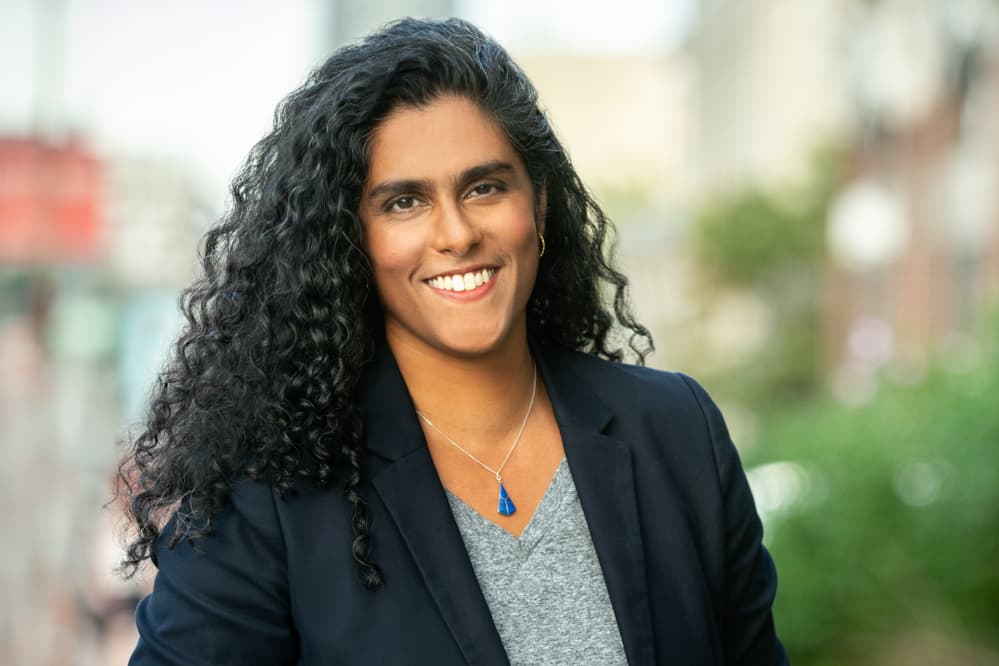
Bella D'Alacio, progressive grassroots organizer living outside D.C. She became politically interested in 2020 related to reproductive rights and bodily autonomy.
Cheryl Johnson, farmer in Iowa and runs a title company in Nebraska. Concerned about the budget and deficit.
Matt Powell, Matt voted for Trump two times (2016 and 2020) but is no longer a supporter. He is concerned about border security and price of groceries.
Transcript
Part I
MEGHNA CHAKRABARTI: Four years ago, we spoke with voters from across the country to get their take on the 2020 election. We asked them about what motivated their votes and what concerns they had going into that election. Today, we've invited some of those folks back to hear about how their views and hopes have shifted, if at all, for the 2024 election.
And really, it's a chance to do some deep listening to each other. Let's bring these folks back. Bella D'Alacio joins us. She's 24 and lives outside of Washington, D.C., where she works as an organizer with Stop U.S. Arms to Mexico. That's a project of Global Exchange. When we spoke with Bella back in 2020, she was a student at George Mason University, and then she talked with us in a roundtable on voters who were casting their first ballot ever.
That was in 2020. Bella, welcome back to On Point.
BELLA D'ALACIO: Hello, thank you so much for having me back.
CHAKRABARTI: It's great to have you back. Cheryl Johnson is also back with us too. She's a farmer in Iowa and also runs a title business in Nebraska. And in 2020, she joined us for a roundtable featuring people who had previously voted for Donald Trump in 2016.
Cheryl, it's great to have you back as well. Welcome back.
CHERYL JOHNSON: Thank you, Meghna, and greetings from the Midwest again. Hello there.
CHAKRABARTI: Our last voter coming back today is Matt Powell. He's a car salesman living and working in Orlando, Florida, and he spoke with us as a part of the same roundtable of people who had previously voted for Donald Trump.
Matt, welcome back.
MATT POWELL: Thank you, Meghna. It was nice to be invited.
CHAKRABARTI: All right, let me just get a quick check in with you since we're thinking about hurricanes in Florida. How are you doing? Are you okay in Orlando?
POWELL: Actually, I live up in St. Augustine in the far northeast corner of the state, just below Jacksonville.
We got some rain and stuff, had a couple of generators going, but all our power has been restored. Orlando has a lot of problems. And then, of course, way over on our west coast, has, there are parts that have been decimated again. If you're of a praying mind, those folks can use them.
CHAKRABARTI: Totally. We were looking at the images coming out of Tampa and it seems really rough there. But glad to hear that your home's okay, Matt. So what I'd like to do actually, oh my gosh, I just threw my pen across the table. Forgive me. What I'd like to do is start by just reminding the three of you, what you said to us last time, and then just check in on how the last four years have gone.
So Cheryl, can I start with you? And back in 2020 you talked to us about how you weren't entirely sure back then if you had been better off after the former president's first term in office, and you said it was still very hard to be a farmer and make a good living in rural America. So that was 2020.
How have the past four years been for you, Cheryl?
JOHNSON: Oh I've made some major changes in my life. But as far as the farming, it's not a whole lot better. And I could direct that with a lot of comments about the tariffs and stuff that were implemented and then carried through the Biden administration.
I made a big move out to Nebraska, and the irony is that the, and I think I commented about this last night time, and if not, I think with Mr. Willis I did, or Willis I did. Because the difference in the environments just between Iowa and Nebraska, and the tolerance of people within my own industry has been eye opening. And I'll put that back to the tolerance of the people on, say, the West Coast or in the cities for what we in agriculture production do, and the lack of understanding is, I think, is such a huge disconnect that we should work on that together. Because I think we are all good hearted people and we want the same thing for this country. Because as I listen to, and I love having these conversations, Meghna, because I don't learn if I don't sit to the table and ask questions and learn.
So have they changed? I made some changes in my personal life and stuff that may have made it better. But the cost of living, the interest rates have changed immensely. Our budgets are out of whack. And I'm talking personally, or it's hard to keep your household budget intact when things are increasing.
Continually like they are and let alone the government. How's the government going to budget? Be fiscally responsible, I guess, I should say. And that would be a huge question. And I hope that kind of gives you a little bit of.
CHAKRABARTI: Yeah. Can I ask you just a couple quick follow ups there, Cheryl? So you said you made some huge personal changes.
I don't know if that's something you're willing to talk about, because that just caught my attention. You don't have to if you don't want to, I just wasn't sure what you were referring to.
JOHNSON: No, that's fine. My husband was killed in a horrific farming accident.
CHAKRABARTI: I'm so sorry to hear that.
JOHNSON: I just made some changes.
And it was the hardest thing, because I have farm ground that has been in his family since it was settled. And it was, oh, wow, Meghna, you're going to get to the soft side of me.
CHAKRABARTI: I'm sorry, Cheryl.
JOHNSON: No, that's okay. It affects you and it affects you. And I've gone through a lot. And I know, we can talk about the whole stepped up basis.
I learned so much on that time. The whole unrealized capital gains. I have definite strong feelings on that, coming from agriculture and how to keep legacies going. Or family, yesterday I was at a meet and greet with Senator Ricketts, and conversation was about that very topic.
And you're out here in the Midwest where farmers, paper rich, cash poor. And it's hard to make a living, and that is a huge concern of those of us who are trying to continue a legacy. So I could go on and on but there are other guests here that I'd love to hear from too, maybe.
CHAKRABARTI: Cheryl, I'm so sorry to hear about your husband's passing and my heart definitely goes out to you. My father passed away two years ago. And it's still two years later, my brother and I are still helping my mother through the whole step-up basis, regarding assets. I know exactly what you're talking about.
It is a major confusing headache and nightmare. So I feel for you completely at the moment. But thank you for coming back and joining us anyway, even though through all of these changes. And let me turn now to you, Bella, when you were with us back in 2020, as I mentioned, you were a college student and you were casting your first vote in the 2020 election, since then, you've graduated.
So congratulations on that. And how have the past four years been?
D'ALACIO: Thank you. First of all, Cheryl, my heart goes out to you and Matt, as well. Both things that you have both been dealing with. I know the past four years have not been easy. I would say four years later, I know back in college I was really involved in the gun violence prevention movement. Because I had, when I had finished high school my senior year, the Parkland shooting happened in my community.
And so that's what got me into politics and politically awakened, and so four years later, I'm still thinking about how gun violence is still the leading cause of death for children and teens. And that's something that definitely scares me. But I think more so than ever, I think the thing top of mind for me is reproductive rights, just seeing the complete erosion of reproductive rights around this country.
I remember in college when RBG had passed away, and knowing the implications of that and what that meant. And now seeing four years later, how women have actually died to this federal abortion ban. And seeing just how emergency care is not a reality and having struggled with my own reproductive rights, and understanding the intricacies of how it's more than just abortion.
It's contraception. It's miscarriages, all those different things. It makes me fearful for maybe the next election, who knows how old I'll be, if I'll be married, if I'll be starting a family, what life will look like for me and what that means for my bodily autonomy.
CHAKRABARTI: Now, just to be clear you said federal abortion ban.
There is no federal abortion ban right now.
D'ALACIO: Oh, I'm sorry. Yes.
CHAKRABARTI: Were you referring to the Supreme Court case that overturned Roe?
D'ALACIO: Yeah, sorry, I misspoke. Yes, the Dobbs decision.
CHAKRABARTI: Yeah, Dobbs. I just wanted to be sure because I don't want anyone to think that the federal abortion, a federal abortion ban had passed.
That is not the case thus far. But let me take it back to you. I hear your passion around these issues, which many voters share. But in your life personally, the past four years, you're a young person just out of college. You graduated from college in the middle of the aftermath of COVID.
Then, Cheryl pointed to this. We had this massive spike in inflation. The job market was starting to come back, but it's just been a rocky time. And I'm wondering from the point of view of someone who's newly, a newly minted adult, how has that been for you?
D'ALACIO: Oh, it's definitely been difficult navigating like housing prices.
I know just getting an apartment has been really expensive. And that's something that I worry about all the time. My first job out of college, I was laid off after a year. So just dealing with all those different facets of the way that the economy is failing us has been really difficult. Things are 100% more expensive. So it's been so hard to just save money and save up to buy a house or save up for, I would love to go to law school. But saving up for that is extremely difficult, as well. Just because things are so expensive. So I would definitely say since college to now, it's just been so hard to save money and think about my future.
CHAKRABARTI: Okay. Matt, we've got a minute before our first break. Just want to give you that heads up. I'll definitely want to hear the whole rest of your story after the break, but get us started. How have the last four years been with you? Because back in 2020, you said that you were feeling good about where you were in life.
You weren't quite sure of how much the government had to do with that. So what have the last four years been like for you?
POWELL: Again, thanks for having me on. And it's nice to hear from Cheryl and Bella again. Four years have been not as good as they were. Ronald Reagan asked us at one point, are you better off now than you were four years ago?
And in some areas, yes. In some areas, no, but financially, absolutely not. I make a similar income, just have less of it to show for it. Because of inflation and the cost of goods and services and things like that. Fortunately, yeah, we stewarded our income well over the years. And we have a couple of kids off, two of our kids are in college and we have two more on the way.
So some of those things have been mitigated by our own personal lifestyle, but the business has changed. My business has changed dramatically over the last four years. And if there's one phrase that I just grow absolutely tired with, it's in these unprecedented times, which just is a word salad for we're not going to pay attention to you and we're just going to take what we want and make you do what we want.
I've lost pretty much all hope in the federal government at every single level. And I really think that my sister, who was a proud hippie in the '60s and early '70s, had it exactly right.
CHAKRABARTI: Hold on for just a second. I'm sorry to have to cut you off. We'll pick up with that when we come back.
This is On Point.
Part II
CHAKRABARTI: Today, three Americans who joined us in our series of roundtables back in 2020 on the 2020 election, they've chosen to come back today to talk to us about what their lives have been like these past four years, what their hopes for the country are.
Obviously, we're going to talk about who they're thinking about voting for, as well. Cheryl Johnson joins us. She's a farmer in Iowa and also runs a title company in Nebraska. Bella D'Alacio is with us as well. She works for a nonprofit right now and also a fairly recent graduate from college, and Matt Powell is with us.
He joining us from Florida and is a car salesman as well. Now, Matt, just before the break I'm sorry I had to cut you off there, but you were saying you don't have any faith in the federal government at all and something about your sister who used to be a hippie?
POWELL: No, she still is a hippie, but and I don't know how old you are, but the mantra then was two things.
Don't trust anyone over 30 and act local, but think global. And I think that's the right way to live. Now you can certainly trust people over 30, but the people that invented that phrase, by the way, are in charge now. So, but they want us all to trust the 90-year-olds. But I think you just have to take care of what's in your community.
Take care of your neighbors, your churches, your friends, your family. And because you're not going to start or stop the federal government. And I don't mean, it's not a sound of doom and gloom. It just is what it is. There is no bipartisan anything and just one Republican votes for a bill or one Democrat votes for a bill that doesn't make it bipartisan.
It's not like in the old days where they called each other names during the day and then went out and had drinks together at night. It's a whole us against them on both sides, and each side plays off the worst part of the worst element of the human psyche, and that's fear and anger. And what they've been successful doing, in large part, is making you and me, not necessarily you, but me and my neighbor angry at one another simply for what we think.
CHAKRABARTI: Yeah. So first of all, I wasn't alive during the hippie era but I am over 30 now. I gotta say, you gotta trust people over 30, if not all of them. But I take your point, so all of you have talked about economic pressures, all of you have talked about your views of, your concerns about politics and policy at the federal level.
So let's bring all that together. And I have a couple of questions for the three of you, but then, after that, please feel free to mix it up and talk with each other. Because like I said, I'm here to listen as well. So the first obvious question is, so who do you think you're going to vote for?
Who are you leaning towards this time around and Matt, let me start with you because you did vote for former president Trump in 2016 and 2020, has he earned your vote again?
POWELL: Absolutely not. And I look at this election and I think out of 360 million people, that these two buffoons are the best we can do.
CHAKRABARTI: Why has he in particular not earned your vote this time around? What's changed?
POWELL: The last time he ran he did a couple things that benefited me. He increased, or the tax he increased the tax code deduction for dependents, which benefited me. He, they eliminated some other taxes that affected me.
Buat the end of his term, he offered $2 trillion to Congress for infrastructure. And I think you probably remember that Congress denied or declined that offer simply on the fact, by the fact that they didn't want Trump to have any kind of victory before the election. Which tells you quite a bit about both sides.
I want to buy your votes and no, you're not getting to buy my votes, because then you're going to get votes. And in the meantime, he hasn't done anything to ingratiate himself to anyone. And I don't care about what he's been charged with, and what he's been convicted of. All those things are going to work themselves out.
My dad used to say, they'll work themselves out in the wash. But it's just, he has made it equally as ugly for one side as the other side has made it for theirs. And somebody made a comment earlier about and I think maybe you were just in the prep coming into it about this is the most consequential election in the history of the United States.
I've been hearing that almost all my life. And yet here we are, still in the United States, we still have the Constitution, we still have rights and privileges that many other countries don't have. We are still the destination place for all people who seek liberty and justice and equality for all.
We are still the shining light on a hill, and in spite of the federal government, I don't think the federal government ever did anything to do that since the creation of the Constitution.
CHAKRABARTI: Yeah. You pointed to that $2 trillion infrastructure idea. That indeed did happen.
There's, I remember in 2019. But we're just, I'm having Willis, our producer look up, because I can't remember what happened to that idea. I'm guessing COVID is probably the thing that happened, but we're going to find out exactly what, because really interesting point that you brought up, Matt. So quickly, Matt, then, if it's not Donald Trump, and I'm just going to make a wild guess, it's not going to be Kamala Harris either.
Who are you going to vote for?
POWELL: I make no selection in the presidential election.
CHAKRABARTI: You're going to blank it.
POWELL: I'm going to blank it and again, and I don't want to be fatalistic, but it really doesn't matter what the federal government does in Washington, D.C. And, Reagan used to describe it as that collection of leaders far away that has no idea what's going on in your community.
And really what is important is what happened for me, is what happens within the borders of Florida. And then within that, within the borders of my County.
CHAKRABARTI: Yeah. Okay.
POWELL: I take that very seriously. And then I think the rest of the folks in the country to just do what they should do, like they should vote their own conscience.
CHAKRABARTI: Okay. So let me turn this to Bella now. And Bella, especially I'm thinking, because you grew up in Florida, as you mentioned. But first let me ask you who has earned your vote this time around?
D'ALACIO: I am extremely excited to cast my vote for vice president Kamala Harris.
CHAKRABARTI: And why?
D'ALACIO: For a multitude of reasons and I want to start with what Matt, just said I know you said that you feel like the federal government, it's far away people that don't care about you. I am an organizer. I've worked in policy. I've worked in organizing pretty much ever since I was in college. And what that means is that I'm uplifting the most vulnerable voices from communities all around the country. Talking to people who are on the ground, who are worried about different issues. And for me personally, having worked in gun violence prevention with a youth led organization, March for Our Lives, we had created some policy priorities, and one of them was establishing a White House Office of Gun Violence Prevention.
Another one was for the Surgeon General to declare gun violence a public health emergency so that we can put resources towards it, because it is, like I said before, the leading cause of death for children and teens. And so we had opportunities to meet with Vice President Harris, President Biden. We've met with many congressional representatives, and we bring hundreds of students from all around the country to the House of Representatives, to the Senate, to talk about these issues.
And we were able to get these things done. They did listen to us. And I think about that. Four years prior, when Trump was president, when the White House fence was just so much further than it is now, and it was just so hard to get through to any of these senators or representatives they didn't want to listen to us.
And I think about who will listen. And when I think of who's going to listen? I think of Kamala Harris. And so to me, I think the Biden administration has done a lot for communities there. They did so much in the Inflation Reduction Act for climate to create good renewable energy jobs at home. The CHIPS and Science Act for manufacturing in the Midwest and all of these great pieces of legislation and broadband access for low-income communities.
So I'm thinking about all of those wonderful legislation that they've passed, and all of these policies that really reflect the needs and the fights of grassroots communities from all around the country. And so when I think about in the next four years, who was going to sit down and listen, who will actually be there to write legislation that reflects the policies that people who are directly impacted want to see. I think Kamala Harris is the best person to do that.
CHAKRABARTI: Bella, it's really interesting to me because you're communicating a faith and hope in the federal government that Matt doesn't share right now.
But what really interests me is that sort of same sort of cynicism that Matt is feeling about the federal government. I've heard often from younger people, from people of your generation, but you don't have that at all. Why?
D'ALACIO: I think that's just because I'm in a unique position where I work in policy.
So I get to see things on the day to day. I get to speak with my members and ask them these questions, but I don't think people realize that they have the right to do that too. And that our congressional representatives are exactly there to represent us and we are the people who hold them accountable.
So it's as much as our responsibility to be in their ear about the things that we want to see get done, as it is for them to do that.
CHAKRABARTI: Yeah. Cheryl, I'm going to come to you in just a quick second, but one more follow up for Bella. You said you're very excited to vote for Vice President Harris. I'm sure you're familiar with a constant critique of her, which is that once she became the nominee, the Democratic nominee, that it's really hard to pin down exactly what she believes, because she's gone back and forth on a lot of issues.
And I think that's a fairly well-established pattern. First of all, do you agree with that? And if so, or even if not, does that matter to you? Because, you're saying the federal government has the capability of doing a lot of important things to have an impact on every American.
But do you have a sense that you can trust what the Kamala Harris would do as president.
D'ALACIO: Yeah, I absolutely do trust her. I just look at her record and how much she's done for Americans from California to becoming a senator, to vice president now. And I think that she's always been for the people.
And I think this is a really unique moment where she had to step up to the plate in this situation to become the nominee. And so she has to bring in a lot more voters than she normally would talk to, she has to really narrow that opinion to appeal to more people and really represent America.
And I think that I don't think she's being wishy washy. I think she's just trying to take into account everybody's opinions and be the best representative in that sense.
CHAKRABARTI: Okay, Cheryl. Your turn, but first let me just close the loop on the infrastructure issue that Matt brought up. Because I've got the best people in the business helping me be sure we've got all the facts straight.
So Matt is exactly right, that there was that $2 trillion, excuse me, dollar infrastructure deal on the table in 2019. But then what seemed to happen is that after a first productive round of talks between Democratic leaders and then President Trump in May of 2019, the deal then crumbled soon thereafter following the release of special counsel Robert Mueller's report. Which Donald Trump objected to very vehemently, as we recall. And then there was supposed to be a second meeting about that $2 trillion infrastructure deal, but the former then President Donald Trump walked out of that meeting in three minutes, and that was the end of those negotiations.
Cheryl, let me ask you then, similarly, who, this time around, who has earned your vote?
JOHNSON: I'm not going to disagree what Matt said, at all, out of 360, how many million people, and this is what we can come up with. But I am, at least, I'm going to go vote, Matt. I've got to, because I feel like I can't have this conversation with the three of you if I don't have my vote and opinion, but then can I continue into this Meghna? Because I was making lists here as they were speaking and things that have concerned me.
CHAKRABARTI: Actually, let me just jump at first for Cheryl, maybe because your line maybe just glitched there for a quick second. Who are you going to vote for?
I don't think I heard that.
JOHNSON: Oh, I'm sorry if I didn't finish that. I'm going to vote for Trump.
CHAKRABARTI: Okay. Just as you did in 2016 and 2020. So go ahead then.
JOHNSON: Yes. And when Willis had contacted me, I babbled on of all the things. And if I don't address those, he may be very disappointed in me, and here are my concerns with Kamala Harris.
Okay. The fact that she's bounced around now, she was part of the Biden administration, the decision making, and now she's not, and she's trying to distance herself. There are issues with things that she did and didn't do in California that I would have concerns of. One of the things probably for me, the most, and Matt brought it up with his sister being a hippie, is that I'm a widow with a bunch of widows that grew up in the '60s, even though I was a young child in the '60s, and they have even told me, and they are all very much, they're Democrats, liberals.
They have told me that after all that they fought for in the '60s, this is not the person for them. And I find that surprising, because of everything that they laid the groundwork, for those of us now enjoying the Title IX, the women's rights that we do have. So that has bent my ear, and they too are voting for Trump.
The military. I have, the borders, the military, I have a soon to be nephew in law who is defending the border south of San Diego right now, and the things that he have told me that they can and can't do. And he said, I've witnessed women being raped. I've witnessed men being raped. I've witnessed people being beat up.
I've seen them being beheaded and disarmed, but you don't hear anything about that. That's a heavy burden. I've got fellow ranching farming people that are on the border and the demolition, the destruction that is happening on their ranch is no different than if I came to your homes and drove equipment or destroyed your homes where you're living and let alone, they're trying to make a living out of it.
I will, I'm disheartened with Matt and not in a bad way. I agree taking care of the communities, and we out here in Nebraska are a little more protected, very self sufficient, taking care of our own community. And this is the first time in my life I've ever lived in a town. I grew up on a ranch.
But who's gonna take care of this deficit? Who's gonna, what are we at? $35, $36 trillion dollars deficit. They want us to help pay for that. I think I have to care and take care of that. The whole FEMA issue right now. I have a daughter that is in Eastern Kentucky. Matt's living through this.
I'm sure, more personal level than I am, except for what I hear from my daughter. And what is going on with FEMA, and she's extremely proud of the people in agriculture or the construction companies that are coming in and helped immediately. And had hands and boots on the ground and hands on the table going to work.
And she said, and now that FEMA is involved, FEMA has slowed down the process. And in some places, are slowing down, getting the water, the food to the people that are in need. She also told that she's extremely proud of the farmers that have the ginormous drones that you can fly out in fields and control fertilizer, spray herbicide, whatever, that they are lifting up the necessities of the mountains and FEMA's getting mad at them and there are code words that they are developing. This all seems so shady when we should genuinely be there to truly, I'll use your word, hope.
Part III
CHAKRABARTI: Now, I have to say, I feel like, am I hearing something of a generational difference here? Because Matt and Cheryl, I'm listening carefully to both of you, and I hear a lot of frustration and a lot of concern and a lot of fear for the state of the nation.
But, Bella, you have an entire, your tone and the way that you're looking at possibilities seems entirely different. Bella, do you think, am I misreading that?
D'ALACIO: I don't think so. I think that there is a little bit of a generational difference. I think people of my generation are still concerned and do have very similar concerns, but I think that we are generally a little bit more hopeful, and I think that most of all, I'm excited for my generation to be able to hold more positions of power as well.
So that we can create the changes that we want to see, but I think that the past few years, we've been operating as a nation on a lot of just fear mongering, and I think it's ingrained in us to hate each other or see each other as the enemy. But I think that my generation has a good grasp of trying to see through that and really listen to each other and be inclusive.
CHAKRABARTI: Matt, you said something similar earlier about Americans being pitted against each other and fear being the sort of dominant emotion that politics raises in all of us. Does part of that have to do with what Bella was saying, that maybe you've just been around for such a long time, you've seen a lot that you're just like, I gotta take a step back from all of this.
POWELL: I think that's certainly part of it. When you're young you have the luxury of a Pollyanna outlook on life. And I don't mean that in a demeaning or destructive way. It's just, it is what it is. But there's nothing like experience to mold your thought process and your priorities. And I listened to Bella and I'm really, I appreciate your passion.
I really do. And I appreciate that she's taking good notes with what the government's done in the last couple of years. But Bella, the one thing I would ask you to do is now pay attention to the actions to what happens as a result of this, you mentioned the CHIP act, still not a one factory has been built.
Not one chip has been created. And you talked about the Inflation Reduction Act. Inflation is still up. And something about inflation that no one talks about, because I only look at the inflation number, is it's certainly inflation is 4.1%, which is down from last year. But it's still 4.1% more than it was last year, which was 6% more than it was a year before, which was 8% more than it was the year before.
Once prices go up, they almost never come down except in the housing market. And when the housing market prices come down, that's when the economy crashes. So don't be too tied up into what is reported based on someone's analytics that favor their point of view, look at your own life and see what your experiences are.
You mentioned can't buy a house. You can't buy a house. You look at rent, for crying out loud, rent is up because so many of these mega giant corporations have bought up so many rental properties that they get to control the price. So I appreciate your zeal. I truly do. But I've been around long enough to not share it any longer.
CHAKRABARTI: Yeah let me, Bella, I'm going to give you a chance to respond to that. But Matt, just a quick note about inflation. You're right. Obviously the absolute price of things is still much, much higher than it was a couple of years ago, because inflation is a rate, right? And unless we go into sort of negative territory, those prices aren't going to come down below where they were a couple of years ago.
So your point is well taken there. Just a little detail though, as of September, the inflation rate was down to 2.44%. But it's a rate again. I hear what you're saying. I just wanted to get the right number in there, but Bella, go ahead.
D'ALACIO: Yeah, thank you, Meghna. And I think Matt, I definitely understand your point about speaking to experience.
And I think I'm not just being naively hopeful. I am very much speaking to my experience. I grew up with a single mom. I grew up without health care. When I was a junior in high school, Trump was president, and I was homeless for a couple of months because the rent had increased so much in our apartment that we couldn't continue to pay for that or live there.
And so I was bouncing between cheap motels and my mom's friend's houses and just relying off of the kindness of strangers. So for me, that was a very integral experience that I think shaped my point of view. I grew up with Republican parents. I'm the daughter of Cuban exiles, Cuban immigrants.
And so I grew up with more of a conservative thinking, but I did very much look at my own life and the things, especially growing up in Florida, a Republican led state, where I felt that those policies had failed me. And by my senior year of high school, one of the deadliest mass shootings in the nation's history happened.
Where I used to drop my sister off every day at school and I used to, or I went to elementary school with those kids. And for me, having a school shooting drill the day before and a school shooting happening in my county just the next day, that was a huge wake up call. And so for me, looking at those experiences, looking at how my senators were backed by NRA money, and that's why they wouldn't vote on any gun violence prevention bills.
That's also what shaped my experience, as well. And now being a 24-year-old with access to abortion care in a lot of states around the country. I'm also looking at that experience and I do see solutions on Vice President Harris's platform that I think will help to mitigate a lot of these issues.
I know during the debate, Trump said he had concepts of a plan, but Vice President Harris released, I think, an 84 page economic plan, so I really do trust her, and I do trust that there are solutions to these issues, and that the experiences that I've had, experiences that I've communicated with members of Congress, they have been acted upon in the ways that we have asked for them to be.
So that's where I'm coming from.
CHAKRABARTI: Cheryl wondering what you think about what you've been hearing?
JOHNSON: I really admire Bella's enthusiasm and hope. And I'm probably a little tainted like Matt is, but yet I do work with a lot of youth, and I love to hear their voice and their positions. And like I said, I admire her hope.
And I probably don't agree with any of that. All of it just because of my experience. And I'm a little tainted, sorry about that Bella, but I think that I guess I think more on a world and that's probably because of its farming and way our products are shipped all around the world. And what happens in China, what happens in Brazil, South America, what happens in India, are we shipping proteins.
All those countries are commodities are being used as negotiating tools on the world trade market for those, whatever, if it's chips coming from China, or the number of vehicles, or whatever. So I have a completely different perspective and listening to Bella. I'm like, wow, I, myself don't think about things, like when she said she was homeless.
I've never had to live like that, I don't know what that's like to feel that way. But to hear her say that and I know she's not the only one. But I might be a little bit in a bubble out here and I don't mean that in a bad way and don't take that As a bad way, I'm pretty proud of where I live and where I come from. And in her situation, she's frustrated with the government and in my head, I'm listening to that and I'm thinking, no different than those people on the mountains in Eastern, the Carolinas, not Eastern --
CHAKRABARTI: Western North Carolina.
JOHNSON: Yeah. Yeah, and I mean that so it's a good conversation and I'm as little as she knows about my world. I could say the same and whereas I'm going to say with a little clarity here that she was relying, because of her situation, on the federal government. And where I live and grow up, I've never looked and I don't think I raised my daughter and my husband.
We never looked to the federal government for consistently for that kind of help, even though there are federal programs for the government, and we can, that's a whole another topic of a discussion. I appreciate all the conversation.
CHAKRABARTI: This is really, so sorry to interrupt you Cheryl, because this is really interesting, because I hear different versions of what Americans relationship with the federal government should be.
And you did hint at the different ways the federal government has an impact on people's lives. And just to, if you can forgive me, just to be clear, the federal government has a big impact on farmers lives, right? In terms of federal farm subsidies, you had mentioned tariffs earlier, and when there was that tariff war in the Trump administration. Between the United States and China, that really hurt prices for farmers in the United States, so much so that the Trump administration had to then actually, the USDA was writing more checks to keep farmers afloat. So in a sense, don't we all rely on the federal government in one way or another? Cheryl?
JOHNSON: Yeah. It's sad, isn't it?
I'd like to think I'm independent and can do our own thing, but in a way, and go back to what Matt, that's a frustrating part. You know, that we are all so, and I get Matt, correct me if I'm wrong. He wants to step back and leave me the heck alone. Or am I, do I have that wrong, Matt? I guess I don't know.
And that's why I'm saying, sitting here having this conversation with Bella, I'm like, Wow, I've never had to live out of a car. And to think about that. And so I'll think about that and I would love for the people, for her, to understand where we're coming from and that, okay, those government subsidies.
Yeah, there's a federal insurance program that yes, I do pay for. That is also, that whole, our whole government farm plan. A huge part of that is the SNAP program. Huge part of it. And so that's why I say there's a whole 'nother discussion. Long discussion, and it's a complicated discussion, like the stepped up basis, you know what I mean?
CHAKRABARTI: Oh, you're like sending alarm bells going off in my head. I've had to spend like dozens of hours on the phone dealing with this. So I could, geez. But Matt, Cheryl was asking you about if she started reading your position on what you want from the federal government, right or wrong.
POWELL: I am a, what I would call a classic conservative. All I want out of the federal government is lower taxes and a smaller version of it. I think it's, to Cheryl's point, it's got its tentacles into everything, at such a high level. You almost can't have a conversation about any policy.
That you can't say the federal government is either harmed or helped. And it really should be that way. The constitution was explicit about the size of the government. Our lives have been built around community. And we just have folks that are there, that if you can have a job in Washington for 50 years, as a congressman or a senator or a whatever, that's a problem, because at some point you lose all touch with your community.
And of course, we're not going to see any kind of term limits anytime soon, because then it just affects their power base, but that's really the problem. They can come and stay there forever and do very little. And claim a lot just because they got a headline about something. And Bella, I say that that I'm a classic conservative because we have redefined liberalism and conservatism over the last 20 years.
And they don't mean anything like what they were intended.
CHAKRABARTI: Yeah, no, that's a really good point, because Trumpism is not classic conservatism at all.
POWELL: Not even close.
CHAKRABARTI: Yeah, maybe on the tax cuts front, but the rest of it is not at all what you believe in, Matt. We've only got about a minute and a half or so left.
Which is so unfortunate. I'm so grateful to be able to listen to all three of you. But Bella, I'm just going to give you the last word here. Because Matt talked about something important, that may be part of the collective frustration that Americans have, regardless of one's political viewpoint, is the calcification of power in Washington.
I really hear that. And you had said a little bit earlier, it's kind of time for a generational change. So I'm just wondering what your thoughts are on how to reinvigorate people's belief in the federal government.
D'ALACIO: Yeah, of course. And I wanted to clarify like I never lived off of federal assistance programs or anything like that, but I did look to the federal government and took action based on my own lived experiences.
Like I mentioned earlier, I had worked at March For Our Lives, and now we have our first Gen Z congressman who was my former colleague, Congressman Maxwell Frost out of Orlando, and to me, that is inspiring. I think if you are someone who has these concerns. Call your representative. Call your senator. Get in their ear.
Don't just let them sit it out. Don't think these powers are bigger forces than who you are. You are the power. The people are the power. We are who they are held accountable to. And if you really think that your representative isn't doing the right thing, I encourage you also to run for office. I think we can complain a lot, but we have to take action.
I had a terrible past growing up, but I took action. And I'm seeing the positives of that action that I took, and the ways that people have listened to me. And I guarantee that if you are consistent, if you care, just take action, talk to people around you and lean on each other. Don't listen to the big forces that are telling us all to hate each other.
Just have conversations like this and figure out what we as America, your local community, what we want.
This program aired on October 10, 2024.