Support WBUR
Why U.S. overdose deaths are dropping
For the first time in decades, drug overdose deaths are decreasing in the U.S. Federal data show a roughly 15% drop from 2023 to 2024. What's driving the decline?
Guests
Keith Humphreys, professor of psychiatry at Stanford University, where he studies addiction.
Shreeta Waldon, executive director of the Kentucky Harm Reduction Coalition.
Also Featured
Brad Finegood, Leads the overdose prevention efforts for Public Health - Seattle and King County.
Transcript
Part I
DEBORAH BECKER: The staggering drug overdose death rate in the U.S. has dramatically dropped, according to the latest federal statistics. Some say it's the most significant decline in overdose deaths recorded this century. But what seems like good news is also ambiguous. According to some drug experts, the decrease could be attributed to better access to treatment and addiction medications such as methadone and long-lasting buprenorphine.
That's according to Brad Finegood, who works on overdose prevention for Seattle & King County Public Health.
BRAD FINEGOOD: Access to methadone has expanded. Access to buprenorphine has expanded. We are starting to deploy long-acting buprenorphine shots so people can get a shot of buprenorphine, and it lasts for a month. And people really seem willing to do it. In King County, we also are standing up walk in behavioral health crisis centers where people can just walk right in. For a long time, detox was the front door. But if people can walk into a place, get care, and get access to medication on demand without barriers, then that gives me a lot of hope.
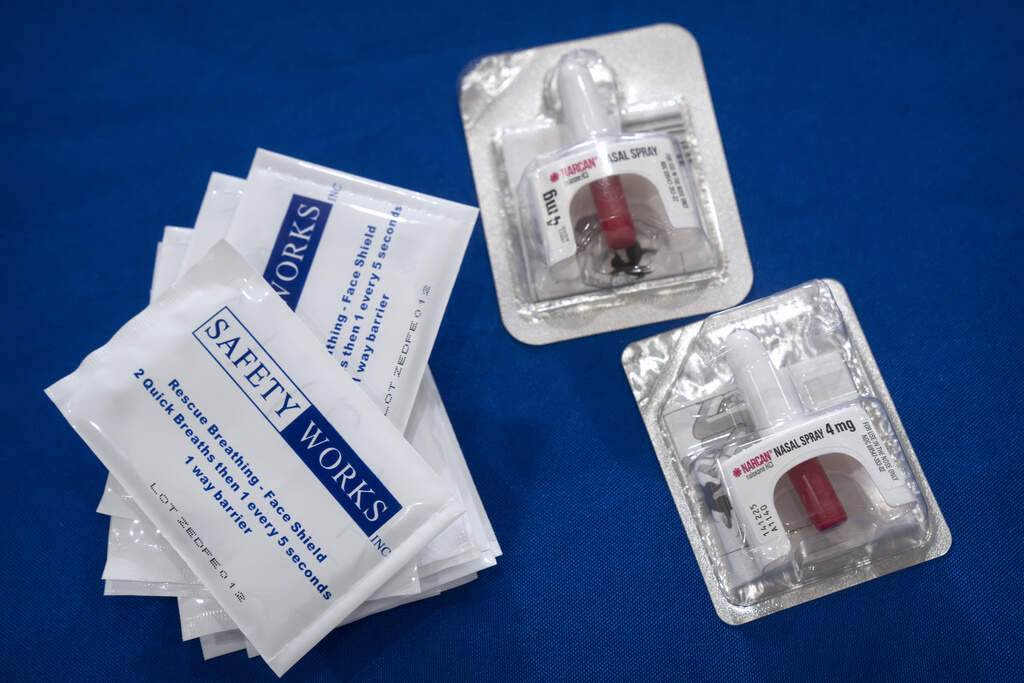
BECKER: Finegood also says the overdose reversal drug naloxone has helped reduce deaths. His department distributed 90,000 naloxone kits in the first nine months of this year. While it's likely that myriad reasons are behind the decline in the overdose death rate, most public health experts say it's not yet time to think that we're making our way out of the ravages of a more than decade long opioid epidemic that's killed more than a million Americans.
Joining us first to talk about this is Keith Humphreys. He's a professor of psychiatry at Stanford University, where he studies addiction. Welcome to On Point, Keith.
KEITH HUMPHREYS: Very happy to be here.
CHAKRABARTI: So these numbers from the Centers for Disease Control and Prevention suggest that between June of 2023 and June of 2024, overdose deaths fell by about 14.5%. And these are provisional numbers, but a significant drop. What's your take here?
HUMPHREYS: First, I have to say, I'm delighted to finally have something good to talk about. After working on this problem for more than 10 years, and the despair that it causes, I have to say, personally for me, but for communities, it has felt like we were never going to turn the corner.
So this is welcome news, and congratulations to everybody who's on the front line trying to produce it. The question now is, will this last, will this be sustained, or is this like a cash bonus? One year that we shouldn't assume is going to be our standing income, and we don't know the answer to that part yet.
BECKER: And let's talk about, also, there are huge differences here, right? Some states saw drops. If we look overall, it's a 14.5% decline, but some states saw increases. Alaska, perhaps, most notably. I think the overdose death rate there was up almost 40%.
What do you make of these huge disparities among the states?
HUMPHREYS: Yeah, that is a very important point to raise. We have geographical differences in that the older fentanyl markets and fentanyl spread in the United States from the east to the west are doing better now. They're showing larger drops.
Whereas you go out west, the drops are smaller, and sometimes, as you noted, there are increases. The second is that these drops are not being experienced comparably throughout all economic classes and all racial and ethnic groups. Indigenous communities who have suffered, really more than I think any other group in the United States, throughout the entire epidemic, are still suffering.
Just one example, access to treatment is not comparable. Life is not comparable. There's more poverty. There's more stress in some communities than others. That's a very good reason not to say, we're done now. Because we definitely have a lot of work to do.
BECKER: So when we say, let's just clarify this. Older fentanyl market, that means when the synthetic opioid fentanyl first came on the scene or was detected in the drug supply, that's an older market where it's been around longer. A newer market, where it was more recently introduced or found in the drug supply. In those newer markets, are you theorizing here that perhaps people aren't used to fentanyl and therefore it could be more deadly in those newer markets, than it is in markets that may have adapted to the potent nature of fentanyl?
HUMPHREYS: That's exactly right. We have only one country to judge these sorts of dynamics on, which is a small country in in Northern Europe, Estonia, which has had a fentanyl dominated market for 20 years. And when fentanyl first appeared, many people would go to their dealer and think they were buying heroin, but they were instead were buying something far more potent, and there was an enormous spike in death rates.
But it moderated over time, for two reasons. One, the people who couldn't handle fentanyl passed away. And the second reason was eventually every dealer and every user knew fentanyl was there. That's what they were selling. And that's what they were buying. And so you didn't have surprise deaths anymore.
That's the situation we have out east, where it's been there for a decade. It is not the situation we have in places like Nevada, or actually some parts of California, where the drug has been around for a couple of years, but there's still going to be a lot of people who aren't aware of it, and aren't expecting it to be in their drug supply.
BECKER: So it's moved from east. The east is the older fentanyl market, moving from east to west. So we see steeper declines in the overdose death rate in the east coast as opposed to the west.
HUMPHREYS: Correct.
BECKER: Okay. So what about reasons? Also, so these are the numbers, a lot of disparities here, a lot of discrepancies.
We're not quite sure why. It could be because of the familiarity with the potency of fentanyl, but it could also be a lot of other things going on, which is likely, right? So we also know that there's more so-called harm reduction, where folks are given supplies to help reduce the dangerousness of drug use, and also the fatality rate of drug use.
There's also medications, and there are fentanyl test strips to test for the presence of fentanyl in drugs, so people can use accordingly. Are all of these factors in the drop or how would you describe those?
HUMPHREYS: It's very important in trying to explain the drop to differentiate things that are good and things that could explain a dramatic change in the last 12 months.
And let's start with naloxone. Now, you mentioned that's the drug. It's called an opioid antagonist. If someone's overdosing, it will usually restore their breathing fairly rapidly and stop them from dying. We, Stanford University, had a partnership with The Lancet, a medical journal, and we had a commission that I led.
And the modeling done by that study showed that expanding access to naloxone was the biggest lifesaving policy that we had. So if not for that, the opioid crisis would have been much, much worse. We wouldn't have been having 100,000 people. We've had 120,000, 130,000 people dying a year. That is very good.
However, that wouldn't account for a dramatic change in the last 12 months, because we've been putting naloxone out there pretty aggressively for many years. So while it is good, it wouldn't explain why this sudden drop. For that, you have to look at something that is qualitatively new in the last 12 months, and that's probably not going to be on the naloxone side, harm reduction side, with the treatment side, even though those all save lives, got to look outside that window. What is new in the last 12 months? And that's why people are looking as more plausible explanations, one, the changes in supply, old markets versus new markets. Perhaps a change in the strength of the drug.
And then the second thing we shouldn't forget, and I assume we can't forget, we just went through a COVID pandemic, and during that pandemic, overdose rates were jumping up by 30% in some cities, in just 12 months. Now, as COVID wanes, all the bad things that COVID did, which greatly accelerated the advance of overdoses, are now gone, or at least mostly gone.
So there should be a dividend from that, and that is something plausible to talk about over that 12-month period. Because COVID disappeared about 12-18 months ago.
BECKER: So where were we? Pre-pandemic and then in general terms, could you explain to folks, so where were we pre-pandemic, what happened during the pandemic, and where are we now?
Is this drop really all that significant then?
HUMPHREYS: We've been on a growth curve for drug deaths in the United States, sadly, since the 1970s at least, which is as far back as we have data, on an exponential growth curve. And some years that's been a little higher than that, some years a little lower, but it's been pretty steady, just mostly year after year, and that's what we were on up to 2020.
Then we saw this huge departure from history by COVID, where it just soared up to levels, I'd never seen in my career growth that fast. Now what we're back to is the curve we were on in 2020. So if you looked, if you disappeared, the years of COVID, and you just charted the death rate of this epidemic from say, 2015, '16, '17, '18, '19, '20, and then 2024, it would actually be right on this line.
The drop is just relative to COVID. The drop is not relative to how the epidemic was progressing to that point. That's why, although I celebrate this, obviously, fewer deaths is always good. I am not going to relax, because I know this could be a one-time change, and not something enduring that I can just assume will continue into the future.
BECKER: And also, because we do have more awareness, more treatment, more naloxone, we have all of those things to help reduce these numbers. Maybe we, should we be saying, this isn't really all that significant at all. It should be much more dramatic than this if you take all of those things into account.
HUMPHREYS: Without all those things, it is the absolute numbers would have been much, much worse. So if you look at these years where we broke over a hundred thousand deaths, which is horrific, if we, let's say we didn't have any overdose rescue protocols, and we didn't have any FDA approved treatments, that number might've been 150,000 people.
So they're making a big difference year after year. And we need to have them, and at the same time, they didn't, their availability didn't change that much in the last 12 months to explain this drop. So we want to keep them, and we want to, ideally, I think, in the best society, the availability of overdose rescue and of treatment would be greater than the availability of fentanyl, if we could get to that point.
Because people face that choice, people who use face that choice every single day, and we want to make it as easy as possible to make the healthiest choice. And so it's worth trying to push towards that, as a way to help resolve this epidemic. Although again, that would not explain this recent drop.
BECKER: And again, just so we can summarize here.
You think the main things are changes in the drug supply, and really coming off a pandemic where we saw a huge increase in overdose deaths. Those two things.
HUMPHREYS: Yeah. Those are the two most plausible things and they're noncompeting. Both those things could be true. We always have to say about the drug supply, this is an illegal business.
So all of us are in the dark, we're inferring things, talking to people who use on the street, talking to people involved in interdiction. There's been some very good journalism about the business itself down in Mexico, for example, which should point that way. But there is a lot of guesswork in figuring out what are drug cartels doing and how is that affecting the streets of our cities.
Part II
BECKER: I'd like to bring someone else into the conversation now. Shreeta Waldon. She's executive director of the Kentucky Harm Reduction Coalition in Louisville. Her group works to treat addiction and cut the number of overdoses and deaths through education and by providing materials such as syringes and naloxone. According to the latest CDC data, Kentucky had a 20% decline in overdose between June of 2023 and June of 2024.
Shreeta, welcome to On Point.
SHREETA WALDON: Hello.
BECKER: Tell us about your work in Louisville.
WALDON: Harm reduction is definitely making a way here on the ground in Louisville, but throughout the state of Kentucky, for the last 10 years, as we have, we're right here at the head of our decade of doing services here on the ground and engaging, educating, and empowering the community with overdose prevention, with access to harm reduction resources, with access to treatment and recovery resources for decades, since 2014.
And today this weekend starts our celebration. So I'm pretty excited about that.
BECKER: Your celebration of 10 years is this weekend.
WALDON: It is. It actually starts today. We're doing a three-day weekend, journey through harm reduction, an unbound journey. Yes. Yes, we are.
BECKER: So why do you think that the overdose death rate has gone down so dramatically in Kentucky?
Is it in large part because of harm reduction, or are there a lot of other things going on?
WALDON: Yes, absolutely. Harm reduction is. I call it, it's a part of the ecosystem of recovery. Without harm reduction, we would not have seen this decrease. However, I pause when I say we have a decrease, because what our governor did share back in June of this year was that although we can celebrate a decrease that we've had, which is an amazing feat, the decrease really only captured our white community here in Kentucky.
Our communities of color continue to see a disparity, as far as our numbers continue to rise. And that's what's disheartening.
BECKER: Why do you think there are disparities like that?
WALDON: That's really complicated and complex to unpack. One of the biggest things that I've shared with people is we have to think about the connection and lack of engagement in our health care systems, right? When we look at treatment recovery beds, which, that's the world I come from. I'm a licensed clinical alcohol and drug counselor.
And my first part of my career was spent 15 years in drug and alcohol treatment. And we always recognize that the beds that were made available were not filled with communities of color. So it's the lack of engagement, and truly understanding how to meet people where they're at. That is the heartbeat and the foundation of harm reduction.
How do we do that? And I think that we struggle as a country, but more so as a community, on how to do that in a way that centers people first, and not punitive actions, which is the failed war on drugs. We know that the failed war on drugs targeted communities of color, especially in a crack epidemic, back in the '80s.
And it was not treatment first. It was criminalized. So trying to take that mindset and that traumatizing effect it had on an entire community of folks that are left in the shadows is very complex.
BECKER: I want to talk about the effect of naloxone, because it's logical, right? If you give out a medication that reverses the deadly consequences of an overdose, and fewer people die.
And we spoke with Kevin Donaldson, who uses drugs on the streets in Burlington, Vermont. And he told NPR's Brian Mann this year that he thinks that really more people are surviving because they have naloxone, and they know now to use with others and to not use drugs alone. Here's a bit of what he said.
KEVIN DONALDSON: I feel like some of us have learned how to deal with the overdoses a lot better. For a while, they were hearing about it every other day. But it was not the overdose we heard about a couple weeks ago, maybe? That's pretty far and few between.
BECKER: That's Kevin Donaldson, who uses drugs on the streets in Burlington.
What do you think, Shreeta? Is it just a logical assumption to say we have a proliferation of naloxone, so fewer people are dying, or not quite that simple.
WALDON: It isn't. I appreciate you having his voice to this conversation, because that's a part of harm reduction, making sure the people who are most impacted are involved.
It's more than naloxone. When you're engaging all the communities, I will say this, our communities, our brothers and sisters here in Kentucky, who are from our white community, have a more open and relaxed conversation around drug use and drug culture. When we're trying to connect with Black community members, we have to not negate some of the other issues that are happening in the social justice world, right?
We can't leave out what's happening that's harmful, when we're talking about law enforcement, everybody across the world, right? Saw what took place here in Kentucky with law enforcement and Breonna Taylor. And so imagine me walking into a space saying, I want to talk to you about naloxone, and I don't want to talk about the crime rate, and the disproportionality of gun violence and children being lost, and all of the things. I have to be able to pivot and address both end, and that's where we are making traction. So this is not a downer conversation. We are seeing more and more Black communities, Somalian communities, Latino communities, getting more involved, because we're opening the conversation to talk about both end, all things.
My conversation is probably going to be 45 minutes longer when I'm going into the West end of Louisville, because I'm going to talk about all things, what's happening in the West end of Louisville. We're going to talk about the increased rate of police surveillance in the West end of Louisville. And I'm going to talk about overdose prevention. Versus going into the east end of Louisville, where I could go right in and talk about drug use ... and all the access out there.
So just being able to pivot. And I think our agencies that are more diverse with communities of color leading this effort are more realistically connecting with communities, because we're not going to leave people out.
BECKER: I want to just ask Keith Humphreys something, because what certainly a lot of us have been seeing and reading particularly in the past year might be construed as a bit of a backlash.
To harm reduction efforts, folks who are asking for different types of things regarding drug use. And saying that giving people supplies or helping people is really condoning drug use, and a tougher approach is needed because this may not be working. Shreeta, I'm going to ask you about that, but I want Keith Humphreys to weigh in on this first.
And Keith, for you to tell me whether, is that an accurate assumption of what's going on right now? Is there a bit of a backlash to harm reduction efforts?
HUMPHREYS: Certainly, out where I am that is the case.
BECKER: Which is near Stanford.
HUMPHREYS: Yeah, so San Francisco. Further north, Oregon, Washington, up into British Columbia.
But I think what I would characterize, it's a reaction to a certain understanding of harm reduction rather than harm reduction tools. I haven't really heard people say anything negative about naloxone anywhere, and I travel a lot around the country. Or syringe exchange, and we have syringe exchange places like Indiana now, like evidence-based tools that save lives.
When people think that's harm reduction, most people think it's a good idea. What has happened was it's acquired some, I would say some baggage, that when people think, oh, when you mean harm reduction, you mean tent encampments are okay. You mean that crime and shoplifting and violence should not be stopped.
You mean that someone can use drugs on my front porch, and I can't do anything about it. When people think it's that, of course they have a more negative reaction to it than when they think of it as a set of public health tools that is there to save lives, including it someday may be the life of somebody that you love.
BECKER: And Shreeta, do you suspect that there is a bit of a backlash to some harm reduction efforts?
WALDON: Absolutely. Here, there's a lot of education efforts that we're trying to do to explain what harm reduction really means here in Kentucky. The truth of the matter is our syringe service programs, they, we see here at Kentucky Harm Reduction Coalition, we're close to 90% are white individuals that come and access our syringe service programs.
What we're talking about is route of use. And if you look at communities of color, we're not going to see a large amount as high as we do in our white communities, of Black individuals who are openly using syringes. On the other side, is there is smoking, there's inhaling and what our government and what our legislators are trying to learn, and are a little bit more receptive now, is there are health implications when people are not using sterile supplies.
So that conversation is very sticky. I get it. I'm a licensed clinical drug counselor. So I think people have just a misunderstanding around substance use, around addiction itself, still continuing to believe that it's a choice, that people are choosing to end up in these situations, so there's a lot of unpacking, which is why it's a part of our pillar to educate our community on what's happening with substance use in the drug supply on the street.
BECKER: Keith mentioned that this, of course, is not an exact science by any means, and it's hard to really gauge what's happening here in an underground illegal world. But I do wonder, do we think that the fentanyl that is in the drug supply at the moment is less potent.
There's been some suggestion that it's been adulterated in such a way that makes it not as immediately deadly as it used to be. Shreeta, I want to go to you first. Do you think that may be a factor here?
WALDON: No, I think that people don't understand drug culture, right? On the streets, because we have our staff, our outreach specialists are made up of teams of people with lived experience.
What we have recognized is there are people who are actually using and have been using substances where they built up this, and forgive me with my words. I'm trying to wrap everything around. But they build up enough to be able to continue to use. They have learned the tools of not using alone.
They have learned how to use the naloxone. These are active drug users. So in this culture, they are taking care of themselves. What we see is people who have, been, there's a fatality. What we are learning is that these individuals are part of the, we went to parties. We went to do something different.
We went with our friends, and I didn't know what was going to be in there. That's a separate group. So when people are seeing people continuing to live, you're talking about people who are actively using drugs, which is a part of our community we have taught very well, which is why you see the decline, but that rise that you see is we're talking about, when I was a youth, when you guys were youth, everyone has a story about when they tried something for the first time.
Unfortunately, when individuals now try something for the first time, they can, it could become a fatal situation. That's what we're learning on the ground. And that's the difference between folks who are sitting in offices and just collecting data, but not getting the context behind the data, which is being out there in the streets, doing outreach, connecting with the community.
That is not a sit behind your desktop. ... I go out with my teams. I put on my gym shoes and do it.
BECKER: This is On Point. I'm Deborah Becker. Also, though, let's talk about, if we go back to drug supply Keith, we've heard a lot about the tranquilizer xylazine, and we're seeing reports that is increasingly found in the drug supply.
This is a sedative that can slow breathing, but apparently it can sedate someone so much that they don't need as much fentanyl to stay high, so that could actually be reducing the overdose death rate? What are your thoughts about xylazine in the drug supply?
HUMPHREYS: Yeah, so it's an interesting speculation.
I have to say that's all I can say about it. You could imagine that maybe then because the high lasts longer, I use fewer times today, and therefore my risk goes down. But on the other hand, naloxone doesn't affect xylazine. And xylazine deoxygenates the skin and does damage to the body, which you would think over time, might increase mortality.
So I don't know. I just leave it as an interesting idea, but on net, at the moment, I can't really be confident that xylazine is a net benefit for health. It could just as easily be a net loss for health.
BECKER: We also, when we were talking with Brad Finegood about his overdose prevention efforts with Public Health Seattle King County in the state of Washington, he mentioned something else in the drug supply something known as BTMPS which apparently is an industrial chemical. So let's listen to what he says about this substance BTMPS in the drug supply.
FINEGOOD: That's an industrial cleaner that's started to show up in our drug supply, that we've been able to detect. We don't know what the impact of BTMPS is.
People have reported a different smell from the drug and a little bit of different impact, but it's hard to quantify that on a mass scale. So whether or not that's impacted overdose deaths rates or not. It's hard to tell, but it is something that we've seen that's correlated around the same time.
BECKER: So used to be heroin and then it was fentanyl and then it was xylazine and now it's this BTMPS.
It's hard to feel like you can keep up with all the substances out there and their risk, right? But Keith Humphreys, is heroin even on the streets anymore? And what do policy makers do when things like industrial cleaners are coming into the drug supply?
HUMPHREYS: Yeah. A really good question about heroin.
If you just thought of this as a market, you would say fentanyl is the ultimate disruptive innovation. It beats out heroin, because the production price is about 1% as high. It's much harder to seize, because there's no farm anywhere, there is for heroin. There's no 7,000-mile supply line where you can grab the supplies.
So fentanyl is just beating it out as a business. It's very hard to find heroin out here in the San Francisco Bay Area. We still see some, fair amount of heroin deaths in old, very old established markets like New York City. But I could easily imagine that in 10 years there won't be heroin, any more than you find morphine addicted people like you used to, before heroin out competed that.
The other point you're raising, and I would point people to, the New York Times had a nice coverage of just chemists in Mexico. People who make illicit drugs are trying new things all the time. They're putting in all sorts of different drugs, different combinations of drugs, different potencies.
Remember, they're unregulated. They can do whatever they want. And we see, all the time, a new drug emerges, it's there for two, three, four, five months, and then it disappears, and then some other combination comes back, so it's very tough to stay on top of all of that.
Part III
BECKER: We're talking about the steep drop in the U.S. overdoses death rate. And, Keith, before the break, you mentioned a recent New York Times piece that talked about the Mexican drug cartels actually recruiting chemistry students to make new chemicals that could be infiltrated into the drug supply. That keeps everybody guessing about exactly what is going on with the drug supply and how to control it.
But right now, there's a bit of celebrating going on for this drop in the overdose death rate. And we're talking about the myriad reasons behind that. But I'm wondering, what about demand? What are we doing about demand and about the fact that the U.S. just seems to have an endless appetite for these.
HUMPHREYS: If you look at the history of epidemics, no epidemic has ended by waiting for people to become ill and then throwing a lot of resources at them. Epidemics end through prevention, when fewer people start getting sick. That's how COVID waned, that's how HIV and AIDS waned. And that's why we need to do work on the prevention side.
Shreeta, like me, has spent, her efforts working with people who are addicted. That's super, super important, working with people who already use drugs. But in the long term, the way we get out of this is if people just don't start down that path in the first place. And it's been hard to persuade people of that, partly because they have memories of lousy D.A.R.E. programs when they were in junior high, which were ridiculous, and partly because our political system doesn't think ahead very well. So it's tough to persuade people. Why don't you allocate things for kids, especially kids growing up in tough neighborhoods, and the benefits will be five or 10 years down the road.
That takes some leadership and it's not always there. A lot of people thinking, but I'm up for election in 18 months. I can't do that.
BECKER: Shreeta, I did see some research suggesting that fewer young people are becoming addicted to opioids. Does your on-the-street view confirm that or not?
WALDON: First, I want to say, I really want to meet Keith because --
HUMPHREYS: Likewise, Shreeta. Come visit.
WALDON: You said some wonderful things and so let me pivot back. Addicted, meaning dependence, it's hard to say, I don't particularly like giving a diagnosis of dependence to youth because they're still developing. So that I cannot firmly say, make a comment about. What I can say is we are seeing an increase of substance use.
We're seeing an increase with overdose. Here in Kentucky, in Louisville, Kentucky, one of our largest school systems, the first day of school at eight o'clock in the morning, a youth was rushed to the hospital because they were in an active overdose. They did survive. But this is what we're talking about, right?
Is that the youth are the next. As we look at the next wave of who's actually in this epidemic and whose numbers are rising, is our youth, because they are the ones who are being missed. As Keith said so eloquently, the war on drugs did not help, and we're still trying here in Kentucky to use these prevention efforts that are led in the law enforcement or justice, Department of Justice mentality.
No, I'm not seeing a decrease in use of our youth. I'm seeing an increase of youth using substances.
BECKER: We were supposed to be using, communities across the country were supposed to be using monies from opioid lawsuit settlements to do prevention and to help with treatment and to help address this.
And we're talking multi-million-dollar settlements. But both of you weigh in on that. Shreeta, are you saying seeing some of that money and couldn't that be used for prevention and to help young people?
WALDON: Absolutely. And I will say, kudos to our government. Our organization, Kentucky Harm Reduction Coalition received in the first rounds, $500,000 for our efforts for over 18 months.
And we were part of about 22 organizations. There's some very diverse, small grassroots organizations, all the way up to hospitals, and they require collaboration with other community partners. What we're seeing with the new attorney general, though, is that they want to pivot and involve more law enforcement.
And I'm a little disappointed with that. They are also, it's a semantics thing, right? Harm reduction is a part of prevention, but we're hearing that they want to move away from harm reduction. They want to move away from syringe service programs and look at a primary prevention. So I am vocalizing very loud that we are primary.
We're primary. We're secondary and we're tertiary. Sources of prevention, because we can meet people at each level. So we, this next legislative session, that'll be starting soon in January. It's going to be a lot of conversation and a lot of push to ensure that we can keep monies rolling into community-based organizations, and grassroots organizations that can do the work that the larger organizations are not equipped to do.
BECKER: I just want to, you brought up turning toward a more law enforcement focused approach to all of this. And this seems to me to be happening around the country.
The pendulum may be coming back. And we do know that President-elect Trump has said that drug dealers should face the death penalty. We actually have a clip of him saying that. It's from a November of 2022 speech that he gave when he was officially announcing his candidacy in Palm Beach, Florida.
And he said there absolutely should be the death penalty for drug dealers. Let's listen.
DONALD TRUMP: I will ask Congress for legislation ensuring that drug dealers and human traffickers, these are terrible, horrible people who are responsible for death, carnage, and crime all over our country. Every drug dealer during his or her life on average will kill 500 people with the drugs they sell, not to mention the destruction of families. But we're going to be asking everyone who sells drugs, gets caught selling drugs to receive the death penalty for their heinous acts. (CHEERS) Because it's the only way.
BECKER: Now the numbers that President-elect Trump mentioned there about drug dealers killing 500 people apiece, really those numbers are hard to fact check.
We don't know for sure how many drug dealers are in the United States. What we do know is that the federal government prosecutes about 20,000 drug traffickers a year, and many of the folks who are arrested for drug dealing are people who are using and are dealing small amounts to fund their addiction.
So I wonder, Keith Humphreys, are we, is the pendulum swinging? And we are going to see very tough measures against people who deal drugs, and perhaps more of a law enforcement approach to trying to deal with addiction.
HUMPHREYS: I think we're at a pivot point and we could go more than one way. So, in a positive sense, I believe most people recognize that a carcerally led racist suppression of poor communities, such as we saw in the '80s and '90s is not destructive.
And at least where I am, where we went absolutely the other way, a Laz faire, do whatever you want. Drugs are everywhere. And they're fine, that also is unpopular. And so that's creating, there's a backlash to that, but I'm hoping people realize, there's a lot of choices between those two extremes.
We can use law enforcement intelligently, for example, to deal with things like violence, where you really have to have police involved, but for the rest of it, to try to use them in a therapeutic way to nudge people onto a healthier pathway. So rather than lock a lot of people up, I would much prefer things where the option is given.
You don't have to do that. You don't have to go to jail, if you will please, get involved in the health sector, do something for your health, take care of the addiction that is driving your offending. That's a productive way to use law enforcement. And this is a somewhat dangerous moment.
I think we could really go in destructive directions as a country. We often jerk this way and that way, and I'm doing the best with the politicians I talk to just try to find some sensible path between those extremes.
BECKER: During his first term, though, when President-elect Trump did provide funding and help for addiction prevention programs and other things.
So I if you take that record, and then you take this speech, where he says that drug dealers should face the death penalty, do you think we'll get some kind of middle ground, or do you expect that things will be very different under the new administration?
HUMPHREYS: The First Step Act, which the president signed, got the care of addiction into all the federal prisons, that's great.
And we know from around the states, as there's a Medicaid reentry movement going on, people are getting treatment paid for by Medicaid as they're leaving corrections, that dramatically lowers overdoses, it also lowers crime. I would think that would be, continue to be popular.
Where I have some worries is that the backbone of the financing of the public substance use care system is the Medicaid program, and I don't know what the new president and new Congress will do with that. And there's some concern that it will be dramatically cut, and if that happens, that would have quite an effect on our ability to help people who have problems with drugs.
BECKER: And Shreeta, you mentioned that in Kentucky, there does appear to be more interest in utilizing law enforcement to deal with drug use and addiction in your state. Why do you think that's happening right now? And do you think it will continue and perhaps even increase under a Trump administration?
WALDON: Unfortunately, I do. It's quite scary because I always ask the question, or tell people we can't treat and criminalize something at the same time. We have, in our last legislative session, passed a bill for a charge of murder, if you're found to be linked. I don't know the language, you have to look up that policy, linked to someone who has had a fatality due to, and we've had a dad, one of the first of this year, a stepfather in rural Kentucky was charged for his stepchild's death.
This doesn't help, fear leads people. I do think it's unintentional. I think that fear is, we have excellent programs. ... I come from a law enforcement family. Just to give you a little context. Both of my parents are retired Chicago police officer detectives. And uncles who are retired detectives from Chicago.
So I understand the need for law enforcement, especially in the society we live in. And in Georgetown, police here in Kentucky have an excellent program, where these officers are integrating more of these approaches, these social service approaches, as well as right here in Louisville, the Newburgh police have case managers and social workers embedded into their police department.
It's possible to do both. And I also believe that we need to allow law enforcement to do what they need to do when crime is taking place. Is it criminal for someone to hustle on the street? No, people are not walking up, taking a syringe and stabbing someone in the arm and saying you're going to die.
That is a criminal act. Someone who goes out and gets something, because they're trying to feed a need, because they have a substance use disorder, they're down on their luck. That's a different spectrum. And I just, I wish we could connect it more. I wish they would listen to more people, like these programs, to understand what we're dealing with.
We're not saying let people do what they want and cause chaos. We're saying, are we addressing the issue? Are we just repeating a failed systemic era of decades ago?
BECKER: Do you think there should be what are called safe consumption sites where people can use drugs under medical supervision to try to prevent a fatal overdose?
WALDON: Absolutely. And it's not just a thought. I did a cross-country trip in 2023 in January and drove from Louisville, Kentucky. My final destination was on point in New York. And it was absolutely amazing to see the levels of care, to see people be able to walk through a door, basic access to harm reduction materials and weave through this program.
It was my dream of seeing the ecosystem of recovery. You start at one point, you meet people where they're at and you walk with them. Walk alongside them. They had LPNs. They have a meditation space. They have case managers. They have therapists. In a safe consumption space, people are not dying there. To see their relationship with law enforcement improve over time, where law enforcement don't take people and lock them up, like here with our House Bill 5, where people who are houseless can be charged or put to, sent to jail. Because they're houseless and be fined.
Up there, they have police officers dropping people off at the On Point to receive services, to see the stories, to see the growth, to see people living and thriving is absolutely necessary. We live in a society where drug and substance use, mood- and mind-altering substances is embedded in the fabric of our society.
We're bourbon country down here. So why are we acting as though we're not?
BECKER: I do want to say that On Point is a safe consumption space in New York, not affiliated with our program, obviously, by the same name. But Keith, what do we know about safe consumption sites in terms of data, and in about the last two minutes that we have left here of our program, do you think that the movement to increase the number of these sites around the country is pretty much going to go on the back burner for now.
HUMPHREYS: One of the most important things to know, that these have been around in different countries for over 40 years and only a handful of people have died in them in all that time, over probably millions of drug use episodes. So there's probably not a safer place in the world to use a drug than in one of those sites.
That is certainly a good thing. They do treat people, as Shreeta just said, as human beings. They give dignity to people who often don't get dignity. That is another really good thing. The challenge is they're very hard to sight. Most people don't like having them in the neighborhood. Not many people access them.
Usually, they only affect a very narrow area. So they've never really fully taken off. I think to the extent they continue to exist in a new environment will depend on the thing Shreeta said. Is do they, are they a pathway to recovery? Because recovery is something that everybody who loves somebody who has a drug problem is happy to see.
So if they can be part of that, they're more likely to survive.
This program aired on December 6, 2024.