Support WBUR
How Democrats squandered their 'emerging majority'
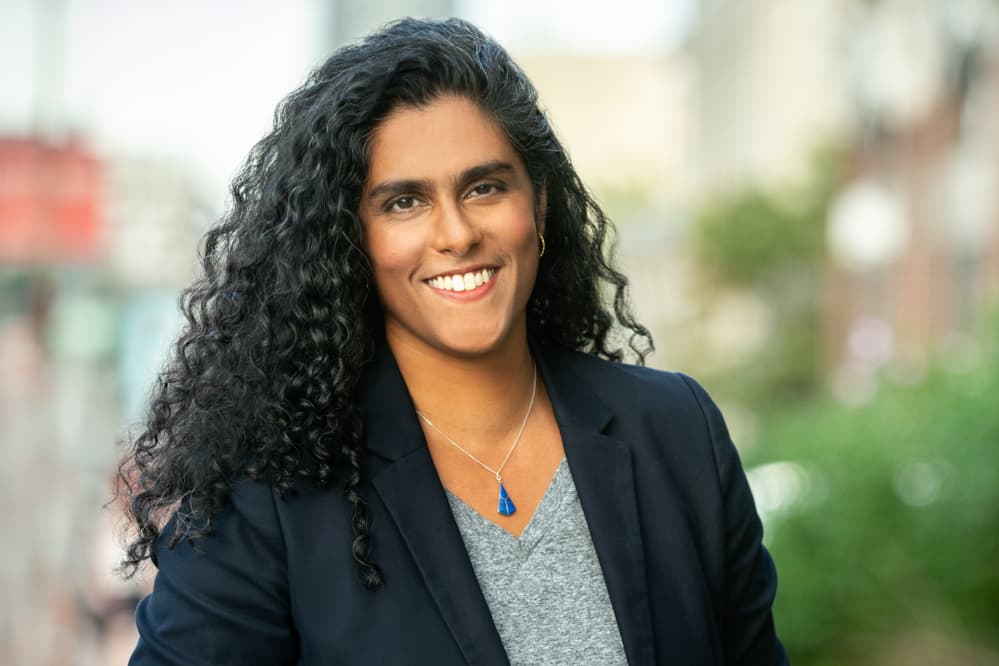
Decades ago, Ruy Teixeira famously wrote that a more diverse America would lean heavily Democratic.
But as he's watched Donald Trump's rise, he believes it's Democrats themselves who are to blame. Why?
Guests
Ruy Teixeira, senior fellow at the American Enterprise Institute (AEI). Co-editor of the Substack newsletter "The Liberal Patriot."
Transcript
Part I
MEGHNA CHAKRABARTI: In 2002, political scientist Ruy Teixeira co-authored, along with John Judis, a book called The Emerging Democratic Majority. It was highly influential in Democratic Party leadership circles. The book argued that an increasingly diverse America would lean heavily Democratic.
Or, as Teixeira said on NPR: "These coalitions emerge that include minorities, they include women, they include even a large section of sort of blue-collar Democrats. And they all tend to share a perception of the government as playing a role in mitigating the excesses of the market, a role in protecting the environment, providing social support."
CHAKRABARTI: Well, a couple of decades later, Teixeira's view of that emerging majority is quite different. In his Substack, The Liberal Patriot, he writes, quote: "The left isn't dead yet, but it's getting there," end quote. In fact, for a few years now, as Teixeira has watched Donald Trump's rise, he's sounded the alarm repeatedly that Democrats themselves bear a significant amount of blame for not only their party's electoral failures, but even more controversially, for contributing to the Republican Party's lurch to the extreme right.
Think of that what you may, but there is no doubt that the Democratic Party, and particularly its leadership, are wounded from the electoral drubbing it received in the last election. And this weekend, the party is electing its next chair, the chair of the Democratic National Committee. That vote will say a lot about where party leaders want the Democrats to go.
So today, we've invited Ruy Teixeira to the show. His long analysis and relationship to the Democrats gives him a particularly interesting perspective on the party. I want to call him a loyal critic today. And his most recent book, also co-authored with John Judis, is Where Have All the Democrats Gone?: The Soul of the Party in the Age of Extremes.
And Ruy Teixeira is also a senior fellow at the Center for American Progress, and as I mentioned coeditor of the Substack, The Liberal Patriot. Ruy Teixeira, welcome back to On Point.
RUY TEIXEIRA: Glad to be here. Interesting times.
CHAKRABARTI: But we always bring people on in the most.
Interesting times. We're cursed to be living in them. But, you know, what I'd like to start by doing is introducing to some of the listeners or reintroducing to others, the work that you did with John Judis prior to the Emerging Democratic Majority book, like what were you seeing that led you to think, Hey, there is a, you know, kind of a political paradigm shift going on in the United States, back then.
Right, well, John and I are, of course, people who pay pretty close attention to politics and political trends in general, and both interested in the Democratic Party. And we thought that as you moved into the 2000s, right? Even though Al Gore had lost the election, it did come on top of a shift that had taken place in the '90s, exemplified by the Clinton New Democrats.
And even though there was a lot of triumphalism among Republicans at the time, because Bush had won the election, and that they'd beaten the Democrats back, the more we looked at the data, the more we thought that underlying the political events we were seeing were a series of trends.
Demographic, ideological, economic, that are moving the country in a direction that was pretty consistent with where the Democrats were coming from, and not so consistent with Republicans who were, at the time, quite socially conservative and quite free market oriented in a pretty uncomplicated and almost libertarian way.
That, in fact, constituencies that would be likely to favor the Democrats were growing and that was important. And they would probably lean toward, for the Democratic model of governance, of course, looked at the growth of the non-white vote, they looked at shifts within, you know, the population of women voters.
We looked at the realignment of professionals for the Democratic Party, which is quite significant. Professionals used to be the most Republican occupational group back in the '60s. And they radically shifted. And we looked at the more dynamic growing areas of the country that we called ideopolises, where they were generally shifting towards the Democrats.
And that was also where the growth was taking place. So we put all these factors together and we thought, well this potentially could give the Democrats an ongoing advantage, a period of dominance. We thought if they practiced what we called progressive centrism and tried to connect to that.
Emerging center of American politics, however. We did have a big caveat about that, and I think we'll get to that.
CHAKRABARTI: Yes, we will. But first, before sort of your caveat was proven true, I do want to talk about the elections that happened after 2000 that seemed to show that what you had identified, you know, was potentially true.
Of course, President George W. Bush won reelection in 2004, but then came President Barack Obama, who seemed to have formed the exact kind of coalition that you were talking about. Right. Many in the, not all, but many in the white working class, people of color, you know, the creative economy types that you had mentioned. It was, you know, and, and he burst onto the scene in 2004 in the Democratic National Convention, which, you know, here in Boston, I saw that. Talking about no blue America, no red America, there's only the United States of America, that held together under Obama.
But even during his eight years in office, did you begin to see some fracturing of that coalition or the caveats that you had were starting to raise their heads?
TEIXEIRA: Yeah, the latter. It is true that when Obama put his coalition together in 2008, it did correspond pretty closely to a lot of the things John Judis and I outlined down to the various states and metro areas.
That would move toward the Democrats, and we were hailed as prophets. However, you hit 2010 and you see this massive rejection of the Democrats, when they lose 63 seats. And if you look closely at where the changes were taking place, the shifts were basically being driven by white working-class voters and increasingly left behind areas of the country.
And it occurred to us. Well, we did tell him. I mean, we did try to explain in the emerging Democratic majority that there was this political and electoral necessity to keep a very strong share of the white working class. Because even though they're a declining demographic, there's still a huge sector of the electorate.
And if you lost too much ground among that demographic then everything else would be called into question. And that's really what 2020 was about. Rejection of the Democratic model of governance by those kinds of voters, and they did move heavily against the Democrats in 2012, Obama puts the coalition kind of back together. Not as strong, but he does win the 2012 election running a kind of populist campaign. Against Mitt Romney was pretty easily portrayed as a technocrat and an equity capitalist. But the way that was interpreted was very interesting.
It was probably misinterpreted on both sides. I mean, the Democrats basically said, Oh, you know, the Obama coalition, the emerging Democratic majority, it's back. All we've got to do is put our foots on the accelerator and we've solved their problems. But the problem was that if you looked at the data carefully, where the Democrats were able to come back from 2010 was critically.
Again, in these, among white working-class voters, particularly upper Midwest, if Obama doesn't do that, he doesn't win the election, but it was all about this sort of emerging Democratic majority, the rising American electorate, and we thought that was a mistake, because I was misunderstanding the message of the election.
Then on the Republicans side, they basically almost believe the same thing. I mean, we have this emerging Democratic majority. We have to stop it. We have to get. You know, we have to basically move to the left culturally, and bring in more Hispanics and, you know, the white working class isn't going to work for us anymore.
Trump blew that out of the water. But even prior to that, in 2014, the Democrats had another terrible election. And again, a lot of the same culprits were responsible. So, by the time you get to 2016, it does seem like the whole model is being called into question. And a lot of the things we warned about were, you know, the chickens, as it were, were coming home to roost, and boy did they ever, in 2016, where essentially the movement of white working-class voters against the Democrats delivers the election to Donald Trump.
That's just very, very clear.
CHAKRABARTI: So, Ruy, I'm going to mix my animal metaphors, and I want to go back to 2010, right? And get some clarification from you. Because it sounds like what you're saying is, I mean, you talk chickens coming home to roost in 2016. I would say 2010, there was like a shark fin still just under the surface of the water, right?
TEIXEIRA: Fair enough.
CHAKRABARTI: That broke the waters in later years, in later elections. But what do you, what would you say, you know, simply put, happened in those 2010 midterms? I mean, a lot of people at the time were saying, well, you know, midterms are always, they're tough for the party in power. Because, you know, their charismatic leader, Barack Obama, wasn't at the top of the ticket, et cetera, et cetera.
But was it more than that?
TEIXEIRA: Oh, it's clearly more than that. I mean, when you lose 63 seats, it's rarely just about not having the, you know, the incumbent president on the top of the ticket. If you look carefully at the places where the Democrats lost ground, the shifts in the House delegations, you know, flipping from, you know, mostly Democratic to mostly Republican, they're all in these same areas where white working-class voters were important.
And clearly those voters already had their suspicions about the Democrats, and they did not find the first two years of the Obama administration very uplifting. And there are a lot of reasons for that, and clearly, part of it is that the economy didn't really come back nearly as fast as people thought.
They felt that Obama had been too indulgent toward the banks and things like that, and that, you know, fundamentally, he didn't deliver for them. And this seemed like more an administration that was for someone else. And so these voters, which are always tenuously tied to the Democratic Party, just shifted very sharply against the Democrats, in some cases by 20 or 30 points in some areas.
So this was if the Democrats had looked carefully, not just at the fact they got shellacked, but where they got shellacked and who they got shellacked by. I think it would have caused them to think more carefully about the way the political trends were evolving. And at the time, I tried to, you know, kind of make that point, but it didn't seem to penetrate very heavily.
And then again, you know, I can't emphasize enough that the interpretation of the 2012 election really moved them away from taking that seriously. And thinking, how can we bring more white working-class voters back in our coalition? Why is our coalition moving upscale the way it is? How can we change that?
Instead, it was more, well, okay, you know, it worked in 2008. Let's see if it works in 2012. And enough of that happened in that election. Obama did well enough among these rising constituencies that they were able to tell themselves a story about that election, which basically led them away from trying to solve the problems that were, as you say, the shark fin bursting the surface in 2010.
That leads them eventually to their defeat in 2016.
Part II
CHAKRABARTI: So, Ruy, you mentioned that in 2010, a lot of especially white working-class voters just didn't feel that Obama had delivered for them.
We're going to get to the part of this analysis a little bit later, because I would argue that no matter how much Democrats do deliver, especially when they deliver big, it doesn't seem to penetrate the consciousness of a lot of American voters. So what I want to hear from you is what do you think it is, the barrier that prevents the deliverism from penetrating the consciousness of American voters?
What are they seeing instead?
TEIXEIRA: Well, first of all Meghna, I should correct you. You said I was a senior fellow at the Center for American Progress.
CHAKRABARTI: Yeah.
TEIXEIRA: That hasn't been correct for a while. I'm a senior fellow at the American Enterprise Institute.
CHAKRABARTI: Oh my gosh. I got that wrong twice. Oh my, okay.
TEIXEIRA: And that is, in and of itself, connects to the question you asked.
CHAKRABARTI: I was gonna say, it's quite different poles for those two.
TEIXEIRA: Quite different, right. The Center for American Progress, where I was at for almost 20 years, in a way, encapsulated the shifts in the Democratic Party that really did start to move the working-class, help moving working class voters away from the Democratic Party.
Because as we look, as it evolves through the [2010s], and you could see this in the latter part of the Obama administration, you could certainly see it in the 2016 races between Trump and Clinton and the kinds of tropes that Hillary Clinton relied upon. And of course, you saw it in the resistance to Trump after 2016, and the way the party increasingly became dominated by the cultural priorities of college educated.
Relatively liberal people would be increasingly becoming a base of the party. And that came out in a lot of different areas. It came out in immigration, came out in crime. It came out in race and gender and just the language that they said people had to use. This was very off putting to working class voters.
I mean, in a way, it represents a big shift from sort of where Obama was coming from, at least to begin with. Remember that stuff about there's no red and blue America, this is the United States of America. In a sense, Obama practiced the kind of progressive centrism that we had alluded to in our original book, the Emerging Democratic Majority, he was trying careful, he was trying very carefully not to alienate parts of the coalition he needed to keep.
Under the democratic tent, he was relatively liberal on cultural issues, but not too liberal. He tried to use language that people understood. He tried not to signal to working class voters that he was much different than they were. He was, he shared their values. And I think that really goes out the window during the teens.
And Hillary Clinton, you know, crashed on those rocks in 2016.
CHAKRABARTI: Ruy, can I just jump in here for a second? Because, I mean, I don't take any issue with your analysis. I think it's plain to see that there was a major cultural shift. That as you point out, gelled as a philosophy, and then gathered cultural influence on college campuses.
And then as those people graduated and took leadership positions across the country, that cultural influence then spreads. But what I maybe, I just answered my own question, because what I wanted to ask you is, how do you think that happened in terms of the influence that it exerted over the Democratic Party?
How did it happen?
TEIXEIRA: Yeah, well, that's an interesting question. And in our book, Where Have All the Democrats Gone?, John and I try to get into this. Yes, certainly part of it is these cohorts come out of the campuses and start occupying positions within the Democratic Party. That's a factor.
But I think one thing that's very critical is there's this whole penumbra of institutions we call the shadow party, around the Democratic Party. You're looking at your non-profit advocacy groups, there's foundations, there's academia, there's a good chunk of the media, no offense, at this point, who do lean pretty heavily toward sort of the college educated liberal version of the Democratic Party and of its philosophy. And very, very, feel very strongly about these cultural issues.
And think they're like critical, and that's really what being a Democrat is all about. And in the process, it helps, starts to redefine what being a Democrat is in the eyes, especially of working-class voters. So how this became so hegemonic is an interesting question, right? I mean, I think it's partly the cohorts.
It's partly the times. It's partly the Democratic Party losing touch, in a sense, with its working-class roots and becoming increasingly influenced by the people who essentially make the party, and its associated institutions run. Increasingly, those kinds of individuals live in a bubble where they never hear from or even have much contact with working class people.
And they start to look down upon those working class people who do not share those enlightened attitudes, allegedly enlightened attitudes, as in the immortal words of Hillary Clinton, the deplorables. I mean it's difficult to overestimate the nature of that kind of attitude and the effect it's had on working class people around the country. And the definition of a gap is when you say what you really think.
And you know, when politicians do it, and I think that is precisely what the kind of thing Clinton said is. And it really, I mean, look, you don't, I don't think I'm telling anybody they don't know. If you talk to the median Democratic voter and educated provinces of our country, their attitudes on people who voted for Trump is they truly are deplorable. They don't get it.
They don't understand why anyone would vote for Donald Trump. It's just so awful. So terrible. It must indicate they're not with the glorious multicultural, multiracial future they're moving into. And I just think this has become toxic to the Democrats, especially as they've ever lengthened the list of things you have to believe in to be a good Democrat.
CHAKRABARTI: But Ruy, I'm just gonna jump in here for a second, because I hear everything that you're saying, but I keep wanting to get to the why, why, why, because regarding that penumbra around the party that you're talking about. I would argue that you can say exactly the same thing about the Republican Party.
I mean, you're at AEI. I'm thinking about, like, the Heritage Foundation. I'm thinking about all the efforts at the Koch Brothers. You talked about media. I mean, if anything, I have kind of a reluctant admiration for the success of right-wing media. Not to say that we're left wing, but somehow the messaging that they're giving is wildly effective.
Whereas, so that penumbra on the Republican party has somehow led to greater electoral success, whereas the same one, or the corollary one around the Democratic party has done the opposite. So there has to be a reason why, is it just that the Republicans are better at this stuff or what?
TEIXEIRA: Well, Republicans have been able to appeal to some of the disaffected constituents I've talked about in a pretty effective way. But to some extent that's leveraging off of the way Democrats don't. But I guess I want to take issue with the idea that you appear to be floating. That Republicans are so much better at this than Democrats, and they're winning, winning, winning.
No, they're not! I mean, in fact, if you look at the last period of time, we see this toggling back and forth between the parties, in terms of who is in power in very close elections, right? Nobody's totally got the upper hand here. And this is the problem. I mean, I put out a report with my colleague Yuval called Politics Without Winners.
Where we basically make the case that we're in a very strange period of American politics, where neither party really has, completely has the upper hand, and is really able to, or perhaps even trying to form a dominant majority in the country. They each have their own shadow parties, as you say, they're penumbras they each have very serious weaknesses, and neither party appears willing or able to pursue a politics that could grow that majority, whatever they have at any given time in a big way.
So now, you know, the needle is pointed back toward the Republicans. Am I convinced that they're going to be able to pursue the amount of power they have and in such a way as to grow their coalition and become the dominant party? And, you know, it's JD Vance, you know. 2028 and 2032. I'm not so sure about that. I think they have their own problem.
CHAKRABARTI: So then why panic? So then maybe Democrats shouldn't be panicking right now about having this massive, you know, soul searching and re alignment of party priorities. And, you know, who they're trying to reach out to.
TEIXEIRA: Well, I think they should panic for two reasons. Not panic, but take this seriously.
One is just because we've been in politics without winners for a while doesn't mean that there can't actually be a much more successful Republican administration this time that does grow their coalition. Democrats so far have not responded. The kinds of things Trump has put in play that suggests.
It's going to be anything different than Trump, Trump, Trump, fascist, fascist, fascist, Trump, Trump, Trump, racist, racist, racist. I mean, some of the things Trump is doing actually are pretty popular with the American public. And he's able to twin that, the good parts of that with a relatively good economic performance.
You don't know what's going to happen, so there's always a danger. That you cannot, that you won't be able to rely on what is a very, you know, very plausible, a thermostatic reaction against the incumbent administration and then come back into power with a weak coalition two or four years later. That totally could happen.
But if your eyes are on the prize here. How could Democrats really dominate politics in a consistent way and move forward the program they want to move forward, and appeal more directly and effectively to the working class of this country, where they are rapidly losing altitude? Then I think you have to take this seriously.
I mean, otherwise, yeah, I mean, I guess you could change absolutely nothing. And there's some chance that Trump will screw up so badly, a thermostatic reaction will put you back in power. But is that all Democrats want, the historic party of the working class in this country?
Is just going to be satisfied being the party of the college educated that's able to keep its head above water. Enough to win some elections, particularly off your elections where their coalition is now, you know, sort of low turnout election friendly. I mean, this is madness. We're so much better than this.
CHAKRABARTI: I'm actually really glad that you put it that way. Just for the record. I don't necessarily want Democrats to have an endless majority.
I don't want Republicans to have an endless majority. My desire, which I think would be in line with most Americans is wanting a group of politicians and lawmakers who are committed to doing best for all the American people. And my question is, you had mentioned this before, that even in the times where Democrats did actually economically deliver for folks.
And I would say that for all the criticisms that the Biden administration does duly deserve, it also deserves some significant credit, especially in the first couple of years of the Biden administration, in terms of economically delivering for the American people. But, but again, what I don't understand is why people don't see that as something Democrats did.
They see these other cultural issues. So how do you then, what would you prescribe Democrats do, to say, Hey, look, we're the ones who are actually delivering for you.
TEIXEIRA: Well, is it the case that they delivered for American voters, and particularly American working class during this administration?
You can certainly look at some big legislation they passed, but passing big legislation does not, you know, impress the median working-class voter. What they're mostly interested in is, you know, how are they fair? What are their opportunities for upward mobility. And basically, what's happened to their standard of living.
And if you look at the data, it's very clear that the Biden administration, because of this big spike in inflation, which was mostly in the first two years, they actually, you know, the typical working-class family did not make much progress or progress at all during the Biden administration. That's huge.
It cannot be. And, you know, people see a connection between that and what the Democrats did, the money they spent, the American rescue plan, you know, people, they pay attention most closely to what's happening in their lives and they saw Democrats spending a lot of money and they saw their bills going up, and they saw their standard of living stagnating and they were not happy about that.
CHAKRABARTI: But some of that money --
TEIXEIRA: They don't care that much that a manufacturing plant gets, you know, built somewhere in North Carolina. That's not how they make their decision.
CHAKRABARTI: Except for people who work at that plant, right?
TEIXEIRA: It's a small number of people. I mean, come on, think about it. Manufacturing is a small share.
This is going to be small and it's not going to turn around the economic trajectory of those so called left behind areas. It is not going to change the effects of inflation on the people who live there. So, you know, I just urge people who think, oh, my God, Democrats never get credit for anything. Just think about it in terms of the lives of the people who live in large swathes of this country and what they actually experienced during the Biden administration.
They don't sit around and read the papers about manufacturing plants that are starting to be belted. Isn't that great? And I love the Democrats.
That's not how it works.
CHAKRABARTI: But many of them, many of them directly did benefit directly in terms of checks in their mailboxes, or child tax credits, or, you know, I don't know, free lunches -
TEIXEIRA: Well, that's the problem with the checks. It was, in the end, the net of this, you know, relative to other economic changes that took place, including inflation, was not good.
As far as those people were concerned, I mean, they got checks from Donald Trump, too, right at the end of his administration. So just sending checks to people doesn't necessarily make them love you unless the net outcome of what's going on is something they feel good about. So, but, I don't think of this as much of a riddle that you're making it out to be.
CHAKRABARTI: But what have Republicans done then that have had a positive impact on the economic lives of all Americans?
TEIXEIRA: Well, you know, Trump actually, his administration and the economy under Trump was looked at very positively and including in retrospect by most working-class people. Now you could argue that he didn't deserve to be looked at positively.
CHAKRABARTI: I mean, if you call a major tax cut, but if you call a major tax cut for the richest Americans and corporations and most of those corporations use that money to buy back their own stock, and if you call running up the deficit --
(CROSSTALK)
TEIXEIRA: But it doesn't impress the typical working-class person, who as far as they're concerned, during the Trump years before COVID hit.
You know, there's steadily rising real wages and incomes, and inflation was very low. I mean, people think about the world in simple terms. They don't pay that much attention to things like, you know, tax cuts that happen in Congress and the extent they do. Maybe they think, hey, I don't know. Did I get some of that?
So this just isn't as malevolent and bad, the Tax Cuts and Jobs Act of 2017, which I'm not a big fan of, but I'm just saying you misinterpret how people think about the economy and think about the incumbent party. If you think it's really. You know, it should be the case that working class people would have hated the Trump administration because of the Tax Cuts and Jobs Act.
I just don't think that's the case. It's much more important how people were doing in their daily lives and conversely, under the Democratic administration, when they passed all these groovy bills, you know, for most people, what was more important is how they were living their daily lives and the bills they were paying.
I just think that's the way voters heads work, whether we like it or not.
Part III
CHAKRABARTI: This weekend, the Democratic National Committee is voting for its new chair. And this election is happening at a particularly important time for the Democrats as they're doing some soul searching about their electoral loss or voter, yes, electoral loss in the 2024 presidential election.
And because of that, we've invited Ruy Teixeira to the show. He is a senior fellow at the American Enterprise Institute, and he's been watching the Democratic Party for decades. And Ruy, I have to, you know, just n full disclosure, my educational career is mostly in engineering.
So I tend to look at the world through that lens, and I had to, like, engage this little thought experiment the other day. Where I'm saying, okay, pretend I'm an engineer and I have some materials in front of me, and those are all the materials I'm going to get. I'm not going to get anything else, but the materials I have in front of me is iron.
Right? And I'm trying to build something, but whatever I build keeps falling down. Just keeps falling down, falling down. But I'm constantly blaming the materials. I'm like, oh, the iron isn't pure enough, it wasn't, you know, forged in the right way, etc. The problem is with the materials. But I can't get any more.
If I don't change my design, failure is guaranteed. And the reason why I like put that thought experiment before us today is kind of sometimes feel the Democrats do the same thing. Their material, if I can put it that way, is the American people. And many times when Democrats lose, which is why I kind of engaged in some good-natured intellectual fisticuffs with you in the previous segment, but I feel like Democratic leadership, their response is very often, well, the problem is the people.
Right? They're too racist. They're too sexist. They watch too much Fox News. But the people are the people. And I wonder if you feel like there's a fundamental misinterpretation of what, let's say, centrism actually means in this country. Because it seems like a lot of Democrats feel like centrism is either some kind of, you know, horrible ideology to run away from. And nothing more.
TEIXEIRA: Yeah. Centrism should really mean conducting your party in such a way that you do connect to the center of American politics. What people actually think in that broad middle, right, on cultural issues, on economic issues on whatever. It's not like this kind of set of ideas that people who call themselves centrist believe in.
It should be what the American people who are in the center believe. And those are two very different things. Let me give you an example of where I think the Democrats are moving away from the center and where it's really critical and exemplifies some of their problems. It used to be the case that Democrats completely dominated nonwhite working-class voters, right?
If you could look back at the election of 2012, Obama carried nonwhite working class voters by 67 points. That's pretty good. Okay. Compare it to 2020. The Democrats lost 19 points off of their advantage, even though Biden won the election among non white working class voters.
At the same time, he improved the Democrats performance by 16 points among white college educated voters. So clearly there's something big going on there. And then if we look at this election further moves toward Trump, among non-white working class voters. So you compare 2012 to 2024 nonwhite working class voters, the margin for the Democrats is about cut in half.
So tons of these voters, these ordinary, Centrist, nonwhite working-class voters no longer find the Democrats that congenial for them. Right? And that's big, the Democrats, you know, they're much more comfortable now sort of connecting to the more liberal element of the white college educated population, where they've actually had some success.
And, you know, practically the only demographic where they're improving and they're not as comfortable trying to connect to non-white working-class voters. Because they think, you know, those people belong to us, you know, we don't have to do anything, but that's wrong.
You do have to do something. They're not automatically with you and they're showing that by how they're voting and how they're moving politically. Well, I've read a couple of, so, I think that Democrats, they really have to face the facts on this.
CHAKRABARTI: Yeah, actually, I was just going to say, a couple of years ago in your Substack, the Liberal Patriot, I mean, your writing was the first that I had encountered that very clearly said, if Democrats do not pay attention to this education divide more than racial divides in this country, that's a losing formula.
And I was very persuaded by that. And it seems to, as you just outlined, like that has shown itself to be true. I also wonder if, I'm trying to get sort of pieces of the puzzle here together. Because the other major divide, and given that we live in the digital era that we cannot ignore, is information and media. And in terms of people not viewing different parties in certain ways.
Like I'll give you another example. Just the other day I saw after President Trump signed the pardons for the January 6th rioters. The Daily Show, I think it was the Daily Show, actually did one of their sort of man on the street interviews, and they talked to people who said, yeah.
Yeah. No, of course, I support the pardons. Those people should have never been put in jail. And the Daily Show correspondent showed a series of photographs to one particular person on the street, and it was photographs of police officers being attacked very violently by the rioters, and this man, to his credit, said, Wait, that happened?
I've never seen those pictures. And he was very earnest about it. He's like, I didn't even know that was part of what happened on January 6th. And he said, I guess the stuff I'm watching didn't show that. And that's on me. So I was really, I was like, that was very revealing and good on that man, that gentleman for saying, Hey, maybe I need to look in other places.
But it brought home to me that no matter how much Republicans say about something or how much Democrats say about something. We have to talk about how we are, all of us, in our own information bubbles, and how does a party overcome that?
TEIXEIRA: Well, I guess I want to push back a little bit against the implication that that's why people believe all the stuff that they do.
They're just, I mean, I agree, being in information bubbles, whether the right or the left, has an influence on what people think, but people also are influenced by what they see and hear about in the real world. And you know, for example, if you wanted to try to understand why the public has turned against the Democrats immigration policy, wouldn't be enough just to say, oh, all those people who don't like it are in information bubble, you know, that's the only reason they're concerned about.
And in fact, it is a real problem. It happened. Same thing with crime, same things with lots of other things. Obviously, people can be influenced, but I mean, look at the January 6th thing. Most people are against, you know, what happened on January 6th. Most people disapprove. A bunch of those people voted for Donald Trump anyway.
So it's very complex, and it's not just a matter of what information they've received. I mean, I do think there's this touching faith among a lot of liberals that have just, you know, we could like pipeline in the true story of the world, into the brains of people who vote for Donald Trump or any other Republican.
They would see the light, right? They would realize that fundamentally they're on the wrong track here and they should all vote for the Democrats. I don't think that's true. Same thing for the Republicans. They believe that, you know, well, I could just pipeline the truth into all these leftists who believe this bizarre stuff and support the Democrats, then they'd all become Republicans.
None of this is true. You know, the information environment we have is the information environment we have, and parties are duty bound to try to figure out ways to break through that. And if they work hard, I think it's possible, but you can't do it if you just sort of keep repeating the same stuff over and over again that people don't like.
So I think, in a way, the whole information environment, intention economy, you know, it's all because of the internet stuff, is a bit of a bit of a cope, right? It's like trying to explain why people don't like you. The most parsimonious explanation for why people don't like you is they don't like you.
CHAKRABARTI: (LAUGHS) I wouldn't know how that feels, Ruy. Come on. No, I'm just kidding. Obviously, I do know how that feels. But so, okay, I'll take you at your word on this. I have to say I disagree with some of it, but I'll take you on your word. So, I'm now searching for like, what would be your prescription for the Democrats?
Because all right, if maybe trying to like, get the facts as a Democrat, the facts to all the Americans, all American people, maybe that's not going to be highly effective. I'm looking at Deepak Bhargava, who was on our show, he's from the Roosevelt Institute and on our show a while ago. He said providing material benefits to people doesn't actually have much of an impact on their political allegiances.
TEIXEIRA: We just argued about that.
CHAKRABARTI: Yeah. Well, but he says, he said people are capable of voting to increase the minimum wage and supporting an authoritarian candidate at the same time. So I'm just wondering, like, so what do you think Democrats should do? I'm seeing like doors being closed on what could be effective actions.
What doors remain?
TEIXEIRA: Well, funny, you should mention that, Meghna. I do have a plan, and I've outlined it on my Substack and various, you know, sort of variations as well. And I called it the 3-point plan to fix the Democratic coalition, and it has 3 components. One is move to the center on cultural issues.
The second is promote an abundance agenda, and the third is embrace patriotism and liberal nationalism. Now, devil's in the details and all that, I guess, but I do think if Democrats moved in that direction, they would do better, particularly among working class voters, right? I mean, the problem about what you were saying, or what, you know, Deepak or whatever was saying, is it doesn't seem to involve changing any positions, right?
If you want people to believe you're a different kind of Democratic party, you actually have to be different, right? If you don't want them to think you're a bunch of crazy cultural liberals, who believe in all this weird stuff, then you actually have to change your approach. If you want them to believe you're tough on crime and tough on immigration.
You actually have to change your positions on these issues. If you want people to believe you're fundamentally about providing abundance to the ordinary person, maybe you should walk back some of this stuff that you've been so committed to, for example, in the climate and energy area. There's lots of things here that need to be thought about.
And need to be debated. And they all come down to the idea, the offer Democrats are making to American voters, particularly working-class voters, is not compelling. Therefore, you have to change your offer. Therefore, you should move in this direction. That's what I think. And I think it's certainly open to question at this point how willing Democrats are to move in that direction.
Look what's happening with the DNC. You know, race for the chair. I mean, I don't see any real difference there in terms of what these candidates stand for and what they say the Democratic Party should do. It's mostly we need better messaging. We need to go on Fox instead of telling them to screw themselves, or Joe Rogan.
That's fine. But that doesn't involve changing anything about what the Democratic party is about, and how it appeals to working class voters. And I think that's a problem. And look, wasn't it Ben Wikler who said, you know, I'm gonna make sure that everybody has a seat at the table, the Democratic Party, and then he runs through this long list of, like, 15 different interest groups, you know, or sort of LBGTQIA.
CHAKRABARTI: Oh, I have the tweet in front of me.
Yeah, I have the tweet in front of me.
TEIXEIRA: Right, so you've seen that tweet, and that's emblematic.
CHAKRABARIT: Black Latino --
TEIXEIRA: This is an election. Yeah. Yeah, go ahead.
CHAKRABARTI: I'm gonna read it. He said, as DNC chair, our leadership team will lift up our full coalition with Black, Latino, Native, AANHPI, LGBTQ, Youth, Interfaith, Ethnic, Rural, Veteran, and Disability representation.
Look, we could parse that to the, you know, to the moon and back.
TEIXEIRA: Notice who's missing, working class people.
CHAKRABARTI: Yeah. No, your point's well taken on that. But we're running out of time here, Ruy, and there's part three of your prescription, is the one I'd love to spend the last few minutes of the show on, about identifying a liberal patriotism.
Because I do think this is something that Democratic leadership or, you know, let's call it that party apparatus around them, did misidentify. Because I remember hearing a lot of like people kind of looking askance at like, wait, why would, you know, we're not citizens of the world? Well, no, we're American citizens, and that actually really matters to a lot of people.
Like, the idea of identifying with your country matters to a lot of people, which is what one of the, I think, the reaction against the border was an expression of that. I mean, I remember when I was growing up, it was, when I was in elementary school, it was, cool to put your hand over your heart and recite the Pledge of Allegiance every day. By the time I got to the end of high school, that wasn't so cool anymore, right?
TEIXEIRA: Yeah, right. That's lame.
CHAKRABARTI: And I just, and it wasn't just cause like, you know, like it's dumb, but it's just like, why would, that you're pledging allegiance to a flag to see, Oh, that's a symbol of only global, you know, domination, colonialism and evil. And I was like, I'm an American. I love this flag. But, I do. So, I think that really matters.
And it's part of the cultural denialism that you talk about, that Democrat leadership don't seem to recognize that. So we've just got about two minutes left, Ruy. What would you describe a liberal patriotism as being?
TEIXEIRA: Right, well, I think that, you know, the only people and the only Democrat group that is not actually proud of their country to a large extent at this point is progressive activists.
Only a third of them say they're proud to be an American, so this is emblematic of the kinds of stuff that influences the Democratic Party. If you are trying to sell to people the idea that the Democrat, America is fundamentally a benighted, almost dystopian place that was born in slavery, marinaded in racism, and white supremacists of this very day, and, you know, runs around oppressing the world's people.
I don't see why anyone would sign up with you. And I think you just have to get in touch with the fact America's not perfect. But, you know, it's still a great country. And we're proud to be Americans, and together we can do great things, right? I mean, people want to believe in their country.
They want to believe in the project that is America. And if people think you are telling them this project is completely screwed and isn't worth anything, that makes them think they're not part of anything that's good. And people hate feeling like that. So let's get realistic here.
Democrats have a big patriotism gap. You can see it in all the data, yeah, they tried to do a reset during the last DNC. When, you know, they didn't exactly hug and kiss the flag like Trump does. But they made a, you know, passable effort at it. But it's going to take a while to convince American voters that the Democrats are just as patriotic a party as the Republicans, if not more so.
And to do that, you have to basically be very willing to say you think America is a great country. It has done great things. It also done some not so great things. And moving into the future, you know, we're going to build on that, and we're going to move together to do great things. And, you know, it sounds corny, but that's what people want to hear, and, you know, I don't think it's crazy to want to hear that.
CHAKRABARTI: Joe Biden said that in the 2020 election. He said, don't bet against America, right? I mean, he was very proudly patriotic in this liberal mold, I'd say.
TEIXEIRA: Who was? I'm sorry, I didn't catch that.
CHAKRABARTI: Joe Biden.
TEIXEIRA: Oh, Joe Biden. Yeah, well, Joe, he's kind of a throwback, you know, I mean, but he wasn't able to put his paw print on the party in a way that would, you know, keep that patriotism around and sort of grow it as it were.
I mean, during and sort of previously and through his administration, I mean, basically the whole trope that America is the benighted country I mentioned kind of grew in strength among him the Democratic Party. Let's not forget the 1619 project and things like that. I mean, Joe can say whatever he wants.
Many times, he did. But the idea that Biden simply saying that would convince everybody the Democrats are the patriotic party, I think is incorrect. Unfortunately, you know, some presidents, they basically make a big paw print on the party. Others are sort of, the party puts a paw print on them. I think he's more the latter.
This program aired on January 31, 2025.