Support WBUR
Black women's deep roots in country music
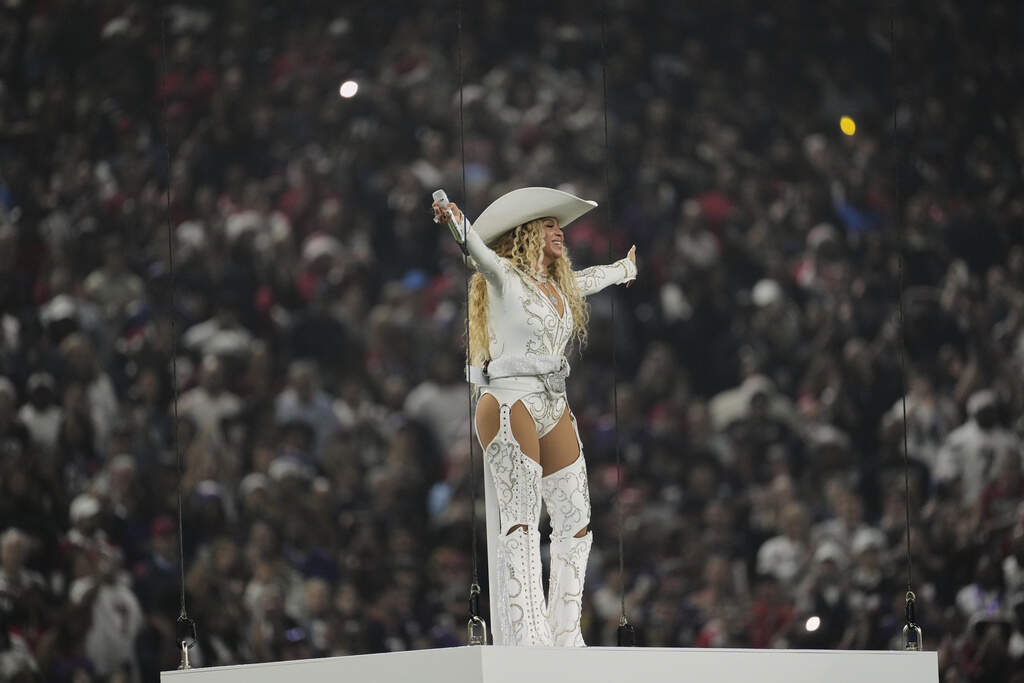
Beyonce says she’s always been country. Now, with "Cowboy Carter," she’s nominated for 11 Grammys and the first Black woman to top country music charts. How Beyonce fits into the long history of Black women in country music.
Guests
Taylor Crumpton, journalist and writer.
Rissi Palmer, singer and songwriter. Host of the “Color Me Country” radio show on Apple Music.
Transcript
Part I
MEGHNA CHAKRABARTI: Beyoncé has said Cowboy Carter is not a country album. It's a Beyoncé album, but the work centers and celebrates decades of Black women in country music as well as Americana, the blues, the list goes on.
So that's what we're looking at today. Black woman in country music, and we're going to start with Taylor Crumpton. She's a journalist and writer based in Chicago. Taylor, welcome to On Point.
TAYLOR CRUMPTON: Thank you so much for having me on.
CHAKRABARTI: So I'm just going to disclose everything right here at the top. When Cowboy Carter first came out, I listened to the whole thing.
And I've listened to it probably 50 or 60 times since then. And I actually consider it an American masterpiece, like one of the finest American albums in the past 50 years, for sure. So beyond that, I'm not sure what else I can add. (LAUGHS) When you first heard the album, like, what did you think?
CRUMPTON: I was so thankful for this piece of art that Beyoncé has given us, because, to piggyback off of you, it was a symbol of every genre that has come out of the country of the United States. I think it was very tongue in cheek for her to say, you know, this is not a country album. This is a Beyoncé album. But also asking listeners to think about music that comes out of the country of the United States.
I think she almost used it as a Trojan horse. And we know horses have played such a big part in her imagery for Act I and Act II. That this album came under the guise of country, but you're hearing Americana, folks, blues, hip hop, all of these American genres that have been created in this country. And every single Black musician, Black artist, Black entertainer is a part of this country. And has performed and actually innovated every single genre that has come out of the country of the United States of America.
CHAKRABARTI: I completely agree. There's going to be a lot of agreement in this hour.
CRUMPTON: (LAUGHS)
CHAKRABARTI: But, you know, in the second half of the album, she advances that tradition, right, by paying homage to all the influences that you just talked about. And then doing exactly what you said, innovating yet again. And, like, making this declaration now, here's the next step.
Beyoncé's next step in defining what American country music is. I'm getting ahead of myself, though. You mentioned Act I and Act II. Can you just remind folks of sort of the backstory behind Cowboy Carter? Where did it come from?
CRUMPTON: Cowboy Carter was first originated or conceived after the infamous 2016 CMA performance, when Beyoncé Giselle Knowles-Carter performed Daddy Lessons, which is her first country track off of Lemonade, with The Chicks at the CMA Awards.
At the time of her performance, if we think back about this country in 2016, a lot of social movements were going on. The first one that comes to mind, the Black Lives Matter movement, a movement of civil rights and human rights for African Americans in this country, that Beyoncé and her husband Jay Z have at that time bailed out protesters.
Beyoncé included the mothers of the movement and one of her visuals for Lemonade and aligned herself with this fight for Black lives and Black rights in the United States. And because of her advocacy, she was subjected to intense anti Black and anti-woman sentiments from the country music industry at that performance.
One of my friends, Tanner, who works for the Black Opry, which is a Black led country music organization, was in the audience and heard people say, get that [expletive, expletive] off the stage.
CHAKRABARTI: Wow. Oh my gosh, okay. So we actually have a little clip, audio clip, obviously, of the performance and Beyoncé was on stage with The Chicks, right, because they had, she had also recorded with The Chicks a kind of extended version of Daddy's Lessons and I think I remember hearing Natalie Maines from The Chicks saying she loves this song and wished she had written it.
But they were all together on the stage at the Country Music Awards in 2016. And here's just a little bit of that performance.
(PERFORMANCE CLIP)
So Taylor, as you're saying, the audience's reception is really what Beyoncé was responding to. You can't tell when you hear the audio there, but if people, you can go online and find the video, some people are kind of like enjoying the music. But an overwhelming number of them look very, very uncomfortable or downright hostile, right, to seeing a Black woman on stage.
Did Beyoncé later declare that that was exactly why she made Cowboy Carter?
CRUMPTON: Beyoncé is so smart to tell us never exactly.
CHAKRABARTI: (LAUGHS)
CRUMPTON: You know, there's a mystery and glamour and allure to her, which I think we have to appreciate. I think it speaks back to the entertainers that she grew up with and idolized, like a Diana Ross, a Prince, a Michael Jackson, who never gave you the full picture and allows consumers and fans and artists and critics to also try to figure out this puzzle for themselves.
But in her Instagram post that was released around the release of Cowboy Carter, she alluded to it, that this was the moment that made her sit down and look at the history of Black women in country music. And I think she is such a scholar because she takes from one of the tenets of Black feminism, of Black women having to self-author.
And put themselves in conversation and write their own narratives. And I think with Cowboy Carter, she's putting her own personal story, her ancestry, her genealogy, everyone who has come before her and made her who she is, in conversation and in the narrative of country music and this country's history as a Black woman.
CHAKRABARTI: Yeah, I think that's so well put. Because not in only in Cowboy Carter, but in so many of her other albums, she does not hesitate to remind us. She's from Texas, right? And, like, that is a major part of, you know, her experience as a Black woman in America. So her connection to country actually goes way back.
I have to admit, I did not know this, but I have a fabulous team. They do incredible research. And my producer, Claire reminded me that Beyoncé actually performed at the Houston Rodeo back when she was with Destiny's Child in 2001. And so we have an excerpt from an interview about the performance.
And in this interview about, you know, her performing at the Houston Rodeo, she mentions her Texas roots.
BEYONCÉ: No one can take away my Houston, Texas, Southern girl-ness. (LAUGHS)
CHAKRABARTI: Now, Taylor are you from Texas too?
CRUMPTON: I'm from Dallas.
CHAKRABARTI: You're from Dallas. Okay, so I'm not going to get Houston and Dallas mixed up, I promise.
CRUMPTON: (LAUGHS)
CHAKRABARTI: I would never do that to a Texan. But can you talk to me about why as a Black woman, Beyoncé, I guess I'm asking you to read her mind, but why it's important for her to keep talking about, you know, her Texas roots, also her Louisiana Creole roots through her mother.
Tell me more about that.
CRUMPTON: To be a Black person from Texas is to hold several realities at once. To be proud of your state, one that prides itself, at one point in time, being its own country and republic. So I think every Texan carries themselves with a sense of independence and agency and autonomy, yet putting that agency and liberation and autonomy on top of a body that is Black and also female that has to deal with centuries long anti Black legislation in the state of Texas that still continues on to this day, with the Texas GOP and also the misogynoir that exists in Texas.
It's hard to love a state but also understand that that state, at points in time, history, does not love you. Yet again, because of the treatment of African Americans, the United States, and those that fled the South via the great migration, those who came from Texas to California, from Mississippi to Chicago, to escape the overt white supremacist nature that was happening in the deep South, there was almost this disassociation of Southern identity and southern heritage.
Because it wasn't seen as urban or a cosmopolitan. There was this almost washing away of anything that was southern and country and Texas and rural and you see it more in hip hop. Where when southern rappers started rapping, people from the East and the West coast said that they couldn't rap because they were country and illiterate and backwards. They even said that Southern rappers' tongues were too slow to rap. And for Beyoncé to, in my opinion, also be a phenomenal rapper.
She was rapping when she was in Destiny's Child. She grew up in the music industry hearing that because she was Black in Texas and Southern, that she could not be this urban cosmopolitan elite. So when she's making this reference, repeated times throughout her career that she is Southern, that she is Texas, that she's Louisiana, that she's Alabama, that she has all of this within her.
And in my personal opinion, it's her saying for every single person who's told me in the music industry or in pop culture that I cannot achieve all of these goals because I am from the South and I'm a Black person from the South.
Let me remind you that this is a birthplace of genius and innovation.
CHAKRABARTI: Without a doubt. Okay, so let's listen to a little bit more from a performance Beyoncé did in Houston, this is a special halftime show, which was on Christmas Day, 2024. NFL game between the Houston Texans and the Baltimore Ravens. The show was dubbed the Beyoncé Bowl and Taylor, as you'd said earlier, a horse features quite prominently in this, because she opened by riding in on a white horse while wearing a white cowboy hat and singing her song, 16 Carriages.
(BEYONCÉ PERFORMANCE PLAYS)
Part II
CHAKRABARTI: Today we are talking about Black women in country music. The Grammys are this weekend. Beyoncé made history by becoming the most nominated artist in Grammy history, and many of those nominations have come because of her most recent album, Cowboy Carter.
But we're also digging in deeper and talking about what the real foundational influence is of Black women in country music. Taylor Crumpton joins us. She's a journalist and writer. And now I'd love to bring into the conversation Rissi Palmer. She's a singer and a songwriter, a huge name in country music, and host of the Color Me Country radio show on Apple Music.
Rissi Palmer, welcome to On Point.
RISSI PALMER: Hi. Thank you so much for having me. I'm glad to be here.
CHAKRABARTI: So I'm going to just presume that you love the album.
PALMER: (LAUGHS)
CHAKRABARTI: But I want to get straight to something deeper. I mean, Beyoncé has unique global star power. There's no one who's going to deny that. But sometimes I wonder if people who have been working in this world for a long time, right, and putting out beautiful music and making inroads as one of those artists, how does it make you feel that all of a sudden people like, well, us here at On Point are talking about Black women in country music?
Only because Beyoncé made an album.
PALMER: I think, okay, so it's a twofold answer, right?
CHAKRABARTI: Mm hmm.
PALMER: Anything that brings attention to the work and artistry of people that have been doing this, you know, since their very beginning is a beautiful thing. And I welcome it and I'm excited about it. The next thing I want to say is I also think that it's not fair to compare the inroads that Beyoncé was able to make to what women that work, Black women that work within the space, have achieved either.
Like, I don't think that's fair. I don't think it's fair to her. And I don't think it's fair to them. Because as you said, she is a global, iconic superstar. Like there really hasn't been anybody like Beyoncé since Beyoncé. So, you know, it's not necessarily a fair comparison, but it's amazing to see, like last year was a crazy year because of that record.
And so I'm very grateful for that.
CHAKRABARTI: Crazy for you?
PALMER: (LAUGHS) Crazy for all of us. I feel like, I mean, I almost feel like I'm a part of Beyonce's press team. Because, you know, she notoriously does not speak to the press and I understand sometimes, but, you know, it gave us, it gave myself an opportunity.
It gave Taylor an opportunity. It gave Holly G from the Black Opry and so many artists and opportunity artists and activists, an opportunity to speak on what really goes on within the Nashville Country Music Industrial Complex.
CHAKRABARTI: Okay, we're going to talk about what really goes on. I'm writing that down, so I don't forget.
In just a second, and by the way, even though I get it that you understand why Beyoncé doesn't do a lot of media, I appreciate you making an exception for us.
PALMER: Listen, I'm not an international superstar.
CHAKRABARTI: Not yet.
PALMER: I gotta do practice.
CHAKRABARTI: Not yet. I'm still, I'm always relentlessly optimistic about these things, but I want listeners to hear a little bit about the music that you make, Rissi.
So this is a single that you released in 2007 called Country Girl, and it charted on Billboard's Hot Country Charts, made you, Rissi Palmer, the first Black woman to chart with a country song in 20 years when that happened. So let's listen to a little bit from Country Girl.
(COUNTRY GIRL PLAYS)
CHAKRABARTI: That's Rissi Palmer's Country Girl from 2007.
Rissi, can you tell me a little bit about why country was the musical genre that called to you and sort of your path into the world, into that world?
PALMER: Absolutely. I am the child of two very country, very Southern people that grew up in Georgia and in small towns in Georgia.
And my whole life has been shaped by the Southern experience. And my mother in particular loved music, but really, really gravitated towards like Patsy Cline. And Dolly Parton, in addition to, you know, Phoebe Snow and Aretha Franklin. So when I was growing up, my listening was that, and I just always loved the stories.
I just absolutely fell in love with the stories and wanted to do that myself, like felt like that was the best way that I could express myself. And I have to give thanks to the two Black women that were my first managers, they were the ones that encouraged me to pursue it. I honestly didn't think that it was a viable route for me, because I had never seen a Black woman do it in the mainstream.
So they were the ones that encouraged me to do it and put me on this path.
CHAKRABARTI: Wow. Well Taylor, I want to bring you back into the conversation. Do you have any responses or want to add something to what Rissi says?
CRUMPTON: I love Rissi Palmer so much, because --
PALMER: I love you.
CRUMPTON: Everything she says is true, is that Beyoncé does have the benefit and the blessing of having done the hard work since she was a little girl, since she was 15. Of being able to create something like Cowboy Carter and be on country radio.
And have worldwide media look towards Black women in country music, like Rissi, like Holly, like Alice Randall, to comment about what's going on in the national music industry. But in that same breath and vein, I remember reading that when Texas Hold 'Em was being played on country music radio, then country music radio programmers and engineers would not play any other Black woman in country music.
And even if we look at the lineups right now, for a lot of country music festivals, there are zero Black women on the lineup. And that is the reality, that we can celebrate and hold space for Cowboy Carter and all this impact and what it's doing for women like Rissi Palmer, who have been on the frontlines advocating and holding space and sharing their experience about what it is to be a Black woman in an industry that is notoriously anti-Black and anti-woman.
However, here we are a year later, the Grammys are about to happen. And the country music industry and music row in Nashville have now gone back to its good old boy days, now that the eyes of the world are no longer on them.
CHAKRABARTI: I have to say, you know, when you said that, okay, so they would play one thing from Cowboy Carter and that was it.
That was, you know, they had one Black artist on there, so they couldn't play anyone else. I literally, my jaw literally dropped. I was like, like what?
PALMER: Oh. It's horrifying. I think I just, I know you're asking the questions, but I just want to throw this in there. Last year at Country Radio Seminar, when right after Texas Hold 'Em and 16 Carriages had broken onto the chart and broken in at number one, you know, everybody was celebrating and patting themselves on the back and, oh, we're so innovative and we're so forward thinking and blah, blah, blah, blah, blah.
In an article in Variety magazine, a person went on the record, I couldn't believe they said it, they were just like, well, we would support more Black women if we were presented with an actual star.
CHAKRABARTI: Oh my.
PALMER: And so, this is a quote, like I'm not, I literally printed it out and it's on my bulletin board on my desk.
Because anytime I get tired or angry or whatever, I look at that and I remember my why, of why I do this, why I'm doing Color Me Country, and all of that. And he said it on the record, and I'm like, you mean to tell me in all the years of country music, that you have never been presented with a superstar that is a Black woman.
Never. So that's what we're up against.
CHAKRABARTI: Also, that's just obviously not true, because we're going to talk in a second, we're going to talk in a second about the decades of superstars in country music who are Black women.
PALMER: Absolutely not.
CHAKRABARTI: But Rissi, if you'll allow me, I wanted to play a little bit more of your music.
Here's another track. This is from 2023. It's a song that you released with Americana singer Miko Marks, and it's called Still Here.
(STILL HERE PLAYS)
Rissi Palmer there, 2023, it's a song called Still Here. Rissi, forgive me for just, I'm blurting things out today, but that song rocks. That song is amazing.
PALMER: Oh, thank you. Thank you.
CHAKRABARTI: I mean, I was just like, five seconds in, I'm like, give me the whole rest of it. But unfortunately, due to digital rights issues, we cannot play more than that on the radio.
PALMER: I understand. I understand.
CHAKRABARTI: All right. So you actually, what you said about, you know, oh, the industry needs to be presented with a bona fide Black female country star, leads us perfectly to talk about how many they actually already have been in country music. So let me play another moment from Beyoncé's Cowboy Carter.
It is a moment that comes in the introduction to the 12th track on the album. And that track is called Spaghetti.
LINDA MARTELL [FROM SPAGHETTI]: Genres are a funny little concept, aren't they? Yes, they are.
CHAKRABARTI: So that voice belongs to Linda Martell, and I believe she was the first commercially successful Black female artist in country, and the commercially successful part matters here, and the first to play in the Grand Ole Opry.
Taylor, do you want to talk a little bit about her?
CRUMPTON: I would be the wrong person to ask when you have Rissi Palmer on the other line.
CHAKRABARTI: Okay. No, I just want to be sure I give everyone an equal crack at it here, but Rissi, go ahead. Tell us more about Linda Martell.
PALMER: Okay. Well, Linda Martell, first of all, we call her the patron saint of my radio show.
It's named after her album, Color Me Country, which came out in 1968. Linda is, as you mentioned, she's the first Black woman to chart. Up until Beyoncé, she was the highest charting Black female at number 22 with her song, Color Him Father. There have been nine of us to chart. And she was the highest until Beyoncé.
She was signed to a record company called Plantation Records. Yeah. And her producer's name was Shelby Singleton. And she toured. She had an all-white band that she could not ride in the car with. Because if she was seen in the car with them, in the South, they would have assumed that she was a prostitute and arrested them.
CHAKRABARTI: Oh my.
PALMER: And so they had to travel separately. A lot of times they would put her on bills, and they would call this ghosting. Where they would put you on a bill, but they wouldn't say anything about you being Black or anything like that. Now, normally that wouldn't be on a bill, but they wouldn't put your picture on there.
So people would come, and they would expect, you know, a white lady and they would get beautiful brown skin, Linda Martell. And unfortunately, Color Me Country was her only album. She recorded a second album. The record company shelved it. In favor of promoting Jeannie C. Reilly and Harper Valley PTA, and she was effectively blacklisted in Nashville, moved back to Sumner, South Carolina, where she still lives, and raised a family, drove a school bus, and performed locally.
And yeah, that's Linda Martell's story in a nutshell.
CHAKRABARTI: Wow. Well, let's listen to A track from that first and only album that you talked about, Color Me Country. This is Linda Martell singing Bad Case of the Blues.
(BAD CASE OF THE BLUES PLAYS)
CHAKRABARTI: Linda Martell there in Bad Case of the Blues. Taylor Crumpton, what do you hear in Linda Martell's story?
CRUMPTON: It is the unfortunate reality of being a Black woman in any industry, whether that be education, politics, music, arts, culture, media, is you can be the first, the finest, and be at the forefront, an innovator, a leader, but if those in power do not respect you, or in Linda Martell's case, being a Black woman signed to a record label named after a plantation, there are always reminders, whether they be individual or on a macro level, that those people are seeing you as less than and are undermining you.
And I think the glory of Beyoncé being not only a student of Black music, but of American music and culture and her, too, having to experience racially charged mistreatment by the country music industry at the 2016 CMA Awards, is that for her to put Linda on Spaghetti.
But also, she had this one post on Instagram where she's wearing a Linda Martell shirt that she purchased off of a website that Linda Martell's granddaughter has, because the granddaughter is raising funds to make a documentary about her grandmother Linda Martell, shows that Beyoncé is not only including her on this track but is doing things out of the goodness of her heart. Because There have been so many Black entertainers that we have lost, that have died penniless and have been mistreated by the record industry.
So it did take a global superstar like herself to do what many in the industry would not do, is to give Linda her flowers while she is still alive.
CHAKRABARTI: Mm. Rissi, we have to take a break here in just a minute or so. You mentioned a couple of times, like, what really goes on, right, in Nashville. Has really so little changed?
Since the time of, you know, Linda Martell's first album?
PALMER: No. No. I hate to, I hate to be that person, but I think that, well, okay, here's the positive. The thing that has changed is that we can now go directly to the audience. We can go directly to people via streaming and via social media. So you see a proliferation of Black and brown and Asian. And, you know, whatever you are, country artists, because there's more visibility, because we're all now connected with these little computers in our pocket.
But in terms of Nashville, no, because if you continue to try to market someone, the same way that you can't market Mickey Guyton the same way that you market Luke Combs.
You just can't. It's a completely different set of guidelines. And, I mean, not just aesthetic, like it's cultural. It's just different. And until they invest in figuring out how to create not only the country artists, but also reach across to Black people and make them feel safe and comfortable within the country music audience, then you're not going to, we're going to stay exactly where we were in 1968.
Part III
CHAKRABARTI: Rissi and Taylor, I want to just give a very, very, very big nod to another major voice in the history of country music. Beyoncé references her directly on Cowboy Carter. And it's, of course, Sister Rosetta Tharpe. She is the godmother of rock and roll. Not just country, but also the godmother of rock and roll.
Here she is in one of her most famous songs. It's called Down by the Riverside.
(DOWN BY THE RIVERSIDE PLAYS)
CHAKRABARTI: Sister Rosetta Tharpe there. Singing down by the riverside. Rissi Palmer, I mean, Rosetta Tharpe is a total legend, but for folks who don't know her, tell us a little bit about her.
PALMER: I mean, Sister Rosetta Tharpe is like, she was gospel, she was rock, she was blues. I mean, she was an incredible guitarist, like I don't think she gets enough, you know, we all know her as a singer and a purveyor of, you know, hymns and spirituals and things like that, but like she also was like a really, like a rocking guitar player, like a real guitar player.
CHAKRABARTI: All you have to do is just go on YouTube now and look her up. I mean, she is like shredding the guitar and I think it's this, you know, this is a mixture of her musical ability with the guitar. And then I just said that the country, the rock and roll and the gospel all coming together. Like I feel somewhat transported by her.
Like when I'm watching her sing with a bunch of singers behind her and playing the guitar at the same time. And that's how good she was.
PALMER: Absolutely. And she comes from a long line of the tradition in church, where if you didn't have a piano player, you had a guitar player, or you had a pedal steel player, or, you know, so all of these instruments that everyone always associates with country music that, you know, i.e. whiteness, a lot of times Baptist churches, if that's all you had, that's all you had. And so that's what you did. You had your guitar player. You had Sister Rosetta come up and play and sing. And, you know, and do the A and B selection.
CHAKRABARTI: Yeah. Taylor, let me turn to you on this, because Rissi is getting to something really important and it reminds me of some conversations I've had with Rhiannon Giddens, right?
And her, you know, long study and exploration of Black influences and Black foundational influences in Americana in general. I mean, when we think about distinctly American genres of music, I don't even know why we ever got to a point where we didn't consider, you know, Black Americans as being there at the creation of these genres, right?
I mean, that actually seems so strange to me.
CRUMPTON: It is my belief and understanding of American music that once it became something that was a commodity, then we see what America does best and thinks about who is going to be the consumer, which American has disposable income. And then we see forces at play around racial segregation, but also class segregation.
Black country music has a different origin story, that is beyond the imagination of what the modern-day country music industry can commercialize and market. Black country music has a deep time connection, not only to the church and hymns and spirituals, but also Black country music has interacted with Tejano music, has crossed borders.
You know, there's a long history of Black entertainers who were blues entertainers and traveled the blues circuit. The blues circuit went down to Mexico and a lot of styles of Black guitar picking are actually influenced by the Mexican tradition of guitar picking. Black country music has always made space for different cultural influences of people of color to make this beautiful gumbo. And to quote sociologist Tracy McMillan Cottom, country music has now become the thing song for white nationalism. And we have seen this as recently with Carrie Underwood performing at President Trump's inauguration, but also historically when Ronald Reagan in the '80s said that country music was the music of America.
That was a dog whistle. Country music has never been white.
CHAKRABARTI: Yeah, you know, we could spend, like, three more episodes on what you just said, Taylor. Because, I mean, it's so big and so important and so unfortunate, I think. And Rissi, I'm going to turn this one to you because you know, not only do we have this racial element, but, from my understanding, when you look at the whole body of all the things that comprise country music, this sort of de facto political conservatism is not at all the story of this genre, right?
Like, not just, you know, Black artists, but white artists as well. The country music for a long time has been the place where like, progressive working-class Americans found their home, right?
PALMER: Absolutely. I mean, it was the music, until 1920, when the genre was actually named, and it was hillbilly music then.
There was race music and then there was hillbilly music. This was the music that everybody, Black, white, indigenous, Hispanic, whatever. This is the music that everybody was sitting on their porch and singing. This was the music that people were singing in the fields while they were picking.
This is the music that masters were being entertained by enslaved people with. Like the initial, we don't talk about the fact that the initial string bands, what we now call bluegrass or old-time music, it was all done by Black people. It didn't become a white medium until minstrelsy. So we've been sold a really great marketing job, and we've believed it.
But that's why artists like Ray Charles can do modern sounds in country and western and make it sound the way that he did, and why it sounded so good. Because that music, country music, is also R&B. Country music is also blues. So, yeah, it's all interchangeable, and we've just been sold, just like with everything.
It's all in how you market it.
CHAKRABARTI: Well, let's take a couple of seconds to listen to two artists. One's actually a group, they are not explicitly mentioned on Cowboy Carter, but they have their place in country music history as well. Because for Martell, became the first Black woman to perform at the Grand Old Opry, as we talked about.
The Pointer Sisters became the first Black female vocal group to perform there, as well. The group released a country song called Fairytale in 1974, and in 1975 they won the Grammy for Best Country Group Vocal Performance. So here are the Pointer Sisters performing Fairytale at the Attic in Greenville, North Carolina.
(FAIRYTALE PERFORMANCE)
That's the Pointer Sisters in 1981, and here's another one. Tina Turner. She performed on the chitlin circuit with her then husband, Ike Turner. Of course, they were called the Ike and Tina Turner Review. They did that from about 1960 to 1976. Tina Turner's debut solo album in 1974 was called Tina Turns the Country On!, the first track on that album is called Bayou Song, and it was written for her by Peter-John Morse.
(BAYOU SONG PLAYS)
Incredible voice. Timeless. Alright, so let's move, Rissi and Taylor, if we can, to talking about, you know, the present and future of Black women in country music. And in order to do that, I want to go back to Cowboy Carter. Because the first time I listened through it, I didn't actually know anything about the album.
I just came to it with a completely, like new set of ears. And when Blackbird came on, I was really surprised. I was like, wow, Beyoncé is doing a Beatles cover. And at first, I was like, wow, this is also a very sort of honorable, if I can call it, she's honoring the original track pretty closely. But it included all these new voices that I had never heard before.
Brittney Spencer, Reyna Roberts, Tiera Kennedy and Tanner Adell. So let's listen to a little bit about from Beyoncé's version of Blackbird.
(BLACKBIRD PLAYS)
It's Beyoncé's version of Blackbird from Cowboy Carter. Rissi, do you wanna talk about this track a little bit?
PALMER: I mean, I really, I love the symbolism behind it. Originally, Paul McCartney wrote this song about the Little Rock Nine. And just basically about the Black women that were involved in the Civil Rights Movement. And, you know, were being yelled at and eggs thrown at them and things like that.
And so for her to choose this song, I think is a very cool nod to the perseverance and resilience of Black women. And all of the women that are featured on this song, we were all shocked when the album came out. You know, Beyoncé does secrecy really, really well.
And when it came out, I was on the phone, literally, three o'clock in the morning, talking to another friend of mine. And we're trying to decipher who is this? Wait a minute. That's Brittney. So we were trying to decipher who the women were, because they weren't on the credits yet. Like that's how fresh it was and how secret it was at the time.
And I'm so happy for each one of these women, because they're all very diverse artists. They do different individual things. Because as you know, Black women are not among them, but they represent the future. They represent the future of country music. And she picked some really good, some really good ones out of the bunch.
And it's been really cool to watch. Each one of them blossom as a result of this opportunity and to see. You know, where they're taking their respective careers.
CHAKRABARTI: You know, I will admit to both of you that I could not hold a note to save my life. And, but these voices are absolutely, to my ears, they're perfection. And I wonder, Taylor. Do you, I wonder if you have any thoughts about, like, for people who don't know who these artists, are Brittney Spencer, Reyna Roberts, Tiera Kennedy and Tanner Adell, what are they missing out on?
CRUMPTON: All of these lovely ladies are not only the future of country music, But I think the future of American music, because the beauty of Cowboy Carter is that it introduced country music to a global audience who did not understand why Beyoncé was receiving so much pushback. And to bring Rissi into the conversation, around the time of Cowboy Carter's release, I remember her, and I were doing radio for BBC.
And one of the questions that the British audience had for us is, Why is there this pushback? Why is there this irritation? Why is this this controversy? And for Beyoncé to not only use Cowboy Carter as a Trojan horse to make global audiences aware about the conditions and the reality and the history of Black women in music, but to make these four women feature on the track.
Then be ambassadors of country music globally. In my opinion, the last ambassador of country music to a global audience was Taylor Swift. Now in 2025, the ambassadors of country music to a global audience are Black women of different shapes and sizes of variety. And even as Rissi said, they make different variations of country music.
That, to me, is really the powerful impact of this album, is that now these women can now tour as Black women country artists across the globe. That this will be some person in Great Britain, or Russia, France. Whoever this album was streamed, because it was streamed worldwide, that when they think of country music, now they will see a Black woman.
And I think that, to me, is the beauty and the glory and the splendor. Is that these women now can tour anywhere across the world and sing country music to a global audience and no one will push back or clap back at them, but instead embrace them in and welcome them on the stage.
CHAKRABARTI: Now, Rissi, I think Taylor just provided us with a mic drop there.
PALMER: (LAUGHS)
CHAKRABARTI: So I don't know if there's anything that you wanted to add to that as a last thought for today's show.
PALMER: The reality is, and we'll use these five women as an example. You know, right before this happened. Tanner Adell had just been dropped by her record label, and Tiera Kennedy had just been dropped by her record label, and so they have this opportunity now.
Yes, they are ambassadors and that sort of thing, but none of them are playing on country radio right now. I think that speaks more to the condition of country radio. And the, again, the Nashville industrial complex and less about their star power. After the Grammys are over next week, what comes of the Black women and Black men in Nashville that are making country music, that are continuing to try to forge ahead and create careers?
CHAKRABARTI: Yeah. Well, you know what? I think what both of you have said, they work together in concert, if I can use that terrible pun. Because Rissi, you're truthfully describing the real present right now. And Taylor, in what you said, I, at least, heard what we hope will come, right? For Black country musicians.
This program aired on January 31, 2025.