Support WBUR
Weight loss drugs may become harder to get. What does that mean for patients?
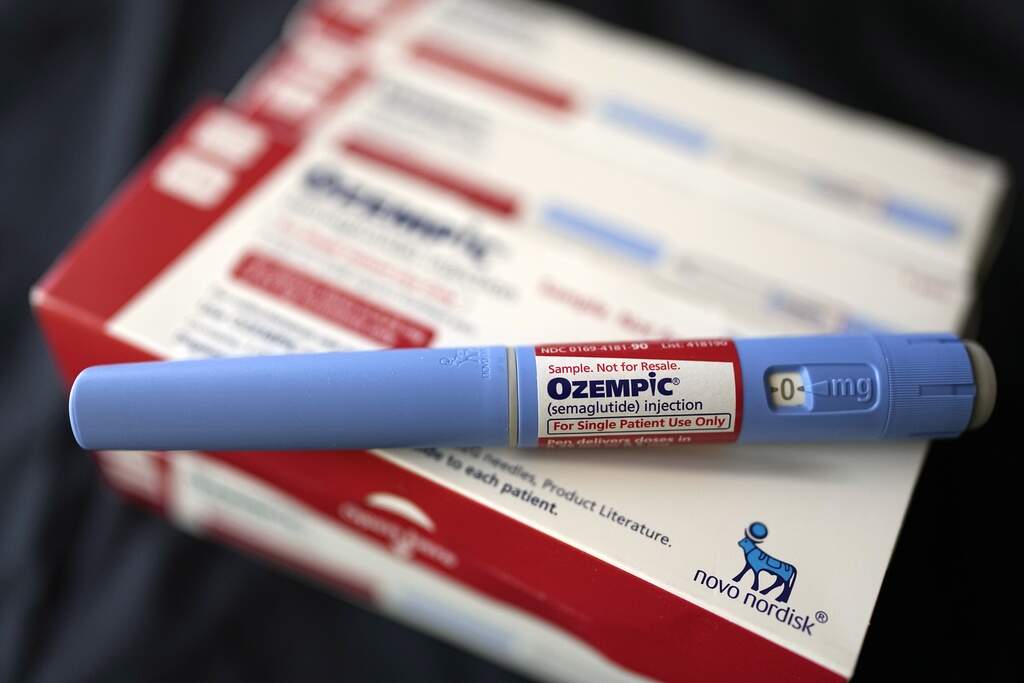
When the FDA declared an Ozempic and Wegovy shortage, business boomed for pharmacies making cheaper, off-brand versions of the weight loss drugs. Now, the FDA is clamping down.
Guests
Daniel Gilbert, reporter covering the business of medicine for the Washington Post.
Dr. Jody Dushay, assistant professor of medicine at Harvard Medical School and a clinical endocrinologist who specializes in medical weight management.
Also Featured
Michelle Cooke, patient who was prescribed Zepbound.
Lee Rosebush, chair of the Outsourcing Facility Association.
Scott Brunner, CEO of the Alliance for Pharmacy Compounding.
Melissa Barber, health economist at the Yale Collaboration for Regulatory Rigor, Integrity and Transparency.
Transcript
Part I
DEBORAH BECKER: This is On Point. I'm Deborah Becker in for Meghna Chakrabarti.
Michelle Cooke did not have a history of being overweight until she turned 47.
MICHELLE COOKE [Tape]: When menopause started, the weight started to come on. Despite eating well, working out, it was just not coming off.
BECKER: She gained about 40 pounds leading to high cholesterol and blood pressure. So her doctor recommended that she do what millions of Americans are doing: go on a weight loss drug.
COOKE: So in January of last year, I started on Zepbound and then, of course, ran into a shortage. And you couldn't get Zepbound anymore.
BECKER: And the drug was working really well for Michelle, so she didn't know what to do about the shortage.
COOKE: And all of a sudden there's a freakout moment. 'Oh my gosh, am I gonna have to stop? I'm not gonna be able to get the medication.' But when I spoke to my doctor and they said that they could have it compounded locally and, you know, I could get it from their office, I had no qualms about taking the compounded version, especially at my doctor's, you know, recommendation and them obtaining it.
It wasn't like I was going to some obscure pharmacy I found online and just ordering it. So, you know, being that it was arranged with my doctor, I trusted the process and I didn't find any difference whatsoever between the Zepbound and the compounded version.
BECKER: Michelle's insurance did not cover the Zepbound, so, compounded or not, she had to pay out of pocket. That was expensive, even with a rebate from the drug maker.
COOKE: So we don't have a weight loss rider on our insurance. But my doctor did submit, you know, authorizations to try to get it covered because I was classified as overweight and I had the additional comorbidities, I believe they're called. But insurance just kept denying it and denying it and denying it. So I was kinda on my own there.
And Zepbound did offer a savings card, so I was able to get it for half the cost, you know, out of pocket. But still really, really expensive.
BECKER: And with that savings card, Michelle was paying $550 a month for the drug. But the compounded version was $100 cheaper.
Even so, given that expense, Michelle didn't wanna stay on Zepbound for long. So after eight months and 40 pounds lighter, she stopped taking the drug. All in all, she paid about $4,000 for it.
COOKE: You know, a bit of a financial hurdle. But I chose to give it a go because I wasn't happy with where my health was going. You know, with the high blood pressure and the high cholesterol. But I will tell you, once I lost the weight, cholesterol, blood pressure, no longer a problem.
BECKER: So far, Michelle's been able to keep the weight off. She says the drug was life-changing.
COOKE: I'm so glad I did it. I would do it again if I had to go back in time and make that choice again. 100% would do it again, was incredibly helpful to me, made a huge change in me becoming more healthy.
But again, I can't emphasize enough that it's not a magic shot in and of itself. You have to do so, so much hard work along with it to be successful and then continue that hard work to maintain your success. It's really a 100% lifestyle change that can't end or else the weight indeed will come back on.
BECKER: That's Michelle Cooke of Derry, New Hampshire.
The weight loss drug Michelle was taking, Zepbound, has been in short supply for the past few years as have many of the brand-name weight loss drugs. Michelle was only able to get the compounded version, sort of a copy of the brand name medication, because of that shortage.
But recently, the FDA announced that the two main ingredients in these new weight loss drugs are no longer in a shortage, so the drugs cannot be compounded. That means people like Michelle who are easily getting the medication at a lower price will not be able to anymore. This hour, we wanna talk about these blockbuster drugs and what the regulatory wrangling might mean for patients, as well as the companies who've been filling in the gaps because of the short supply.
Joining us first is Dr. Jody Dushay. She's an assistant professor of medicine at Harvard Medical School and a clinical endocrinologist who specializes in medical weight management. She joins us from Boston. Welcome to On Point, Dr. Dushay.
DR. JODY DUSHAY: Hello, Deborah. Thank you so much for having me.
BECKER: And we should start by saying no conflicts or potential conflicts that you need to tell us about before this conversation, right?
DUSHAY: That is right.
BECKER: Okay. When you hear stories like Michelle's, who was getting this drug and then had to switch things around because of the shortage, which started in 2022 for many of these weight loss drugs, is that common? Have you heard this story a lot for your — in your practice?
DUSHAY: Yes, definitely. Especially around the timeframe that you mentioned. There was a period of time where we were getting — I work in an academic medical center — and we were getting emails every single week telling us about supply issues at our own pharmacy, in terms of what are the shortages, what is the duration of waiting time. And I was also hearing it from patients at all kinds of local pharmacies.
So there was a period of time where there were significant delays in getting people started and also interruptions in treatment. Even though there was insurance coverage, there was just no supply of the medication.
BECKER: So you would not refer a patient to a compounding pharmacy or anything like that, as we heard with Michelle, you would basically tell them that they would have to delay their treatment for a bit until the supply issues were resolved?
DUSHAY: Right. I don't — I wouldn't say that I draw a complete line in the sand on this issue. But I don't — I haven't referred any patients to specific compounding pharmacies or to any of the companies that have sprung up that are supplying these compounded medications.
BECKER: Mm-hmm. Now, these drugs, Zepbound — that Michelle was taking — Ozempic, Wegovy, these are wildly popular. Can you give us a brief explanation of how they work in general?
DUSHAY: Sure. So these medications work primarily in two ways. There are receptors for GLP-1 throughout the body, but the main ways that they work for weight loss are in the brain there are receptors for GLP-1, and that helps to, and when they are activated by pharmacologic doses of GLP-1, that helps to suppress appetite. So, in your brains --
BECKER: And GLP, just for our listeners, explain GLP-1.
DUSHAY: Sure. That is Glucagon-Like Peptide-1, GLP-1. And, as I said, there are receptors all throughout the body, including in the brain. And so when these receptors are activated in the brain, they sort of activate fullness centers or satiety centers so you don't have the desire to eat. So this explains, I think a lot of this, the term "food noise" that people have been talking about.
BECKER: Mm-hmm.
DUSHAY: Patients and in the literature and in the press. So that is how it works centrally in the brain. It also works outside the brain, what we call in the periphery. And that is in the stomach, it keeps food there longer. So it delays food leaving the stomach. So in two ways that helps to suppress appetite. One, it stretches the stomach, and that sends signals back to the brain that there's a lot of business down there and so you don't need to eat.
And also there are different hormones that are secreted once you have food in the stomach and moving into the first part of the small intestine that also send hormonal signals back to the brain saying, "Things are busy down here, we're digesting food. You don't need to eat." So people feel full for longer and end up eating less.
BECKER: So part of the reason that we've had this shortage for the past three years is really that so many people are taking these kinds of drugs. Do they really benefit that number of people? Do you think that that really this many of people should be taking their drugs, so this is being done to them in order for them to lose weight?
DUSHAY: Well, there is, I mean, there's a wide spectrum of, you know, should people take it. So there are guidelines that doctors follow that are based on BMI, which itself is a bit of a complicated metric and shouldn't really be used as the only metric. But unfortunately, insurance sometimes boxes us in because insurance has these BMI criteria.
So there are the BMI criteria. BMI is body mass index, which is your weight divided by — weight in kilograms — by your height. And it's basically kind of a way of looking at your density as opposed to just your body weight. Because it corrects your body weight for your height.
So body mass index greater than 27 with these comorbidities that Michelle mentioned — classically, high blood pressure, high cholesterol are the main ones also now sleep apnea and fatty liver disease. Or body mass index greater than 30 without comorbidities. So those are the guidelines for which that doctors typically follow when they're deciding if they're gonna prescribe these medications.
BECKER: Mm-hmm. Are you getting a lot of patients asking for them?
DUSHAY: Yes. Yes, definitely. And so, patients get, you know, you mentioned before about qualifying. So you know, there are these BMI criteria, but that sometimes is problematic because a person might not quite meet that threshold but have other indications for doing it. Or the insurance might raise the bar and say, "Well. That's fine. For us, the BMI criteria is 35 or even 40," so they really are making it a little bit more difficult to get.
But in terms of, you know, should people be taking them, I would say that certain people benefit more than others. People who have these comorbidities and recently semaglutide, which is Wegovy, was approved for secondary prevention of heart disease in people with overweight and obesity. And tirzepatide, which is Zepbound, which works through two hormones, is approved for sleep apnea, again, for people with overweight or obesity.
So people who have not just excess body weight, but serious metabolic comorbidities really can, um, can benefit. Do I think that everyone with excess weight needs to take these medications? No. Do I think that excess weight on every person is unhealthy? No. So, you know, that's where it gets to be really, really tricky between the patient and the physician.
BECKER: We've gotta go to a break in just about a minute here, but just, are you surprised by the popularity of these drugs? Because we're talking millions and millions of people in the U.S. taking these, just in the U.S., taking these drugs. Are you surprised?
DUSHAY: Uh, I'm not surprised because of what happened with social media. It's unusual that a medication that the popularity surges because of, I mean, largely because of that and because of, you know, kind of widespread coverage in the media and especially social media and the press. So, um, no, I'm not surprised. I mean, our society views excess weight in a negative, through a negative lens. So, um, I'm not surprised.
BECKER: Okay.
Part II
BECKER: Dr. Dushay, before the break, you were talking about some restrictions on the part of insurers, perhaps increasing the body mass index that might be required before someone could get a prescription for these weight loss drugs. And I'm wondering what kind of restrictions are you seeing? Are you having to reduce the number of folks that you're recommending take these weight loss drugs?
DUSHAY: So I would say I'm not reducing my recommendations. However, we've noticed that especially around after the first of the year, despite some new indications, there have been changes in the criteria for coverage by certain insurance companies.
I will say overall, there have been, there's been more success getting it covered for people with sleep apnea who, say, have Medicare. That's been a huge hurdle in the past is Medicare just did not cover these at all for weight loss. But now Medicare is covering them for secondary prevention of heart disease and for the indication of sleep apnea in conjunction with overweight or obesity. So that's actually improved access quite a lot.
The private insurance companies are I think changing the playing field by sometimes increasing the BMI --
BECKER: So --
DUSHAY: And people who have been — Excuse me, go ahead.
BECKER: No, no, go ahead. So more people being denied?
DUSHAY: Right. So people who have been on them can no longer stay on them in many cases, which is really frustrating.
BECKER: Now, you mentioned these less expensive compounded versions because I imagine that some folks also cannot afford to pay for these drugs if they have to pay out of pocket, and if they're denied by their insurers, right?
DUSHAY: Right. There are some coupons available. And there are ways to get name brand, the starting, the two starting doses from the company directly for tirzepatide. You can get that much less expensively for about $500 a month in a vial, but only at the lowest two doses and only from Lilly directly.
However, patients do ask me about getting compounded medication. And as I said, I really — I don't recommend it. I don't write prescriptions for compounded semaglutide or tirzepatide. But people do ask and are very interested in this option.
BECKER: And why is that? Why don't you?
DUSHAY: I don't because it's too — there's too many unknowns. I don't know pharmacy to pharmacy about what's in the product in terms of strength, in terms of other agents, in terms of purity. I don't know about the dosing. I mean, pharmacy to pharmacy, the dosing could be different. So it's really, you know, there's no standardization out there for these compounded medications.
And so I just would not feel comfortable managing that at all. It's not like, you know, with the name brand, you have a whole dosing regimen and you know that it's coming from the manufacturer and it's been — gone through a rigorous inspection process. And I just think it would be unsafe for me to prescribe these compounded medications without knowing those details.
BECKER: Would it also be a legal liability for a physician to suggest that someone go to a compounding pharmacy and it may be a compounding pharmacy that isn't entirely safe?
DUSHAY: Well, so suggesting that they go there, I mean, they would need a prescription.
BECKER: Right.
DUSHAY: Right. So I think that it would only be a liability if you wrote the prescription.
If you say to them, "You can go to a pharmacy that compounds it, but I won't prescribe it," that's one thing. Or people sometimes ask about a lot of these companies that have sprung up that are supplying them. And again, I really don't know anything about where each individual company manufactures these compounded medications. Is it domestically? Is it internationally? And there's so many of them that it's hard to keep up.
So I tell people, if you wanna do that, that's fine, but I can't be responsible for managing any part of that — the dose, the side effects, anything.
BECKER: Right. Well, we wanna bring someone into the conversation now who has been monitoring this explosion of companies trying to provide these weight loss drugs, and that's Daniel Gilbert. He's a reporter covering the business of medicine for the Washington Post. He joins us from Washington, D.C.
Welcome to On Point, Daniel.
DANIEL GILBERT: Hi, Deborah. Thanks for having me.
BECKER: Hi. Thanks for being with us. So, you know, give us an idea of — before we get into an explanation of compounding pharmacies here in more detail — give us an idea of the number of people, what we know about the number of people who are taking these weight loss drugs right now.
GILBERT: Well, we know that there are millions of people who are taking the FDA-approved version of these weight loss drugs, and that's Wegovy and Zepbound. The number of people who are taking compounded weight loss medications is harder to identify. There's just less solid information about it. What we've seen from some of the compounding associations is estimates on the order, I think they've said of something like 80 million prescriptions filled within 12 months.
BECKER: Mm-hmm.
GILBERT: So most people who closely watch the space, including financial analysts, estimate it's a pretty significant share of people who are using compounded GLP-1 weight loss medications.
BECKER: Right. Right. And so let's talk about this. There was a shortage of the non-compounded, the brand-name drugs, declared about three years ago. And so to fill that void, compounding pharmacies were utilized to make a version of these drugs so it could be used by people. And that's what happened here.
So now we have these compounding pharmacies that have a huge slice of the market and have been able to make these drugs less expensively. And then recently the FDA says, "Well, shortage isn't over anymore. These brand name drug makers can make the brand name version again. So we don't need these compounding pharmacies." Is that essentially where we are?
GILBERT: That's about it. And that scenario that you described just captivated my attention when I came onto it a couple of years ago because the role, one of the roles that compounding pharmacies can play is when the FDA designates a drug in shortage, compounding pharmacies are supposed to be able to step in and fill that gap while the drug is in shortage.
It's designed to be a temporary sort of stopgap measure. But in this case, it lasted a long time. I mean, you know, more than two years, or approaching two years, depending on the drug. And it lasted so long and there was so much demand for these drugs that having it on the shortage list for this period of time gave rise to this whole other industry that is built around being able to offer less expensive, compounded weight loss medications.
BECKER: Right. And of course, these compounding pharmacies are not just sitting around saying, "Oh, well, the FDA declared this shortage over." Right? (LAUGHS)
We spoke with Lee Rosebush, who's chair of the Outsourcing Facility Association, and that's a trade group of large-scale compounders. The association is suing, actually, the FDA over stopping the shortage for two of the main ingredients in the diet drugs. He argues the drug shortage is not over and points to documents from Novo Nordisk, the maker of Ozempic. Let's listen.
LEE ROSEBUSH [Tape]: If you take a look really at Novo's own February 2025 SEC filings, Novo themselves stated that the "supply constraints," and, another quote, "drug shortage notifications will continue into the foreseeable future," and we know based on patient reports and industry data, but there continues to be a shortage. It's why I just don't understand FDA's decision. It just is not adding up.
BECKER: Right. And then of course we heard from Scott Brunner, who's CEO of the Alliance for Pharmacy Compounding. That's the industry trade association for compounding pharmacies.
And just like Lee Rosebush, he also questions: Is this shortage really over? And one of the reasons that he says there is no reliable data on the number of patients who are taking the compounded versions of these drugs. So the FDA doesn't know the demand, so how can it say that there's enough supply?
SCOTT BRUNNER [Tape]: The problem is that compounding is generally a cash-only business. And because it's cash-only, there's no real central repository of which pharmacies are preparing which compounded drugs, how many patients they're serving, et cetera. And so any data that FDA was able to ascertain is basically an estimate, would be anecdotal at best. We are a data-poor industry, unfortunately.
So it appears that they have relied more on representations from the drug maker than anything else. And that's because the law requires them to do that. Whether the drug makers are taking into account the demand for the compounded version of the drugs, I seriously doubt.
BECKER: So Daniel Gilbert, you know, how does the FDA know that the shortage of these drugs is really over because of the widespread demand?
GILBERT: Well, it's a really good question. And what Scott Brunner said is pretty much correct, that there is not the same kind of data for how many people are using compounded weight loss medications as there is for prescriptions that go through insurance. It's just much easier to track.
That said, the FDA does have some visibility into this, or it should. It is able to monitor what the largest compounding pharmacies manufacture. And so that could give it some insight into the scale of, at least of their production.
And then according to the FDA, they've also considered what the Outsourcing Facilities Association that Lee Rosebush represents what they have brought to them in terms of the number of people using compounded weight loss medications. And so the FDA says that it's taken all of this into account.
And they stand by their decision that the manufacturers, in this case, Eli Lilly for tirzepatide, Mounjaro and Zepbound; and Novo Nordisk for semaglutide, that's Ozempic and Wegovy; that they are able to meet, basically, the demand for these medicines.
BECKER: Okay. They say they can meet the demand. And they've also raised questions about whether some of the compounding pharmacies are actually doing this safely. And Dr. Dushay mentioned that there are so many companies doing this that it is difficult to assess the safety.
What do we know? You said there is some FDA oversight here. There may be some information about at least the market of this drug's manufacturing, of some of these drugs. But what do we know about safety and how do patients know whether a drug that they're getting is safe?
GILBERT: It's a tricky issue. And what the FDA says about compounded medications in general is that they are less safe than products that the FDA would review from end to end and formally approve like the brand-name medications, the weight loss drugs Wegovy and Zepbound, in this case.
But there isn't zero oversight there. For many compounding pharmacies, they're licensed by state boards of pharmacy. They have pharmacy inspectors coming into their facilities on a regular basis to examine how they do what they do and the conditions that they are making sterile medications for those that have a sterile compounding lab. And then for larger facilities, the FDA also has inspectors that would go in and look at those facilities.
In terms of what we know about safety, we have seen anecdotal reports of people having some bad reactions to compounded weight loss medications. The FDA, I think last year, put out a warning that some people were injecting too much semaglutide.
BECKER: Mm-hmm.
GILBERT: Making mistakes when they — because one of the differences here is that say, Ozempic and Wegovy or Mounjaro and Zepbound, they come in auto-injector pens with doses that are pre-drawn. But when you get the compounded versions, they come in vials and you have to draw that out in a syringe.
BECKER: Mm-hmm.
GILBERT: And there's a lot of people who are just not terribly familiar. With giving themselves injections. And so there have been some reports that people have injected themselves too much, in some cases requiring hospitalization.
So there have been those kinds of situations. But on the whole, there hasn't been an overwhelming volume of really dire safety incidents that I have seen that the FDA has acknowledged. What the FDA said is that sort of these bad reactions that are specifically tied to compounded medications — last time I checked they kind of number in the hundreds. Given the very large number of people using them, it's not, you know, it's not immense. And you have to also acknowledge that many people have bad reactions to the brand-name medications, too.
BECKER: Right, right. And we're talking here about compounded pharmacies primarily, but there are a bunch of companies that are involved in this and other, you know, telehealth companies that are getting in on this market or at least trying to. And so in that particular case, I wonder how do folks gauge safety there?
And you have a great story about this, Daniel, you actually ordered some weight loss medication. You didn't take it, we'll say you didn't take it, but you ordered it from one of these online companies. Can you describe what happened?
GILBERT: Yeah, so I should say that there are like, there's a spectrum of ways that you can get — or a whole range of off-brand weight loss medications and one is the compounded version that are made by pharmacies that are licensed and and regulated to some degree and require a prescription, by the way. But there are others that do not. And there's been a proliferation of websites and online pharmacies that offer these medications or what they say are, say, semaglutide or tirzepatide that you can just, you know, click on, put in your shopping cart. Put in your credit card information and order.
And so these are much, much less regulated or not regulated at all, and it's hard to know exactly what you're getting. But I was curious about this. So when I was first reporting on this kind of shadow market for these weight loss drugs, I, you know, looked at a bunch of these websites and with the budget that I had, I picked one that described the benefits that you could get from semaglutide and had a little bit of a — had a caveat that this was for research use only.
And I went ahead and, and ordered it. I think I paid 90 bucks. And a few days later I got a little package in the mail of a tiny little vial with some kind of white clumpy powder in it. And that was it. No instructions or anything.
BECKER: Hmm. And was it legit?
GILBERT: (LAUGHS) Well, I subsequently found contact information for the owner of that particular company and I gave him a call. And when I, you know, told him what I was calling about, what I was writing about, he said, "Oh, oh, well, people are using these medications for a purpose that we did not intend, and we're gonna take them off the website."
And within hours they had taken those pages — like the very page I used to order the medication offline. And so, no, I had no intention of using it, but I definitely did not use it. (LAUGHS)
BECKER: (LAUGHS) Oh boy.
Part III
BECKER: We've been hearing about the cost of these drugs. In the U.S., the lowest price for a monthly injection of the drug Ozempic is $968. And some researchers and others say that's way too much. Melissa Barber is a health economist at the Yale Collaboration for Regulatory Rigor, Integrity, and Transparency.
MELISSA BARBER [Tape]: The estimated cost for semaglutide, which you likely know as Ozempic, is 89 cents per month if you assume a 10% profit margin and just under $5 if you assume a 50% profit margin.
BECKER: 89 cents. She based that number and others on a study that she did with Doctors Without Borders. She says the study calculated the costs of the main ingredient, the device used to inject the medication and the researchers added in expenses such as capital and operating costs.
Now, the pharmaceutical industry has criticized Barber's study, arguing that it's not a fair comparison, especially considering that things such as R&D costs were not included in Barber's generic version. But Barber says the maker of Ozempic, Novo Nordisk, has not provided information about its R&D costs, so her team couldn't make a direct comparison. She says she stands by her study.
BARBER: The same costing algorithm that was used in this paper for GLP-1s has been used for other drugs. So an example of, you know, where our estimate came out to be extremely accurate was for the cost of insulin glargine.
So we estimated that the cost would be between $1.20 and $5, and Sanofi actually disclosed their costs as part of a U.S. Senate inquiry and their disclosed costs line up exactly with what we had reported.
BECKER: That's Melissa Barber, a health economist who conducted that Yale study. We'll get back to Congress and the price of these drugs in just a moment.
But Daniel Gilbert, I'm wondering why is the price so high in this country? And what do we know about costs in the U.S. for these weight loss drugs like Ozempic compared to other nations?
GILBERT: This is always a thorny question. And it's endlessly frustrating for patients and policymakers who look and see what the list price of a medication in the U..S is, and then look and see what the price is of the same medication in say, Europe --
BECKER: Hmm. Daniel, did we lose you? We may have lost Daniel. Dr. Dushay, are you with us?
DUSHAY: I am.
BECKER: Okay, great. I wonder in terms of your perspective on this, do you feel that many of your patients are not able to take some of these weight loss drugs because of cost? How much is that a factor?
DUSHAY: If — well, it's a factor in a few ways. If they have to pay out of pocket for almost all patients, that's a complete non-starter. Because the injectable, the auto-injectors are usually about $1,100 to $1,300 per month. Sometimes people are able to get coupons and bring it down to say, 500 or 600.
But also sometimes insurance does cover it, but the copay is very, very high. So even with coverage, the copays are, are high and that's set by insurance. So yes, it's really, it's a major, major factor in terms of people being able to start and stay on these medications.
BECKER: You know, we heard that story from Daniel right before the break about ordering online from a company that really was selling white clumps of something and claiming that it was a cheaper weight loss drug. And then of course, taking the ads down once they realized they were sending that to a reporter for The Washington Post.
And you mentioned that you were concerned about prescribing during the shortage, right? To folks who may not be able to get it and where they might then get it if they have a prescription from you. So I guess, what advice would you give to people because of this proliferation of companies and of course, lawsuits on the part of these companies to keep a share of the market? You know what — it's going to continue. What do you tell your patients?
DUSHAY: Well, there are other options. There are older medications. They are generally not as effective, and in some cases they are contraindicated because they can increase blood pressure. But I have also had some patients who have had success with some of the older options.
So there is — there are other FDA-approved medications besides these. For example, there's a medication called Qsymia, which is a combination of phentermine and topiramate. There is a medication called Contrave, which is a combination of bupropion and naltrexone. These are FDA-approved medications that people don't really hear much about that you can prescribe as well. So it's not always that there are no options whatsoever.
And people are often disappointed if they're unable to get the medication, the injectable medications, the GLP-1s, or the dual-agonist tirzepatide. But I do tell people that, you know, there are other things that we could potentially try.
BECKER: Okay. Daniel Gilbert is back with us, I'm told. Hello, Daniel.
GILBERT: Hello. Sorry about that. Not sure what happened there.
BECKER: That's okay. It's always technology. So I guess, you know, we were talking about these difference in costs especially in terms of the U.S. and other countries, which we've heard a lot about. But I wanna hear it from you in terms of this $968 minimum cost in the U.S. on average that we heard during these congressional hearings. And what are people paying in other countries?
GILBERT: Yeah, it's an incredibly complex question in terms of what we pay in comparing it to what other countries pay. But at a very high level, the United States government takes a different approach to drug pricing than other countries.
Other countries are much more hands-on in negotiating how much drugs will cost and how much patients will pay for them, whereas the United States doesn't really do that, at least it hasn't until recently. And so it's — in the United States, it's the drug makers who set the price and they do so based on what they think the drug is worth, what they think insurance companies will pay for it. And so that's a real difference between the United States and other countries.
In the U.S., it's further complicated by the question of insurance and middlemen that negotiate prices on behalf of insurers. And so there are a lot of dynamics that affect what the list price is, as well as what the prices that patients will, will ultimately pay.
BECKER: Mm-hmm. You know, we mentioned that this went before Congress not too long ago. During a Senate hearing on the prices of these drugs, Vermont Senator Bernie Sanders asked the CEO of Novo Nordisk, Lars Jorgensen, who makes Ozempic, why the U.S. drugs are roughly nine times higher in price than in other countries.
And Jorgensen did say the U.S. healthcare system is complex — insurers, pharmacy benefit managers, or PBMs, as they're called — what you just referred to there, Daniel. He says that all of that is partly behind the higher prices in the U.S. Let's listen.
LARS JORGENSEN [Tape]: We don't decide the price for patients. That's set by the insurance companies.
I do acknowledge that there are patients who have poor insurance or no insurance. And if you in the U.S. do not have insurance, if you have a low income, we actually have support programs to help those patients. I'm proud about those, but they, they are not a real solution. So it's — I strongly believe we need to solve this within insurance. And when you are in insurance, there is access to our medicine.
SEN. BERNIE SANDERS: Well, you know, Mr. Jorgensen, this committee has heard from insurance companies. We've heard from PBMs, we've heard from everybody in the world, and everyone blames everybody else.
BECKER: So Daniel Gilbert, when we hear that response from Novo Nordisk saying, "It's not us, it's the U.S. health insurance system." Does Bernie Sanders have a point there that there's a lot of finger pointing here, but a lot of confusion as to why the prices are so much higher in the United States?
GILBERT: Absolutely. I think that's a legitimate expression of frustration that every time you try to nail down exactly why prices are as high as they are, you get some kind of answer that says, "well, it's this other thing that happens in this other corner of the system that we have no control over."
And I think it's tremendously frustrating for policymakers. It's hard for patients and even journalists like me to understand exactly where the sticking point is. And I think a lot of that is because of just the general lack of transparency in the healthcare system. So, you know, the drug makers are gonna say, "It's not our fault that prices are so high. It's the pharmacy benefit manager that wants such a large rebate." And the pharmacy benefit managers are saying, "Well, no, it's — we are doing the best we can to negotiate prices down."
But the fact remains that the prices in the U.S. are very high. They're much lower than they are in other countries — are much higher than they're in other countries, due, in large part, to how the other countries negotiate. And just the fact of those high prices I think is what has fueled the tremendous popularity of what we're talking about here, the compounded weight loss drugs.
BECKER: Yeah. Right. So this was an unprecedented shortage of a real blockbuster drug at an unbelievable time, and it went on for a very long time, longer than a shortage, I think has really been declared before, allowing these compounding pharmacies to step in and fill that gap. And so it's understandable that these companies would say, "Well, that's a huge part of our business now, so we're going to take some action and try to fight for that."
What do you expect will happen here? A, for patients who may have restricted access and not be able to afford these high prices that we're seeing in the U.S.? And B, for these compounding companies that are now businesses that have stepped up to meet this need? Will they have to step back? I mean, what, what happens?
GILBERT: It's a really fascinating question and one that kind of amazed me from the beginning. Because this was, you know, a shortage is supposed to be a temporary thing, and the fact that all of these companies just flooded into the business of making or providing compounded weight loss medications and ramping that up. It was never gonna last forever. I mean, some people thought that it would, but it was never designed to last forever.
And so now patients are in a situation where, where many of them have gone the compounded weight loss route, and many of them that I've spoken with have had great success with that. And in the aftermath of the FDA's announcements — first, last fall with tirzepatide and then quite recently with semaglutide, the patients I've spoken with have been really concerned about that and not sure what they'll do.
And some have started to ration what they take and to reduce the doses they take. Initially when it was tirzepatide, that the FDA had said there's no more shortage, people were talking about switching to semaglutide.
BECKER: Right.
GILBERT: Now that may not be an option as well. It can put patients in a tough spot.
BECKER: Mm-hmm. And perhaps in a spot where they might order online from companies like the one you mentioned earlier in this show that aren't quite legitimate.
GILBERT: I guess I would add to that that companies like Eli Lilly are looking at this very carefully. And something that Dr. Dushay mentioned earlier, like, Eli Lilly has made available these vials of Zepbound, which is different than its autoinjector pens, at a significant discount to what the list price of those pens would cost.
And it actually, earlier this week expanded the number of vials it offers. At first it was just the two lowest to doses of Zepbound. Now there are two higher doses as well. They've lowered the price for the lowest dose, and I think they're offering these doses for sort of $500 a month. So it's kind of a similar offering to what people were getting with compounded tirzepatide.
And that comes in a vial. You gotta draw up a syringe and inject yourself. It's generally more expensive from what I've seen than what the compounded tirzepatide products were. But Lilly is looking at this and they're undoubtedly looking at the cost-conscious consumer who has been using a compounded GLP-1 weight loss medication and hoping to convert those to its customers.
BECKER: Right. And the compounding businesses themselves, I mean, what do you see happening there? Are they going to just stop? Or do you think they're going to figure something else out? I mean, there's an enormous demand here.
And as you said, the companies themselves are trying to figure this out, so there may be another way that the compounding pharmacies may help in this business area at some point. I mean, what's — and as we mentioned, they're suing.
GILBERT: Yeah.
BECKER: So this is a very messy situation.
GILBERT: This has gotten so big because the shortage has lasted so long that yeah, like the compounding pharmacies that have really gotten into this business and other companies that have built their business around being able to offer compounded medications, I think we're seeing some resistance. They're not just gonna say, "Oh, well. It was nice while it lasted."
BECKER: Mm-hmm.
GILBERT: They are in many cases pushing back. As you had earlier on the show, the Outsourcing Facilities Association that is suing the FDA over this issue. So it's not settled.
But we're also seeing actions from companies like Hims and Hers. This is a publicly traded telehealth company that decided last year was gonna offer compounded semaglutide. And so they had a, a really significant increase in their stock price over the last number of months since they began offering that.
BECKER: And they advertised in the Super Bowl.
GILBERT: And they advertised in the — right, quite aggressively, I think. Had this message of, you know, we're pricing, you know, the critique that the other brand-name weight loss drugs were priced for profits, not patients. So very much like are making their case.
And yet, in the aftermath of the FDA's announcement about semaglutide and there being no more shortage of it, they had an earnings call earlier this week and basically guided towards a future where they're not offering a commercial amount of compounded semaglutide. They may make a pretty small number of personalized doses the way compounding pharmacies typically would operate to suit an individual patient's needs. But it sounds like it is not going to be core to their business the way perhaps they envisioned the way it has been for the last, you know, six or so months. And their stock price has really deflated.
BECKER: Right. Well, we haven't even talked about everything we should talk about with this, but we're out of time. I wanna thank you so much for being with us. We'll have to do another show about the next generation of these weight loss drugs.
Daniel Gilbert, reporter covering the business of medicine for the Washington Post. Thanks for being with us.
GILBERT: Thanks for having me.
BECKER: Dr. Jody Dushay, an assistant professor of medicine at Harvard Medical School and a clinical endocrinologist, thanks to you as well.
DUSHAY: Thank you.
This program aired on February 28, 2025.