Support WBUR
What a polarized U.S. might learn from other countries in 'Another World is Possible'
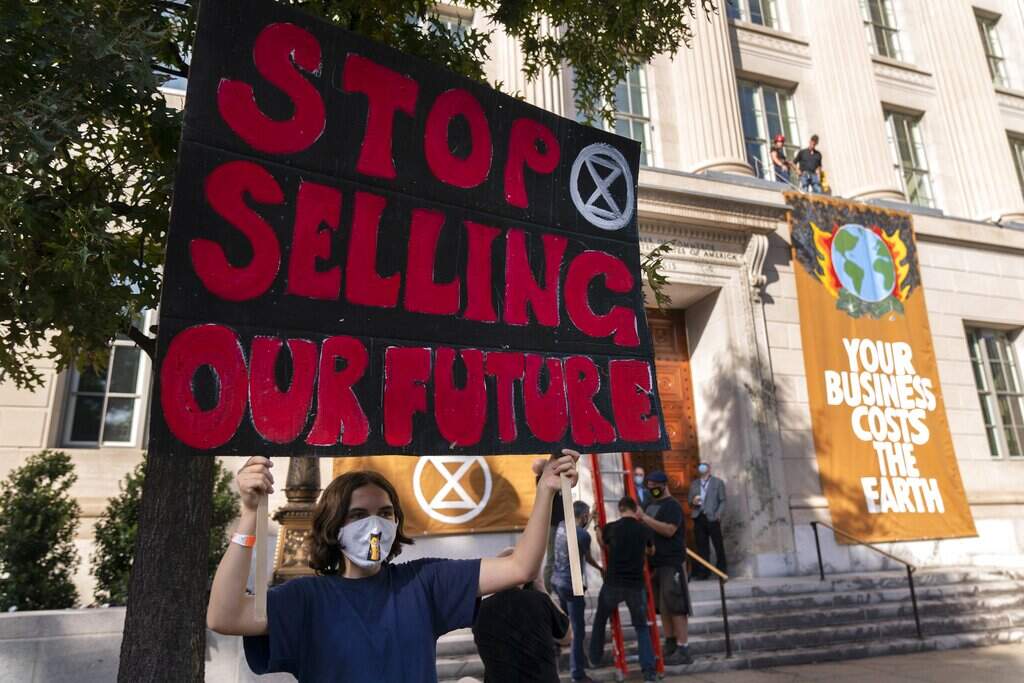
Journalist Natasha Hakimi Zapata's book “Another World is Possible” explores what the U.S. could learn about ways to tackle issues such as inequality, health care and homelessness from innovative solutions deployed abroad.
Guests
Natasha Hakimi Zapata, journalist. Author of "Another World Is Possible: Lessons for America from Around the Globe."
Book Excerpt
Copyright © 2025 by Natasha Hakimi Zapata. This excerpt originally appeared in Another World is Possible: Lessons for America from Around the Globe, published by The New Press. Reprinted here with permission.
Transcript
Part I
MEGHNA CHAKRABARTI: Today, I'm joined by Natasha Hakimi Zapata. She's the author of Another World Is Possible: Lessons for America from Around the Globe. And as its title suggests, it is a worldwide journey exploring how some of the most advanced social policies emerged only after those respective countries darkest times.
Natasha, welcome to On Point.
NATASHA HAKIMI ZAPATA: Hi, Meghna. Thanks so much for having me.
CHAKRABARTI: I'm wondering if you could tell us where the inspiration for writing this book came from. I understand it came from a family experience that you had?
ZAPATA: Yeah, absolutely. So the book really comes from two parts of my life. The first side is professional.
I've been a journalist, mostly in progressive media, for about 15 years now. And at the same time, I've lived abroad in a number of countries. And so as I was reporting on issues and struggles that seemed intractable at times in the U.S., I was also living in a number of countries where some of these issues had been solved, or at least they had made much more headway on them than we have.
And so I really wanted to share these stories of success from around the world for my fellow Americans. But the personal side of things, which I write about in the introduction to the book, comes from my mom. So I grew up in a family of immigrants, my mom was undocumented from Mexico, my father is from Iran, and there was this idea that my brothers and I were these little American dreams that my parents had.
And yet, as we got older, It started to feel like those dreams, or that American dream specifically, was actually more possible in some of the other countries I'd lived in or visited. And part of that has to do with a health incident with my mom.
CHAKRABARTI: Mm-hm. No, go ahead. Sorry, I didn't mean to interrupt you.
ZAPATA: No, so when I was in grad school, actually, and I was the first in my family to get a college degree. And I was in grad school in Boston, and I had a call from my mom who could not afford health care or health insurance for many years and had undiagnosed, untreated diabetes that was finally diagnosed in an emergency room where she was rushed, nearly in a diabetic coma, and had to have her right foot amputated.
At that moment, as she was calling me from the emergency room, I was flooded with concern for her well-being, for her survival, for what her life would look like moving forward. But I had this added concern of how are we going to pay for the care she's going to need, the treatment she's going to need, moving forward.
How are we going to afford the insulin to literally keep her alive? And I knew because I'd lived in other countries like the UK, where I live now, where there is universal health care, that we didn't have to leave that financial burden on people in their most vulnerable moments.
CHAKRABARTI: I think in listening to the terrible experience that you and your family had, there's probably a lot of people right now who are nodding their heads in empathy because this is regarding health care. This is something that touches just about every single American. And by the way, I am very sorry that happened. The irony is, of course, regarding health care, that the United States has the world's biggest economy, and when it comes to specialized health care, some of the best health care in the world can be found in this country.
And I make that distinction between specialized health care, and primary care. Because primary care is sometimes tough to come by, depending on where you live in the United States. But it also still takes up 20% of our economy, so there's just a big gap there in terms of how much we're paying versus people's access.
Now, so Natasha, why don't we just stick with health care? There's actually some more really interesting examples in your book, about other policies from countries I don't think people would have thought of. But since we're on the health care track here, talk to me about what new you can share with us about the National Health Service in the United Kingdom.
ZAPATA: I think what's really important to highlight is exactly what you were saying, that in the U.S., the wealthiest Americans have access to the best health care, the best elder care, the best schools for their children, the best housing, and yet, despite the fact that we live in the wealthiest country in the history of the planet.
The majority of Americans have very limited to no access to those same great things. And I think health care is a really important example of that. And it's an example as well, in which we can actually be very wasteful. Like you said, 20% of our GDP is going on a health care system, which people don't have universal access to.
And so when you compare that to the UK, and I want to highlight as well that the United Kingdom really decided to shift gears, so to speak, after World War II. Often, the NHS, the National Health Service, which is the first universal health care system in the world that's nationwide, is talked about as coming from the ashes of World War II. And this moment of crisis in which the society was deciding what kind of country it wanted to live in moving forward, what kind of country it had fought for.
And a huge part of that was this new national health service, that is free at the point of delivery. Paid for by general taxation, and that is still the case today, and it is a widely beloved system. There are, I think, few things that Britons agree on more than how much they love their NHS. And a lot of it is down to the fact that it is there at their time of need.
It belongs to everyone. I think that's a really key aspect of it, that it builds in the social solidarity, but that there's a real understanding that it's actually also a very good deal. Britain spends nearly half what we do in percentage of GDP on their health care system. And yet, almost across the board, they have better health outcomes. And --
CHAKRABARTI: Natasha, are you there?
ZAPATA: Hear me?
CHAKRABARTI: Yes. Keep going. Phew. We got you back there. You dropped out for about five seconds.
ZAPATA: Sorry about that. I was just saying that across the board, when it comes to health outcomes, Americans are actually doing worse than Britain, despite the fact that we spent nearly double the percentage of our GDP on health care.
And we even live four years less than the average Briton does. And so when you think about that, and that's one of the things that I think gets lost in this conversation about health care, is we're actually getting a really bad deal in the U.S.
CHAKRABARTI: So I want to make a distinction between the NHS, UK's NHS at its founding, versus the state that it finds itself in now.
I definitely don't disagree with your fact, with your observation that most people in England really do love the NHS. As you pointed out in the book, it was even featured in the opening ceremonies of the London Olympic Games in 2012. But I just want to make that distinction, because I'm going to come back to the state of the NHS now, but can you talk to me a little bit more about those first founding years. Because you said something very important. That after the just sheer destruction of World War II.
Obviously, not just the British soldiers that fought and died in World War II, but England and the UK itself was just bombed to smithereens by the Germans for a long time. That is what propelled this vision for a new UK or a new society there. What else did people that you talked to tell you about that transformation?
ZAPATA: What's really fascinating about this moment in British history is that there was a real understanding that something really different needed to happen. And so the Britons elect their first labor government. They get rid of Winston Churchill, who had gotten them through World War II and the Tory government and actually elect the first labor government with Clement Attlee.
And Aneurin Bevan, who is a health minister that really ushers in the National Health Service, understood that there was going to have to be massive public investment in the health care system. At the time, you had a lot of privately owned hospitals and charities and privately owned practices, and there was, they've been literally bombed during the war, there was a lot that needed to be done.
And so he understood that if there was going to be this public investment, that it should also belong to the public. And that's another thing that's really important about the National Health Service, is that Britons understand that it belongs to them. And so when they complain about it, which they do, and I'm sure we'll talk about a lot of the reasons why, especially now, they are.
A really important thing to come back to is that they can complain, and they should because it belongs to them and that's how things get better. In a privatized health care system, it doesn't, nothing really belongs to us. There's not really levers that we can pull like you can in a democracy, that is in charge of a universal health care system.
CHAKRABARTI: It's interesting because what makes the UK's health service unique-ish in terms of our conversation, is that it is truly a nationalized health system. There are private hospitals, as well, in England, which people can go to, but it's a completely different payment system. But everyone is covered.
And I do want to just make a point that in Europe, there are other nations that have total coverage for people, but it's not exclusively through a nationalized health system, right? There's other models for this that achieve the same ends, right? Like semi privatized systems or regionally run systems that are then administered nationally or paid for nationally.
So there's just multiple ways of achieving the same thing that we still can't seem to achieve here in the United States.
ZAPATA: Absolutely. When we talk about the National Health Service, and I'm a big fan, having experienced it myself firsthand. But also, just generally, I think the idea of an entirely socialized medical system is really fascinating, but it's true that other countries have done it differently and successfully. And for example, Medicare for All is single payer.
It is not the National Health Service. It is not an NHS style policy. It is actually, it would not have the government take over hospitals and general practitioner offices, but it would have a similar impact in terms of access. And I think that is a really important starting point in the U.S.
Part II
CHAKRABARTI: Natasha, I want to just stick with health care here for another second. Because, again, at risk of repeating myself, it is such a major issue here in the United States as well.
In your book there were some quotes that you have that I found utterly captivating. And one of them was from a parliamentarian that you spoke to in Britain who talked about just really how difficult life was for non-affluent Britons between the First World War and the Second World War.
And then coming out of the ashes of the Second World War, people no longer, this is the quote, or people didn't want to worry anymore about what they would do if they got ill, which was a major worry for people prior to World War II. And then you have this quote that the NHS, quote, will lift the shadow from millions of homes.
That shadow is cast across people here in the United States, and I'm wondering how quickly was that shadow lifted after the passage of the NHS Act?
ZAPATA: The impact of it was almost immediate, in that you had the services oversubscribed almost immediately. And so they had to expand their budget immediately.
They had to expand services immediately. It was incredibly popular. And there was this really great pamphlet that was spread around the time, announcing its birth and it has a really important quote in it, where it talks about how you can use, it's for every man woman and child. Because actually, women and children were often left out of any health care services previously. But you can use all of it or any part of it and I'm paraphrasing here. But it was something like, and it is not a charity. It is paid for by all of us for all of us.
And that understanding means that people also know that they can count on it, not just in their time of need, but all along their lives, right, from the moment they're born until the moment they die, they have continuous access to free at the point of delivery care, and they don't need to worry about things like medical debt or like your insurance claims getting denied, or all of these other issues that are built into our health care system in the U.S.
CHAKRABARTI: Yeah. So it captures a certain ideal about what a particular form of collectivism can achieve. But I don't want to have rose colored glasses on about the NHS for the whole episode here, because you're living in London, Natasha, now, so you know better than I do that over the past many years, the NHS has been under constant criticism for escalating costs, for not having enough doctors, for long wait lists, for not providing the kind of care that the more affluent people in the UK can purchase from private hospitals, which also exists there. It's a beleaguered system now.
ZAPATA: I actually reported on all of these problems that the National Health Service has been having for The Nation magazine a few years ago.
And this was around the time that I was thinking about writing this book. And I still decided to choose the NHS in its original conception because I still think it's an amazing policy. Right now, what we're seeing is decades of underfunding and understaffing and then the impact of a global pandemic.
And the NHS has unfortunately really struggled to come back from that, partly again because of austerity measures from both labor and Tory governments. It hasn't been one party or the other. And so currently, what's happening is that there are longer wait lists than there used to be for certain treatments or for especially for specialists, for example.
But I think an important distinction here is that there's not, first of all, in terms of emergency services, you will always be able to get emergency care. In the moment. This is the same as in the U.S. You will walk into an emergency room, and you will get treated.
CHAKRABARTI: Like in the U.S. though, you may be waiting for hours and hours for that treatment.
ZAPATA: Yes. Yes. And in terms of things like just general treatment, in the UK, about 21% of people wait less than a day, whereas in the U.S., you have 28% people waiting less than a day, and for specialists, that definitely goes up. It's about 41% wait less than a month in the UK versus 27% in the U.S. So in some ways, these are comparable.
But importantly, and again, at the end of this wait list, every Briton will get free quality health care. Whereas Americans will possibly get denied coverage or be saddled with thousands in medical debt. Or never be able to even access it in the first place, because they can't afford it.
And that is such a key difference to how our systems work. Even at a time in which the NHS is struggling.
CHAKRABARTI: Yeah, no, that is the key point, right? Because access and not fearing medical bankruptcy, which are two things that are burdensome on Americans here with our health care system.
Okay we've done a lot of shows in the past, Natasha. Because this is one of my favorite ways to learn about how we can improve our lives here in the United States, is to compare to other countries, but most of our previous shows have landed on Western European models, and I'd actually like to spend the rest of the hour talking about the non-Western European models that you raise in the book, because I think they're lesser known, instructive to us.
So can you talk about Singapore? And how it has, in your estimation, affordable public housing for all.
ZAPATA: It was so important for me to go to every continent except Antarctica. And to not stay in Scandinavia, where we often talk about their great social democratic solutions. And I did go, I went to Finland, I went to Norway, they have great policies there.
But I wanted to go further afield to somewhere like Singapore. The Singaporean public housing model was extra important for me to include because I wanted to show how a place that by no means can be called left, like their government can't be called left leaning or anything like that. It's actually a hyper capitalist country in which it really is about picking yourself up by your own bootstraps, even more so than in the U.S., in many cases.
To the point where all schools are also fee charging, for example, and yet the one thing they decided to do at the beginning of the founding of their nation, nearly at the beginning, was to ensure that citizens and residents had access to affordable, high quality housing and the way that they've done that is through a very fascinating model in which now 80% of Singaporeans live in public housing and 90% of them are homeowners.
CHAKRABARTI: Can you stop there for a second, Natasha, if you could? Because when you said they just decided from the start that they wanted this. How? Why? Who?
ZAPATA: There was a lot of leadership. Lee Kuan Yew, who he is a controversial figure and who is known as a union buster and has a very checkered legacy.
CHAKRABARTI: Founding prime minister.
ZAPATA: The founding prime minister, yes, of Singapore. He was one of the people that was really interested in this idea of housing and home ownership as the basis for a more stable society. And it can be partly credited to him, but also to the housing development board that was established early on.
And this HDB, which is still in charge of housing, public housing in Singapore, had a lot of wonderful architects and urban planners and social workers and just economists, a number of experts that all work together over the years to ensure that this public housing system provided housing for the majority of people, at a time in which actually the population was growing astronomically.
So it was, you know, under 2 million when this project started in the 1970s, and you have a population of almost 6 million now in Singapore. And yet, homelessness is not really a problem in Singapore, largely because of this model.
CHAKRABARTI: How does it work? Housing is being built, and then you said that, what, 95% of Singaporeans are homeowners?
Did I mishear that?
ZAPATA: Ninety. 90%.
CHAKRABARTI: Okay. It's an enormous number.
ZAPATA: It is. Yeah.
CHAKRABARTI: How does, so how does that work?
ZAPATA: So the way that it works is that the Housing Development Board is in charge of getting the development done for all of this housing across Singapore and also gives permits for private housing.
There is still private housing in Singapore. And what happens is that the state, because they have land scarcity as well, they've decided early on that the state should maintain ownership of the actual physical land that these buildings are built on, but that the homes themselves should be owned by people. So that there was the sense of ownership, of pride of being a stakeholder in your own society, in a really material way.
And the way that this was accomplished was that they have this pension savings program that is employee-employer based. Which is a percentage of checks comes out, goes straight to this savings account every month, and your employer also contributes. And while this was essentially just for retirement initially, at one point, it was recognized that actually all of this money that was just sitting there could be used for housing, and so a portion of it, anyway.
And so the way that it works is that you take a percentage of your savings. There's like a ballot system, because their public housing is in very high demand in Singapore, especially new public housing. So for new public housing, you'd have to ballot and wait for a building to be built, for example. And your down payment comes out of your savings account.
So you don't actually need any cash savings for this.
CHAKRABARTI: Okay. I want to just dive into the details for this a little bit more, because it's so remarkable to me. So as you write in your book, yes. So you have Singaporeans have this pension fund, which is meant for retirement. But according to your book, the down payment for housing for an apartment can come out of that pension savings fund, and monthly mortgage payments as well.
Ostensibly, a Singaporean can move into affordable housing without paying a single Singaporean dollar from their own cash savings, right?
ZAPATA: That's right. And that's one of the things that I find incredible about the Singaporean model, is that because the Housing Development Board gives the housing loan straight to your savings account, your own personal pension savings account, and the monthly payments are coming out of there at a very low interest rate.
This loan is at a very low interest rate, so it's very different from a bank loan. You actually never have to put any of your own cash savings into it. And importantly, and this was the thing that really blew me away. There aren't really foreclosures in Singapore, because of the way that this works. In that if you did get a housing development board loan and it's in your pension savings, because you can get a bank loan if you want to.
Most people don't, for this reason. If, let's say, you lose your job and you can no longer make those monthly payments, you can just restructure that loan with HDB, and they'll usually just have you pay for a longer period of time. And while you're getting back on your feet, you're not making any payments or you're paying what you can afford to pay.
So again, this is another key aspect of the way that they've essentially eradicated homelessness. I say essentially, because there is still some incidents of homelessness.
CHAKRABARTI: Yes, nothing's perfect, but I'm Meghna Chakrabarti. This is On Point. Natasha, let me ask you, when American ears hear the word affordable housing, the phrase affordable housing, it means a lot of different things to us.
Like what, how, what quality is this housing in Singapore?
ZAPATA: One of the people behind the design of a lot of these new towns and new buildings, Tai Kareliu, who I interviewed, who's considered the master architect. He and others who worked on these projects and continue to, and there are many people who still continue to, were adamant that people deserve to live in high quality homes, regardless of their income level.
And so all of these buildings are built with people's needs, with services in mind, with access to everything from public services to commercial services within walking distance or within public transportation's distance, and the homes themselves are, again, you own them and so you can renovate them as you want, but the bones of them are very well done.
CHAKRABARTI: Now, Singapore, as you said, hyper capitalist, very strict, right? In its enforcement of laws, as well. Like you said, it's not at all lefty, liberal. But does this housing scheme payment plan, this whole vision, does it apply to every single Singaporean, or are there some people who are left out of this?
ZAPATA: There are some people left out of it, and I want to highlight that the book includes the flaws as much as the positive aspects of every policy, because I think it's just as important to learn from flaws and not repeat mistakes as much as we can. And so I include a section that talks about how, for example, because gay marriage is still illegal in Singapore, oftentimes Singaporeans from the LGBTQ+ community have to wait until they're over 35 in order to be able to apply for public housing. It also really heavily encourages people to be married in order to get a home together. And so there's that aspect of it as well, pushes people in a certain direction.
And then there are people who are unhoused in Singapore. It's a very small amount. The reason for that is often that they will have homes and yet for reasons that happen everywhere, their family will break up or something like this, they will not be welcome in their homes and so they might end up living on the street. There are a number of rental units ... specifically for people who end up in this situation.
Part III
CHAKRABARTI: Natasha, so let's swing all the way over to back to the Western Hemisphere but to South America with Uruguay, because you write a whole chapter about Uruguay's record-breaking renewable energy transition.
Talk to me about that.
ZAPATA: Uruguay, despite being a relatively low-income country, greened its grid in under 10 years. And this remarkable story, actually, again, comes from a period of crisis. You have a country that has no naturally occurring fossil fuels, and is highly dependent on hydroelectric dams for a lot of its electricity, but also on imported fossil fuels from neighboring Argentina and Brazil.
And what would happen is that whenever the price of petroleum would spike or there were droughts, which became more frequent and more severe due to the climate crisis, the country would be plunged into literal darkness and there would be power cuts. And it was incredibly destabilizing for civilian life, for government, for factories, for any sort of business. I went to a factory, and they would say, whenever there were rolling blackouts, we would just have to stop working.
And what happened is that the government actually runs every aspect of electricity in the country through this publicly owned utility called EUTM. And thanks to being able to control that, there was a massive effort from within the government around right before the year 2010, to bring in a combination of wind, solar and biomass energy generation in order to hopefully have energy sovereignty in a country that could really not afford to keep importing expensive fossil fuels.
CHAKRABARTI: And like you said, they made that transition in, you said, less than a decade?
ZAPATA: In less than a decade. And there are a lot of really wonderful aspects of this story. One of them is that although it was the left leaning government, Frente Amplio, under Pepe Mujica, who's famous for being very humble and driving around in a beat up blue Beetle, he, before he came into power in 2010, he had already decided that for really key problems in the country, there would need to be cross party agreements established. So that when it came time to change government, for government to change hands, they would be ensured that these policies would continue to be implemented.
And one of those cross-party agreements was about energy. Again, because it was such a crisis that everyone agreed something had to be done. And really, no other country up until then had tried to do what [they] did, and especially not one with so few resources. And what they proved was that actually these myths about the wind doesn't always blow and the sun doesn't always shine.
And so you can't really have a fully renewable grid were false. As long as you had a combination, and this was really important, as long as you had a combination of different renewable energy sources, you can actually have a fully renewable grid.
CHAKRABARTI: Oh, why can't we have nice things? Okay, no, Natasha, I'm just — so here's the thing.
These are just three examples in a book that is full of them. And I just encourage listeners that the book is called Another World Is Possible. If you want to learn about Portugal's drug decriminalization policy, Estonia's internet as a human right policy, Finland's school system, New Zealand's universal pension program, you got to go read the book.
But for the rest of the program, Natasha, what I'd like to do is I want to talk about why it seems so challenging for the United States to achieve these similar sweeping and transformative improvements in the lives for all Americans. I see at least four reasons. There are more than that, but I see at least four right now.
And what I'd like to do is go through them all one by one and have you tell me what we can do to overcome these obstacles. Deal?
ZAPATA: Absolutely. Deal. I'll try my best.
CHAKRABARTI: So here's my first one. Obviously, you talk about how each of these radical transformations, or most of them, come after a cataclysmic period in the various nations' history.
World War II for the United Kingdom, Singapore coming out of the shadow of being a British colony, so the dawn of Singaporean independence allowed them to reinvent themselves, Uruguay's crisis, as you just said. National blackouts, a country cannot function with national blackouts. So it was true. These are truly crises that the nation's emerging from.
Ironically, one of the United States strengths is, I think, for 80 years since the last, since, the second World War, which didn't even touch physically our shores, there has been no equivalent catastrophe here. And that's one of the things that's made it hard to say we need a total reinvention.
How do we overcome that? I don't want a catastrophe in the United States to trigger change.
ZAPATA: I would say that things are pretty broken right now in a lot of aspects of American life. And I can see that this current administration and people like Elon Musk are breaking things even further. There's a way in which so many of our systems have become unsustainable, starting with our healthcare system, and that they've really been failing Americans.
And so while I also don't want us to get to a period of total cataclysmic catastrophe, I do wonder if we're not already in a very dark period.
CHAKRABARTI: I would agree that we are. But the difference to me, and correct me if I'm wrong, is, it's like a slow rolling one. And so I guess this leads me to my second issue, like for as long as the crisis is slow rolling and it's having a disproportional impact on people who don't have economic power or political power.
What we're also facing is deep political tradition in this country, I would say, especially over the past 50 years or so, where unlike in Singapore, UK, Uruguay, Americans have been trained to think that government is the problem, that government can't be a unique source of national solution making, right?
It was Ronald Reagan himself who clearly said the scariest words in the English language are, I'm from the government and I'm here to help. That's a deep philosophical difference I see between the United States and some of the other countries that you talk about in the book.
ZAPATA: This is why I'm such a big believer in universal programs.
I was already a believer in universal programs before I started writing this book. But going out there and seeing these programs in action have really made me an even bigger believer in them. Because not only, especially, I want to highlight in tandem with more progressive tax systems, which is a huge problem we have in the U.S., but universal programs are better, more equitable, less wasteful. But importantly, again, it builds the social solidarity that I think is really lacking in the U.S.
In that, if we all have to send our children to the local school, we will all make it the best possible school. The problem in the U.S. is that at the core of our society, we have off ramps for the wealthiest Americans. And I think that actually universal programs, fighting for universal programs, fighting to implement these will help bring us some of the way towards more social solidarity, less individualism, and more collective solutions that work for the majority, instead of the few wealthy Americans that don't.
CHAKRABARTI: I would agree with that. And you just touched on my third one, which is rampant individualism is at the core of Americans beliefs about themselves. So we'll skip that one. But back to the social solidarity question. I just want to push a little bit more. Because, again, even for people who are lower on the socioeconomic scale in this country, many of them believe that the solution isn't going to come from government.
I'm going to press on this, because I just feel like there's so many political messages that say we're going to lower taxes and return those taxes back to the people. Because you know better what to do with your money than the government does. There's a fundamental difference in the belief of the entire purpose of government, and I don't know how to overcome that. It won't happen quickly. I just don't even know where to start about overcoming that. Natasha?
ZAPATA: I really wonder if now, as we're seeing so many services broken apart, defunded, shut down, and especially things like Social Security or Medicaid, that so many Americans rely on the understanding that government has actually been there and in many cases, effectively helping us in our daily lives will become clearer.
But I also think that we have, and I completely agree with you that there's this myth in American society that somehow, we know better what to do with our taxes, that we would have to pay, this is a big myth, that we would have to pay a lot more tax if we were to get things like a universal health care system or paid parental leave like they have in Norway and highly subsidized, high-quality childcare like they also have in Scandinavian countries.
And actually, there's this great piece by Matt Bruenig from a few years ago about the labor tax rate in the U.S. compared to other wealthy nations. And he argues that if you actually take into account health care costs, which you should, because of the Affordable Care Act making it mandatory to have health insurance.
And you compare it to countries like the UK that has universal health care, the UK, the average married person with two kids is paying something like 26% of their income in Norway, where you have universal health care. And also, these great, family friendly policies I was talking about, it's about 32%. In the U.S. we're paying over 43%.
And so again, it comes back to this idea that the Average American, not even just the poorest Americans, but the average American is getting a very bad deal. And a lot of this again comes back to the fact that we do not have a progressive tax system, that the wealthiest Americans aren't paying their fair share, corporations aren't paying their fair share, but also that we have systems like a privatized health care system that is incredibly inefficient.
CHAKRABARTI: Before I leave the idea of just a different understanding of the government's role in everyday life, I'm just reminded of, you're saying that more and more people may fully realize the role that things like Social Security and Medicare, Medicaid play in their lives when they're at the risk of losing it.
I just remember what it was back in 2009, I believe, there was one angry citizen who very famously yelled at a town hall meeting, keep your government hands off my Medicare. So people just don't even, a lot of folks don't really understand even how these programs are administered. So here's my last one, and unfortunately, we only have two minutes left.
Every other country that you pointed out is smaller than the United States and more racially homogeneous. I think another thing we have to face in this country is that as a multiracial democracy, at every single point in time where we have tried to expand the social safety net. I'm thinking during the New Deal.
Racism has flat out impeded rapid progress on those fronts. I was looking back at in 1934, the Federal Housing Administration wanted to insure home mortgages, but they refused to do it in neighborhoods that were predominantly of Black Americans. That's just one example. How do we overcome that?
I think that's still very much a vein in American politics now.
ZAPATA: Racism is still a huge issue in the U.S. and I want to highlight that although not quite as multiracial as the U.S. and not quite as big, countries like the UK are also quite diverse and have managed to have a universal health care system that serves everyone at the point of delivery.
And I think what's so key about it is that while these are still battling from within the NHS and outside of it as well, to make it more equitable, the starting point is so different because of universal access. And so while I completely agree with you that racism often holds us back from a lot of these great solutions, I also think that it can't be the excuse that we turn to in order to not implement these things, and I really want to reframe our diversity as a great strength.
We are a country of great resources, and I mean that in both financial resources and human resources. So I want us to think, why is it that tiny Uruguay can green its grid in under a decade and we can't? With all of the resources and all the technology that we have and importantly, why is it that our diversity would hold us back from clean energy or free school lunches or universal pensions?
This program aired on March 20, 2025.