Support WBUR
How Trump administration cuts threaten Native Americans
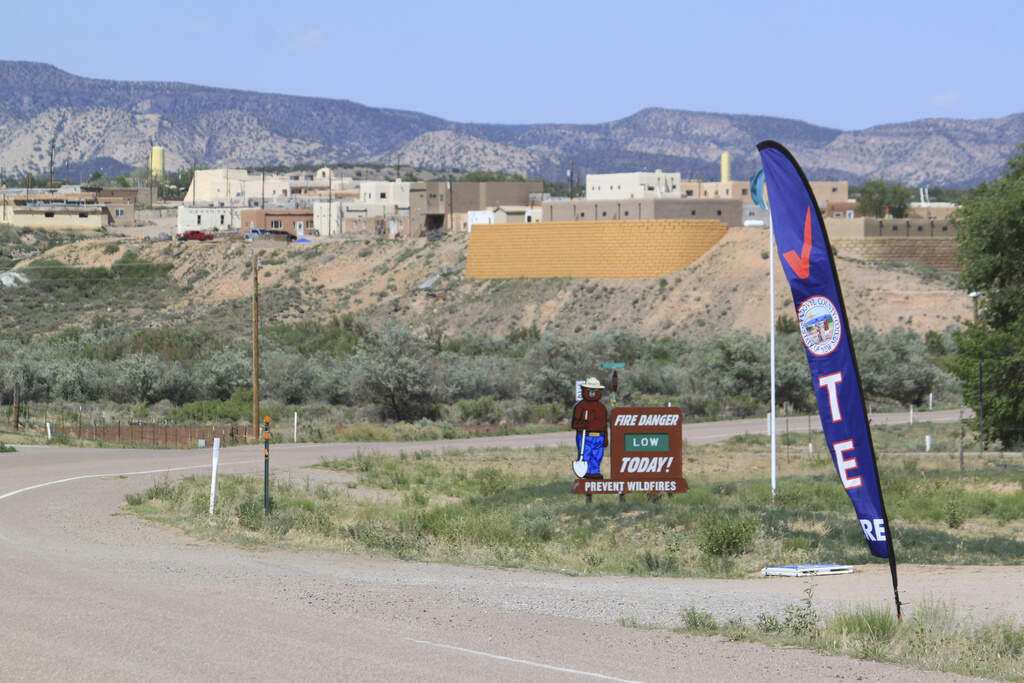
As the Trump Administration looks to cut government spending, many Indigenous communities say they’re losing vital public services. It could be a violation of long-standing treaties between tribes and the federal government.
Guests
Mary Annette Pember, national correspondent for ICT News. Enrolled member of the Red Cliff of Wisconsin Ojibwe tribe. Author of the book Medicine River: A Story of Survival and the Legacy of Indian Boarding Schools.
Aaron Payment, member of the Tribal Council of the Sault Ste. Marie Tribe of Chippewa Indians. Former chairperson of the Tribe. Former First Vice President of the National Congress of American Indians.
Also Featured
Aiyanna Tanyan, Haskell Indian Nations University student.
Tescha Hawley, founder of the Day Eagle Hope Project, an organization that provides support and services for those affected by breast cancer, particularly in the Fort Belknap Indian Reservation area of Montana.
Transcript
Part I
DEBORAH BECKER: The Fort Belknap Indian Reservation in Northern Montana is rural, really rural. Tescha Hawley lives there. She says things that many Americans take for granted are often hard to come by.
TESCHA HAWLEY: We only have a local grocery store and some of our families live anywhere from 40 to 50 miles from it, and it's a very small grocery store.
We have some conveniences, but it just simply cannot source the food and the resources, especially the fresh produce, is almost little to none scarce.
BECKER: Health care is also scarce. Many treatments require a three-hour drive, one way to Billings, the nearest major city. In 2016, Hawley started the day Eagle Hope Project.
That's a nonprofit that provides medical and behavioral health care on the reservation. And recently, she's been running a kind of food bank. She brings in truckloads of meat and produce from Western Montana. And Hawley says there's a great need for healthy food. Fort Belknap has high rates of diabetes, heart disease, and other chronic illnesses.
HAWLEY: A lot of these health disparities could be lessened if we had access to fresh fruits and vegetables and healthy protein. And even for me, I struggle. Because oftentimes meals are full of fat, carbs, calories. And to go to the grocery store to get strawberries, I'm lucky if they're even healthy enough to eat, right? Because by the time they get to us, they're not good.
BECKER: Hawley's nonprofit was growing with the help of federal grants that made up the majority of her budget, and then one Friday night, last month, she got an email. $750,000 for the next fiscal year, canceled. Part of the Trump Administration's funding cuts for the U.S. Department of Agriculture.
HAWLEY: I can tell you, it caused great, great stress in my life. Because I was expecting these funds, had food on order. I had to call and tell them, by the way, you need to hold on. I can't get the food. I can't bring the food here. Because I don't have the funds or the money to pay you. And because it was something that literally happened in the middle of the night, I felt we didn't have a plan, and we weren't planning for this.
BECKER: The Trump administration's cuts to the federal workforce and government spending have taken a toll on Indian reservations throughout the country, and even though many of the cuts were reversed or rescinded, that is not yet the case for food banks like the one run by Hawley.
She points out that the federal government has a unique role in supporting Native American tribes and the government's legally mandated to provide some services. Hawley was dismayed by a Fox News interview with U.S. Agriculture Secretary Brooke Rollins, where Rollins said there needs to be reductions in many food assistance programs that are considered non-essential.
HAWLEY: It's just like when you have the wealth and the greed, you can't see the need.
Sorry. It's hard because I'm in it every day. We struggle ourselves. I don't even have a facility, but I'm not going to give up. I'm not going to live in fear. I'm going to find a way.
BECKER: The USDA did not respond to our request for comment. The Bureau of Indian Affairs says it is committed to upholding federal responsibilities to the tribes. And says the bureau will engage with tribal leaders to help improve efficiency and cut bureaucratic waste.
This hour On Point, we look at federal budget cuts in indigenous communities and why those reductions could be considered breaking centuries-old treaty deals. Joining us first to talk about this is Mary Annette Pember. She's a national correspondent for ICT News, formerly Indian Country Today, she's also an enrolled member of the Red Cliff of Wisconsin Ojibwe Tribe. Mary, welcome to On Point.
MARY ANNETTE PEMBER: Oh, good to be here, Deborah. Thank you.
BECKER: So let's start with what we know about the cuts at this point. And I realize we're talking about a lot of different agencies and tribes, but we want to know how broadly, first, this is affecting indigenous communities. The cuts and the layoffs. Some rescinded, some restored, where do things stand at the moment?
And how would you describe them in broad terms first?
PEMBER: Yes, it's been a real challenge to keep up with the cuts and what's going on in Indian country. Initially, we found that some of the cuts were affecting programs that were covered under these long-time mandated funding that was actually determined under the Indian Self-Determination Act.
It's called a 638 framework. In which tribes will be, receive their funding, in honoring self-determination, they would receive their funding and then be federal funding, and then be able to allocate it accordingly to their needs. And a lot of people were finding it usually comes in the form of a draw down from the federal government and tribes were finding that it was frozen online and there was a period where people were having to lay workers off.
We are hearing most recently that has been restored. However, Indian country, we have to remember, runs on grants, on many of these small grants, within agencies, like so many little subgroups, that the average person, a non-native person, and even native people have never heard of. For instance, under Health and Human Services, there's SAMHSA, which is for addiction services.
Also, we learned that the Institute of Museum and Library Services, I think it's almost been entirely cut by the Trump administration, but that funds tribal libraries and museums and other, like, rural libraries. I just actually learned that on my mother's reservation, Bad River Ojibwe reservation in Wisconsin, that now the librarian is gone. So as I said, there just are so many, and the USDA additionally also provides counterintuitively, we wouldn't think of it on first glance, tribal colleges, many of their programs were often related to food, but then also scholarships for students.
Tribal colleges have taken a big hit as well.
BECKER: Essentially, we hear food banks like the one we heard Tescha Hawley describe. So we're talking about cuts to food, cuts to museums and libraries. Addiction services, you said are definitely cut and those have not been restored.
PEMBER: We are still, as I said, we're still waiting to see, some of, with the kind of wrecking ball of looking to extinguish anything that smacks of DEI. They have come for Indian country, but of course we aren't a racial class. We are a political class. So I think that some of these terms, red flagged or one colleague was calling them the naughty words or the naughty terms.
So that at least for the time being, it's looking like these funds are cut.
BECKER: And what about the Federal Bureau of Indian Affairs? It's lost dozens of employees and then there were suggestions that the White House might close some of the agency's offices. What's happening there?
PEMBER: We, as I said, we haven't nearly heard. We haven't. It is just, it's unfortunately not really clear.
BECKER: Yeah. Just a lot of uncertainty all the way around.
PEMBER: Exactly, exactly.
BECKER: I did see an interview with Robert F. Kennedy, Jr. The Nation's Health and Human Services secretary, where he said that the health service in particular would be a priority.
The Indian Health Service would be a priority during Trump's second term. Is that reassuring at all when you hear something like that?
PEMBER: Somewhat. He does have a strange affinity for Indian country and we're not entirely sure from which that stems, but Indian Health Service doesn't provide the lion's share of funding for Indian Health Services.
It actually comes from Medicaid. And we're looking at a lot of cuts to Medicaid, and Indian country has a special kind of relationship with Medicaid. Much of the billing is done, third party billing is done through Medicaid. So there's a lot of fear about the sort of impact that will have.
BECKER: And you mentioned tribal colleges and what's happening there, and I just wanna go into that a little bit. Because these cuts in these colleges I think are a really unique aspect of all of this. We spoke with Aiyanna Tanyan, who's a student at Haskell Indian Nations University, one of the colleges I believe you're referring to, that's a tribal college in Kansas.
And she's among those who's suing the federal government over some of these cuts. And we should say there's a foundation called the Haskell Foundation, which is a nonprofit that's supporting the school. And it says that it does expect even more federal cuts. And the student we spoke with, Aiyanna Tanyan, said that she and other students have been protesting.
Let's listen.
AIYANNA TANYAN: The first protest we did was in front of the Kansas Capitol building in Topeka, and it was so cold, but we toughed it out and we stayed out there and we marched around the whole building, and we held up signs. And one of them being, honor the treaties. Because I don't think a lot of people realize that high school is not just a college.
It has this long. Yeah, it's a painful history. It was founded as a federal Indian boarding school during that era of assimilation, and over the years, it has transformed into this wonderful tribal college that is federally operated.
BECKER: And I wonder, Mary, if you could tell me, what do these federal cuts mean for education schools at Haskell Indian Nations University?
PEMBER: Yes. I think people don't realize the role that tribal colleges play, not only in tribal communities, but in rural America. There are about 37, I think, tribal colleges and, they. Also educate a substantial number of people that are called non beneficiary students. And those are non-native people, that rural citizens who go to tribal colleges for the same reason that Native American people go.
It's close to home, inexpensive. And since they're funded by federal dollars, they have to take those people as well. Tribal colleges are really the anchors for these communities and through there is this very long legislation called the Tribally Controlled Act.
Actually, I can't quite remember the name of it. It's quite a long acronym.
Part II
BECKER: Mary, we were talking about Haskell Indian Nations University and Federal Cuts, and how that's affecting education there. Can you continue explaining that to us?
PEMBER: Yes. As I refer to this really long acronym that names the legislation that requires the federal government to pay, to fund tribal colleges, has never been funded fully.
But as I mentioned, it isn't only Native Americans that attend these colleges. There are a number of non-native people that also attend for the same reasons that Native people do. It's inexpensive and it's close to how homeless people are called non beneficiary students. And we find that often in these rural areas, tribal colleges can be the anchor for the communities, they provide a meeting place, a gathering place.
And opportunities for non-traditional students. Older students who may be returning to education and so on. And many of those colleges, in addition to the federal funding, receive a number of grants. For instance, from USDA, they may receive scholarships and then also funding for food related programming. The National Science Foundation provides funds to tribal colleges for all kinds of STEM related sciences. Any of these cuts have a tremendous effect on these colleges.
BECKER: Okay. A lot of uncertainty, a lot of cuts, a lot of potential cuts.
I wanna shift gears a little bit here and talk about this unique legal situation involving cuts to tribal nations. The U.S. government assigned hundreds of treaties with tribes, promising to maintain a level of services and in this case, the federal government has treaty and trust obligation as it's called.
So I want to bring in Aaron Payment. He's a member of the Tribal Council of the Sault Ste. Marie Tribe of Chippewa Indians. He's former chair of the tribe and also former first Vice President of the National Congress of American Indians. And I wonder, Aaron, can you explain a little bit what this treaty and trust obligation is and what the requirements are for the federal government to provide some of these monies.
AARON PAYMENT: Absolutely. So first I wanna say, the treaty and trust obligation is settled law. That's very important to understand. The 574 tribes across the nation seeded over 2 billion acres of land in exchange for health, education and social welfare into perpetuity.
What we receive is pennies on the dollar of what we exchanged. It's not welfare. Even though we do have the worst statistical outcomes in the U.S. Civil Rights Commission, Broken Promises report it is not reparations and it's not because of the poor Indians, but we prepaid in full for every penny that we receive.
Unfortunately, we fall into the discretionary category of all of our federal funding, and discretionary is about 38% of the total budget. 62% is mandatory. That includes social security, Medicare, Medicaid, and as my friend Mary Annette had explained, the funding through Medicaid helps to supplement Indian Health Services.
Indian Health Services only reaches 55% of the need for my tribe service area, which means the vast majority of our members, we don't get any funding. But the Medicaid expansion and in the exchange under the Affordable Care Act is how we are closing the gap on our need. Unfortunately, that's threatened and while a lot of members of the Senate and the House are saying that they're not going to touch Medicaid and also, or Medicare. Or social security. The proposed volume of cuts that they are proposing to come to cannot happen unless you cut into mandatory funding. So there's $880 billion in both the Senate and the House.
Big, beautiful budget blueprint. So those are huge cuts that are going to impact my tribe. And for my tribe, we received $30 million in Indian Health Services. We're a very large tribe, over 50,000, and our annual funding agreement, third party revenues, is about $30 million. So half of our health budget is about to be cut.
Earlier you were talking about the fits and starts with the president will declare something and then see how far it can go with it and get sued and then retrench back, and our secretaries of interior and health come out and make these sweeping, very positive statements.
Either they are not in charge or they're not, they're misleading because the cuts and the OMB, HHS ... so that's like a draft document to tell all the agencies of what they can ask for. That's proposing $1.4 billion in cuts to HHS Indian Health Service, eliminating SAMHSA, the tribal opiate response funds, eliminating HeadStart, eliminating LIHEAP, low energy heating assistance.
We are in a crisis right now. And so nobody should let their guard down, because while they're saying one thing and smiling through it, the reality is the proposed cuts to Indian country is going to be over probably $2.5 billion or about 30 to 40% cuts in the treaty and trust obligation.
BECKER: And so let's go back to the treaty and trust obligation.
So what does that mean specifically? So there are a lot of people who are concerned about the potential cuts to Medicaid and the budget blueprint and what it says about various social safety net programs. But for tribes in particular who are under this agreement with the federal government, the courts have upheld that the feds must provide this. So tell us what that legal requirement is and how this is a bit of a different situation for you and other tribes.
PAYMENT: Yeah, so I was born in 1965, so I'm a baby of the Great Society programs. And I support helping people and lifting people up.
But the treaty and trust obligation is different. It is settled law, like I said, the Marshall Trilogy in the early 1800s ruled in favor of tribes that there is legal obligation for the treaties. The treaties exchanged peace and the inviting visitors, and those who came here to the land, in exchange for the promise for health, education and social welfare forever.
And the courts have ruled consistently over the years. There's been ebbs and flows and administrative fiat and also legislative have recognized that. But we're seeing echoes of the past, just like Andrew Jackson. When the Cherokee Nation won the Supreme Court case, and were not supposed to be removed, Andrew Jackson basically said, have fun enforcing it.
So what we're seeing is with Donald Trump, we're seeing the exact same thing. In one case so far, the Supreme Court has ruled in favor of immigration of the person who was illegally removed from the country. And basically, the president's saying, okay so what's gonna happen?
And we're very worried about that, because he seems to be purposely testing the waters to see how far he can go and how far down the path of an autocratic society. Most Americans support the treaty and trust obligation once they understand it. And so again, it's not welfare. It's owed to us. We prepaid in full, and a country is only as good as its word and this country should uphold its legal obligation to its original inhabitants who invited all the others who are immigrants.
BECKER: I wanna say, we reached out, On Point reached out to the Department of the Interior, which oversee the Bureau of Indian Affairs. They declined our request for an interview, but they did provide a statement, and in part that statement says that this is a federal shift in approach that will ultimately foster greater self-governance.
And the statement goes on to say, quote, Indian Affairs is committed to upholding federal responsibilities to tribal communities. Under President Trump's leadership, we are prioritizing strategic reforms to maximize resources and enhance operational effectiveness across the organization to cut bureaucratic waste and ensure that taxpayer dollars are spent efficiently.
What do you think of that statement? Basically, it's what we've heard from other folks who have defended and talked about the role of the Department of Government efficiency under Elon Musk, right? That we are going to reduce waste and we are going to make things more efficient. What do you say to that, Aaron?
PAYMENT: I would say that they must have some really good messaging people, and they might even be American Indian, because they, it sounds like they're getting it right in the way they're stating it, but I would say it's window dressing. Because what we're seeing is very different. What should be happening, because we can get on board with, I was an executive, I had to balance a $180 million budget, and I did every year that I was the executive, the chairperson. But the reality is we're seeing these sweeping statements, but in the meantime, we're also seeing these proposed cuts by the very same people.
Interior is proposing to cut over $1.2 billion from the Indian Affairs budget, which is about a 40% cut, that's similar to Trump 1.0, which was a 35% across the board. If there was a way that the federal government could just hand us over the dollars that's due to us, that would be fine.
Compact with us to allow us to spend the money as we see fit, get the bureaucracy out of the way, I can buy into that. But the reality is the reductions in force have dismantled the delivery of the services to Indian country, and that is nonetheless an abrogation of the treaty and trust obligation.
So any way you slice it, it looks like we're entering into a termination era where they eliminate the bureaucracy first. Then it's easier to eliminate the funding to Indian country.
BECKER: Now let's talk about members of Congress here, because we also did reach out to members of Congress about this. Oklahoma Senator Markwayne Mullin recently met with members of the Norman Oklahoma Chamber of Commerce in Washington, D.C.
We had reached out to his office about an interview. Decline, but we did listen to what he told the Norman Oklahoma Chamber of Commerce. He did not specifically address tribal cuts, but he did acknowledge that Elon Musk's Department of Government efficiency has made mistakes, he called them. Such as when it proposed cutting funding for a National Weather Service facility in Norman, he compared this.
So here's a bit of a clip from the meeting that Mullin posted on Instagram. Let's listen.
MULLIN: When they're cutting through something this big, mistakes happen. That happened in your old backyard. But we got it resolved. I talked to Elon one time and it started getting solved almost immediately, so he had no idea.
And sometimes that stuff happens. It's very difficult for people up here in Washington D.C. to know what's going on in Norman.
BECKER: And also, Aaron Payment. That, of course, was Oklahoma Senator Markwayne Mullin. We also reached out to Oklahoma Congressman Tom Cole. They also did not respond to our request for an interview.
And Cole is a member of the Chickasaw Nation and he told the House appropriation subcommittee on interior environment and related agencies back in February that he is committed to honoring the U.S. government's longstanding treaties with Native Americans to provide basic services. Let's listen.
TOM COLE: I have been in contact with agencies in the White House to ensure our responsibilities to tribes are fully and understood across all facets of the federal government.
And sometimes people just don't get it. They quite often come from places that don't have a tribal presence. They don't know much about the issue. Again, these are important treaty and trust responsibilities the United States needs to fulfill. And our commitment is to work with you and our colleagues across the aisle to make sure that those are kept.
BECKER: Aaron Payment, I wonder when you hear those comments from the Senator from Oklahoma and the congressman from Oklahoma, saying maybe some of these initial things were a mistake by Elon Musk's Department of Government Efficiency. And yes, in fact, the government will honor these longstanding treaties.
What do you say?
PAYMENT: I would add to the mix that Senator Mullin is Cherokee. He's a citizen of the Cherokee Nation and Representative Cole is co-chair of the Native American Caucus in the Congress, along with Sharice Davids. So we have some really strong advocates in the legislative branch, including Senator Lisa Murkowski from Alaska, who's the chair of the Senate Committee on Indian Affairs.
They're all genuinely supportive of the treaty and trust obligation and fulfilling it. And so I do have some hope and faith that they're going to be able to be a line of defense. But what I'm worried about is you saw in December when the Congress passed the continuing resolution, and then you've seen in the blueprints, the Senate blueprint and the House blueprint, that in the 11th hour when push comes to shove, the billionaire class made the round of calls along with the president, to threaten to primary people out of office if they don't kowtow. And what we're seeing is a weird phenomenon that we've never seen before.
Coequal branches of government where Congress is subordinating their authority to appropriate to the executive branch. And instead of these cuts and then mending it afterwards and piecemealing things back together afterwards, what should be happening is the administrative branch and the legislative branch should be reaching out and holding formal consultations with tribes to ask them about what the impact would look like if these cuts were to happen in Indian country. And we're not seeing that yet. So I've got my fingers crossed that the Chickasaw and the Cherokee and the Choctaw come together and they protect us.
BECKER: But I wonder, you mentioned Trump, first time around, Trump 1.0, and you're hoping that these formal consultations will happen with tribal leaders.
But is this different than it was during the first Trump administration?
PAYMENT: Absolutely. I was first vice president for the National Congress the first time, and we met with Donald Trump's key legislative aide for American Indians, key native advisors. And we also met with the chief of staff for the Senate Committee on Union Affairs.
At that point, they were proposing 35% cuts across the board to Indian country, and what we were told is, don't worry. Because while the president proposes, Congress disposes. Which told us that we just have to basically just tolerate these proposed cuts and Congress will defend us. But what's very different today is where members of Congress were willing to stand up, today they're afraid. They're afraid to lose their position.
So I would call on all members of Congress and the Senate to stand up for the leadership. Stand up for their constituents in their state, what you're about to see. And you're beginning to see a little glimpse of a little courage making its way in the Senate Republicans, where they're starting to fight back a little bit on these proposed Medicaid and Medicare cuts, and also social security because they're beginning to see.
The impact to their red states, where those jobs, where those services are about to be cut. So you may see a little bit of a mutiny on the Senate Republicans if the president keeps making discretionary cuts or indiscriminate cuts without even consulting with them.
BECKER: So overall you would say it's very different than it was the first time around, but you're starting to feel a little bit better about it than you were, and you think that there may be some sort of compromise maybe reached, would you even call it that?
PAYMENT: Cautious optimism, I guess I would say, maybe it's just wishful thinking.
Part III
BECKER: We've been talking about potential cuts and how they might particularly affect indigenous communities and Indian reservations throughout the country. We've talked about health care services, education, addiction treatment, food banks and more. And I'm wondering, we did hear from the Department of Interior, got a statement and it does say that it's developing plans to implement operational improvements.
Do you think there's room for operational improvements in some of these services? And how that might be something that you could work toward with the Department of Interior?
PEMBER: Oh, yes. And I think, even the stated mission of DOGE, to cut fraud and to cut misspending and so on.
I think these are all laudable goals, and I think certainly Indian country supports and there's so much government red tape in the way that we access funding and deal with the federal government. I think that most of Indian country would support that 100%.
BECKER: Were there some of these agencies that are seeing cuts now, had they received more funding during the Biden administration and there is perhaps some sort of cutting of what had happened in the previous administration. And Aaron, you may be able to answer this question. You may have more information about this because you worked so closely with the first Trump administration, and you've been watching this.
Was there a bump under Biden that's now being reduced under Trump? Is it that simple or no?
PAYMENT: Yes it is. When I, in the first administration, for three legislative cycles in a row, on behalf of NCAI, I got to testify in the Senate committee and Indian Affairs on the Indian country budget.
And so I'm really attuned to what we received under each administration, under the Obama administration, and we saw record amounts of funding to Indian country under the Biden administration. Part of it was due because of the pandemic and also to try to stimulate the economy because of the pandemic and the threatening recession.
But jobs and infrastructure brought needed dollars to Indian country, again, for which is due to us, because it was promised to us in the treaties. And we're seeing indiscriminate, massive cuts. And I'm not sure how intentional those are. There again is my wishful thinking, or if a lot of it is just indiscriminate and cutting across the board, kinda like the Gramm-Rudman Act where you cut first and then ask questions later.
But we're seeing lots of executive orders rescinded without being replaced. Indian self-determination which Mary Anne had me mentioned is in its 50th year this year. We will celebrate the 50th anniversary of self-determination, which is giving tribes the discretion to spend the funds how they see fit.
So it's ironic that we're seeing the dismantling of the treaty and trust obligation in the 50th anniversary, but again, how intentional it is or indiscriminate. And so what they need to do is slow the roll. They need to stop. Consult with tribes, ask tribe what the impact would be. I do think there's efficiencies to be had.
What I would like is I'd like to formula fund all tribes and get a lot of the bureaucracy out of the way because tribes have to compete for the funding that is due to us, for a lot of the funding, and that's just not right. One example is under the Affordable Care Act, the Medicaid expansion and exchange, you have to be poor to qualify for that.
The treating trust obligation should not be based on it whether you're a poor Indian or not. So the means test should be eliminated. But yes, we're seeing drastic cuts across the board in comparison from Trump 2.0 to Biden. And then again, we leveled off in Trump 1.0, mainly because we had protection in the Congress.
BECKER: What about other sources of revenue for the tribe? I know that there are some tribes that may have gambling casinos, right? Some tribes sell gasoline. They're not taxed, right? They sell gasoline or tobacco without federal taxes. Are there other ways that tribal communities can get revenues in that could supplement what the federal government is giving them and can that be tapped if this continues.
PAYMENT: Yeah, I would say, first of all, because there's a misnomer, and I'm glad you asked this question. Only about 40% of the tribes across the country have gaming and a much smaller number have gaming net revenues that are such that they could supplement the federal government's failure to fully fund the treaty and trust obligation.
So my tribe and many tribes across the country, I would say most tribes already supplant the funding that the federal government should be already providing. So my tribe, I was a council member when I introduced a resolution to put a 100% of our net revenue from our gaming operations and our enterprise operations back into services for the tribe.
So we are already doing that, and other tribes across the country are already doing that. But I'm glad you asked the question, because most tribes, the majority of the tribes do not have that kind of revenue that can supplement or supplant the federal government's failure to honor the treaty and trust obligation.
BECKER: So I guess I just wonder what some of the proposals are, and I wanna ask Mary this as well, what are tribes thinking about doing? Because this is facing federal agencies across the country, whether they affect indigenous communities or not. And so folks are making contingency plans.
Are tribal leaders looking at any contingency plans and what might those be? Any ideas about that? Aaron, you first, and then Mary we'll go to you.
Yeah, so, you know, I am a descendant. I'm an enrolled member, but I'm a descendant from a long line of my ancestors, and it's my responsibility to uphold the treaty and trust obligation.
PAYMENT: Of course, we've survived ebbs and flows, but we shouldn't be asked how are we going to withstand these cuts if they ultimately happen? We have faith in our ability to advocate for ourselves and hopefully convince the legislature to do the right thing and to uphold the treaty and trust obligation.
The day may come, because we go through this every so often. We go back through a threatened termination era and we have to figure out how we're gonna continue to exist. And tribes are diversifying, tribes are finding different ways. To do rentals. Housing is at a premium right now and that's part of our business portfolio, is we rent not only to our members, but also to non-Indian people.
And so the question is really how do we make sure that the federal government upholds its treaty and trust obligation, such that we don't need a contingency plan. Because again, the country, a country is only as good as its word and its promise to provide health, education, and social welfare.
So we're holding the federal government to that promise.
BECKER: And so then what would you say, Aaron, just to follow up before we go to Mary, what would you say is the percentage of monies for most programs for indigenous communities that comes from the federal government. What is it 90%? Is it 95% and only 5% from other sources?
And that's what you wanna diversify. Are there any numbers out there that suggest how big is the federal funding for most of these services?
PAYMENT: So I would say it's not big. It's essential. We rely on it, but it's not big, because I'll give you just a real specific example. My tribe has 50,000 members, only 16,000 live in our purchase and referred service area, or our health service area.
And we only get 55% of funding for the need in that service area. That means the vast majority of our tribe gets nothing from the federal government in terms of health care. That's why the Affordable Care Act was so important in the Medicaid expansion, because it allowed us to double our annual funding agreement with the Indian Health Service.
So I would say that the vast majority of the tribes are supplementing their operations. Probably, I'm going to guess, at about 40%. Or more.
BECKER: All right. And Mary, what would you say to this question about potentially diversifying and what we do about the revenues that do come to indigenous communities for some of these services, and also potential contingency plans if federal funds do go away?
PEMBER: What we found is that a lot of tribes, tribal leaders are afraid to talk to us. Just I think Lisa Murkowski stating that, people are afraid.
BECKER: Like journalists they won't talk to journalists either.
PEMBER: Yes, what I think is noteworthy is how they're not talking.
But yes, and as Aaron said, tribes, particularly the tribes that have gaming operations. They have diversified and whenever possible try to create contingency funds, because they know that these days are coming. So and they have, many of the people are, very savvy and creating various portfolios.
So yes, we have diversified, however, I don't think enough that we can weather these cuts, which really often are used for some very basic infrastructure needs.
BECKER: And also I just wanna make sure that we mention while we're talking about this, is potential cuts to environmental programs and how that is a very specific issue for indigenous communities. Mary, can you talk about that a little bit?
PEMBER: Yeah. Actually, ICT News, we just learned that we had a grant from the National Science Foundation in collaboration with PBS that it may be in danger. And we had a group of reporters who are focusing on climate change reporting.
And it may endanger that, so that holds a great threat for us.
BECKER: For your reporting. I wonder Aaron, if you wouldn't mind, have you also gotten any kind of reaction or is there any talk about potential lobbying with members of the Trump administration to talk further about this?
PAYMENT: Yeah, except for we don't call it that.
BECKER: (LAUGHS)
PAYMENT: Because that's what's wrong with the system. Citizens United and the money that makes its way into the processes, is a bastardization of the American democracy. And it should be fixed. It needs to be fixed.
That's why billionaires are wielding so much power right now becoming the oligarch class. But, so what we are doing is tribes are communicating, and a lot of tribes are reluctant to speak out. But we are collaborating with state attorneys generals to file lawsuits to protect our resources.
And we're winning. We are winning that battle. And Senator Murkowski had a meeting with NCAI and NHB in January. And from that meeting she did Dear Colleague letters to the OMB, to interior and HHS to try to guide them on how to think about the treaty and trust obligation and how to protect it.
That's been very effective and behind every wonderful legislature that's great for Indian country. There's an Indian and Amber Ebarb is the chief of, not chief of staff, but the lead on the portfolio for Native Americans. She used to work for NCAI. And we are sending letters encouraging members of Congress to do the right thing to protect the treaty/trust obligation.
One big success we had was to distinguish us from DEI. Because there is a Supreme Court case, Morton v. Mancari, that defines us as political entities and not as ethnic minorities. Or our programming being DEI. That's not to say we don't support DEI, but that's not what our funding comes from.
So yeah, we're doing everything. There is a portal on National Indian Health Board's website that they're collaborating with NHB. No, that is National Health Board. They're collaborating with NCAI ... to collect stories. Because the other thing is a lot of members of Congress will say, I haven't heard from anybody.
I don't really know what the effect is. So they're collecting that primary data to be able to show the impacts of freezing, unfreezing the reduction in force and how people don't have access to their funds. This reduction in force has created a trauma for the country. Where funding portals are just not available.
They're not open and they can't contact anybody to find out what's going on. So this chaotic approach is it's gotta break. It's gotta come to an end.
BECKER: You mentioned DEI and I wonder, has that been a complete switch? For you to say that we need to be completely separate from DEI under this administration, which was perhaps the opposite of what we did in the previous administration.
PAYMENT: That's exactly true. So tribes for the most part I think are supportive of DEI, in addition to being citizens of our respective tribes, we are ethnic minorities. We are people. And some of us are really brown still. And we're discriminated against.
I've been discriminated against in employment and in education. But it's been, it's an uneasiness because tribes don't want to make it appear like we're giving up on DEI, we ebb and flow with presidents and I believe the time will come.
I'm not sure how quickly, but it'll come back to where women recognize their role in diversity, equity, and inclusion, and people with disabilities recognize that and everybody teams up on the side of doing what's right. But in the meantime, the messaging that we are pushing is that what we receive is not based on DEI, it's based on the treaty and trust obligation.
BECKER: So you're cautiously optimistic that there can be some kind of an agreement reached that perhaps will be able to make some efficiency changes that could be beneficial to programs overall, and also make sure that fund, the necessary funding is available to the tribes. Is that right?
Would you say that's right Aaron?
PAYMENT: I would say it's right, but I would put a caveat. Because it's only going to be as good as how active tribes are to make sure that's the outcome, because it's not gonna happen for us, without us. So tribes across the nation need to be diligent. They need to be affirmative, and they need to be brave. Because not a lot of people are speaking out to protect our treaty and trust obligation.
BECKER: And Mary, would you say the same thing, cautiously optimistic, and you think that some kind of an agreement can be reached? Or how would you describe it?
PEMBER: I think he's looking to, Trump is looking to push the envelope, and I think he has great interest in a lot of holdings that native, that tribes have, natural resources and so on.
And I think that as he's interested in dismantling a lot of our environmental laws, I think he would have, potentially, he and his supporters would have great interest in being able to access those. I don't know. I think he will push as hard as he can, and one wonders if the Supreme Court will have the will even after they make these decisions to enforce them.
How is it gonna happen?
BECKER: So that doesn't sound cautiously optimistic.
PEMBER: No. I want to be, I would say I want to be, he doesn't seem to be bound by any of the normal kind of boundaries or behaviors that we've seen of our lawmakers in the past.
This program aired on April 22, 2025.