Support WBUR
The long-term effects of nuclear waste in St. Louis
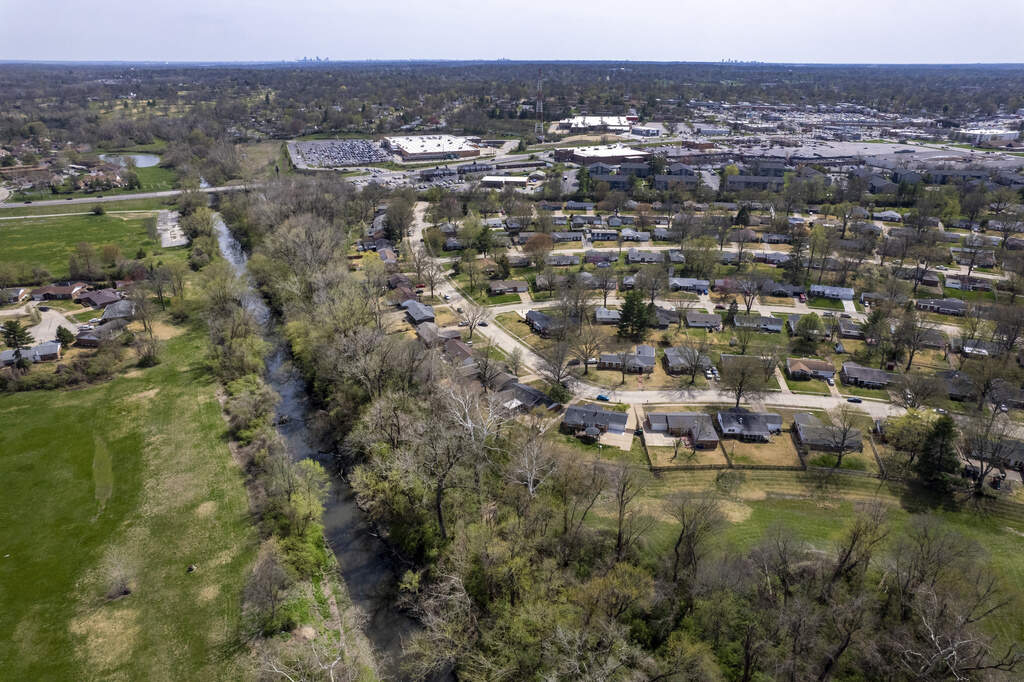
For decades, kids in St. Louis County caught crawdads in Coldwater Creek, made mudpies, went swimming — and were exposed to nuclear waste.
Today, On Point: How St. Louis became a dumping ground for radioactive waste generated by the Manhattan Project.
Guests
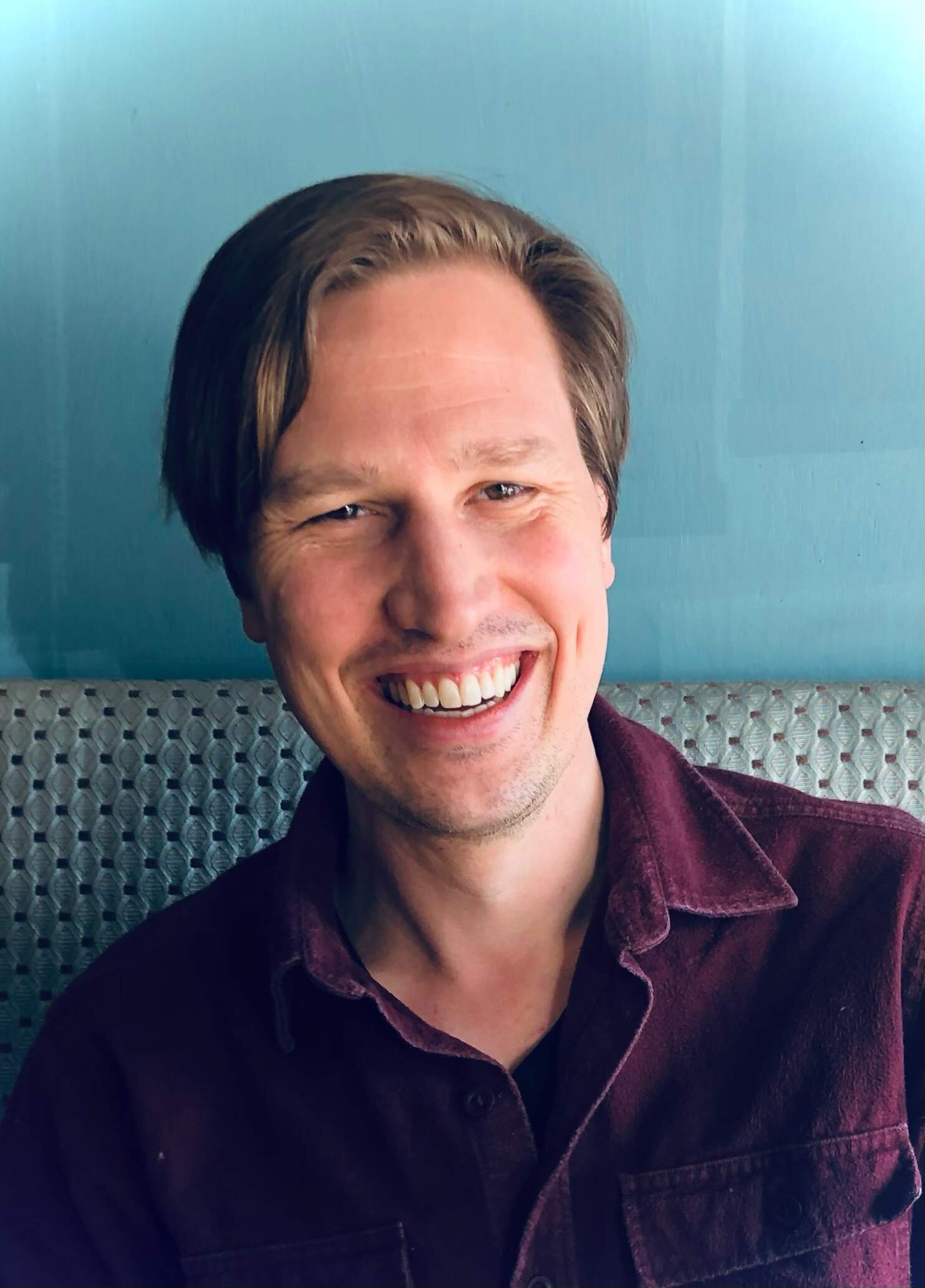
Doug Clemens, current state representative from the 72nd District near Coldwater Creek and the West Lake Landfill.
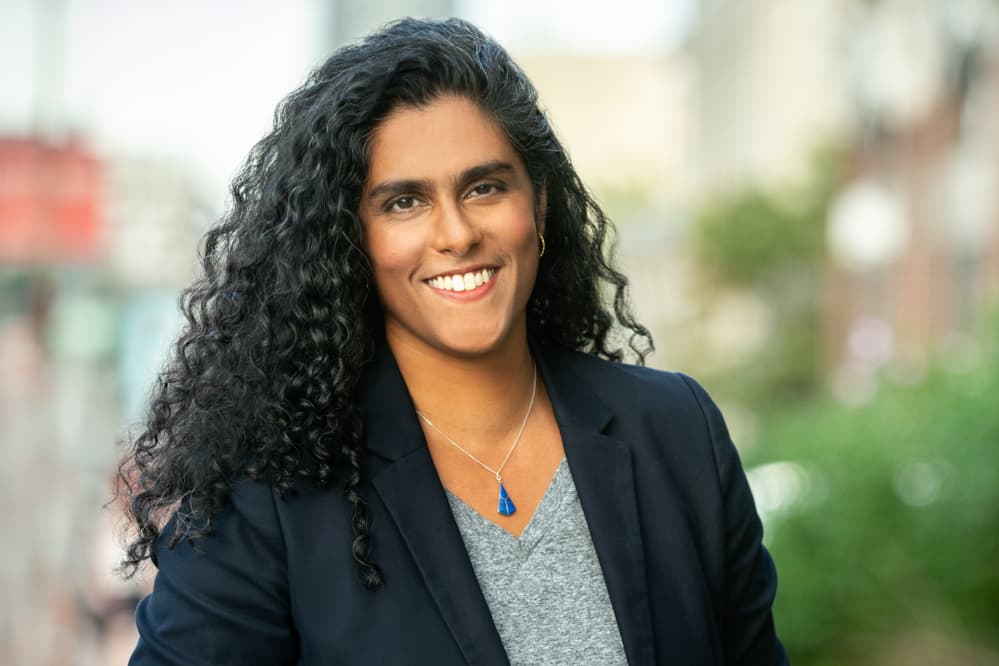
Linda Morice, Author of Nuked: The Echoes of the Hiroshima Bomb in St. Louis.
Also Featured
Debbie Mason, cancer survivor and former resident of North St. Louis County.
Cindi Schroeder, former resident of North St. Louis County who lost her son to cancer.
Transcript
Part I
MEGHNA CHAKRABARTI: Debbie Mason had a typical childhood in Florissant, Missouri. A house and a yard she played in with her three sisters. The house was unremarkable and therefore perfect. A single story, red brick affair with white trim and a screened in porch where the family often ate meals. And behind the house there was a creek.
DEBBIE MASON: We had a tree house down there, a tree swing. We were always down in the creek. We were splashing in the water and we played down there a lot. You know, we were kids. It was great down there.
CHAKRABARTI: The sisters loved the creek so much they even played there in the winter.
MASON: We would attempt to walk on what we thought was frozen ice, but it was not, and my sister fell in. (LAUGHS) And we got in trouble because we weren't supposed to be walking on the frozen creek.
CHAKRABARTI: Well, that beloved creek has a name, it's called Coldwater Creek, and it winds through North St. Louis County.
After a couple of years, her family relocated to California. The sisters grew up, moved out, got jobs, started families. And then, Debbie and her sisters started getting sick.
MASON: My middle sister, Denise, got breast cancer in 2010. She was stage three. She was 45. Then my youngest sister got breast cancer in 2017 and she was 48. She didn't have any cancer in her lymph nodes.
I was the last to get it. I got it in 2020. I was stage two and I had two lymph nodes removed. So I did 36 rounds of radiation. And I opted for a double mastectomy because of my sisters having cancer.
CHAKRABARTI: It took years of treatments and tests. But finally, doctors determined that the sister's cancers were not genetically inherited. Something else had made the siblings sick.
Then just last year, Debbie reached out to a former classmate on Facebook. It turns out that classmate had been sick as well. And her friend asked:
MASON: "Wait a minute, have you heard about Coldwater Creek?"
"Wait a minute, have you heard about Coldwater Creek?"
CHAKRABARTI: Well, of course, Debbie had heard of Coldwater Creek. She'd splashed around in it in the carefree days of her girlhood. It turns out many people who once lived in the area of the creek were getting sick. They had formed an online community and they believed their illnesses were caused by toxic waste in Coldwater Creek.
Decades before Debbie and most of the other families who grew up along that waterway, Coldwater Creek had a different purpose. It served as a toxic waste dump. And the waste had come from one of the greatest scientific and wartime efforts in United States history.
PRESIDENT HARRY TRUMAN [Tape]: It is an atomic bomb. It is a harnessing of the basic power of the universe. The force from which the sun draws his power has been loosed against those who brought war to the far east.
CHAKRABARTI: President Harry Truman, August 6, 1945, announcing the bombing of Hiroshima.
The Manhattan Project was top secret at the time, but it later became known as America's massive and rapid effort to produce the first atomic weapons. You have most certainly heard of Dr. Robert Oppenheimer and the testing that was done at Los Alamos, New Mexico. Additional research was done at universities across the country.
But where did the uranium used in the bombs come from? More specifically, where did the refined uranium come from? Well, years later, Debbie and other sick neighbors found out the answers. It came from production plants in St. Louis and waste byproducts were dumped in Coldwater Creek.
Though it would be years before any government agency would acknowledge a possible link between that nuclear waste and the cancers suffered by Debbie, her family, and former neighbors.
NEWS ANCHOR: Now, a government study confirms it: Contamination at Coldwater Creek could have led to higher rates of lung cancer, bone cancer, and leukemia.
CHAKRABARTI: A 2019 report there from St. Louis Television station KSDK.
Well, joining us now is Doug Clemens. He's a state representative from Missouri's 72nd District, and also former chair of the West Lake Bridgeton Landfill Advisory Group, which was tasked with helping clean up another side effect by toxic waste that came from uranium production in the St. Louis area.
Doug Clemens, welcome to you.
DOUG CLEMENS: Thank you, Meghna, and thank you for having me on today. This is a very important issue that we keep talking about.
CHAKRABARTI: I keep thinking about how surprised, shocked even, Debbie must have been to find out that there was a reason why so many members of her family got sick. When did you first hear about some possible problems in Coldwater Creek?
CLEMENS: So, um, my history with this goes back sometime. I was about 13 years of age when my brother took me along to an environmental meeting that happened to include Kay Drey. So I'm sitting in the basement of this church, bored, and this woman sits down next to me and goes, "who are you sweetie? Why are you here?" And, little bit of conversation. She finds out Coldwater Creek is in my backyard and she has a fit.
So Kay Drey is an authority and kinda like an aunt to me on this particular subject. And one of the few voices way back when of back in the seventies letting us know that we were in danger.
CHAKRABARTI: Mm. Okay. I want to hear more about that meeting that you were at, but, but just to be clear, Coldwater Creek was in your backyard?
CLEMENS: Yes. A tributary --
CHAKRABARTI: And did you play in it ever?
CLEMENS: Of course. We caught crawdads in there. We dug into the bank, which was probably the most dangerous thing we could have done. We actually, as a group of kids, we'd follow the creek into the airport, which was dangerous and all that sort of thing. But there we were, right in the middle of where piles of this stuff had been sitting.
"We caught crawdads in there. We dug into the bank, which was probably the most dangerous thing we could have done."
CHAKRABARTI: Can you describe to me what it looked like? Are we talking about like a big creek? Because creeks can mean different things in different parts of the country.
CLEMENS: So I'd say probably about 12 to 20 foot across, depending on where you're at. Maybe two foot deep, maybe five foot deep. Again, depending on where you're at. If it's at a bend, it's gonna be wider and deeper.
CHAKRABARTI: Gotcha. Okay. So you're 13. You're bored outta your mind at a local meeting in the basement of a church. This woman named Kay comes up to you. And then what happened next?
CLEMENS: So she tells me that if Coldwater Creek is in my backyard, I should not play in it. And that what is in there and where it came from. And I've always been one of those folks that that is very into knowing more than I should in terms of doing extra book reports, that sort of thing.
And I listened to her and I went back to school the next Monday and told everybody. Of course, they didn't want to hear about that. But I've been doing that ever since it seems.
CHAKRABARTI: Huh. Okay. So what year was this?
CLEMENS: That've been probably around 79, 80.
CHAKRABARTI: 1979 or 80. Okay. And so then tell me what happens next, as you continued to learn more — and, well, first of all, did you go back into the creek after she told you not to?
CLEMENS: Um, actually I didn't very often.
CHAKRABARTI: Okay.
CLEMENS: It kind of haunted me in the back of my mind. And, you know, the creek flooded. We had an acre of land in the suburbs, which was kind of an unheard of thing. We plowed and tilled it. We had a garden that produced a lot of food that we ate. And that water would come up to our back door sometimes during floods.
CHAKRABARTI: Okay. So between 1979 and then we heard that clip from the St. Louis television station, that was all the way in 2019 when the government finally acknowledged that they had a role in the illnesses that many people were suffering, how did your knowledge about what was happening in Coldwater Creek and then also the West Lake Landfill grow?
CLEMENS: Well, it, it grew over time by attending meetings. I went to a couple meetings with the Army Corps of Engineer about West Lake Landfill, I mean about Coldwater Creek. Later on, I came back from college and there, there were a number of meetings about West Lake Landfill at the time.
They were starting to talk about a ROD, a record of decision on the property. And I remember giving testimony, fighting that because it was to cover it up and leave it in place. Now, West Lake Landfill has the same waste that Coldwater Creek suffers from.
Basically, there was a subcontractor who was trying to sell some of this stuff for profit, and when they were pushed to clean up the area, they threw it in the back of dump trucks and brought it over to the local landfill and told 'em it was fill dirt. Interestingly enough, the construction company that hauled this stuff was diagonally across the backyard from where I grew up. And they used to hose out those trucks right into the creek.
CHAKRABARTI: Wow. I have to ask, have you suffered any adverse health effects?
CLEMENS: Let's just say that I keep a close monitor on it. I was actually talking off the air recently about every man on my street had either intestinal or stomach cancer. And I've had some pre-cancerous stuff pop up that I have to keep following up on.
CHAKRABARTI: Every man on your street?
CLEMENS: Yeah. Five homes. Statistically abnormal, I would say.
CHAKRABARTI: That's what would be called a cancer cluster. Right?
CLEMENS: Exactly.
CHAKRABARTI: Okay. So tell me a little bit more, I'm still intrigued that in in 1979, 1980, there was already some community activity around what was happening both in that landfill and the creek. Do you remember, when did you learn, or how did you learn about when the community first discovered that this toxic nuclear waste was in their backyards?
CLEMENS: You know, I don't think I knew when the community found out. And it's an interesting thing. It was a badly kept open secret in that people knew it, but it was just so enormous, they refused to believe it. And it really came down to Kay Drey and the people around her educating the community as to just how dangerous it was and what was happening.
Now, as we've gone through things, we found out that the federal government knew in 1947 this stuff was highly dangerous and it was going into the creek.
Part II
CHAKRABARTI: We're gonna hear a lot more about the landfill in a few minutes, but joining us now is Linda Morice. She's author of Nuked: The Echoes of the Hiroshima Bomb in St. Louis.
Linda, welcome to On Point.
LINDA MORICE: Thank you, Meghna, and it's great to be here. Why don't we go back to 1942 where it all began?
The United States had recently joined the Second World War on the side of the allies. And American officials were stunned to receive an intelligence report that Germany was two years ahead of us in creating the ultimate weapon to end the war.
So in order to close that gap, what the U.S. needed was 40 tons of pure uranium. To create the world's first self-sustaining nuclear chain reaction, which as we know now would be the atomic bomb. If successful, the chances would be great that we would win the war. But the problem was there was only a quarter cup of pure uranium in the U.S. at the time.
"What the U.S. needed was 40 tons of pure uranium ... But there was only a quarter cup of pure uranium in the U.S. at the time."
CHAKRABARTI: Oh, wow.
MORICE: And so the best source in the world, the purest and greatest amount of was in uranium oxide in a mine in the Belgian Congo. And somebody needed to get it and purify it. Now this was a tricky situation because the Germans had overrun Belgium and the Belgian government was in exile in London.
The Congo, however, was not in German hands. So in negotiating with the Belgians, they agreed to let the Americans buy the uranium oxide ore if — and this is important — if the U.S. only purchased the uranium in the rock and returned the rest of the contents to Belgium. And their interest was that there was also radium in the rock and Belgium wanted it for its scientific and commercial purposes.
So we agreed to do that, that we would store the waste and return them later. Unfortunately, those wastes were radioactive and, after processing, they became the source of nuclear contamination in large swaths of St. Louis.
CHAKRABARTI: Well, so Linda, that's actually really interesting background because as a side note, of course the Congolese don't have any say in any of this, right? But so then take us to St. Louis, Missouri. I mean, I've never known, I don't think anyone's ever known it as a famed uranium processing city in America. How did in 1942 St. Louis become the place?
MORICE: Well, how it became the place much of it was influenced by the relationship of two men, the friendship of two men.
Arthur Holly Compton was a physics professor at the University of Chicago. He was a Nobel laureate. And until fairly recently, before 42, he had been a professor at Washington University in St. Louis. And he was a friend of Edward Mallinckrodt, Jr., who was chair of the board of Mallinckrodt Chemical Works of St. Louis.
CHAKRABARTI: Aha.
MORICE: So in 1942 with this national emergency, that was being perceived, Compton went to St. Louis to have lunch with his old friend. And he was particularly interested in the fact that Mallinckrodt specialized in ether, which was essential to uranium refining, and also had a reputation for pure chemicals.
CHAKRABARTI: Okay, so can I just jump in here for a second?
MORICE: Sure. Sure.
CHAKRABARTI: And forgive me if I do jump in quite often, but this is a very fascinating story.
MORICE: Feel free! (LAUGHS)
CHAKRABARTI: Because I'm so — it's not only is it not by accident because of the connection with Compton, right? But I understand that this was an untested process and other firms had actually refused to take on the project of processing this uranium. Is that right?
MORICE: Reportedly two other firms had.
CHAKRABARTI: Okay.
MORICE: And I don't know — I think it was private and I don't know which firms they were.
CHAKRABARTI: Okay.
MORICE: But Mallinckrodt readily accepted over lunch. The two men had lunch at a private club downtown. And by the end of the meal, they had sealed the agreement with a handshake.
CHAKRABARTI: Wow.
MORICE: So Mallinckrodt would become a contractor under the Manhattan Project, and like other contractors in that project would be indemnified.
CHAKRABARTI: I see. Indemnified. Okay. That's important.
MORICE: Right.
CHAKRABARTI: But they were successful. I'm seeing that Mallinckrodt and his business, Mallinckrodt Chemical, after a while were able to produce almost a ton of pure uranium every day. And then continued to do this processing all the way until what, 1957?
MORICE: Yes, in St. Louis. And and it was under top secret. So the scenario was the ore was sent from Africa to New York, put on cattle cars and shipped to St. Louis, and it would be purified or refined. And so the problem was that this process created an enormous amount of waste. And so if you're asking where did the problems come in St. Louis, it was those waste products, residues and wastes, that ended up being, quote stored, and I'm using the term very loosely.
"[The] ore was sent from Africa to New York, put on cattle cars and shipped to St. Louis, and it would be purified or refined."
CHAKRABARTI: Yeah.
MORICE: Because they were in barrels or or just dumped next to Coldwater Creek.
CHAKRABARTI: Okay. So was that Mallinckrodt's decision? Or did the government say do what you want? Or did the government say, well, we actually bought some land over here, dump it over there. I mean, how did the dumping actually happen?
MORICE: Okay. Well, Mallinckrodt first was storing the material in its plant. I have read from people who worked down there that some of it actually went down the drain to the Mississippi River which was, you know, that borders St. Louis.
CHAKRABARTI: Yeah.
MORICE: But very quickly, by 1946, the war was over and Mallinckrodt was running outta storage space. So it was the decision of the federal government to purchase by eminent domain approximately 22 acres of land adjacent to the St. Louis Airport, but also adjacent to Coldwater Creek.
CHAKRABARTI: Okay.
MORICE: A land that sloped into the creek.
CHAKRABARTI: Hold on for a second, Linda. Doug, let me turn back to you because in the first segment of the show you mentioned you used to follow the creek to the airport, which was also dangerous, and I couldn't figure out why other than children should not be around airplanes. Is this what you were referring to?
CLEMENS: It is what I was referring to. And one thing I wanna point out, the material we're talking about, a lot of this is raffinate, a talcum powder consistency basically. Some of it's stored in barrels which rusted, opened up, but some of it, just piles in open air.
"A lot of this is ... a talcum powder consistency ... some of it's stored in barrels which rusted [and] opened up, but some of it, just piles in open air."
Children rode their bicycles on the Latty Avenue site as a big mound of dirt, quote unquote. But something the consistency of talcum powder stacked 25, 40 foot high, depending on where it is, covering acres of ground, left in the wind and rain till the 1990s. Think about how far it spread down that creek.
CHAKRABARTI: It was close to the — okay, I'm still thinking it was close to a major airport also.
CLEMENS: Yes.
CHAKRABARTI: Not just the creek, but the airport — and all the way till the 1990, you said Doug?
CLEMENS: Yes.
CHAKRABARTI: So the barrels or the contents have been removed. What about the soil that it was sitting on, sitting in?
CLEMENS: Most of that at the airport site has been removed, quote unquote, to the remediated level. Now that doesn't mean it's been removed. It means that it's down to the level that they're required to get it to by their decision.
Now, interestingly enough, this is one of the things that I talk about a great deal. Is if the EPA was left to its own devices, the cleanup level would be much better than what the Army Corps of Engineers is delivering in St. Louis.
CHAKRABARTI: Okay. Interesting. Because we're also gonna talk about places where there hasn't been anywhere near as much cleanup done. But, so Linda, here's what I'm trying to understand. You mentioned the indemnification before. And I'm presuming that Mallinckrodt insisted to whomever asked about the dumping of this waste, that it wasn't dangerous.
MORICE: Mallinckrodt — well, officials in general, often they were public officials — said it wasn't dangerous.
CHAKRABARTI: Okay.
MORICE: They were spokespeople. But initially, even when the first deposits were being made, even before that, when it was a court case in, in 1946 people and a journalist in St. Louis for example, asked questions about it. And he was told by unnamed officials that it's no different than what any other business would have. You know. So there was a lot of lack of truth. And a lot of this had to do with top, top secrecy and prioritizing winning the war.
CHAKRABARTI: Yes.
MORICE: But after the war was won, they then there was the Cold War, so that was prioritized and cleanup was never a — very rarely a concern.
CHAKRABARTI: Okay. Can I just jump here again one more time? Because again, I'm thinking of St. Louis in its modern day form, right? This huge, big American, important American city. But to be clear, back in what, 1945, 1946, we're talking about northern St. Louis, Doug, was lots of farmland?
MORICE: Yes. And it was it was prairie land.
CHAKRABARTI: Okay.
MORICE: As opposed to other parts of St. Louis County that were had rock and, you know, if you were a contractor, you'd have to dig through that for a basement. So it was prime land for all the new families and the postwar baby boom.
CHAKRABARTI: Aha.
CHAKRABARTI: And so that's where the growth was.
CLEMENS: So industry and homes were set up immediately following the war. We grew quickly in North County. And one of the things that's interesting about Missouri is Karst topography. So we have a great deal of limestone, which gets eroded away and forms caves and our underwater water supply runs in rivers.
And so Coldwater Creek even empties into karst formation in places and moves this stuff underground.
CHAKRABARTI: Wow. Okay. So wait, Linda, I'm also trying to understand here, 'cause your point about this was the Manhattan Project, this was World War II. So the, I mean, the highest levels of classification around these activities, even when residents were like what's going on here? But then the Cold War follows.
And yet at the same time I'm understanding that the Atomic Energy Commission, in 1947 said uranium, they reported that uranium byproducts could pose grave problems if they were just discarded, which is what was happening.
MORICE: Yes. It was saying that the current method of storing a radioactive waste was of grave danger. But not too many years later, well, after the Manhattan Project ceased to exist, it was succeeded by the Atomic Energy Commission. And the head of that organization admitted at one point that chemists and chemical engineers were not interested in waste.
He said there are no brownie points for that. There are no careers to be built. And it's kind of messy. And there are — no one's very interested in being at the back end of the fuel cycle. So if you're looking for causes of the problem, "not a priority" is a major cause.
CHAKRABARTI: Wow. Not a priority when, at the same time, some of the sites, I think, Doug, maybe the site near the airport had the largest — or highest concentration of what, thorium-230, which is one of the byproducts, in the world.
CLEMENS: Right. And I wanna point out that there are multiple sites in respect of processing uranium in Missouri around the St. Louis area.
So there's the original airport site, then there's a Lattie Avenue site where the subcontractor had literally piled the stuff up and was sorting through it. But they moved processing out to Weldon Spring in St. Charles County. And they put the processing plant next to the high school so that the Russians wouldn't think it was a processing plant.
"They put the processing plant next to the high school so that the Russians wouldn't think it was a processing plant."
CHAKRABARTI: I'm sorry. It makes — I'm putting my mind back in war time and it makes, or Cold War time. And I guess at a level of sort of national security, it makes sense. But on the level of the health security of the very people who live there, it makes no sense at all.
And Doug, to your point about the rapid post-war growth of North St. Louis, I'm seeing here that some of the the towns — Florissant, we mentioned earlier, Hazelwood, Blackjack — in the early fifties, there were some 4,000 people. That's what? 85, 90,000? More today?
CLEMENS: A tremendous amount more. Yeah, Florissant alone is over 30,000.
CHAKRABARTI: Yeah. Okay. And there's one more thing. We were talking about barrels earlier. Linda, was there a time that they just also abandoned using barrels and just kind of moved the waste in even less secure means?
MORICE: They, well, they did both. They dumped it and they had barrels and they spilled it along the way. And by 1996, in St. Louis and St. Louis County alone, there were 82 sites that were contaminated with the residues and waste we've been talking about. That doesn't even take in St. Charles County, which is one to the west which is what Doug was talking about.
So, yeah, so it was just the natural forces of gravity, wind, rain, and also creeks flood seasonally, they just do that. And creeks have sediment. So the sediment would become detached. And if the creek flooded over its bank, which it did, then the sediment would go someplace else. And the waters would recede, but the contamination did not go back into the creek.
CHAKRABARTI: Yeah. So, Linda, let me just — in your book, you write, there's something really important here. The waste was supposed to be buried. What, a hundred, 200 feet deep? And that did not happen, right?
MORICE: Well, there were, you know, different solutions attempted along the way. Eventually, a fair amount got shipped west and it was buried. But there was even things that were recommended were not always done.
For example, there was a task force in the nineties that noted that a problem with Coldwater creek and said that it should be cleaned up a according to the highest standards. And it was not. And it was even by 2014, no testing had occurred north of inter the interstate, which is most of the Coldwater Creek watershed.
Part III
CHAKRABARTI: We're gonna talk about the landfill in just a second, Doug, but I want to get back to the stories of people who lived or are living in the neighborhoods we're talking about.
You're about to hear Cindi Schroeder. She's a former North St. Louis County resident, and she used to live near Coldwater Creek.
CINDI SCHROEDER: Well, I first moved there in 1985. It was in the fall, like August. My daughter was four and my son was nine. And we moved into Hazelwood, and that's right by the airport there.
I knew nothing about the vicinity. Well, my son, he was really tall and well-built and he would go outside and ride his bike with his buddies through the creek and he would come back soaking wet. It's just the boys playing outside, you know?
And then he started getting these episodes of profuse sweating. I took him to several different doctors, even took him to Children's Hospital downtown St. Louis. They didn't know what the cause was. They didn't test him for cancer or anything. "Well, he's just a growing boy. He just needs to stop playing outside for a while and use strong deodorant and make him take two showers a day."
And that still did not help. He still was profusely sweating. He couldn't even go outside and play for like 10 minutes of touch football, nothing. So he gave that all up and became a couch potato.
However, when he grew up and moved out, he moved to Kentucky for a while with his real father. And he was working at a place called Shoney's. He fell outside and they had to take him in an ambulance because they thought he broke his legs. They took him to the hospital where they ran extensive testing, and he called me and told me they found that he had sweat gland cancer, that they did not know where it came from, but it's so rare.
So I still didn't think anything of it. I thought maybe it was hereditary. Nope. We couldn't find anyone in our family that had any weird cancers like that.
What the doctors all referred to me was that they knew that it wasn't hereditary because no one in our family on either side of the genes had it. And they concluded that it was environmental, but they couldn't prove it.
So he got treatment, and later in his life he ended up with lymphedema.
They were alternating chemo, then radiation, then chemo, then radiation. And I think they did that for a month. And then when he came home, he went back to college and he started noticing swelling in his ankles. Somebody told him, one doctor told him he had the gout, so they gave him medicine for the gout and that didn't work. Then they put him on some other medicine and that didn't work.
So he ended up not being able to drive. That's how bad his feet swelled. Couldn't put his shoes on. We had to get special stockings for him to wear, and the Medicaid would not cover it. We had to get $800 out of our pocket just for two pairs of compression stockings. They had to be specially made because by that time, his legs were so huge he could not fit into normal compression stockings.
"I blame it all on the creek ... His life was not even half over. He could have lived a better life."
I blame it all on the creek.
He suffered for 15 more years and passed away at the age of 41 from the lymphedema.
I'm still angry. I haven't got through the anger. His life was not even half over. He could have lived a better life.
CHAKRABARTI: Cindi Schroeder, she used to live in North St. Louis County near Coldwater Creek, and she also tells us that she's been diagnosed with cancer in the years since her son died.
Doug Clemens, we also need to talk for a moment about the landfill. The, well, the landfills, right, because we've been focusing on Coldwater Creek. But there's an additional concern with the West Lake and Bridgeton landfills.
Now, West Lake, you correct me if I'm wrong, but West Lake is the site where there is quite a bit of this waste product from the uranium processing and the Bridgeton landfill, there's something else going on. Can you tell us what's happening?
CLEMENS: So the landfill, if you look at it through my eyes, looks like one property.
CHAKRABARTI: Okay.
CLEMENS: However, it is divided into two properties, in two zones by the EPA, the Bridgeton Landfill had a subsurface smoldering event.
CHAKRABARTI: Fire.
CLEMENS: Those of us call it a fire. Yes. (LAUGHS) So, the landfills are connected. s I said, to my eye, they look the same. And we also need to point out the stuff has been left since it was dumped in 1973 to be mixed in, blown around, moved by water.
And one of the problems that we see with Coldwater Creek, with Weldon Spring, with the landfill, is that folks have common sense. They see which way the water runs, they see what's happened to the ground when erosion happens, and they say, "I bet it's over there."
CHAKRABARTI: Mm-hmm.
CLEMENS: And authorities refuse to test over there because it's not within their area, their scope that they think it must be in. Then when a decision is made and they have to characterize things, like at West Lake Landfill, lo and behold they find it where we all thought it would be.
CHAKRABARTI: Yeah.
CLEMENS: So, so we see this continually. The problem I see is, you know, you just played this story. I've got a 6-year-old girl they're talking about giving a hysterectomy to. I've got a 19-year-old girl that died of cancer. This stuff is still poisoning people in folks' backyards.
"I've got a 6-year-old girl they're talking about giving a hysterectomy to. I've got a 19-year-old girl that died of cancer. This stuff is still poisoning people in folks' backyards."
CHAKRABARTI: And it has the potential to poison, I don't think this is histrionics, but put millions more, right? Because, so fires occur in landfills frequently. It's not unheard of, right? Those landfills are generating methanes, right?
CLEMENS: Right.
CHAKRABARTI: You'll see like, the pipes burning off methane. But the concern is if that fire gets close enough to the radioactive waste, I mean, I'm seeing the concerns it could explode?
CLEMENS: Well not explode.
CHAKRABARTI: No?
CLEMENS: It doesn't work like that.
CHAKRABARTI: Okay.
CLEMENS: But it could aerosolize.
CHAKRABARTI: Aerosolize. Okay.
CLEMENS: Which actually, in some ways might be worse because it's going to be clear and odorless and settle on things. And if you ingest this stuff, that's where you get into danger. The alpha particles are what's harmful to us when we ingest them.
And we know that the stuff can aerosolize because out in Colorado there was a fire in a building that processed plutonium and it spread it over miles of territory. So there are shelter in place orders in St. Louis County if the subsurface smoldering event were to ever hit the rad waste. Basically, duct tape your windows shut and wait for somebody to come in a suit and rescue you.
CHAKRABARTI: Wow. Okay, so let's talk about cleanup now with I'd like to hear this, hear from both of you.
We got, there's a statement that EPA put out after EPA administrator Lee Zeldin visited Coldwater Creek back in March of this year. And you are both familiar with this statement, but I just wanna read part of it.
It says that EPA has collaborated with the West Lake Landfill Superfund site responsible parties to establish an expedited timeframe while enhancing transparency with the community throughout the process. By restructuring the timeline to allow for earlier confirmation sampling more time for post remediation plans and EPA's commitment to faster review turnarounds, the agency has defined a new approach to better deliver on its statutory obligations to communities with Superfund sites across the whole country.
So, Doug first of all, what is the plan to clean up? And do you think that EPA is moving with the the urgency that statement seems to communicate?
CLEMENS: I will say that so there are different jurisdictions involved in all of this stuff. Out in Weldon Spring, it's Department of Energy, all by their lonesome. The West Lake Landfill, the EPA has charged and the federal government is a potentially responsible party in that site, as is Coldwater Creek.
Now, Coldwater Creek, historically has been run by the Army Corps of Engineers as lead and the EPA just kind of rubber stamps everything that happens over there. While it is a Superfund site and the EPA does have jurisdiction, they haven't been playing really master of the place.
So what the public has done is really pushed the EPA to exercise its authority as governing the Superfund and the federal government itself as being a potentially responsible party to step up and do what needs to happen under Superfund law.
And we've seen over the last couple of years, the EPA become incredibly responsive to this site. Now, you've got 70 years of wind, rain, and blowing around. You've got the stuff embedded in people's backyards. And right now, this week, there's a place called Cades Court where they're buying out six homeowners because the material is under their homes. And we know what's going to happen is radon gas has been going up because it's a daughter product of uranium.
CHAKRABARTI: Yeah.
CLEMENS: So they're not getting compensation for the trouble that they're going through. However, they're gonna be getting a new house and forced to move out of this neighborhood. We begin to wonder what the rest of North County looks like under those circumstances.
CHAKRABARTI: Wow.
CLEMENS: How many other homes are built on top of this and dangerous and we'll have to move families in order to clean the material up?
CHAKRABARTI: Linda, I hear you there. Go ahead.
MORICE: Oh, yes. Well, I would say first of all, I'll just talk about Coldwater Creek here. It's been nearly — will have been nearly a century when the Corps of Engineers completes its cleanup. And their target date is 2038 and this stuff has been in the creek since 1946. So that's a problem.
And it's also a problem and I understand that the Corps has to follow its mission, but its mission is to clean up the main channel of the creek and within the 10-year floodplain. And then this creek, like many creeks, has all kinds of tributaries where every time it flooded, flood water and contamination backed up. So I have, in, in talking to people in the Corps, I've really urged them to pay attention to tributaries.
I lived a thousand feet from a major tributary of Coldwater Creek for many years, and that has not been tested to this day. And when they do their testing, they don't go down the main channel of the creek. And then if their data suggests they ought to veer to the right or veer to the left a little bit, they do that. But if you think of the nature of flooding and where sediment breaks off, et cetera, it needs to be more than that, I think.
I recently, and I was not involved in this study, but it was reputably quoted to me. The Washington University Environmental Law Clinic found that the cleanup that the Corps is doing is leaving three times more radionuclides than the Department of Energy thinks is safe.
CHAKRABARTI: It's leaving that behind?
MORICE: Well, just because they have their mission. And their mission is to go down the main channel of the creek.
CHAKRABARTI: I see. And not the tributaries, okay.
MORICE: And that's not where it all happened. It's a start, it's an improvement, certainly.
I also think I talked about not a priority. It needs to be a priority. It needs to be a priority in terms of attention and in terms of federal funds. This situation was created by the federal government. They arranged the uranium to come in. They purchased the land by eminent domain, and there have been five successive federal entities going from the Manhattan Project — also called the Manhattan Engineering District — to today, the Department of Energy, which has responsibility. So, and even going back in the nineties, there was a recommendation from a health, you know, to clean it up. So, I think that would be helpful.
"It needs to be a priority ... This situation was created by the federal government. They arranged the uranium to come in."
CHAKRABARTI: I'm just gonna — Linda, forgive me. We're just running out of time and only have about a minute and a half left. I know it seems really hard because both of you, this is your lives, and I fully acknowledge that.
I mean, as you both know, the Army Corps said that, you know, they're doing the best they can. They've removed a million cubic yards of contaminated waste so far. And, importantly, they say they're bound by a Superfund law in terms of how they go about doing the cleanup.
But Doug, we only have about a minute left. And I wanna close with this question to you because it's taking us back to the people who have suffered the impacts of all of this. Senator Josh Hawley has reintroduced a bill to help create an avenue for people to get compensated if they've been impacted by this contamination. I mean, do you think that's gonna help? Or is the legacy of this going to be long and deadly for, I don't know, generations to come?
CLEMENS: The answer to that is yes to both counts, but I've been working with the senator on that piece of legislation, the expansion of RICA. It's a national effort.
CHAKRABARTI: Yeah.
CLEMENS: Because as you know, St. Louis is not the only place where folks are affected by this. And so we're trying to get everybody included, where the federal government basically poisoned its own people, make sure that they get some recompense in terms of healthcare.
One of the things I wanna point out for the St. Louis area is lost opportunity, lost revenue. This affects our ability to grow as a municipality. It affects the people's psychology, not just their physical health, their mental health, the school districts, For example, we had a school closed because of contamination. The school district had to take those costs, not the federal government.
CHAKRABARTI: Yeah. Well, Doug Clemens, state rep from the 72nd District near Cold Water Creek and former chair of the West Lake Bridgeton Landfill Community Advisory Group. Doug, thank you so much.
And Linda Morice, author of Nuked: The Echoes of the Hiroshima Bomb in St. Louis. Linda, thank you so much as well.
The first draft of this transcript was created by Descript, an AI transcription tool. An On Point producer then thoroughly reviewed, corrected, and reformatted the transcript before publication. The use of this AI tool creates the capacity to provide these transcripts.
This program aired on June 2, 2025.