Support WBUR
Netanyahu’s endgame in Iran
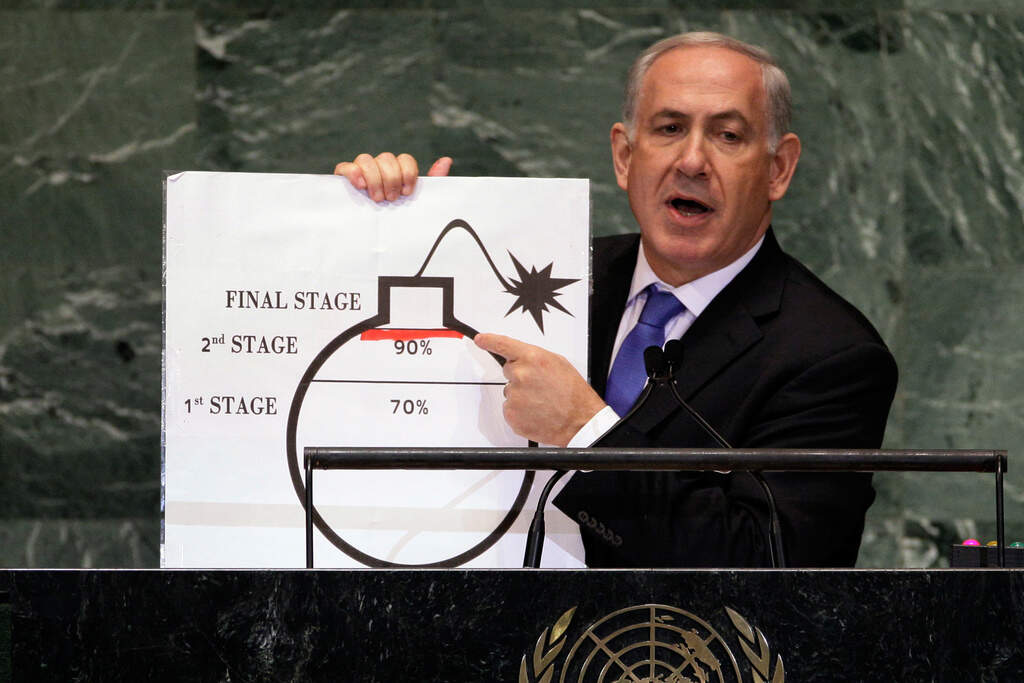
Israel's Prime Minister Benjamin Netanyahu got what he wanted this weekend after the U.S. bombed Iran.
But Netanyahu says its goals in Iran have not yet been fully achieved.
So, what are Israel’s goals in Iran? And what role does the U.S. still play?
Guests
Akbar Shahid Ahmed, senior diplomatic correspondent at HuffPost.
Ori Goldberg, Israeli independent analyst. Author of the Al Jazeera op-ed "The real reason Israel attacked Iran."
Ray Takeyh, senior fellow for Middle East Studies at the Council on Foreign Relations. His areas of specialization are Iran, U.S. foreign policy and the modern Middle East. Author of the Wall Street Journal op-ed "Israel’s Strike Changes Everything in Iran."
Transcript
Part I
DEBORAH BECKER: Our topic today is the rapidly changing conflict between Israel and Iran, the U.S. role so far in the conflict and the reported truths. We'll start with President Trump declaring on Truth Social last night that Israel and Iran agreed to a quote, complete and total ceasefire.
Since then, Israel has accused Iran of violating the agreement and it promised to retaliate. Now, Iran denies any wrongdoing and this morning, again, on Truth Social, Trump wrote in all caps, Israel, do not drop those bombs. If you do, it's a major violation. Bring your pilots home now. The president was asked about this morning as he was boarding his flight to the NATO summit in the Hague.
DONALD TRUMP: I am not happy that Israel's going out now, there was one rocket that I guess was fired overboard. It was after the time limit and it missed its target and now Israel's going out. These guys gotta calm down, ridiculous.
CHAKRABARTI: The U.S. officially entered the Israel-Iran conflict when it bombed three key nuclear facilities in Iran over the weekend.
TRUMP: Tonight, I can report to the world that the strikes were a spectacular military success. Iran's key nuclear enrichment facilities have been completely and totally obliterated.
BECKER: The U.S. attack named Operation Midnight Hammer involved U.S. B-2 bombers. Here's what defense secretary Pete Hegseth said on Sunday.
PETE HEGSETH: The order we received from our commander in chief was focused. It was powerful. And it was clear. We devastated the Iranian nuclear program. But it's worth noting the operation did not target Iranian troops or the Iranian people.
CHAKRABARTI: At that same press conference. Chairman of the Joint Chiefs of Staff General Dan Caine specified that quote, final battle damage will take some time, but initial battle damage assessments indicate that all three sites sustained extremely severe damage and destruction.
End quote. President Trump said the goal of all of this was to destroy Iran's nuclear capabilities, which Israel also outlined as its main reason for attacking Iran earlier this month. Here's Israel's Prime Minister Benjamin Netanyahu in response to the U.S. airstrikes.
BENJAMIN NETANYAHU: First comes strength, then comes peace.
And tonight, President Trump and the United States acted with a lot of strength. President Trump, I thank you. The people of Israel thank you. The forces of civilization thank you.
CHAKRABARTI: And President Trump issued a strong warning to Iran if it retaliated.
TRUMP: There will be either peace or there will be tragedy for Iran, far greater than we have witnessed over the last eight days.
Remember, there are many targets left. Tonight's was the most difficult of them all, by far, and perhaps the most lethal. But if peace does not come quickly, we will go after those other targets with precision, speed and skill.
BECKER: Iran did launch a missile attack Monday against an airbase in Qatar, the largest American military installation in the Middle East.
U.S. officials said Iran warned them before the attack and air defenses intercepted those missiles, so nobody was hurt. That's where things stand as of a few minutes after 10:00 AM Eastern time on Tuesday. Now, President Trump has said he wanted the U.S. role in the conflict to end with the bombing of those three Iranian nuclear sites, and he said a wider war was not on the table, but after Iran strikes and this shaky ceasefire, has his position changed?
Israel's prime Minister Benjamin Netanyahu says his goals have been achieved in Iran, but he also said it'll respond forcefully to any violations of this ceasefire. So this hour we're asking, what is Israel's end game in Iran and what's the role of the U.S.?
Is diplomacy still possible? Joining us is Akbar Shahid Ahmed. He's a senior diplomatic correspondent for HuffPost, and he joins us from Washington, D.C. Welcome to On Point.
AKBAR SHAHID AHMED: Hi Deborah.
BECKER: So can you tell us what you think led to this ceasefire agreement that was piecemeal announced as of last night?
SHAHID AHMED: I put in a couple of factors.
President Trump's willingness to deal with Iran in a way that Netanyahu has not wanted to. That's been consistent throughout his now young presidency. There's also the factor that Iran's truck. Qatar, a mediating country, which Trump is very close to the leadership. He actually has not just political ties, but business and personal ties as he does to many Gulf dictators.
And then I just put, the Trump administration has been facing a huge amount of backlash from some of the president's own conservative, right-wing supporters who have said, you campaigned saying no new wars. Kamala Harris as my rival will actually take us into World War III. So what are you, Donald Trump, doing?
And I think that pressure had mounted on the Trump administration to the point where, yes, Trump did go ahead and approve a strike that Netanyahu had long sought. And then he very quickly felt, you saw administration officials within 12 hours say it was a very successful strike.
One-off, limited. What's really key to remember Deborah, is we are playing with fire with a very chaotic and quite poorly equipped team on the Trump side. So while I think there is still a desire for diplomacy with Iran, and you might see that ramp up in the coming days or weeks, the actual fundamental issue of Iran's nuclear program and the really complicated questions about how do you get to a compromise between Tehran and Washington, that process hasn't even begun. And Trump's war has likely made it harder by diminishing trust on the Iranian side.
BECKER: And why do you say that? Is it in part based on what we're seeing after this ceasefire announcement, there are alleged violations, Iran's denying that, what's going on?
There doesn't seem to be a clear picture. And of course, President Trump's threats to both sides. This morning after those reports of the ceasefire violations, is that, or what's leading you to say this?
SHAHID AHMED: I think it reflects the fact that the Trump administration didn't have a plan or strategic doctrine for getting the U.S. involved in this war.
And it's so important to remember the U.S. is not just involved in the war through direct strikes on Iran. The U.S. every day has been intercepting Iranian missile barrages on Israel, and Israel's attacks on Iran have been enabled by its fair assumption that the U.S. will replenish its stocks of weaponry.
So the U.S. is really deeply implicated. I think the Trump administration, while it wants that deal, that what you're seeing with the ceasefires demonstrating they still don't quite understand the players they're working with. Prime Minister Benjamin Netanyahu has never wanted a nuclear deal with Iran, right?
He said for years he campaigned against President Barack Obama's attempt to get that deal in 2015. And he said for years the only way to deal with Iran is through military force. So I think we'll be back here. And what's making all of that harder is that Trump has crossed the Rubicon in terms of a direct U.S. strike on Iranian nuclear facilities.
He's done that now ... and Iranians have said, you didn't destroy our stockpile and we're going to be that much more secretive about it.
BECKER: So you don't think that despite the reports from the U.S., that the Iranian nuclear capabilities were in fact affected and affected badly.
You don't buy that?
SHAHID AHMED: U.S. officials themselves have said, Vice President JD Vance, notably said, Iran's stockpile of highly enriched uranium has not been destroyed. So even U.S. Intelligence has that. Of course, this is a hyperbolic administration that likes to say its military strikes are successful and beyond belief and all of that, but the evidence of the damage hasn't been shown to us. And really important to remember, right, this idea that military force will deal this knockout blow. Who is going to verify that? Because the Iranians are not going to necessarily expose their entire infrastructure. Does that mean American inspectors need to go in, is really international?
And how will Trump get to that point to even verify the damage he caused?
BECKER: So you think this is going to continue in some respects, I would say. That's what it sounds like to me.
SHAHID AHMED: Yeah. I think we'll be back here unfortunately in kind of three or six months because I don't see how Trump gets from this to a sophisticated actual deal with Iran.
BECKER: And what about, you mentioned the Iranian attack on the military base in Qatar and what that might mean here. What does that say about what Iran is doing and its role in all of this. And we should say as we mentioned, Iran did warn the U.S. about this attack.
SHAHID AHMED: Iran is described by Israel in the U.S. as this immeasurably evil, beyond conception regime.
And at the same time, consistently, the U.S. and Israel will rely on Iran to be the force of moderation, to prevent all out chaos. That's a pattern you saw in the first Trump presidency when he assassinated Iran's top general, and they did a similar thing to what they did yesterday in Qatar. They attacked a basically empty base, didn't kill anyone, right?
So Iran certainly made possible the ceasefire in. That doesn't mean anyone should have illusions that the regime has suddenly become pro-western or any less repressive at home. It just means that Iran has often been able to look a little more rationally and not be driven in a way that in Washington and to an extent Tel Aviv, a lot of this has been driven by deep seated hawkishness, which is really rooted in a lot of emotion and hatred for the regime, rather than a strategic plan of how do we get to dealing with them.
And I'd say from the Iranian point of view, they didn't begin this war right now. I think they were quite puzzled that Trump permitted Israel to start a war with Iran, and they felt they were getting somewhere with the talks, and I think now they're going to be much harder as a result. I was talking to some Iranian sources yesterday and I was struck by the fact that they said, look, the voices now that are pushing skepticism of any nuclear diplomacy with the U.S. That's not your hardliners inside Iran. That's actually some of your more moderate voices, the more reformist voices who are now beginning to distrust any international negotiation.
BECKER: So do you think that diplomacy is even a possibility at this point?
SHAHID AHMED: I think it's the only way forward, Deborah, because I don't think there's an appetite in the U.S. for a huge war on Iran, which is the real only alternative. Because there has to be some kind of resolution to this question of Iran has all this highly enriched uranium now. Again, because Donald Trump got out of Obama's nuclear deal, Iran enriched because the deal collapsed.
So what do we do with that highly enriched uranium, and no one wants to see this get into an all out war, which would be deadly for the 19 million people in Iran, potentially for Americans, likely for Israelis as well, but also just hugely disruptive globally to trade, to any sense of lingering stability we have, while we still have these devastating wars in Gaza and Ukraine as well.
Part II
BECKER: Before the break we were talking about the potential of diplomacy, which you said is the only way forward. And I wonder if we've seen any sort of movement or discussion along those lines, especially after these allegations of violations of this ceasefire that was announced this morning between Israel and Iran.
Is there any reason for optimism right now?
SHAHID AHMED: The main barrier to diplomacy at this point, I'd say is Iran's trust deficit with U.S. Trump coming out quite strongly and saying, and calling out these five violations, and notably saying he believes Israel is more responsible than Iran for the violations.
That's notable. I think that does help a little bit to establish a little more trust with the Iranian side. Of course, Iran did bomb right up until the ceasefire, so did Israel, bomb after the ceasefire was already announced, before it went into effect. What happened then was one Israeli strike went after the ceasefire.
All that to say, the fact that Steve Witkoff, who has been President Trump's chief negotiator with the Iranians, was involved in getting the ceasefire. That's notable. I think that shows, again, that's an interlocutor that the Iranians feel they can deal with and crucially can get things done with Trump, but there's a lot of fear of Netanyahu being a spoiler, not only with this really fragile ceasefire, but with nuclear diplomacy as it picks up with Witkoff and with the Iranians.
I wanna introduce into our conversation here, Ori Goldberg, he's an Israeli analyst. He holds a PhD in Middle Eastern studies with a specialization in Iranian affairs.
He's also a former professor and national security consultant. He joins us from Israel. Welcome to On Point.
ORI GOLDBERG: Thank you, Deborah.
BECKER: So I wonder, can you tell us what is the mood like? Is there a sense of relief or is there still a lot of concern after the ceasefire, then the apparent violations of the ceasefire.
What's happening in Israel right now?
GOLDBERG: There's a lot of confusion. There's some relief. I don't think anybody was really concerned about the violation of the ceasefire. I think there was a general sense that had the Iranians wanted to actually violate the ceasefire they would not have fired two missiles on the Israeli North.
I think that Israel still hasn't processed President Trump's reaction to the Israeli fighters flying towards Iran and having them turn back midway because of a conversation with Netanyahu. But generally there's a sense of confusion. We have been told, not now, but for a generation, that the war with Iran was inevitable and that once this war would be fought, the forces of righteousness, as our prime Minister said, forces of civilization would win the day. We don't appear to have won the day. So there is real tension between our foundational narratives, if you will, and reality on the ground.
BECKER: Let's talk about some of the goals here. Israel's goals in particular.
You've been hearing this for a generation, that something needed to be done about Iran and now of course something has been done, and the U.S. has been involved, and Israel has called this attack preventative, and sparked by evidence that Iran was in fact building up its nuclear capabilities.
What do we know about that and why Israel decided to make this move right now?
GOLDBERG: I think the general assessment all over the world is that there was nothing preventive about Israel's attack. Preventive strike requires an element of urgency in self-defense, and to the best of my knowledge, nobody claims that anything substantive changed in the relationship between Israel and Iran.
Even after the IAEA report I think it's quite clear that Netanyahu decided to carry out this attack, which had obviously been planned for many months, if not more because of political considerations. Some domestic, some foreign, and most of them having to do with Gaza. I think he chose this time because he felt global momentum beginning to shift slightly.
Israel had exhausted all of its options in Gaza. It could get nowhere. It was involved in the daily killings of Palestinians next to the quote-unquote aid centers. And a war with Iran was just the thing both for rallying Israelis around his leadership, but also for recasting Israel as the bastion of civilization fighting the good fight.
Bringing the world back in line to treat Israel with the impunity to which it had grown accustomed.
BECKER: So using Iran as a ruse for his own political lens, is what you're saying Netanyahu did here?
GOLDBERG: I do, not just on principle, but also because Israel failed to define any clear goals for this war. The decapitation of the nuclear program, of course, did not take place, but it wasn't even clear if you could get the United States to enter the war.
And even when the United States struck at the Iranian nuclear installations, I don't want to say it did so half-heartedly, but after the strike the United States retreated and talks began immediately. They probably began beforehand. I don't think Israel succeeded in what it set out to do, which was to bring the world again, to rally behind Israel.
BECKER: But the U.S. did get involved. Why? Why would the U.S. get involved in something like that? That was obviously a personal thing for Netanyahu. If in fact that is what happened here.
GOLDBERG: I think the U.S. got involved more because of Trump than because of Netanyahu. I think Trump needed a win. I think Trump needed to quell what he saw as potentially disturbing opposition on the right wing of the MAGA movement.
And generally, I think that despite Trump having replaced all the regime changers who were around him during his first term. I think this is a prevalent, powerful story that is being told by the American right. And Trump saw an angle where he could get involved with relatively little cost and come out of it having this cake and eating it too.
Generating a deal between Iran and the United States, or perhaps between Israel and the United States, and then also doing something that would make him appear powerful. The commander in chief, perhaps it came as a consolation prize after the debacle of his birthday parade. But all of that was on the line.
And I don't think it was a strategy. I think it was really played by ear on an hourly basis.
BECKER: But a lot of people, a lot of his base is not happy about this. So a lot of Trump's base is not particularly happy. But I also wanna ask you about this idea of regime change, which has been brought up here.
That was also a motivation here for many parties involved. Israeli Prime Minister Netanyahu called on the people of Iran to stand up for freedom. Now, the U.S. Defense Secretary, Pete Hegseth, was asked about this and explicitly over the weekend he said, that's not a goal of the U.S.
Let's listen to what he said.
HEGSETH: This mission was not and has not been about regime change. The president authorized a precision operation to neutralize the threats to our national interests posed by the Iranian nuclear program and the collective self-defense of our troops and our ally Israel.
BECKER: Ori Goldberg is regime change at all something that's at play here?
GOLDBERG: I highly doubt it. From the Israeli side, regime change was brought up only when it became clear that while Israel had established aerial dominance over Iran it could not do much more than strike continuously killing Iranian civilians. It did not manage to dent the Iranian nuclear program in a significant way.
Regime change is always a trope, but Israel's efforts were symbolic at best, and even then, I have to say they were pretty lame. Calling on the Iranian people to rise after being attacked unilaterally in an unprovoked fashion is somewhat akin to asking the civilian residents of the Gaza Strip to rise against Hamas after Israel has been starving them for going on two years.
It's very much a Netanyahu move, but it isn't substantiated by reality on the ground in any significant way. I think regime change was a card that was used when the attempt to strike at the nuclear program proved to some extent futile or when they proved ambiguous like they did after the American strike.
Proof on the Israeli side is that the main person who spoke about regime change was our minister of defense. Who mostly serves to parrot Netanyahu's loftier ideas and to provide fictitious guidances to our military to pursue targets that are at best ambiguous and ambivalent, like regime change.
No, I don't think it was ever a practical goal on the Israeli side. Certainly not on the American side.
BECKER: And do we have any idea at this point, we've heard claims that there, it has been significant damage to Iran's nuclear capabilities, because of the U.S. strike over the weekend, particularly the underground nuclear program that was operating in Iran.
Do we have any idea exactly what might be going on there or how we even figure that out going forward?
GOLDBERG: No, we don't. One can assume that there was significant damage. These ... bunker busters actually appear to work, but what kind of damage and what happened to the Iranian stockpile? Nobody seems to know with the general assessment being that it likely was not destroyed, as Vice President Vance said.
And if that is the case, then even if the Iranian program was set back by, I don't know, months or years, it doesn't really matter. Netanyahu talked about an imminent inevitable threat that apparently was not there. No such threat actually materialized. So right from the start, this was political. This was not about what Iran has and how to deny it various capabilities.
This was political and there were safeguards trying, the relevant party is trying to put safeguards in place looking forward towards a new nuclear deal. It was whether Iran would be able to enrich uranium at all, or whether it would be able to enrich uranium to a degree that would allow it to construct a nuclear weapon.
Israel wanted everything. Israel wanted Iran to be denied any nuclear capabilities whatsoever. It doesn't look like anybody's supporting Israel's demand at the moment. So once talks begin, talks will mostly be with Iran. Israel will have to be content with the somewhat dubious achievement it claims to have.
BECKER: So where does it go from here? Does it go to talks and what does Iran do in all of this? We saw the attack on the U.S. military base in Qatar. Is that something that Iran had to do after the attacks by the U.S. over the weekend or what do you make of this?
GOLDBERG: I think it was something that Iran felt it had to do.
And moreover, I think it was something that the U.S. and Qatar understood that Iran had to do. The Iranians have demonstrated that if they want to attack, if they want to launch a salvo or a barrage of missiles, they can do in a much, much more effective and intense way than the attack that was launched on Qatar.
This was not meant to hurt American personnel. This was meant to serve as a demonstration that Iran means business and having performed its purpose could now move on to the more important stage of this, but the budding relationship, which are the talks that may facilitate another agreement, even if it is of an interim nature, Israel chose to go all in.
And when you go all in, you tend to amplify and exacerbate the circumstances, not just of your response, but your interpretation of any response on the part of your arrival. So Israel had to assume and had to talk the talk as though every Iranian moved was pregnant with a sense of destiny and you heard our Prime Minister.
There was nothing diminished about his tone, and it's been this way from the beginning. And if anything, he only went more grandiose and more bombastic. And that's Israel's main problem at the moment. Israel is thriving on hyperbole while everyone else seems to be wanting to get down to brass tacks.
Israel is not capable of doing that. It can attain a brilliant tactical successes. It can strike and it can kill, and it can destroy, and it can assassinate, but it doesn't really have an end game, which makes all of its tactical prowess ultimately somewhat pointless.
BECKER: But, and again, the reason that the U.S. and others would go along with this is what?
GOLDBERG: Again, I think it's about Trump. Trump and perhaps Secretary Hegseth. I think it's about scoring a win in a place where that win will come at relatively low cost and can be played and leveraged to the benefit of the interest of parties. Even those on the MAGA right who are not happy with Trump's decision.
I think what he did today, and I don't remember any American president doing this to Israel. Warning Israel, forcing Israeli planes to turn back midway as they were headed to strike in Iran. I think what Trump did today send a very powerful signal, and I think Trump was counting on the images, the Star Wars like images of the B-2 strike on Fordow to remain in public consciousness without any clear idea of what actually happened.
I think that this can be demonstrated by the fact that nobody still knows what actually happened and nobody on the American side seems to be very eager to reveal what happened, even if America does know. So I think this was as far as Trump is capable of managing a message, I think this was a message that was meant to appeal to everybody.
It was meant to present Trump as strong and mature, but was also meant to show that Trump does exactly what's best for America, and if he decides that striking Iranian nuclear installations is good for America, but then decides that the next step is not, he will back away. Without a second's hesitation.
SHAHID AHMED: Deborah, could I just jump in on something?
BECKER: Certainly.
SHAHID AHMED: So I just, I think he raised, you raised such an interesting point Ori, about the tactical success for Israel, but the real lack of a strategic picture of how we get beyond this, rather than being a place of constant crisis, violence and danger, volatility.
And I think you cannot read this moment between Trump and Netanyahu, Iran without looking at what happened before Trump took office, right? Netanyahu was able to feel under the Biden administration in its response to October 7th and the really heinous Hamas attack, of course. Netanyahu through the 18 months that Biden was in office following October 7th, received unprecedented U.S. support and was able to go beyond his wildest dreams in terms of never getting a red line from the U.S., right?
Biden very repeatedly said, I will stop the Israelis from doing X. I'll stop them from attacking Rafah. I'll stop them from displacing Palestinians. He never issued consequences. And so the emboldening that Netanyahu got, that allowed him to treat a matter of really important foreign policy as a political, domestic matter, that emboldening happened because of U.S. choices under President Biden, well before Trump.
So I think that pattern has to really be seen. And I just also note, I think listeners might not know this, but it's really important to remember that Iran does not now have a nuclear weapons capability. The last time it was thought to have that was 2003. Since then, it said it won't, and verifications have shown it hasn't moved towards a weapon.
So just for people to understand what we're talking about is a nuclear enrichment program right now, and if the goal is truly for the U.S. and Israel to move towards no civilian nuclear program for Iran at all. Also, important. Remember, that's a shifting of the goalposts from the previous nuclear deal.
Part III
BECKER: Ori, what I'd like you to do is just respond to some of the things Akbar was saying before the break, namely that Prime Minister, Israeli Prime Minister Netanyahu has been somewhat emboldened by previous actions of the Biden administration after the Hamas attacks of October of 2023. And also, that Iran does not have a nuclear bomb, isn't there yet.
And what we're talking about are nuclear capabilities on the part of Iran. What would you say to those things that Akbar wanted to point out before we had to take a break?
GOLDBERG: I agree with both points wholeheartedly. I think the Biden administration really did embolden Netanyahu both through omission, but also through direct statements.
And Netanyahu believed he can do anything. But I think when we look at the grand game, we often tend to underestimate the effects of time. Israel's response to the Hamas massacre on October 7th, 2023, may have been justified or appropriate. It doesn't matter what word we choose.
After nearly two years of doing what it has been doing in Gaza, that response is now something completely different. And I think that when Trump took office, he adopted a very different policy with regard to Netanyahu, who I think he personally dislikes. Trump remembers very well the cartoon showing Netanyahu walking him on a leash.
And I think what he said to Netanyahu, that's my understanding of the situation, was, listen. I'm not going to deny you weapons and you can do whatever you want, but I'm not going to risk my head in this. I'll see what you're doing and I'll decide what I do in response. Here in Israel, we were very excited at some point during the supposed ceasefire with Hamas, when President Trump said one week, if Hamas doesn't release all the hostages by Saturday, I will open the gates of hell.
No hostages were released. No gates of hell were opened. When President Trump talked about the plan for the ethnic cleansing of Gaza, everybody in Israel, especially the right wing, thought the Messiah had come. This isn't actually happening. And the United States is not actually supporting any kind of the removal of Palestinians from the Gaza Strip.
So I think Trump divides the world into winners and losers.
And I think that when he looked at Netanyahu in Gaza, he saw a loser because Israel had failed abjectly in achieving its self-defined war goals. Hamas had not been destroyed. Hostages had not been returned. I don't think Trump wanted a lot to do with Gaza other than standby the contractual obligations of supplying weapons.
But I think that with Iran, Trump genuinely wanted to see what Israel could pull off. And after seeing Israel's, again, tactical prowess over Iran, especially when it comes to aerial attacks, he was certainly open to talking about the possibility of participating in a strike.
But very clearly and almost immediately, no more. When Israel embarked on this war, Israelis were prepared. That was what our leadership told us, for a conflict that could last months, for a war of attrition, for endless missiles and endless casualties, because this was what had to be done. I don't think Trump thought of this as something that had to be done.
BECKER: But what about, how does the U.S. emerge a winner now? Like where do we go from here? Especially also, as Akbar pointed out, there's real damage in any trust that Iran might have with the U.S. for any kind of diplomatic talks to go forward. So it's gonna be hard to win this one if that is really the objective of the U.S. President.
GOLDBERG: It is. It is going to be hard, but I don't know if the U.S. president is in it to win it. I think the U.S. president is in it to leverage it as much as he can. And I think there's certainly a nuclear deal to be potentially signed with the Iranians, even if it is an interim one. At first, I think the lines are pretty clear and the Iranians have themselves declared their readiness to commit to such a deal.
True. Trump has the damaged trust and good faith, but Trump has perhaps earned. Or earned again, the trust of good faith of his friends in the Gulf, the Saudis, and the Emiratis, because he has demonstrated that he is willing to strike Iran on Iranian soil when push comes to shove. But it also that he is not crazy like Netanyahu, that he doesn't want a destabilizing war, but his security doctrine calls for some carrots and some sticks as required. And in that sense, he may have presented himself to the Saudi Emirati royalty as more mature than they had reason to believe.
BECKER: Israeli independent analyst, Ori Goldberg.
I wanna thank you so much for bringing your perspective on the program today. Thanks for being with us.
GOLDBERG: Thank you for having me, Deborah.
I now wanna talk with Ray Takeyh, a senior fellow for Middle East Studies at the Council on Foreign Relations. His areas of specialization are Iran, U.S. Foreign Policy, and the Modern Middle East.
Welcome to On Point, Ray.
RAY TAKEYH: Thank you very much. It's a Council on Foreign Relations.
BECKER: Council on Foreign Relations. Thanks so much. One thing I would like to ask you about is, now you've been listening, you've been hearing what Ori said about Israel, but what's happening in terms of the Iranians?
What would you say is going on in most the minds of most Iranians today with all of this attacks by the U.S., ceasefire, not ceasefire. Yes, there is. What is happening there and where do we go from here?
TAKEYH: That's hard to say at this point. I think the leadership of the country is rather confused, is discombobulated by everything that has happened.
The air defenses were penetrated. The nuclear program, which they put so much national emphasis on, has been damaged, possibly ruined, and the population is largely traumatized. So this is a country that's trying to get its bearing back. Before figuring out what the next steps are, this was a very serious setback for the regime.
And it was a setback facilitated to a large extent by penetration of his intelligence services and his security apparatus.
BECKER: I want to play a piece of tape here from the Iranian Foreign Minister Abbas Araghchi, right at a conference in Turkey over the weekend who responded to the U.S. Airstrikes on the Iranian nuclear sites.
This is what he said.
The United States itself has now also opted for a dangerous military oppression and aggression against the people of Iran. In doing so, the U.S. administration holds sole and full responsibility for the consequences of its actions, including the Islamic Republic of Iran's right to self-defense under the principles of the United Charter.
In accordance with the UN charter and its provisions allowing legitimate response in self-defense, Iran reserves all options to defend its security, interest and people.
BECKER: I'm wondering, Ray, when you hear that it sounds very strong, we are going to defend ourselves, and then we saw obviously the attack on the U.S. military base in Qatar.
What do you think is the main thinking here on the part of Iranian officials going forward? That they will take decisive action, that there might be more attacks if provoked, or do you think there is more of an effort? There's going to be more of an effort toward diplomacy and talks?
TAKEYH: The two positions are not necessarily inconsistent.
The Iranian response in the Gulf was predictable because they had to essentially suggest that the government is still in control. It is still capable of responding, it is still capable of making national security decisions. This is a government whose leadership military leadership was decapitated and its principle leaders were in bunkers and hiding, and it was unclear whether they were even in communication with one another, they could make decisions and they could execute decisions.
So this was in some way indication of continuity of government, which was in doubt. My guess is that Iranian response will unfold over time. Over the years they have mastered the practice of using proxies, allies, militias to inflict terrorist damage on their adversaries. We may see that again at some point.
But this is something that's gonna linger for a while. And if revenge can be had, I think it will be had, but I suspect it will be at the time and place of their choosing. Most likely the means would be terrorism, whether it's American targets, tourists, students, military installations, diplomatic compounds, and so on and so forth.
We will see that at some point, I suspect.
BECKER: And what about this idea that perhaps Iran might take the step of restricting the maritime trade route through the strait of Hormuz? Likely or not likely?
TAKEYH: It will damage its own ability to transport oil, which is already very important to its struggling economy.
It will damage the prospect of commerce with its principle commercial partner, China. It will not be a reasonable thing to do, but we're not living in a reasonable age, and people are behaving in an impetuous manner. I suspect that's beyond Iranian strategic thinking at this point, simply because it will necessarily involve the United States, which has a very substantial naval presence in the Gulf at this point for justice.
BECKER: And talk about regime change. What do you think of that? Do you think that really is one of the incentives in all of this here, despite folks saying that it isn't? And what do you think most Iranians think of that?
TAKEYH: I suspect the president is right in the sense that he wanted disarmament, not necessarily a change of regime.
That's been what he has talked about all along. In terms of the Iranian people, the relationship between the government and the people is a strange one. The Islamic Republic has confronted social protest movements before, it will confront one again and the thinking is perhaps with a weakened regime, with the security services somewhat discombobulated, that such a protest movement can succeed.
I think at this point, that's a farfetched proposition, but certainly in the future, the Islamic Republic has a lot of explaining to due to own people, it invested billions in a nuclear program. It foregoes trillions of dollars in terms of economic sanctions in order to dogmatically pursue that nuclear program. It's damaged today.
So they has to explain to the people what was this all about.
BECKER: And do you think this ceasefire announced yesterday and into today? Do you have, are you optimistic about it?
TAKEYH: Yes, because when the Iranians shot a missile on Israel or the United States, it's their way of having the last word with some measure of impunity.
So they want to come out of this particular conflict with some narrative of success, suggesting that despite everything that happened to them, despite all the attacks, despite all the assaults and technology that was deployed against them, they were still capable of not just responding but finishing the conflict.
With their missiles, attacking their adversaries, not the other way around.
BECKER: And do you think that the nuclear capabilities of Iran have been really affected by this? There's been some talk about perhaps Iran moved its stockpiles even before the U.S. attacked, and we really don't know exactly what happened.
If the ultimate objective or at least one of the objectives here was to affect the nuclear capabilities of Iran. Do you think that objective has been achieved?
TAKEYH: The only thing I can say is what is being discussed publicly. I don't, if with this level of military penetration, obviously those particular sites have been damaged probably to the point of being disabled.
Now there is [a] but, and there's always a but. We don't know the full inventory of the Iranian nuclear program simply because it had not been cooperating with the IAEA. The International inspection agency. So there may be aspect of the Iranian nuclear program that we are unaware of. There may be stockpiles elsewhere, centrifuge machines operating in surreptitious installations or factories or what have you.
So right now the Iranian nuclear program will likely go from a more public visible one to a clandestine one, and the counterproliferation challenge were therefore different. It will not be eliminated, but it'll be different.
BECKER: And so what do you think, how do we move forward from here? What do you think is the most likely scenario?
TAKEYH: The likely scenario is not a particularly pleasant one. I suspect this is the end of the Iranian civilian nuclear program, but not necessarily the end of Iran's clandestine nuclear weapons program, and I don't think we can rely on international inspections, international institutions such as the IAEA or even diplomatic agreements such as the Iran Nuclear Deal of 2015 to restrain Iran.
From now on, counterproliferation measures will likely have to be kinetic, namely military intervention when there is timely intelligence. So we have gone to a different phase of counterproliferation, one that you have to rely on your intelligence services or allied intelligence services. And also be willing to use military force because other means are no longer at your disposal.
BECKER: Okay. Ray Takeyh, a senior fellow from Middle East Studies at the Council on Foreign Relations. Thank you for being with us. I just wanna get Akbar's last word here in the last minute here. What do you think is the way forward here and what do you think we'll see from the U.S.?
SHAHID AHMED: It's so important to remember that the volatility involved in repeated attacks is if we do move towards dealing with the nuclear program only through military means, the risk to civilian airliners, of mistakes, of things spiraling out of control is really high. So I think that the likely route. Trump still wants to win a Nobel Peace Prize.
He's been quite clear about that. The likely route for a President Trump will be attempting diplomacy for at least months or years ahead. And I would imagine any U.S. leaders after that, but there's a chance that we just can't get there.
The first draft of this transcript was created by Descript, an AI transcription tool. An On Point producer then thoroughly reviewed, corrected, and reformatted the transcript before publication. The use of this AI tool creates the capacity to provide these transcripts.
This program aired on June 24, 2025.