Support WBUR
The new science of 'dad brain'
You’ve heard of 'mom brain.' But how do men’s brains change when they become fathers?
Guests
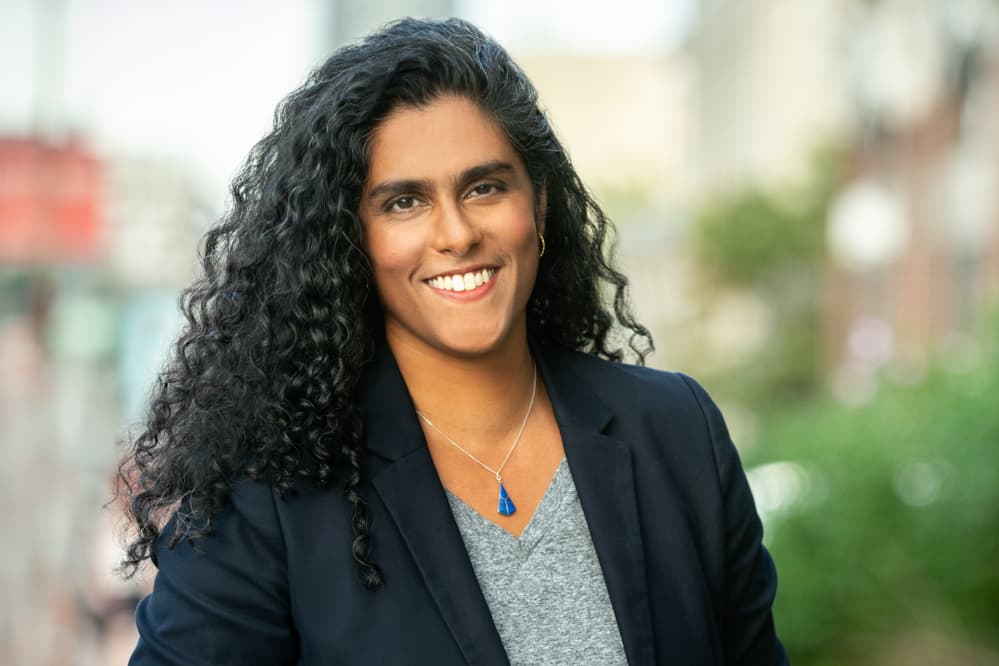
Darby Saxbe, professor of psychology at the University of Southern California. Her book “Dad Brain: The New Science of Fatherhood” comes out in May 2026.
Transcript
Part I
MEGHNA CHAKRABARTI: Now you've heard of the mom brain phenomenon, and if you haven't, just go ask a mom. But have you heard of dad brain?
PEGASUS: My first kid just had a fourth birthday, so that's the anniversary of my sleep deprivation. And of course that was a big part of dad brain for me. I've never been in love with any other adult as much as these kids.
BRENT: I definitely noticed a shift. I was an emotional person before, but now I feel like I'm always crying at the most little things.
ERIC: Being hypervigiliant. Just becoming more aware of noises and sounds. And when you try to sleep at night — when you could get some sleep just being extra sensitive to the sound of their cry and their murmurs. I have dad ears.
BUCKY: Chimney sweep
SHAWN: Clarity, purpose and moral grounding suddenly overwhelmed me even though I was very young, 21, when my first was born. It was powerful.
CHAKRABARTI: Those are On Point listeners Pegasus in Essex Junction, Vermont; Brent and Eric in Philadelphia; Bucky in Atlantic Mine, Michigan; and Shawn in Barre, Vermont.
Darby Saxbe is a professor of psychology at the University of Southern California, and researchers have taken a look at how women's brains change during motherhood.
Professor Saxbe is researching the same questions about fathers, and she's at work on a book about "Dad Brain" and joins us now. Professor Saxbe, welcome to On Point.
DARBY SAXBE: Very happy to be here.
CHAKRABARTI: Okay, let me just check first, are you a mom? I'm a mom of two.
SAXBE: I am a mom of two. I have two teenagers.
CHAKRABARTI: Okay, so you then have personal experiences.
As have I [with] mom brain, which is definitely a thing.
SAXBE: Yes.
CHAKRABARTI: I have to say, just in listening to those dads, I was quite moved because I was shocked at how similar the dads were, things that the dads were talking about that I've experienced. First of all, suddenly having a sense of the dire need for self-preservation, hyper vigilance, crying at the drop of a bucket.
I used to not be a big crier, but now just put on Little Drummer Boy, and I'm a sea of tears and the, like, clarity that parenthood brings. Do those things sound familiar to the dads that you've spoken with or worked with in your research?
SAXBE: Absolutely. And so both I resonate with those dads both personally and professionally.
And if you think about what evolution needs us to be able to do to keep a baby alive, you hear a lot of those themes in those dads' experiences, right? They're being more vigilant about safety, both their own and presumably their children's safety. And their empathy is tuned way up so that they can be sensitive to the signals that they're getting from their kids.
And those are the kinds of things, if you think about a new parent, even just in the first few minutes after a baby cries, you have to figure out, what's going on? Why is the baby crying? What do I need to do to figure out how to soothe this baby? How can I modulate my own stress, my own annoyance to be patient with the baby?
It requires a lot of skills and a lot of the skills map onto some of the things that we see looking different in the brain.
CHAKRABARTI: Okay, so we're gonna talk about the actual imaging in just a second here. But obviously trying to understand what happens in a woman's brain after she becomes a mother.
That makes a lot of sense, right? Because for better or for worse, women are the primary physical caregivers, at least for an infant after they're born. What got you interested in similar questions about dads?
SAXBE: Yeah, so I actually think dads are fascinating because they're so variable.
So it does happen, but it's unusual to think about a mother, either a human or a mammal, abandoning her baby. And part of that is because moms have a lot of investment in babies. We've spent a lot of time; we've devoted a lot of calories to incubating these little critters before they're even born.
With fathers, you see this big range of engagement. Dads who've never met their child. Dads who are really hands-on, primary caregivers. And it makes me curious about, how does experience shape our brains and our motivations?
CHAKRABARTI: So this is essentially, in the case of dads, it's almost exclusively external stimuli of having become a dad versus the internal physiological changes from carrying a baby.
SAXBE: Exactly right. So moms have this kind of head start from pregnancy, birth, and then breastfeeding, if they're breastfeeding. And men aren't experiencing those big hormonal events. Their hormones are changing often in tune with their partners, but they don't necessarily get that same kind of kick. It's more about their motivation and the time they invest.
CHAKRABARTI: Which in a sense makes it even more interesting.
So we're gonna talk about the correlations that you found a little bit later, but let's get down to the nitty gritty of the brain imaging. So you've been doing neuroimaging on men that you've recruited, and you do the, what, the imaging before their children are born and then after.
Is that right?
SAXBE: That's right. We image them during their partner's pregnancy and then again when their babies are about six to 12 months old.
CHAKRABARTI: Okay. So after the first year postpartum. And what kind of imaging are you doing?
SAXBE: So we put them in the MRI scanner, and we can take a few different kinds of images.
We can take what are called structural images, which is like a still photograph of the brain to see the shape and size of different structures. And then we also do functional imaging, which is more like a camcorder recording of what your brain is doing when, for example, you hear a baby cry.
Or you see your baby's face.
CHAKRABARTI: Okay. So that's actual like real-time neural activity then? Here's the big headline I gather from your research, is similar to mothers, fathers experience a reduction in grey matter volume. Sounds a bit dire, but it's not necessarily.
SAXBE: Yeah, it sounds like a bad joke, right?
Like the shrinking parental brain. But there's some evidence that remodeling might be adaptive and our brains lose grey matter volume at other periods in the lifespan. So in early childhood, we actually prune and streamline connections to work faster and more efficiently. In puberty, the same thing happens.
So the initial study looking at this was done in moms.
CHAKRABARTI: Wait, actually, can I just jump in for a second?
SAXBE: Yeah, definitely.
CHAKRABARTI: Because this is really important, the neural pruning that you're talking about, it serves a purpose, right? As when you're like, what, five years old? And again, at puberty, but especially in the first massive neural pruning that happens. A huge percentage of the neural networks that are basically no longer deemed efficient or important enough for the brain in a five-year-old. Because they're just like absorbing everything from the time they're born. That actually sets up the brain to operate, in a sense, even better or more efficiently.
Is that right? For that neural pruning?
SAXBE: Exactly. Yeah. So we start to, it's like having a bunch of little dirt roads branching off in different directions. Versus having a highway, we start to figure out, we're going to go the same way to get to work every day, so let's pave that road and make it a little easier to travel on.
And so that's what's happening with that process of pruning, is we're developing these pathways that talk to each other, and we're using some more than others and we're going to get rid of the ones we don't need.
CHAKRABARTI: And so you're saying, you are seeing evidence of the same thing in the brains of fathers, but let me ask you, when we say reduction in brain matter, the first presumption, is that like it's just an overall equal volumetric or percentage reduction across the whole brain?
Is that true or do you see specific places in which the grey matter is shrinking?
SAXBE: So we see the volume reductions are happening in a part of the brain called the Cortex, which is like the top layer of the brain, and it's the most recently evolved. It's what you would consider to be like your primate brain.
As opposed to your lizard brain or your rat brain, which are the parts of the brain that sort of deal with more gut feelings and instincts. Your cortex is the part of the brain that has your prefrontal areas, that help with executive functioning, thinking and reasoning. It also has what's known as the mentalizing network, which is this kind of interconnected suite of structures that come into play when we think about the contents of other people's minds, and we imagine how other people are feeling.
And you can imagine how important that network might become when you're taking care of a newborn baby who can't tell you what they need, and you just have to be able to tune in.
CHAKRABARTI: Before we talk more about what the consequences or behavioral consequences are of that pruning in the cortex for fathers, is this for first time dads only, or similar things to happen every time a man becomes a father?
SAXBE: So that's a great question that we don't know the answer to. So the studies to date have only looked at first time dads, and I should emphasize, this is a really small research literature. So there's a lot we still don't know, because we haven't studied it.
We think that when fathers go on to have more kids, you might see more of these changes and maybe more pervasive changes, but we just don't have that evidence yet.
CHAKRABARTI: Okay. I was just wondering because in thinking about if these behaviors, brain driven behaviors are persistent, right?
That's really fascinating. Or do they fall off over time, but that would require like a very significant longitudinal study.
SAXBE: Yeah, so we're actually bringing our families back to the lab right now. Our kids are seven. So these are the kids that we first recruited the parents during pregnancy, and so we're scanning them in and hopefully we'll be able to see how many of these changes are sticking around.
There was a study done in moms that found that some of the brain changes in the moms did seem to endure six years after birth. So there's some evidence that this remodeling is pretty long term.
Part II
MATTHEW: I was afraid of holding babies. My wife, for example, would ask me to hold babies and I was afraid they were gonna smell my fear or something like that. Once I had my first baby, we have two now. It was much easier to just hold them and accept that they might cry on me.
ANTHONY: From the moment my daughter was born, I became a papa bear being incredibly protective, and that has persisted for 20 years.
ERIC: There was often challenges with just remembering basic things and focus and attention.
HOWARD: Realizing that I had other people that were depending upon me for their existence.
ZACHERY: I had to take him for some blood work. As soon as she poked his foot, I could feel him clench up and then start crying. And it was like; it broke my heart.
Like I felt so connected to him. Even with the tiredness and the waking up and having to help my wife and all these different things, like. I just feel like everything is him first. Everything else second.
CHAKRABARTI: Wow. Those were On Point listeners Matthew in Renton, Anthony in Boston; Eric in Philadelphia; Howard in Elkhart, Indiana; and Zachery in Lake View, New York. Professor Darby Saxbe, you talked about how the brains of new fathers, one of the changes that you've been able to measure is a reduction in grey matter volume, specifically in the cortex. So does that map to actual behavior changes then?
So we're just starting to look at that. In my lab, we linked dads' grey matter volume changes to their motivation and engagement in parenting, and we found that when dads told us during pregnancy that they felt more bonded to the baby and that they hope to take more time off after the birth of the baby, they subsequently lost more cortical grey matter volume.
And at three months postpartum, they said they were more attached to the baby. They enjoyed spending time with the baby. They were spending more time with the baby, and they were experiencing less stress related to parenthood. So it seems like similar to what's been seen in moms.
These brain changes are adaptive in the sense that they're supporting a closer bond to the baby and more sensitive parenting.
CHAKRABARTI: Okay, but you've also seen that it's variable depending on, I shouldn't say depending, but correlating with the amount of engagement, however you define it, that the father has in the baby's life.
SAXBE: Exactly. Yeah. So if you look at mom's brains, you can use a machine learning algorithm to essentially distinguish mothers from non-mothers. With dads, the changes tend to --
CHAKRABARTI: Wait, hang on.
That was really interesting.
Tell me more about, you can like, basically what, an AI can detect the difference between females who are mothers and those who are not.
SAXBE: Exactly. Yeah. So I should back up a little bit and tell you about how some of the mom brain work was done. So the first big study about this came out of Barcelona, researchers recruited a sample of women from a fertility clinic that were trying to have kids. And they followed women from before pregnancy to a few months after birth.
And they found this really pervasive grey matter volume decreases across the whole brain. And compared that to a sample of women that were followed across the same time span, but didn't become mothers. And if you use AI, if you use machine learning, to basically say, here are a bunch of brain scans, which brain scans belong to women that became mothers during this time period, which belonged to women who didn't become mothers.
The computer can tell them apart because the changes are that clear cut, that profound. So that's not the case with the dads that we looked at. Their changes were more variable. Not every dad decreased in grey matter volume. Some stayed flat, some showed very slight increases, so it was a little bit more of a mixed bag and it seemed to track with dad's caregiving time.
So when dads were spending more time with the baby. And more time as a primary caregiver of the baby, they showed greater grey matter volume decreases. So in other words, their brains looked a little bit more like the moms.
CHAKRABARTI: Was that a strong correlation or kind of weakish? How would you describe it?
SAXBE: Yeah, it was a moderate correlation. But we also had a pretty small sample, so we don't want to get too excited about this work until it gets replicated a few more times.
CHAKRABARTI: Do you care to theorize about correlation versus causation here? Because I wonder if, is it that the grey matter change is what potentially triggers the more caregiving impulses in the man? Or is it that the experience of doing more caregiving of the infant is what causes the brain matter reduction? Or maybe it's both?
SAXBE: Yeah, it's a really interesting question, and I think it's bi-directional, right? I think it's both. That's the wishy-washy answer.
But we did find that when the men told us during pregnancy that they were more attached to their unborn child, they wanted to take more time off after the baby was born. Those men subsequently showed greater grey matter volume decreases in the sort of coming months. So it seems like there's a motivation piece.
And there's an engagement piece, and I think we often think about we're innately wired to provide care. Like the brain is set in a way that makes, for example, women great caregivers, and men, maybe not always so great. And I actually think, what I've learned from this work is, maybe the opposite is true.
Like we provide care and that shapes the brain, that shapes our hormones. And much like learning any new skill or like changing in any important way, right? We see echoes in the brain. Our brains are very plastic.
CHAKRABARTI: So this is really important. Because the way you just phrased it about learning new skills, I think I'm gonna, it makes me wanna stop saying grey matter reduction and instead, I'm gonna call it brain plasticity.
Because I think --
SAXBE: I like that.
CHAKRABARTI: What you're describing, okay, so there might actually be a mass, a like a number of neural connections getting pruned, but what you're talking about is evidence of change in the brain when a whole new chapter of life begins, or a whole new set of skills is activated or learned, which is actually really quite inspiring.
We talked about the cortex. Are there other sort of particularly notable parts of the brain that show a similar change upon the advent of fatherhood?
SAXBE: Yeah, so before I get into that though, I kind of wanna pick up on what you just said about plasticity. Because I think that's really important and there's actually some new evidence coming out of the Spanish group, looking at moms that we see some increase in volume.
There's some rebound, a certain period after birth. So some changes are pervasive, some changes actually seem to be reversing. And you see the same in rodents, in primates around parenthood. It's not necessarily that things are shrinking or growing in one direction, it's that there's just remodeling that's taking place.
And in fact, in our dads, we did find the hippocampus, which is a part of the brain that didn't show overall changes in our men. It's considered to be part of the sub cortex, so it's like tucked under the cortex and it's like these seahorse like structures that are on either side of the ears.
And the hippocampus helps us with memory. It helps us not just remember experiences from our lives. It also helps us remember where we have left things, which is very useful if you're a rodent parent and you've stashed your little babies all around the nest and you need to retrieve them.
So seriously, the hippocampus plays a role in pup retrieval, and that's one reason that people think it changes in new parenthood and in rat models. And we found that in our dads, the hippocampus was actually larger, or it became larger from prenatal to postpartum in the dads who were more involved in caregiving and more bonded with their infants. And also tracked with their hormone levels.
So dads who had higher oxytocin levels, had more hippocampal volume increases. And the reverse was true for testosterone. We know that testosterone tends to dip in new dads around the transition to parenthood. And lower levels of testosterone were linked with increases in the hippocampus.
CHAKRABARTI: We're going to go back to hormones specifically in just a second. But the only reason I'm giggling right now, Professor Saxbe, forgive me, is that when you said the hippocampus is important in terms of remembering where you put things. In my N=1 of myself, my experience of mom brain was like all of these, like, beautiful behavior changes and hypervigilance, et cetera, we've been talking about.
In addition to a complete collapse of my executive function, like I could not remember where I put things. And so I'm wondering, does that same hippocampus increase or is that seen in women? Because like I don't feel like I went through that phase of mom brain.
SAXBE: Yeah, it's a great question.
When we think about mom brain, we often use this kind of deficit model of like impaired cognitive function. And the latest research on mom brain, actually, it's like a little bit more of a subtle story, which is that we have a lot more inputs that we're keeping track of, and in some ways, we get enhanced memory and retrieval when it comes to things like, you know, our baby, right?
We don't forget where we left our baby. Generally.
CHAKRABARTI: Generally. (LAUGHS)
SAXBE: And we're having, generally, it could still happen. I had a recurring fear as a new mom that I was gonna put the kid's car seat on top of the car and drive off because I've done that with my wallet and my keys and everything else I need and thank goodness I never did that.
CHAKRABARTI: That's your hypervigilance.
SAXBE: Yes.
Exactly. So there's a reason that I didn't do that right, because I had more specialized kind of focus on the baby. There was actually a study that was done in new moms where they looked at baby relevant stimuli and memories, and then they looked at memories for everything else.
And the baby relevant memory has actually gotten enhanced. So it's not that we're seeing this kind of overall deficit, right? It's more that we're sharpening and honing our memory when it comes to things that are really salient for the survival of our offspring.
So maybe that's a more charitable way.
CHAKRABARTI: I think it makes a lot of sense. Yeah.
Like again, it's that plasticity thing, like the brain is shaping itself in a way that makes it the most, the sort of potent thinking tool in this new phase of life and this new person that you have to take care of.
Also, just to state the obvious, I think part of my perceived executive function collapse came from lack of sleep, but that may be, that's another thing. Okay. So getting back to male brains or the brains of new dads. There's another part of the brain that I actually did not know anything about until we came across your research. Tell me if I'm pronouncing this correctly, the precuneus.
SAXBE: Yes, the precuneus, very nice.
CHAKRABARTI: And why is it significant in the brains of dads?
SAXBE: So the precuneus is part of the cortex, so again, it's kind of part of that top layer and it's a major node of the mentalizing network. So that's that region of areas that kind of fire together when we're thinking about other people's minds and intentions. And the precuneus is actually a little hard to study because you can't injure it very easily.
It's like where you would wear a beret, on the back of your head. But deep within. And a lot of our studies of the brain originally come from like injuries, like Phineas Gage who had a metal rod that was through his eye socket that kind of impacted his prefrontal lobes.
CHAKRABARTI: The railroad spike.
Exactly.
SAXBE: Exactly. Yeah.
So we know a lot about the prefrontal cortex, right? Because it's a part of the brain that gets injured. And so we can see these lesion studies, will tell us about it. You don't have a lot of lesion studies of the precuneus, so it's been this kind of mysterious dark horse region of the brain.
But we think it's really important for this kind of empathetic mentalizing network processing. And it was a region that seemed to particularly decrease in grey matter volume in our dads. It was also a region, I told you we did functional imaging as well, which is where we saw, you know, what happened in the brain when dads were watching videos of their own baby.
And we saw that the precuneus was responsive to one's own baby versus an unfamiliar baby.
Or one's own baby versus one's own partner. So there was this kind of unique own baby salience that seemed to be lighting up their precuneus.
CHAKRABARTI: Okay, so wait, let me pause there. So to get more clarity from what you're saying, so that you basically were doing these, let's call it the real time imaging, right?
And did you put pictures of different babies in front of the dads, including their own, and you measured very different responses in the precuneus, is that what you're saying?
SAXBE: Yes. We actually gave them video clips. So we had recorded our babies in the lab, and we had recorded a baby that wasn't there.
Then they watched brief clips of their own baby versus another baby. And so we were able to see all over the brain what was lighting up uniquely in response to their own baby. And the precuneus was one of those regions.
CHAKRABARTI: And this extends even further, right? Because you also showed them pictures or videos of attractive women. And what? That do you find in a typical male, that a attractive woman would produce a greater mental, or sorry, brain response than a random baby. But that's not what you found in dads.
SAXBE: Yeah. So actually that's a different study that's different study. That was a study that was done by James Rilling's lab at Emory.
CHAKRABARTI: Okay.
SAXBE: He did a really cool study where they looked at showing men who are both fathers and non-fathers, images of baby faces and attractive women, like scantily clad women. And the non-fathers are way more interested in the good-looking women. But the fathers actually had less of a preference in the brain.
They had brain activation in reward regions to the baby faces as well as to the attractive women. I think they still had a slight preference for the attractive women, but it was buffered. It was modulated when the men became parents. We, in our lab, we actually looked at their own partners.
So we had them watching the video clips of the babies, and then they also looked at their partners in an unfamiliar pregnant partner. And we contrasted because we wanted to tease out, your partner is very familiar to you, as is your baby and is related to you and relevant to you. And so we wanted to tease out that kind of familiarity and self-relevance from what's unique about baby stimuli, in particular, and again, the precuneus was an area that helped differentiate that was special to the baby.
CHAKRABARTI: We have a minute before we have to take our next break. Professor Saxbe, and can I just take us for a second out of the scientific analysis and into your own brain in terms of how, like the reactions that you had as a researcher when you saw these differences emerge. Like you're sitting there, the dad is in an MRI and you're like looking at a brain being activated in different ways. Like what was your reaction?
SAXBE: Yeah, I never get over the chills that I feel when I can see what's happening in someone's brain in real time.
I just think it's like this unbelievable miracle of science, and I think it tells us that, like, dads are wired to care in the sense that they have this biology that can turn on when they're encountering a baby, particularly their own baby. And I think it upends a lot of what we think about who the instinctive parent is.
And it tells us, again, going back to this word we keep using, plasticity. How very plastic we are, that men who don't undergo pregnancy still will show these changes that entrain with this transition to parenthood.
Part III
BRENDAN: I realized that my generic vernacular included a whole lot of swear words and I knew that wasn't going to be a situation that would be cohesive with raising a daughter. I tried to look for certain ways to curb my enthusiasm with my vocabulary. I decided instead of swearing, I would absolutely yell out the names of NPR reporters.
Meghna Chakrabarti was definitely one of them. So is Steve Inskeep, Rachel Martin and Ari Shapiro.
PETER: I find myself happy to show off my daughter. And send pics unwarranted and unsolicited to random colleagues and work folks.
ZACHERY: I do think I have dad brain. I don't know, I just feel like more goofy and I've been watching all of my old favorite PBS shows like Arthur and Wishbone and all these different things and how much I want him to experience these things.
It's been a change certainly, but it's a good change and I don't know, he's my little guy.
CHAKRABARTI: That last voice you heard was Zachery again in Lakeview, New York. Then there was Peter in Brooklyn, and at the top, of Brendan in Seattle, Washington. (LAUGHS) And Brendan, I have got to know, first of all, I'm touched that you consider me worthy enough to replace an expletive in your vocabulary, but I wanna know which one, you gotta tell me.
So get back on the On Point VoxPop app and let me know. Anyway, that's actually probably one of the best calls we've ever seen. Professor Saxbe, before we get to just the whole way fathers experience fatherhood and what our society expects of them. I want to get back to another aspect of the physiological change that you have mentioned and that actually had to do with hormones.
It's obvious why in a woman's body there's massive hormonal changes, but you've detected them in men too, and I was very surprised to read that testosterone actually changes the amount of testosterone in a father's body.
SAXBE: Yes, and that's actually been seen in animals as well as in humans. So some of the very first work on testosterone was done in birds, in songbirds, and found that testosterone spikes at the start of breeding season in males and then drops after kind of mating has been achieved. And men are, men, male birds are taking care of their hatchlings. And birds are actually a very sort of father intensive species. Dads do a lot of the care in birds, but we've seen that in other biparental mammals as well, in mice, for example.
And so the best study, I think, of testosterone changes in fatherhood. It was done by Lee Gettler, who's at Notre Dame. He had a longitudinal study of men recruited from the Philippines, measured testosterone a couple different times, and found that men who had higher testosterone at age 21 were more likely to become fathers, but then after they had children, their testosterone levels went down.
And so that tells us that it's not just that low T men are selecting into parenthood, but rather there is something about becoming a father that seems to modulate our testosterone levels. And from an evolutionary survival perspective, it makes a lot of sense. It's actually taxing to the body to maintain high testosterone levels, and they might be adaptive when you're competing for mating opportunity.
But when your job is really to nurture and invest in the survival of offspring, it's much better to turn those hormones down and be more tolerant of little babies instead of aggressive and competitive.
CHAKRABARTI: This is so fascinating to me, professor Saxbe, because, for, I would say perhaps the majority of species out there, the survival strategy in terms of evolutionary strategy for males is to have as many offspring as possible, right?
In species like primates specifically, where the survival of the extant offspring is a very energy intensive and long term duty for parents, the reduction in testosterone, what you're saying, would be, it's helpful in focusing the father's energy on the offspring that exists.
That is so fascinating to me.
SAXBE: Yeah, that's right. And actually, as human societies get wealthier and better resourced, you do see this shift from a quantity-oriented mating strategy. Let's have as many babies as possible. Infant mortality is high. We're hoping some will survive. Versus let's have a couple of babies and really invest in their thriving, right?
And so that is what we could, would consider to be a lower testosterone strategy of fatherhood. One thing that's interesting, looking at other animals, is 95% of mammals don't have father involvement in infant care.
Us humans are actually pretty unusual. It's us, the California mice, the prairie voles, some other species we could name.
But I would argue that father involvement is a sort of secret to our success as humanity. In the sense that we have these kind of caregivers on, extra caregivers on hand. We practice cooperative breeding, which means we help each other raise our children. And the more contributors, right, the better the fate of our offspring.
CHAKRABARTI: Wait, but so hang on here for a second. Because I actually I read it in a really different way that this sort of very immediate active parenting from fathers is very recent in human history. In terms of the kind of day-to-day interaction with the infant versus the, what, 99% of human history, which may have had a different role for fathers in a family group.
SAXBE: So yes and no. So if you think about hunter-gatherers, right? There are hunter gatherer societies where males actually are very involved in infant care. There's a society called the Aka that's gotten a lot of study there in Central Africa, males are holding infants or within arm's reach of infants about 50% of the time.
So that's a really unusually high level of father involvement. I think the story is less dads are checked out and then suddenly they check back in. It's more about variability across culture and it's about what different cultures have at stake. So in this particular society, they do net hunting.
Women are really good net hunters, so are the men. And they work together in cooperative couple pairs. In societies that have different models of provisioning, it might make more sense to be specialized. So you have more traditional gender roles.
In our society, we're a service and knowledge economy.
It makes a lot of sense to have women in the workforce. They have the same skills that men do when it come to the sort of wage earning that we do, for the most part. And that means we need fathers to be involved in parenting at home. And you have seen these big changes in father investment.
CHAKRABARTI: Yeah. But I actually, it's so interesting, in the examples that you gave of different cultures. The takeaway I got is that our society right now, let's just stick to the United States, is definitely not constructed to make it easy for fathers to be within arm's reach of their babies 50% of the time.
We actually don't have a society that's supporting what it seems like your research is finding, that dad's brains are actually built to facilitate.
SAXBE: That's exactly right. We're in this tension, right? We're like caught in between these two different moments in history where women are in the workforce.
We haven't fully embraced that dads can be part of the childcare team, to the same extent, most men are not taking long paternity leaves. Certainly there are examples of other countries that have longer, more protected paternity leaves. We still have this model of masculinity that's really built around the wage earner, the breadwinner.
While at the same time, many men and women want more father involvement. And our cultural models of fatherhood have changed. We have men feeling like they need to be doing more at home, but not necessarily having the scaffolding from our institutions to facilitate and encourage that.
CHAKRABARTI: Wow. Honestly for policymakers, I hope they're hearing this because now you can be like, the brain wants to take care of the child.
Before we get to things that we can at least, if not conclude right now, because as you said, the research is in its own infancy, sorry, pun intended. But takeaways, there's one more hormone that I wanted to talk about. Because oftentimes oxytocin is very associated with maternal feelings and maternal care, like the love hormone.
Do we see fluctuations in that in fathers as well?
SAXBE: So we do, and my lab actually looked at dad's oxytocin levels, after a play interaction with their infants, we found that when they spent more time touching and physically playing with their infants, dads had higher oxytocin and that's something a couple researchers have found as well.
Speaking of literature that are in their infancy, there's a lot we don't know about oxytocin. And I think there are a lot of overblown claims. People love to say it's the cuddle hormone or the love hormone. It's actually a lot more subtle and in some ways very hard to measure. But we do see, like in prairie voles, I mentioned one of the biparental mammals out there.
Oxytocin levels play a really important role in social bonds and motivate a lot of the like cuddling and huddling. In the same way that testosterone might motivate competitive or aggressive behavior. It seems like oxytocin is something that kind of shores up our affiliation and is also dynamic in males, as well as in females in new parenthood.
CHAKRABARTI: That's so interesting. So one takeaway, even though it might seem basic and a no duh, having science to affirm this conclusion, I think is really important. You're proving that the male brain in human beings is actually designed to take part in parenthood, right? Because if it weren't, you wouldn't be able to detect any changes before and after a child is born, in the brain of a man.
SAXBE: That's right. I think of it as like we have brains and hormones that are designed to turn on when we engage in care, does that mean that every father is going to spontaneously step up and be an amazing parent? Not necessarily, but it means that when we choose to invest, our biological milieu will follow suit, right?
We were equipped with this kind of plastic, adaptable brains and bodies that can change as we devote more time and practice and energy and motivation to caring for little people.
CHAKRABARTI: And then of course, I'm not going to ask you to give us the solution to fix society, but what flows from that in my mind is, then in that case, we as a society ought to be doing even more to facilitate, of course, not just dads being a greater part of their child's upbringing, but moms as well, or whatever your family unit is. There's just a lot of evidence that there's much more we can do to facilitate that.
SAXBE: Yeah. Yeah. I think the more that I study the transition to parenthood, the more I think of it. It's a time of vulnerability, but also of opportunity. It's a time that warrants much greater investment than we currently give it. We spend a lot more taxpayer money on the last three years of life than the first three years of life.
And we don't do a lot to support parents' time at home with kids in the early years, even though we know that time and practice is really important for building that internal infrastructure that makes us great caregivers. And I think in the larger context of the birth rate is dropping.
And lots of young people say they do not want to have children. We've developed this society that pits itself against parents. And I think it becomes an existential issue. Like how do we encourage healthy family formation through the supports that make parents' lives better?
CHAKRABARTI: Yeah.
I just have two more questions for you, for now, Professor Saxbe, as your research continues, I'd love to have you back, but I can't talk to a working scientist right now without asking how the recent retraction of the administration's support for science is having an impact on you, your lab, your colleagues.
SAXBE: Yeah, I mean it's shocking and devastating and there has always been bipartisan support in this country for science and research. I think there's been a recognition that having strong science is great for our economy. It's an investment in human capital. And yet we've had these attacks on scientists, and I've had a couple of my students whose funding has been suddenly pulled in the middle of their training, funds that they had budgeted around.
It feels like a hostile, like if a hostile foreign power were to try to destabilize this country. It doesn't feel that different from what's happening right now inside universities.
CHAKRABARTI: Wow. Do you find that you or your colleagues are like having to do even things like comb through grant applications just to remove triggering keywords for the administration?
SAXBE: Yeah, I mean, so I was actually the person that released that word list that you might have seen circulating around on social media. That was something that came from a colleague of mine who got it from his program officer at the National Science Foundation. It was the list of terms that included things like women and socioeconomic. Essentially any kind of work you're going to do on humans is rendered ineligible by these kinds of terms. It feels like we're living in Soviet Russia or Maoist China, and this is not how we build a free society.
CHAKRABARTI: I don't even know what to say.
SAXBE: Me neither.
CHAKRABARTI: That is genuinely shocking.
Don't put the word woman in your grant application. Oh my God. Not that 50% of humanity doesn't deserve more research done on their experience.
Okay. So let me just switch gears once again, because the last question I do have for you for now, professor, is what does your husband think about all of this, about your research?
SAXBE: (LAUGHS) Oh my gosh, that's the million-dollar question. Thankfully, I married a great dad with a great sense of humor, and he's read every chapter of the dad book, including the chapters that talk about him and tell stories about his parenting and has been a big supporter.
He thinks it's funny that so much of my work is about motivating men to care and step up more around the household. Because he's actually terrific at that. And I'm the slacker. I'm the one who's like always distracted, staring at my laptop while he's doing the dishes and taking the kids places.
He generally puts me to shame-
CHAKRABARTI: Clone that guy! (LAUGHS)
SAXBE: I know, I'd like to take credit, but I think he's just a genuinely good guy.
The first draft of this transcript was created by Descript, an AI transcription tool. An On Point producer then thoroughly reviewed, corrected, and reformatted the transcript before publication. The use of this AI tool creates the capacity to provide these transcripts.
This program aired on June 27, 2025.