Support WBUR
The legacy of the Consumer Financial Protection Bureau
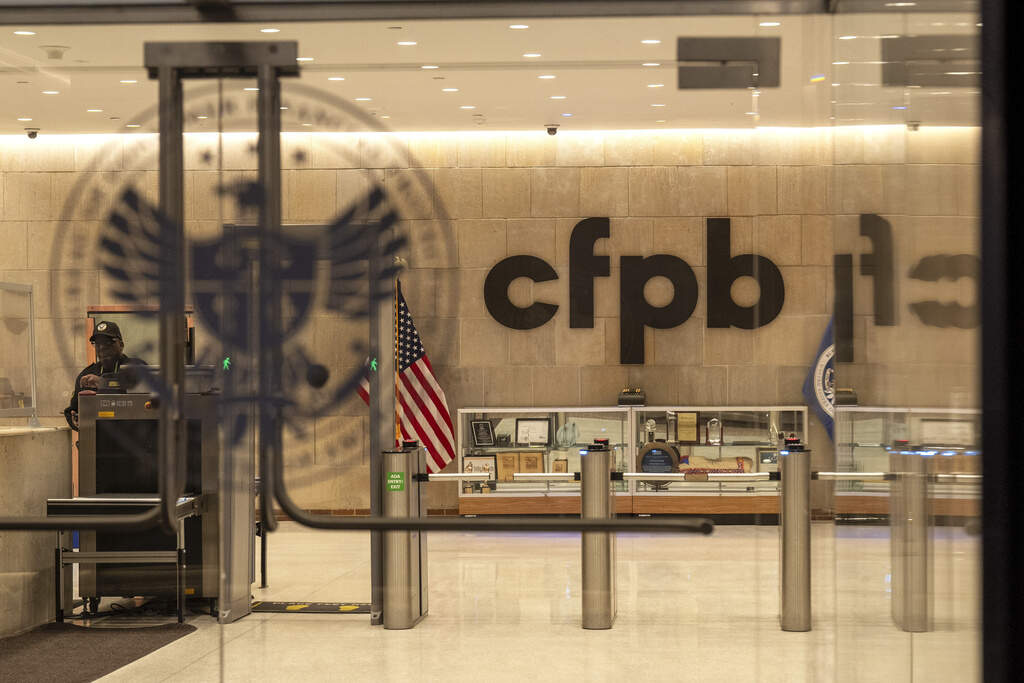
Since its creation 14 years ago the Consumer Financial Protection Bureau has used its powers to return billions of dollars to defrauded consumers. Now the Trump administration wants to close it. What the CFPB has meant for consumer protection in the U.S.
Guests
Richard Cordray, first director of the Consumer Financial Protection Bureau. He served from 2012 to 2017. Author of "Watchdog: How Protecting Consumers Can Save our Families, our Economy and our Democracy."
Norbert Michel, vice president and director of the Center for Monetary and Financial Alternatives at the Cato Institute, a libertarian think tank in D.C. Co-Author of "Report: Consumer Protection Predates the Consumer Financial Protection Bureau."
Diane Thompson, deputy director and chief advocacy officer at the National Consumer Law Center, a non-profit focused on consumer issues.
Also Featured
Darisa Greene, a consumer.
Transcript
Part I
DEBORAH BECKER: Darisa Greene opened up a PayPal account in 2012. She was installing a carpet and the vendor wanted to be paid online. That was the last time she used it. In fact, it was the last time she even thought about her PayPal account until October of 2022, a decade later.
DARISA GREENE: I started getting weird emails from PayPal. You've had a deposit made in your account, and I thought, I don't have a PayPal account, and so I thought it was some type of scam, so I didn't reply.
BECKER: Darisa was convinced that the emails weren't real because she hadn't used her PayPal account in so long. A few weeks went by and then she started receiving voicemails like this one.
VOICEMAIL: I am receiving charges on my card from this phone number, and I have had no business with you whatsoever, and you need to call me back and explain to me why charges keep showing up on my credit card that I have. I don't even know who you are and I wanna get to the bottom of this, so will you please call me back?
So that I don't have to go to the police department and have them contact you. Thank you very much. Bye.
BECKER: Darisa received similar voicemails from people in Texas, Oklahoma, and Ohio. Darisa lives in Seattle. She didn't know who these callers were or what was going on. She had heard about PayPal scams, so she blocked the numbers and continued to ignore the calls until December 13th, 2022.
GREENE: I get a letter from what appeared to be a collection agency saying that I owed $37,000 plus dollars. It says you had a PayPal account with account number, blah, blah, blah, and you owed $3,000 and now additional debits were applied to your account of $33,900 and something, and so it was sent to collections, and I was mortified.
BECKER: Darisa immediately reached out to PayPal to try to figure out what was going on.
GREENE: I said, I need whatever is going on, shut down. And they're like, you have an active account with a current balance. We can't do that. And so basically, they were declining to help me or giving me in information based on the fact that there were these, transactions happening, and I'm like, I don't even have apparently the password to this thing anymore, because when I try and reset it, it doesn't come to my email.
So they had added additional emails onto it. And changed the phone number. So I spent so much time trying to write to PayPal and talk to them on the phone, and there's just no real way to reach the same person.
So I would write down people's operator number and their employee number, and then I could never reach that person again to find out what was happening. I was trying to resolve it myself. Yeah, I didn't get anywhere with them.
BECKER: In emails, Darisa shared with us a PayPal customer solutions support specialist told her to check with friends and family to see if they were using her email address. Darisa didn't know what to do about someone she didn't know taking over and fraudulently using her old PayPal account.
GREENE: I was afraid that they were going to affect my credit. Obviously. I knew that they couldn't prove that I had done something, but I didn't know if I would have to get some kind of legal help or I had no idea.
So it was just the unknown of potentially having to deal with it more than I already had because I couldn't get any straight answers from PayPal. I don't know. I guess it was just the fear of not knowing how to handle it or how these things work. I've never had any issues with my credit before, so I guess it was just really scary to be the owner of a business and have someone potentially stealing my identity.
I don't, I didn't know what would come next.
BECKER: Searching online for help, Darisa found a Reddit forum suggesting that you make a complaint to the Consumer Financial Protection Bureau or the CFPB. It's a federal agency charged with consumer protection. Darisa had never heard of the agency before, but decided to give it a try.
In January, she filed a complaint.
GREENE: I went online and created an account, uploaded the letter that I received and basically explained that I had not used this account and whatever, and within two weeks it was handled. They sent me a letter saying, we sent your complaint to the company and here's their response and you don't have to do anything further, basically.
BECKER: And that was it. Case closed. No more emails, no voicemails, no more letters from collection agencies.
GREENE: So without the government agency, I don't know what it would entail, all the details that I would have to check through to try and make sure that this was handled. I don't really know, because obviously I'm not going to start making payments on something I didn't do.
But the other challenge was that they wouldn't let me, they wouldn't verify for me that the account was closed and that these transactions were gonna stop. So it was also scary in that way that I didn't have control over said account to even make sure that it was deleted. And yeah, I guess we would've called our attorney.
I don't know.
BECKER: That was Darisa Greene of Seattle, Washington. We did reach out to PayPal for comment. They have not gotten back to us as of the time of this broadcast. Now, Darisa is one of millions of people that the Consumer Financial Protection Bureau says it has helped since it opened in 2011. But under the Trump administration, this national consumer watchdog agency may be shut down.
So this hour we wanna look at the Bureau's legacy and what it might mean for consumers if it no longer exists. Joining us is Richard Cordray. He was the first director of the Consumer Financial Protection Bureau. He served from 2012 to 2017. Richard, welcome to On Point.
RICHARD CORDRAY: My pleasure.
BECKER: So I wonder when you hear stories like Darisa's story about dealing with an agency and having difficulty trying to make sure that she is not the victim of fraud, would you say that's a common thing that the bureau deals with and is why the bureau was set up?
CORDRAY: We've dealt with legions of stories like that, and in fact, I wrote a book about my time setting up the CFPB called Watchdog, and there's a chapter devoted to the consumer complaint function, how well it worked to resolve issues for people like you just described, who were at their wit's end. Caught in a trap, dead end situation where they couldn't get relief from the customer service of the company.
And we were able to cut through all of that and solve problems, and we did it over and over again for many hundreds of thousands of people.
BECKER: Remind us of why the CFPB came into existence.
CORDRAY: It came into existence because there are large financial companies around the country, banks, but also mortgage companies, auto lenders, credit card companies, that deal with consumers at everyday level, and many of them give very good customer service. And that's how they retain their business, but some of them do not. And the consumer bureau was set up to level the playing field and put somebody on the side of average people like you and me, who if we have a problem, can get it resolved and make sure we're treated fairly.
BECKER: Now, of course there's, as we said, the Trump administration wants this agency gone right? And wants it to shut down. And there it cites several reasons for this. And among them really is that there's a lot of redundancy. There are already agencies that can enforce consumer protection laws and statutes.
There are state regulations. Why do we need this federal agency to do this?
CORDRAY: Yeah, that argument isn't very convincing as shown by the fact that back in 2008, 2010, when the financial markets melded down, Congress looked at this and decided we needed a new agency because all the other agencies are looking out for the financial companies.
And this is the only agency, the CFPB, that is looking out for American families, ordinary people, you and me in our dealings with them.
BECKER: Now I want to point to something that I believe a former colleague of yours said. This is James Kim. He was an attorney at the CFPB in 2012 in the office in New York.
He testified last week at a House financial services committee hearing, he said that under the Biden administration, the agency has, quote, exceeded the boundaries of the laws and rules that it enforces. Here's a clip.
JAMES KIM: Compared to other federal agencies, the CFPB is still a startup and like other startups who've gotten off the ground, it needs reminders to stay faithful to its mission and its core principles, and it needs adjustments to better execute its mission.
Most importantly, the bureau should focus on engaging with and gathering information from stakeholders at the ground level. All CFPB functions from supervision to rulemaking to enforcement should be driven by data collected from a wide range of sources rather than siloed top-down decisions from agency leadership.
BECKER: Richard Cordray, I'm wondering what you say to that, what you say to James Kim suggesting two members of Congress that perhaps the CFPB does need reminders to, quote, stay faithful to its mission.
CORDRAY: Look, I think everybody needs reminders to stay faithful to their missions. But during the time I was there for the five years that I ran the bureau it was doing exactly what James describes.
We were data driven. We looked at the data to try to understand what the problems were. We took action in response to what we learned. We listened closely to consumers. The story you told is one of millions of stories told over and over again by people all across the country who brought them to us.
And that's what informed our work. Now, is it possible that sometimes the Bureau has overreached and sometimes has it possibly unreached and not done enough? I think that's very possible. There are many situations that arise every day, but in terms of whether you should shut down this agency, which is what the Trump administration is doing, violating the law, by the way, the law says that the agency shall exist and shall do this, and shall do that, and the Trump administration is simply ignoring that out of hostility and spite, that's not good for the American people.
It is not faithful to the original efforts by Congress to set up this agency because it saw a vacuum and that needed to be filled to look out for consumers. And if nobody's looking out for consumers, then they're gonna be treated unfairly and it's gonna happen again.
Part II
BECKER: We were talking about some of the criticisms that have come up regarding the Bureau, and I just want you to expand a little bit on them.
There was a report issued by The Heritage Foundation, of course, author of the Trump Administration Blueprint, known as Project 2025. And that report basically said that the CFPB has flaws that are restricting people's access to credit and eroding American's financial independence. And I just want you to respond to some of the things that have been said about the Bureau as reasons why the Trump administration might potentially shut it down.
What would you say to that, Mr. Cordray?
CORDRAY: The Consumer Bureau was established, and again, Congress saw the need and voted to create this agency because consumers often are in an un unlevel playing field with big financial companies. Consumers can't afford armies of lawyers. We're talking about our mothers, our fathers, our sisters, our brothers, our sons and daughters. Just regular people who end up in a doom loop, like the woman you described who couldn't get out of the problem that PayPal had created or had permitted to foster.
Real troubles in her life and for people to have to spend hours on hold, not able to reach anybody or hours trying to resolve a problem that they did not themselves create or having to pay fees that they don't understand and that often are unfair or even illegal.
Junk fees, late fees that nobody can ever explain to them, this is the kind of thing that was happening. And the Consumer Bureau was created to straighten that out. And that's what we did for many years. And the Trump administration for some reason doesn't like it or wants to throw its weight around.
And consumers will be the ones who are harmed by that, but they just don't care.
BECKER: I wonder do you think that this was always something that was politicized? Since you started right in 2012 as the first director of the bureau, was this always a political issue for you that you've had to navigate and the bureau had to navigate?
CORDRAY: For some reason it did become a bit of a partisan political issue. And maybe the big financial companies were using their leverage with Congress to make it an issue. But again, let's go back to the woman who had the problem with PayPal. Is there a political issue for her? No. It's just a human issue.
It's an issue of her everyday life. It's an issue for her family. It's an issue of distraction, potentially a $37,000 bill hanging over her head that she had nothing to do with and doesn't begin to understand what's political about that. The only political thing here is that the Trump administration wants to shut down an agency because they're hostile to it.
They don't care about its mission. They want to shrink government. They don't care what the fallout of that is. The slogan in the tech world is move fast and break things. They're breaking the Consumer Bureau and again, someday it will be revived because the law is still on the books, and the need is great.
But in the meantime, many people will be hurt because they can't get the attention and the response and the help that they deserve.
BECKER: But I also want to bring up, go back a little bit to the point that we brought up earlier in the first part of the program. That some say that perhaps the agency has overreached, and you did say maybe it overreached, maybe it underreached, but some have called it a rogue agency that has politic gone after its political opponents and tried to hurt them financially. What's your response to that?
CORDRAY: We never went after political opponents. We sought justice from companies that were ripping off consumers, taking advantage of them, and merely name calling it a rogue agency, that doesn't tell you anything. The question is, what is it doing? Who is it helping? Who feels pinched by it? And if companies that are breaking the law and getting an advantage over, people feel pinched by it. They should. That's what law enforcement is all about.
BECKER: But could that have happened since you left in 2017?
CORDRAY: Look I can't speak to what's done on a daily basis at a place that I no longer work at. But I know what the Consumer Bureau is set up to be. I know what we were doing. I believe it was faithful to that mission through the first Trump administration, the Bureau continued to function effectively and answered and solved consumer complaints on a large volume basis and was good for people. Where do you go when you have a problem of this sort to get it resolved? As you can tell from the story you told at the outset here, people don't know where to go. They can't get help. Nobody will give them the time of day, but that's what the Consumer Bureau did.
It's a good agency. It has a good mission. It helps people and it levels the playing field and makes it fair in our society, which is very important.
BECKER: As you mentioned, the first Trump administration, obviously the bureau was in existence, and you were the director for part of that time when Trump first took office.
What has changed to make this such a focus now by the White House to try to shut the bureau down?
CORDRAY: It is an obsession of a small group of academic thinkers led by Russell Vought, who is now the head of Management and Budget. And he's trying to set an example by shutting down certain agencies if he can get his hands on them.
He's now being stopped by Congress and others from broadening the scale of what he's doing. This is what Elon Musk came in to do, was to just junk the government, wherever he could do and it was thought that was a good thing. He didn't understand what the consequences were or who it would hurt or who it would help, because they were just trying to move fast and show off with a big chainsaw as to what they could accomplish.
Musk is now out of the government, the whole DOGE project, which has bragged about saving hundreds of billions of dollars has been shown up to be mostly window dressing and it hasn't really accomplished that much, but unfortunately caught up in, early on was the USAID overseas and the Consumer Financial Protection Bureau here at home.
And this very worthy agency with a mission just to help average people and make sure that they had somebody standing on their side for a change, has been caught up in this game of break the government that is being cheer led by Vought and the White House, and in part it's out of animus to Elizabeth Warren, who is one of the founders of the Bureau.
BECKER: Yeah. I wanna play a little bit of tape for Russell Vought, who now is the head of the Office of Budget and Management. He's acting head of the Consumer Financial Protection Bureau and one of the lead authors of Project 2025 which describes the CFPB is perhaps the most powerful and unaccountable regulatory agency in existence.
So there was a house hearing last week where Vought was asked by Rhode Island Senator Jack Reed about his efforts to cut the agency, and this is a little bit of what Vought said.
We ultimately believe that the consumer protection bureau has not actually protected consumers. And I will tell you, as we have delved deep, we have found the extent to which these examiners have gone out and tried to weaponize the agencies against hardworking Americans across the country.
BECKER: So Richard Cordray, you brought up Russell Vought. That's what he says. Again, it's the weaponization accusations and it's saying that this bureau is not in fact protecting consumers.
CORDRAY: He's just saying, that's not evidence. The examiners would go into these institutions and make sure they were complying with the law.
I'm sure that made the institutions uncomfortable, and that's who Russell Vought is siding with. But in terms of the rest of it, it's just pure name calling on his part. He doesn't like the government. He doesn't like the Consumer Bureau for some reason in particular. And he's determined to break it as much as he can.
And there are people who will be hurt by that. Look, my book Watchdog details exactly how the Consumer Bureau helped people by reigning in financial institutions, by making sure they abided by the law, by making sure that they went the extra mile to serve their customers. Many of them didn't need any of that.
They were doing just fine. And if so, we left them alone. But if they were violating the law, if they were trying to get an edge over consumers, if they were trying to hurt our families unjustly. That was when we took action and that was appropriate.
BECKER: I wanna bring someone else into the conversation now.
Norbert Michel, vice President and Director of the Center for Monetary and Financial Alternatives at the Cato Institute, which is a libertarian think tank in DC's, also co-author of a report titled Consumer Protection Predates the Consumer Financial Protection Bureau. And Norbert Michel, thanks so much for being with us.
NORBERT MICHEL: Hi, Deb. Thank you.
BECKER: So can you give me briefly one of your main arguments? You've heard Richard Cordray say that this was an agency that was designed to reign in financial institutions. Most of them behaving appropriately, but some were not. And this is to protect the consumer from those agencies that do not follow the law and do not behave appropriately.
What do you say?
MICHEL: Yeah, you won't be surprised. I don't agree with Richard, if I see things a bit differently, the idea that fraud was somehow legal prior to creation of the CFPB is dead wrong. A lot of the behaviors that we're talking about in terms of unjust treatment and fraudulent behavior, or things like identity theft.
These are all things that were illegal before the CFPB. So I look at things very differently. I see this as why exactly would the woman who you had at the beginning, Darisa, I believe her name was, with a PayPal account.
BECKER: Darisa.
MICHEL: ... Why did all the other arms of government fail her?
Why if her identity is stolen, could she not go to the police? Why could she not get help from the FBI? Why could she not get help from the Federal Trade Commission whose motto is protecting America's consumers? This is, what we've done is we've created a redundant agency. And it's not the case that you could only have this one agency to protect people.
BECKER: Would the FBI take a complaint from a consumer who thought their identity was stolen through their PayPal account? Would they, really, would they have a consumer complaint board online by which someone could say, Hey, I think there's a problem here with an old PayPal account. The FBI would do that?
MICHEL: If not, why not?
BECKER: Yeah. I don't, why not? Is not, yeah but you're the one who said that there's the FBI to deal with these kinds of things. It's yeah.
MICHEL: No. I'm saying, but I'm saying we have multiple levels of law enforcement. We have local law enforcement, we have federal law enforcement, we have the Department of Justice, we have a Federal Trade Commission.
We have multiple banking agencies, regulators, and if you go back and you look at the congressional record, none of these things were discussed in the runup to Dodd-Frank. No matter what Mr. Cordray thinks, the fact that Congress looked at this stuff and decided we needed the bureau, that, okay, fine, if you look at that debate, the debate was not about these sorts of questions, this is absolutely not what they did.
And again, you've got to look at how the bureau was constructed, one of the things that it did was it moved over the enforcement authority for about 20 different consumer protection statutes. Okay, why wasn't that working before? That's a primary pillar of the CFPB, those statutes, those consumer protection statutes, things like the Equal Credit Opportunity Act, the Truth and Lending Act, all laws that were put in place in the '60s and '70s.
So what was the problem? Let's ask Richard Cordray. What do you say about that, Richard?
CORDRAY: Look I hear Norman spreading a lot of baloney around here.
MICHEL: It's Norbert, Richard.
CORDRAY: Suggesting that there were no laws against fraud. There were always laws against fraud, but they weren't effectively enforced, especially for consumers.
And we need this agency. How do we know that? Because Congress passed a law and spent a year working on that law, whether you like it or not, and the right way.
MICHEL: That's pretty faulty logic. Say we needed this because Congress passed it.
CORDRAY: Excuse me, I did not interrupt you. So if you'll allow me to speak the right way to go about this, if you don't like, the law is to go to Congress and get the law repealed.
But that's not what the Trump administration has done. They can't get the law repealed, but they're gonna try to undermine it and fail to enforce it. And that's totally illegal and outside the norms of government. This was passed because Congress saw the need and they heard the testimony, and there's a big record on that.
Whether you like it or not.
BECKER: So Norbert talk about that, because we're talking about the 2008 crisis, the mortgage crisis that sort of sparked this, the creation of the CFPB and also, why not go to Congress and try to repeal. So both of those issues, what would you say?
MICHEL: I agree that it should be repealed. And that's the right way to do it.
BECKER: But instead what's happening is they're just shrinking the agency and making it completely ineffective. Why go that route and not repeal?
MICHEL: Yeah. I don't work for the Trump administration either, so I don't know why they're going that route.
Maybe they're trying to put this is just speculation, but maybe they're trying to pressure certain members of Congress to do something about it. I honestly don't know. I don't, I'm not part of the government. But I do agree that the right way to do this would be to repeal, amend or repeal the law.
So I think --
CORDRAY: But they can't get that done.
MICHEL: And oh, excuse me, Richard. Excuse me. I think that if it's part of their strategy, that's a question for them. I don't know. I've consistently advocated that the bureau was not necessary in the first place. And that the law should be amended and/or repealed.
BECKER: And again, remind us of why you think that this is not necessary. Because there are so many other federal agencies that can already do the work that the Bureau is doing. And --
MICHEL: Not only federal, state, and local as well. And again, like it's not very logical to say, oh, we must have needed it because Congress decided we had to do it.
That's a bit ridiculous. That's not logic at all. And the debate that took place in the runup to Dodd-Frank was highly politically charged. It was in the middle of the, or in the aftermath of the 2008 financial crisis. And there's a lot of things that Congress did in the Dodd-Frank Act that don't make sense, and that weren't thoroughly debated.
And if you look at how a lot of these actions take place, the bigger settlements, for example, that the Bureau won. So the Wells Fargo account scandal, that's just one example. That happened in 2015. So one question is, why didn't the Bureau know about this before 2015? Another question is if the bureau is so unnecessary, then why is it that the investigation was started by the LA City Attorney and everybody at the federal level piled on after the fact. The same thing happened with the Wells Fargo Auto Insurance case.
The same thing happened with the Equifax 2019 data breach case. This is, the Consumer protection statutes were primarily state, local, and specifically in the banking agencies, and if you think that they needed to be consolidated, that's fine. Then the thing to do, the sensible thing to do would've been to consolidate it under the Federal Trade Commission, if you think it needed to be at the federal level.
Part III
BECKER: Richard, I want you to respond to a few things that Norbert was saying before the break. He was bringing up some issues that he felt that the Bureau should have dealt with, and one of them was a big one that happened during your time.
He brought up Wells Fargo in 2015 and what happened there and said, why was it that the bureau was not aware of what was going on with Wells Fargo? And this is an example of why we don't need the Consumer Financial Protection Bureau. I'd like you to respond to that.
CORDRAY: Yeah. Thank you, Deborah, for giving me a chance to respond to some of Norbert's fairytales.
He says, we have all this law enforcement in this country. We don't need the Consumer Bureau. Then why was it that it took the consumer bureau to crack the Wells Fargo case? None of the other law enforcement folks could do it. The LA City attorney who worked as a partner with us in that case, found some problems within the city of Los Angeles.
He came to the Consumer Bureau and asked for our help. Because he didn't know if there was more of this going on. We looked at it and were able to find that nationwide what was happening. Okay. This is an example of the shenanigans at the financial companies that were going completely unobserved by other law enforcement agencies, Wells Fargo employees were opening fake accounts in people's names.
Your and my name, Deborah. Opening account in our name, putting some money in it so that they could make their goals and get their bonuses paid for having opened those accounts. That was a scandal, and it was repeated across thousands of customers nationwide. This consumer bureau stopped it, the Consumer Bureau levied a heavy fine, and the Consumer Bureau got that done.
Norbert quibbles, Oh, why did it take till 2015? Nobody else did anything ever. So the Consumer Bureau was the one who solved that problem and fixed that. And banks are not doing that anymore. That's what good law enforcement is about. And if you take the cops off the beat, how would we feel about taking the police off the streets in our neighborhoods?
What do you think would happen? Bad things would happen. The same thing will happen in the financial marketplace if you take the consumer bureau off the beat. And for Norbert to say everybody else will pitch in and solve it. They didn't do it in the first place. That's why Congress created the Consumer Bureau.
There's nothing illogical about that. And if Congress wants to repeal it, Congress can do, but the Trump administration does not have the authority to repeal the Consumer Bureau on its own, which is what it's trying to do manifestly illegally and unconstitutionally.
BECKER: So Norbert, why didn't those other agencies do it in the first place?
Which is one of the reasons why folks say we need this bureau.
MICHEL: Yes since Richard brought up fairytales and baloney, let's talk about that. It's not true at all. You can read the newspaper, you can read the LA Times before the Consumer Financial Protection Bureau was even involved. Their investigation broke the story.
Everybody knew what was going on before the CFPB was ever involved. It's just nonsense. And what I said is that it's not logical to say, because Congress did something we must have needed it. That's crazy. Let's talk about data-driven decisions. The bureau under Richard practically destroyed the payday lending in small dollar loan industry, and there were about 10,000 complaints in the database over a four-year period.
At the time, 10,000. Not even verified complaints, just 10,000 registered complaints where you had around 12 million users of a service every day. What the bureau was designed to do is exactly what he said, is to go after cons or go after companies that the Bureau thinks have hurt families or hurt people or done ugly things.
And what that means is if they think that they've charged too much, there's a separate level of consumer protection that is a completely new concept at the time, that was put into place. So you had basically two pillars of the CFPB. One was moving over roughly 20 federal consumer protection statutes, and the other was creating this abusive authority under consumer protection.
And it was blatantly designed to encompass all kinds of things as they made it up and to go after what some consumer advocates would consider to be financial companies charging too much money. That's where a lot of the advocacy that pushed Liz Warren to start the bureau came from.
And that's a subjective realm that the federal government shouldn't be involved in.
BECKER: So you're not saying, just that there are other agencies that can deal with this. You're saying that this agency in particular has just gone off the rails here and is overreaching all the time.
(CROSSTALK)
MICHEL: I'm saying that --
CORDRAY: Is just not true. That it's not true.
(CROSSTALK)
MICHEL: I'm, hold on. I did not say --
CORDRAY: Lot of garbage he's peddling here that's just not true.
MICHEL: Did not say, hold on.
(CROSSTALK)
MICHEL: Excuse me, Richard. I did not say --
CORDRAY: There's a whole say industry in Washington. --
BECKER: Okay. Norbert let's just make one brief statement and then we're gonna give it to Richard. I have one more question for him.
MICHEL: Yeah. I don't put words in my mouth. I didn't say, all the bureau does is overreach over time. I'm saying that the concept that it is founded upon is one that it should not, that should not exist.
That's what I'm saying. That's a different, entirely different situation.
BECKER: Richard, I think when you said it destroyed payday lending and a lot of the other issues that you brought up. I think you were suggesting that there was an overreaching component there that you feel has been prevalent throughout the year.
CORDRAY: Of course he was.
BECKER: And Richard --
CORDRAY: And when he's called on, he retreats.
BECKER: But look, Richard, I want you to respond.
CORDRAY: Payday lending is alive and well in this country. We attempted to impose a regulation that would've restricted it and some of its harms, that was reviewed in the courts. That's perfectly appropriate.
The courts have taken steps to block that rule. Fair enough. Plenty of other things that the consumer bureau did that have been very successful, such as regulating the mortgage industry, which the mortgage industry itself now admits has been very helpful to creating a healthy mortgage market in the United States and improving home ownership and the credit card industry as well, where there were junk fees imposed left and right on credit card consumers at one time.
We worked with the Federal Reserve to clean that up. Is everything a success? Not necessarily, but are a lot of things better for consumers as a result of the Consumer Bureau being on the job? Again, I tell that story in my book, Watchdog and there's a whole cottage industry in Washington, Deborah, of people who are paid by the financial industry to carry their water and to come up with arguments as to why they shouldn't be held in check or overseen.
And yet it's not good for the American public.
BECKER: And I just wonder if we have to say that there's a legacy of the Bureau. Richard, what is it?
CORDRAY: The legacy of the Bureau is having somebody on the side of the average family in this country, making sure that there's more of a level playing field for them when they're dealing with big financial companies that usually treat them well, but sometimes don't.
Just like most people obey the law, but some don't. And that's why we have law enforcement, and that's what the Consumer Bureau does.
BECKER: Okay, Richard, I know you have to leave us, so thank you very much for being with us because I do wanna bring in another voice here about the state of the agency right now and what's going on.
Diane Thompson, deputy Director and Chief Advocacy Officer at the National Consumer Law Center, which is a group focused on consumer issues. Diane, I wonder if you can just tell us, we've said the Trump administration is attempting to shut down the bureau. What does that mean? What's happening there now?
DIANE THOMPSON: Thank you so much, Deborah. It's really a pleasure to be here. I would say we've seen a lot of reporting, and we know that the Bureau has a backlog of over 16,000 complaints. There's been some conversation about complaints. We started with the dramatic impact that being able to complain to the Bureau made in one family's life.
You're caught in this doom lip loop of, how do you get access to get PayPal to correct your account and you can't do it. And you struggle for years. And a phone call or an email to the bureau and it's resolved pretty quickly. One of the first things Russell Vought did was completely disable the complaint function, that's been restored to a moderate extent by court orders, but there's still a backlog of over 16,000 complaints, including dozens of people who are facing foreclosure.
They have brought no new enforcement cases, and instead they have dismissed a number of cases, including cases where, as Norbert points out, there's often other reported fraud, it's aware, it's public, it's obvious that there's a problem, but nobody's stepped in systematically to address it across the country.
There are a number of those cases where the CFPB was stepping in, including lawsuits against Capital One for hiding information about accounts from consumers. They're dismissing those accounts in a few other cases. In two other cases, they've attempted to set aside settlements in order to allow corporations to get off.
BECKER: So work is at a standstill basically.
THOMPSON: I think work is, yeah, work is most work. Other than tearing down what has been at the bureau, is largely at a standstill from everything we can see. We've seen a steady parade of career, long-term career officials leave the agency, the most recent one was the acting head of enforcement and she left in early June.
And said, I'm leaving. I'm really sorry to leave. I've been here since the beginning. I've served under Trump before. Long time career person at the FTC under many administrations, but what's happening now is a complete violation of everything that is supposed to happen lawfully.
Yeah, I think we are seeing real hits to staffing and to morale. And the work, the incredibly important work that the CFPB does every day to defend and protect consumers and to address the incredible imbalance that we face between large financial corporations and all of the rest of us, is not being addressed now.
BECKER: I just wanna say we did reach out to the Bureau for comment last week. We gave them a list of questions about the state of the agency today, how many workers are there, the future of the agency, and we have yet to hear back. But it does appear that there is this sort of gutting of the agency going on at this moment.
And I just wonder, you mentioned a 16,000 backlog, really, of complaints. What else do we know about how consumers are affected?
THOMPSON: The agency has every enforcement action that stopped. Means that those are consumers that are not gonna get the redress and that are going to continue to suffer harm from the illegal actions of companies.
So every enforcement action, there's harm to consumers if it's stopped. They are, they have undone a settlement with Toyota motor credit. That was from 2023, and it operated illegal scheme to prevent borrows from canceling product bundles that increased the monthly car loan payments, and the company withheld refunds and under the settlement, Toyota was supposed to refund money to consumers. Finally to its customers, supposed to have paid back money it owed its customers.
And the Trump CFPB terminated that consent order. And said, no, you don't have to pay people back. That's an immediate harm to those folks without any justification.
BECKER: So I wanna ask Norbert Michel here, in a case like this, in a case like the Toyota settlement that's been taken back, where things were bundled to increase somebody's monthly auto payment. Without this bureau, how might you say there are other agencies that could deal with this, who would've dealt with something like that? Where Toyota customers were essentially forced to make higher payments than they would've, who would've fought for the consumer?
MICHEL: First of all, I don't pretend to know exactly what happened and if there's a settlement that was reached prior, that doesn't necessarily mean that anybody did anything illegal. I don't, so I'm not going to go into those details. But again, if we're talking about deceiving consumers, okay, that is fraud.
And there have been laws on the books that make that illegal. That make fraud illegal, that make deceiving your consumers illegal. They've been on the books for decades. The Federal Trade Commission is supposed to enforce those. On specific, certain specific statutes. Were previous to the Bureau, were enforced by federal banking regulators, including the Federal Reserve, the Office of the Comptroller, just to name two.
If you're telling me that 22 federal consumer protection statutes against fraud are not enough. And that we have to have a new federal agency with a new concept of fraud. I'm telling you that's not correct.
BECKER: Diane Thompson let's just go to you right now. What do you say about that? If there are all of these agencies?
Why? It is 14 years old now, so it's not necessarily new, by the way. Mr. Michel, but Diane, what do you say? Why do we need this bureau, make the case in the last minute of our program?
THOMPSON: I think the crisis that we went through in 2008 that led to the Great Recession, there was widespread agreement that was caused by the lack of coordinated supervision and oversight over non-banks and that the states could not actually address non-banks. So one of the reasons is the CFPB uniquely combines the focus and the purview. It allows consumers to complain. It's the only federal agency where that has the authority to compel responses to complaints. It has the ability.
It's the only agency that has the ability, federal agency that has the ability to supervise the non-banks who are not the dominant players in most financial spaces, and the supervision and enforcement and research in market monitoring and complaints functions, all combined, make it a powerful agency.
The first draft of this transcript was created by Descript, an AI transcription tool. An On Point producer then thoroughly reviewed, corrected, and reformatted the transcript before publication. The use of this AI tool creates the capacity to provide these transcripts.
This program aired on July 1, 2025.